New York City winters are brutal — but this city has never been the type to simply surrender to the cold. While the temperature drops and the sidewalks empty, two of the most uniquely New York experiences of the season are heating up: the TWA Hotel rooftop pool at JFK Airport, where steam rises above an active runway, and Culture of Bathe-ing, NYC’s first-ever sauna festival turning Brooklyn’s Domino Park into a village of communal heat and ritual.
You don’t need to fly anywhere. You don’t need to book a spa retreat upstate. The warmth is already here — you just need to know where to find it.
Option 1: The TWA Hotel Rooftop Pool — A 95°F Pool-Cuzzi Above an Active Runway
A Mid-Century Masterpiece Reborn
Few buildings in New York carry the architectural weight of the TWA Flight Center at JFK. Designed by Finnish-American architect Eero Saarinen and completed in 1962, the terminal was considered one of the defining structures of the Jet Age — its sweeping concrete wings, fluid interior forms, and futurist optimism made it an immediate landmark. When Trans World Airlines went bankrupt and the terminal was shuttered, the building stood silent for nearly two decades. In 2019, it was restored and reopened as the TWA Hotel, the only on-airport hotel at JFK, and instantly became a destination in its own right.
Today, the building serves not just travelers with early departures, but anyone who wants to step inside one of America’s great mid-century spaces — and, increasingly, anyone who wants to take a dip in one of New York’s most unusual pools.
The TWA Hotel Rooftop Pool: Where Steam Meets the Runway
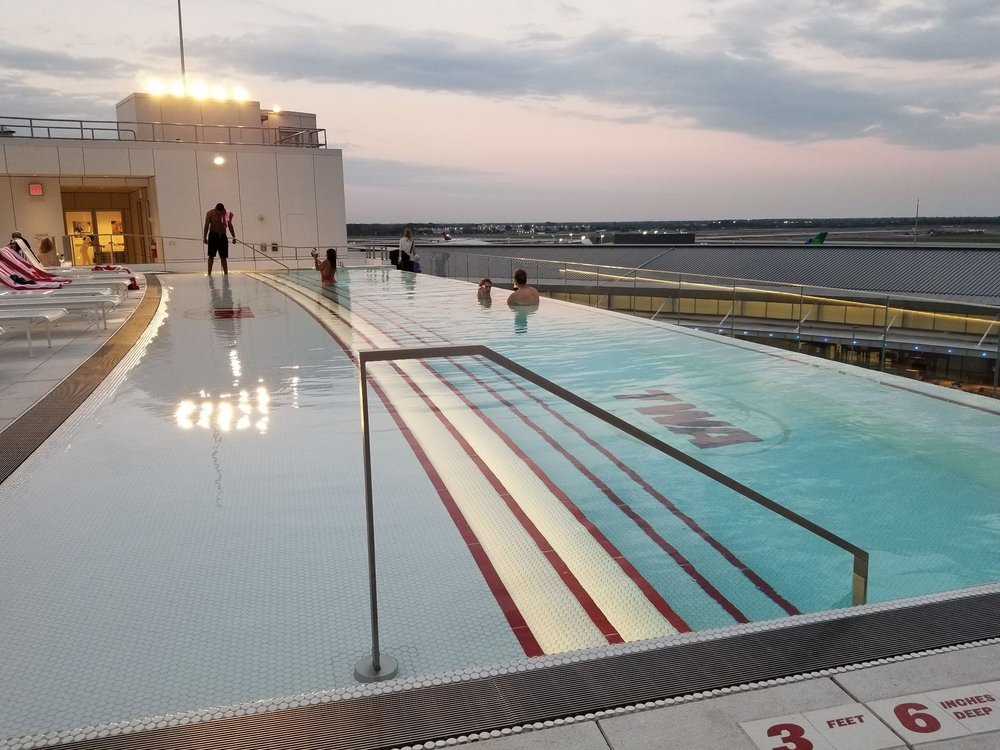
The TWA Hotel rooftop pool is open year-round, but winter transforms it into something altogether different. When temperatures drop, the pool turns into a “pool-cuzzi,” with the water heated to 95°F every day. The highly filtered water is purified every 30 minutes — a standard pool recirculates only every six hours.
The infinity-edge pool offers a captivating panorama of JFK’s busy Runway 4 Left/22 Right, stretching all the way to Jamaica Bay. At 12,079 feet long, Runway 4L/22R is one of the airport’s longest, and the pool also has a view of the Bay Runway — the second-longest commercial runway in all of North America and once a backup landing strip for NASA’s Space Shuttle.
What this means in practice: you sink into 95°F water, steam curling around your shoulders, while Lufthansa, Delta, American, JetBlue, and dozens of other carriers lift off just beyond the pool’s edge. It is, by any measure, a deeply strange and wonderful way to spend a winter afternoon.
The pool design is inspired by the infinity pool at the Hotel du Cap-Eden-Roc in Cap d’Antibes, France, and features a TWA logo mosaic in signature red and gold hues. You enter like at a beach and step down to a depth of about three feet — this pool is made for lounging, not laps.
The Runway Chalet: Après-Pool in the 1960s Alpine Style
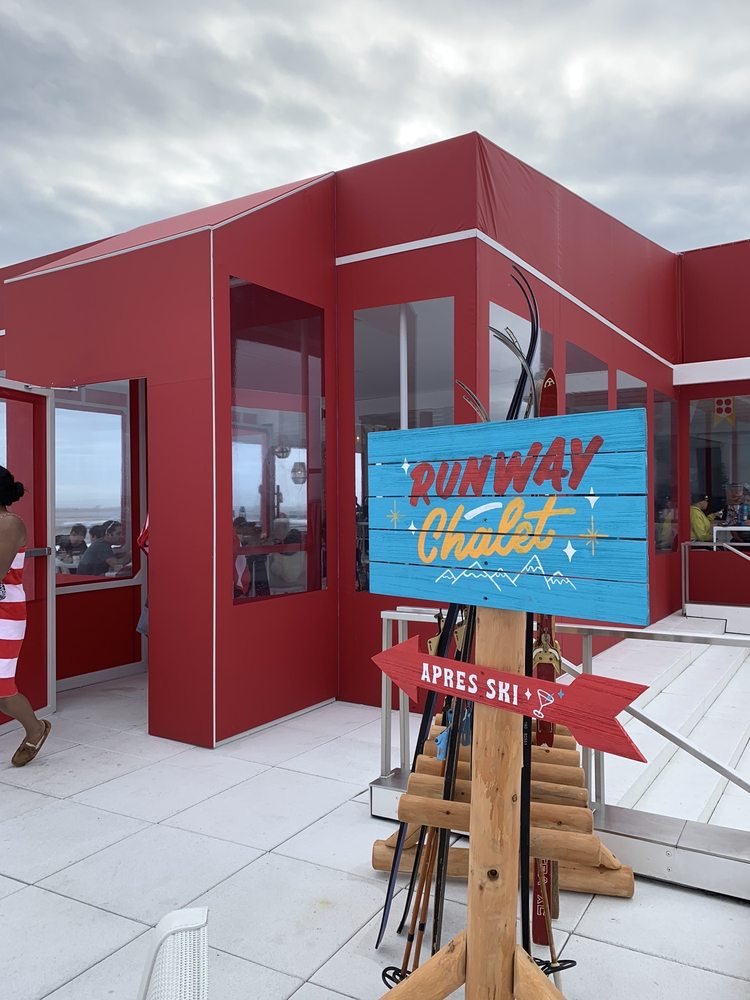
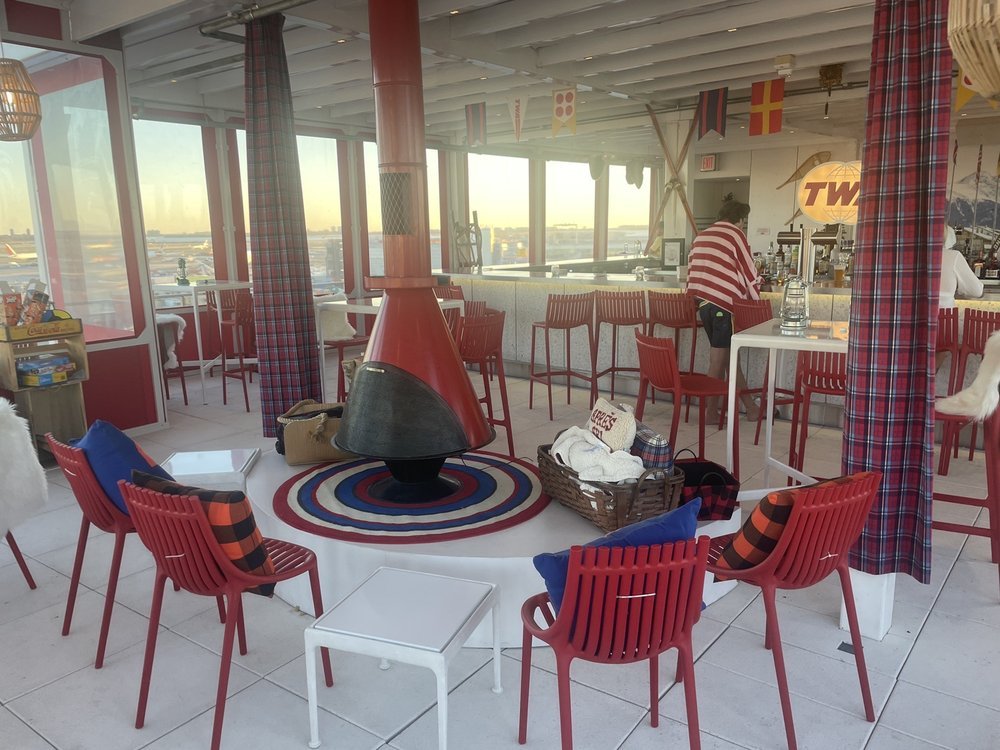
When you’re ready to step out of the water, the Runway Chalet at The Pool Bar is waiting. The Runway Chalet transforms the rooftop into a retro ski lodge — kitschy, fabulous, and completely on-brand for a hotel that honors a time when glamorous travel was an experience unto itself. Think flannel upholstery, vintage fireplace, reclaimed wood — and clear tent walls so you never lose sight of the runway or the pool. Warm up with a hot toddy or a spiced apple cider and watch aircraft tail lights trace arcs across the winter sky.
How to Visit the TWA Hotel Rooftop Pool
The TWA Hotel offers three different ways to experience the rooftop pool:
Non-Guest Pool Pass — The most straightforward option. Walk-ins are welcome outside peak season, but availability isn’t guaranteed. Pricing: weekdays $25, weekends $50. Covers access to the pool and the Runway Chalet.
Daytripper℠ — A clever mid-tier option: rent a guest room for a minimum of 4 hours (available 6 AM–8 PM) without booking an overnight stay. Pricing starts at approximately $149 for 4 hours. Includes fitness center access and luggage storage. Note: pool access is not automatically included with a Daytripper booking — you’ll need to add it via a separate email reservation.
Overnight Stay — Rooms start around $249/night and include complimentary pool access. Ideal if you want the full TWA Hotel experience, including the museum exhibitions, Sunken Lounge, and all dining venues.
Dining at the TWA Hotel: Beyond the Pool
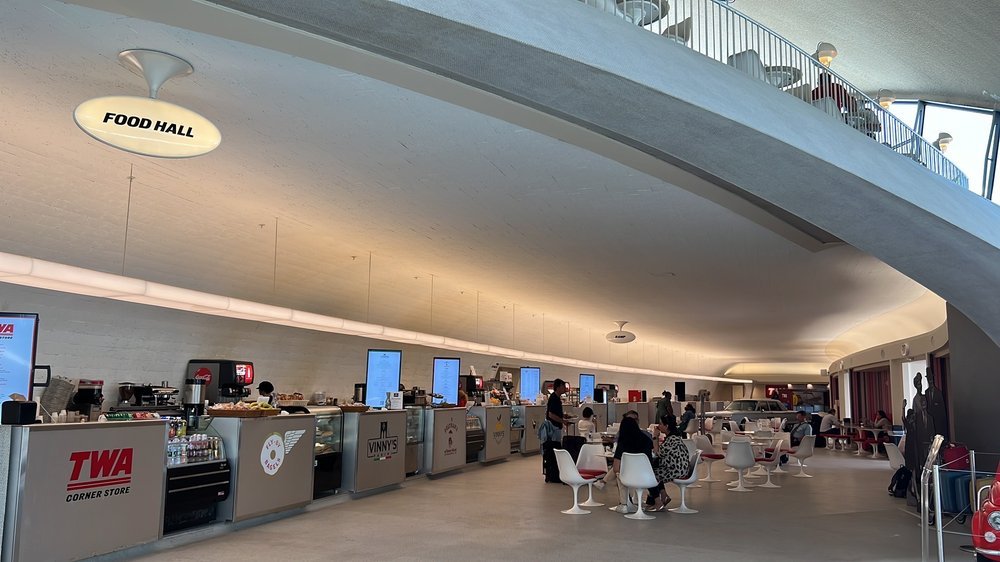
The hotel’s culinary offerings are worth planning around. The Food Hall operates 24 hours a day, anchored by Feltman’s of Coney Island — the hot dog institution with roots going back to 1867 — alongside Vinny’s Panini, serving soups, pizza, and freshly baked panini.
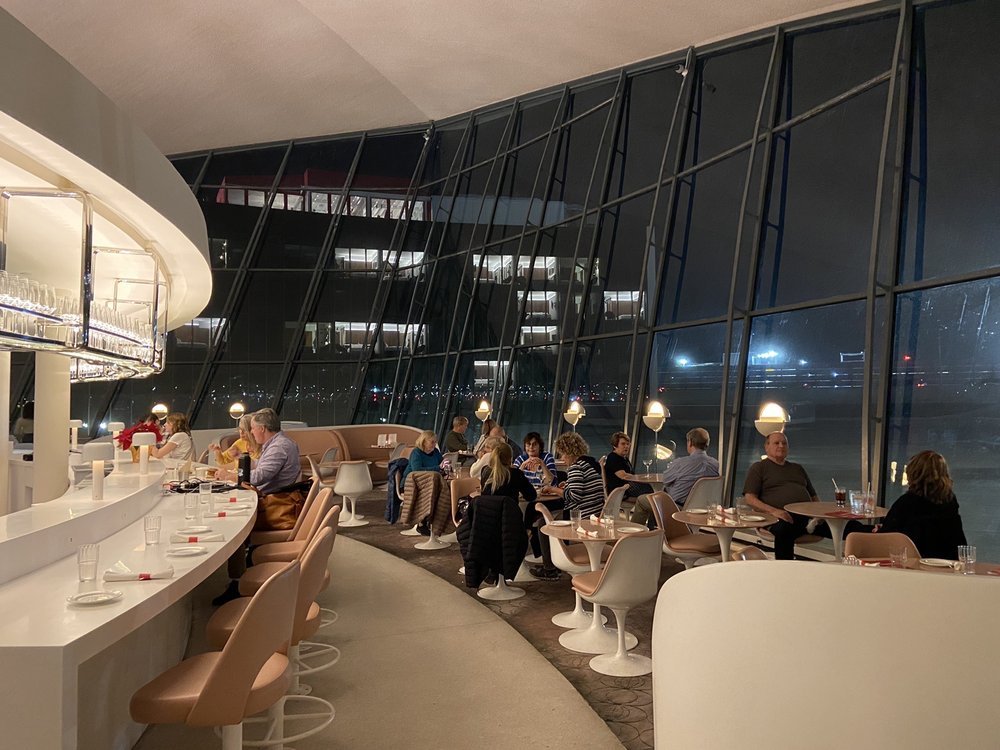
For a proper sit-down meal, Paris Café by Jean-Georges is the standout. Chef Jean-Georges Vongerichten draws inspiration from 1960s TWA in-flight menus, reinterpreting the era’s elegance through a contemporary lens. Signature dishes include black truffle pizza and crispy salmon sushi.
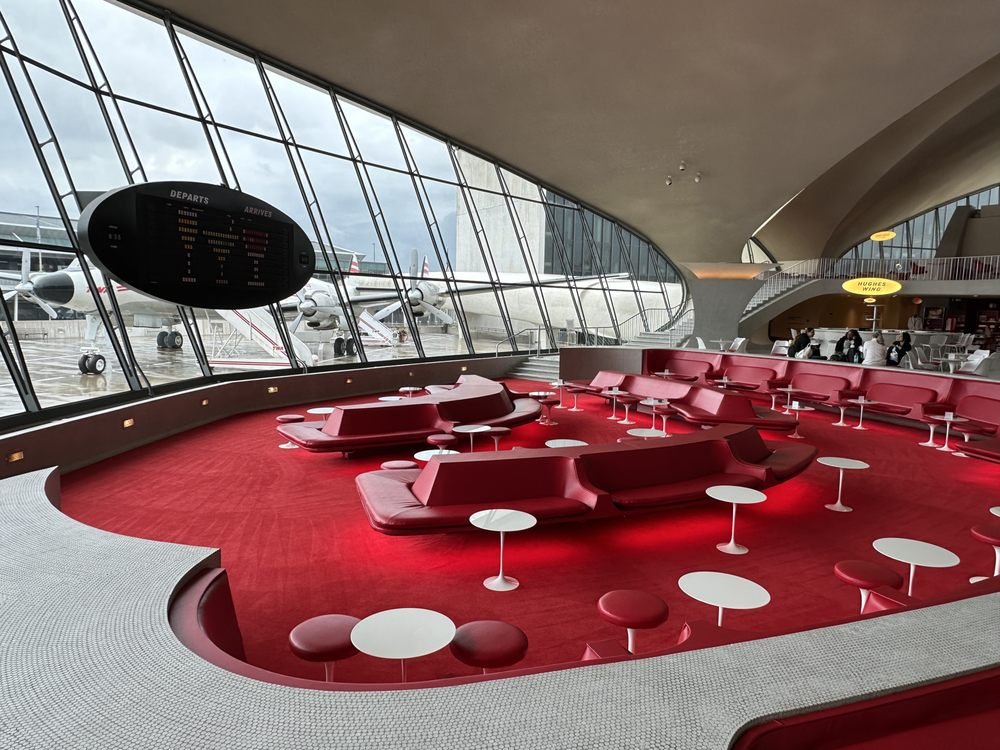
Finally, don’t skip a drink in the Sunken Lounge, the hotel’s iconic centerpiece: a swooping, curved space that captures the mid-century glamour of Saarinen’s original design. Order a TWA-logo martini, settle into the plush curved seating, and let the Jet Age wash over you. The airport was always meant to be a place of departure. Here, it becomes a reason to arrive.
TWA Hotel | twahotel.com
Pool Pass: Weekdays $25 / Weekends $50 | Daytripper℠: from ~$149 for 4 hours
Accessible via AirTrain from Jamaica or Howard Beach stations.
Option 2: Culture of Bathe-ing — NYC’s First-Ever Sauna Festival in Brooklyn
The NYC Sauna Festival That Changed the City
If the TWA Hotel rooftop pool is about nostalgia and altitude, Culture of Bathe-ing — NYC’s first-ever sauna festival — is about something more elemental: heat as community, sweat as ritual, and the radical idea that New Yorkers might enjoy gathering together without a single screen in sight.
Running from February 12 through March 1, 2026, Culture of Bathe-ing transformed Domino Park on the Williamsburg waterfront into the largest sauna village ever staged in the United States. The festival was led by Robert Hammond, co-founder of the High Line — the man who turned an abandoned elevated rail line into one of New York’s most beloved public spaces — this time in his role as President of Therme Group US. Hammond wanted to bring a new culture to the sauna that traditionally isn’t seen in the bathhouse.
17 Saunas, 12 Countries, 1,000+ Sessions
At this NYC sauna festival, a celebration of heat, ritual, and community unfolded across 17 uniquely designed saunas, with over 1,000 guided sessions led by Aufguss masters from over 12 different countries. These weren’t cookie-cutter sweat boxes. The festival offered a mix of mobile sauna experiences, from a converted Airstream trailer to a barrel sauna. Each structure had its own temperature, design logic, and intended mood — from dry Finnish-style heat to steam-heavy environments scented with lavender, bergamot, and sandalwood oils.
At the heart of the programming was the Aufguss ritual — a German-originated sauna tradition in which a master pours scented water over hot stones and uses towels, swung in precise rhythmic arcs, to direct waves of fragrant heat across bathers. It sits somewhere between performance art and thermal therapy, and at this festival, Aufguss World Champions from Japan, Lithuania, Germany, and beyond brought their own national interpretations to the practice.
Cultural programming curated in partnership with Pioneer Works, Brooklyn’s leading center for experimental art and performance, extended the festival beyond the sauna with live performance, sound, ritual, and immersive art under the title Hot Bodies. Local bathhouse operators — Bathhouse, Othership, and the storied Russian & Turkish Baths — also participated, grounding the international programming in New York’s own bathing culture.
The Bigger Picture: NYC’s Evolving Night-Out Culture
There’s something culturally significant happening here. The NYC sauna festival isn’t just a quirky pop-up — it’s a signal. The city’s younger residents are increasingly drawn to wellness-forward socializing: heat over alcohol, breath over bass. Sauna culture has origins going back roughly 10,000 years in the Nordic countries, where it was considered essential to emotional and physical well-being, and even had a spiritual dimension, connecting people to the four elements. What Culture of Bathe-ing proposed was that this ancient practice could find a natural home on the banks of the East River.
Despite the chill of winter and two snowstorms during its run, Domino Park became home to the largest sauna village ever staged in the United States. Locals walked dogs along the waterfront peering into the saunas. Festival volunteers helped direct foot traffic. An ice rink appeared across the street. New York, as always, added its own layer of surreal energy to the whole thing.
Tickets, Logistics & Free Access
Ticketed sauna sessions ranged from $60 to $125 depending on time and day. The village grounds were open to the public, with free public experiences and workshops scheduled throughout the run. Over 1,000 free tickets were distributed during the festival’s run on a rolling basis. Locker rooms and shower facilities were available at One Domino Square, just adjacent to the park.
Culture of Bathe-ing | cultureofbathe-ing.com
Note: The 2026 edition has concluded, but based on its success, future editions are expected. Follow their Substack and website for announcements.
After the Sauna: Where to Eat and Drink in Williamsburg
The streets around Domino Park offer some of the best dining in Brooklyn. Here’s how to build a full evening around the sauna village:
Misi — Pasta with an East River View
One of New York’s most celebrated pasta destinations, Misi sits right on the waterfront. Chef Missy Robbins’s handmade pasta — ricotta toast, simple but architecturally precise olive oil pasta — is exactly what the body craves after an hour of sweating. Light but deeply satisfying. Around $30–40 per person.
St. Anselm — Williamsburg’s Steak Institution
A neighborhood classic, St. Anselm does straightforward, exceptional meat. The butcher’s steak finished with butter is the move. Post-sauna protein replenishment at its most pleasurable. Mains $30–50.
Westlight — Cocktails with the Manhattan Skyline
Perched atop the William Vale Hotel, Westlight is one of Brooklyn’s best rooftop bars, offering direct sightlines to the Manhattan skyline. With the sauna warmth still in your bones, a cocktail up here feels like the city’s version of a perfect closing chapter. Cocktails around $20; reservations strongly recommended for evenings.
Lilia — If You Can Get a Table
Lilia requires advance planning — its reservation queue is competitive — but if you land a spot, Missy Robbins’s wood-fired pastas and vegetable dishes make for one of the finest Italian meals in the borough. Worth the effort for a special occasion.
Two Weekends, Two Experiences, One City
New York’s winters are long. They can also be surprisingly good — if you know where the heat is.
The TWA Hotel rooftop pool gives you aviation history, mid-century glamour, and the singular experience of soaking in 95°F water while watching intercontinental flights lift off fifteen feet away. It’s available any weekend, year-round, for as little as $25.
The NYC sauna festival, Culture of Bathe-ing, offered something newer and more communal: an entire waterfront village given over to sweat, ritual, scent, and performance art. Its 2026 run may have concluded, but it has fundamentally changed what New Yorkers know is possible in a public park in February.
The choice between them isn’t really a choice. If the calendar allows, do both.
Practical Info at a Glance
| Experience | Location | Price | Website |
|---|---|---|---|
| TWA Hotel Pool Pass | JFK Airport, Queens | $25 (weekday) / $50 (weekend) | twahotel.com |
| TWA Daytripper℠ | JFK Airport, Queens | From ~$149 / 4 hrs | twahotel.com |
| Culture of Bathe-ing | Domino Park, Williamsburg | $60–$125 | cultureofbathe-ing.com |
Related posts you might enjoy: