Noguchi’s New York: Inside the Noguchi Museum’s Most Ambitious Exhibition Yet, One of Best Museums in New York

Running through September 13, 2026, the Noguchi Museum’s landmark exhibition explores Isamu Noguchi’s lifelong — and often turbulent — relationship with New York City through 50+ works, archival documents, and the radical public visions that never made it off the page.

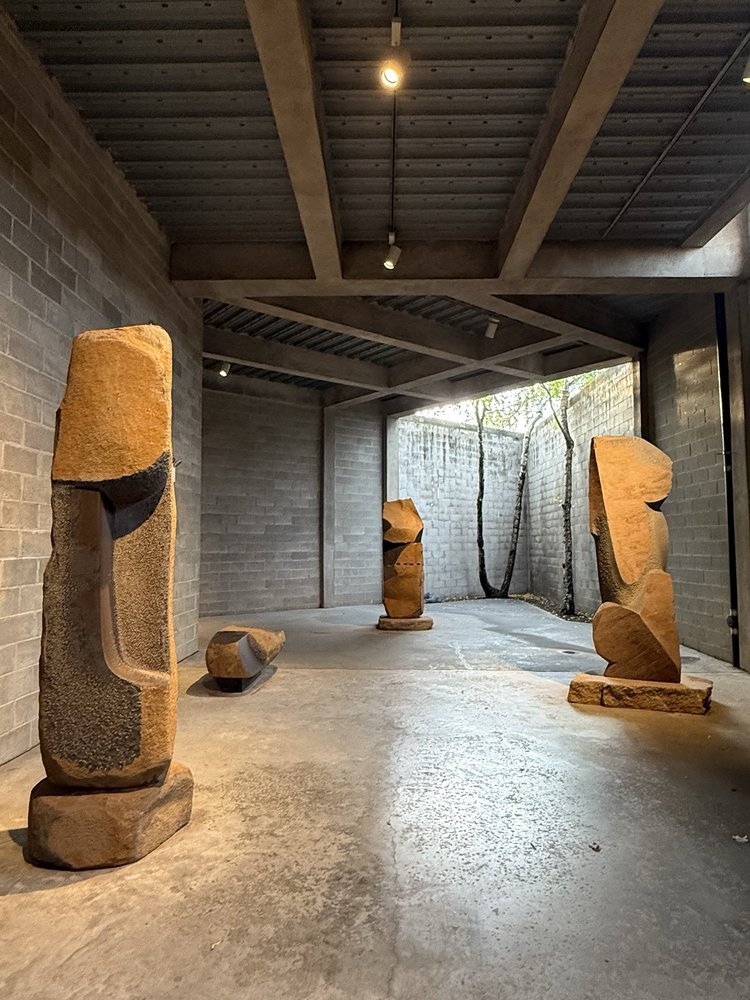
The Noguchi Museum exhibition Noguchi’s New York is not a typical retrospective. Noguchi Museum is one of the best Museums in New York. When you walk into the galleries in Long Island City, Queens, you are not greeted by a triumphant chronology of an artist’s greatest hits. You are met, instead, by the sketches, blueprints, rejection letters, and unrealized visions of a man who spent sixty years trying — and often failing — to give a city a better version of itself.
best museums in new york
Noguchi Museum

Isamu Noguchi first arrived in New York in 1922, at seventeen years old. He would leave and return, leave and return, for the rest of his life. He died here in 1988. As he once put it: “I’m really a New Yorker. Not Japanese, not a citizen of the world, just a New Yorker who goes wandering around like many New Yorkers.” This exhibition, now on view through September 13, 2026, takes that self-definition seriously — and asks what it actually cost him.


What Is the Noguchi Museum Exhibition Noguchi’s New York?

Organized to mark the 40th anniversary of The Isamu Noguchi Foundation and Garden Museum, Noguchi’s New York brings together more than 50 works — sculptures, models, stage sets, archival photographs, and administrative documents — to examine one of the most complex artist-city relationships in 20th-century American art.

The exhibition examines Noguchi’s deep and dynamic relationship with New York City, exploring how its material, cultural, social, and political landscape indelibly transformed his artwork and thinking, and how he in turn transformed the city.

What makes this Noguchi Museum exhibition distinctive is precisely what it doesn’t leave out. Rather than presenting only completed masterworks, curators have foregrounded the projects that never happened: playground proposals that city officials dismissed without a second glance, public sculptures killed in committee, civic spaces imagined and buried in bureaucratic files. These failures, the show argues, are just as revealing as the successes.


Isamu Noguchi New York: A 60-Year Relationship Defined by Collision

An Artist Born on the Border

To understand Noguchi’s relationship with New York, you have to understand who he was before he got here. Born in Los Angeles in 1904 to Japanese poet Yone Noguchi and American writer Leonie Gilmore, Noguchi grew up between cultures — raised partly in Japan, educated in Indiana, and trained in New York. He was, from the beginning, a man without a fixed category.

In the 1920s, he traveled to Paris and worked as an assistant to Constantin Brâncuși, absorbing the fundamentals of modern sculpture. But he quickly broke from the model of the studio sculptor making objects for pedestals. For Noguchi, sculpture was inseparable from the body that moved through it, the ground it sat on, the light that fell across it. Furniture, gardens, stage sets, playgrounds, plazas — all of it was sculpture, if you understood sculpture broadly enough.

New York as Laboratory and Obstacle

Noguchi first arrived in New York in 1922 at just seventeen. Though his career unfolded across Paris, Tokyo, and Mexico City, the city remained his constant point of return. Noguchi’s New York examines this enduring relationship, revealing how New York’s political tensions, architectural density, and civic ambitions shaped his artistic vision.

In the 1920s and ’30s, the city was the ideal laboratory. Industrial materials — aluminum, steel, plate glass — were available on a scale impossible elsewhere. The avant-garde moved fast. He collaborated with Martha Graham, whose radical approach to dance gave Noguchi some of his most generative commissions; his stage sets for her productions remain landmarks of 20th-century design. He designed furniture for Herman Miller. He built a reputation as someone who refused to stay in one lane.

But New York also showed him its hardest face. As a mixed-race immigrant artist during the years of the Great Depression, World War II, and the Cold War, Noguchi was never simply an artist in New York — he was always also something else, someone who had to prove his right to belong.

Robert Moses and the Politics of Public Space

No figure haunts this exhibition more persistently than Robert Moses, the parks commissioner and master builder whose iron grip on New York’s public spaces extended from the 1930s through the 1960s. Moses shaped the physical city more than any elected official of the era — and he was the single greatest obstacle to Noguchi’s public ambitions.

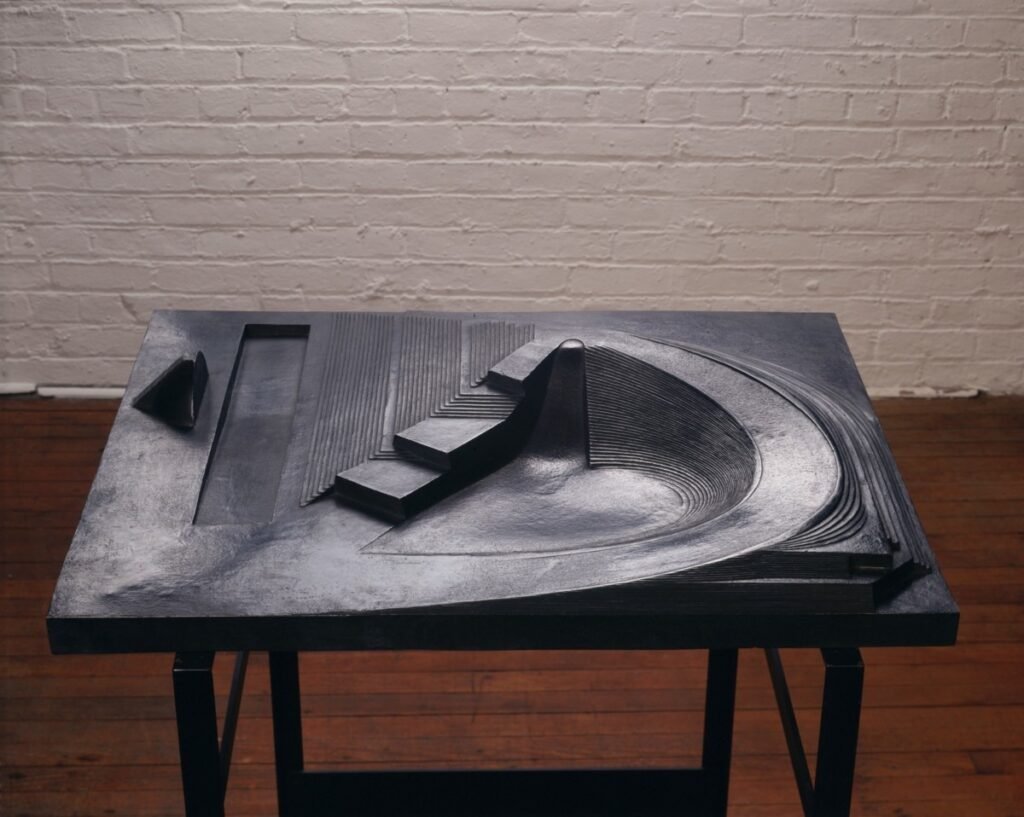
In 1934, Noguchi submitted a proposal for Play Mountain — a pyramid-shaped earthwork designed for children to climb without equipment, a pure sculptural landscape for play. Moses rejected it. In subsequent years, Noguchi proposed playgrounds for Riverside Park and other public sites. Moses rejected those too. The exhibition highlights Noguchi’s unflagging attempts to give back by sculpting communal spaces for exploration and play — efforts often thwarted, most notably by the influential NYC Parks Commissioner Robert Moses.

The rejections were not simply aesthetic disagreements. They reflected a deeper incompatibility between Noguchi’s vision of art as participatory civic space and Moses’s preference for efficient, standardized, manageable infrastructure. Noguchi believed that the city’s children deserved something beautiful and strange to climb. Moses wanted swing sets and slides.


Key Works in the Isamu Noguchi New York Exhibition

Play Mountain (1933) and the Unrealized Playground Proposals
Source: Noguchi Museum

Central to the exhibition is Noguchi’s radical rethinking of public sculpture. A key section brings to life his unrealized playground and plaza proposals — projects that imagined art as a catalyst for communal play rather than passive monumentality. Models and blueprints for works such as Play Mountain (1933) and Contoured Playground (1941) are animated through newly commissioned short films, translating speculative designs into vivid, moving form.

These films are worth the visit alone. Seeing children move through the spaces that never existed is both a pleasure and a quiet indictment.

News (Associated Press Building Plaque, 1938–40)

One realized commission on view at the exhibition may be familiar to New Yorkers: News (Associated Press Building Plaque) (1938–40), Noguchi’s first public work in the United States — a large-scale stainless steel relief installed at Rockefeller Center. Archival photographs and drawings trace the making of this piece, which renders a group of newspaper men as a celebration of the city’s heroic working class. It is one of the few places in the exhibition where the city and the artist arrived at something together.

Red Cube (1968) and Sunken Garden (1961–64)
Source: Noguchi Museum

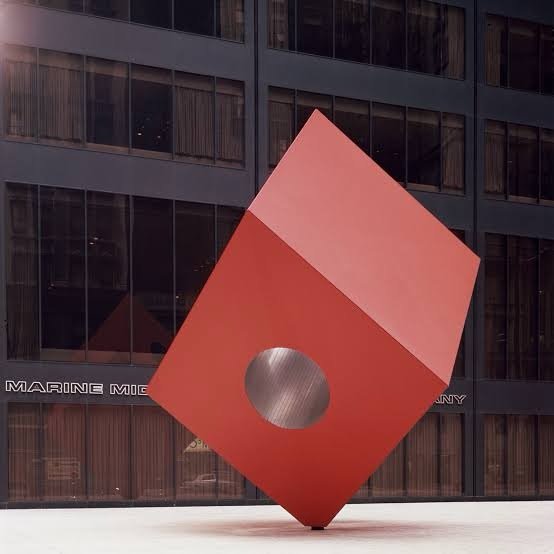
Two public art displays are just a block away from each other in Lower Manhattan — both the work of Noguchi. They are the Red Cube at 140 Broadway and the Sunken Garden at Chase Manhattan Bank Plaza. Both are on view as part of the exhibition context, and both remain among the most quietly radical pieces of public sculpture in the city.

Unidentified Object (1979)

Perhaps no work better captures Noguchi’s position in New York than Unidentified Object, the 11-foot basalt sculpture that stood at Doris C. Freedman Plaza in Central Park — his first public sculpture on city land, unveiled when he was 74 years old. The photograph of Noguchi at its debut, standing in front of the Plaza Hotel in a rumpled suit, is one of the most moving images in the show. It took him most of a lifetime to get a piece of stone into Central Park.


The Noguchi Museum Itself as Exhibition: A 40th Anniversary Reflection

One of the most original arguments this Noguchi Museum exhibition makes is about the museum itself. After decades of watching his public proposals rejected, Noguchi built his own public space. In 1985, he opened The Isamu Noguchi Foundation and Garden Museum in a converted 1920s factory in Long Island City — at the time, the first museum in the United States established by a living artist.

The space is extraordinary. Two gallery floors and an outdoor sculpture garden, where granite, basalt, and marble works sit under open sky and change with the light and the seasons. It is everything his rejected playgrounds were supposed to be: a place where people walk among art, sit with it, think inside it.

Noguchi called it a gift to the city. As Amy Hau, director of the Noguchi Museum, noted: “We are just so proud here in Queens that he not only established the beginnings of a very wonderful collection, but giving it to the city in this way as a museum for all of us to enjoy.”

The 40th anniversary framing makes this point without sentimentality: the museum is not a consolation prize. It is the most complete realization of everything Noguchi believed about art and public life.


Visitor Guide: Everything You Need to Know Before You Go

Exhibition Details

DetailInfo
ExhibitionNoguchi’s New York
DatesFebruary 4 – September 13, 2026
HoursWednesday–Sunday, 11am–6pm (closed Mon & Tue)
Address9-01 33rd Rd at Vernon Blvd, Long Island City, Queens, NY
AdmissionAdults $20 / Students & Seniors $15
ReservationsAdvance booking recommended via the museum website

Getting There

Take the 7 train from Midtown Manhattan to the Vernon Blvd–Jackson Ave stop in Queens. The museum is about a 10-minute walk from the station through the industrial waterfront neighborhood of Long Island City — an area worth exploring before or after your visit for its concentration of galleries and waterfront parks.

What to Expect Inside

The museum occupies a converted factory building. The ground floor galleries hold the historical arc of the exhibition — early portrait busts, archival documents, the rejected playground proposals, and models for unrealized public works. The upper floor carries his applied works: stage designs, Akari light sculptures (his iconic paper lanterns), furniture.

The outdoor sculpture garden is the emotional heart of the space. Large stone works in granite, basalt, and marble are arranged across a gravel courtyard, shifting with the light. Visitors can sit on benches, listen, and look — the garden does a remarkable job of muting the surrounding city noise. Come on a clear day if you can.

Tips for Getting the Most Out of the Noguchi Museum Exhibition

Read the rejection letters. The administrative documents — particularly Moses’s terse dismissals of Noguchi’s playground proposals — are among the most affecting objects in the show. They make the sculptures feel urgent in a way that art history rarely does.

Watch the animated films. The newly commissioned short films showing how children might have moved through Play Mountain and Contoured Playground are a genuine innovation in exhibition design. Give them time.

Stay in the garden. Most visitors spend 20 minutes in the outdoor space when they should spend an hour. Sit down. Let the stone and the light do their work.

Connect the indoor and outdoor. The exhibition makes most sense if you carry what you’ve seen in the galleries into the garden. The garden is the argument. It’s what Noguchi built when the city said no.


Why This Exhibition Matters Right Now

The questions Noguchi asked about New York — about who public space is for, who gets to shape it, what art can do in a city — have not been answered. The exhibition positions Noguchi not only as a sculptor of objects, but as a visionary thinker who treated New York itself as a material — shaping, challenging, and reimagining the city through art.

That vision runs directly into questions cities are still failing to answer: How do public spaces get designed, and for whom? Who decides what belongs in the park? What does it cost an artist — particularly an immigrant artist navigating race, nationality, and institutional gatekeeping — to imagine a better city?

Noguchi spent sixty years asking those questions in New York. This exhibition asks them again.


Plan Your Visit

Noguchi’s New York is on view through September 13, 2026, at The Noguchi Museum, 9-01 33rd Rd at Vernon Blvd, Long Island City, Queens. Admission is $20 for adults, $15 for students and seniors. Advance reservations are recommended and can be made at noguchi.org.

The museum is open Wednesday through Sunday, 11am to 6pm.

While in the neighborhood, consider pairing your visit with the nearby MoMA PS1 (a 10-minute walk) or a stop along the Long Island City waterfront for views of the Manhattan skyline — views Noguchi himself would have known from his studio.


Last updated: February 2026

NYC’s Best Street Food: Hidden Gems and Award-Winning Carts Locals Actually Eat At
Best Dim Sum in NYC: 12 Must-Visit Restaurants from Chinatown to Flushing

From the steamy carts of Chinatown to the polished brunch menus of Midtown, this guide to the best dim sum NYC restaurants covers 12 essential spots — with tips on what to order, when to visit, and what makes each one worth the trip.

New York City has never had a shortage of great food, but when winter settles over the streets and you need something that warms you from the inside out, there’s nothing quite like a table full of dim sum. The best dim sum in NYC has to offer spans generations and boroughs — a story told through bamboo steamers, rolling carts, and dumplings folded with quiet precision.

Dim sum traces its roots to the Cantonese yum cha (飲茶) tradition, where tea was paired with small bites — a practice that became central to Guangdong’s teahouse culture centuries ago. For early 20th-century Chinese immigrants settling into lower Manhattan’s Chinatown, it was more than food. It was a communal ritual, a way of recreating home across an ocean. Today, New York’s dim sum restaurants New York visitors discover stretch from Doyers Street all the way to the neon-lit corridors of Flushing Crossing Mall in Queens — and the diversity of styles available in this city is unmatched outside of Hong Kong.

Whether you’re a first-timer trying to navigate your first cart-service hall or a devoted regular looking for what’s new, this guide covers 12 of the best dim sum restaurants New York has right now — traditional and modern, casual and refined.


The Two Worlds of Dim Sum in New York City

Before diving into the list, it helps to understand that NYC’s dim sum scene operates on two distinct registers. Knowing which one you’re walking into shapes the whole experience.

Cart-Style Dim Sum: The Best Dim Sum NYC Traditionalists Love

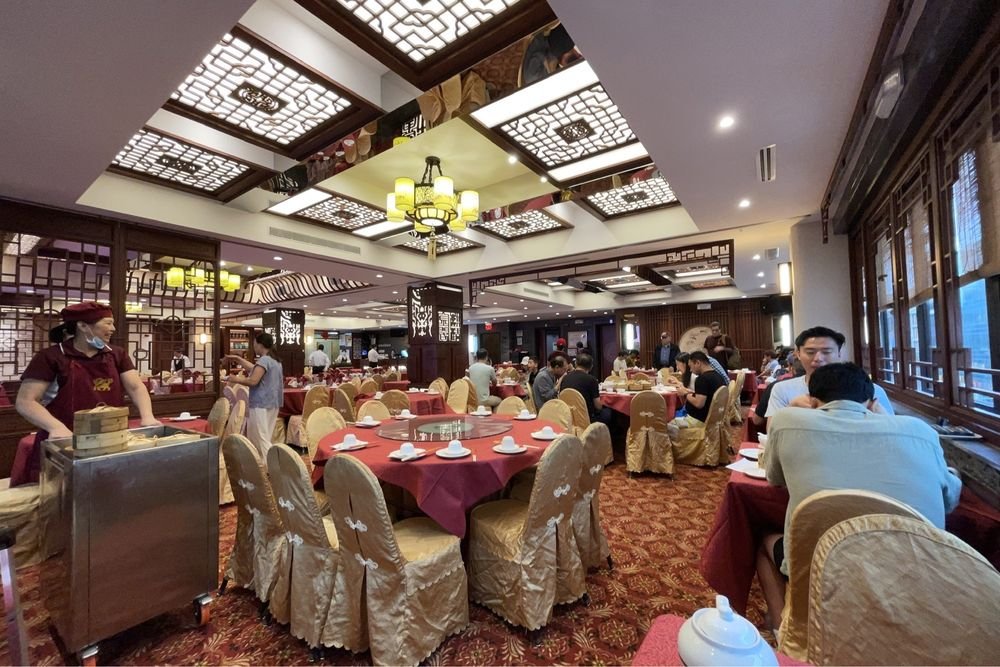
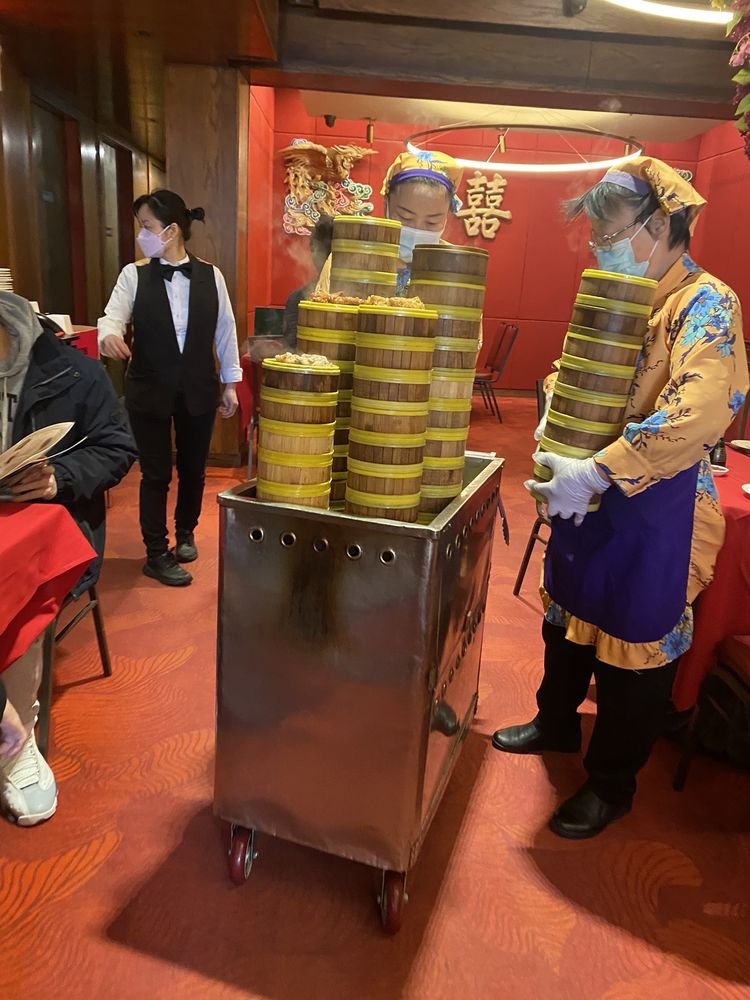
The cart-style hall is the original format — and it remains one of the most thrilling dining experiences in the city. Servers push stainless steel carts stacked with bamboo steamers through packed dining rooms, stopping at tables so diners can lift lids, point, and claim. The pace is fast, the noise is constant, and the energy on a Sunday morning feels closer to a sporting event than a meal.

These restaurants — Golden Unicorn, Jing Fong, Asian Jewels — are best visited with a group. The carts move fast and the more people at the table, the wider the variety you’ll be able to try before the kitchen runs out of the best items. Arrive early. The carts are fullest in the first hour of service.

Brunch-Style Dim Sum: Modern Dim Sum Restaurants New York Newcomers Prefer

The newer wave of dim sum restaurants New York has embraced over the past decade operates more like a refined weekend brunch. Menus are à la carte, plating is deliberate, cocktails and natural wines appear alongside the tea list, and reservations are not only available — they’re usually necessary. Places like Hutong, RedFarm, and Din Tai Fung fall into this category. The food is just as serious, but the experience is quieter and more controlled.

Neither style is better. They’re just different moods.


12 Best Dim Sum NYC Restaurants to Know

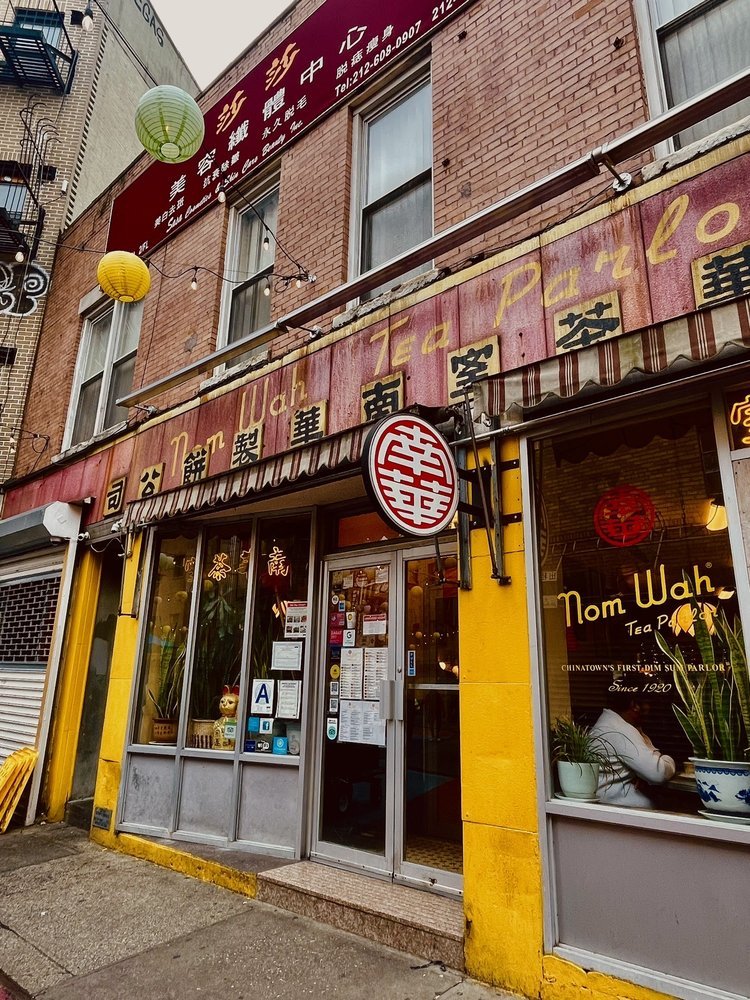
1. Nom Wah Tea Parlor — A Century of Dim Sum on Doyers Street

best dim sum
Nom Wah Tea Parlor

13 Doyers St, Manhattan · nomwah.com

Opened in 1920, Nom Wah Tea Parlor is the oldest continuously operating dim sum restaurant in New York City — and one of the most atmospheric. Tucked into the elbow of Doyers Street, a curved alley in Chinatown with its own storied history, the parlor has appeared in TV series, films, and food documentaries so many times it has practically become a landmark of the genre. But the food is the real reason people keep coming back.

Unlike many Chinatown spots, Nom Wah uses a written menu rather than carts, which means dishes arrive fresh rather than from a cart that’s been circling the room. The Roast Pork Bun and Shrimp & Snow Pea Leaf Dumpling are perennial favorites. The retro interior — formica counters, vintage signage — has barely changed in decades, which is entirely the point.

Nom Wah Tea Parlor_dim sum

Visitor tip: Weekends draw long lines. Arrive at opening time or come on a weekday morning for the most relaxed experience.


2. Tim Ho Wan — Michelin-Starred Dim Sum at Accessible Prices

dim sum
Tim Ho Wan

85 4th Ave, East Village · timhowanusa.com

When Tim Ho Wan opened its first U.S. outpost in the East Village in 2016, it brought with it a reputation earned in Hong Kong: this was once recognized as the world’s most affordable Michelin-starred restaurant. The baked barbecue pork buns — golden, slightly crispy on the outside, yielding and fragrant inside — are among the most talked-about dim sum items in the city. The Har Gow here is textbook: thin skin, generous prawn filling, nothing extraneous.

Prices remain remarkably fair for the quality. Walk-ins are the norm since reservations aren’t typically accepted.

Visitor tip: The mid-afternoon window between 3 and 5 PM tends to be the least crowded. Avoid weekend lunch unless you’re prepared to wait.


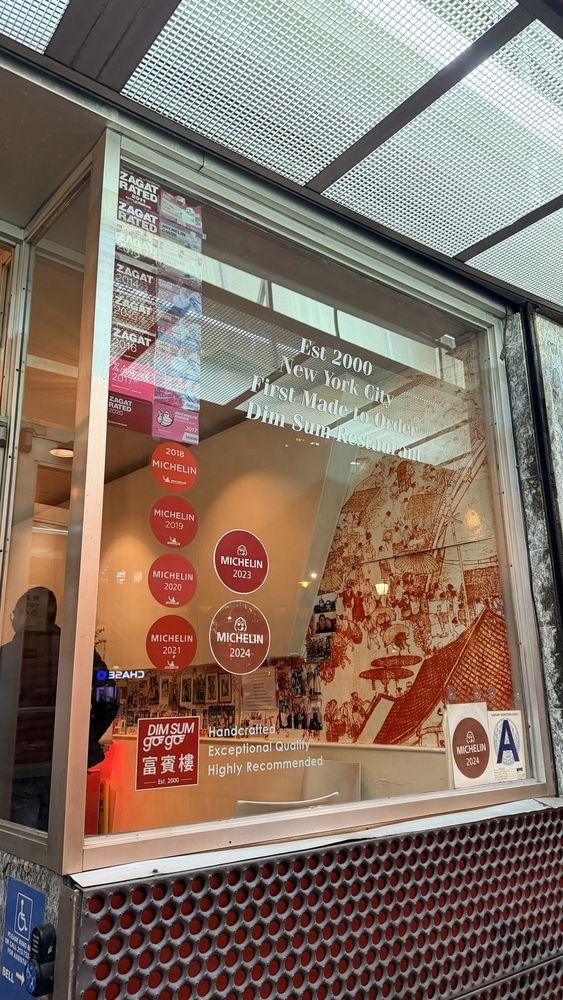
3. Dim Sum Go Go — Handmade, MSG-Free, and Michelin-Noted

5 E Broadway, Manhattan · dimsumgogo.com

Dim Sum Go Go occupies a quieter corner of the best dim sum NYC conversation — favored by locals who prioritize craft over spectacle. Every dumpling is made in-house daily by the kitchen team, and the restaurant’s commitment to MSG-free cooking (uncommon in the genre) has earned it a loyal following beyond the Chinese-American community. The Rainbow Dumpling Sampler — a plate of colorful dumplings each filled differently — is both visually striking and genuinely delicious.

The space is small and tables turn quickly, making it one of the rare dim sum spots where solo dining doesn’t feel awkward.

Visitor tip: This is the place to go for a focused, high-quality dim sum lunch without the chaos of the cart-service halls.


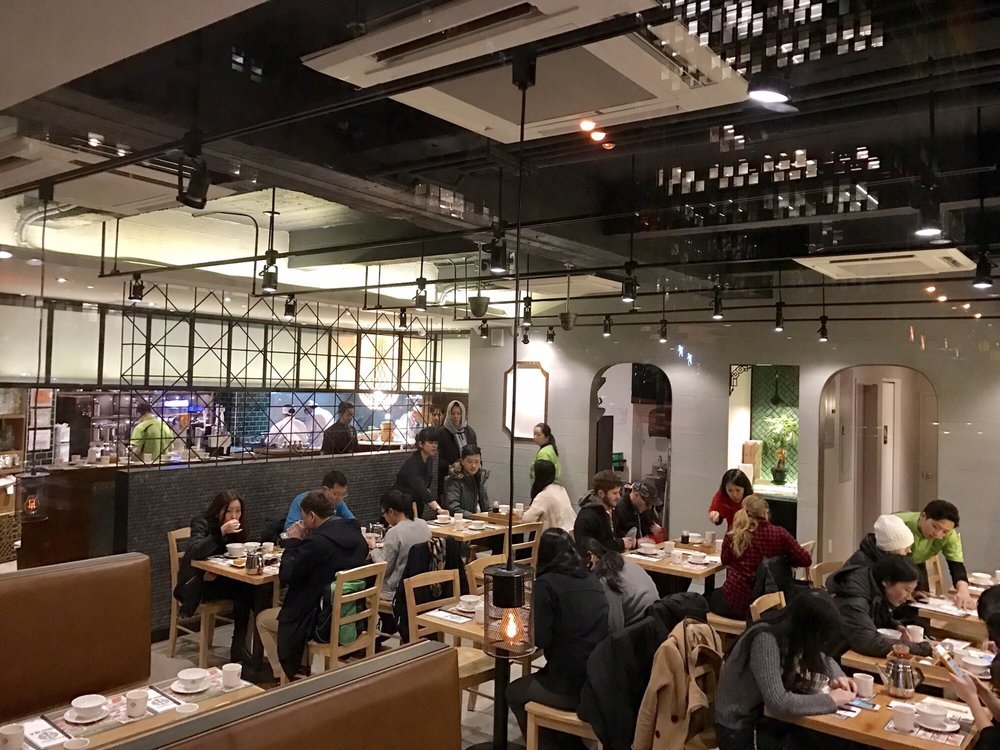
4. Golden Unicorn — The Grand Old Hall of Chinatown

Golden Unicorn
Golden Unicorn

18 E Broadway, Manhattan · goldenunicornrestaurant.com

Golden Unicorn is the kind of place that feels like it exists in its own time zone. Spread across multiple floors above a bank on East Broadway, its dining rooms fill with extended families, wedding parties, and birthday celebrations on weekend mornings. The cart service is classic and generous — Siu Mai, Chicken Feet braised in black bean sauce, and Turnip Cake arrive in steady rotation.

Golden Unicorn is a restaurant above a bank in Chinatown where you can eat some dim sum while a wedding reception is going down nearby — a description that captures both the charm and the scale of the experience perfectly.

Visitor tip: The carts are most abundant between 11 AM and 1 PM on weekends. Arrive just before the rush for the best selection and shortest wait.


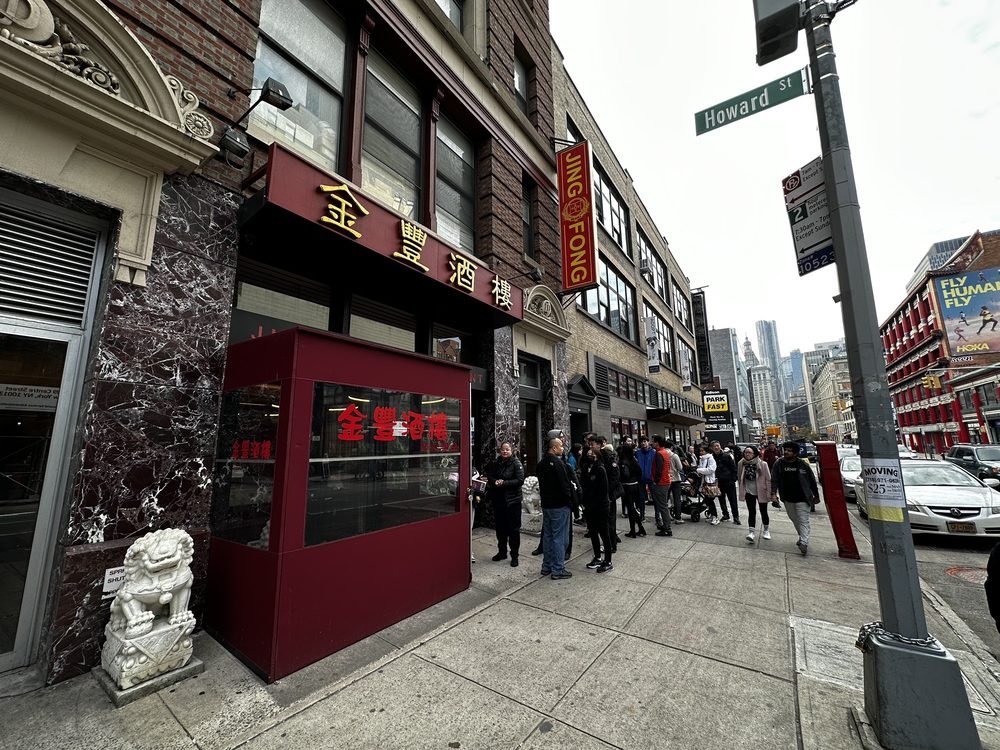
5. Jing Fong — Chinatown Institution, Reborn on Centre Street

202 Centre St, Manhattan · jingfongny.com

Jing Fong has been serving delicious food in NYC since 1978, and each weekend they draw quite the crowd. Throughout the years they’ve become a community fixture, well-recognized among the Chinese community and local New Yorkers. The original Canal Street location — once home to one of the largest restaurant dining rooms in the city — closed during the pandemic. The relaunched Centre Street version is more compact, but the spirit remains: weekend brunch is loud, social, and deeply satisfying.

The Sticky Rice in Lotus Leaf is not to be skipped. It arrives fragrant and dense, the glutinous rice having absorbed the smoky sweetness of the lotus during steaming.

Visitor tip: Best for groups of four or more. The brunch-hour energy is the draw — don’t come here for a quiet solo meal.


6. Dim Sum Palace — The Modern Mini-Chain Doing It Right

28 W 56th St (Midtown) + multiple locations · dimsumpalace.com

Dim Sum Palace has become one of the more reliable answers to the “where should we get dim sum?” question for New Yorkers who aren’t heading to Chinatown. With locations across Manhattan and Brooklyn, Dim Sum Palace is a burgeoning homegrown chain of dim sum restaurants with six locations and counting, boasting an extensive menu of all things dim sum, from black truffle har gow and seafood shumai to juicy pork and crab meat buns and creamy egg tarts.

The Shrimp & Chive Dumpling and Roast Duck Buns are highlights. The Midtown location in particular is convenient before or after a show.

Visitor tip: Walk-ins are the norm for lunch; dinner reservations are recommended, especially on weekends.


7. Hutong — Upscale Northern and Cantonese Dim Sum in Midtown

731 Lexington Ave, Manhattan · hutong-nyc.com

For the best dim sum NYC offers in a genuinely upscale setting, Hutong is hard to beat. The restaurant combines elements of northern Chinese and Cantonese cuisine in an art deco–influenced space that feels unlike any other dim sum venue in the city. The Rosy Prawn Dumpling — tinted pink, architecturally pleated — is as photogenic as it is delicious. The Crispy Duck Roll draws on northern Chinese tradition in a way most Cantonese-focused restaurants don’t attempt.

This is the spot for a special occasion dim sum brunch, a business lunch with a twist, or any time you want the ritual of dim sum with serious cocktail and wine options alongside.

Visitor tip: Weekend brunch books up well in advance. Smart casual dress is appropriate.


8. RedFarm — Where dim sum restaurants New York’s creative class loves to eat

529 Hudson St, West Village · redfarmnyc.com

RedFarm occupies its own category: it’s neither a traditional dim sum parlor nor a polished hotel restaurant. It’s a genuinely creative space where chef Joe Ng applies dim sum technique to unexpected ingredients. The Pac-Man Dumplings — ghost-shaped shrimp dumplings that have become the restaurant’s signature image — and the Katz’s Pastrami Egg Roll (a collaboration with the legendary Lower East Side deli) are the dishes that define what RedFarm is about.

The New York Times and Eater have both included it on their must-visit lists consistently since it opened in 2011, the appeal of this dim sum innovator doesn’t seem to have dulled since its smash opening.

Visitor tip: Book early for dinner, or aim for the early dinner window (5:30–6:30 PM) for slightly easier access.


9. Ping’s Seafood — The Purist’s Choice in Chinatown

22 Mott St, Manhattan · pingsny.com

Ask any dim sum fanatic where to get dim sum and they’ll likely recommend Ping’s as the go-to spot in Manhattan’s Chinatown. Fans on Chinese-language social media have praised Ping’s dim sum and banquet-style dishes as the closest resemblance to the flavors found in Hong Kong and Guangdong.

The kitchen’s focus on fresh seafood sets it apart. The Shrimp Dumpling and Seafood Rice Roll showcase produce that is clearly sourced with care. For parties of 10 or more, reservations are accepted by phone.

Visitor tip: Arrive between 11 AM and noon to find the fullest menu and the best seats before the peak lunch rush.


10. New Mulan — Luxury Dim Sum in the Heart of Flushing

136-17 39th Ave, Flushing, Queens

Flushing’s dim sum scene has been expanding rapidly, and New Mulan represents its most ambitious edge. Located inside the Flushing Crossing Mall, the restaurant combines robot-assisted service, high-end interior design, and a menu that elevates dim sum into fine-dining territory. The Truffle Siu Mai and Deluxe Shrimp Dumpling (finished with gold leaf) reflect the restaurant’s positioning as a luxury experience for special occasions.

This is a very different proposition from the traditional cart halls, but for those who want to see where dim sum is heading aesthetically, New Mulan is essential.

Visitor tip: Lunch is fast-paced and walk-in friendly. For dinner, book in advance.


11. Asian Jewels — Flushing’s Most Reliable Cart-Style Experience

133-30 39th Ave, Flushing, Queens · asianjewelsny.com

If New Mulan is Flushing’s future, Asian Jewels is its anchor. This large, well-run restaurant has earned its reputation as the go-to dim sum destination for local residents — the kind of place where regulars know which carts to flag down first and where the Chicken Feet, Siu Mai, and Turnip Cake are consistently excellent week after week.

The Michelin Guide’s inspectors have taken note of this Flushing staple, most visitors don’t require a menu when visiting this Flushing mainstay. Before you’ve even had a chance to sit down, a host of carts filled with delicious plates will approach you.

Visitor tip: Weekend mornings between 10 and 11 AM offer the best balance of full carts and manageable crowds.


12. Din Tai Fung — The Global Standard for Xiaolongbao

1633 Broadway, Midtown Manhattan · dtf.com

Din Tai Fung is technically Taiwanese rather than Cantonese, and its specialty — the xiaolongbao (soup dumpling) — is a different discipline from traditional dim sum. But no guide to dim sum restaurants in New York would be complete without it. The chain, which operates dozens of locations worldwide and has earned Michelin stars at several of them, brought its precision-engineered dumplings to New York with significant fanfare.

Each Pork Xiao Long Bao is made to exacting standards: 18 pleats, a specific ratio of skin to filling to soup. The Crab & Pork XLB is the splurge item. Spicy Wontons round out the table perfectly.

Visitor tip: Reservations are essential, especially on weekends. The 3–5 PM slot between lunch and dinner service is typically easier to secure.


Practical Guide: How to Do Dim Sum in New York

When to go: Cart-style restaurants peak between 10 AM and 1 PM on weekends, when the variety of passing carts is greatest. Arrive at opening for the best experience and shortest wait. Brunch-style and à la carte spots often serve all day, with dinner service available.

Who to bring: Dim sum is designed for sharing. The ideal group is four to six people — enough to try a wide variety of dishes without over-ordering. Larger groups should consider booking ahead at cart-style halls.

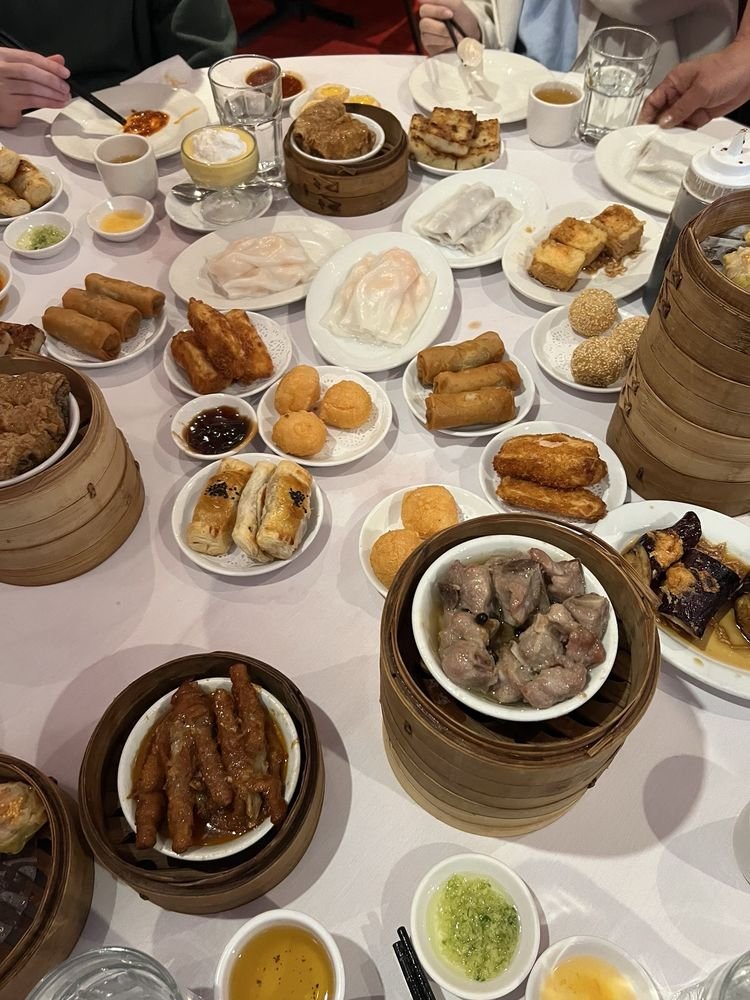
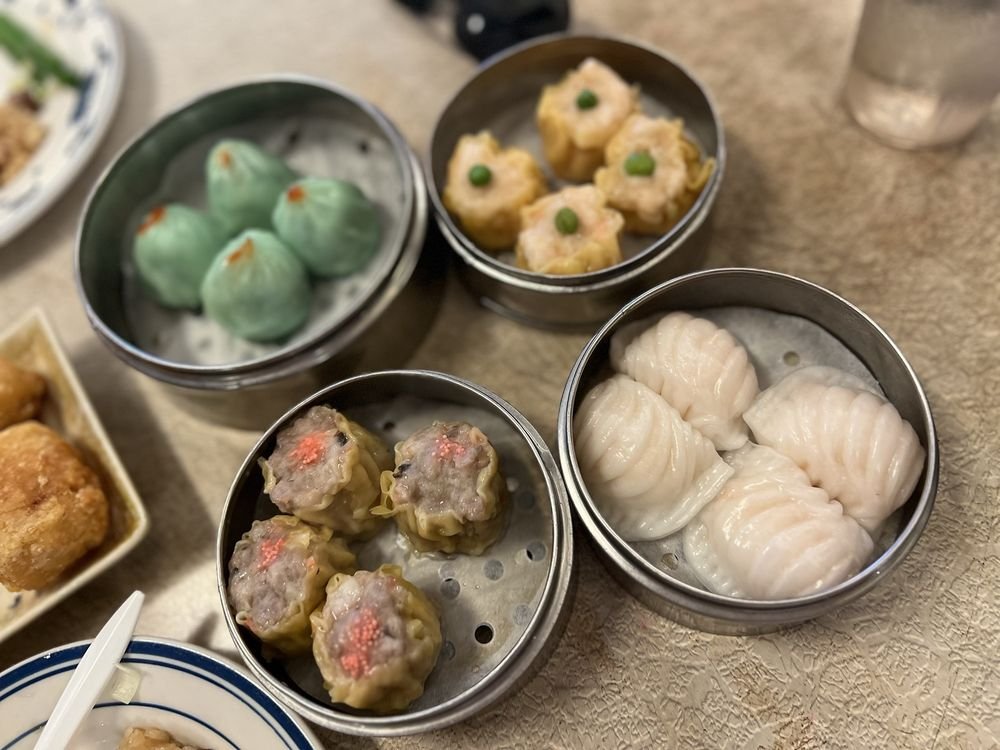
What to order first: At any new spot, the Har Gow (shrimp dumpling) is the benchmark dish. Its quality tells you everything about how much the kitchen cares about the fundamentals. After that: Siu Mai, Cheung Fun (rice noodle rolls), and something from the baked buns category.

Neighborhood breakdown:

  • Manhattan Chinatown (Mott St, Doyers St, E Broadway): History and tradition. Best for cart-style classics and century-old atmosphere.
  • Flushing, Queens: The most dynamic dim sum scene in the five boroughs right now. A mix of traditional halls and modern high-end spots.
  • Midtown Manhattan: Convenient, polished, reservation-friendly. Best for visitors or business meals.
  • West Village / East Village: Creative and modern. Better for dim sum as a brunch concept than a traditional yum cha experience.

Final Thoughts on the Best Dim Sum NYC Has to Offer

The best dim sum NYC restaurants don’t share a single formula. Some are about the theater of the cart, the noise of the hall, the joy of lifting a bamboo lid to discover something you didn’t expect. Others are about quiet precision, a single perfect dumpling that took three years to perfect.

What they share is the underlying philosophy: dim sum is food made to be shared, eaten slowly, talked over. In a city that rarely slows down, that might be its most enduring gift.


All restaurant information current as of early 2026. Hours and availability may vary — always check directly before visiting.

Manhattan’s Korean Restaurant Revolution: From Michelin Stars to Comfort Food

The Ultimate Classic Diners Guide: 8 Must-Visit Spots in New York and New Jersey