Slowing Down in Cold Spring: A Solo Day Trip by the Hudson

There are times when the city gets too loud, even if nothing’s being said. On those days, the subway feels tighter, the skyline more distant, and the sidewalks too crowded for thought. That’s when I know I need to leave—not forever, just for the day.

Just 90 minutes north of Manhattan lies Cold Spring, a small riverside village that feels like a page torn out of another season. It’s not just quieter here—it’s slower, softer, and perfectly made for walking alone. This is a journey for those who don’t need a plan, only a pause.

Getting There: The Hudson Line

Board the Metro-North Hudson Line at Grand Central Terminal. Sit on the left side for views of the river. As the train climbs north, steel gives way to green, and glass becomes water. About an hour and twenty minutes later, you’ll arrive at Cold Spring Station—with the Hudson greeting you as you step off.

There’s no ticket gate. No rush. You walk straight out onto a quiet platform, and within minutes, you’re in a different rhythm entirely.

First Stop: Cold Spring Coffeehouse

Start your walk through town by heading up Main Street. Just a few blocks in, you’ll find Cold Spring Coffeehouse—an understated café with warm lighting, wooden chairs, and a quiet hum. Grab a latte or a cold brew and take a seat by the window.

No one’s in a hurry here. Even the baristas move like they’ve read every chapter of the morning already. This is the kind of place where you don’t need Wi-Fi to stay awhile.

Wandering Main Street

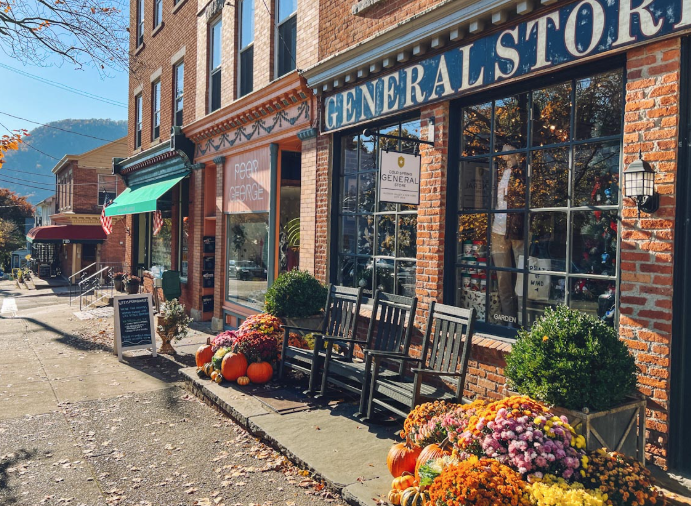
Walk slowly. No need to follow a map. Main Street is lined with antique shops, secondhand bookstores, local art galleries, and vintage signs that seem like they’ve always been there.

The joy of Cold Spring is in what you don’t do. You can browse. You can skip. You can stand in front of a window for ten minutes watching the leaves fall. No one will ask why you’re alone. No one will interrupt the silence.

Riverside Quiet: Dockside Park

At the end of Main Street, the town opens into Dockside Park—a wide grassy area with wooden benches and sweeping views of the Hudson River. This is where time truly stops.

Sit for as long as you like. Watch the water move. Feel the breeze shift. The city feels far away here—not just in miles, but in meaning. Here, it’s okay to be still. To not post. To not explain.

“Sometimes, the best part of a journey is the part where you don’t move at all.”

Optional Detour: Little Stony Point Trail

If you’re up for a short hike, cross Route 9D to find Little Stony Point Trail. It’s an easy loop through forested paths that opens to a quiet riverside beach with mountain views.

No special gear needed. Just good shoes, a bottle of water, and your willingness to listen to the woods. It’s only a 30–40 minute loop, but you might take longer. That’s kind of the point.

Heading Back

Trains back to Grand Central run about once per hour. There’s no rush. Sit on a bench near the platform. Read. Write. Let the wind carry off whatever you came here to release.

You’ll arrive back in the city the same way you left—but you won’t feel quite the same. That’s the quiet magic of Cold Spring.

Practical Tips

  • Train: Metro-North Hudson Line (Grand Central → Cold Spring)
  • Duration: 1hr 20min (each way)
  • Best time: Weekdays or Sunday mornings
  • Bring: Water, a book, notebook, comfortable shoes
  • Don’t bring: Expectations. Just let the place arrive to you.

Closing

We often think we need to travel far to feel new. But sometimes, all it takes is a train ride north, a bench by the river, and a little time alone. If you’re craving silence, space, or simply a breath—Cold Spring is waiting.

Slow Travel NYC

Where Stillness Takes Shape: A Slow Walk Through the Noguchi Museum

In a city where space is currency and silence feels rare, the Noguchi Museum offers both, in abundance.

Tucked away in Long Island City, far from the noise of midtown and the buzz of SoHo, this museum feels less like an institution and more like a retreat. Not for tourists in a hurry. Not for checklist travelers. But for those willing to pause, to breathe, and to experience art as presence.

Who Was Isamu Noguchi?

Isamu Noguchi was a Japanese-American sculptor, designer, and thinker. His work defies categories—somewhere between architecture, furniture, landscape, and sculpture. But what’s most striking about his work is not what it is, but how it makes you feel.

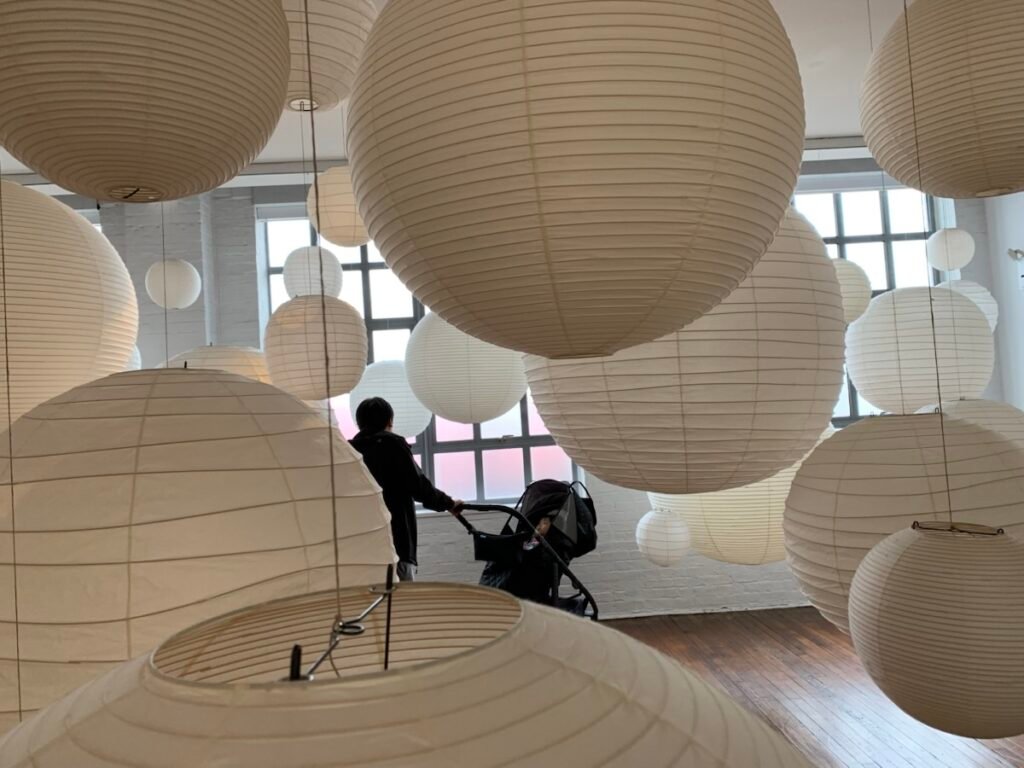
Everything he created, from massive stone pieces to soft paper lanterns, invites stillness. His forms are not loud. They don’t scream for attention. They simply exist—with gravity, elegance, and restraint.

Arrival: A Gate Into Another Tempo

noguchi museum

From the outside, the Noguchi Museum looks like little more than a concrete wall. No banners. No fanfare. Just a small wooden sign and a quiet door.

Step inside, and you’re met not with marble floors or museum guards, but with natural light, raw textures, and a garden. The space breathes. It asks you to slow down. And, if you’re willing, to stay a while.

The Garden: Where Sculpture Meets Sky

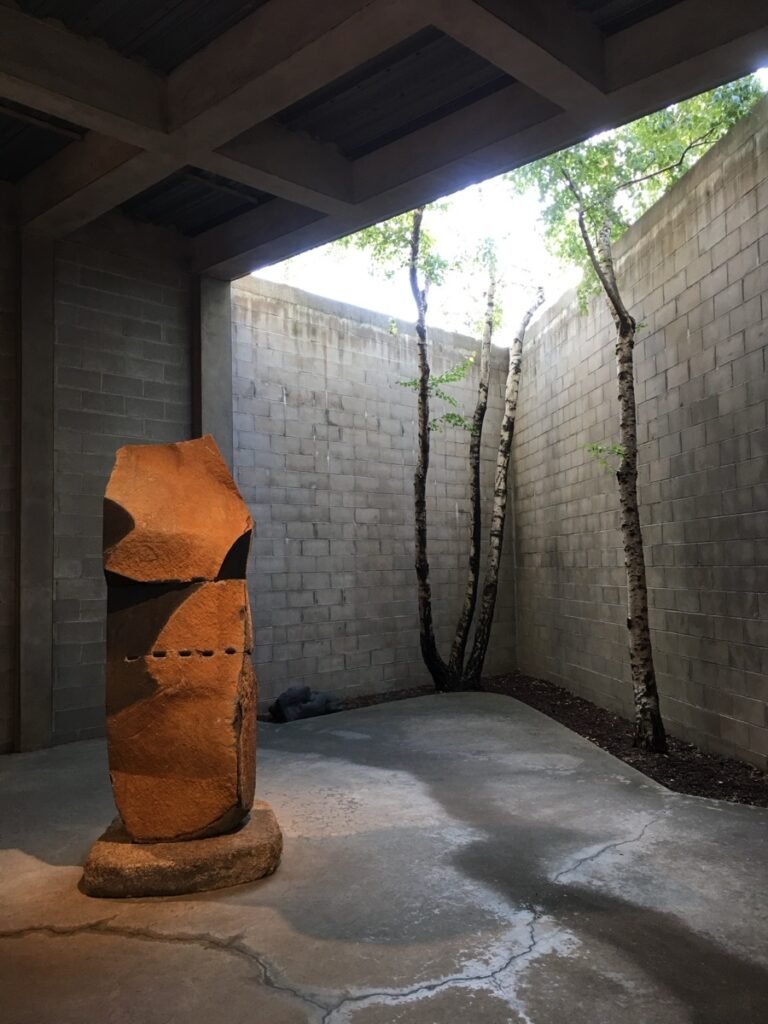
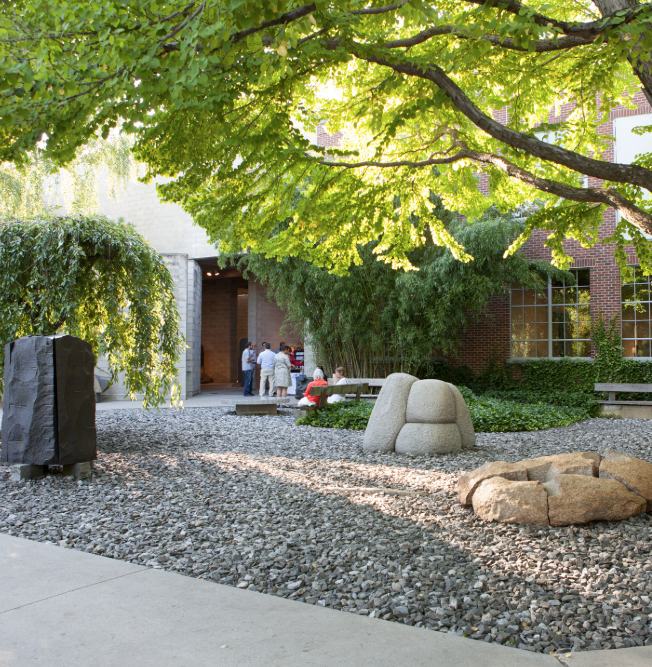
The heart of the museum is its inner courtyard—an open-air sculpture garden surrounded by Japanese maple trees and gravel paths. Sculptures rest, not on pedestals, but on the ground itself. They seem to have grown there, as if carved directly from the earth.

You don’t “look at” Noguchi’s art. You sit with it. You walk around it. You notice how the light changes it. How its shadow stretches or shortens with the passing sun.

Slow tip: Sit on one of the benches near the center. Listen. To birds, to breeze, to the silence inside you.

Inside: Forms That Whisper

The indoor galleries are arranged simply—no numbered order, no pressure to move forward. Each room offers space: space between works, space around you, and space inside you. Some sculptures are smooth and minimalist. Others are rough and weighty, like memory.

There are no crowds. No loud school groups. Just a few people moving slowly. Often alone. It’s one of the few museums where no one minds if you sit in silence for twenty minutes before moving on.

What to bring: A sketchbook. Or nothing at all.

Why This Museum Matters

In a city of iconic museums—MoMA, the Met, the Guggenheim—why spend your time here? Because sometimes, art isn’t about interpretation. It’s about feeling. About being.

The Noguchi Museum doesn’t demand your intellect. It invites your attention. It doesn’t ask you to understand. Only to notice.

Practical Details

  • Location: 9-01 33rd Rd, Long Island City, NY 11106
  • Hours: Wednesday–Sunday, 11am–6pm (closed Monday & Tuesday)
  • Admission: $12 (free on first Friday of each month)
  • How to get there: Take the N or W train to Broadway, then walk 10 minutes

Tip: Pair your visit with a stop at the nearby Socrates Sculpture Park or walk down to the East River to sit on the waterfront steps.

Final Thoughts

“The essence of sculpture is for me the perception of space, the continuum of our existence.” – Isamu Noguchi

In a world that often demands reaction, the Noguchi Museum offers reflection. It reminds us that art doesn’t have to shout. That beauty can rest. And that meaning can be found not in movement—but in stillness.

If you ever need to return to yourself, come here. Walk slowly. Sit often. Let shape and shadow speak to you. Welcome to a different kind of New York.

Slow Travel NYC