The Ultimate Guide to Central Park Running Routes: Best Loops for Every Level

Whether you’re a seasoned marathoner or a first-time visitor lacing up for a morning jog, Central Park running routes offer something for everyone. From the challenging Full Loop to the flat, car-free Reservoir track, this guide covers every route, distance, and pro tip you need before your next run in NYC.

If there’s one place in New York City that every runner needs to experience, it’s Central Park. Stretching 2.5 miles from 59th Street to 110th Street and covering over 840 acres of greenery in the heart of Manhattan, Central Park is widely regarded as one of the greatest running destinations in the world. Locals and travelers alike lace up their shoes here every morning and evening, chasing skyline views, fresh air, and that unmistakable New York energy.

Whether you’re visiting NYC for the first time or you’re a regular on the pavement, this guide to Central Park running routes will help you choose the perfect loop for your fitness level, time, and goals.


central park running routes
Central Park Map

Why Running in Central Park Is a Bucket-List Experience

Running in Central Park isn’t just exercise — it’s a full sensory experience. You’ll find yourself weaving past the Bethesda Fountain, glancing up at the Manhattan skyline reflected over the Reservoir, and pushing through iconic hills that serious marathoners train on year-round. With an estimated 42 million visitors annually, Central Park is the most frequented urban park in the United States — and for runners, it’s nothing short of a paradise.

The park is open daily from 6:00 AM to 1:00 AM, with the main drives closed to vehicle traffic on weekends (Friday 7 PM through Monday 6 AM) and on weekdays from 10 AM–3 PM and 7–10 PM. That means more room for runners, more peace, and a safer experience overall.


Central Park Running Routes: The Complete Breakdown

1. The Full Loop — 6.1 Miles (~10K): The Crown Jewel of Central Park Running Routes

central park running routes

Distance: 6.1 miles (~9.7–10 km) Surface: Paved Difficulty: Moderate to High

The Full Loop is the quintessential Central Park running route. Circling the entire park along East Drive, West Drive, Center Drive, and Terrace Drive, this is the route that serious runners live for. It overlaps with portions of the TCS New York City Marathon course, making it a genuine bucket-list run for endurance athletes around the globe.

The total elevation gain on the full loop is approximately +300 feet, with two notable climbs to watch for:

  • Cat Hill (near the Loeb Boathouse) — a ~50-foot gain, named for the bronze cat sculpture nearby
  • Harlem Hill (above 102nd Street) — the toughest section, with a ~100-foot gain on the west side

If you want to skip Harlem Hill, you can cut across the 102nd Street Transverse and shave the route down to about 4 miles (6.5 km) — a popular “middle loop” among locals.

Best for: Experienced runners, marathon training, those who want the full New York running experience


  • COMFY RUNNING WAIST BELT: Made to keep you in motion, the FlipBelt is an exercise-belt phone holder and carrier pouch fo…
  • MONEY & PHONE POUCH: The FlipBelt features 4 pocket openings to slip in all your must-have items, like cards, cash, and …
  • FASHION & FUNCTION: Made of moisture-wicking material that is quick drying and soft even while working up a sweat, this …

2. The Lower Loop — 1.8 miles (~2.9K): Perfect for Running in Central Park as a Beginner

central park running routes

Distance: 1.8 miles (~2.9 km) Surface: Paved Difficulty: Easy to Moderate

The Half Loop follows Central Park Drive south of the 72nd Street Transverse, looping through the most scenic and landmark-dense section of the park. This route passes some of Central Park’s most beloved spots:

  • Bethesda Terrace & Fountain — one of NYC’s most iconic gathering places
  • The Mall & Literary Walk — a grand promenade lined with towering American elm trees
  • Sheep Meadow — a wide-open lawn perfect for a post-run stretch
  • Strawberry Fields — the memorial to John Lennon just off Central Park West

This route is a favorite for before-work or after-work runs, and it’s ideal for tourists who want to combine sightseeing with a workout. Note that this southern section is also where the NYC Marathon finishes — while it looks flat, anyone who has run it at mile 26 will tell you otherwise.

Best for: Beginners, sightseeing runners, quick morning or evening jogs


3. The Reservoir Loop — 1.58 Miles: Scenic Running in Central Park Without the Crowds

central park running routes

Distance: 1.58 miles (~2.54 km) Surface: Crushed gravel (soft) Difficulty: Easy

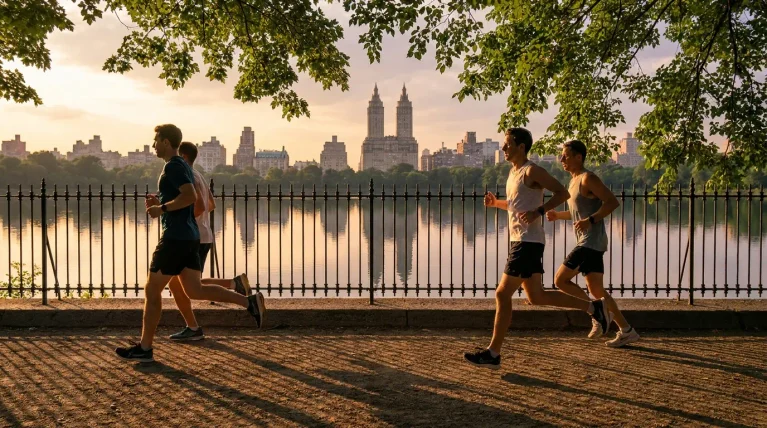
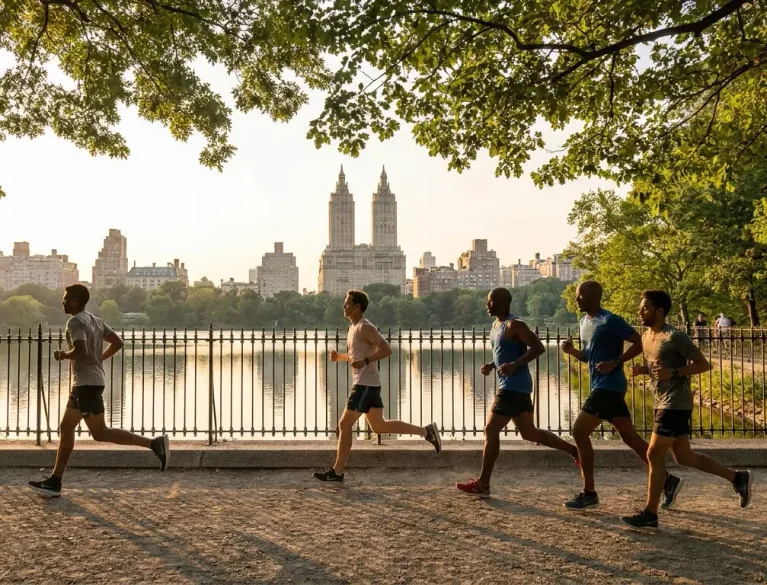
The Jacqueline Kennedy Onassis Reservoir Running Track is one of the most beloved short loops in all of New York City — and for good reason. At 1.58 miles around, this soft-surface crushed gravel path is completely car-free and bike-free, making it a peaceful refuge in the middle of one of the world’s busiest cities.

The track spans from 86th to 96th Street and stretches nearly the full width of the park. Every 100 yards is marked, making it easy to track your distance. The views are spectacular: open water on one side, the Manhattan skyline rising on the other.

Key rules for the Reservoir:

  • Run counterclockwise — this is strictly observed
  • No dogs, strollers, or bikes allowed on the track
  • The most direct access point is the Engineer’s Gate on East 90th Street

The Central Park Conservancy regularly maintains and upgrades the gravel surface, a testament to just how popular this loop is with daily runners.

Best for: Joint-conscious runners, beginners, anyone who wants skyline views with minimal traffic


4. The Bridle Path — 1.6 to 4.2 Miles: Running in Central Park Off the Beaten Track

central park running routes

Distance: 1.66 miles (short loop) or 4.2 miles (full loop) Surface: Dirt / soft soil Difficulty: Easy to Moderate

Once used for horseback riding (and still shared with occasional equestrians — horses have the right of way!), the Bridle Path is now a beloved dirt running trail that winds through the park. The softer surface makes it significantly easier on joints compared to the paved drives.

There are two options:

  • The shorter loop (1.66 miles) circles the Reservoir
  • The full Bridle Path (4.2 miles) extends north to the North Meadow fields, crossing the 102nd Street Transverse before reconnecting near West 93rd

The canopy of trees along the path makes it one of the coolest routes in summer, and the changing foliage makes it particularly beautiful in autumn. If you’re combining the Bridle Path with the main loop, you can build out a longer long-distance training run.

Best for: Injury-prone runners, trail running fans, summer heat escapes


  • Polyester Net + Nylon Elastic Fabric
  • Imported
  • Available In 3 Options: ① running vest only, ② hydration backpack with a 500ml soft flask, ③ Hydration vest with a 1.5L …

5. North Woods & Harlem Meadow — 3 to 5 Miles: The Hidden Gem of Central Park Running Routes

central park running routes

Distance: 3–5 km (customizable) Surface: Mixed trail and dirt Difficulty: Moderate

Head to the northern reaches of Central Park and you’ll find a completely different world. The North Woods is a secluded, forested area with winding paths that feel worlds away from the bustle of Midtown. Combined with the open expanse of Harlem Meadow, this section of the park offers a trail-running experience unlike anything else in Manhattan.

There are fewer tourists, more birdsong, and a sense of quiet that’s rare in New York. The terrain is varied — expect gentle hills, forested trails, and open meadows — and the seasonal changes here are especially dramatic, from spring wildflowers to brilliant autumn color to winter snow.

Best for: Solitude seekers, trail runners, anyone who wants to escape the crowds


Central Park Running Tips: What You Need to Know Before You Go

Direction & Etiquette

  • The recommended running direction on the main loop is counterclockwise
  • On the Reservoir, counterclockwise is mandatory
  • Stay in the designated running lane on paved roads; the innermost lane is for runners going counterclockwise
  • Watch for cyclists in the bike lane — always look both ways before crossing

Hydration

  • Water fountains are located throughout the park but are not operational in winter
  • In colder months, bring water or cash to buy from vendor carts
  • Summer runners should plan hydration carefully — heat can be intense on exposed sections

Safety

  • Morning runs are the most comfortable and crowded — great for energy and safety
  • Evening runs on the main loop are generally fine as it is well-lit
  • Avoid running alone in the interior trails at night
  • If you get lost, check lamppost numbers: the first two digits indicate the nearest cross street, and the last two digits tell you east (even) or west (odd)

Gear Storage

  • The NYRR RUNCENTER on 57th Street (between 8th and 9th Avenues) offers lockers for runners
  • New York Running Company at Columbus Circle also provides locker facilities

Seasonal Notes

  • Spring and fall are peak seasons — the park is at its most beautiful and the weather is ideal
  • Winter brings icy patches, especially on hills — use caution and consider trail shoes
  • Summer mornings are best; avoid midday heat on exposed paved routes

Best Starting Points for Central Park Running Routes

RouteSuggested Start
Full Loop59th St & 7th Ave (Columbus Circle)
Half Loop59th St & 5th Ave (SE entrance)
Reservoir LoopEngineer’s Gate, East 90th St
Bridle PathWest 90th St entrance or East 90th St
North Woods110th St entrances (north side)

Running in Central Park: The NYC Marathon Connection

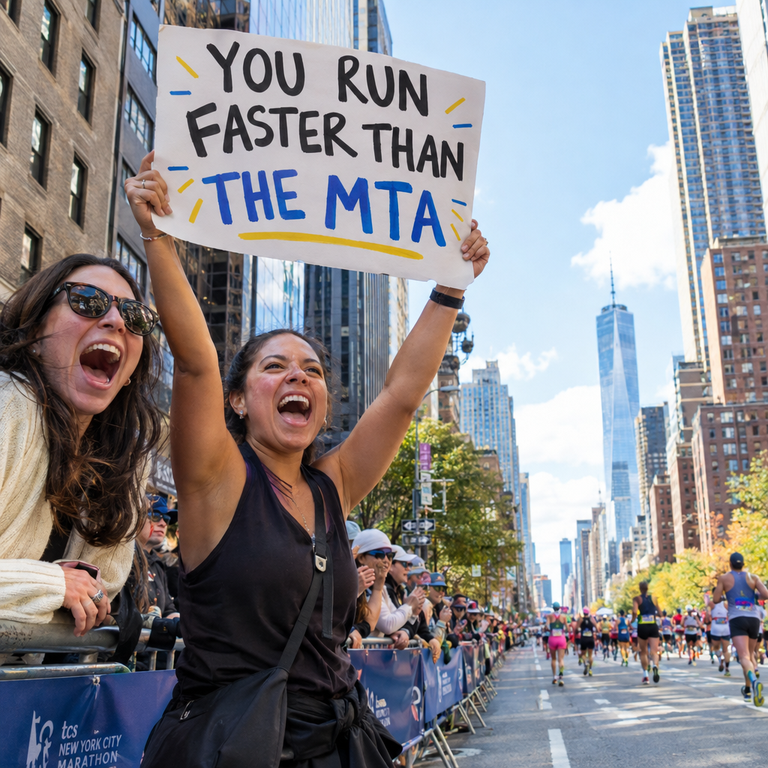
For runners with a competitive streak, Central Park holds deep significance in the world of road racing. The park is the finish line of the TCS New York City Marathon, one of the six World Marathon Majors, which draws roughly 50,000 runners every November. The final miles of the race wind through Central Park’s East Drive and onto the famous finish on West Drive near Tavern on the Green.

Training on the Full Loop is one of the best ways to prepare for the marathon’s final miles — and a statue of Fred Lebow, the late founder of the NYC Marathon, stands watch near the Reservoir entrance on East 90th Street as an enduring tribute to the race’s history.


Final Thoughts

Central Park’s running routes are more than a workout — they’re an experience of New York City at its most alive. Whether you’re chasing a personal best on the Full Loop, soaking in skyline views on the Reservoir track, or escaping into the quiet of the North Woods, every run here tells a different story.

Start with the route that matches your fitness level, mix and match loops as you build endurance, and don’t forget to look up from your watch once in a while. New York’s greatest park deserves your full attention.

Happy running — and welcome to the most famous stretch of pavement in the world.


Running Central Park for the first time? Save this guide and download the official Central Park running map from the Central Park Conservancy before you head out.

Related post you might enjoy:

New York Marathon 2026: The Ultimate Guide to Entry, Training & Race Day

Best Budget Upper West Side Hotels for the NYC Marathon: Walk to the Finish, One Subway to the Start

Noguchi’s New York: Inside the Noguchi Museum’s Most Ambitious Exhibition Yet, One of the Best Museums in New York

Running through September 13, 2026, the Noguchi Museum’s landmark exhibition explores Isamu Noguchi’s lifelong — and often turbulent — relationship with New York City through 50+ works, archival documents, and the radical public visions that never made it off the page.

The Noguchi Museum exhibition Noguchi’s New York is not a typical retrospective. Noguchi Museum is one of the best Museums in New York. When you walk into the galleries in Long Island City, Queens, you are not greeted by a triumphant chronology of an artist’s greatest hits. You are met, instead, by the sketches, blueprints, rejection letters, and unrealized visions of a man who spent sixty years trying — and often failing — to give a city a better version of itself.

best museums in new york
Noguchi Museum

Isamu Noguchi first arrived in New York in 1922, at seventeen years old. He would leave and return, leave and return, for the rest of his life. He died here in 1988. As he once put it: “I’m really a New Yorker. Not Japanese, not a citizen of the world, just a New Yorker who goes wandering around like many New Yorkers.” This exhibition, now on view through September 13, 2026, takes that self-definition seriously — and asks what it actually cost him.


What Is the Noguchi Museum Exhibition Noguchi’s New York?

Organized to mark the 40th anniversary of The Isamu Noguchi Foundation and Garden Museum, Noguchi’s New York brings together more than 50 works — sculptures, models, stage sets, archival photographs, and administrative documents — to examine one of the most complex artist-city relationships in 20th-century American art.

The exhibition examines Noguchi’s deep and dynamic relationship with New York City, exploring how its material, cultural, social, and political landscape indelibly transformed his artwork and thinking, and how he in turn transformed the city.

What makes this Noguchi Museum exhibition distinctive is precisely what it doesn’t leave out. Rather than presenting only completed masterworks, curators have foregrounded the projects that never happened: playground proposals that city officials dismissed without a second glance, public sculptures killed in committee, civic spaces imagined and buried in bureaucratic files. These failures, the show argues, are just as revealing as the successes.


Isamu Noguchi New York: A 60-Year Relationship Defined by Collision

An Artist Born on the Border

To understand Noguchi’s relationship with New York, you have to understand who he was before he got here. Born in Los Angeles in 1904 to Japanese poet Yone Noguchi and American writer Leonie Gilmore, Noguchi grew up between cultures — raised partly in Japan, educated in Indiana, and trained in New York. He was, from the beginning, a man without a fixed category.

In the 1920s, he traveled to Paris and worked as an assistant to Constantin Brâncuși, absorbing the fundamentals of modern sculpture. But he quickly broke from the model of the studio sculptor making objects for pedestals. For Noguchi, sculpture was inseparable from the body that moved through it, the ground it sat on, the light that fell across it. Furniture, gardens, stage sets, playgrounds, plazas — all of it was sculpture, if you understood sculpture broadly enough.

New York as Laboratory and Obstacle

Noguchi first arrived in New York in 1922 at just seventeen. Though his career unfolded across Paris, Tokyo, and Mexico City, the city remained his constant point of return. Noguchi’s New York examines this enduring relationship, revealing how New York’s political tensions, architectural density, and civic ambitions shaped his artistic vision.

In the 1920s and ’30s, the city was the ideal laboratory. Industrial materials — aluminum, steel, plate glass — were available on a scale impossible elsewhere. The avant-garde moved fast. He collaborated with Martha Graham, whose radical approach to dance gave Noguchi some of his most generative commissions; his stage sets for her productions remain landmarks of 20th-century design. He designed furniture for Herman Miller. He built a reputation as someone who refused to stay in one lane.

But New York also showed him its hardest face. As a mixed-race immigrant artist during the years of the Great Depression, World War II, and the Cold War, Noguchi was never simply an artist in New York — he was always also something else, someone who had to prove his right to belong.

Robert Moses and the Politics of Public Space

No figure haunts this exhibition more persistently than Robert Moses, the parks commissioner and master builder whose iron grip on New York’s public spaces extended from the 1930s through the 1960s. Moses shaped the physical city more than any elected official of the era — and he was the single greatest obstacle to Noguchi’s public ambitions.

In 1934, Noguchi submitted a proposal for Play Mountain — a pyramid-shaped earthwork designed for children to climb without equipment, a pure sculptural landscape for play. Moses rejected it. In subsequent years, Noguchi proposed playgrounds for Riverside Park and other public sites. Moses rejected those too. The exhibition highlights Noguchi’s unflagging attempts to give back by sculpting communal spaces for exploration and play — efforts often thwarted, most notably by the influential NYC Parks Commissioner Robert Moses.

The rejections were not simply aesthetic disagreements. They reflected a deeper incompatibility between Noguchi’s vision of art as participatory civic space and Moses’s preference for efficient, standardized, manageable infrastructure. Noguchi believed that the city’s children deserved something beautiful and strange to climb. Moses wanted swing sets and slides.


Key Works in the Isamu Noguchi New York Exhibition

Play Mountain (1933) and the Unrealized Playground Proposals

Source: Noguchi Museum

Central to the exhibition is Noguchi’s radical rethinking of public sculpture. A key section brings to life his unrealized playground and plaza proposals — projects that imagined art as a catalyst for communal play rather than passive monumentality. Models and blueprints for works such as Play Mountain (1933) and Contoured Playground (1941) are animated through newly commissioned short films, translating speculative designs into vivid, moving form.

These films are worth the visit alone. Seeing children move through the spaces that never existed is both a pleasure and a quiet indictment.

News (Associated Press Building Plaque, 1938–40)

One realized commission on view at the exhibition may be familiar to New Yorkers: News (Associated Press Building Plaque) (1938–40), Noguchi’s first public work in the United States — a large-scale stainless steel relief installed at Rockefeller Center. Archival photographs and drawings trace the making of this piece, which renders a group of newspaper men as a celebration of the city’s heroic working class. It is one of the few places in the exhibition where the city and the artist arrived at something together.

Red Cube (1968) and Sunken Garden (1961–64)

Source: Noguchi Museum

Two public art displays are just a block away from each other in Lower Manhattan — both the work of Noguchi. They are the Red Cube at 140 Broadway and the Sunken Garden at Chase Manhattan Bank Plaza. Both are on view as part of the exhibition context, and both remain among the most quietly radical pieces of public sculpture in the city.

Unidentified Object (1979)

Perhaps no work better captures Noguchi’s position in New York than Unidentified Object, the 11-foot basalt sculpture that stood at Doris C. Freedman Plaza in Central Park — his first public sculpture on city land, unveiled when he was 74 years old. The photograph of Noguchi at its debut, standing in front of the Plaza Hotel in a rumpled suit, is one of the most moving images in the show. It took him most of a lifetime to get a piece of stone into Central Park.


The Noguchi Museum Itself as Exhibition: A 40th Anniversary Reflection

One of the most original arguments this Noguchi Museum exhibition makes is about the museum itself. After decades of watching his public proposals rejected, Noguchi built his own public space. In 1985, he opened The Isamu Noguchi Foundation and Garden Museum in a converted 1920s factory in Long Island City — at the time, the first museum in the United States established by a living artist.

The space is extraordinary. Two gallery floors and an outdoor sculpture garden, where granite, basalt, and marble works sit under open sky and change with the light and the seasons. It is everything his rejected playgrounds were supposed to be: a place where people walk among art, sit with it, think inside it.

Noguchi called it a gift to the city. As Amy Hau, director of the Noguchi Museum, noted: “We are just so proud here in Queens that he not only established the beginnings of a very wonderful collection, but giving it to the city in this way as a museum for all of us to enjoy.”

The 40th anniversary framing makes this point without sentimentality: the museum is not a consolation prize. It is the most complete realization of everything Noguchi believed about art and public life.


Visitor Guide: Everything You Need to Know Before You Go

Exhibition Details

DetailInfo
ExhibitionNoguchi’s New York
DatesFebruary 4 – September 13, 2026
HoursWednesday–Sunday, 11am–6pm (closed Mon & Tue)
Address9-01 33rd Rd at Vernon Blvd, Long Island City, Queens, NY
AdmissionAdults $20 / Students & Seniors $15
ReservationsAdvance booking recommended via the museum website

Getting There

Take the 7 train from Midtown Manhattan to the Vernon Blvd–Jackson Ave stop in Queens. The museum is about a 10-minute walk from the station through the industrial waterfront neighborhood of Long Island City — an area worth exploring before or after your visit for its concentration of galleries and waterfront parks.

What to Expect Inside

The museum occupies a converted factory building. The ground floor galleries hold the historical arc of the exhibition — early portrait busts, archival documents, the rejected playground proposals, and models for unrealized public works. The upper floor carries his applied works: stage designs, Akari light sculptures (his iconic paper lanterns), furniture.

The outdoor sculpture garden is the emotional heart of the space. Large stone works in granite, basalt, and marble are arranged across a gravel courtyard, shifting with the light. Visitors can sit on benches, listen, and look — the garden does a remarkable job of muting the surrounding city noise. Come on a clear day if you can.

Tips for Getting the Most Out of the Noguchi Museum Exhibition

Read the rejection letters. The administrative documents — particularly Moses’s terse dismissals of Noguchi’s playground proposals — are among the most affecting objects in the show. They make the sculptures feel urgent in a way that art history rarely does.

Watch the animated films. The newly commissioned short films showing how children might have moved through Play Mountain and Contoured Playground are a genuine innovation in exhibition design. Give them time.

Stay in the garden. Most visitors spend 20 minutes in the outdoor space when they should spend an hour. Sit down. Let the stone and the light do their work.

Connect the indoor and outdoor. The exhibition makes most sense if you carry what you’ve seen in the galleries into the garden. The garden is the argument. It’s what Noguchi built when the city said no.


Why This Exhibition Matters Right Now

The questions Noguchi asked about New York — about who public space is for, who gets to shape it, what art can do in a city — have not been answered. The exhibition positions Noguchi not only as a sculptor of objects, but as a visionary thinker who treated New York itself as a material — shaping, challenging, and reimagining the city through art.

That vision runs directly into questions cities are still failing to answer: How do public spaces get designed, and for whom? Who decides what belongs in the park? What does it cost an artist — particularly an immigrant artist navigating race, nationality, and institutional gatekeeping — to imagine a better city?

Noguchi spent sixty years asking those questions in New York. This exhibition asks them again.


Plan Your Visit

Noguchi’s New York is on view through September 13, 2026, at The Noguchi Museum, 9-01 33rd Rd at Vernon Blvd, Long Island City, Queens. Admission is $20 for adults, $15 for students and seniors. Advance reservations are recommended and can be made at noguchi.org.

The museum is open Wednesday through Sunday, 11am to 6pm.

While in the neighborhood, consider pairing your visit with the nearby MoMA PS1 (a 10-minute walk) or a stop along the Long Island City waterfront for views of the Manhattan skyline — views Noguchi himself would have known from his studio.


Last updated: February 2026

NYC’s Best Street Food: Hidden Gems and Award-Winning Carts Locals Actually Eat At

Best Noise Cancelling Earbuds for Running in 2026: Top 5 That Actually Stay In Your Ears

Tired of stopping mid-run to shove your earbuds back in? We ranked the 5 best noise cancelling earbuds for running in 2026 — focusing on secure fit, sweat resistance, and ANC performance so you can focus on your pace, not your gear.

There’s nothing more frustrating than a pair of earbuds falling out at mile 4. You’re locked into your pace, the playlist is hitting — and then one bud drops, bounces off the pavement, and the moment is gone.

If you’ve been searching for the best noise cancelling earbuds for running, you already know the problem: most ANC earbuds are built for commuters and office workers, not runners. They’re too bulky, the fit isn’t secure, or the noise cancellation works against you outdoors by blocking out traffic you need to hear.

This guide cuts through the noise (literally). We tested and ranked the top 5 running earbuds that stay in for 2026, weighing each pair on fit stability, ANC performance, water resistance, battery life, and running-specific features like transparency mode and call quality. Whether you’re a daily 5K runner or training for your first marathon, there’s a pair on this list for you.


What to Look for in Running Earbuds with ANC

Before the rankings, here’s what separates a great running earbud from a great everyday earbud:

Fit & Stability — The most important factor. Look for ear tips with silicone wings, over-ear hooks, or a design shaped specifically for active movement. An earbud that sounds incredible but falls out every mile is useless on a run.

Water & Sweat Resistance — At minimum, you want IPX4 (splash-proof). For serious outdoor runners or those training in rain, look for IP55 or higher. IP68 means the earbud can be fully submerged.

Transparency Mode — This is critical for outdoor running safety. A good transparency mode lets ambient sound in naturally — traffic, other runners, cyclists — without making it sound tinny or distorted. Pure ANC while running outdoors is a safety risk.

ANC Performance — Great for treadmill runs, gym sessions, or drowning out wind noise. You want the ability to toggle between ANC and transparency easily, ideally mid-run with one tap.

Battery Life — Aim for at least 7–8 hours of ANC playback. Shorter runs are fine with less, but long training runs and races demand staying power.

Call Quality — For runners who take calls or use voice assistants during workouts, clear microphone pickup with wind noise reduction matters.


The 5 Best Noise Cancelling Earbuds for Running in 2026

🥇 1. Apple AirPods Pro 3 — Best Overall Running Earbuds That Stay In

best noise cancelling earbuds for running
source: apple.com

Price: $249 | Water Resistance: IPX4 | Battery Life: 8 hrs (ANC) / 30 hrs with case | Website: apple.com


  • WORLD’S BEST IN-EAR ACTIVE NOISE CANCELLATION — Removes up to 2x more unwanted noise than AirPods Pro 2* so you can stay…
  • BREAKTHROUGH AUDIO PERFORMANCE — Experience breathtaking, three-dimensional audio with AirPods Pro 3. A new acoustic arc…
  • HEART RATE SENSING — Built-in heart rate sensing lets you track your heart rate and calories burned for up to 50 differe…

The AirPods Pro 3 have earned their reputation as the best all-around running earbuds — and the 2026 edition cements it. Apple redesigned the ear tips with a foam-infused silicone construction and added an XXS size option, bringing the total to five sizes (XXS, XS, S, M, L). In testing across multiple reviewers and real-world runs, the Pro 3s stay firmly in place even during tempo intervals and trail runs.

The ANC is among the strongest available — reducing ambient noise by up to 90% in lab tests — but the real star for runners is the Transparency Mode, which Apple has tuned to be one of the most natural-sounding on the market. You hear traffic, other runners, and voices without the hollow, digitized quality that plagues competitors.

New for 2026: built-in heart rate monitoring lets you track your heart rate and calories without a smartwatch — a genuine game-changer for Apple Watch-free runners. Real-time workout data streams directly through the buds.

Pros:

  • Exceptional fit across ear sizes, one of the most secure in-ear designs tested
  • Best-in-class transparency mode for safe outdoor running
  • Heart rate monitoring eliminates need for a fitness tracker
  • 8 hours ANC battery — up from 6 hours on the Pro 2
  • Seamless Apple ecosystem integration

Cons:

  • Best experience limited to iPhone / Apple devices
  • No ear hook — relies entirely on tip seal and fit
  • Premium price

Best for: iPhone users who want one pair of earbuds that handles running, commuting, travel, and the gym equally well.


🥈 2. Beats Fit Pro (2nd Gen) — Best Running Earbuds That Stay In for Android & iPhone Users

Price: $179 | Water Resistance: IPX4 | Battery Life: 9 hrs / 36 hrs with case
|Website: beatsbydre.com


  • BUILT FOR ATHLETES WHO DON’T STOP: After 1,500 hours of testing across athletes of every ear shape and intensity level, …
  • TUNE OUT THE GYM. TUNE INTO YOUR WORKOUT: Active Noise Cancelling (ANC) designed specifically for training environments …
  • YOUR HEART RATE, RIGHT FROM YOUR EARS: Built-in sensors pulse 100+ times per second for real-time heart rate tracking wi…

The Beats Fit Pro 2 remain the gold standard for running earbuds that stay in regardless of your ear shape or size. The key is the flexible silicone wingtip that anchors into the concha (the bowl of your outer ear), locking the bud in place even during high-intensity sprints, stair climbs, and trail running.

Unlike most ANC earbuds that rely solely on tip seal, the Fit Pro 2’s wingtip system creates two points of contact per ear — a design that’s simply more stable than anything without an over-ear hook. Multiple reviewers and consumer lab tests confirm the fit holds firm for almost all ear shapes. Those with very small ears may want to size down their wingtips carefully before their first run.

ANC performance is strong — roughly on par with the AirPods Pro 2 — and the earbuds include actual physical buttons rather than touch panels, which runners will appreciate (no accidental pauses from sweat or brush contact). Battery life at 9 hours edges out the AirPods Pro 3.

Pros:

  • Dual-contact wingtip system = most secure in-ear fit tested
  • Physical buttons — no accidental touch triggers mid-run
  • Works well across both iOS and Android
  • Strong ANC and good transparency mode
  • 9 hours battery in ANC mode

Cons:

  • Bulkier design than stem-style earbuds
  • No heart rate monitoring
  • Wingtips may not suit very small ears

Best for: Runners who have struggled with earbuds falling out and want the most reliable fit, regardless of device.


🥉 3. Bose QuietComfort Earbuds (Standard) — Best ANC Performance for Treadmill & Gym Runners

Price: $179 | Water Resistance: IPX4 | Battery Life: 8.5 hrs / 36 hrs with case
|Website: Bose.com

  • A COOL NEW HUE:  Listening feels anything but fleeting when you tune in with QuietComfort Earbuds in Twilight Blue
  • SOUND WITHOUT COMPROMISE: Seize the day your way and defy distractions using these wireless earbuds with world-renowned …
  • POWERFUL, PROVEN AUDIO: Get into it while you get after it, these IPX4-rated wireless earphones feature remarkable sound…

Bose is synonymous with noise cancellation — and the standard QuietComfort Earbuds deliver that legendary performance at a more accessible price than the Ultra flagship. For gym runners and treadmill warriors, the ANC here is some of the best you’ll find in this price range, effectively erasing the mechanical drone of treadmill belts and HVAC systems.

What surprised testers most was the fit. The QC Earbuds come with three sizes of ear wings, and with the right wing size, they held position reliably through runs of 20+ miles according to long-distance testers. They’re among the most comfortable winged earbuds tested — wearers reported zero ear fatigue even after hours of use before and after runs.

The awareness mode (transparency) is functional, though introduces a slight amount of wind noise at higher running speeds outdoors — something to be mindful of on breezy days. Still, for anyone who does the bulk of their training indoors, these deliver Bose’s world-class ANC at a competitive price.

Pros:

  • Top-tier ANC that rivals much more expensive options
  • Comfortable, secure winged fit
  • Excellent sound quality for a workout earbud
  • Strong value compared to Bose’s Ultra lineup

Cons:

  • Transparency mode introduces slight wind noise outdoors
  • Larger charging case than competitors
  • No ear hook design

Best for: Treadmill runners, gym regulars, and anyone who wants best-in-class ANC without paying flagship prices.


4. Sennheiser MOMENTUM True Wireless 4 — Best Sound Quality + Secure Fit Combo

Price: $299 | Water Resistance: IP54 | Battery Life: 7.5 hrs / 30 hrs with case

  • Seamless Connectivity & Smart Features: Sennheiser MOMENTUM 4 earbuds wireless Bluetooth 5.4 with multipoint connectivit…
  • Adaptive Noise Cancellation & Transparency Mode: The wireless Bluetooth earbuds block distractions with optimized ANC an…
  • All-Day Comfort & Secure Fit: The true wireless earbuds have an ergonomic design with extra soft silicone ear tips for l…

For runners who refuse to compromise on audio quality, the Sennheiser MOMENTUM True Wireless 4 is the pick. Lab tests show 83% average noise attenuation — among the highest of any earbud tested — combined with sound quality that audiophiles will genuinely appreciate. The MOMENTUM 4 supports aptX Lossless and Auracast, delivering a level of audio fidelity unusual in a sport context.

The fit system includes both ear tips and concha fins (small, flexible rubber anchors that sit in the outer ear’s ridge), giving a secure hold without the bulkier profile of some wingtip designs. The Sennheiser Smart Control app adds a fit test tool that helps you optimize ANC effectiveness for your specific ear shape — a thoughtful feature that helps dial in noise isolation before you head out.

IP54 water resistance is solid — better than IPX4 — meaning the MOMENTUM 4 handles rain and heavy sweat without concern. Phone call quality is also notably good, with effective wind noise suppression in the microphone array.

Pros:

  • Exceptional sound quality — best in this roundup
  • 83% ANC effectiveness with fit-test tool in app
  • IP54 water resistance — rain-ready
  • Concha fin + tip system for stable fit
  • Strong call quality with wind noise suppression

Cons:

  • Premium price
  • 7.5 hours battery is slightly shorter than competitors
  • Larger design may not suit small ears

Best for: Audiophile runners who train in varied weather and want premium sound, strong ANC, and a secure fit — and don’t mind paying for it.


5. JBL Endurance Race 2 — Best Budget Running Earbuds That Stay In

Price: ~$59–$79 | Water Resistance: IPX7 | Battery Life: 10 hrs (ANC) / 12 hrs without

If you want running earbuds that stay in without spending $200+, the JBL Endurance Race 2 is the pick. JBL’s soft silicone wing design has been refined over multiple generations and holds up remarkably well during runs — comfortable for hours and secure enough that most runners won’t feel the need to adjust them.

At 10 hours of ANC battery life, the Endurance Race 2 outlasts nearly everything on this list. IPX7 water resistance means these can handle a full downpour and won’t be harmed by sweat-drenched sessions. At under $80 (and frequently found on sale for less), the value-to-performance ratio is hard to beat.

The ANC doesn’t match the intensity of Bose or Apple’s flagships, and the ambient aware mode can let in wind noise — but for a budget-focused runner who primarily wants a secure fit, good battery, and rain-proof build, the Endurance Race 2 delivers everything that matters.

Pros:

  • Outstanding value — best budget pick tested
  • Secure silicone wing for reliable fit
  • IPX7 — can handle heavy rain and submersion
  • 10 hours ANC battery life
  • Frequently discounted further below MSRP

Cons:

  • ANC effectiveness lower than premium picks
  • Ambient aware mode less natural-sounding outdoors
  • Sound quality is good but not audiophile-grade

Best for: Budget-conscious runners who prioritize fit security, battery life, and weather resistance over premium ANC and sound quality.


Head-to-Head Comparison Table

EarbudPriceFit TypeWater ResistanceANCBattery (ANC)Best For
Apple AirPods Pro 3$249Foam-silicone tipIPX4⭐⭐⭐⭐⭐8 hrsiPhone users, all-around
Beats Fit Pro 2$179Wingtip (dual-contact)IPX4⭐⭐⭐⭐9 hrsSecure fit priority
Bose QC Earbuds$179WingIPX4⭐⭐⭐⭐⭐8.5 hrsGym / treadmill
Sennheiser MTW 4$299Concha fin + tipIP54⭐⭐⭐⭐7.5 hrsSound quality + rain
JBL Endurance Race 2~$69Silicone wingIPX7⭐⭐⭐10 hrsBudget, weather-proof

Tips for Getting the Best Fit From Your Running Earbuds

Even the best earbuds on this list can fall out if not worn correctly. Here’s how to maximize fit stability:

Try every ear tip size. Most runners grab the medium tip and call it done. Don’t. The correct tip creates a firm seal that holds the bud in place and improves ANC effectiveness. If you feel the bud shifting, size up or down.

Insert at an angle. Most in-ear buds sit best when inserted with a slight forward-and-downward twist, following the natural canal angle. Straight-in insertion is one of the most common causes of poor fit.

Test at home before race day. Run up and down stairs, do jumping jacks, shake your head. If the bud shifts during this, it will fall out on a long run.

Use ear tip alternatives. Memory foam tips (available for most earbuds as aftermarket accessories) mold to your canal and often provide a more secure seal than silicone for runners with unusual ear shapes.

Use only one bud on busy roads. No matter how good the transparency mode, keeping one ear free when running in traffic is the safest approach.


Should You Use ANC Mode While Running Outdoors?

This is one of the most common questions — and the answer is: use it situationally.

For trail runs, track workouts, or treadmill sessions, full ANC is completely fine and helps you lock into your zone without distraction. For road runs in urban environments with traffic, bikes, and pedestrians, always switch to transparency mode. The best earbuds on this list — particularly the AirPods Pro 3 — have transparency modes tuned well enough that you’ll barely notice the difference in music quality while staying fully aware of your surroundings.

The general rule: ANC for controlled environments, transparency for open roads.


Final Verdict

The best noise cancelling earbuds for running in 2026 don’t force you to choose between sound quality, ANC, and a fit that actually holds. The technology has matured enough that all five picks on this list stay securely in place through real training — no mid-run fumbling required.

  • Best overall: Apple AirPods Pro 3 — unmatched transparency mode, heart rate tracking, and a fit that holds across ear sizes
  • Most secure fit: Beats Fit Pro 2 — the wingtip system is the most reliable for runners who’ve struggled with every other design
  • Best ANC for indoor training: Bose QuietComfort Earbuds — Bose’s noise-cancellation legacy, at a fair price
  • Best sound quality: Sennheiser MOMENTUM True Wireless 4 — audiophile performance that happens to be rain-proof
  • Best budget pick: JBL Endurance Race 2 — the most value per dollar, with IPX7 and 10-hour ANC battery

Whatever your budget or your ear shape, there’s no reason to run another mile chasing a falling earbud. Upgrade your kit — and your training — in 2026.


Last updated: February 2026. Prices and product availability subject to change. Always check the manufacturer’s website for the most current specs and pricing.

New York Marathon 2026: The Ultimate Guide to Entry, Training & Race Day

New York Marathon 2026: The Ultimate Guide to Entry, Training & Race Day

The 2026 TCS New York City Marathon takes place on November 1, 2026 — and it’s a milestone 50th edition through the five boroughs. Whether you’re chasing a guaranteed bib or hoping to beat the lottery odds, this complete guide breaks down every NYC Marathon entry method, time qualifier standard, training strategy, and race-day tip you need.

Why the 2026 NYC Marathon Is One for the Books

The New York Marathon 2026 is not just another race on the calendar. Taking place on Sunday, November 1, 2026, this year marks the 50th running of the course through New York City’s five boroughs — a milestone that promises a celebration unlike any previous edition.

Officially known as the TCS New York City Marathon and organized by New York Road Runners (NYRR), this World Marathon Major draws over 55,000 finishers annually, making it the largest marathon in the world. From the Verrazzano-Narrows Bridge start in Staten Island to the iconic finish line in Central Park, it’s 26.2 miles of pure New York energy — and one of the most coveted racing experiences on the planet.

new york marathon 2026
source: new york road runners

Whether you’re a first-timer dreaming of your first major, or a seasoned runner chasing a PR on the streets of Brooklyn and Manhattan, this guide covers everything you need to know about the 2026 NYC Marathon — from how to get in, to how to train, to how to cross that finish line feeling strong.


The Ultimate Guide to Central Park Running Routes: Best Loops for Every Level

2026 NYC Marathon at a Glance

DetailInfo
Official NameTCS New York City Marathon
OrganizerNew York Road Runners (NYRR)
Race DateSunday, November 1, 2026
Distance42.195 km / 26.2 miles
CourseStaten Island → Brooklyn → Queens → Bronx → Manhattan → Central Park
Field Size~55,000+ finishers
Entry Fee$269.66 (NYRR members) / $333.11 (non-members)
Milestone50th running through the five boroughs

new york marathon 2026

NYC Marathon Entry Methods: How to Get a Bib in 2026

Getting into the NYC Marathon is often harder than training for it. With millions of runners worldwide wanting in, NYC Marathon entry methods are competitive, varied, and highly time-sensitive. Here’s a full breakdown of every official route to a 2026 bib.

1. General Entry Drawing (Lottery)

The lottery is the most well-known — and most unpredictable — way in. Applications were open February 4–25, 2026, and the drawing took place on March 4, 2026. Runners are grouped into three categories: local (within ~60 miles of NYC), U.S. non-local, and international.

Be aware: acceptance rates are extremely low. In recent years, only about 2–3% of non-guaranteed lottery applicants received a bib. If you’re selected, your card is charged automatically — there’s no confirmation step.

NYRR members who aren’t selected in the main drawing are automatically entered into a Member-Only Second-Chance Drawing on March 4, giving members a notable edge.

2. 9+1 Program — Best Option for NYC-Based Runners

One of the most reliable NYC Marathon entry methods for local runners, the 9+1 Program guarantees your bib if you:

  • Complete 9 qualifying NYRR races in 2025
  • Volunteer at 1 NYRR event in 2025
  • Hold an active NYRR membership by December 31, 2025

Guaranteed entry must be claimed between February 4–25, 2026. You still pay the standard entry fee, but your spot is locked — no lottery nerves required.


UPDATE: Major Changes Coming to the 9+1 Program for 2027

Starting with the 2027 program (for guaranteed entry into the 2028 TCS New York City Marathon), NYRR is introducing significant updates to address high demand:

  • Eligibility Drawing Introduced: You must enter and win a free lottery between September 17–29, 2026 (NYRR membership required by Sept 16) to earn a 9+1 Pass. Passes are capped at ~15,000 runners.
  • $99 Pass Fee: If selected in the drawing, a $99 fee is automatically charged for your 9+1 Pass.
  • Priority Race Registration: Passholders receive a dedicated, early-access window to register for qualifying races and volunteer spots throughout 2027.
  • Member Plus Tier Discontinued: Member Plus and Family Plus tiers are eliminated, giving all general NYRR members equal 2-day early access to race registrations.

(Note: The 2026 9+1 Program for the 2027 NYC Marathon remains unchanged under the traditional format.)


3. Time Qualifier — For Competitive Runners

The time qualifier path is respected, demanding, and one of the most satisfying ways to earn your bib. To qualify for the 2026 NYC Marathon, runners must have achieved NYRR’s published time standards at a certified race during the qualifying window: January 1 – December 31, 2025.

2026 Time Qualifier Standards (Men’s Marathon / NYRR Half-Marathon)

Age GroupFull MarathonNYRR Half-Marathon
18–342:53:001:21:00
35–392:55:001:23:00
40–442:58:001:25:00
45–493:05:001:28:00
50–543:14:001:32:00
55–593:23:001:36:00
60–643:34:001:41:00
65–693:45:001:46:00
70–744:10:001:57:00
75–794:30:002:07:00
80+4:55:002:15:00

(Women’s and Nonbinary standards differ — check the official NYRR page for your full category.)

Important distinctions between NYRR and Non-NYRR qualifiers:

  • NYRR race qualifier: Times are automatically logged to your dashboard. Guaranteed entry — claim it February 4–25, 2026.
  • Non-NYRR race qualifier: Limited spots available. Application window was February 4–11, 2026 (earlier deadline). Entry is NOT guaranteed — if demand exceeds supply, NYRR accepts the fastest runners per age and gender category. Half-marathon times are not accepted for non-NYRR applications.

Strategy tip: If you’re targeting a non-NYRR qualifying race (Chicago, Berlin, CIM, etc.), aim to run significantly faster than the standard. Meeting the minimum time alone may not be enough for acceptance.

4. Charity Entry

Running for a cause is one of the most accessible NYC Marathon entry methods, especially after the lottery results come out. NYRR’s flagship charity program, Team for Kids (TFK), opened registration in October 2025 with a fundraising minimum of $3,000 USD plus the standard entry fee.

In return, charity runners receive:

  • Guaranteed entry
  • Personalized coaching and training platform
  • TFK singlet
  • VIP race-day perks

NYRR’s full list of official charity partners for 2026 will be announced in spring 2026. Most partner charities require fundraising commitments of $2,500–$4,000 USD.

5. Legacy / Streaker Entry

Completed 15+ NYC Marathons? You’ve earned it. Runners with 15 or more official NYC Marathon finishes are eligible for guaranteed entry as a recognition of their lifelong commitment. Claim your entry during the February 4–25, 2026 window.

6. Philanthropic Membership

NYRR’s 5K and 10K Philanthropic Memberships include guaranteed marathon entry plus VIP hospitality and access to additional NYRR marquee races. This is a premium option for those who want guaranteed access while supporting NYRR’s community mission.

7. International Tour Packages

International runners have a streamlined option: book through an NYRR-approved Official International Tour Operator. These packages bundle your race bib with hotel accommodations and race-week logistics, making it the most stress-free path for athletes flying in from overseas. Packages vary by country — check the NYRR website for approved operators in your region.

8. Virtual Marathon Guaranteed Entry

Runners who registered for and completed the 2025 Virtual TCS NYC Marathon (Guaranteed Entry tier) earned non-complimentary guaranteed entry to the 2026 in-person race.


Key 2026 NYC Marathon Dates

DateEvent
February 4, 2026Lottery & guaranteed entry applications open
February 11, 2026Non-NYRR Time Qualifier application closes
February 25, 2026All applications and guaranteed entry claims close
March 4, 2026Drawing day + charity partner announcements
Spring 2026Charity partner list published
November 1, 2026Race day 🎉

Training for the 2026 NYC Marathon: A Strategic Approach

Earning a bib is step one. Running 26.2 miles through five New York City boroughs — with bridges, hills, and 2 million cheering spectators — is a challenge that demands smart, structured preparation.

Phase 1: Base Building (20+ Weeks Out)

Start by gradually increasing your weekly mileage across 4–5 runs per week. Keep most of these runs at an easy, conversational pace. The goal is to build aerobic capacity without accumulating injury risk.

Phase 2: Speed and Hill Work

New York’s course features several demanding elevation changes — most notably the Verrazzano-Narrows Bridge at the start and the rolling hills of Central Park in the final miles. Incorporate:

  • Interval training to sharpen leg turnover
  • Tempo runs to build lactate threshold
  • Uphill repeats to strengthen quads and glutes for the bridges and park climbs

Phase 3: Long Runs

Weekend long runs are the cornerstone of marathon training. Build up to runs of 25–35 km, practicing your goal pace and nutrition strategy. Use these runs to dial in your fueling routine — what works at mile 18 matters far more than what you eat at mile 3.

Phase 4: Taper and Recovery

In the final 2–3 weeks, reduce mileage while maintaining intensity. Trust the process — your body is absorbing all the hard work. Prioritize sleep, nutrition, and mobility work.

Phase 5: Mental Training

NYC is a sensory overload — in the best possible way. Plan your mental strategy for the quiet stretches (Queensboro Bridge, we’re looking at you) and the explosive crowd energy in Brooklyn and on First Avenue. Develop segment-by-segment mantras and pacing targets so you stay composed no matter what the course throws at you.


NYC Marathon Course Strategy: Borough by Borough

Staten Island — Verrazzano-Narrows Bridge (Miles 0–2)

The race starts on the lower deck of the Verrazzano Bridge — one of the steepest climbs of the entire course. With race-day adrenaline surging, most runners go out too fast here. Resist the urge. Run conservatively; the miles to come will reward the patient runner.

Brooklyn (Miles 2–13)

Brooklyn is the heart and soul of the NYC Marathon. The crowd energy is electric, the neighborhoods are vibrant, and the course is relatively flat. This is your opportunity to settle into your goal pace. Don’t let the atmosphere push you faster than your race plan allows.

Queens (Miles 13–16)

A quieter stretch after the Brooklyn buzz. Stay focused and maintain your rhythm. The transition to the Queensboro Bridge is approaching.

Queensboro Bridge (Around Mile 15–16)

This silent, spectator-free climb is where many races unravel. There are no crowds here — just you, the bridge, and your legs. Keep your form, shorten your stride on the incline, and stay mentally strong. The reward is just ahead.

The Bronx (Miles 20–21)

A brief but crucial stop. By now you’re deep into the race, and the Bronx marks the final turning point. This is where mental fortitude separates finishers from faders. Keep your cadence up.

Manhattan and Central Park (Miles 22–26.2)

First Avenue’s roar is one of running’s great experiences — soak it up, but don’t blow up your pace. As you enter Central Park, the rollers begin. Short, punchy hills at miles 23–25 are brutal on tired legs. Break the final miles into smaller goals: get to the next lamppost, the next water station, the next turn. The finish line on Central Park South is worth every step.

Pacing Strategy

Start 5–10 seconds per mile slower than your goal pace for the first 10K. Negative splitting — or at minimum even-splitting — the NYC Marathon course is the most reliable path to a strong finish. The course saves its hardest test for last, so conserve early.


Race Day Essentials: What You Need to Know

Before the start: Expect a long wait at the start village on Staten Island — sometimes 2–3 hours. Bring throwaway warm layers (the start area collects donated clothing for charity). Pack snacks and stay off your feet as much as possible.

During the race: Aid stations appear roughly every mile. Utilize water and sports drink, and take your energy gels on schedule — don’t wait until you feel you need them.

Post-finish recovery: Within 30 minutes of crossing the finish line, consume a combination of protein and carbohydrates to kickstart muscle repair. Use a foam roller that evening and the next morning. Plan for 3 full days of rest before any light movement, and hold off on running for at least a week.


Frequently Asked Questions

How much does the 2026 NYC Marathon cost? Entry fees are $269.66 for NYRR members and $333.11 for non-members. Charity entries require the standard fee plus a fundraising minimum, typically $2,500–$4,000.

When does the NYC Marathon start? Professional women begin at 8:35 AM ET, professional men at 9:05 AM ET, and wave starts for the general field follow through the mid-morning.

Can I defer or transfer my entry? Entries are non-refundable and non-transferable. Deferral may be available in certain circumstances (such as injury), but you would likely need to pay the entry fee again for the following year.

What is the acceptance rate for the NYC Marathon lottery? Historically, only 2–3% of non-guaranteed lottery applicants are accepted. NYRR members have a slight advantage through the second-chance drawing, but the odds remain long regardless.

Is it worth running the NYC Marathon for charity? Absolutely — if you’re committed to the fundraising requirement. Charity runners receive guaranteed entry, coaching support, and a premium race experience. It’s one of the most reliable paths to the start line if the lottery doesn’t work out.


Final Thoughts: Running New York Is Running History

The 2026 TCS New York City Marathon is more than a race. On its 50th anniversary through the five boroughs, it’s a living piece of running history — 26.2 miles of Brooklyn murals, Queensboro Bridge silence, First Avenue thunder, and Central Park finish-line glory.

Whether you qualified by time, won the lottery, fundraised your way in, or completed the 9+1 program, every runner on that start line has earned their place.

Start spreading the news — you’re running New York. 🗽


Official Resources:

Additional Readings:

The Ultimate Classic Diners Guide: 8 Must-Visit Spots in New York and New Jersey

The Ultimate NYC Bakery Pilgrimage: 8 Viral Bakeries You Must Visit

Best Budget Upper West Side Hotels for the NYC Marathon: Walk to the Finish, One Subway to the Start

Dog Friendly Travel Guide: New York & New Jersey Hotspots 2026

Planning a trip with your furry companion? Explore New York and New Jersey’s top dog-friendly destinations, from Central Park’s scenic trails to Asbury Park’s pet-welcoming beaches. This comprehensive guide includes everything you need for a pawfect getaway.

Dog Friendly Travel Guide: New York & New Jersey Hotspots 2026

Traveling with dogs in the United States has evolved beyond simple accommodation—it’s now about creating memorable experiences. New York and New Jersey stand out as premier destinations where urban infrastructure, natural beauty, and dog-friendly culture converge seamlessly. This guide covers the top dog-friendly hotspots you can visit and book as of January 2026, complete with addresses, hours, fees, and official websites.

New York City Dog Parks and Urban Spaces

Central Park

Located in Manhattan’s heart, Central Park remains the most reliable space for dog walking in the city. With designated dog runs and expansive pathways, your pup gets plenty of exercise while you enjoy iconic city views.

Details:

  • Leash required (6 feet or less, except in designated dog runs)
  • Off-leash hours available during specific times
  • Address: 110 W 59th St, New York, NY 10019
  • Website: centralparknyc.org
  • Admission: Free

Hudson River Park

This waterfront park stretches along the Hudson River, offering long walking routes perfect for dogs and their owners who want to experience Manhattan’s riverside scenery.

Details:

  • Leash required (except in designated areas)
  • Stay off grass areas
  • Location: West Side of Manhattan, NY
  • Website: hudsonriverpark.org
  • Admission: Free

Carl Schurz Park

A quieter alternative favored by owners of medium to large breeds, this Upper East Side park provides a peaceful retreat from the city bustle.

Details:

New Jersey Beaches and Nature Trails

Asbury Park Beach

This popular beach destination allows dogs during specific seasons and times, making it ideal for off-season travel with your four-legged friend.

Details:

  • License and supervision required
  • Off-leash permitted in designated areas
  • Hours vary by beach section and season
  • Location: Asbury Park, NJ 07712
  • Website: cityofasburypark.com
  • Admission: Free (seasonal passes available)

South Mountain Reservation

A well-maintained nature preserve featuring forest trails perfect for long walks with your dog. The reservation offers both on-leash trails and dedicated dog park areas.

Details:

  • Leash recommended (dog park available, trails require leash)
  • Hours: Sunrise to sunset
  • Address: Cherry Ln, West Orange, NJ 07052
  • Website: essexcountyparks.org
  • Admission: Free

Dog-Friendly Cafes and Rest Stops

Boris & Horton (East Village, Manhattan)

New York’s first dog-friendly cafe features a unique layout with separate zones for dogs to roam freely and areas for food and beverages.

Details:

  • Hours: 8:00 AM – 8:00 PM (Tue-Sun, may close Mondays)
  • Address: 195 Avenue A, New York, NY 10009
  • Website: borisandhorton.com
  • Admission: Free (food and drinks sold separately)

Château le Woof (Astoria, Queens)

One of New York’s premier dog-friendly spaces, combining a cafe, pet market, and play area. They offer coffee, snacks, dog treats, and host regular pet events.

Details:

  • Hours: Daily 7:00 AM – 8:00 PM (subject to change)
  • Address: 31-01 Vernon Blvd, Astoria, NY 11106
  • Website: chateaulewoof.com
  • Admission: Free (food and drinks sold separately)

LE DOGGIE CAFE (Williamsburg, Brooklyn)

This cozy Brooklyn cafe features dog-friendly tables and a puppy-welcoming atmosphere where you can enjoy coffee while your dog relaxes beside you.

Details:

  • Hours: Weekends only, 9:30 AM – 6:00 PM (Sat-Sun)
  • Address: 149 Wythe Ave, Brooklyn, NY 11249
  • Website: ledoggiecool.com/cafe
  • Admission: Free (food and drinks sold separately)

Dog-Friendly Hotels and Accommodations

Soho Grand Hotel

This downtown Manhattan hotel offers pet welcome kits and well-planned walking routes, making it a top choice for travelers with dogs.

Source: Soho Grand Hotel

Details:

  • Check-in: 3:00 PM | Check-out: 12:00 PM
  • Pet fees apply
  • Address: 310 W Broadway, New York, NY 10013
  • Website: sohogrand.com

Hyatt Place New York Chelsea

Located in Chelsea with excellent access to neighborhood parks and cafes, this hotel welcomes dogs with certain restrictions per room.

Details:

  • Check-in: 3:00 PM | Check-out: 12:00 PM
  • Pet policy limits per room
  • Address: 140 W 24th St, New York, NY 10011
  • Website: hyatt.com

Essential Tips for Booking Dog-Friendly Accommodations

Verify Specific Pet Policies

Don’t rely solely on “Pets Allowed” labels. Confirm weight limits, number of pets allowed, and in-room mobility restrictions before booking.

Understand Fee Structures

Clarify whether pet fees are one-time cleaning charges or nightly rates, as this significantly impacts your total cost.

Check Common Area Access

Confirm whether dogs are allowed in lobbies, elevators, and outdoor terraces—these details greatly affect your trip satisfaction.

Scout Nearby Walking Routes

Research parks or safe walking paths near your hotel before arrival to ensure convenient exercise options for your pup.

Confirm Reservations via Email

Send a direct email to the hotel before check-in to reconfirm your dog’s stay and avoid potential disputes.

Final Thoughts

New York and New Jersey have transformed dog-friendly travel from a special occasion into an everyday possibility. With interconnected parks, beaches, cafes, and accommodations, you can plan anything from weekend getaways to extended stays with your canine companion. Traveling with your dog is no longer extraordinary—it’s a well-planned, accessible reality.

6 Best Brunch Spots & Hip Cafes in SoHo, New York City

5 Best Brunch Spots Near the Metropolitan Museum of Art (MET)

NYC Hotel Week 2025: Your Complete Guide to 25% Off New York City Hotels

Planning a winter getaway to New York City? NYC Hotel Week returns January 2 through February 12, 2025, offering 25% discounts at over 140 participating hotels across all five boroughs. From luxury midtown landmarks to trendy Brooklyn boutiques, this comprehensive guide helps you choose the perfect hotel for your winter staycation.

NYC Hotel Week 2025: Your Complete Guide to 25% Off New York City Hotels

Winter in New York City transforms the metropolis into an invitation to explore its finest indoor spaces. NYC Hotel Week, running from January 2 through February 12, 2025, offers travelers a unique opportunity to experience the city’s hospitality scene at 25% off standard rates.

Organized by NYC Tourism + Conventions, this annual promotion features more than 140 participating hotels across Manhattan, Brooklyn, Queens, and beyond. Whether you’re seeking classic luxury, local Brooklyn charm, or vibrant downtown energy, this guide will help you navigate your options.

How NYC Hotel Week Works

The discount applies to standard rates booked directly through participating hotel websites. Third-party booking platforms like Hotels.com are excluded from the promotion. Keep in mind that taxes and additional fees apply separately, room availability is limited, and each hotel may have specific terms and conditions.

You can browse and book participating hotels at the official Hotel Week website, with filter options by borough and neighborhood to help narrow your search.

Top Participating Hotels

Notable properties joining this year’s promotion include:

  • W New York – Union Square
  • Lotte New York Palace
  • New York Marriott Marquis
  • New York Hilton Midtown
  • The Plaza Hotel
  • The Pierre
  • Ace Hotel Brooklyn
  • Wythe Hotel

Understanding the NYC Winter Staycation

A New York winter staycation differs significantly from typical resort getaways. Rather than poolside lounging and breakfast buffets, the NYC approach centers on minimizing outdoor exposure while maximizing the use of sophisticated indoor spaces. Your hotel becomes a cultural basecamp, anchoring your daily rhythm in the heart of the city.

Midtown Manhattan: Classic Luxury Basecamp

Why Choose Midtown

NYC hotel week

Midtown’s concentration of large hotels with multiple restaurants, bars, and lounges within a single building makes it ideal for winter stays. Many of New York’s most iconic properties cluster in this area, offering classic staycation appeal.

Recommended Hotels

Lotte New York Palace (Madison Avenue & 50th Street)

Lotte New York Palace

Located across from St. Patrick’s Cathedral, this hotel features marble bathrooms and cathedral views from select rooms. The property incorporates the historic Villard Mansion, built in 1884, with tours available to guests. A 7,000-square-foot fitness center and spa serve wellness needs, while Rockefeller Center sits within walking distance and Central Park lies less than one kilometer away.

Hotel amenities include the Villard restaurant for brunch, the Gold Room bar, and Pomme Palais. The property’s lounges and bars welcome both guests and visitors.

New York Marriott Marquis (Times Square)

Source: New York Marriott Marquis (Times Square)

Positioned in the heart of Times Square, this hotel provides immediate access to the theater district.

New York Hilton Midtown (6th Avenue)

New York Hilton Midtown (6th Avenue)

Features an expansive lobby lounge and multiple restaurant options.

The Plaza Hotel (Fifth Avenue & Central Park South)

The Plaza Hotel

An iconic landmark overlooking Central Park.

Suggested Itinerary

  1. Check in (or store luggage)
  2. Coffee and reading in the hotel lounge
  3. Afternoon workshop or nearby museum visit (MoMA, Rockefeller Center)
  4. Evening cocktails at the hotel bar
  5. Relax in your room or attend a Broadway show

Best For

Couples seeking quiet conversation, families traveling with parents, first-time visitors to New York.

Brooklyn & Queens: Boutique Charm and Local Vibes
Why Choose Brooklyn or Queens

These boroughs offer a more relaxed atmosphere than Manhattan while providing distinctive neighborhood character. Properties here appeal to solo travelers and those seeking authentic local experiences.
Recommended Hotels

Ace Hotel Brooklyn (Boerum Hill)

This design-forward boutique property operates its own local cafe and restaurant. Manhattan sits just 15-20 minutes away by subway.
Wythe Hotel (Williamsburg, Brooklyn)

Offering East River views of the Manhattan skyline, the hotel provides walking access to Williamsburg’s galleries, cafes, and vintage shops.

The Rockaway Hotel (Rockaway Beach, Queens)

This unique location allows for winter beach walks and surf culture immersion, complete with beachfront bar and restaurant.

Renaissance New York Flushing at Tangram (Flushing, Queens)

Situated in Queens’ Asian cultural hub near Koreatown, with access to large shopping centers and diverse Asian restaurants.

Suggested Itinerary

  1. Check in
  2. Brunch at a nearby cafe
  3. Gallery and design store browsing
  4. Evening drinks at the hotel bar or rooftop
  5. Return to your room or explore neighborhood live music venues

Best For

Solo travelers, those seeking local culture, design enthusiasts.

Uptown: Classic Elegance and Urban Reflection

Why Choose Uptown

Hotels along the Upper East Side and Upper West Side feature high ceilings and traditional interiors that accommodate longer, slower stays. These properties suit families and travelers seeking quiet conversation.

Recommended Hotels

The Pierre (Upper East Side, Fifth Avenue & 61st Street)

Opening in 1930, this Five Star, Five Diamond property offers afternoon tea (2pm-6pm) and live jazz (Thursday-Saturday, 6:30pm-9:30pm) at Two E Bar & Lounge. The hotel sits near Fifth Avenue designer boutiques, Museum Mile, and Central Park. Its famous Rotunda ceiling murals and classic interiors define the space.

The Renwick Hotel (Upper East Side)

A boutique-style property with refined uptown sensibility.

Suggested Itinerary

  1. Check in
  2. Afternoon at nearby museums (Metropolitan Museum of Art, Guggenheim) or Lincoln Center performance
  3. Return for wine or coffee at the lounge bar
  4. Central Park walk (weather permitting)
  5. Dinner at the hotel restaurant

This routing considers proximity to transit, museums, and cultural venues while minimizing weather exposure.

Accessible Spaces (Non-Guests Welcome)

The Pierre’s Two E Bar & Lounge offers Central Park views, afternoon tea, and live jazz performances.

Best For

Families traveling with parents, couples seeking quiet ambiance, those preferring traditional atmospheres.

Downtown, East Village & Hell’s Kitchen: Neighborhood Character

Why Choose These Areas

Union Square, East Village, and Hell’s Kitchen each maintain distinct neighborhood cultures. These areas suit travelers who prefer neighborhood rhythm over formal hotel elegance, particularly younger travelers seeking contemporary experiences.

Recommended Hotels

Moxy NYC East Village (112 East 11th Street)

Website: https://moxyeastvillage.com/

Located in the historic heart of rock and roll, avant-garde art, Beat poetry, and LGBTQ+ activism, this property operates four food and beverage venues: Cathédrale (French-Mediterranean restaurant), Alphabet Bar, The Ready Cantina (rooftop bar), and Little Sister (basement lounge).

Rockwell Group designed the 286 rooms. The hotel sits three blocks from Union Square and features coworking spaces, cultural programming, and regular live music and comedy shows.

W New York – Union Square

Source: Rockwell Group

Reservation Link

Near the Union Square Farmers Market (Monday, Wednesday, Friday, Saturday), independent bookstore Strand Books, and specialty coffee shops. The W brand’s contemporary, sophisticated design defines the property. Gramercy Park lies within walking distance.

Source: Rockwell Group

Romer Hell’s Kitchen

Reservation Link

Positioned in the Broadway theater and restaurant district, within walking distance of Times Square and diverse international dining options.

Suggested Itinerary

  1. Check in
  2. Nearby cafe or brunch (Cafe d’Avignon in East Village, Union Square Cafe)
  3. Afternoon exploring neighborhood galleries, vintage shops, record stores
  4. Hotel lobby bar or coworking space for reading or work
  5. Evening at hotel rooftop or nearby live music venue
  6. Broadway show (Hell’s Kitchen) or East Village bar hopping

Accessible Spaces

Moxy East Village: Cathédrale (happy hour), The Ready Cantina (rooftop bar), Alphabet Bar (lobby bar), Little Sister (basement lounge, independently operated by Tao Group)

W New York – Union Square: Lobby bar

Best For

Young solo travelers, those interested in local culture and music, couples enjoying nightlife, travelers seeking LGBTQ+ friendly spaces.

Situation-Specific Recommendations

Best Hotel Bars for Quiet Conversation

  • The Pierre – Two E Bar & Lounge: Central Park views, peaceful atmosphere, live jazz
  • Lotte New York Palace – Gold Room: Historic Villard Mansion setting
  • Lotte New York Palace – Rarities: Upscale wine lounge (reservations required)

Most Comfortable Lounges for Solo Travelers

  • Moxy East Village – Alphabet Bar: Lobby bar with coworking space
  • Moxy East Village – The Ready Cantina: Rooftop bar with Manhattan skyline views
  • Ace Hotel Brooklyn: Lobby lounge and cafe
  • Wythe Hotel: Rooftop bar and restaurant
  • W New York – Union Square: Lobby bar

Best for Young Travelers and Nightlife

  • Moxy East Village: Cathédrale (happy hour), Little Sister (basement lounge), live music and comedy shows
  • Wythe Hotel: Williamsburg’s gallery and live music scene
  • W New York – Union Square: Access to Union Square bars and clubs

Traveling with Parents: Key Considerations

Spacious Accommodations: Lotte New York Palace (luxury hotel), The Plaza, The Pierre

Quiet Environment: Uptown classic hotels offer more tranquility than Midtown

Park Proximity: The Pierre and The Plaza provide walking access to Central Park

Family Amenities: Lotte New York Palace offers content like Villard Mansion tours

Practical Booking Information

How to Book

Visit the official website at nyctourism.com/hotelweek to browse participating properties. You can filter by borough and neighborhood, then book directly through individual hotel websites.

Important Notes

  • Discounts apply to each hotel’s standard rates only (excludes third-party booking sites)
  • Taxes and additional fees are separate
  • Room availability is limited with hotel-specific terms
  • Popular hotels sell out quickly
  • Cancellation policies vary by property—review terms and conditions when booking

Making the Most of Winter in New York

New York’s winter season invites the entire city indoors, creating opportunities to experience the metropolis through its interior spaces. NYC Hotel Week transcends a simple discount promotion, offering a designed approach to urban rest that allows you to absorb the city’s diverse character and seasonal rhythms.

When you approach a winter staycation as a practice of “dwelling” rather than just lodging, you can fully appreciate the meaning of urban space that the city provides, whether you’re staying overnight or simply enjoying the public areas these hotels offer.

Since its launch in 2022, NYC Hotel Week has embodied what NYC Tourism + Conventions CEO Julie Coker describes as the ideal way to experience New York: January and February offer excellent opportunities to enjoy more of the city while spending less.

Plan Your NYC Hotel Week Stay

With over 140 hotels participating across five boroughs, NYC Hotel Week 2025 presents diverse options for every type of traveler. Whether you’re drawn to Midtown’s classic luxury, Brooklyn’s creative energy, Uptown’s traditional elegance, or Downtown’s vibrant neighborhoods, the 25% discount makes this an ideal time to experience New York’s winter hospitality.

Book early to secure your preferred property, and prepare to discover why New Yorkers know that winter is one of the best times to truly experience their city.


Additional Reading:

New York’s 10 Legendary Jazz Clubs: Where Time Stands Still on Stage

The Ultimate Guide to New York Cheesecake: 11 Must-Try Spots From Classic Icons to Modern Favorites

Dog Friendly Travel Guide: New York & New Jersey Hotspots 2026

Dia:Beacon: A Pilgrimage to Minimalist Art in New York’s Hudson Valley

Experience Dia:Beacon, the Hudson Valley’s premier contemporary art destination. Housed in a converted 1929 factory, this expansive museum features monumental minimalist works by Serra, Flavin, and Judd. Discover where industrial architecture meets world-class art, just 90 minutes from NYC.

From Industrial Ruin to Contemporary Art Sanctuary

The Hudson Valley is now draped in the rich colors of autumn. Leaves blaze in shades of red and gold, and the small towns along the river look like scenes from a painting. In fact, as of 2025, the Hudson Valley region ranks among America’s premier fall foliage destinations. Following the Hudson River northward, you’ll encounter Beacon—a former industrial city reborn as an arts community. At its heart stands Dia:Beacon, a monumental space dedicated to minimalist and conceptual art. This converted factory has become a cathedral of contemporary art, where light and space breathe in harmony with the works on display.

When visiting Dia:Beacon, pay special attention to how the artworks interact with natural light. The changing seasons outside respond to the light and shadows inside, transforming the atmosphere of the entire space. Outside the gallery, near Long Dock Park, you’ll find Beacon Point, a sculptural environment by George Trakas. Additionally, Dia is working with landscape architect Sara Zewde on a landscape improvement project for flood-vulnerable areas, reimagining the exterior spaces.

Under the deepening autumn light, Dia:Beacon and its surrounding landscape offer a sensory experience that transcends a typical museum visit.

Getting to Dia:Beacon from New York City

By Train: Take the Metro-North Hudson Line from Grand Central Terminal to Beacon station (approximately 1 hour 20 minutes). The museum is a 10-minute walk from the station.

By Car: Approximately 1.5 hours from Manhattan.

History and Origins

Dia:Beacon opened in 2003, transforming a 1929 Nabisco box-printing factory into a vast exhibition space. The Dia Art Foundation created this sanctuary to house large-scale works from the 1960s and 70s, establishing a definitive home for minimalist and conceptual art.

Current Exhibitions and Highlights

This fall, Dia:Beacon presents its permanent collection alongside compelling exhibitions by contemporary artists:

Tehching Hsieh: Lifeworks 1978–1999 (Long-term exhibition)

A monumental survey of Taiwanese-American artist Tehching Hsieh’s (謝德慶) groundbreaking body of work. This exhibition brings together his five “One Year Performances” and his Thirteen Year Plan in one comprehensive presentation. His art explores the boundaries between daily life and art, labor and freedom, time and the human condition.

Renée Green: The Equator Has Moved (Through August 31, 2026)

Installation work examining cultural geography, migration, and language.

Cameron Rowland: Properties (Through October 20, 2025)

Critical works deconstructing structures of ownership, institutions, and capital.

Jack Whitten: Prime Mover (Opening October 24, 2025)

A special exhibition showcasing innovative painting experiments.

Permanent Collection Masterpieces

Richard Serra – Torqued Ellipses Massive curved steel walls create labyrinthine spaces that transform as you move through them.

Dan Flavin – Fluorescent Light Installations Neon light works that reconstruct space through color and illumination.

Donald Judd – Untitled Works Geometric, repetitive minimalist sculptures that define the movement.

Louise Bourgeois – Maman & Cells The iconic spider sculpture and installation works containing personal memories.

Andy Warhol – Shadows Series An infinite repetition of light and shadow exploring seriality and perception.

These minimalist and conceptual art masters command entire spaces with their large-scale works. Dia:Beacon serves as a textbook of contemporary art history while simultaneously illuminating contemporary artists who offer new perspectives, writing an ongoing art historical narrative.

Viewing Tips

  1. Natural Light Architecture: The exhibition spaces utilize natural light extensively. Artworks change expression throughout the day as light shifts.
  2. Immersive Scale: Most works are large-scale, making the experience of walking through and within them essential to understanding.
  3. Photography Restrictions: Some areas prohibit photography, enhancing immersive viewing experiences.

Visitor Information

Address: 3 Beekman St, Beacon, NY 12508
Website: diaart.org
Hours: Friday–Monday, 10:00 AM–4:00 PM (Closed Tuesday–Thursday)
Admission: Adults $20, Students/Seniors $12, Children free

Exploring Beacon and Nearby Attractions

Main Street, Beacon

A charming street lined with galleries, cafés, and vintage shops.
Location: Main Street, Beacon, NY 12508

Hudson Beach Glass

Glass-making studio and gallery featuring artisan demonstrations.
Address: 162 Main Street, Beacon, NY 12508

Mount Beacon

Hiking trail offering panoramic views of the Hudson Valley from the summit.
Trailhead: 788 Wolcott Avenue, Beacon, NY 12508

Bannerman Castle

Ruins of a castle on a Hudson River island, with guided tour programs available.
Address: 2 Red Flynn Dr, Beacon, NY 12508

A Living Space Where Art and Nature Converge

Dia:Beacon represents the transformation of declining industrial space into an art sanctuary—a place where the monumental forms of minimalism and conceptual art find their ideal setting through architecture, light, and seasonal landscape. Now, within the embrace of the autumn-painted Hudson Valley, the works inside the gallery and nature outside respond to each other, bringing the space alive.

Just one train ride from New York City, you can open your senses and wander through these artworks. As you lose yourself in the experience, time itself will deepen and expand around you.


Additional Reading:

New York’s 10 Legendary Jazz Clubs: Where Time Stands Still on Stage

Step into New York’s legendary jazz clubs where history breathes every night. From Village Vanguard’s 90-year legacy to Blue Note’s world-class performances, discover the iconic venues where jazz legends were born and continue to thrive in Greenwich Village, Midtown, and beyond.

New York’s jazz clubs are more than just venues—they’re living history. The basement where Miles Davis caught his breath, the stage where John Coltrane poured his soul into every note, the piano where Bill Evans held the night captive—these moments have layered upon each other to create today’s New York jazz scene. Let’s follow the trail of legends past and present, exploring the venues where history still breathes every night.

1. Village Vanguard: The Sacred Ground of Jazz Since 1935

Greenwich Village | Operating since 1935

Miles Davis, John Coltrane, Bill Evans, Sonny Rollins, Thelonious Monk, Wynton Marsalis, Brad Mehldau, and Joe Lovano have all graced this underground stage. Opening in 1935, this uniquely shaped basement space stands as New York’s longest continuously operating jazz club.

The live albums recorded here have become textbooks of jazz history. Starting with Sonny Rollins’ 1957 recording, over 100 albums have been born within these walls. Village Vanguard functions less as a performance venue and more as a recording studio where tonight’s performance becomes tomorrow’s standard.

Though intimate with only 130 seats, the distinctive triangular architecture creates perfect acoustics. The red velvet curtains, low ceilings, and close proximity to the stage offer an intimacy unmatched anywhere else. Every Monday night since 1966, the Vanguard Jazz Orchestra has maintained its residency.

Address: 178 Seventh Avenue South, New York, NY 10014
Website: villagevanguard.com

2. Blue Note: The Living Mainstream of Modern Jazz

Greenwich Village | Where legends and rising stars share the stage

Herbie Hancock, Chick Corea, Wayne Shorter, Wynton Marsalis, Dizzy Gillespie, Sarah Vaughan, Oscar Peterson, Keith Jarrett, and James Carter have all performed on this stage. Ray Charles even held week-long residencies here annually.

Since opening in 1981, Blue Note has demonstrated that jazz is a living, evolving art form by featuring both legendary masters and contemporary virtuosos on the same stage. Founded by Danny Bensusan, it quickly became New York’s premier jazz club and soon earned its place among the world’s most prestigious jazz venues. Today, Blue Note has locations worldwide including Tokyo, Milan, Rio, and Beijing.

In 2001, the club established its own label, Half Note Records, to release live albums directly. Since 2011, it has hosted the annual Blue Note Jazz Festival. Performances run nightly at 8 PM and 10:30 PM, with jazz brunch on Sundays. As a full-service restaurant, you can enjoy dinner while immersed in world-class jazz.

Address: 131 West 3rd Street, New York, NY 10012
Website: bluenotejazz.com

3. Smalls Jazz Club: Where Jazz Is Reborn

Greenwich Village | The crucible of 1990s jazz renaissance

Brad Mehldau, Joshua Redman, Kurt Rosenwinkel, Peter Bernstein, Mark Turner, and Jason Lindner all developed their careers in this basement. Founded in 1994 by Mitch Borden, Smalls became the epicenter of the 1990s New York jazz renaissance.

Initially operating with a $10 cover charge and BYOB policy, it functioned as a playground for young musicians. Famous for late-night jam sessions, rising stars honed their craft here. After briefly closing following 9/11, it reopened in 2006 with improved sound systems and a full bar.

Since 2013, Smalls has pioneered live-streaming and archiving every performance online. Subscribers can revisit past shows, with revenue shared among artists. Though only accommodating about 60 people, this intimacy defines its character. Open Tuesday through Thursday from 7:30 PM, and Friday through Sunday from 2 PM. Sister club Mezzrow is located nearby.

Address: 183 West 10th Street, New York, NY 10014
Website: smallslive.com

4. Birdland: The Jazz Corner of the World

Midtown | Symbol of jazz’s golden age

Charlie Parker, Dizzy Gillespie, Count Basie, John Coltrane, Miles Davis, Art Blakey, and Thelonious Monk all performed on this stage. Opening on December 15, 1949, and named after Charlie “Bird” Parker, Birdland symbolizes New York jazz’s golden era.

Though the original Broadway location closed in 1965 due to rising rent, the club was revived on the Upper West Side in 1986 and now resides in the Midtown theater district. True to its nickname “The Jazz Corner of the World,” the weight of big band and vocal jazz remains alive here.

The Count Basie Orchestra made this their home base, and George Shearing’s classic “Lullaby of Birdland” (1952) was composed to honor this very club. During the 1950s, Hollywood stars like Frank Sinatra, Marilyn Monroe, and Marlon Brando were regulars.

Today’s Birdland operates two spaces: the main performance hall and the underground Birdland Theater. Serving Cajun-style American cuisine, it’s open daily from 5 PM to midnight (1 AM on weekends). Monday nights feature Jim Caruso’s Cast Party, showcasing Broadway stars.

Address: 315 West 44th Street, New York, NY 10036
Website: birdlandjazz.com

5. Smoke Jazz & Supper Club: Refined Jazz Nights

Upper West Side | Where mature jazz resides

Ron Carter, McCoy Tyner, Kenny Barron, Harold Mabern, George Coleman, Wynton Marsalis, Brad Mehldau, and Chris Potter have all performed here. Opening on April 9, 1999, founders Paul Stache and Frank Christopher created a space that demonstrates what sophisticated jazz truly means.

Inheriting over 30 years of jazz tradition from the former Augie’s Jazz Bar location, Smoke was named Best New Jazz Club by New York Magazine in 2000. Located on Duke Ellington Boulevard (106th Street) near Harlem in the Upper West Side.

Candlelit tables, velvet sofas, antique chandeliers, and a full bar combine to create an authentic jazz atmosphere. Though intimate with about 50 seats, the acoustics are exceptional. Pianist David Hazeltine noted it’s rare to find a club where the piano sounds this clear, while Harold Mabern called it the best jazz club in the world.

Chef Patricia Williams developed soulful American cuisine that perfectly balances dinner and music. In 2014, Smoke established its own label, Smoke Sessions Records, producing Grammy-nominated releases. Open Wednesday through Sunday, with performances running until midnight on Fridays and Saturdays.

Address: 2751 Broadway, New York, NY 10025
Website: smokejazz.com

6. The Iridium: Where Guitar Legends Made History

Midtown West | Les Paul’s home stage

Les Paul, Jeff Beck, Steve Miller, Buddy Guy, Joe Walsh, and Joe Satriani have all performed here. Opening in January 1994, The Iridium is inseparable from guitar legend Les Paul, who performed here every Monday night from 1995 until his death in 2009 at age 94—nearly 15 years of weekly performances.

This venue birthed new traditions where the boundaries between jazz and rock blurred. Initially starting in the Empire Hotel basement across from Lincoln Center, it relocated to its current Times Square location in 2001.

With 180 seats, The Iridium showcases diverse genres including jazz, blues, rock, folk, and cabaret. Its label IridiumLive has released Albert Lee’s ‘Live At The Iridium’ and Jeff Beck’s Grammy-nominated ‘Rock ‘N’ Roll Party Honoring Les Paul.’

As a full-service restaurant featuring upscale American cuisine and a 450-square-meter wine cellar, performances begin nightly at 7 PM, with dinner service starting at 6:30 PM. Located at Broadway and 51st Street for excellent accessibility.

Address: 1650 Broadway, New York, NY 10019
Website: theiridium.com

7. Arthur’s Tavern: West Village’s Timeless Night

Greenwich Village | Home of the Bird

Charlie Parker and Roy Hargrove have graced this small bar’s stage. Opening in 1937, Arthur’s Tavern boasts 88 years of history and is known as the last existing club where Charlie Parker regularly performed, earning it the nickname “Home of the Bird.”

Pianist and singer Al Bundy performed here for 22 years, with a plaque honoring him hanging on the door. This venue blending traditional jazz, blues, swing, and funk remembers when jazz was part of everyday life.

Though maintaining a humble, friendly neighborhood bar atmosphere, live music fills the space every night. The Grove Street Stompers have performed every Sunday since 1986, with various bands playing Monday through Saturday.

No cover charge—just order at least one drink per person. Cash only, no credit cards accepted. The small space creates intimate proximity to the stage. Open Monday-Thursday and Sunday from 5 PM to 2 AM, Friday-Saturday from 5 PM to 4 AM.

Address: 57 Grove Street, New York, NY 10014
Website: arthurstavern.nyc

8. Dizzy’s Club: Where Jazz Meets Institution

Jazz at Lincoln Center | Purpose-built for jazz

Named after Dizzy Gillespie, this club regularly features Wynton Marsalis, Wycliffe Gordon, and members of the Jazz at Lincoln Center Orchestra. Opening in fall 2004 on the 5th floor of Frederick P. Rose Hall, Jazz at Lincoln Center’s new headquarters, Dizzy’s Club is part of the world’s first performance, education, and broadcast facility built specifically for jazz.

Designed by Rafael Viñoly as a $131 million facility, the space was specially created for jazz music’s warmth and clarity. Though intimate with 140 seats, experiencing jazz while overlooking Central Park and the Manhattan skyline is truly transcendent. Tony Bennett praised it as New York’s finest jazz room.

Unlike most historic jazz clubs located in basements, Dizzy’s Club occupies an elevated position with stunning Central Park views. It also serves an educational role in preserving jazz history for future generations. Wynton Marsalis has served as artistic director since 1987, leading the Jazz at Lincoln Center Orchestra.

Serving New Orleans-style soul food, performances run Monday-Saturday at 7 PM and 9 PM, and Sundays at 5 PM and 7:30 PM.

Address: 10 Columbus Circle, 5th fl., New York, NY 10019
Website: jazz.org

9. Café Carlyle: Where Jazz Meets Cabaret

The Carlyle Hotel | The last bastion of New York’s golden age cabaret

Bobby Short, Woody Allen, Eartha Kitt, and Barbara Carroll held regular residencies here. Recently, artists like Judy Collins, Sutton Foster, and St. Vincent have performed extended runs.

Opening in 1955 within The Carlyle Hotel, Café Carlyle represents the intersection of New York high culture, jazz, and cabaret. Decorated with murals by Marcel Vertès, this space is called the last bastion of New York’s golden age cabaret.

Bobby Short performed here regularly for nearly 40 years from 1968 until just before his death in 2005, while Woody Allen played clarinet every Monday. Though accommodating only about 60 people, the narrative depth is profound.

Formal attire is recommended in this elegant atmosphere where you can enjoy cabaret and jazz alongside French cuisine. Broadway stars, jazz artists, and Grammy winners regularly hold residencies. The 2024-2025 season featured a special series commemorating Bobby Short’s 100th birthday.

Cover charges start at $80 depending on the artist, with separate food and beverage orders required. Valet parking is available at the hotel’s 76th Street entrance. Open Monday-Saturday from 6:30 PM, with performances typically starting at 8:45 PM.

Address: 35 East 76th Street, New York, NY 10021
Website: rosewoodhotels.com/cafe-carlyle

10. Zinc Bar: Where Jazz Boundaries Expanded

Greenwich Village | Underground stage of evolution

Zinc Bar demonstrates how New York jazz has evolved with the times. Since the 1970s, this Soho and Village area venue has functioned as a stage where jazz, Latin jazz, world music, and Afro-Cuban jazz intersect.

Joe Henderson, McCoy Tyner, Gonzalo Rubalcaba, Miguel Zenón, and David Sánchez—performers who led jazz’s expansion after hard bop—have all graced this stage. Rather than specific albums or singular moments, Zinc Bar’s legend lies in showing the flow of jazz evolution.

It stands as one of the venues most consistently demonstrating how post-bebop jazz created new languages through Latin rhythms and world music influences. The music performed here has proven that jazz is no longer a single style but an open structure.

Located at the bottom of a descending staircase, the space is dark and dense. The proximity between stage and audience is close, with flexible seating arrangements creating different atmospheres for each performance.

Address: 82 West 3rd Street, New York, NY 10012
Website: zincbar.com


Planning Your Jazz Journey in New York

These ten legendary venues represent different facets of New York’s jazz heritage. From Village Vanguard’s unchanged 1935 aesthetic to Dizzy’s Club’s modern institution, each space tells its own story while contributing to the living history of jazz.

Tips for visiting:

  • Reserve in advance, especially for popular venues like Blue Note and Village Vanguard
  • Expect minimum drink requirements at most clubs
  • Dress codes vary from casual to formal depending on the venue
  • Many clubs offer multiple sets per night—check schedules online
  • Consider multi-club nights in Greenwich Village where several venues are within walking distance

Whether you’re a devoted jazz aficionado or a curious first-timer, these venues offer more than just music—they offer a chance to step into history, to sit where legends once sat, and to experience the art form that defines New York’s cultural soul.

The stages may be empty during the day, but at night, they still pulse with the same energy that moved Miles, Coltrane, and countless others. This is where time stands still, and jazz lives forever.​​​​​​​​​​​​​​​​

Dia:Beacon: A Pilgrimage to Minimalist Art in New York’s Hudson Valley

Bryant Park Winter Village 2025: Your Complete Guide to NYC’s Best Winter Destination

Discover everything Bryant Park Winter Village has to offer this season, from the exciting new Ice Bumper Cars to classic ice skating, 170+ market vendors, and special Winter Olympics celebrations. Whether you’re planning a family outing, romantic date, or solo adventure, this complete guide covers activities, pricing, tips, and the best times to visit NYC’s premier winter destination in the heart of Manhattan.

Bryant Park Winter Village 2025: Your Complete Guide to NYC’s Best Winter Destination.

Looking for the perfect winter weekend activity in New York City? Bryant Park in the heart of Manhattan offers an exciting new addition this season that’s worth checking out.

Ice Bumper Cars Are Back at Bryant Park

The Ice Bumper Cars have returned to Bryant Park, running from January 9 through February 28. This unique winter attraction lets you enjoy the ice without needing any skating skills. Sessions last 45 minutes and cost between $22-$26 for participants ages 7 and up (minimum height 42 inches). Advance reservations are highly recommended at wintervillage.org, especially for popular time slots like weekday evenings and weekend afternoons.

What makes ice bumper cars special is their accessibility. You don’t need to know how to skate, and you won’t worry about falling. Just bundle up in warm outerwear and gloves, then enjoy bumping into friends and family while seated comfortably in your bumper car. It’s the perfect low-pressure winter activity for everyone.

Classic Ice Skating at The Rink

Bryant Park’s famous outdoor ice skating rink operates daily through March 1, from 8am to 10pm. Admission to the rink is free, though skate rentals range from $19-$60 depending on the time of day. Off-peak hours during weekday mornings and early afternoons offer the lowest rates. If you bring your own skates, you can use the rink without any rental fees.

For beginners, weekday mornings are ideal since the rink is less crowded and you can practice at your own pace. Weekend evenings create a romantic atmosphere under the lights, but expect larger crowds. First-timers should start near the walls and can typically get the hang of basic skating within 30 minutes.

Pro tip: Book skating and bumper cars at least one week in advance. Weekday mornings are the least crowded. Activities run rain or shine, though severe weather may cause cancellations. Wear comfortable shoes and warm layers, and budget for locker rentals starting at $6.

BRYANT PARK RESERVE TICKET

Winter Village Market: Shopping and Dining

Over 170 vendor booths surround the skating rink, offering handmade accessories, knitwear, candles, home decor items, and unique products from local New York brands. Whether you’re shopping for gifts or just browsing, the market provides hours of entertainment.

The food vendors are a winter highlight, serving hot chocolate, mulled wine, pretzels, waffles, cheese dishes, and other warming treats. Prices typically range from $5-$15, making it affordable to enjoy multiple items. The market is especially atmospheric in the evening when lights illuminate the entire area.

You can explore the market freely without skating, making it perfect for dates, solo walks, or family outings. For a more relaxed experience, visit on weekday evenings or early afternoons when crowds are lighter.

The Lodge: Warm Indoor Space with Special Events

The Lodge offers a heated indoor area where you can watch the ice rink and holiday market while enjoying drinks and snacks from 10am to 10pm daily.

Special events at The Lodge include:

Vinyl Nights – Select Tuesdays (January 13, 20, 27, February 3) from 7-9:30pm feature disco, hip-hop, and funk music.

Winter Dance – Wednesday dance lessons open to everyone, couples or singles.

Mixtape Bingo – An interactive event where participants share playlists and connect through music.

We Met IRL – Social programs designed to help online connections meet in person.

Rosy Igloos for Special Occasions

Bryant Park Winter Village

The pink-lit igloos provide a private dining and relaxation space for groups up to eight people. Sessions last 90 minutes and start at $254, including Afternoon Tea. Reservations are required. Special events include a Rose Light Skate Night for Valentine’s Day and Lunar New Year performances and craft programs in February.

Family-Friendly Programming

Winter StoryTime – Saturdays at 10:30am for one hour (recommended ages 2-9). Some sessions feature performances by the Bryant Parkettes, a children’s skating group.

Kids Week – February 17-20 offers free skating lessons, junior performances, and off-ice activities, perfectly timed for winter break.

Winter Olympics Celebration (February 2025)

As the Milano Cortina Winter Olympics approach (February 6-22), Bryant Park transforms into an Olympic celebration hub.

The Lodge Community Lounge – Watch live Olympic coverage throughout February from 10am-10pm. The space becomes a Team USA cheering station with real-time medal updates and podium photo zones. Experience New York’s unique way of celebrating the Games, even if you’re not a winter sports fan.

Ice-less Curling – February 6-26, 11am-7pm, free admission. Try curling on a special mat instead of real ice. No reservation needed, first-come first-served. Staff will teach you the rules on-site, giving you a chance to experience an actual Olympic sport.

Suggested Itinerary

Here’s how to make the most of your Bryant Park winter visit:

  1. Start by exploring the Winter Village Market with a warm beverage
  2. Try ice bumper cars or ice skating (pre-booked)
  3. Warm up and relax at The Lodge
  4. Finish with dinner at nearby restaurants or food vendors in the village

Bryant Park’s winter season isn’t about checking off a to-do list. It’s designed as a space where you can spend time in your own way. This weekend, you don’t need to travel far to find something special.

The season runs through March 1. For detailed schedules and reservations, visit the official website at wintervillage.org.

Visitor Information

Location: Bryant Park, Manhattan
Season: Through March 1, 2025
Ice Bumper Cars: January 9 – February 28
Ice Skating: Daily 8am-10pm through March 1
The Lodge: Daily 10am-10pm
Winter Market: Daily hours vary
Website: wintervillage.org

Whether you’re looking for active winter fun, leisurely shopping, or a cozy spot to enjoy the season, Bryant Park Winter Village has something for everyone right in the heart of New York City.

New York’s Top 12 Hot Chocolates: From Christmas Market Mugs to Chocolatier Cups