New York’s Matcha Revolution: 11 Best Matcha Cafes Challenging Coffee’s Reign

New York City’s coffee culture is experiencing a green revolution. Matcha cafes are rapidly gaining ground, offering health-conscious New Yorkers a smooth caffeine boost without the jitters. Discover the 11 best matcha cafes NYC has to offer, from traditional tea houses to Instagram-worthy latte bars.

For decades, New York City’s café scene has been dominated by rich espressos and velvety lattes. But in recent years, a new contender has emerged to challenge coffee’s throne: matcha. With its vibrant green hue, subtle umami flavor, and impressive health benefits, matcha is rapidly becoming the beverage of choice for health-conscious New Yorkers seeking sustained energy without the coffee crash.

The rise of matcha cafes New York reflects a broader wellness trend. According to recent market data, consumer interest in matcha has surged 19% year-over-year across social media , with the global matcha market projected to reach $5.8 billion by 2034 . This green tea phenomenon combines three irresistible elements: proven health benefits, Instagram-worthy aesthetics, and a smooth caffeine experience that coffee simply can’t match.

What Makes Matcha Special?

Matcha (抹茶) is a finely ground powder made from specially shade-grown tea leaves called tencha. Unlike regular green tea, which is steeped and discarded, matcha is whisked directly into water, meaning you consume the entire leaf and all its nutrients.

The production process is what sets matcha apart. About 20-30 days before harvest, tea plants are covered with shade structures , blocking direct sunlight. This shade cultivation increases the amino acid L-theanine while reducing bitter catechins, resulting in matcha’s signature smooth, umami-rich flavor.

The Science Behind Matcha’s Benefits

What makes matcha particularly appealing to New York’s fast-paced lifestyle is its unique combination of caffeine and L-theanine. While a typical serving contains 19-44 mg of caffeine per gram —comparable to coffee—the L-theanine content fundamentally changes how this caffeine affects your body.

L-theanine allows the body to absorb caffeine more slowly, resulting in a sustained 3 to 6-hour energy period without crashes or jitters . This amino acid also triggers alpha wave brain activity and stimulates dopamine to increase focus and mood while reducing stress .

Research published in scientific journals demonstrates that the combination of L-theanine and caffeine enhances concentration, vigilance, and efficiency to a higher extent than either compound alone . For busy professionals juggling meetings, deadlines, and New York’s relentless pace, this makes matcha an ideal fuel.

Why Matcha Is Taking Over NYC

Several factors have contributed to matcha’s explosive growth in New York:

Health-Conscious Culture: Matcha is packed with antioxidants called catechins, particularly EGCG (epigallocatechin gallate), which has been linked to cancer prevention, improved heart health, and better cholesterol levels .

Social Media Appeal: The vibrant green color of matcha lattes makes them natural stars on Instagram and TikTok. The vivid green beauty of high-quality matcha makes it a natural star in photos and videos , according to tea industry experts.

Generational Shift: Younger consumers are increasingly looking for alternatives from the crash and burn of espresso-based drinks and shifting to healthier options .

Supply Challenges Drive Premium Positioning: The growing demand has even created shortages, with some matcha suppliers limiting or stopping sales of certain grades in October 2024 . This scarcity has only heightened matcha’s premium appeal.

The 11 Best Matcha Cafes New York Has to Offer

Whether you’re a matcha newcomer or a ceremonial-grade connoisseur, NYC’s matcha scene offers something for everyone. Here are the top spots transforming the city’s café culture:

1. 12 Matcha Cafe
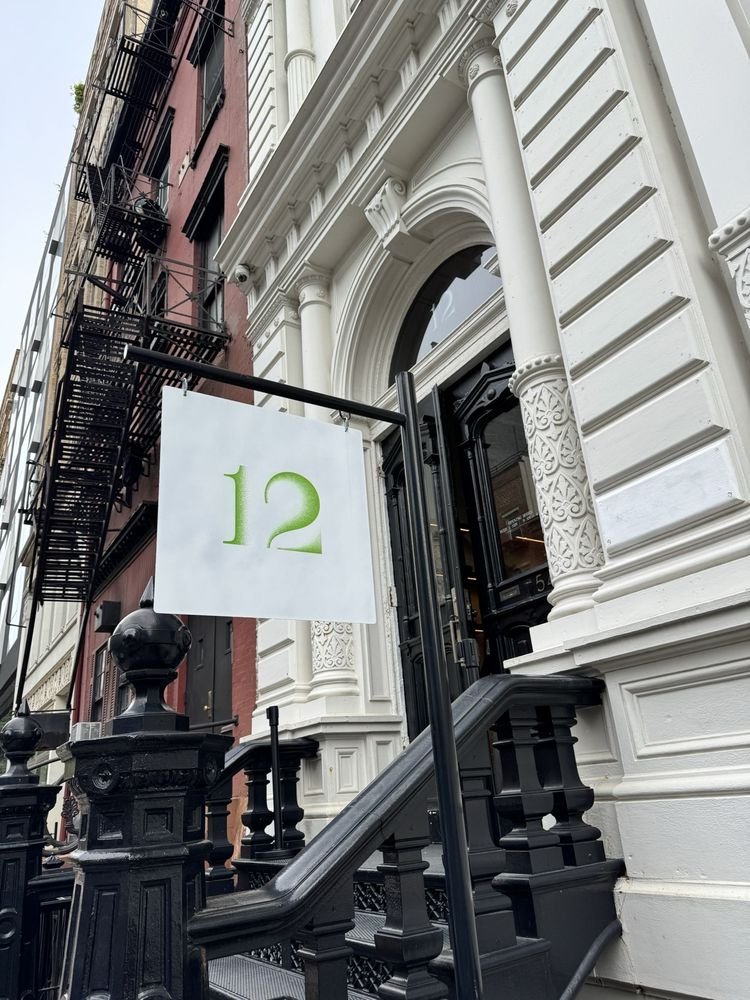
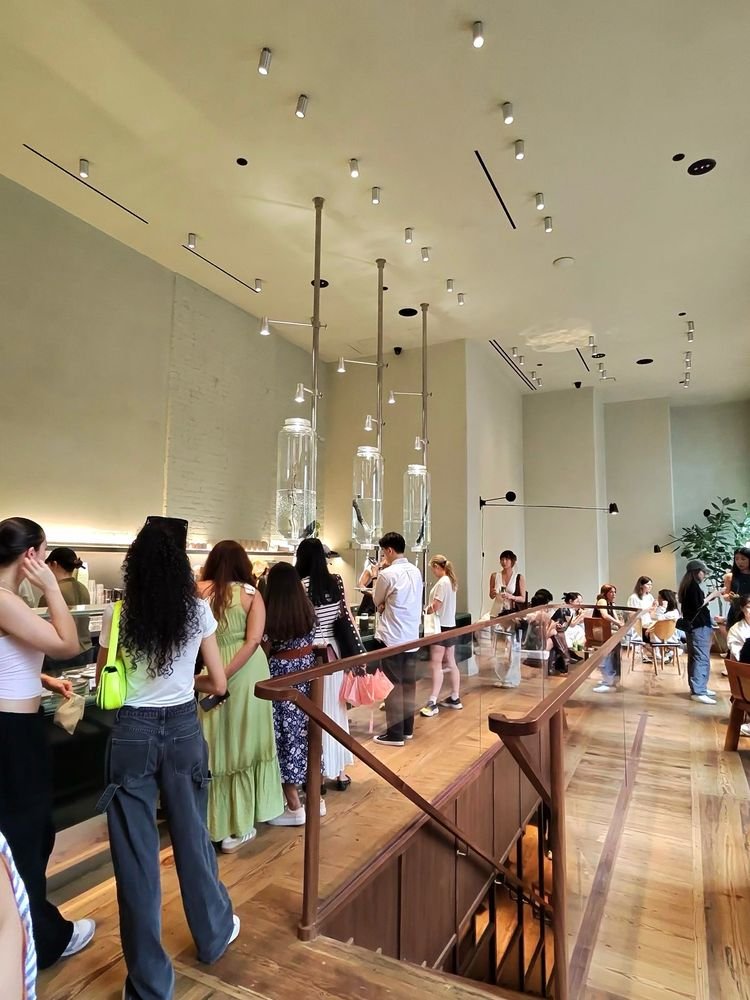
Currently the hottest matcha destination in NYC, 12 Matcha Cafe uses premium matcha from Uji, Japan’s most renowned tea-growing region. Their unique charcoal water filtration system maximizes the pure flavor of their ceremonial-grade matcha. Lines form daily outside their NoHo location.
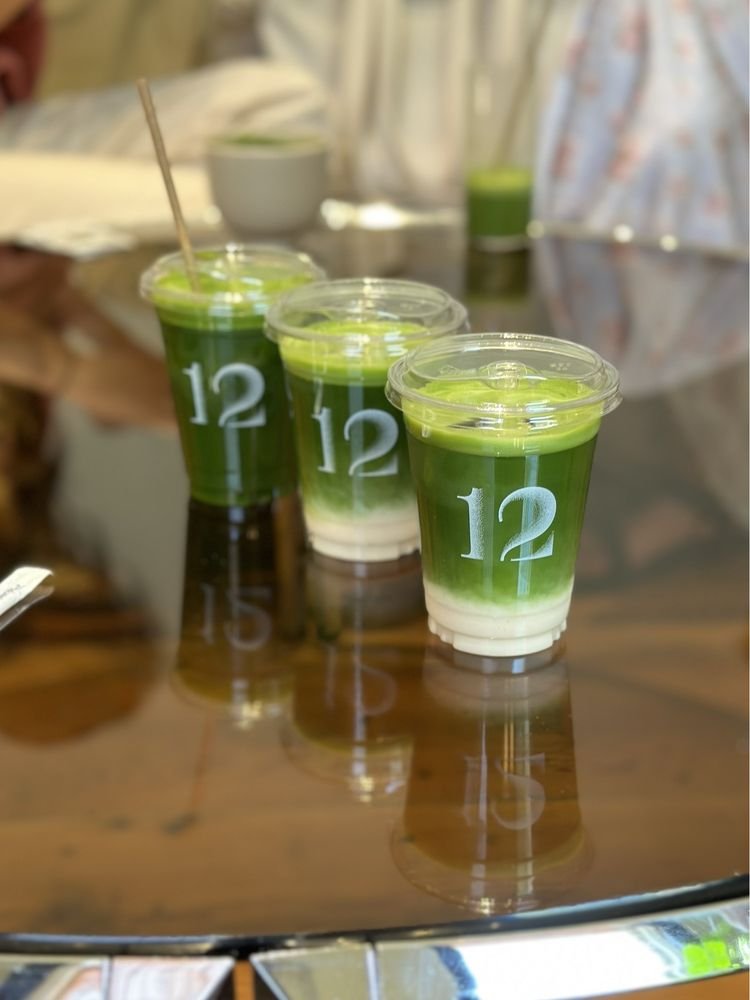
12 Matcha

Must-Try: Matcha Americano, Matcha Latte, Matcha Basque Cheesecake, Matcha Ice Cream
Location: 54 Bond St., NoHo
Website: 12matcha.com

2. Matchaful
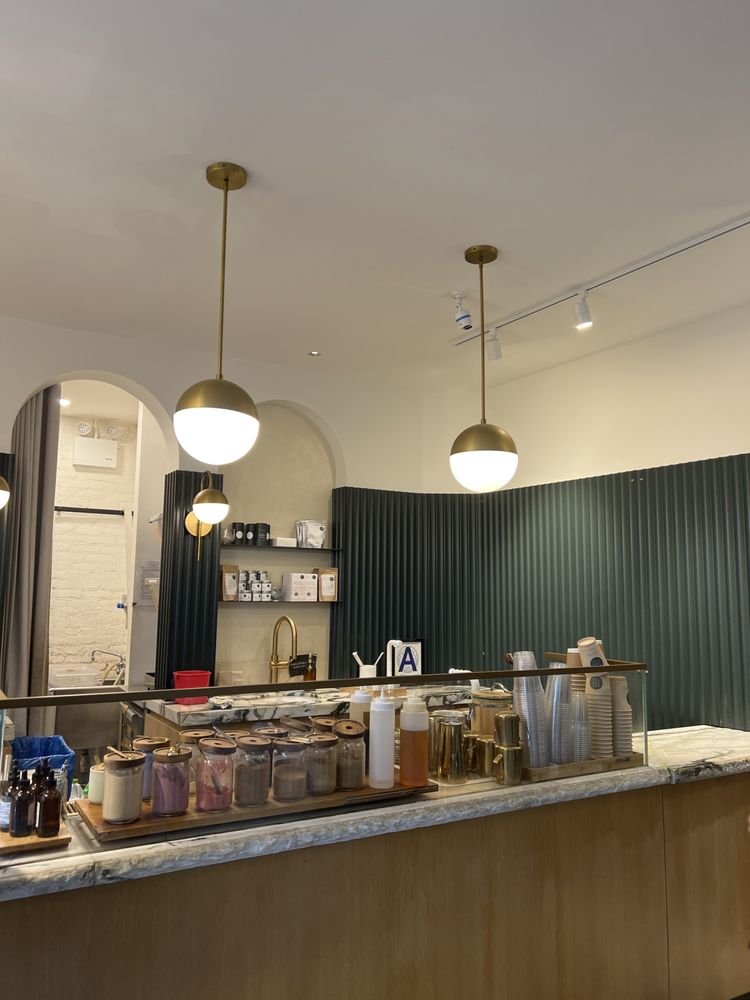
Matchaful

For the health-conscious matcha lover, Matchaful offers organic, direct-import Japanese matcha with complete transparency about sourcing. All menu items are available vegan, gluten-free, and refined sugar-free, with optional add-ins like collagen and MCT oil.
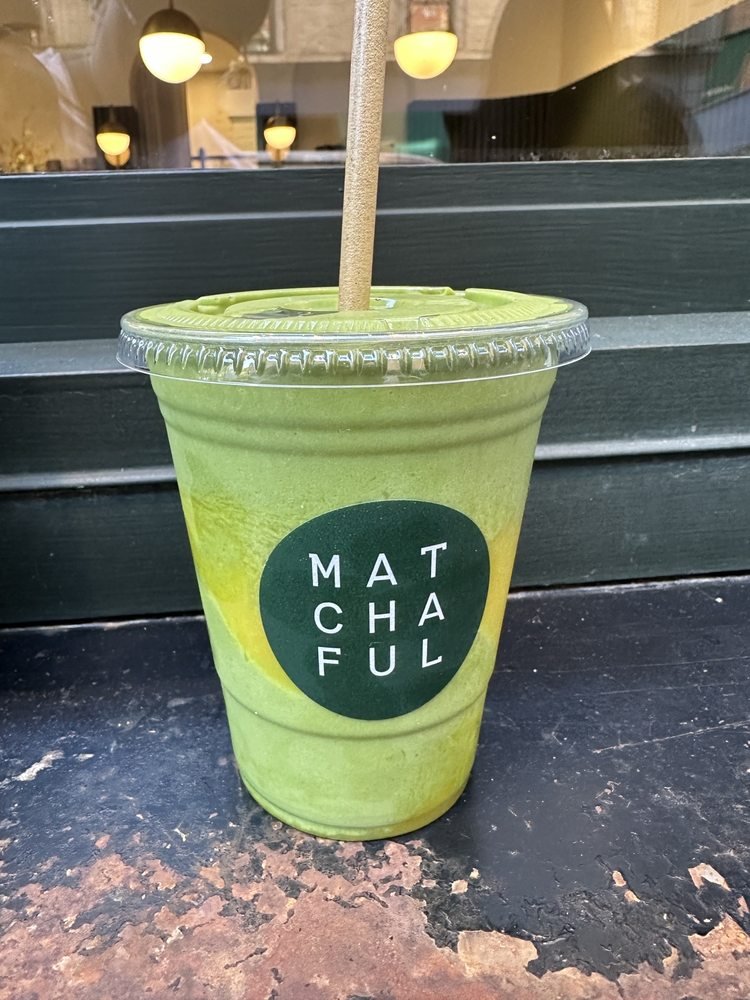
Must-Try: Hikari Ceremonial Matcha, Vanilla Zen (matcha, vanilla, GABA tea, cinnamon, maple, oat milk), Cacao Dream (matcha, cacao, chaga mushroom), Matcha Donuts
Locations: 7 locations across Manhattan including SoHo and West Village
Website: matchaful.com


The Ultimate NYC Bakery Pilgrimage 2025: 8 Viral Bakeries You Must Visit

A Day in New York Starts With Donuts: 11 Must-Try NYC Donut Shops in 2025


3. Cha Cha Matcha
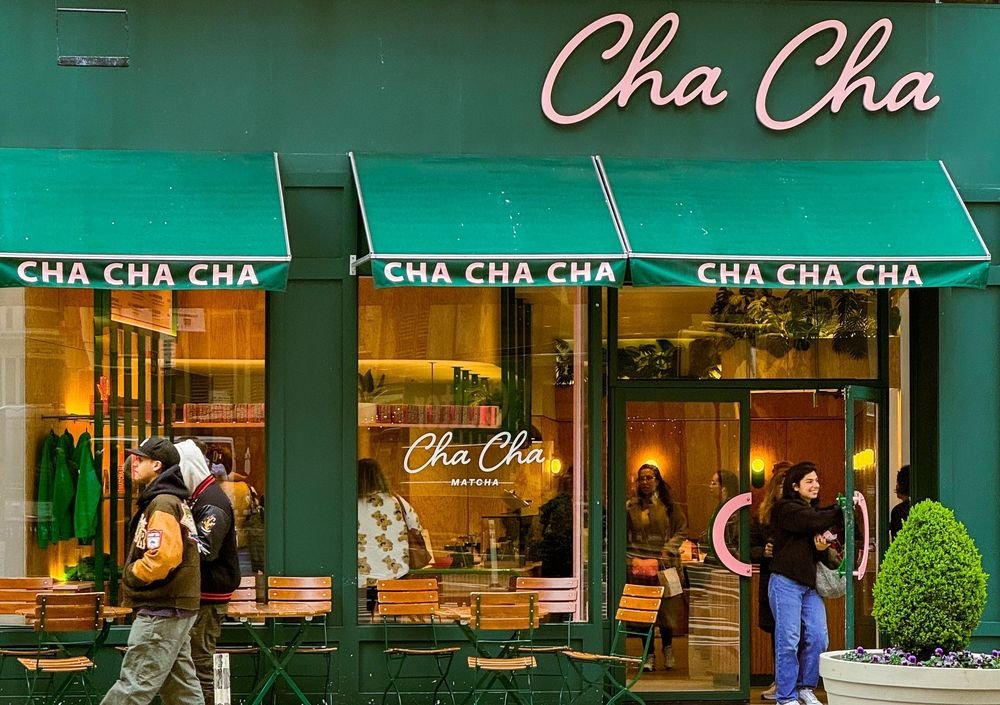
Cha Cha Matcha

With its pink-and-green Instagram-worthy interiors, Cha Cha Matcha is a social media phenomenon. This café makes matcha approachable for newcomers with creative fruit-forward drinks alongside traditional preparations.
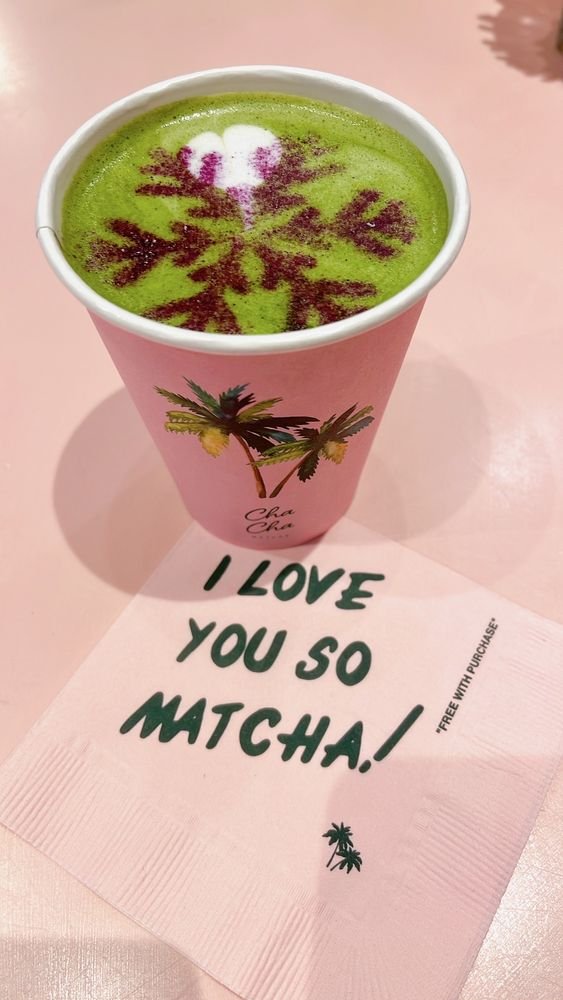
Must-Try: Matcha Lemonade, Matcha Latte, Purple Drink (blueberry, lavender, coconut milk, matcha), Strawberry Matcha Latte, Matcha Soft Ice Cream
Locations: 1158 Broadway and multiple other locations
Website: chachamatcha.com

4. Kijitora
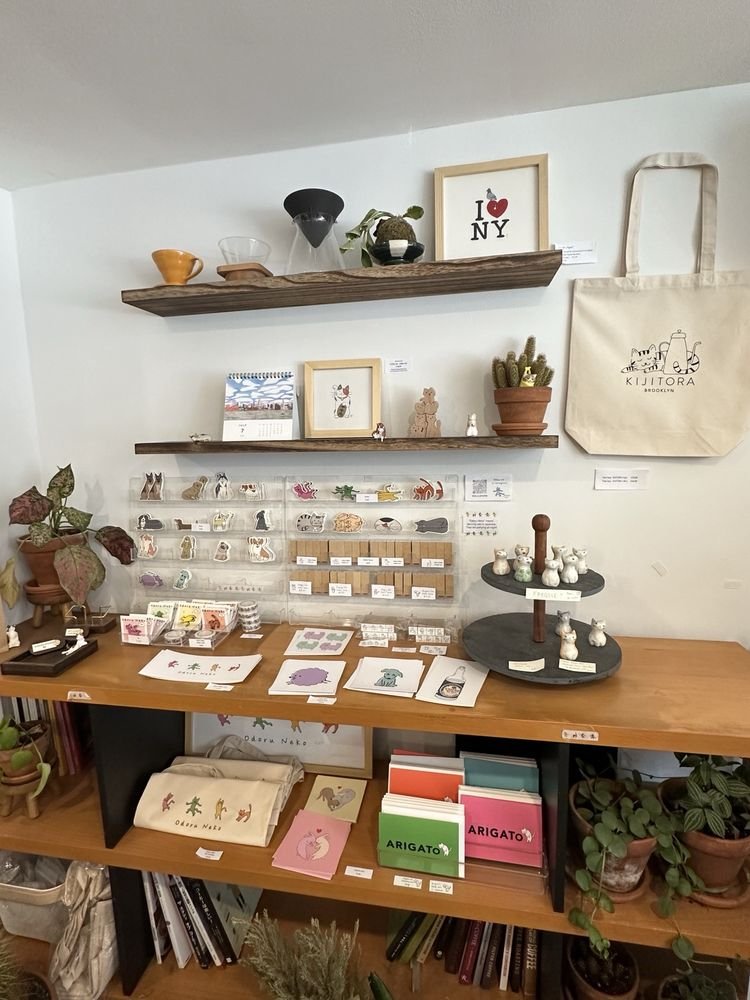
Kijitora

Brooklyn’s answer to Japan’s kawaii café culture, Kijitora combines cute cat branding with seriously good matcha. Their viral strawberry matcha has made this spot a must-visit for Gen Z and millennials seeking both quality and aesthetics.
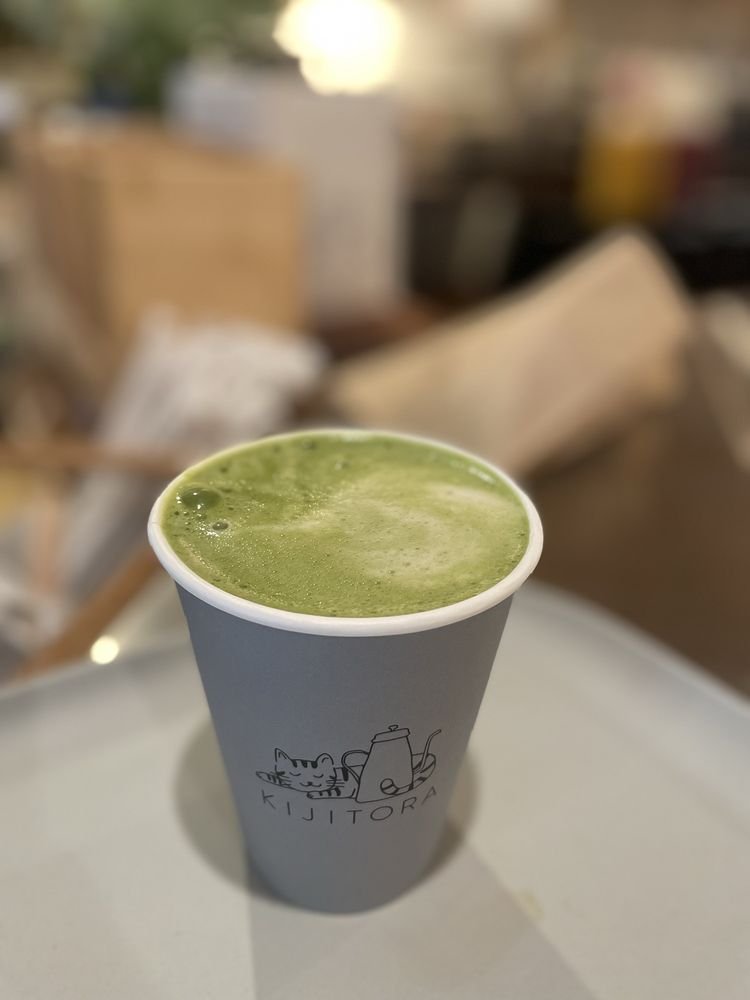
Must-Try: Strawberry Matcha Latte, Iced Mango Matcha Latte, Azuki Matcha Latte
Location: 116 N 6th St, Brooklyn, NY 11249
Website: kijitora.cafe

5. Sorate Soho
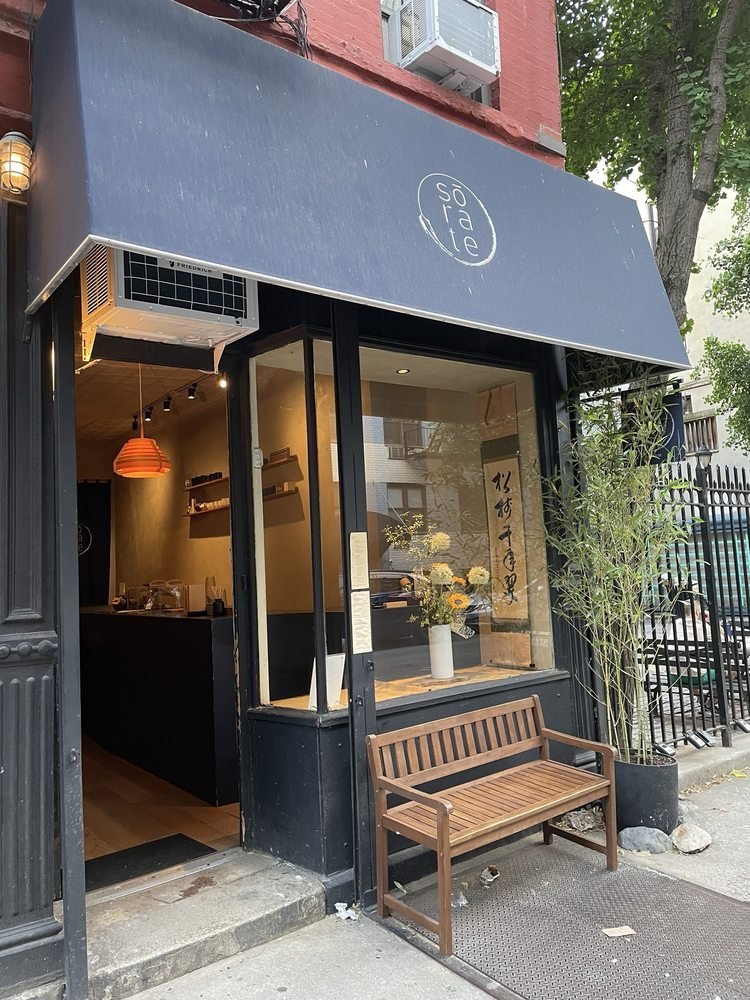
Sorate

For those seeking an authentic Japanese tea ceremony experience, Sorate brings wabi-sabi philosophy to downtown Manhattan. This minimalist teahouse sources organic tea directly from family farms in Kyoto’s Uji region.
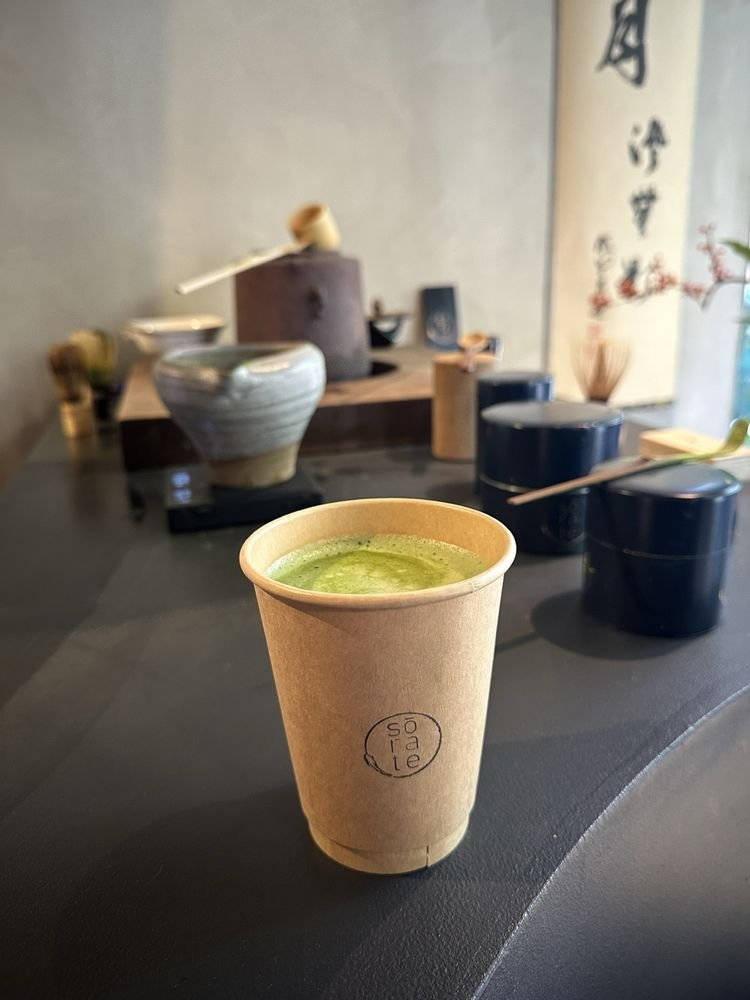
Must-Try: Ceremonial Matcha, Sparkling Matcha Yuzu, Matcha Gelato, Matcha Tiramisu
Location: 103 Sullivan St, New York, NY 10012
Website: sorateteahouse.co

6. Matcha Cafe Maiko

Born in Hawaii and now globally recognized, Maiko specializes in matcha desserts with an extensive menu that makes it perfect for matcha beginners.

Must-Try: Maiko Special Parfait, Matcha Soft Ice Cream, Matcha Latte Float
Locations: 138 W 32nd St and additional locations
Website: matchacafe-maiko.com

7. Setsugekka

Run by an award-winning tea master, Setsugekka offers traditional tatami seating and authentic tea ceremony experiences. They stone-grind their matcha fresh, ensuring maximum flavor and nutrient retention.

Must-Try: Usucha (thin tea), Koicha (thick tea), Matcha Cappuccino
Location: 74 E 7th St, New York, NY 10003
Website: setsugekkany.com

8. Kettl

With a reputation for supplying Michelin-starred restaurants, Kettl brings professional-grade Japanese tea to NYC consumers. Their expert tea preparation ensures every cup meets exacting standards.

Must-Try: Matcha Shot, Sparkling Matcha, Shaken Matcha
Location: 348 Bowery, New York, NY 10012
Website: kettl.co

9. Tea Room by Calmplex

Combining a ceramics studio with a serene tea room, Calmplex offers urban refuge. Sip matcha from handcrafted pottery while escaping the city’s chaos.

Must-Try: Sweet Corn Matcha, Matcha Yuzu Soda, Mugwort White Chocolate Latte, Matcha Oat Latte
Location: 240 E 54th St, New York, NY 10022
Website: tearoombycalmplex.com

10. Isshiki Matcha

Modern aesthetics meet Kyoto’s finest matcha at Isshiki. This sleek café positions matcha as a daily wellness ritual rather than just a beverage.

Must-Try: Rose Matcha Latte, Lavender Matcha Latte, Yuzu Matcha Latte, Pistachio Matcha Latte, Brown Sugar Matcha Latte
Location: 121B E 7th St, New York, NY 10009
Website: isshikimatcha.com

11. Aokō Matcha

Opened in August 2024, Aokō immediately became a West Village sensation with its innovative five-tier matcha gelato flight. This unique tasting experience lets customers explore matcha intensity from subtle to ceremonial-grade.

Must-Try: Matcha Gelato Flight, Matcha Latte, Hojicha Latte, Black Sesame Latte, Matcha Mille Crepe
Location: 275 Bleecker St., West Village
Website: aokomatcha.com

The Future of Matcha in NYC

As the matcha market continues its rapid expansion, NYC’s café landscape is evolving. Some tea suppliers reported price increases of 150% in July 2024 , and businesses have been placed on waitlists until August 2026 for premium matcha from favorite farms .

Despite supply challenges, or perhaps because of them, matcha’s premium positioning in New York seems secure. The combination of genuine health benefits, sustainable energy, and aesthetic appeal creates a powerful value proposition that coffee struggles to match.

For New Yorkers seeking alertness without the crash in energy levels that can follow caffeine consumption , the best matcha NYC cafes offer a sophisticated alternative. Whether you’re drawn to traditional tea ceremonies or fruit-infused modern creations, NYC’s matcha revolution has something for every palate.

How to Choose Your Matcha

When exploring matcha cafes New York has to offer, quality matters. Most high-grade matcha will be vibrant in color, rich, and with smooth flavor with no bitterness . Look for cafes that provide transparency about their sourcing, specify whether they use ceremonial or culinary grade, and can tell you about the farms and regions where their matcha originates.

For the ultimate matcha experience, visit during off-peak hours to engage with knowledgeable baristas who can guide you through flavor profiles and preparation methods. Many of these cafes also sell retail matcha powder, allowing you to recreate the experience at home.

The green revolution in New York’s café culture shows no signs of slowing. As more New Yorkers discover the sustained energy and wellness benefits of this ancient Japanese tea, matcha is poised to become as integral to the city’s identity as bagels and pizza. Whether you’re a longtime enthusiast or curious newcomer, there’s never been a better time to explore the best matcha NYC has to offer.​​​​​​​​​​​​​​​​

More reading:

A Day in New York Starts With Donuts: 11 Must-Try NYC Donut Shops in 2025

NYC’s Best Street Food: Hidden Gems and Award-Winning Carts Locals Actually Eat At
Manhattan’s Korean Restaurant Revolution: From Michelin Stars to Comfort Food

Manhattan’s Korean dining scene has exploded beyond the boundaries of Koreatown, evolving from traditional barbecue joints to Michelin-starred fine dining and hip casual eateries. From kimchi meeting caviar to nostalgia-driven comfort food, here’s your ultimate guide to the best Korean restaurants transforming New York’s culinary landscape.

Manhattan’s Korean Restaurant Revolution: From Michelin Stars to Comfort Food


Manhattan’s Korean food scene is having a moment—and it’s unlike anything we’ve seen before. Just a few years ago, Korean dining in New York meant heading to 32nd Street for barbecue, soft tofu stew, or seolleongtang. Today, the landscape has transformed dramatically, with Michelin-starred establishments redefining Korean cuisine and casual spots bringing authentic comfort food to new neighborhoods across the city.

From fine dining temples where kimchi meets caviar to retro-style “driver’s restaurants” (gisa-sikdang) offering affordable set meals, Korean cuisine has expanded its footprint and elevated its profile. With multiple Michelin stars now dotting the Manhattan Korean restaurant map, including the city’s first three-starred Korean establishment, K-food has firmly established itself as a major force in New York’s competitive culinary scene.

The Michelin-Starred Elite: Korean Fine Dining at Its Peak

Jungsik: New York’s First Three-Michelin-Starred Korean Restaurant

Korean Restaurant, Jungsik
Jungsik

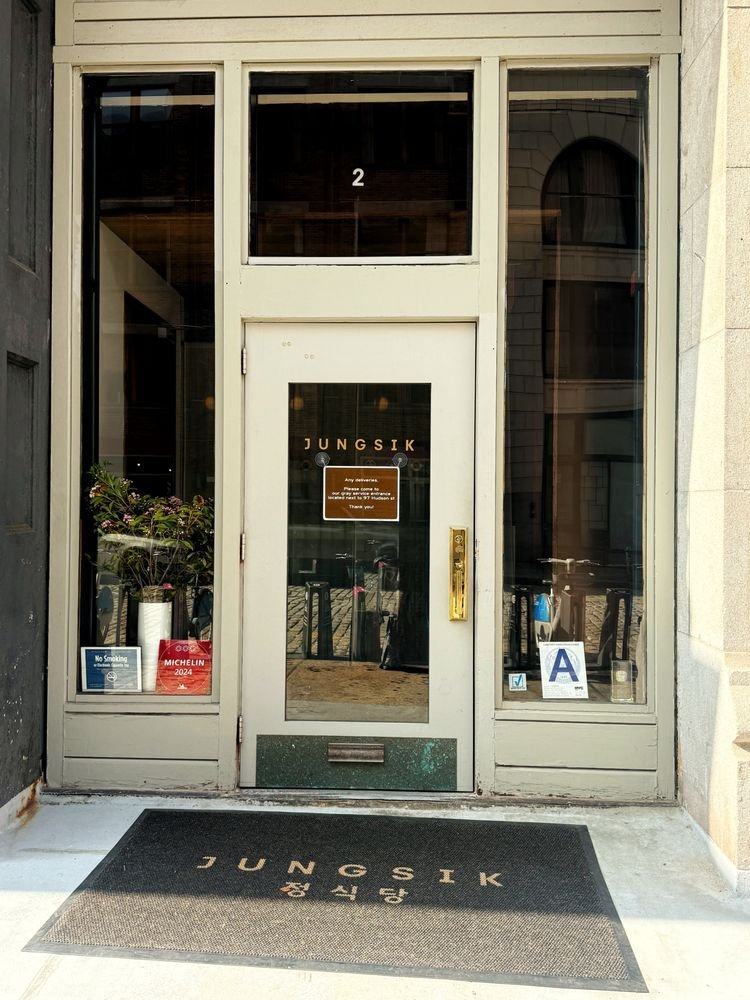
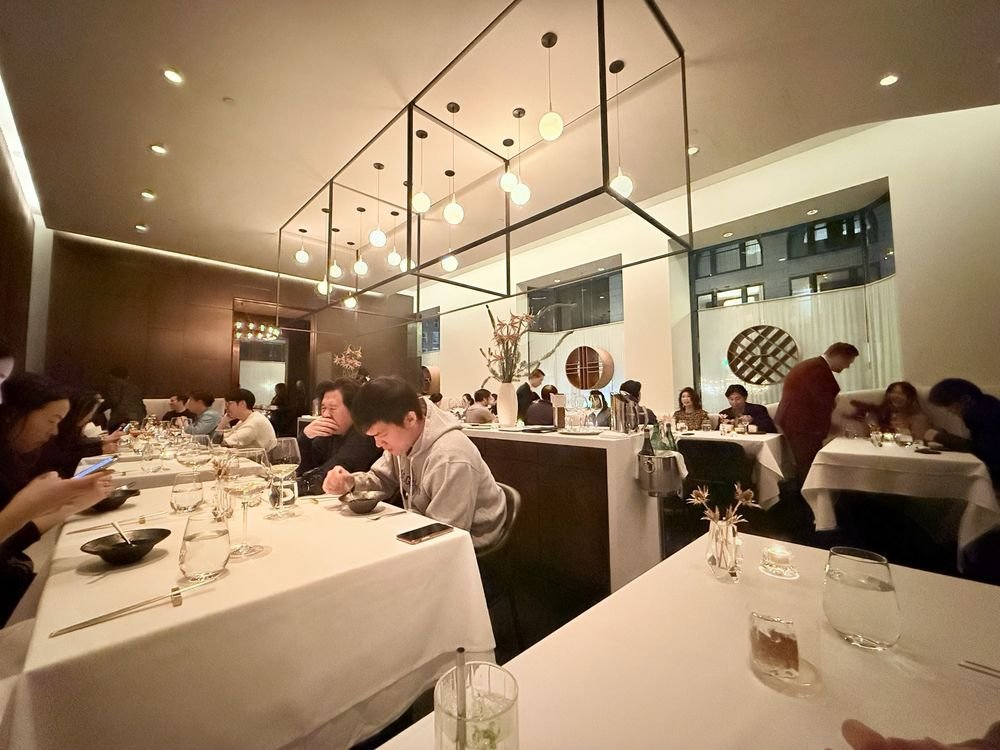
Jungsik in Tribeca has made history as the first Korean restaurant in North America to earn three Michelin stars, a distinction held by only about 140 restaurants worldwide. Since opening in 2011, Chef Yim Jung-sik’s restaurant has been foundational to New York’s modern Korean movement, serving as a training ground for many of today’s celebrated Korean chefs.

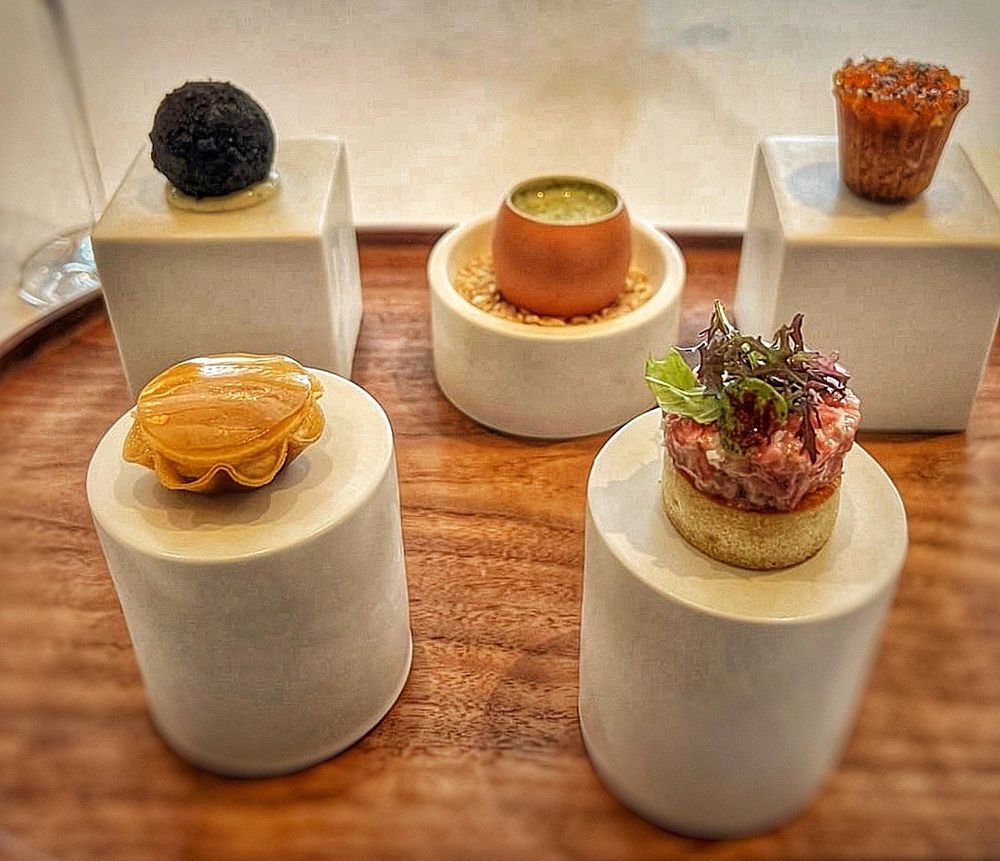
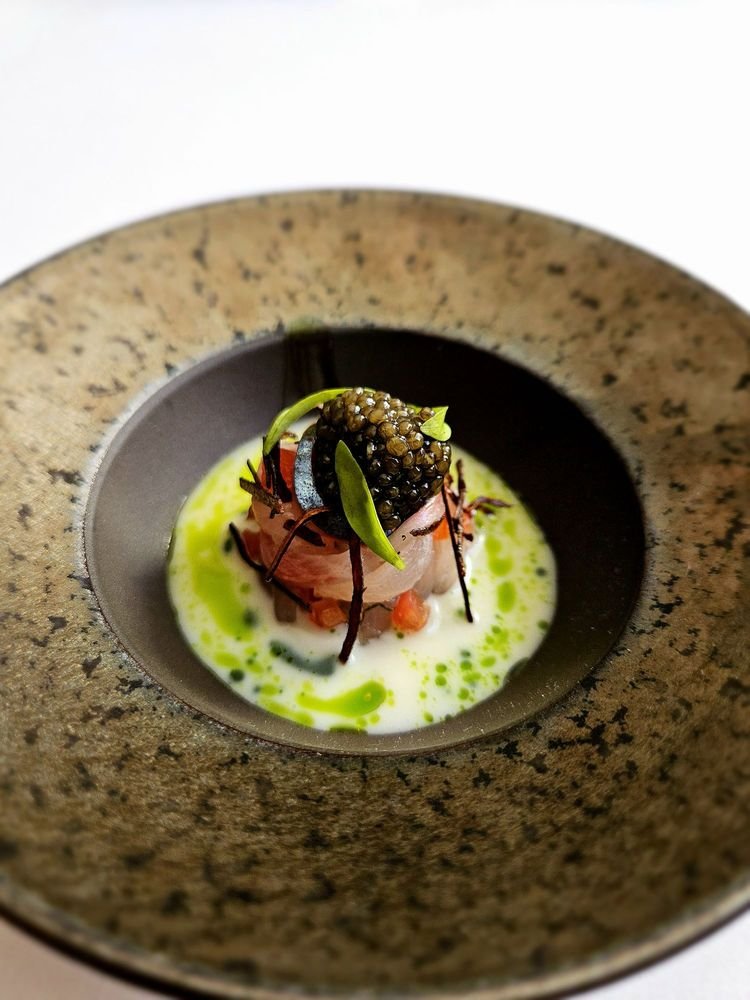
The restaurant’s approach is characterized by highly original, impeccably executed dishes that make diners involuntarily nod in appreciation. The meal begins with an artfully presented array of banchan, followed by creative dishes like raw striped jack with white kimchi and chilled fish bone broth, and crispy octopus with gochujang aioli. The cooking here is both enormously satisfying and distinctly Korean, yet presented through a thoroughly modern lens.

Banchan:  small side dish served along with rice as part of a typical Korean meal.
Striped Jack

Location: Tribeca
What to expect: Multi-course tasting menu, Japanese and Korean fusion influences, impeccable technique
Reservation: www.jungsik.com
Price point: $$$$ (Fine dining)

Oiji Mi: Flatiron’s Modern Korean Showcase

One-Michelin-starred Oiji Mi offers a five-course prix-fixe menu priced at $150 per person, featuring creative contemporary Korean cuisine from Chef Brian Kim. After establishing himself with the more casual Oiji in the East Village, Kim elevated his concept to fine dining in the Flatiron District.

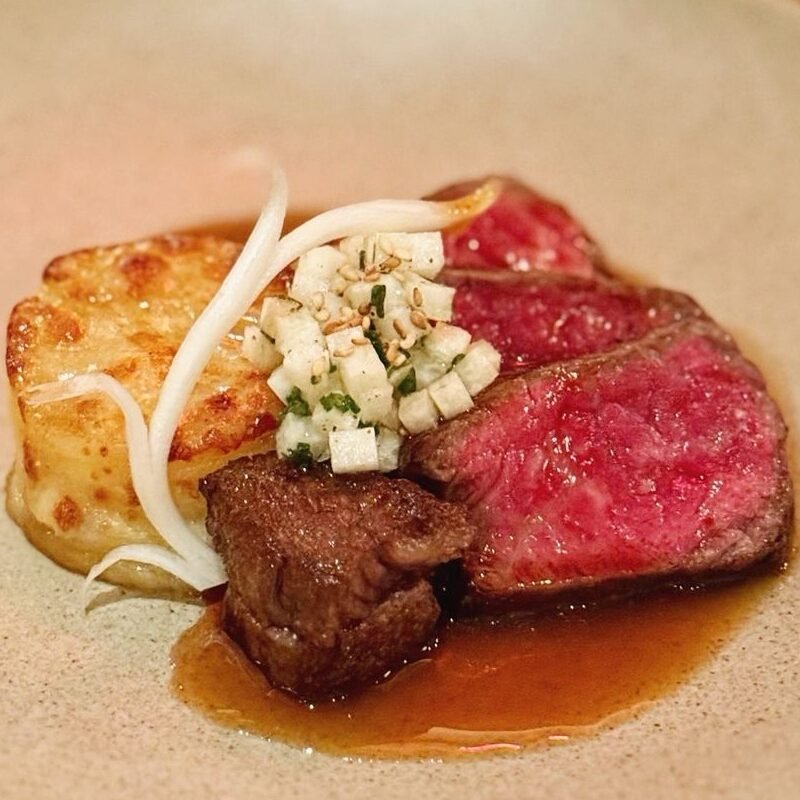
Wagyu galbi with potato gratin
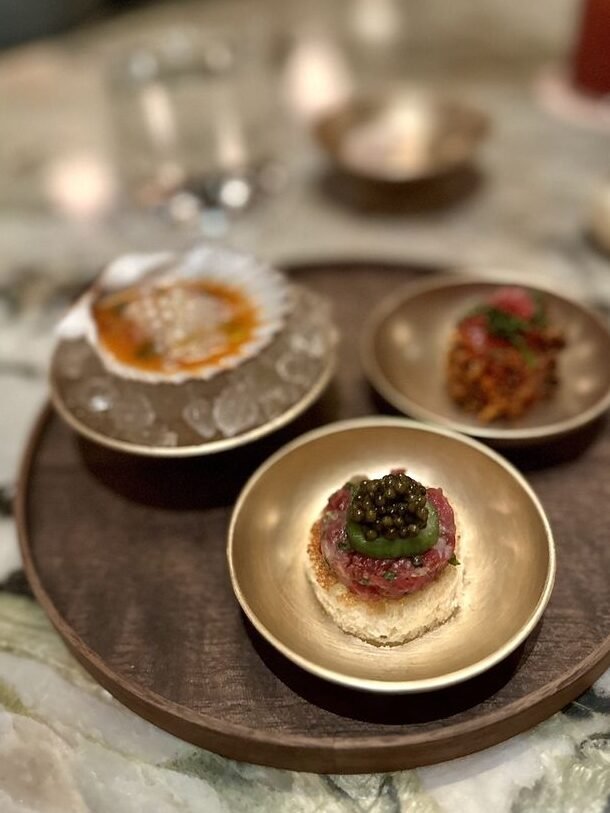
Appetizer

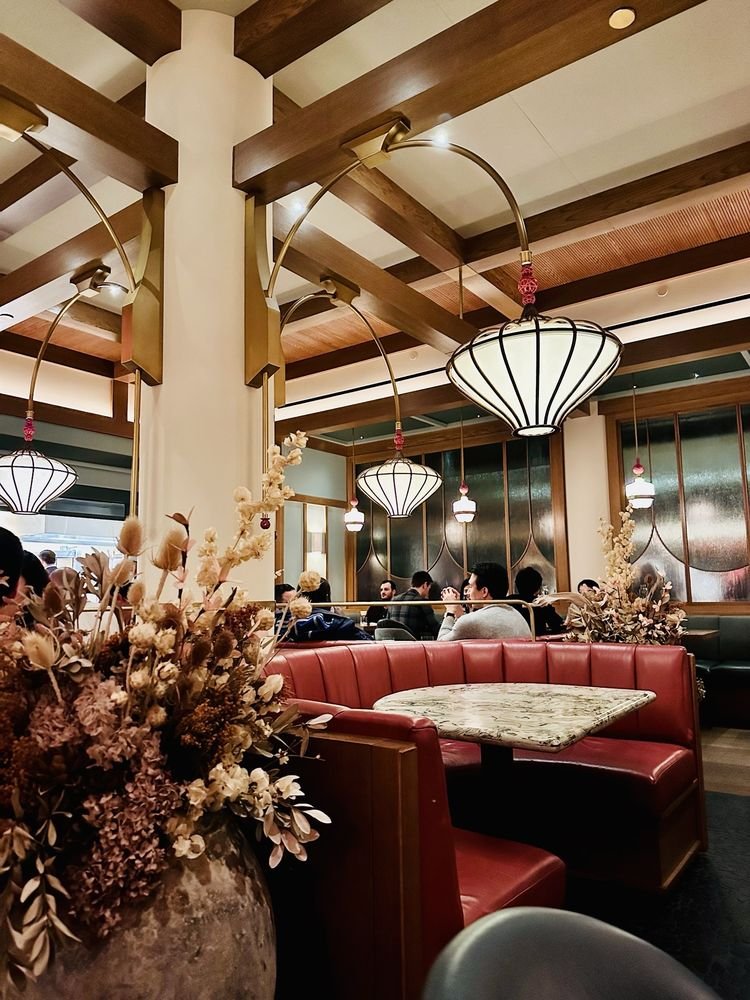
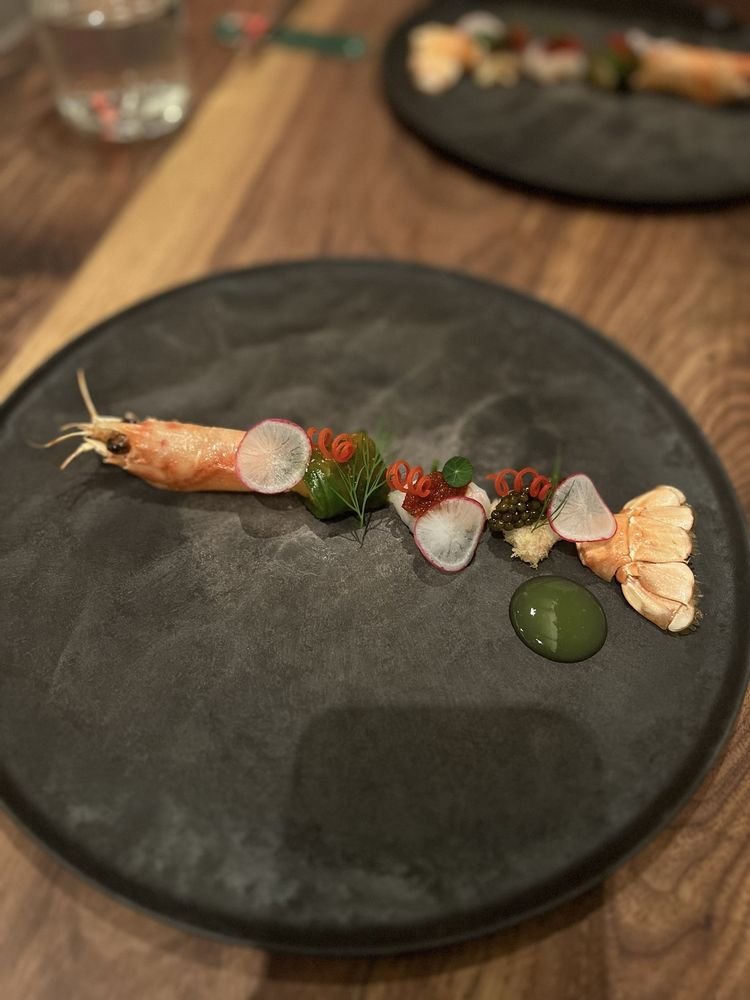
The menu showcases luxury ingredients applied through Korean techniques—think foie gras with bokbunja (Korean raspberry wine) sauce, bossam with oysters and pork belly steamed in bamboo baskets, and truffles and caviar woven throughout the courses. The space beautifully merges traditional Korean hanok design elements with early 20th-century social club glamour, featuring custom lighting inspired by traditional Korean hair pins and a warm palette of plum, powder blue, and cool green.

Location: 17 W 19th St, Flatiron District
Reservations: oijimi.com
Price point: $$$ ($150 prix-fixe)

Naro: Rockefeller Center’s Elegant Korean Experience

From the husband-and-wife team behind two-Michelin-starred Atomix, Naro focuses on showcasing types of Korean cuisine not very abundant in the United States, highlighting seafood and vegetables in lighter dishes inspired by traditional Korean cuisine. Located on the Rink Level of Rockefeller Center, Naro earned its Michelin star shortly after opening in 2022.

The restaurant draws inspiration from hansik (traditional Korean cuisine) and historical Korean cookbooks, presenting dishes like tangpyeongchae (mung bean jelly with chilled vegetables), octopus naengchae with radish-kimchi granita, and wagyu carpaccio with aged soy sauce and fermented kimchi in samhap style with uni and truffle. Recently reimagined with an all-day à la carte menu alongside tasting options, Naro now offers more flexibility for different dining occasions.

Location: 610 5th Ave, Rockefeller Center (Rink Level)
Reservations: naronyc.com
Michelin status: One Star
Price point: $$-$$$ (lunch $42-48, dinner tasting available)

Nōksu: The Secret Subway Sanctuary

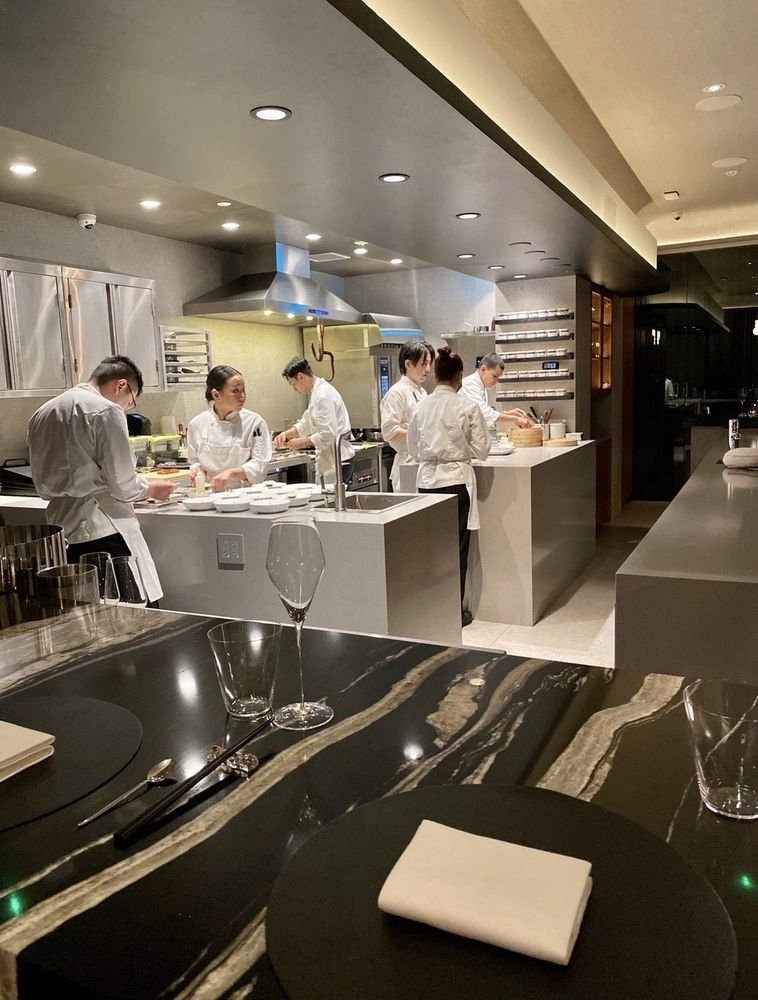
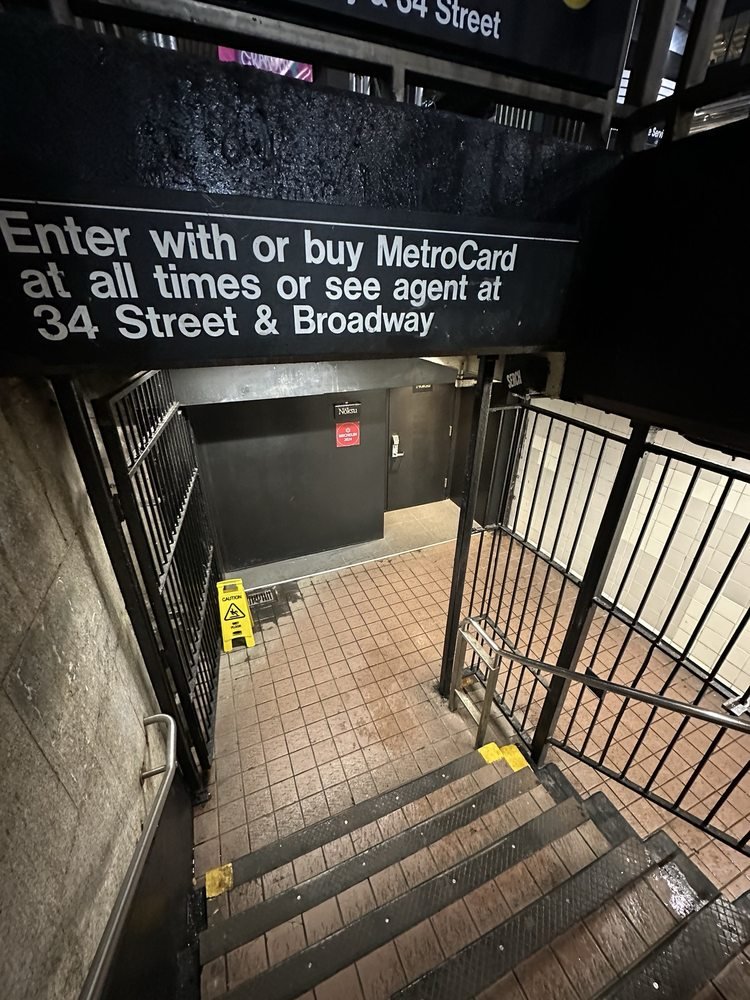
Perhaps Manhattan’s most unusual Michelin-starred restaurant, Nōksu operates from a secret location behind a locked door inside the 34th Street subway station exit, offering only 15 counter seats. Chef Daniel “Dae” Kim, who trained at Thomas Keller’s Per Se, opened this ultra-premium Korean restaurant in October 2023, and reservations remain fiercely competitive.

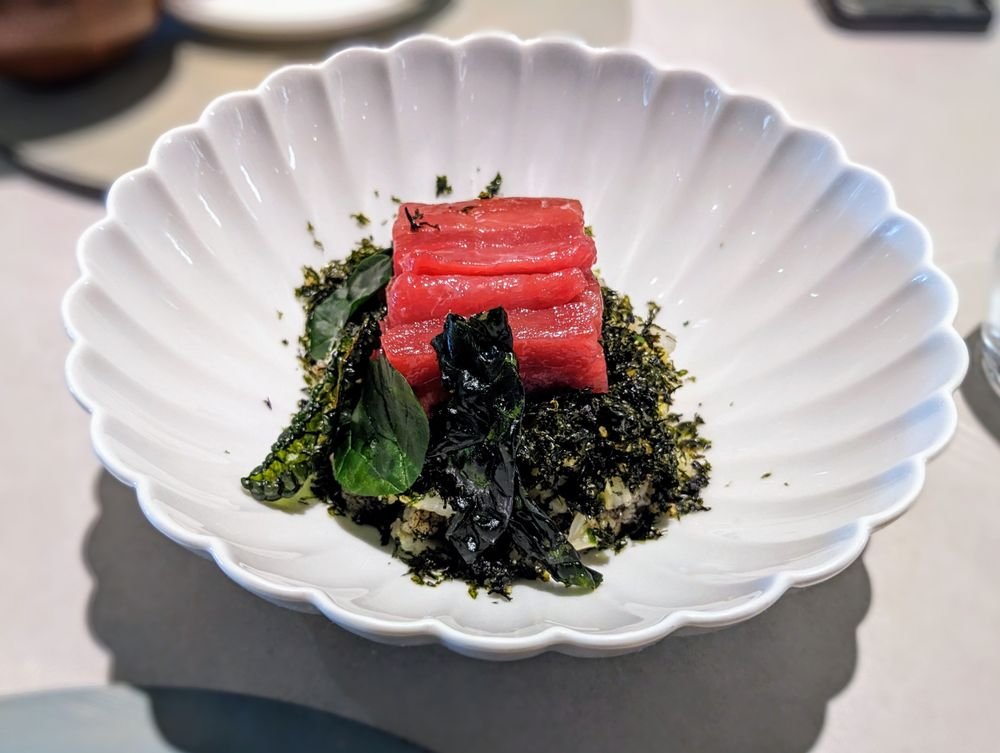
The nine-course seasonal menu centers on seafood, with signature dishes including barbecued squab, caviar-topped scallop egg custard, and freshwater trout with tangy citrus sauce. At approximately $300 per person, it’s among Manhattan’s priciest dining experiences, but the intimate, private atmosphere and luxury ingredients create a truly unique culinary journey.

Surf Clam
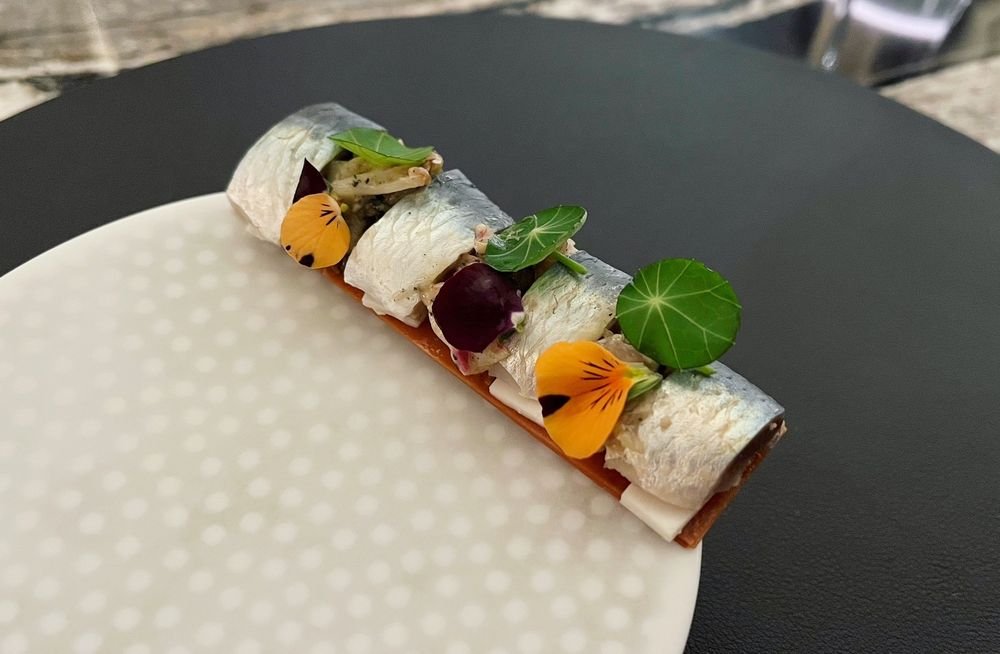
Sardine: charred romaine, caesar

Location: 49 W 32nd St (inside Herald Square subway station)
Reservations: noksunyc.com
Michelin status: One Star
Price point: $$$$ (~$300)

Mari: Korean Handrolls Reimagined

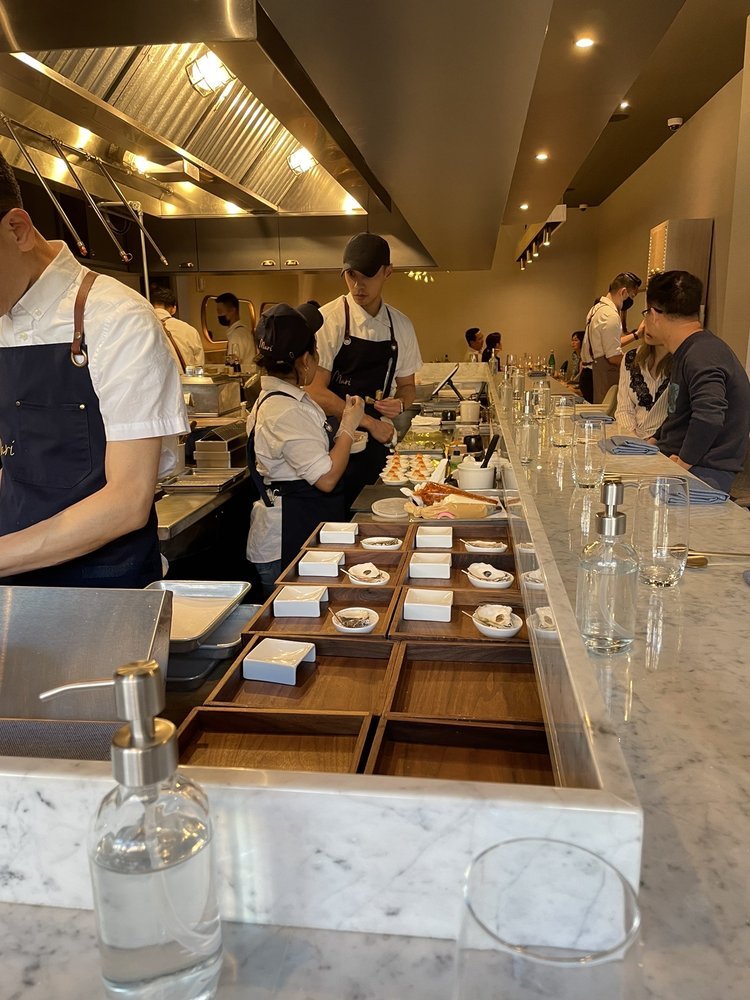
Mari, whose name comes from the Korean word for roll, earned its Michelin star less than a year after opening in late 2021. Chef Sungchul Shim’s second restaurant (after Kochi) takes inspiration from Korean kimbap and Japanese handrolls to create a tasting menu that’s both playful and refined.

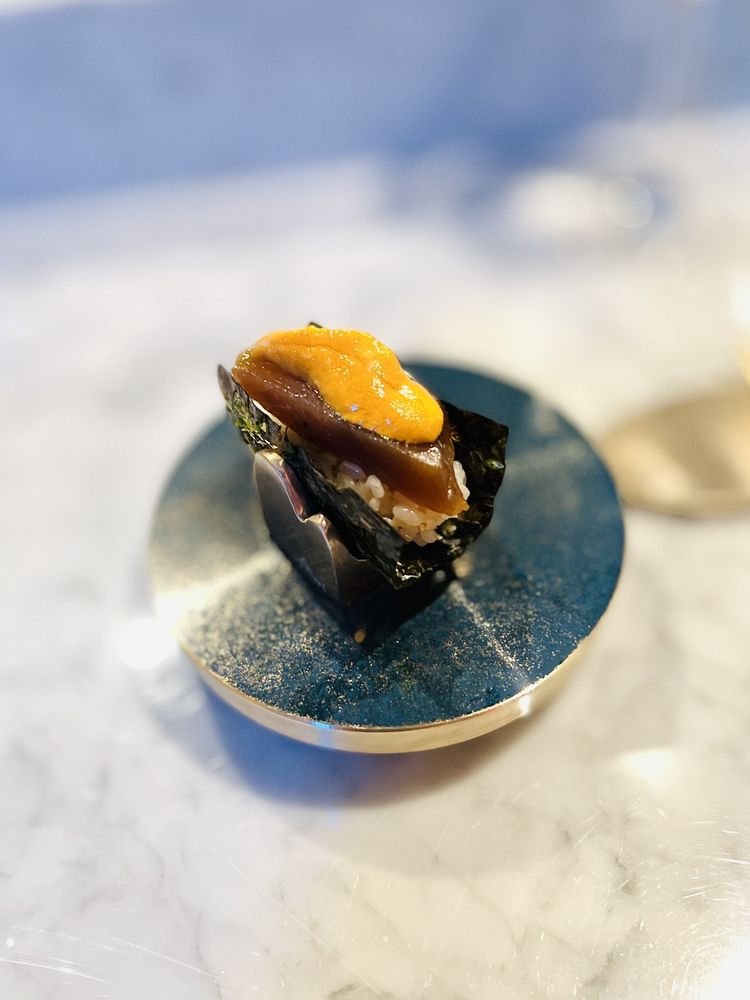
Uni tuna – add on

The restaurant serves glistening planks of Scottish salmon, tender strips of cured mackerel, and three types of mushrooms on beds of rice cradled in seaweed, with chefs working swiftly around a counter flanked on all sides. The approximately 11-12 course menu features handrolls with caviar, tuna, salmon, abalone, and mushrooms, plus standouts like yukhoe (Korean beef tartare) with uni roll, black sesame marshmallow choco-pie, and a deeply savory noodle soup made from chicken, pork, and beef broth.

The intimate 31-seat space centers around an open kitchen with a U-shaped counter, creating an interactive omakase-style experience.

Location: 679 9th Ave, Hell’s Kitchen
Reservations: Marinyc.com
Michelin status: One Star
Price point: $$$ ($145-185)

Joo Ok: Seoul’s Michelin Legacy in Koreatown

In a remarkable move, Chef Chang-ho Shin closed his two-Michelin-starred restaurant in Seoul in December 2023 to relocate Joo Ok entirely to New York City, bringing his core team with him. The Manhattan location opened in September 2024 in the heart of Koreatown and has since been promoted to two Michelin stars in the 2025 guide.

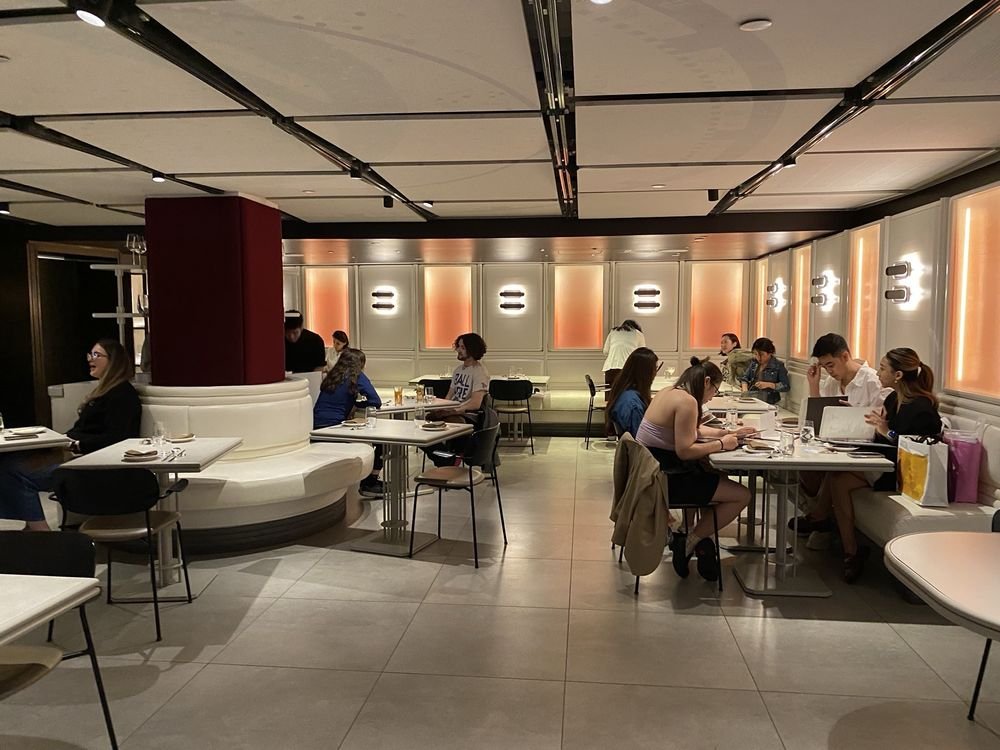
Accessible via freight elevator up 16 stories, the elegantly appointed space echoes a traditional Korean home, where guests are welcomed with snacks and drinks before entering the minimalist dining room with Manhattan skyline views. Shin’s tasting menu is rooted in tradition but presented through a modern lens, featuring dishes like deul gi reum with geoduck and perilla oil, and jat jeup chae with lobster and Korean pear in salted cucumber.

Location: West 32nd St, Koreatown
Michelin status: Two Stars
Reservation: https://www.joo-ok.com
Price point: $$$$ (Fine dining tasting menu)

Mid-Range Modern Korean: Where Innovation Meets Accessibility

Moono: The Bridge Between Casual and Fine Dining

Opened in May 2023 by Michelin-starred chef Kim Ho-young (of Jua), Moono occupies a sweet spot between traditional Korean and high-end tasting menus. The name means “gateway” in Korean, and the restaurant lives up to it by offering refined à la carte Korean dishes at more approachable prices.

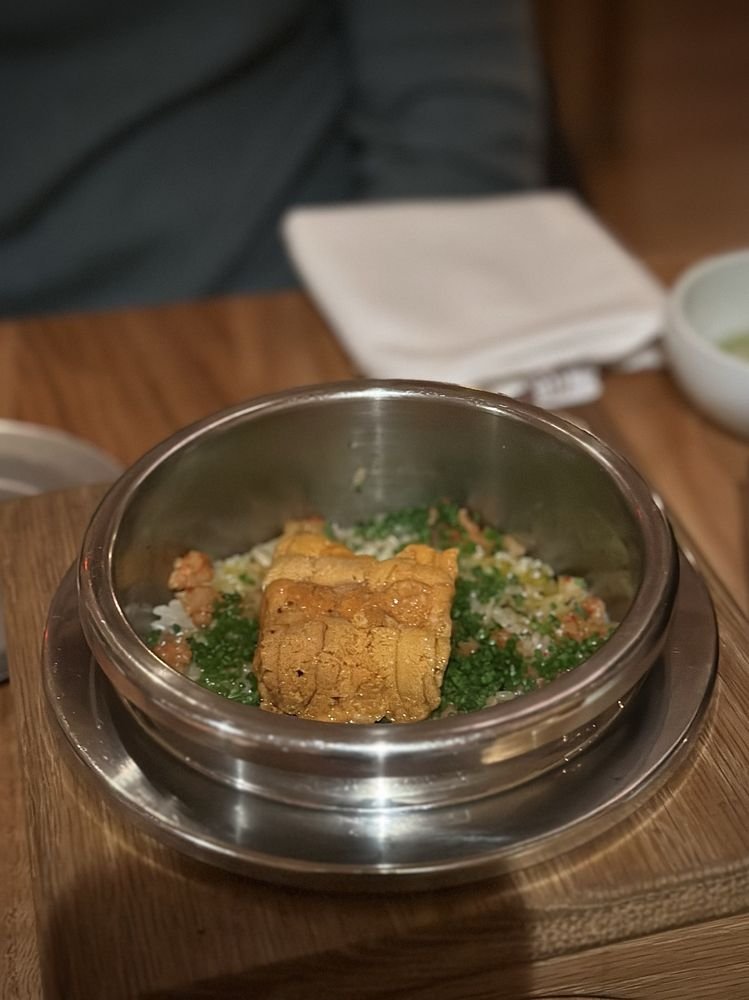
Uni sotbap
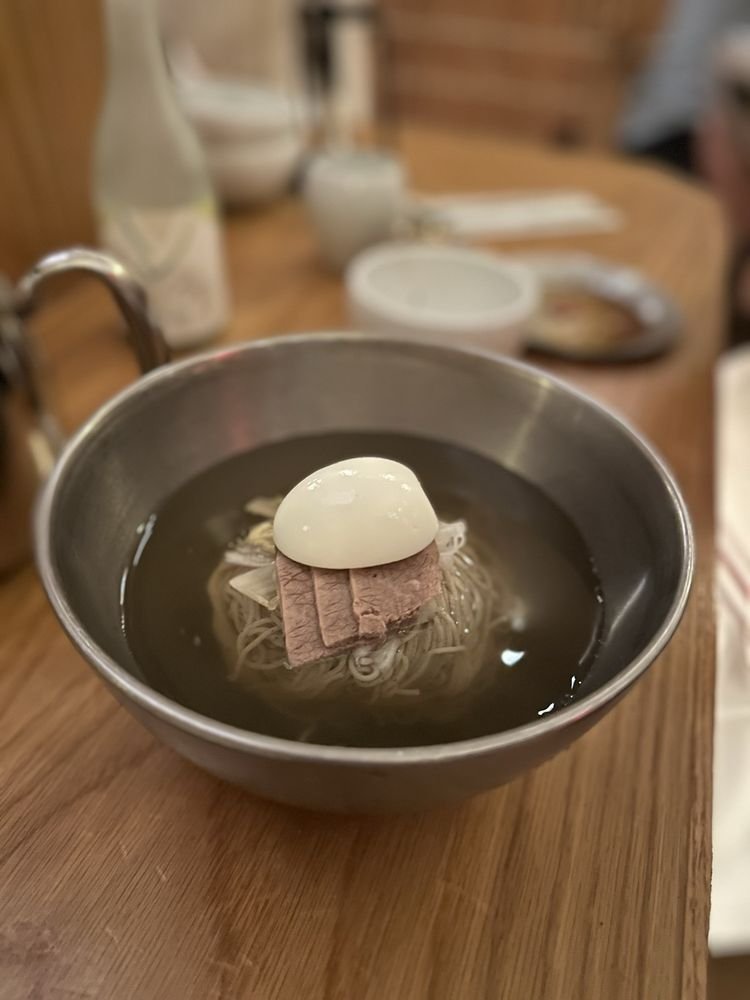
Pyongyang cold noodle

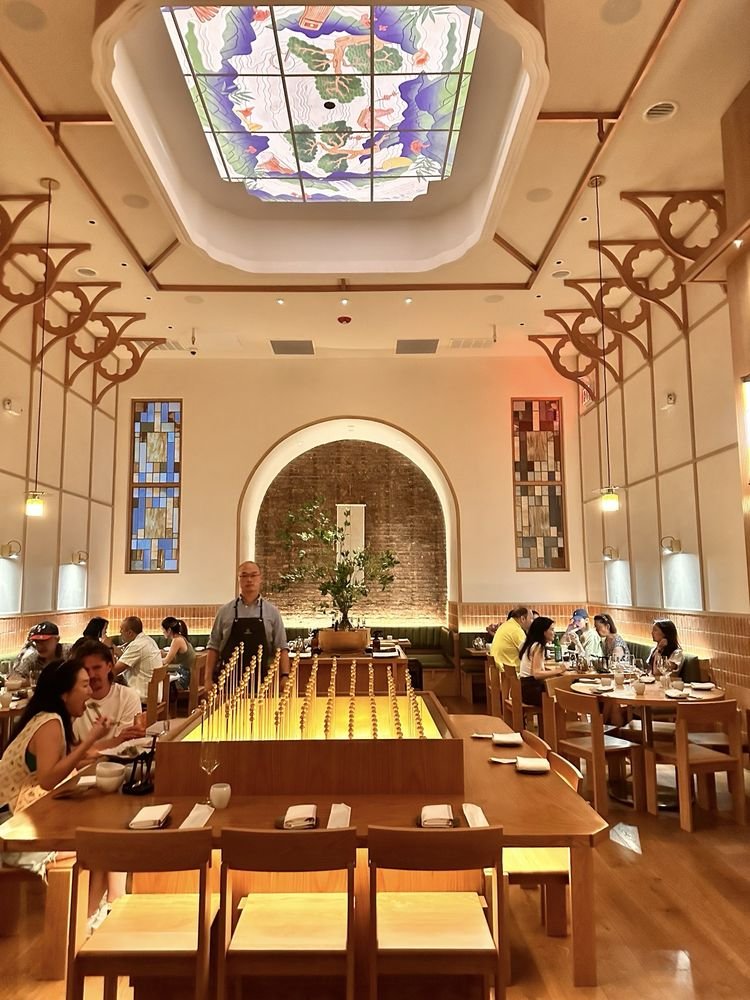
Signature dishes include mushroom solbap (stone pot rice) with uni and truffle using Golden Queen rice, sundae (blood sausage) wrapped in perilla leaves, dry-aged branzino, and Pyongyang-style naengmyeon. The two-story space features stunning stained glass windows and warm wood interiors, creating an atmosphere that’s both grand and intimate. A chef’s counter is planned for the future.

Location: 29 E 32nd St, near Koreatown
Reservations: moononyc.com
Price point: $$ (à la carte)

Seoul Salon: The Trendy Korean Bar Experience

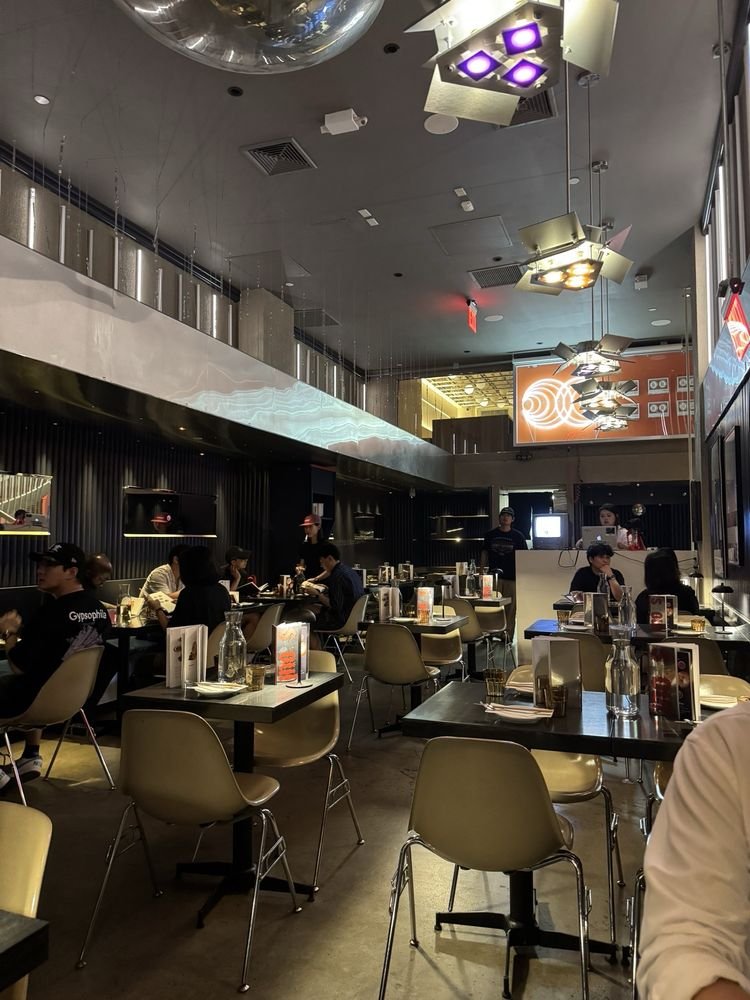
Located in a former karaoke space on the northern edge of Koreatown, Seoul Salon completely reimagines the Korean drinking establishment for New York audiences. The industrial-chic space features neon signs, graffiti-style art, and staff dressed in streetwear, while K-hip-hop from artists like those on AOMG plays throughout.

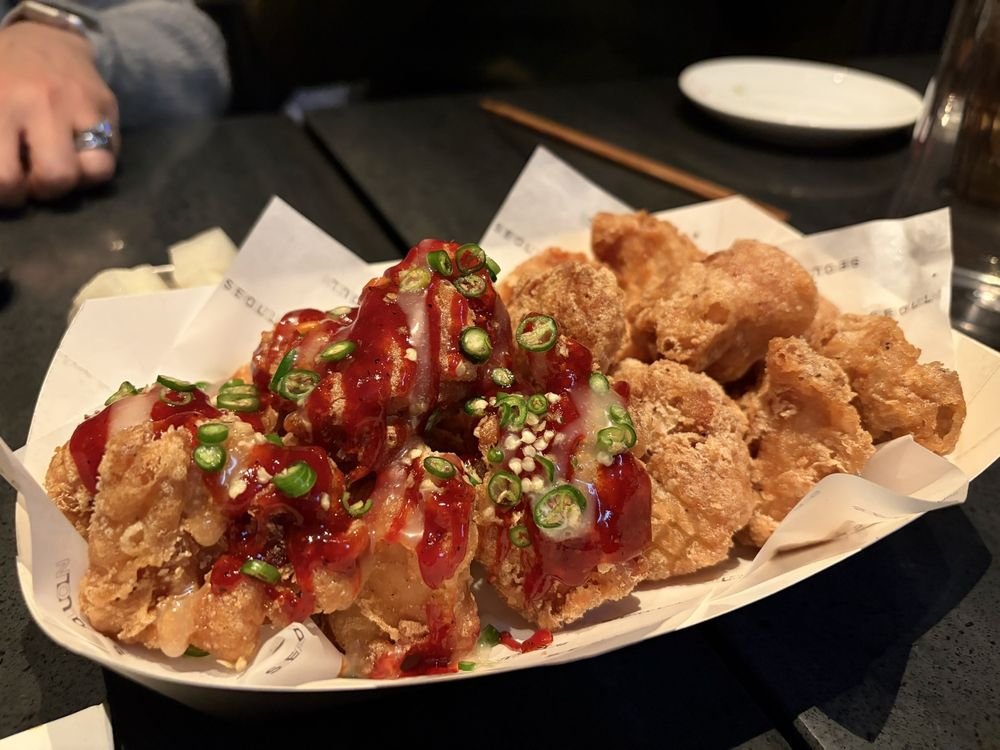
Seoul Salon Fried Chicken

The menu creatively reworks Korean drinking snacks: crispy chicken with sweet-spicy glaze, ceviche-style hwe muchim (Korean raw fish salad), truffle-enhanced tteokbokki, and cocktails ($18-25) made with gochujang, honey-jujube syrup, and makgeolli. It’s less fine dining, more vibrant party atmosphere.

Location: 28 W 33rd St
Reservations: Seoulsalon.nyc
Price point: $$ (small plates and cocktails)

Casual Korean: Comfort Food and Street Style

Kisa: The Nostalgic Gisa-Sikdang Experience

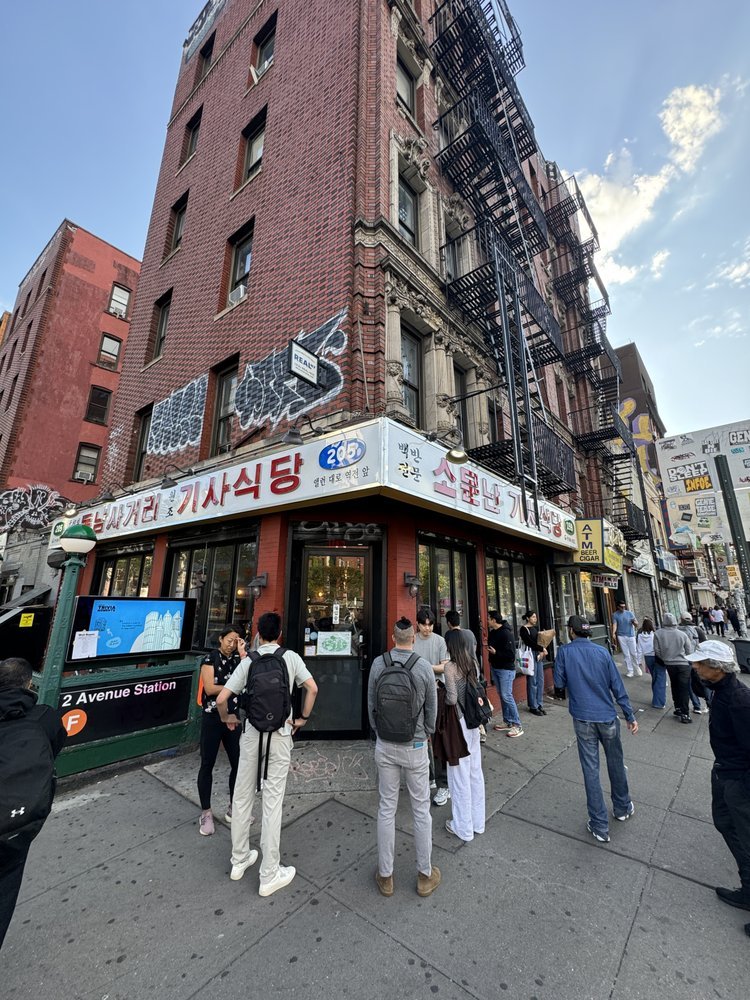
In a tiny corner of the Lower East Side, Kisa brings the Korean “driver’s restaurant” concept to Manhattan—and it’s become a sensation. The restaurant opens only once daily at a set time and offers just one menu: a complete Korean table d’hôte for $32.

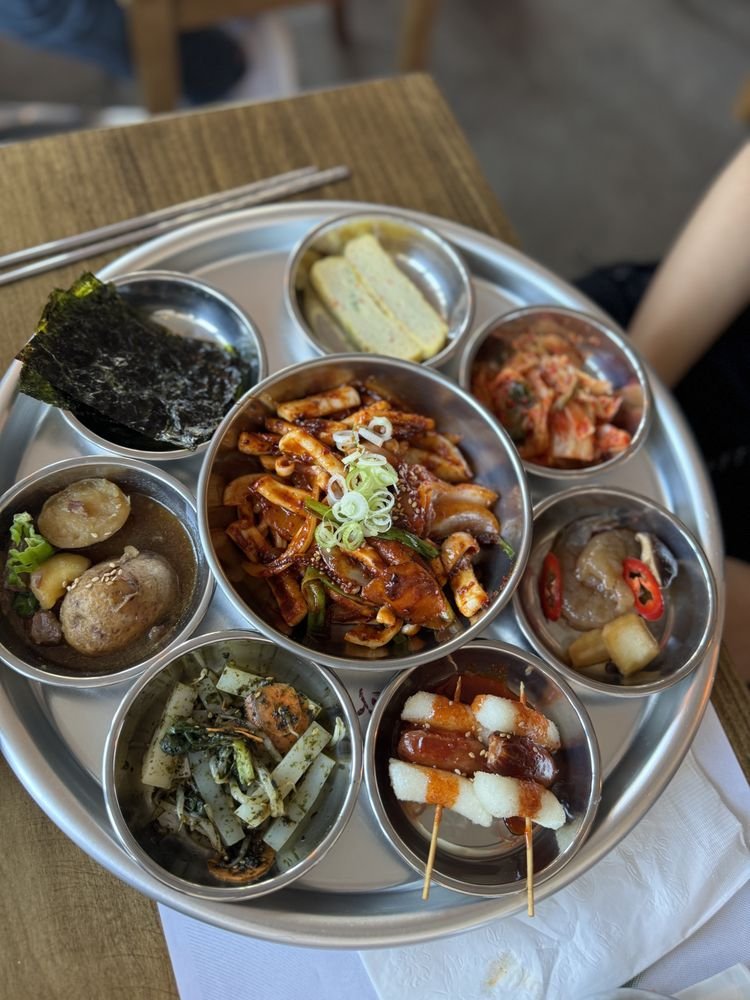
Spicy Squid Platter

Choose from four main dishes (bulgogi, jeyuk bokkeum, etc.), which come with rice, soup, and 7-8 side dishes all served on a single tray. The interior features red tiles and vintage photo frames creating a retro atmosphere, as if time has stood still. The pricing is remarkably affordable by Manhattan standards, earning praise as a triumph of practical, humble Korean cooking.

No reservations are accepted, so lines form early. Arrive by 5pm for first seating. Cash only at lunch.

Location: 205 Allen St, Lower East Side
Price point: $ ($32 set meal)

Sam Sunny: Instagram-Famous Kimchi Fried Rice

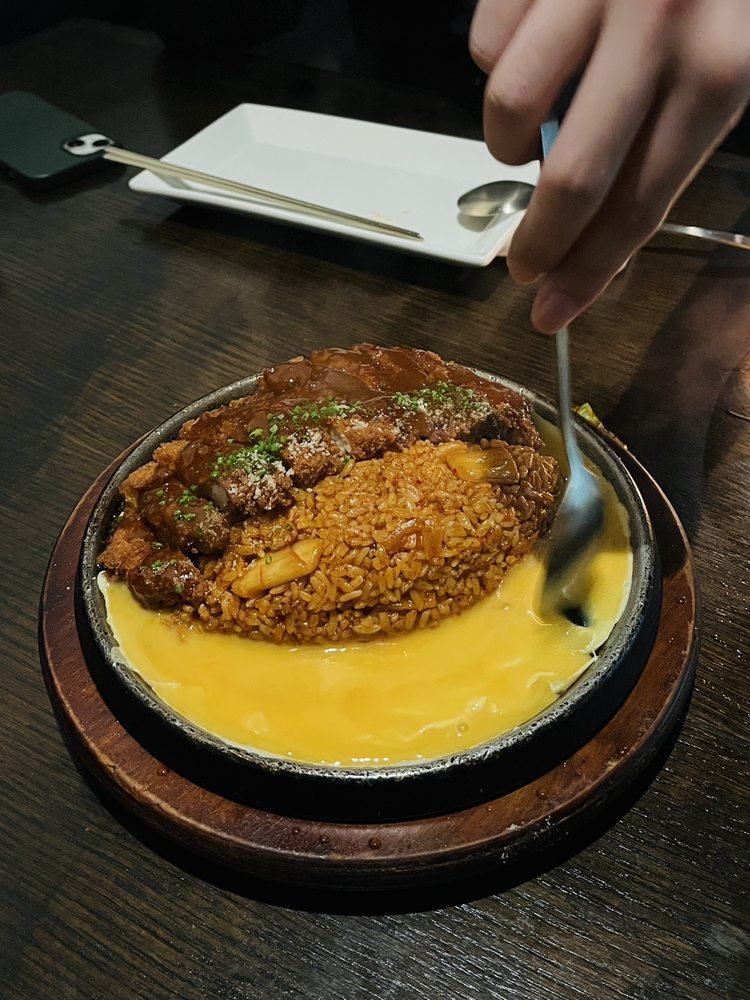
This unassuming spot in Murray Hill gained viral fame on Instagram for its tableside kimchi bokkeumbap performance. The signature dish features thick chicken katsu and a soft-boiled egg on kimchi fried rice, prepared with theatrical flair—complete with a fire show—right at your table.

Kimchi Fried Rice with Chicken Katsu

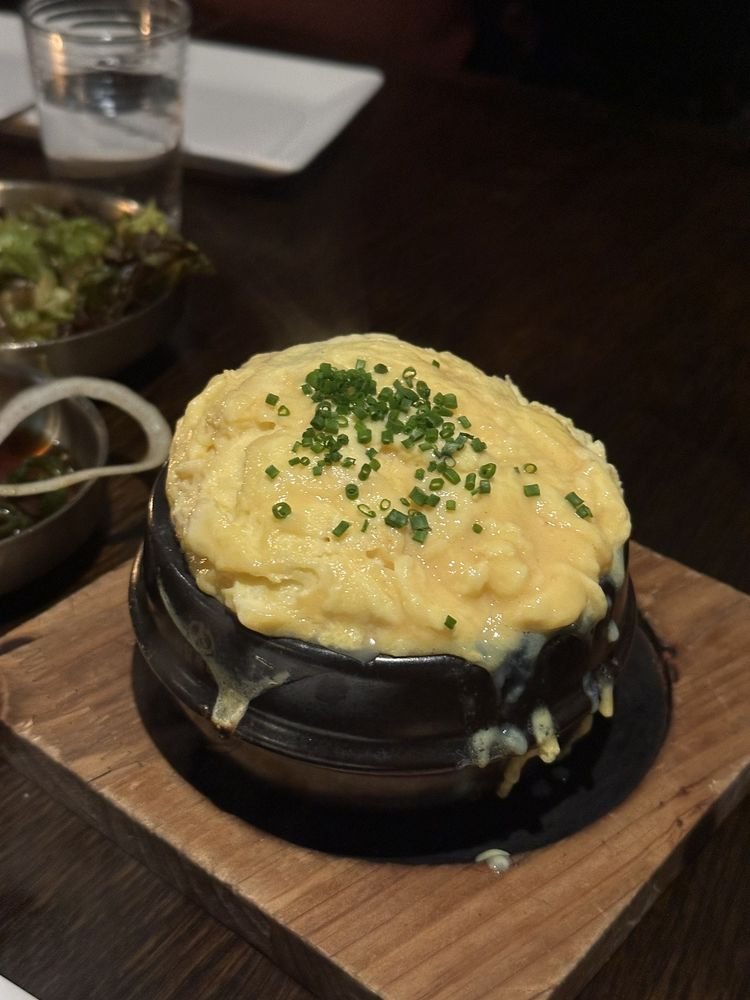
At around $25 per bowl, it offers excellent value and has become a favorite among NYU students and office workers. The menu also includes tomahawk-style braised pork galbi, cloud-like egg custard inspired by Southern Korean cuisine, and Korean-style brunch items.

Egg Souffle

Location: 517 2nd Avenue, Murray Hill
Reservations: Resy
Price point: $ ($20-30)

8282: Lower East Side’s Korean Tapas Bar

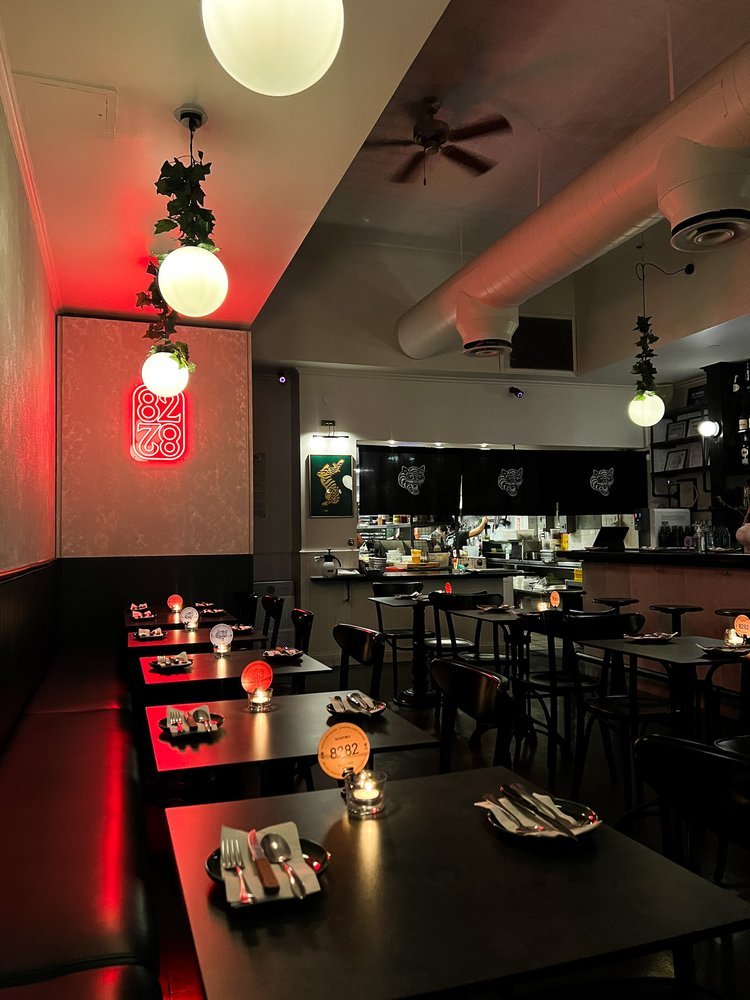
Named after the Korean expression “ppalli ppalli” (hurry hurry), 8282 channels the energy of a Korean pocha (street food tent) in a modern LES setting. Since opening in 2021, it’s attracted both hipsters and Korean food enthusiasts with its playful, contemporary approach to Korean drinking snacks.

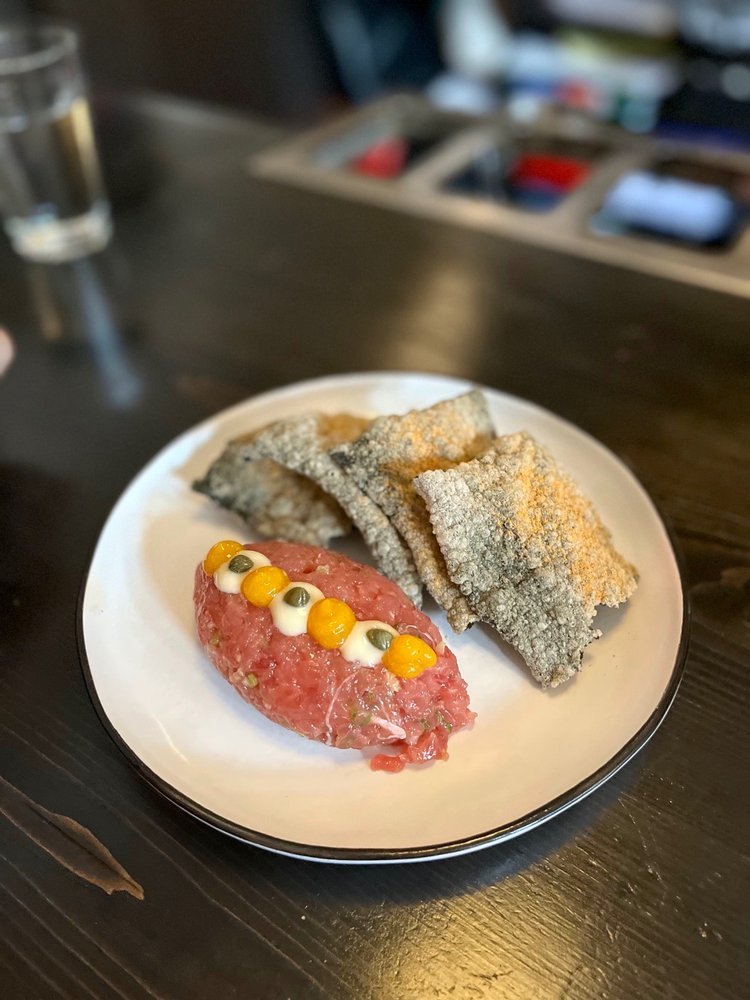
tuna tartare

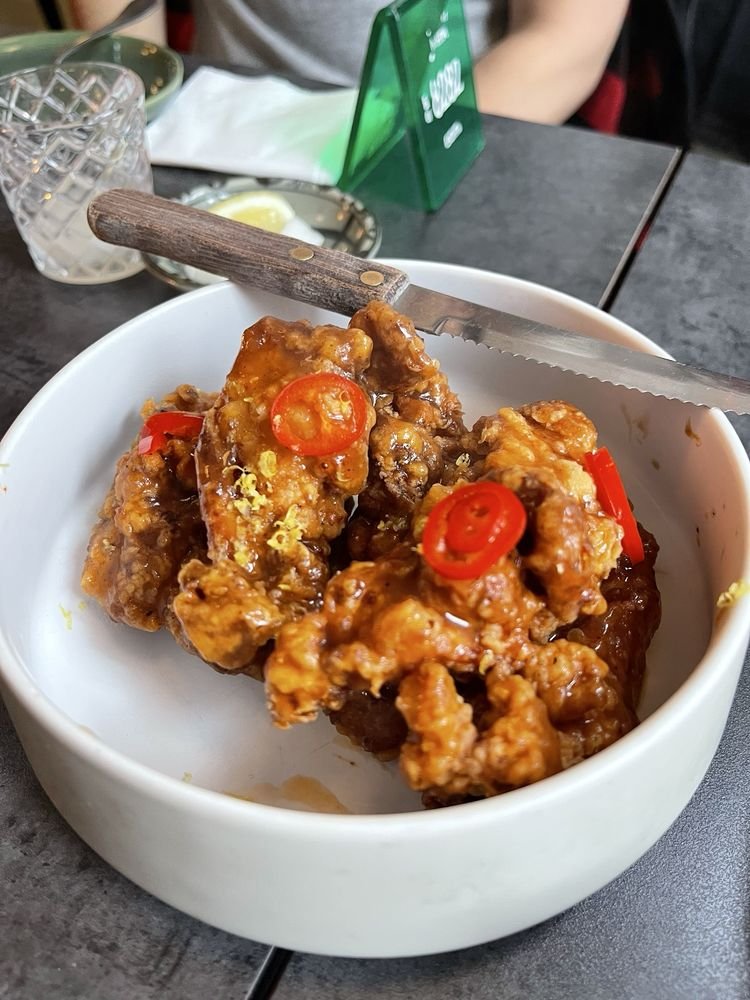
The menu divides into small plates (anju) and larger dishes. The most popular item is tuna tartare on crispy gim bugak (seaweed chips) with house soy sauce and quail egg yolk. Other highlights include spicy-sweet chicken wings, truffle japchae pasta, and Iberico pork bossam tacos. For larger dishes, try the seafood-loaded haemul pajeon or charcoal LA galbi.

Fried chicken

Pair dishes with soju cocktails at the casual bar seating. Two to three small plates per person make for a satisfying meal.

Location: 84 Stanton Street, Lower East Side
Reservations: Official website or Resy
Price point: $ (small plates $12-18, mains ~$25)

The Evolution of Korean Dining in Manhattan

The transformation of Manhattan’s Korean restaurant scene reflects broader shifts in how New York diners engage with Korean culture. New York now easily ranks with Seoul as one of the world’s hotbeds for cutting-edge and expensive Korean cuisine, with the Michelin Guide documenting this evolution for years.

What makes this moment particularly exciting is the diversity of concepts. Fine dining establishments are pushing boundaries with techniques learned at French temples like Per Se and Le Bernardin, while casual spots embrace the warmth and generosity of Korean home cooking and street food culture. Some restaurants, like Moono, successfully bridge both worlds.

The geographic expansion beyond Koreatown also signals Korean cuisine’s mainstream acceptance. From the Lower East Side to Rockefeller Center, from Flatiron to Hell’s Kitchen, Korean restaurants are now integral to Manhattan’s diverse culinary ecosystem.

Tips for Exploring Manhattan’s Korean Food Scene

For Fine Dining:

  • Book well in advance—Michelin-starred restaurants fill up quickly
  • Budget $150-400 per person depending on the venue
  • Consider lunch prix-fixe menus for better value (where available)
  • Ask about wine or traditional Korean alcohol (sool) pairings

For Casual Dining:

  • Most popular spots don’t take reservations or have limited availability
  • Arrive early to avoid long waits, especially on weekends
  • Come with a group to share more dishes family-style
  • Don’t skip the banchan (side dishes)—they’re often the highlight

Neighborhood Guide:

  • Koreatown (32nd St): Traditional spots, Moono, Seoul Salon, Nōksu
  • Flatiron: Oiji Mi
  • Rockefeller Center: Naro
  • Hell’s Kitchen: Mari, Kochi
  • Lower East Side: Kisa, 8282
  • Tribeca: Jungsik
  • Murray Hill: Sam Sunny

The Future of Korean Cuisine in New York

With Jungsik’s historic three-star achievement and numerous one and two-starred establishments, Korean cuisine has proven it can compete at the highest levels of fine dining. Meanwhile, the success of casual concepts like Kisa and Sam Sunny shows that New Yorkers crave both high and low expressions of Korean food culture.

The current boom suggests we’ll see continued innovation—perhaps more regional Korean cuisines represented, more chef-driven reinterpretations, and greater integration of Korean ingredients and techniques into non-Korean restaurants. As chef training grounds like Jungsik, Atomix, and Oiji Mi continue producing talented alums, the next generation of Korean restaurants will only push boundaries further.

From three-Michelin-starred temples to $32 set meals that transport you to Seoul, Manhattan’s Korean restaurant scene offers something for every palate and budget. Whether you’re seeking culinary adventure, nostalgia, or simply a great meal, there’s never been a better time to explore Korean food in New York City.


Additional Reading:

Last Updated: January 2026


Have you visited any of these Korean restaurants in Manhattan? Share your experiences in the comments below!