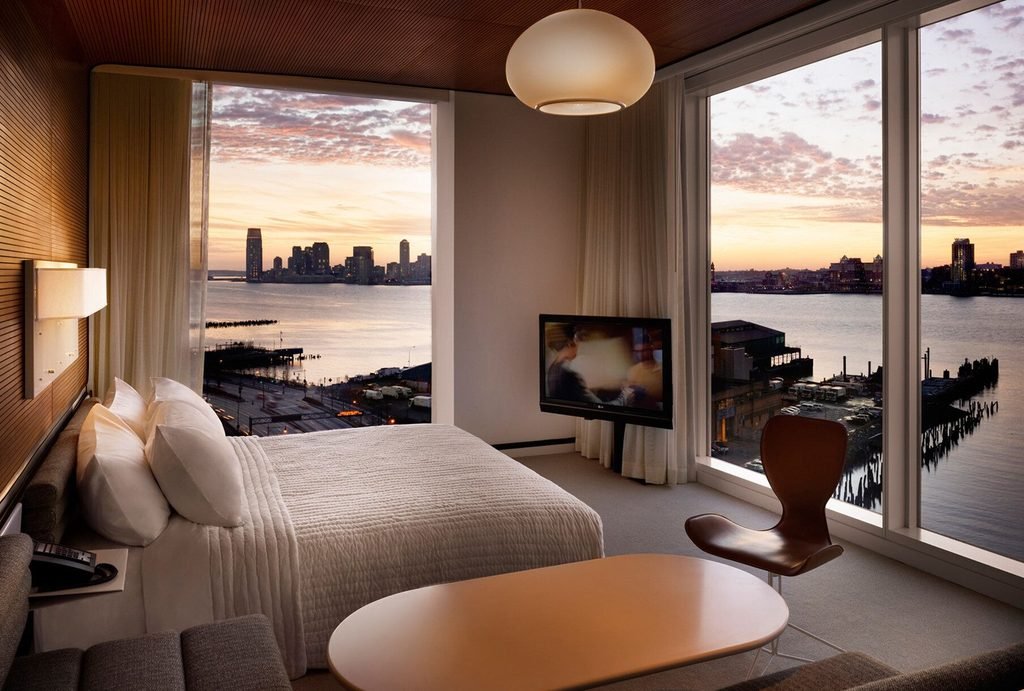
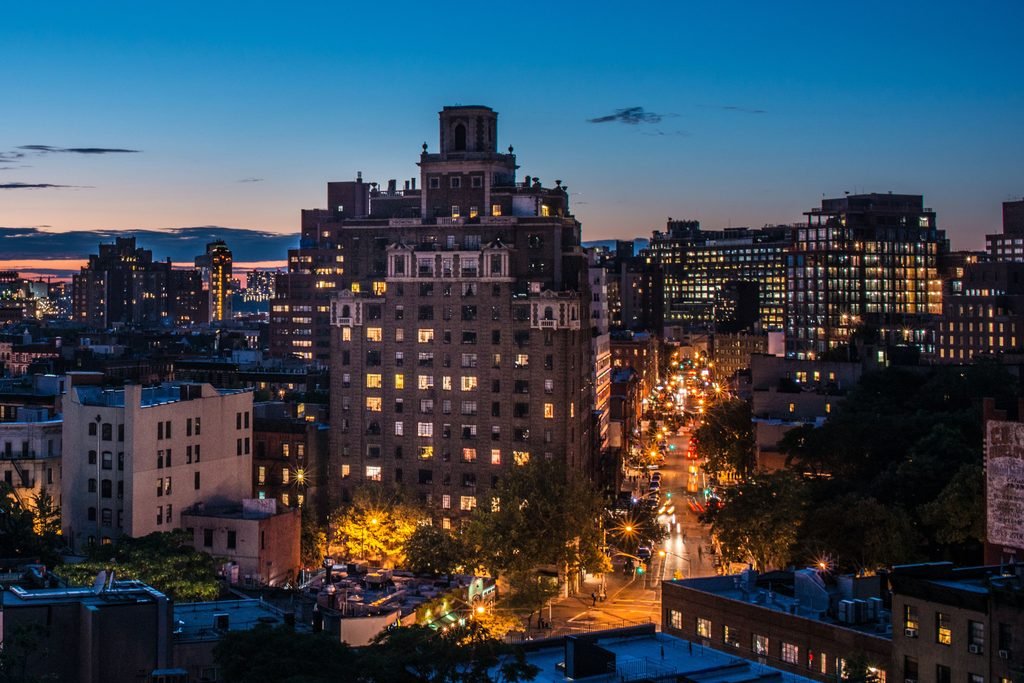
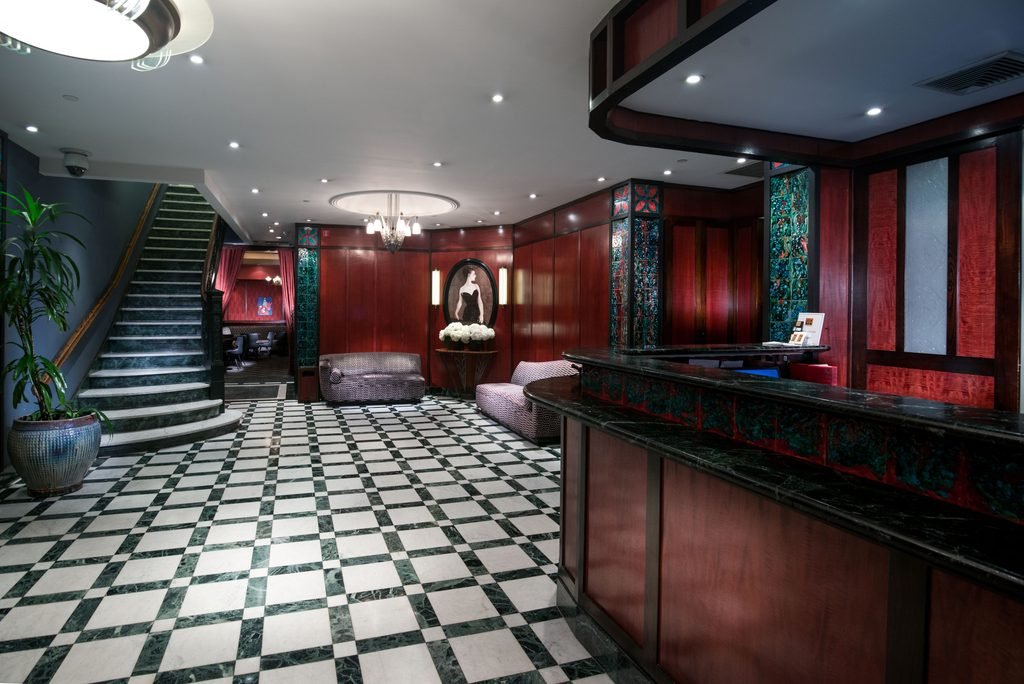
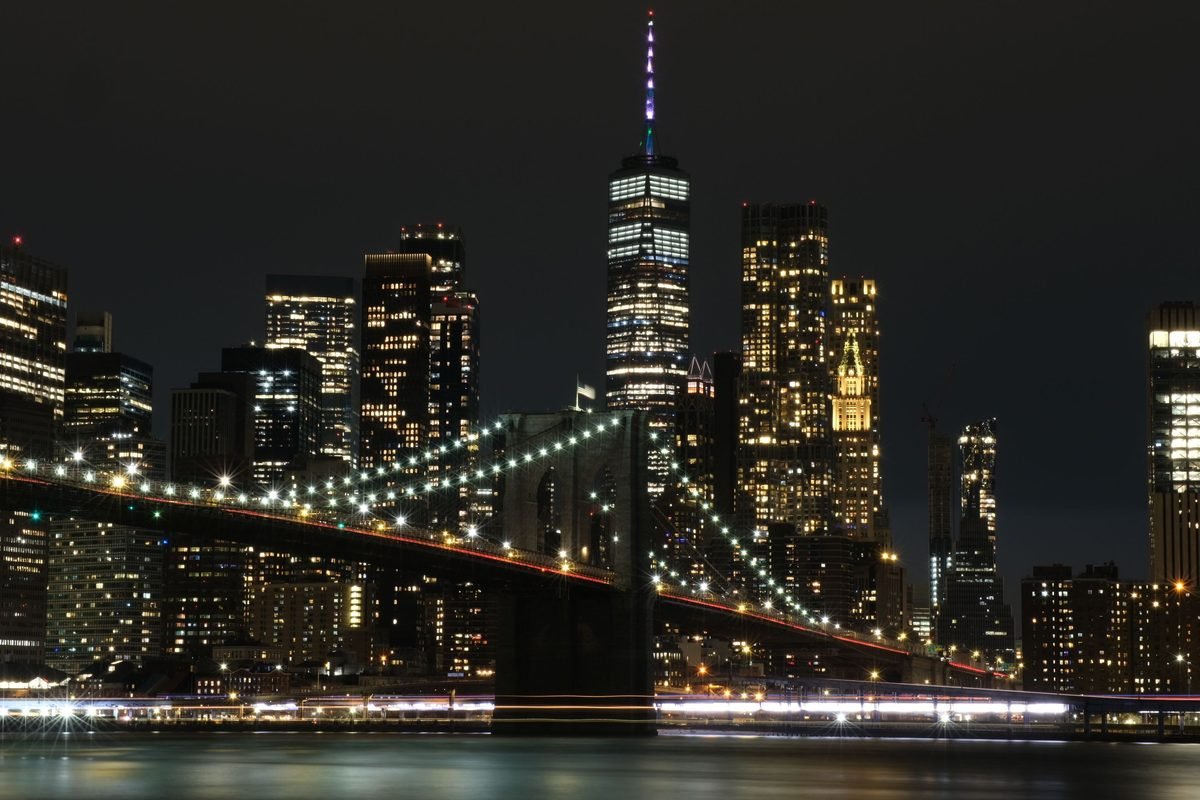
Planning a spooky getaway? These are the best boutique hotels near the Village Halloween Parade — from SoHo lofts to Tribeca hideaways — all within walking distance of Greenwich Village’s Halloween festivities.
Every October 31st, more than two million spectators pour into Lower Manhattan for the Village Halloween Parade — the largest Halloween celebration on earth. If you’re hunting for boutique hotels near the Village Halloween Parade, location is everything: heavy street closures and packed subway platforms make walkability the single most important factor for an easy, elevated Halloween weekend in New York City.
This guide rounds up the best hotels near Greenwich Village Halloween Parade route — from industrial-chic SoHo landmarks to hushed Tribeca hideaways — plus everything you need to know about the 2026 parade route, timing, and booking strategy.
What to Know About the 2026 Village Halloween Parade
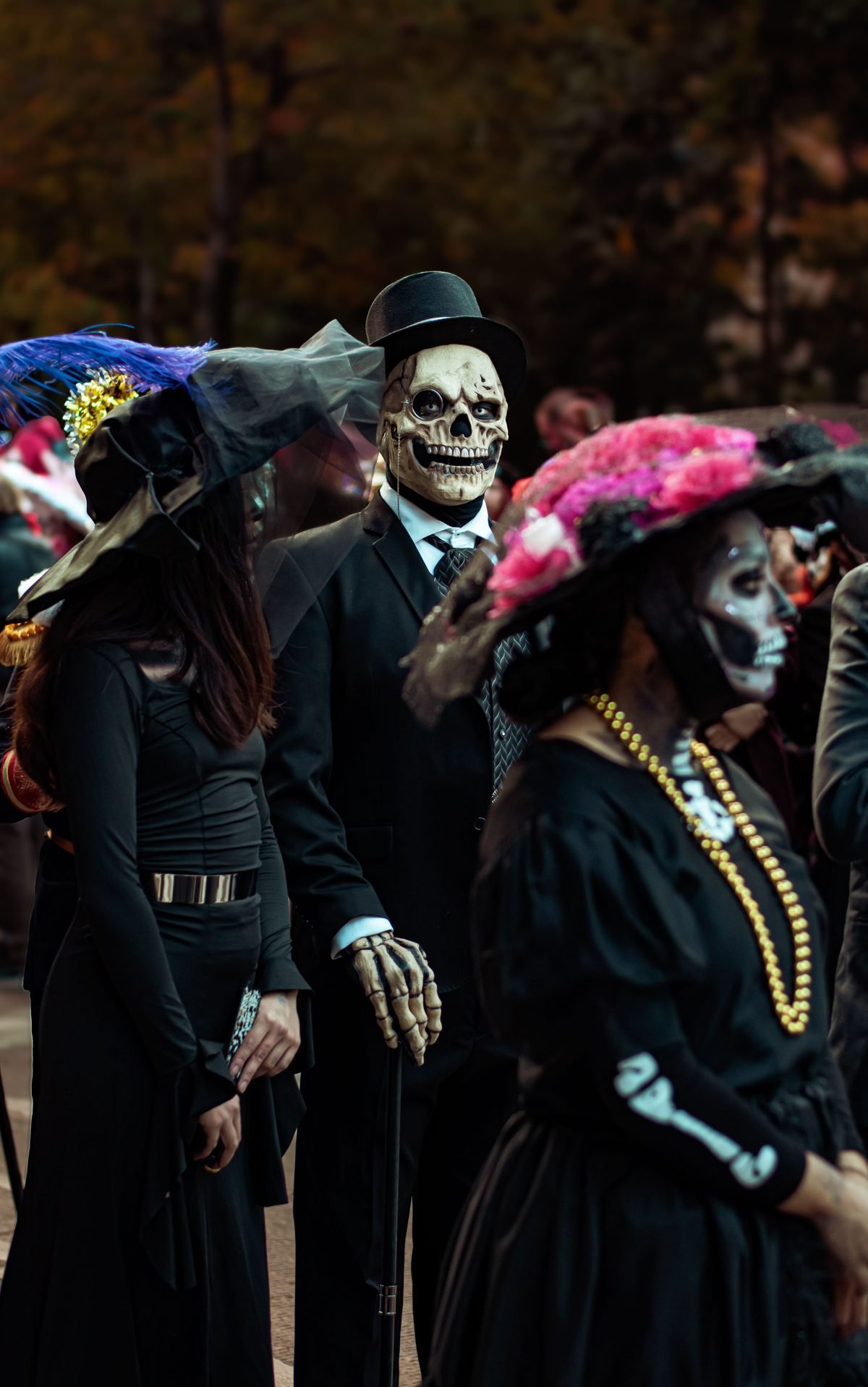
Before booking, it helps to know exactly what you’re walking into. The 2026 edition is the parade’s 53rd year, and organizers have confirmed the theme as “Body & Soul,” with giant illuminated puppets, Day of the Dead-inspired skeletons, and more than 50 marching bands.
Key details for October 31, 2026:
Start time: 7:00 PM, rain or shine
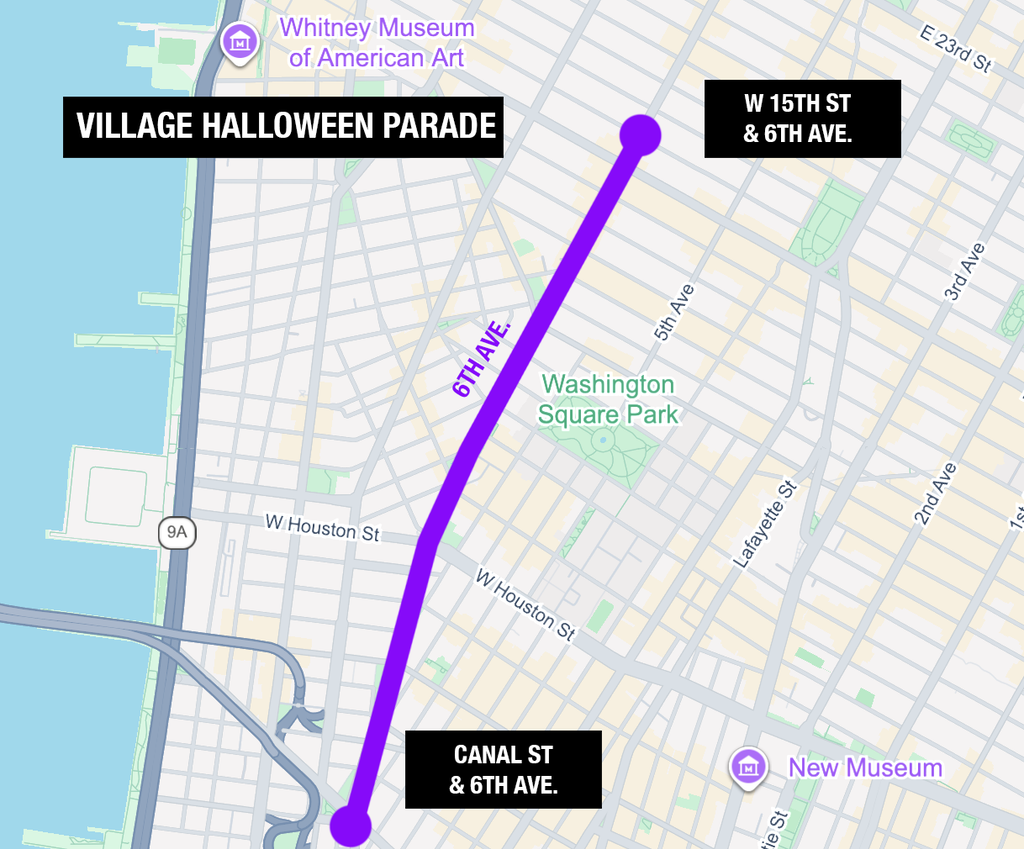
Route: North on Sixth Avenue from Canal Street to 15th Street
Best viewing spots: Along Sixth Avenue between King Street and West 15th Street (the stretch from Bleecker to 14th Street gets especially crowded)
To march in costume: Line up at Canal Street and Sixth Avenue between 6:30 and 9:00 PM — costumes are mandatory to enter the route
Because Sixth Avenue effectively shuts down for hours and nearby subway stations get overwhelmed, staying at one of the boutique hotels near the Village Halloween Parade listed below means you can walk to the action instead of fighting traffic or crowded trains.
Quick Comparison: Best Hotels Near the Parade Route
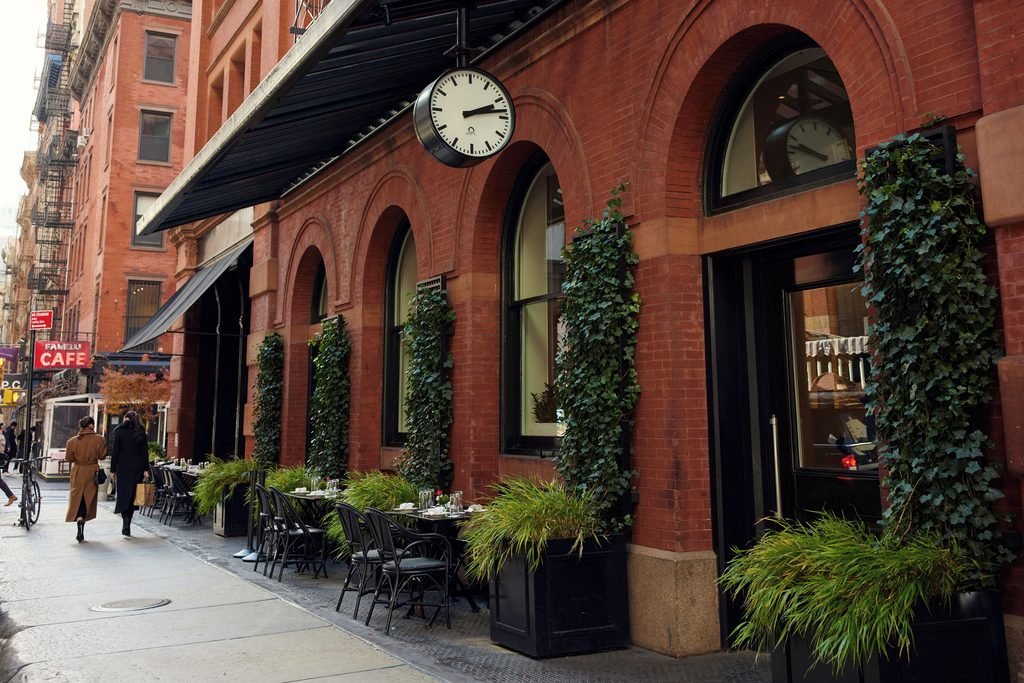
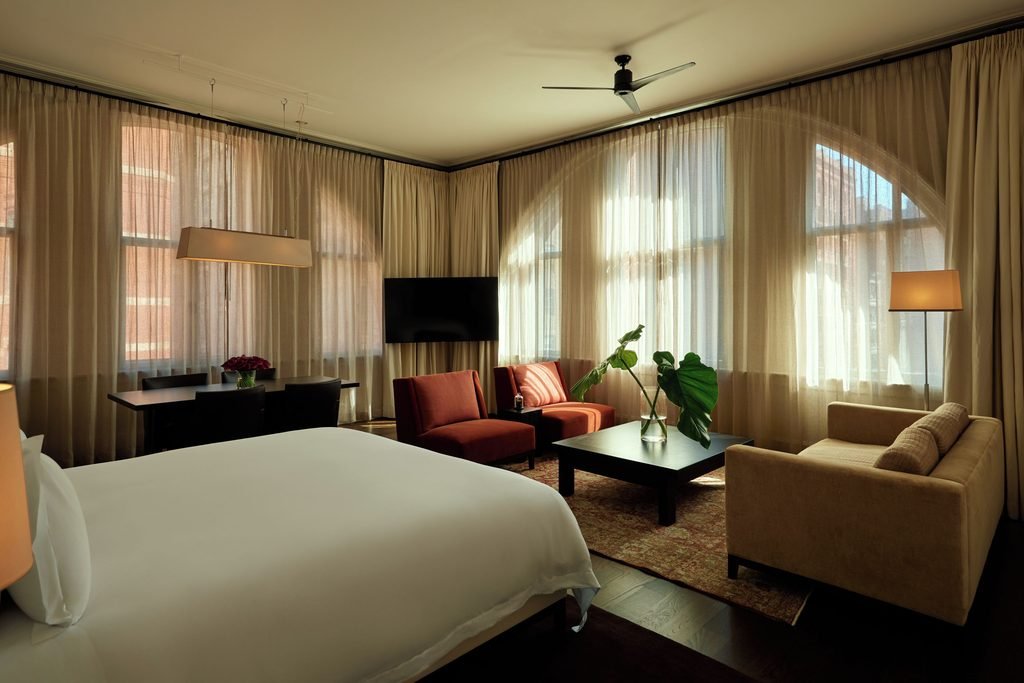
1. SoHo Grand Hotel — Downtown Sophistication Near the Start of the Route
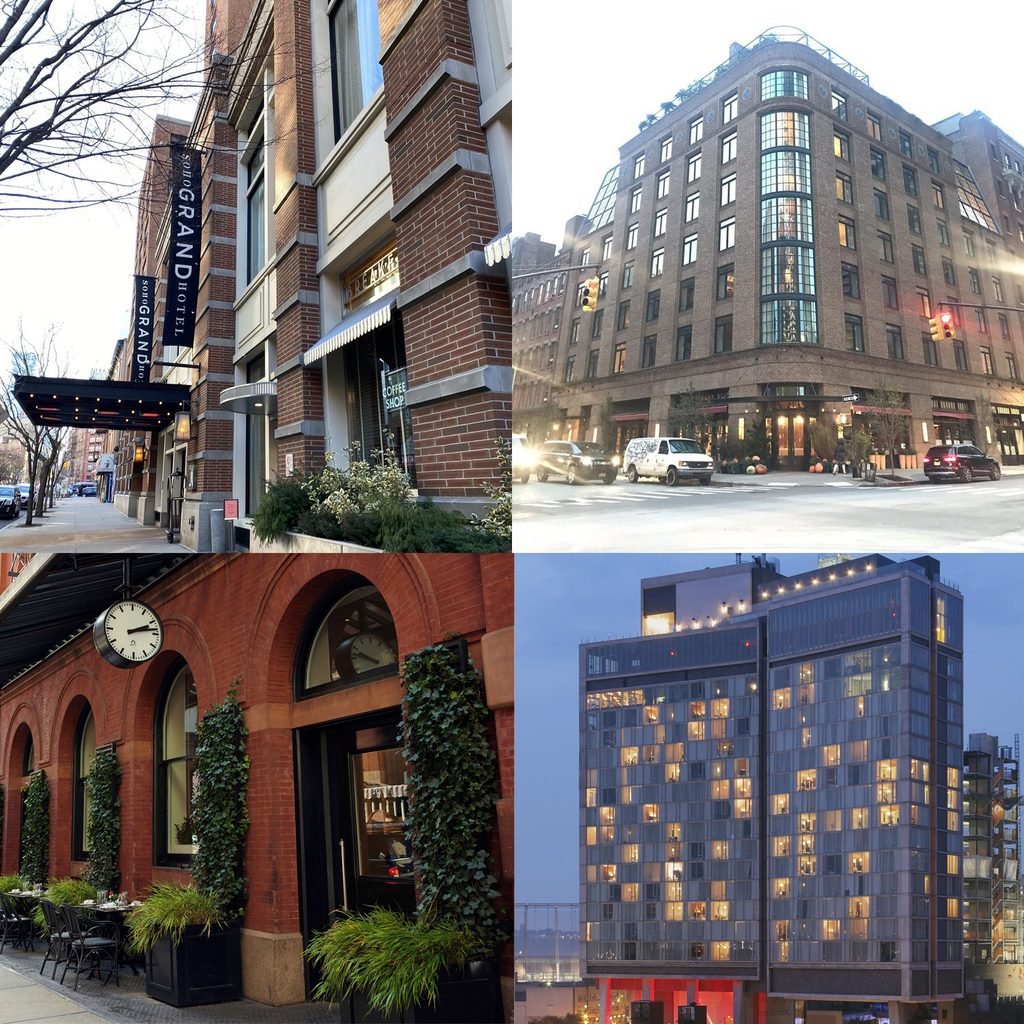
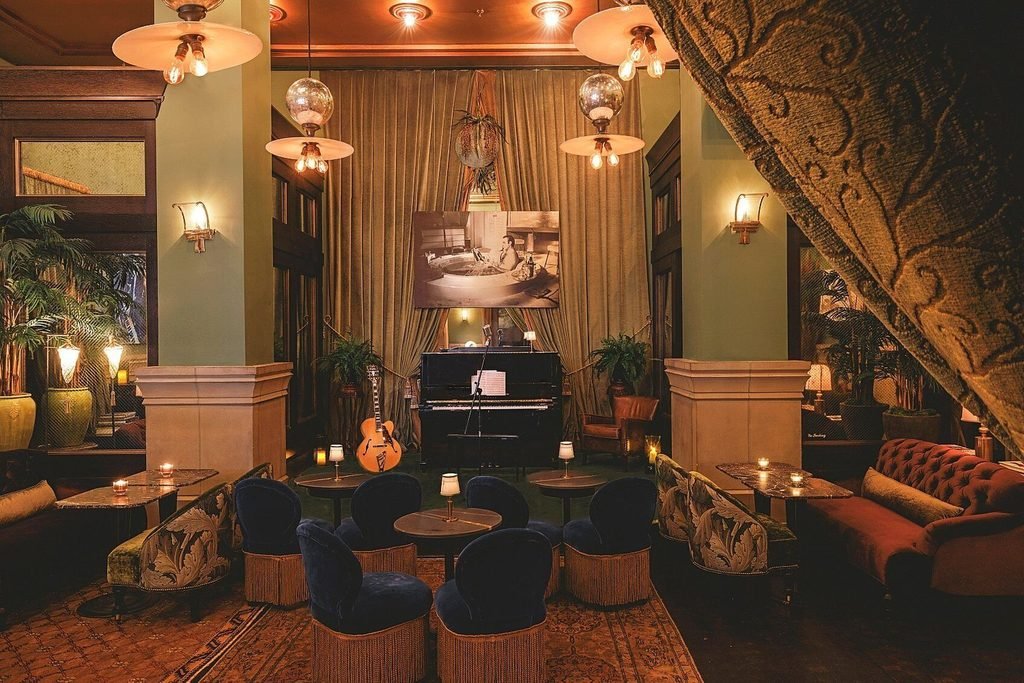
If you want one of the most convenient hotels near the Greenwich Village Halloween Parade, SoHo Grand Hotel is hard to beat. It sits at 310 West Broadway, just blocks from the parade’s Canal Street gathering point, and is known for its cast-iron industrial design, resident dog mascots, and lively Grand Bar & Lounge, which tends to fill up with costumed guests on Halloween night.
Location: 310 West Broadway, New York, NY 10013
Best for: Travelers who want nightlife and a short walk to the lineup
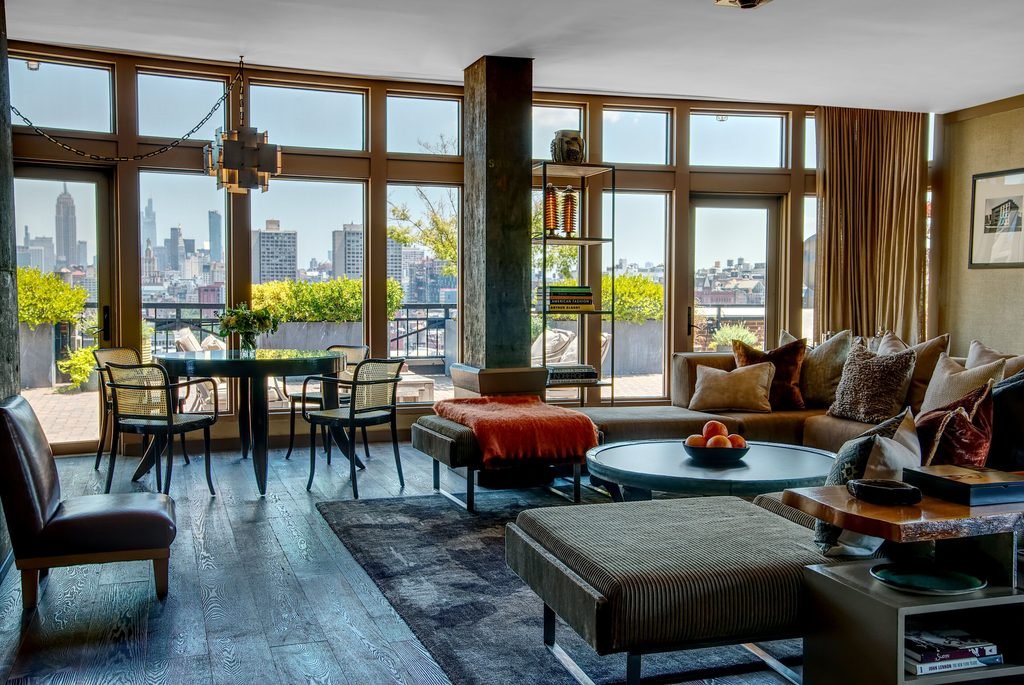
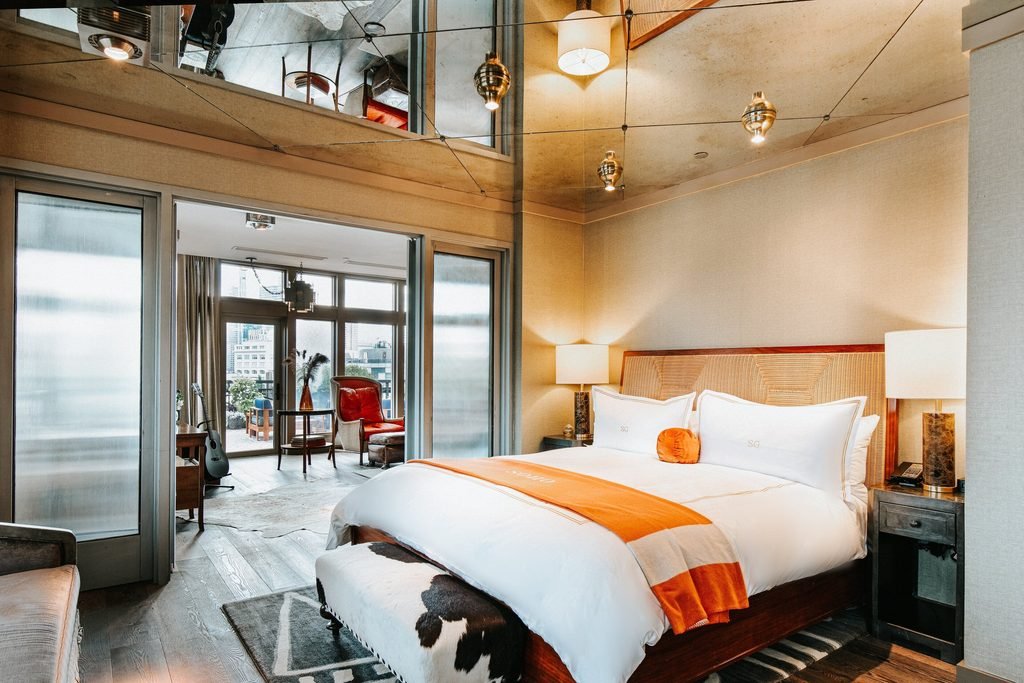
Booking tip: Upper-floor rooms offer skyline views over Downtown Manhattan — book early, since SoHo fills up fast in late October
2. The Greenwich Hotel — Quiet Luxury Steps from Tribeca
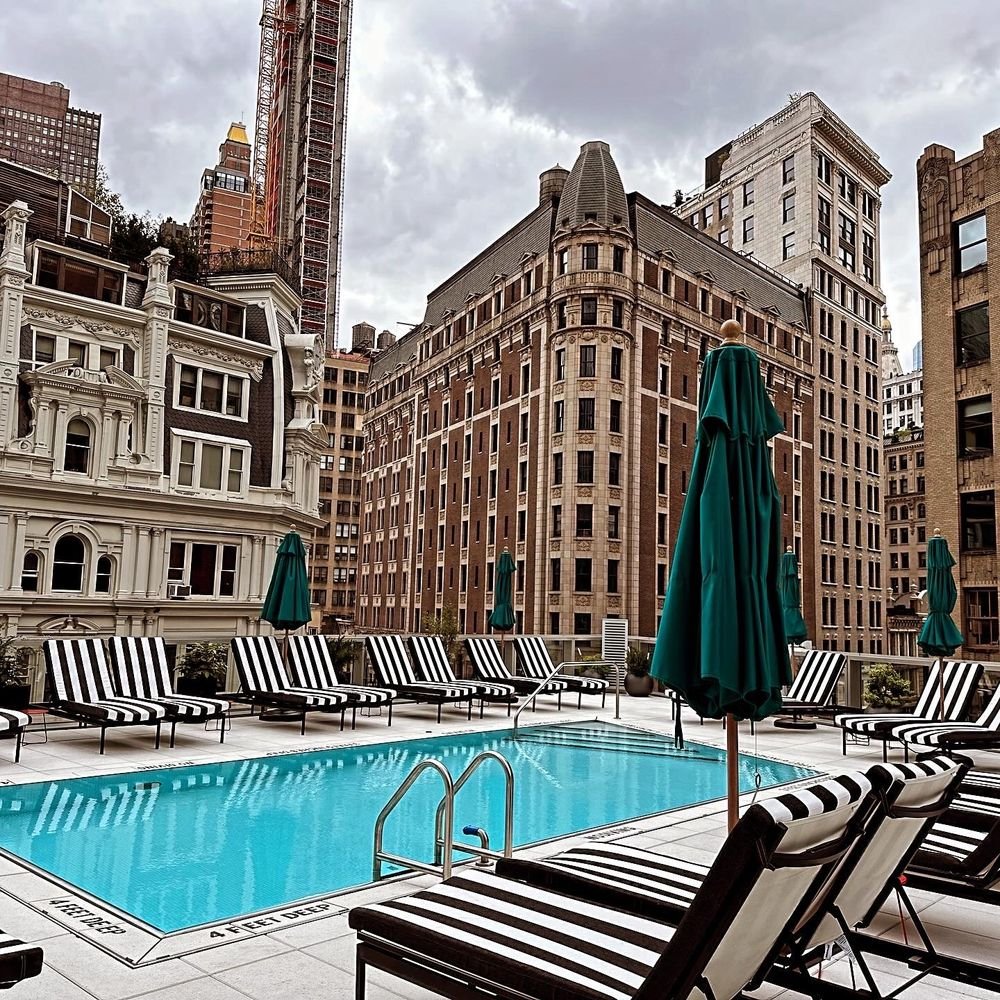
Co-owned by Robert De Niro, The Greenwich Hotel is the antidote to parade chaos: an 88-room hideaway with a subterranean pool, the Shibui Spa, and Italian dining at Locanda Verde. It’s a favorite pick among boutique hotels near the Village Halloween Parade for guests who want to experience the spectacle, then retreat somewhere calm and private.
Location: 377 Greenwich Street, New York, NY 10013
Best for: Luxury travelers who prefer a serene sanctuary after the crowds
Key feature: Individually designed rooms with hand-laid Moroccan and Mexican terracotta tile work
3. The Mercer — Classic SoHo Loft Living
In the heart of SoHo’s shopping district, The Mercer offers loft-style rooms with soaring ceilings and oversized windows — a design-lover’s favorite among hotels near Greenwich Village Halloween Parade routes. Its position near Sixth Avenue means a short walk gets you straight to prime viewing spots, and the neighborhood’s restaurant scene makes it easy to grab a bite before the 7 PM kickoff.
Location: 147 Mercer Street, New York, NY 10013
Best for: Design enthusiasts and foodies who want a boutique SoHo base
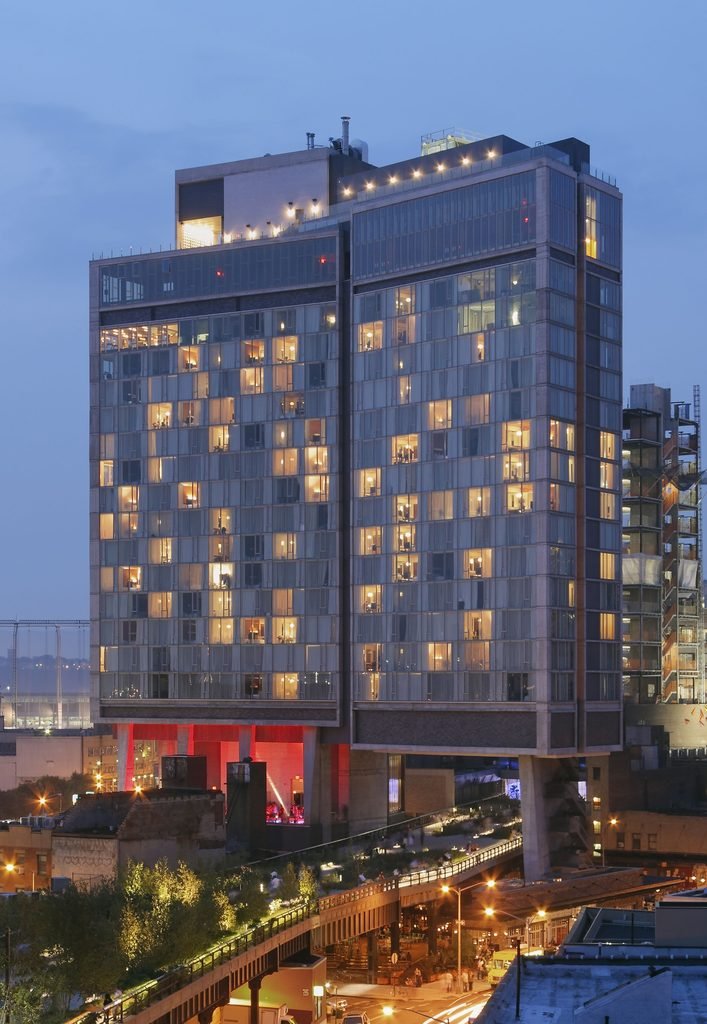
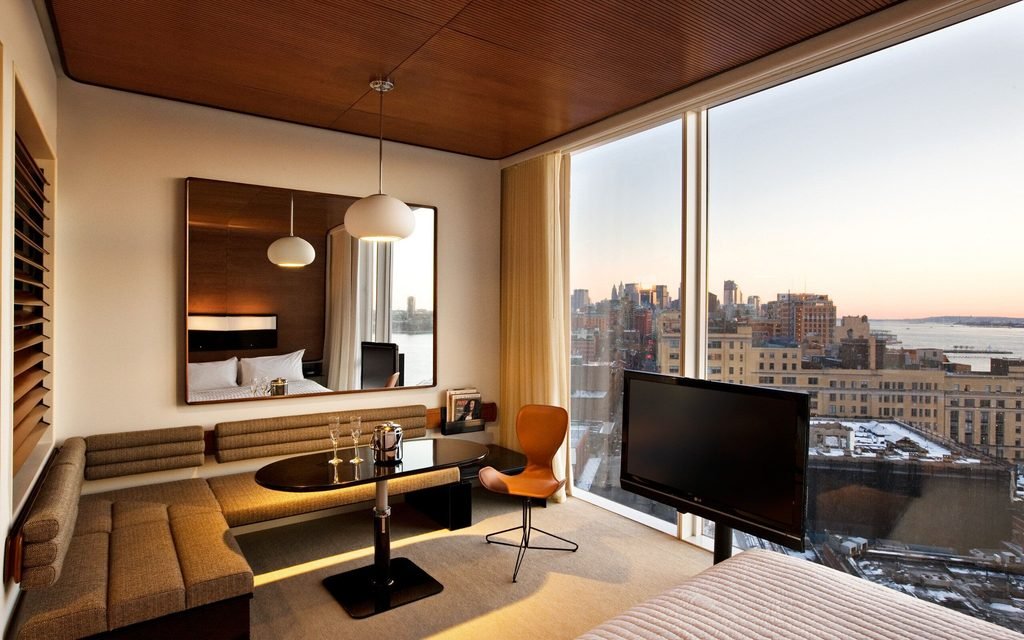
4. The Standard, High Line — Meatpacking’s Party Scene
Straddling the High Line, The Standard is known for Hudson River views and its rooftop venue, Le Bain. It’s a bit farther from the parade start but puts you close to Chelsea’s gallery scene and West Village nightlife for pre- or post-parade plans.
Location: 848 Washington Street, New York, NY 10014
Best for: Rooftop views, late-night parties, and easy access to Chelsea
5. Washington Square Hotel — Budget-Friendly & Steps from the Action
For travelers who want a genuinely boutique feel without luxury-hotel pricing, the Washington Square Hotel sits directly on Washington Square Park, a short walk from the parade’s midpoint on Sixth Avenue. It’s one of the few true boutique properties actually inside Greenwich Village itself, making it a practical alternative among hotels near the Greenwich Village Halloween Parade for guests booking last-minute.
Location: 103 Waverly Place, New York, NY 10011
Best for: Budget-conscious travelers who still want a walkable, character-filled stay
Insider Tips for Booking Your Halloween NYC Stay
Book 30–60 days in advance. Availability at SoHo, Tribeca, and Greenwich Village hotels drops fast once the parade’s theme is announced each September.
Plan around the road closures. Sixth Avenue closes to traffic from Canal Street to 15th Street starting in the late afternoon on October 31st — walking from a nearby hotel is far faster than a cab.
Check cancellation policies. Favor bookings with free cancellation up to 48 hours out, since NYC weather and travel plans can shift quickly in late October.
Skip the subway near showtime. Stations along the Sixth Avenue line get extremely congested after 6 PM — another reason walkable boutique hotels near the Village Halloween Parade are worth the premium.
Looking for the best luxury neighborhoods in Manhattan and Brooklyn? This 2026 guide breaks down pricing, lifestyle, and market data for the five most sought-after high-end NYC neighborhoods, from West Village to DUMBO.
Before diving into individual neighborhoods, it helps to understand the broader context. Despite affordability concerns dominating headlines after the 2025 mayoral election, the top end of the New York market has kept moving. Brokers report that Manhattan’s luxury tier — generally properties above $4 million — continued to drive both sales volume and price gains into 2026, even as the broader co-op market cooled (The Real Deal). Manhattan luxury inventory actually tightened by double digits year-over-year, which has kept upward pressure on pricing at the high end (Purllow 2026 NYC Luxury Report).
Buyer behavior is also shifting. According to Sotheby’s International Realty’s 2026 Luxury Outlook, wealthy buyers are prioritizing privacy and multi-generational flexibility, with a growing share of purchases made by buyers planning to house extended family under one roof (Bloomberg). In practice, that means more demand for full-floor units, private elevators, and multiple bedroom configurations — all things you’ll find concentrated in the neighborhoods below.
With that backdrop, here are the top five best luxury neighborhoods in Manhattan and Brooklyn for 2026.
1. West Village: Historic Charm Meets Unmatched Luxury
The West Village remains the undisputed crown jewel of Manhattan residential real estate. Known for its tree-lined cobblestone streets, intimate cafes, and historic brownstones, this neighborhood offers a relaxed, small-town atmosphere right in the heart of Lower Manhattan.
Vibe & Lifestyle: Quiet, artistic, and endlessly fashionable. Home to boutique designer shops, Michelin-starred bistros, and picturesque residential blocks.
Real Estate Snapshot: Extremely tight inventory and high demand keep valuations resilient. Pre-war townhouses and meticulously restored condo conversions dominate the market.
Market Outlook: Expect average rental prices around $5,500–$8,500/month for a one-bedroom, with luxury townhouse sales frequently exceeding $15 million to $30+ million.
2. SoHo: High-Fashion Epicenter and Iconic Loft Living
South of Houston Street, SoHo is globally renowned for its iconic cast-iron architecture, high-fashion flagship stores, and expansive artist-style lofts. It’s the ideal neighborhood for residents who thrive in an energetic, style-forward urban setting.
Vibe & Lifestyle: Trendy, fast-paced, and cosmopolitan, with world-class shopping, contemporary art galleries, and premier dining right outside your door.
Real Estate Snapshot: Soaring ceilings, oversized historic windows, and custom open-concept interiors define the housing stock. High-end loft conversions and boutique luxury condominiums are highly coveted.
Market Outlook: High-end two-bedroom lofts range between $8,000–$14,000/month for lease, while median sales prices hover around $3,000–$3,500 per square foot. SoHo has also seen some standout trades in 2026, including penthouse sales in the eight-figure range, reinforcing its status as one of the more resilient high-end NYC neighborhoods 2026 has produced (Engineers and Architects of America market update).
3. Tribeca: Exclusive, Quiet Luxury for High-Net-Worth Residents
For those prioritizing privacy, space, and understated sophistication, Tribeca stands unmatched. Historically an industrial warehouse district, Tribeca has transformed into Manhattan’s most exclusive residential enclave, popular among executives, celebrities, and families.
Vibe & Lifestyle: Discreet, polished, and serene. Quiet cobblestone streets host world-renowned restaurants, private members’ clubs, and top-tier private schools.
Real Estate Snapshot: Doorman luxury condominiums, full-floor penthouses, and converted historic warehouses with private elevator access are the neighborhood’s signature.
Market Outlook: Median sales prices regularly exceed $4.5 million, with luxury rentals averaging $9,000–$18,000/month for multi-bedroom residences. Tribeca’s inventory of full-floor and multi-bedroom layouts aligns closely with the growing buyer preference for multi-generational living noted in Sotheby’s 2026 outlook.
4. DUMBO, Brooklyn: Waterfront Views and Industrial-Chic Design
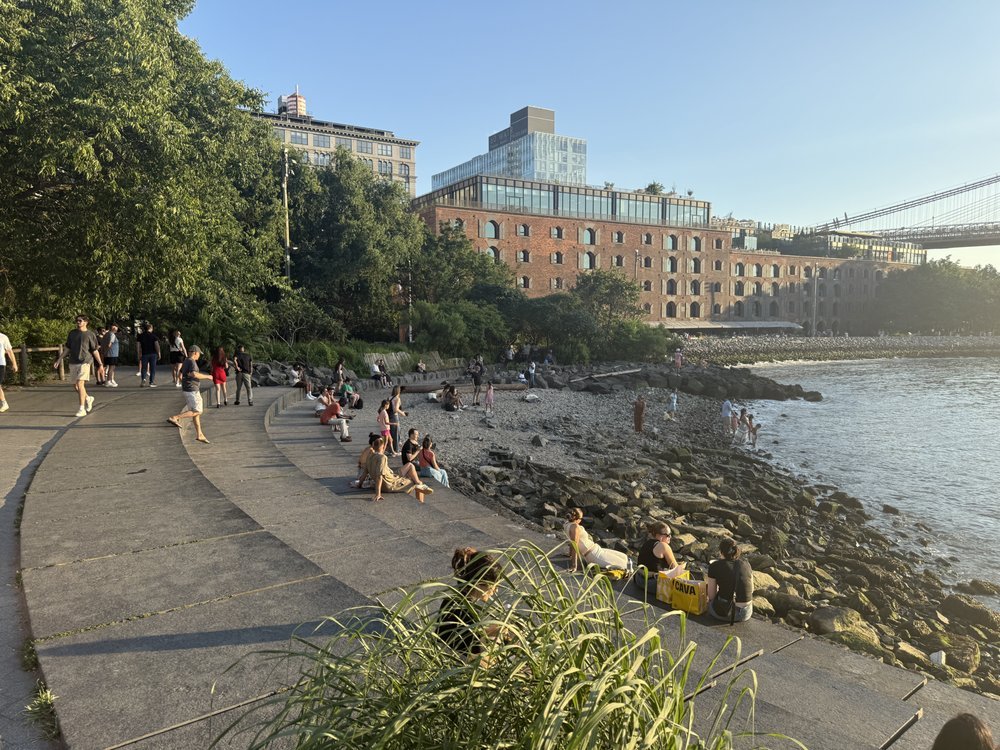
Just across the East River, DUMBO (Down Under the Manhattan Bridge Overpass) offers one of the most dynamic luxury markets in NYC. Boasting unmatched views of the Manhattan skyline and Brooklyn Bridge Park, DUMBO blends historic cobblestone charm with cutting-edge modern development.
Vibe & Lifestyle: Tech-forward, creative, and scenic, with excellent waterfront green spaces, artisan coffee shops, and design-focused boutiques.
Real Estate Snapshot: Luxury high-rise condominiums with full amenity packages (concierge, private gyms, rooftop decks) sit alongside converted timber-and-brick industrial lofts.
Market Outlook: One-bedroom luxury condos start around $1.3 million–$2.2 million, with rents ranging from $4,800–$7,500/month. Interestingly, industry data shows the luxury price threshold in Brooklyn neighborhoods like DUMBO sits closer to $2 million — noticeably lower than Manhattan’s $4 million-plus threshold — which is part of why more buyers priced out of Manhattan are turning to Brooklyn’s waterfront for comparable square footage (Purllow 2026 NYC Luxury Report).
5. Chelsea: Art, High Line Access, and Architectural Landmarks
Chelsea seamlessly bridges classic Manhattan character with modern architectural innovation. Stretching from the Hudson River toward Midtown, it’s celebrated for the High Line park, the West Chelsea art district, and world-class architecture designed by starchitects like Zaha Hadid and Frank Gehry.
Vibe & Lifestyle: Culturally rich, active, and highly walkable, with convenient access to Hudson River Park, Chelsea Market, and more than 200 art galleries.
Real Estate Snapshot: Diverse options range from classic pre-war co-ops and brownstones to ultra-modern glass tower condominiums along the High Line corridor.
Market Outlook: Average one-bedroom rents range from $4,500–$6,500/month, while new construction condo sales average $2,200–$2,800 per square foot.
NYC Luxury Real Estate Market Comparison (2026 Snapshot)
Neighborhood
Primary Property Type
Avg. 1-Bed Rent (Monthly)
Median Sales Price / Sq. Ft.
Primary Appeal
West Village
Brownstones & Pre-war Condos
$5,500 – $8,500
$2,400+
Historic charm, privacy
SoHo
Cast-Iron Lofts & Luxury Condos
$6,000 – $9,500
$3,000+
Fashion, dining, architecture
Tribeca
Converted Warehouses & High-Rise
$7,000 – $12,000
$2,800+
Privacy, space, prestige
DUMBO
Industrial Lofts & Modern Condos
$4,800 – $7,500
$1,800+
Skyline views, waterfront
Chelsea
Starchitect Condos & Co-ops
$4,500 – $6,500
$2,200+
Arts, High Line, central location
What’s Driving Demand Across These High-End NYC Neighborhoods in 2026
A few forces are shaping this year’s market and are worth keeping in mind as you compare the best luxury neighborhoods in Manhattan and Brooklyn:
Constrained trophy inventory. True trophy properties — prewar penthouses, full-floor residences, townhouses — represent only a small slice of total listings, so when one comes to market, competition among qualified buyers is intense.
International capital. Buyers from the Middle East, Asia, and Europe continue to treat Manhattan real estate as a stable long-term store of value, regardless of currency fluctuations.
A widening city-vs-borough price gap. Brooklyn’s luxury threshold sits meaningfully below Manhattan’s, which is pushing more affluent buyers toward neighborhoods like DUMBO and Brooklyn Heights for better value per square foot.
Policy-driven caution at the very top. Anti-wealth political rhetoric following the 2025 mayoral race and an ongoing pied-à-terre tax debate have made some ultra-high-net-worth buyers more selective about eight-figure trophy purchases, even as the broader luxury tier keeps performing well (CooperatorNews).
Tips for Buyers and Renters Exploring High-End NYC Neighborhoods in 2026
Move fast on well-priced listings. Turnkey properties in tight-inventory neighborhoods like the West Village and Tribeca tend to go under contract quickly, while overpriced listings can sit for 90+ days — data worth tracking if you’re negotiating.
Compare Manhattan and Brooklyn side by side. If West Village or Tribeca pricing feels out of reach, DUMBO and nearby Brooklyn Heights offer a comparable luxury lifestyle at a noticeably lower per-square-foot cost.
Factor in co-op vs. condo dynamics. Co-op board approval requirements can add time and complexity in neighborhoods like Chelsea and the West Village, so build that timeline into your search from the start.
Work with a specialist. An experienced Manhattan or Brooklyn real estate agent is essential for accessing off-market listings, navigating co-op board approvals, and structuring high-yield investment purchases in this micro-market-driven landscape.
Final Thoughts
Navigating New York City’s real estate landscape in 2026 requires weighing both investment performance and lifestyle fit. Whether you choose the timeless residential feel of the West Village, the discreet prestige of Tribeca, or the sleek waterfront modernity of DUMBO, each of these high-end NYC neighborhoods offers a distinct version of the New York luxury lifestyle. The right fit ultimately comes down to how you want to live day to day — and working with an experienced local agent will help you get there with the least friction.
Thinking about buying or renting in one of these neighborhoods? Reach out to a local luxury real estate specialist to get access to off-market listings before they hit the public market.
Thinking beyond the hotel room for your next NYC assignment? This guide breaks down luxury corporate housing NYC options and extended stay serviced apartments Manhattan travelers actually book — from AKA and Blueground to the legal fine print of Local Law 18 — so you can land a compliant, comfortable home base for weeks or months in the city.
Planning a long-term business trip, an executive relocation, or a one-month-plus stay in New York City? A few nights at a five-star hotel feels great — but weeks or months of room service, cramped closets, and $18 breakfasts wear thin fast.
That’s why more executives, relocating employees, and digital nomads are booking luxury corporate housing NYC providers instead. These properties combine the space and privacy of a high-end residential apartment with the service standards of a boutique hotel, and they’ve become the default choice for anyone whose New York stay runs past the 30-day mark.
Below is an insider’s guide to finding the right extended stay serviced apartments Manhattan has to offer, including the top brands, the neighborhoods worth targeting, real cost comparisons, and the legal details that catch first-time renters off guard.
Why Choose Luxury Corporate Housing NYC Over a Hotel?
For stays longer than 30 days, a fully furnished executive suite beats a hotel room on nearly every metric that matters for daily living:
Turnkey living. Chef-caliber kitchens, in-unit washer/dryers, high-speed Wi-Fi, and a real workspace — not a desk wedged next to the minibar.
Flexible 30+ day leases. You get the flexibility of a short-term stay without signing a traditional 12-month New York lease, while staying fully compliant with local rental law (more on that below).
Real cost savings. According to a 2026 industry breakdown, a four-person team based in Midtown for 10 weeks spends roughly $112,000 in extended-stay hotels versus about $70,000 in a corporate apartment over the same period — a meaningful difference for any relocation or project budget.
Understanding NYC’s 30-Day Rule Before You Book
Before you fall in love with a listing, it’s worth understanding why nearly every legitimate corporate housing option in the city requires a minimum 30-night stay.
New York’s Local Law 18, enacted in 2022 and enforced by the Mayor’s Office of Special Enforcement since September 2023, created a strict registration system for rentals under 30 nights. Under the law, a host offering a stay shorter than 30 days must be a natural person who lives in the unit full-time, must be present during the guest’s stay, and can host no more than two paying guests. Whole-apartment, host-absent short stays are effectively illegal in ordinary residential buildings — a rule change that caused Airbnb’s active NYC listings to fall from roughly 22,000 to about 2,300 within months of enforcement beginning.
The good news for business travelers: rentals of 30 days or longer sit entirely outside Local Law 18’s scope. This is precisely the lane that luxury corporate housing NYC operators occupy, which is why “30-night minimum” has become the industry standard rather than a marketing quirk. When you’re comparing extended stay serviced apartments Manhattan providers, always confirm the lease is written as a genuine 30-day-or-longer tenancy — this is what keeps your booking legal and protects you from a sudden cancellation.
One more line item to watch: stays under 180 days can be subject to New York’s roughly 14.75% hotel/occupancy tax, so ask upfront whether your quoted monthly rate already includes it.
Top Luxury Corporate Housing Brands in NYC
1. AKA Hotels & Hotel Residences
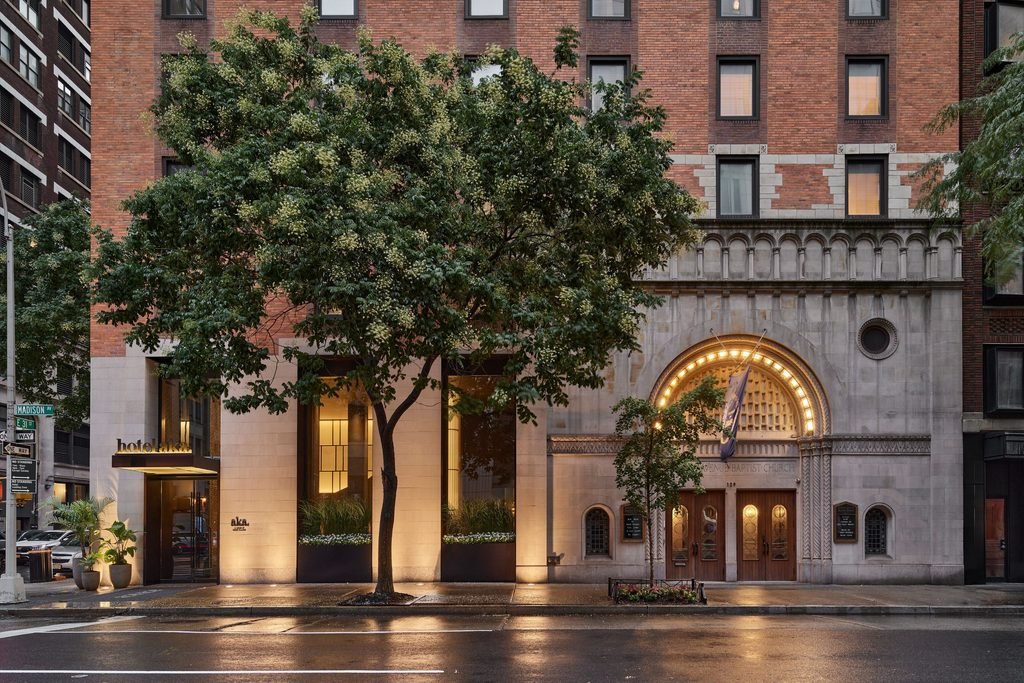
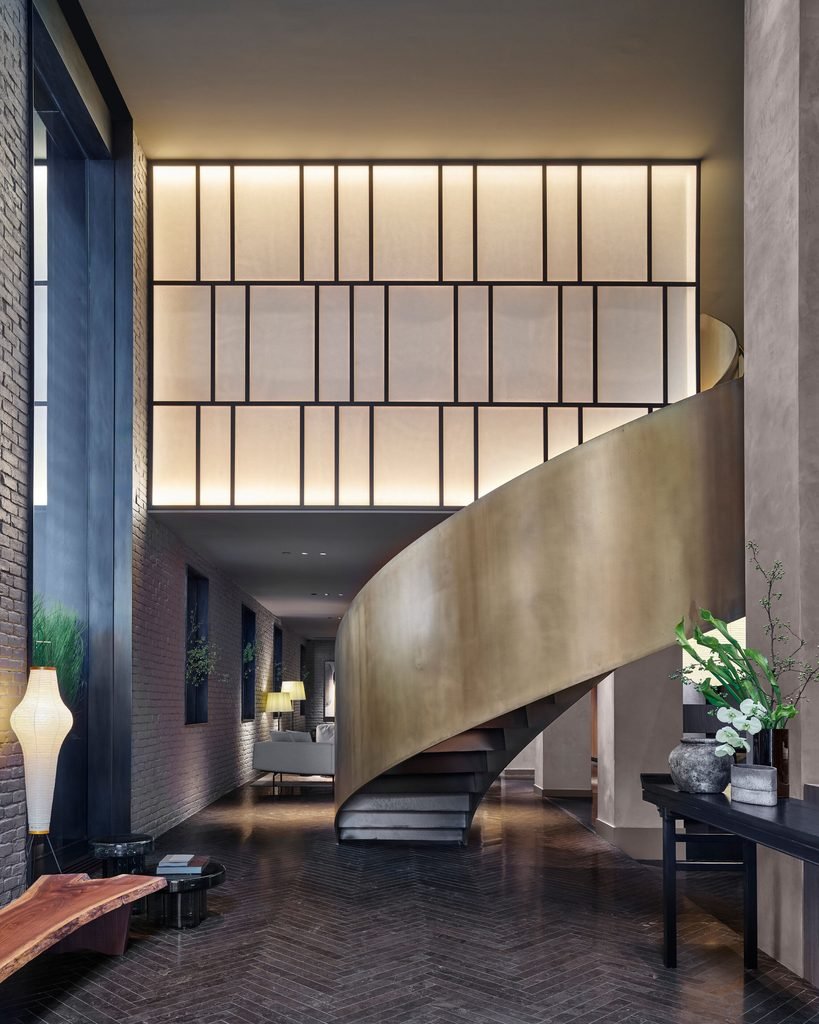
Hotel AKA NoMad
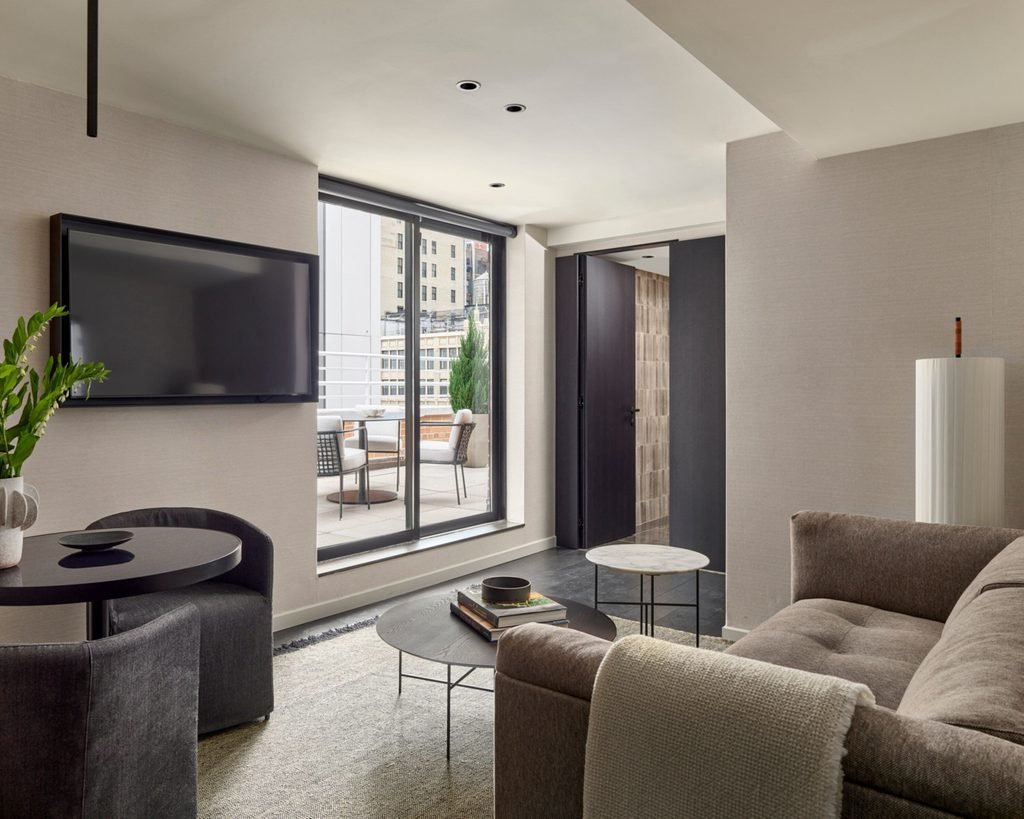
AKA sets the benchmark for ultra-luxury corporate stays in New York, with hotel residences in Central Park, Midtown, Times Square, and Sutton Place. Suites include full kitchens, private screening rooms, and Technogym fitness centers, with a dedicated resident services team available around the clock.
Hotel AKA NoMadHotel AKA NoMad
Vibe: Sophisticated, timeless luxury with business lounges and personalized concierge support.
Best for: C-suite executives and high-net-worth individuals who want hotel-level service with residential-level space.
2. Blueground
Blueground offers professionally managed, design-forward apartments inside some of Manhattan’s top residential buildings, booked and managed almost entirely through its app.
Vibe: Sleek, modern interiors with a fully digital, self-service rental experience.
Best for: Tech leaders, creative professionals, and expats who want a flexible 1-to-12-month lease without the friction of a traditional broker.
3. Sonder
Sonder blends contemporary design with a tech-first, contactless approach, with furnished units concentrated in Flatiron, Battery Park, and the Financial District.
Vibe: Chic, boutique-inspired spaces built for the digital-nomad crowd.
Best for: Mid-to-senior level executives who value efficiency, self check-in, and a strong design aesthetic.
Best NYC Neighborhoods for Extended Stay Serviced Apartments in Manhattan
Your ideal neighborhood depends heavily on where you’ll be working and how you like to spend a weekend.
Neighborhood
Vibe & Advantage
Best For
Midtown / Hudson Yards
Walkable to corporate HQs, transit hubs, and upscale dining
Finance, legal, and consulting executives
Financial District (FiDi)
Modern high-rises, quieter weekends, easy subway access
Wall Street professionals and corporate expats
SoHo & Flatiron
Vibrant dining, boutique shopping, high-end residential living
If your work is downtown, FiDi or Flatiron will save you a daily commute; if you’re near a Midtown headquarters, the density of options around Hudson Yards is hard to beat.
Key Considerations Before Booking
Confirm the 30-day minimum. As covered above, this is what keeps your stay compliant with Local Law 18 and avoids the risk of a listing being pulled mid-stay.
Ask what’s bundled. Premium corporate stays typically fold utilities and Wi-Fi into one monthly invoice — but building amenity fees (gym, pool, rooftop) aren’t always included, so ask before you sign.
Negotiate for longer stays. Most corporate housing providers offer discounted tiers for corporate accounts or stays past 60–90 days. Always ask about enterprise pricing before booking.
Book 3–4 weeks ahead. Quality furnished inventory in Manhattan and Brooklyn moves quickly, especially during fall and spring corporate relocation seasons.
Final Thoughts
Finding the right luxury corporate housing NYC option doesn’t mean giving up comfort or a real workspace for the sake of flexibility. Whether you land with AKA’s white-glove residences, Blueground’s app-driven apartments, or Sonder’s design-forward units, choosing the right extended stay serviced apartments Manhattan market has to offer gives you both a functional home office and a genuinely comfortable base for however long your New York chapter lasts.
Beat the New York City heat without booking a room. This ultimate guide to the best rooftop pools in New York City covers 12 must-visit pools — luxury hotel day passes, hidden spa retreats, and free public pools — with everything you need to plan your perfect summer pool day.
Summer in New York City is no joke. The concrete heats up, the subway platforms turn into saunas, and suddenly the idea of escaping to a rooftop pool with a cold drink in hand sounds like the only reasonable plan. The good news? You don’t need to book an expensive hotel room to make it happen.
Thanks to the growing popularity of the NYC hotel pool day pass, locals and visitors alike can access some of Manhattan’s, Brooklyn’s, and Queens’ most stunning pools for a fraction of the cost of an overnight stay. Whether you’re after a luxury rooftop with skyline views, a serene spa on a private island, or a free public pool with old-school New York energy, this guide has you covered.
Here are 12 of the best rooftop pools in New York City for summer 2026 — ranked by vibe, value, and views.
How NYC Pool Access Works
Before diving in (pun intended), it helps to know the three main ways to access pools in New York City:
Day Pass (ResortPass or hotel website): Purchase a day pass directly through the hotel or via platforms like ResortPass, which lists 30+ NYC properties. Passes often include lounge chairs, towels, and sometimes food and beverage credits.
Hotel Stay: Some pools are reserved exclusively for overnight guests. Book a room and the pool access comes included.
Free Public Pools: NYC Parks operates 53 outdoor pools across the five boroughs — all completely free of charge.
Pro tip: Weekend day passes at popular hotels often sell out weeks in advance. Book early through ResortPass or the hotel’s official site.
🏙️ Brooklyn & Queens: Rooftop Pools with the Best Skyline Views
1. Sephora Summer Club — William Vale Hotel (Williamsburg, Brooklyn)
Best for: Hip vibes + Manhattan skyline views Access: Day pass or hotel stay
Source: Sephora.com
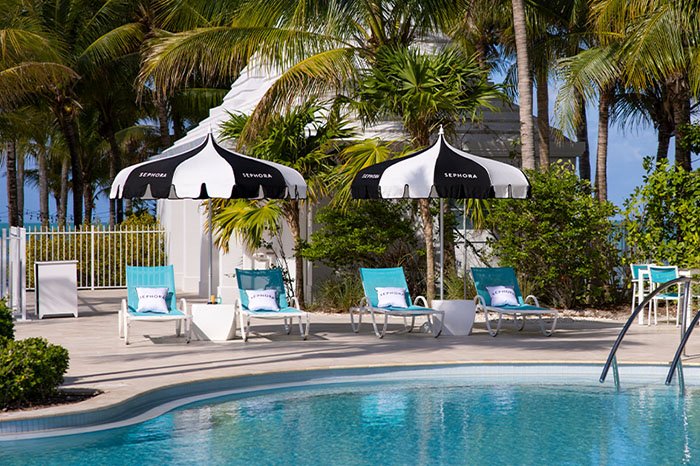
The best rooftop pools in New York City all have one thing in common: unforgettable views, and the William Vale delivers. Perched over Williamsburg with an unobstructed panorama of the Manhattan skyline, the Vale Pool is a seasonal dream. Day passes are available for non-guests, with optional cabana rentals for a more premium poolside experience. This summer, the pool is operating as the Sephora Summer Club, adding a branded, beauty-forward twist to your pool day.
2. The Pool House — Rockaway Hotel (Rockaway Beach, Queens)
Best for: Beach-town escape without leaving NYC Access: Day pass or hotel stay
Located near NYC’s surf mecca, Rockaway Beach, The Pool House at the Rockaway Hotel offers a completely different energy from the typical Manhattan rooftop. Think laid-back surfer vibes, tropical-inspired décor, and ocean air — a genuine mini-vacation just a subway ride (or ferry) from the city. Ideal for those who want the feeling of a beach resort without leaving the five boroughs.
3. Aliya Pool Club — Indigo Williamsburg (Williamsburg, Brooklyn)
Best for: DJ-driven pool parties Access: Day pass or hotel stay
Source: Resortpass.com
Williamsburg’s coolest rooftop pool belongs to the Hotel Indigo, where the Aliya Pool Club turns a regular pool day into a full event. Expect curated playlists, craft cocktails, and a stylish crowd that embodies everything Brooklyn does best. If you’re looking for an NYC hotel pool day pass that doubles as a social scene, this is your spot.
4. 1 Hotel Brooklyn Bridge — DUMBO, Brooklyn
Best for: Instagram-worthy infinity pool shots Access: Hotel guests + Sky Swim Lounge reservations
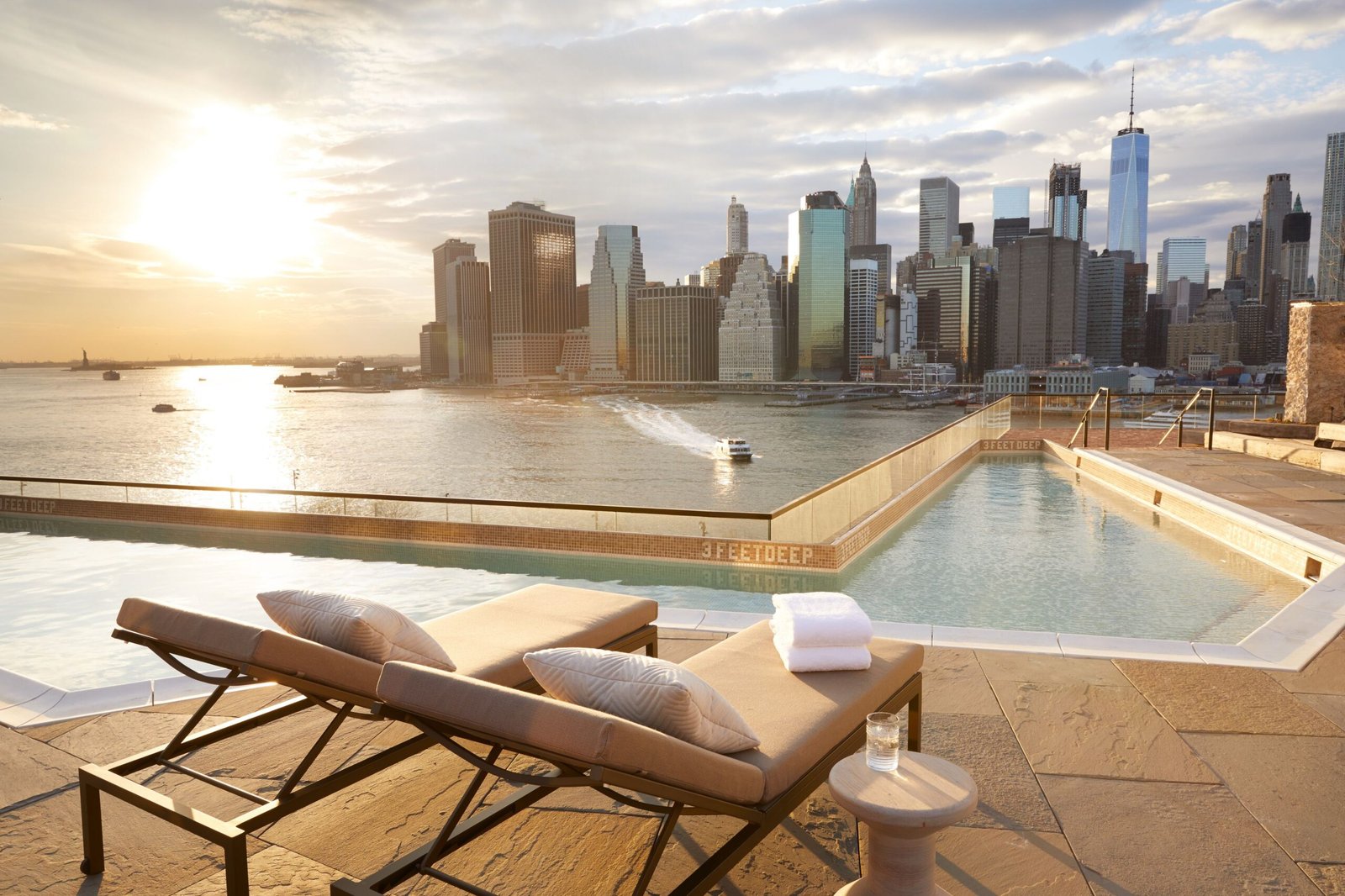
Few pools in New York rival the views at 1 Hotel Brooklyn Bridge. The rooftop pool glitters against an iconic backdrop of the Brooklyn Bridge and the lower Manhattan skyline. The eco-luxury property is for hotel guests, though non-guests can access the pool area by booking a table at the Sky Swim Lounge — a clever workaround worth knowing.
5. Arlo Hotel Rooftop Pool — Williamsburg, Brooklyn
Best for: Young, social energy on a mid-range budget Access: Day pass or hotel stay
Arlo Hotels has built a loyal following among younger travelers and NYC locals for good reason: great locations, accessible price points, and rooftops that actually deliver. The Williamsburg location puts you steps from some of Brooklyn’s best restaurants and bars, with a rooftop pool that gets lively on weekends.
6. Astoria Pool — Astoria Park, Queens ⭐ Free
Best for: Classic NYC summer experience, budget travelers, families Access: Free and open to the public (June 27 – early September)
If you’re looking for the best rooftop pools in New York City on a zero budget, Astoria Pool is genuinely one of the most iconic experiences the city has to offer. Located in Astoria Park at 19th Street and 23rd Drive, it is the largest public pool in New York City, holding an extraordinary 1 million gallons of water.
The pool underwent a landmark $18.9 million renovation and reopened to major fanfare in 2024. For 2026, it opens on June 27 and runs through early September — free to all, every day from 11 AM to 7 PM (with a 3–4 PM cleaning break). Views of the Triborough Bridge are included at no extra charge.
Heads up: No electronics or outside food are typically permitted, and entry may be capped on high-demand days. Arrive early.
🌆 Manhattan: Luxury Spas and Rooftop Pool Escapes
7. Spa Nalai — Park Hyatt New York (Midtown Manhattan)
Best for: Ultimate urban luxury, solo wellness retreat Access: Day pass or hotel stay
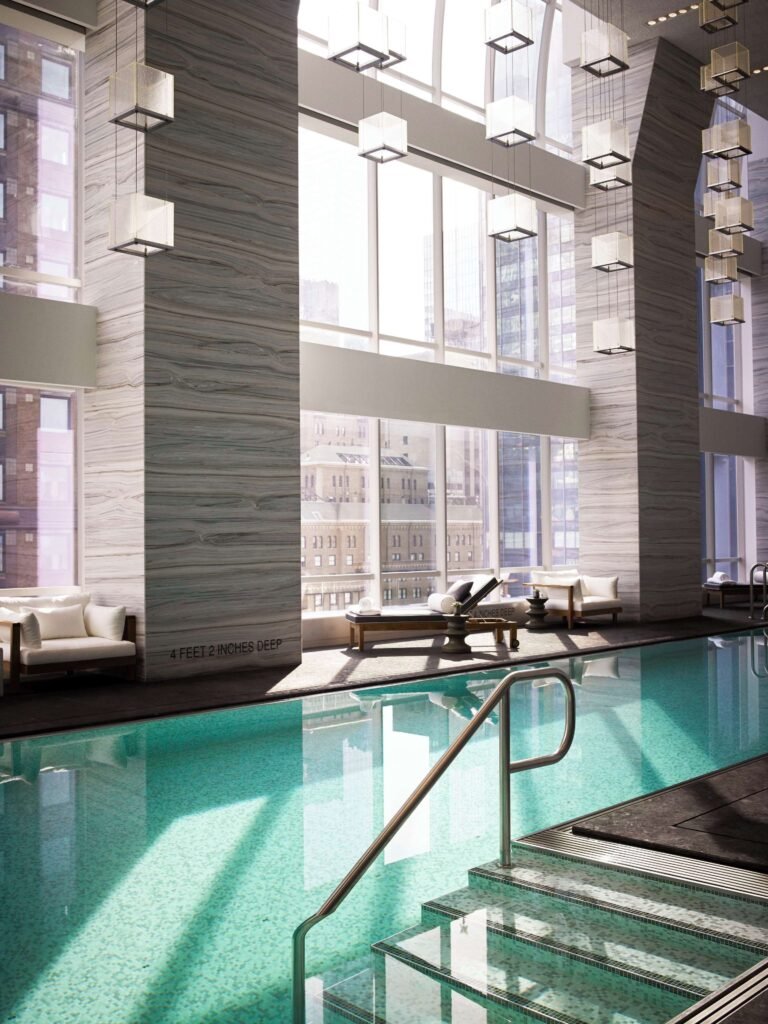
If you’re going to splurge on an NYC hotel pool day pass, Spa Nalai at the Park Hyatt is the gold standard. The indoor pool is wrapped in floor-to-ceiling windows and embodies the kind of hushed, immaculate luxury that mid-town Manhattan promises but rarely delivers. Perfect for a solo day of complete recovery, or a special occasion that calls for something truly elevated.
8. Spa La Mer — Baccarat Hotel (Midtown Manhattan)
Best for: Glamour seekers and special occasions Access: Day pass or hotel stay
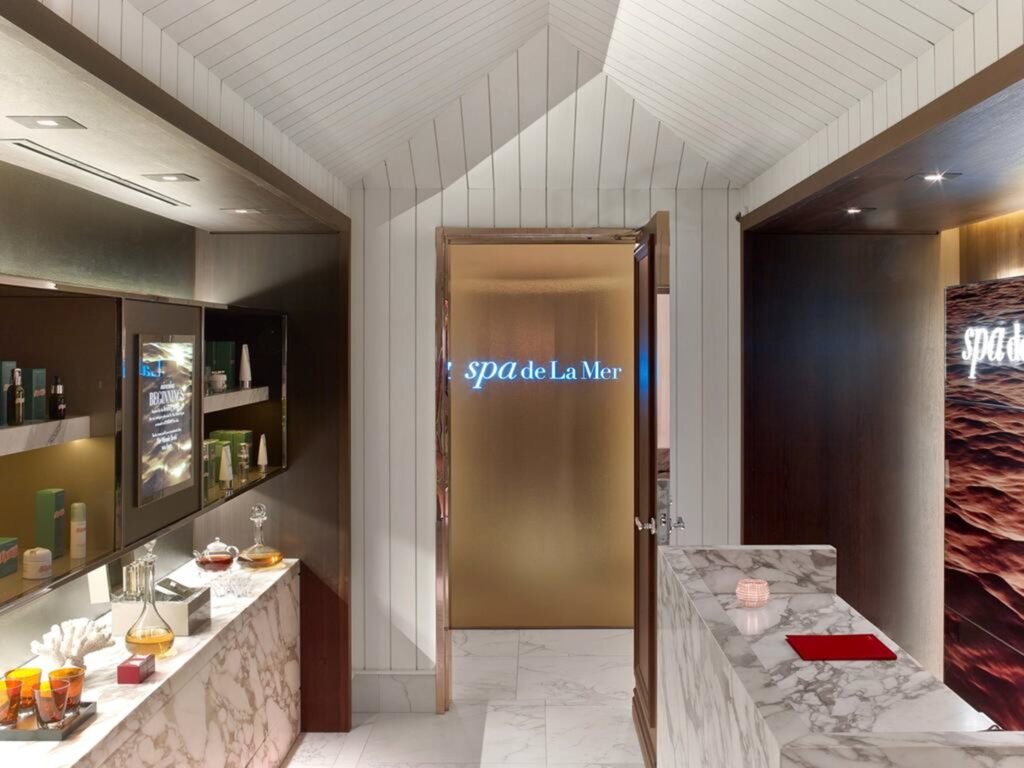
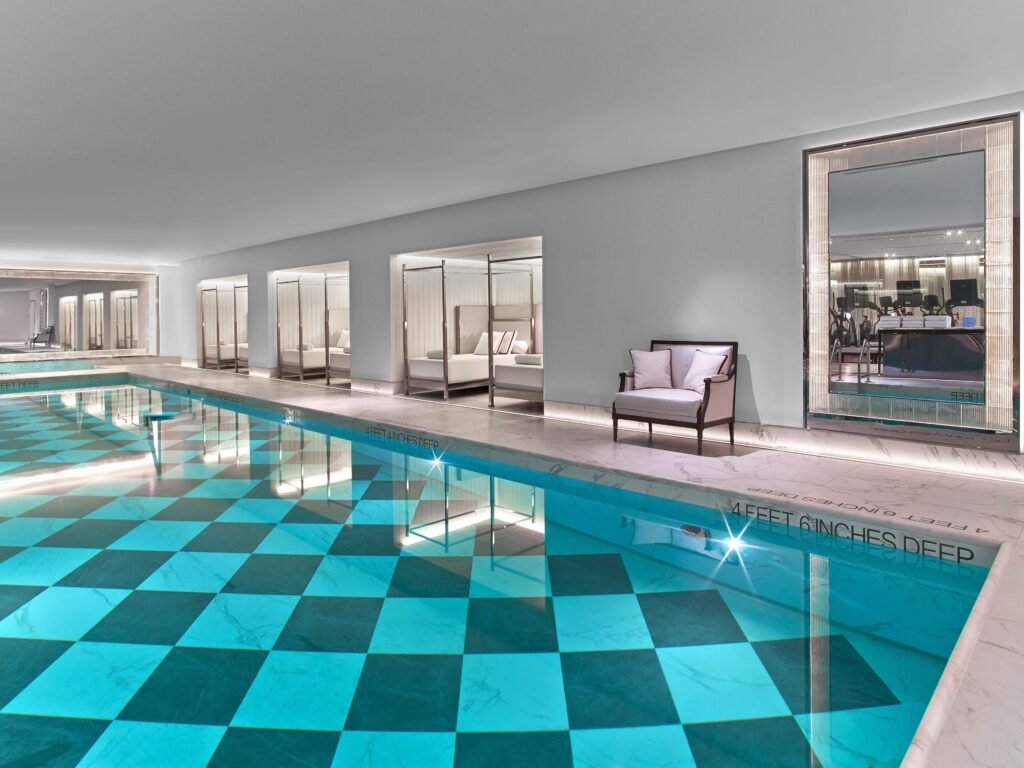
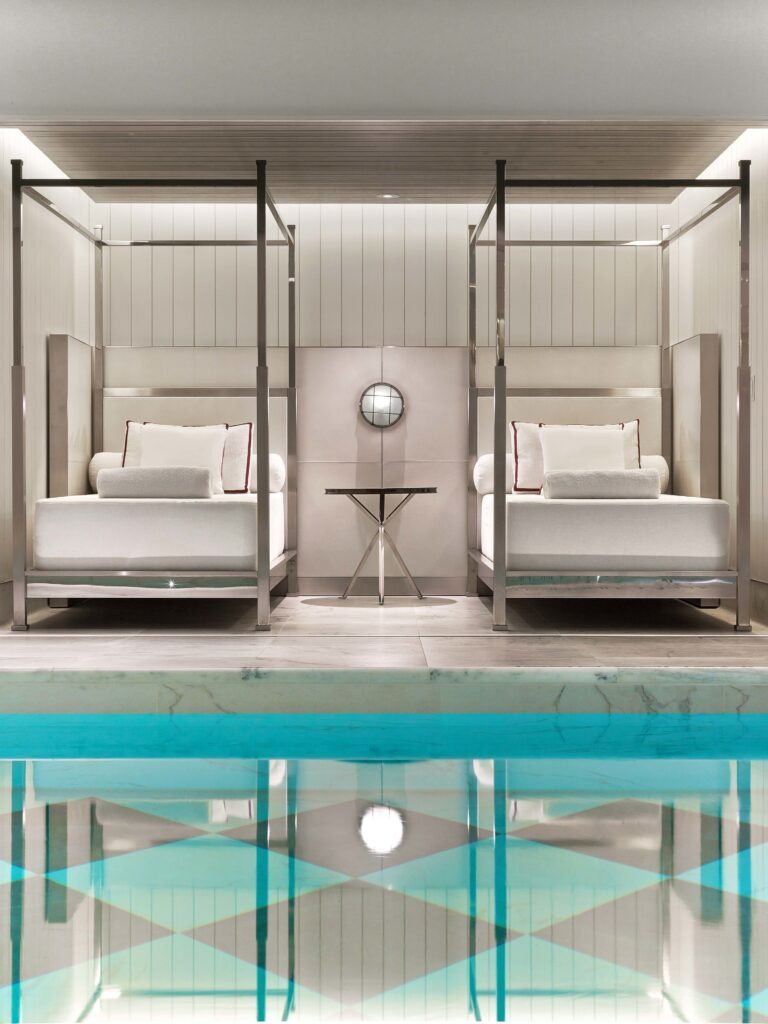
Baccarat is a French crystal brand synonymous with opulence, and their NYC hotel is no different. Spa La Mer uses the iconic La Mer skincare line throughout, and the pool — intimate, private, and impeccably designed — feels like a secret tucked inside one of Manhattan’s most theatrical luxury hotels. Not the most budget-friendly option, but an unforgettable experience for a birthday, anniversary, or “treat yourself” day.
9. Virgin Hotels NYC Rooftop Pool — NoMad, Manhattan
Best for: City-center rooftop vibes + Empire State Building views Access: Day pass or hotel stay
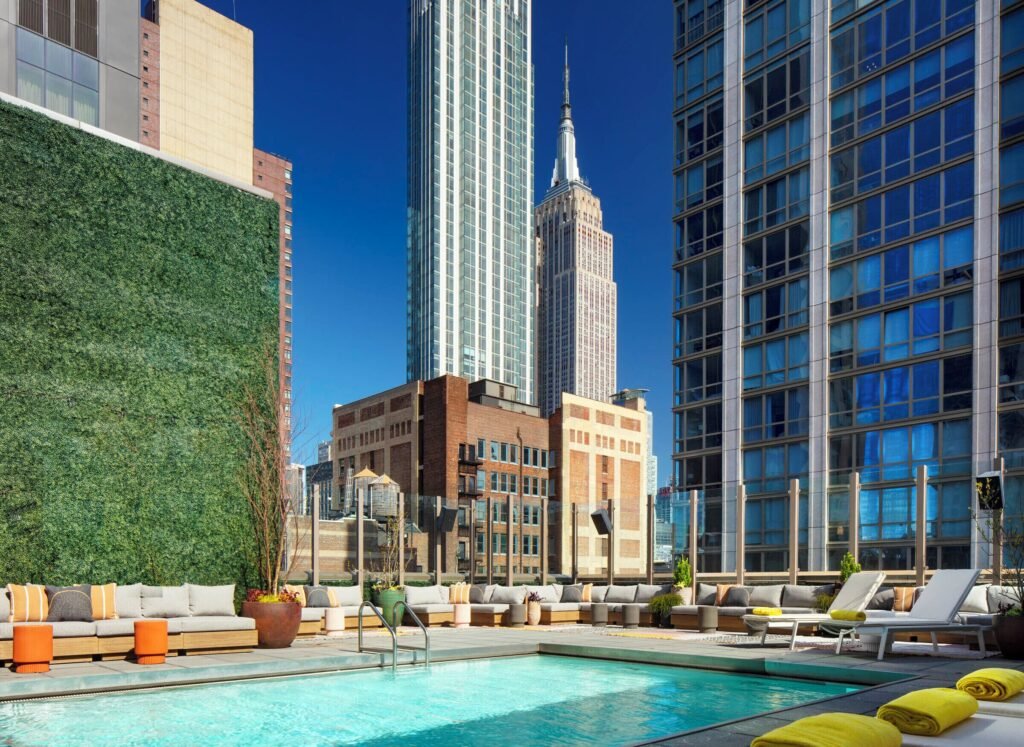
Situated in the heart of NoMad (North of Madison Square Park), the Virgin Hotels NYC rooftop pool delivers one of the most quintessential New York views imaginable: the Empire State Building looming overhead as you float in the water. It’s a relatively newer addition to the NYC rooftop pool scene, with a modern, design-forward aesthetic that photographs beautifully and feels welcoming rather than intimidatingly exclusive.
10. QC Spa — Governors Island, NYC ⭐ Year-Round
Best for: Full-day wellness experience, couples, spa lovers Access: Paid admission (~$98–$102+, includes round-trip ferry) Hours: Sun–Thu 10 AM–10 PM, Fri–Sat 10 AM–11 PM | Must be 21+
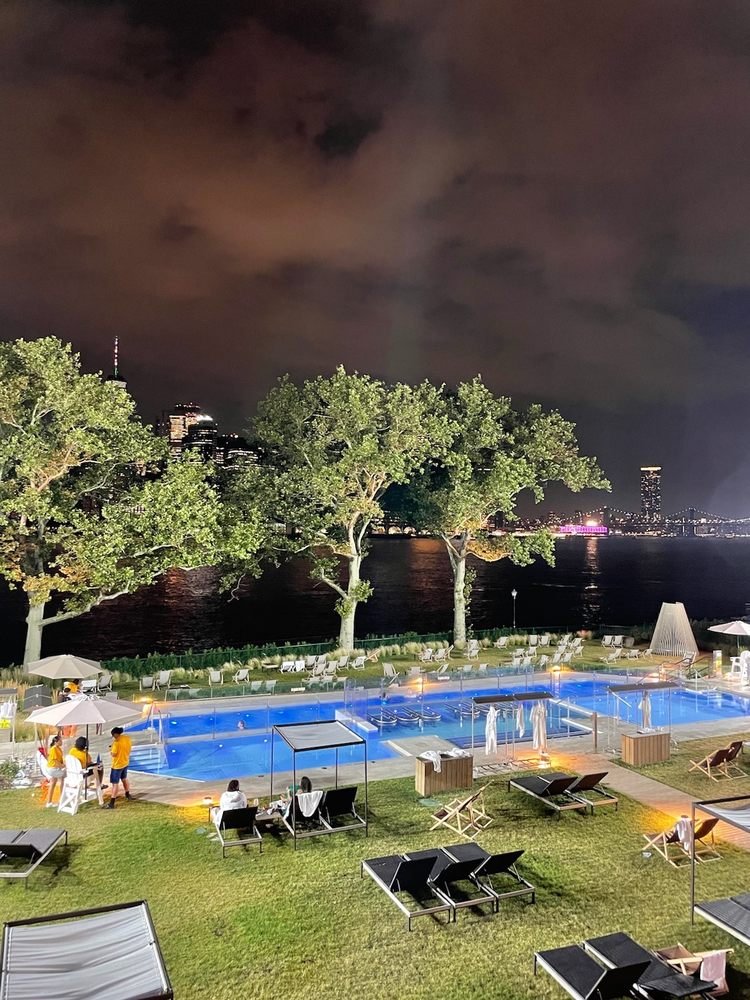
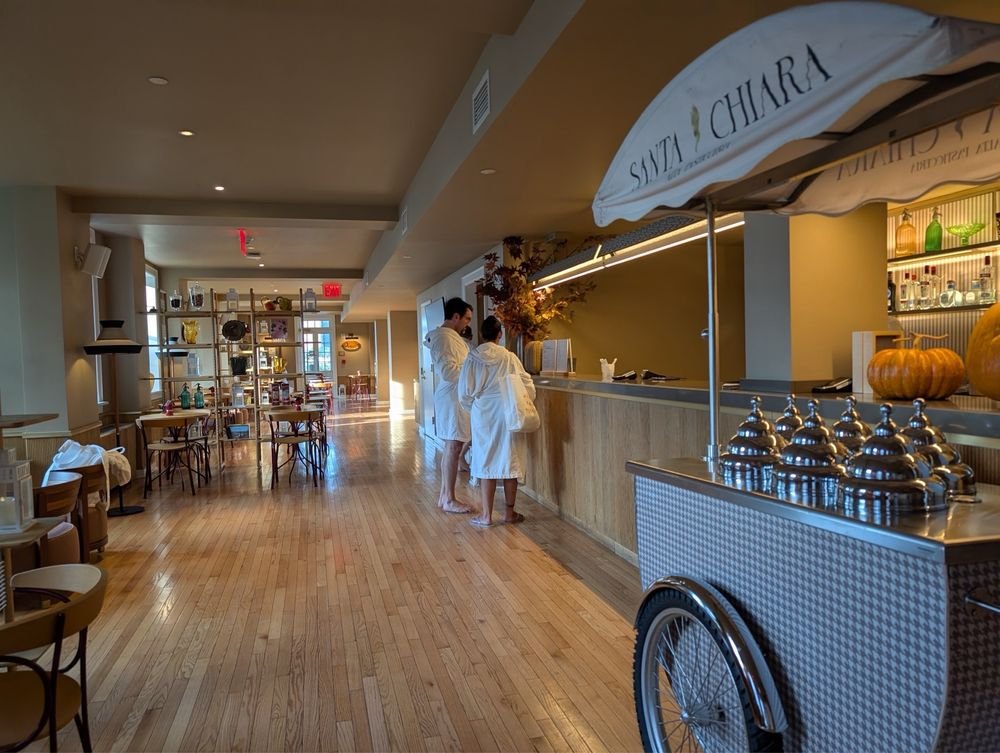
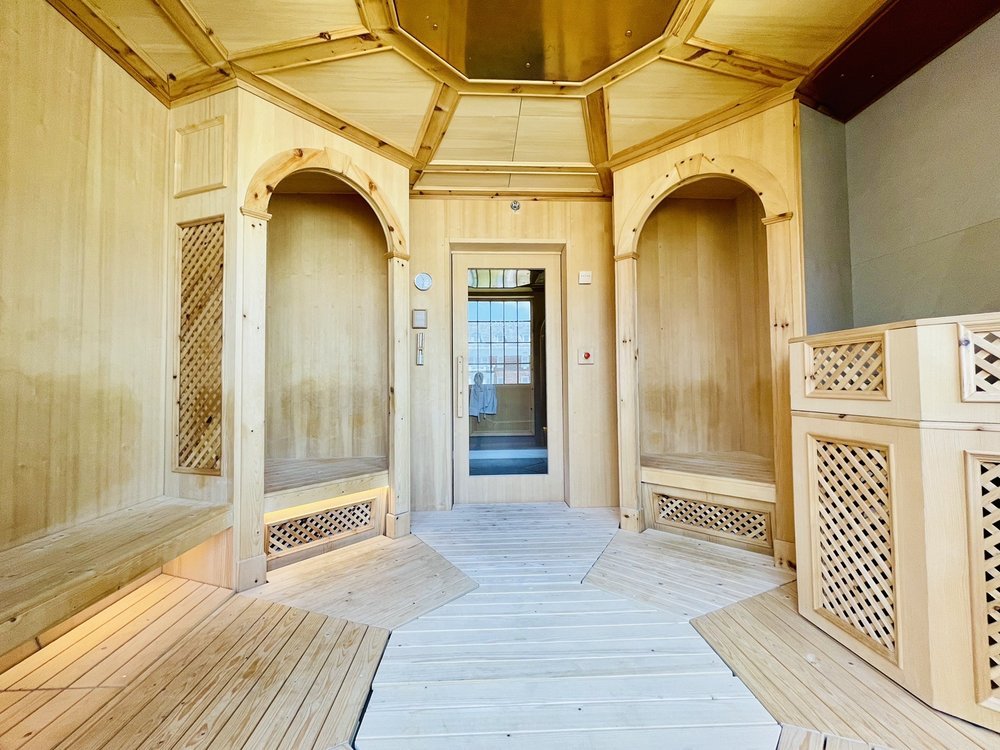
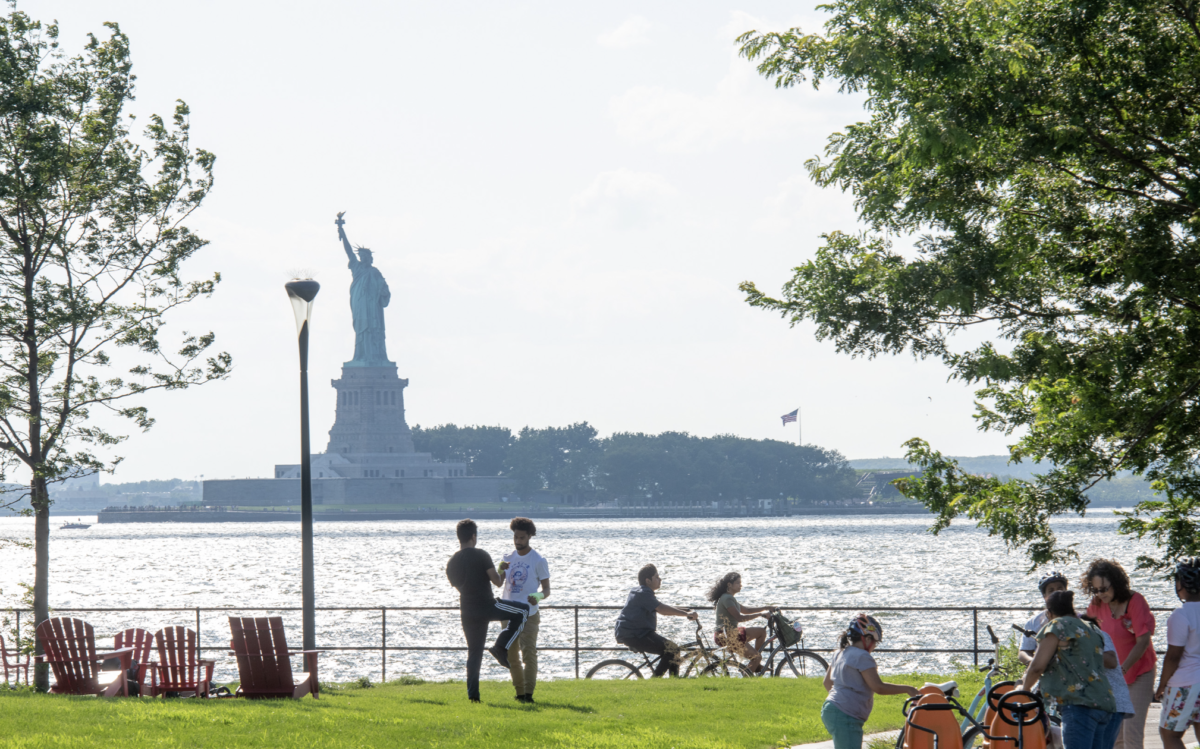
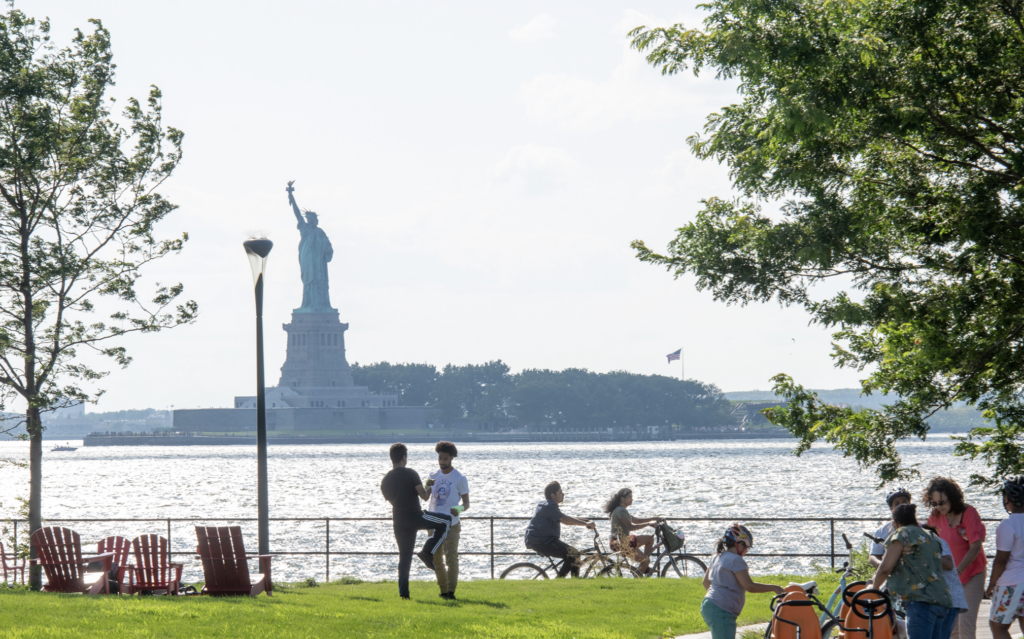
QC Spa on Governors Island is in a category of its own. Just a 5-minute ferry ride from the Battery Maritime Building at 10 South Street in Lower Manhattan, this Italian-inspired wellness spa features 20+ indoor wellness experiences — saunas, steam rooms, infrared beds, salt rooms, ice rooms, and Vichy showers — alongside heated outdoor infinity pools with jaw-dropping views of the Manhattan skyline and the Statue of Liberty.
Unlike seasonal rooftop pools, QC Spa is open 365 days a year, making it genuinely unique in the NYC wellness landscape. Your ticket includes the ferry, locker, spa sandals, towels, and full facility access. The on-site Casa QC Bistro offers food and wine during your visit.
Book ahead: This one fills up fast, especially on weekends. Average advance booking is 23 days out. Reserve via GetYourGuide or Viator.
11. Royalton Park Avenue (Murray Hill/Midtown South)
Best for: Chic daytime lounging, date afternoons Access: Day pass or hotel stay
The Royalton’s rooftop pool and lounge overlooks Park Avenue with a stylish, understated cool that suits the neighborhood. During the day it’s calm and social; once the sun sets, the vibe shifts toward a more lounge-bar atmosphere. A reliable pick if you want solid views and a relaxed mid-range luxury experience without the over-the-top price tag of some other Manhattan properties.
12. The Beach — Dream Downtown (Chelsea, Manhattan)
Best for: Unique, party-forward NYC experience Access: Day pass starting at $25 (general admission); lounge chairs from $50 per person
Source: taogroup.com
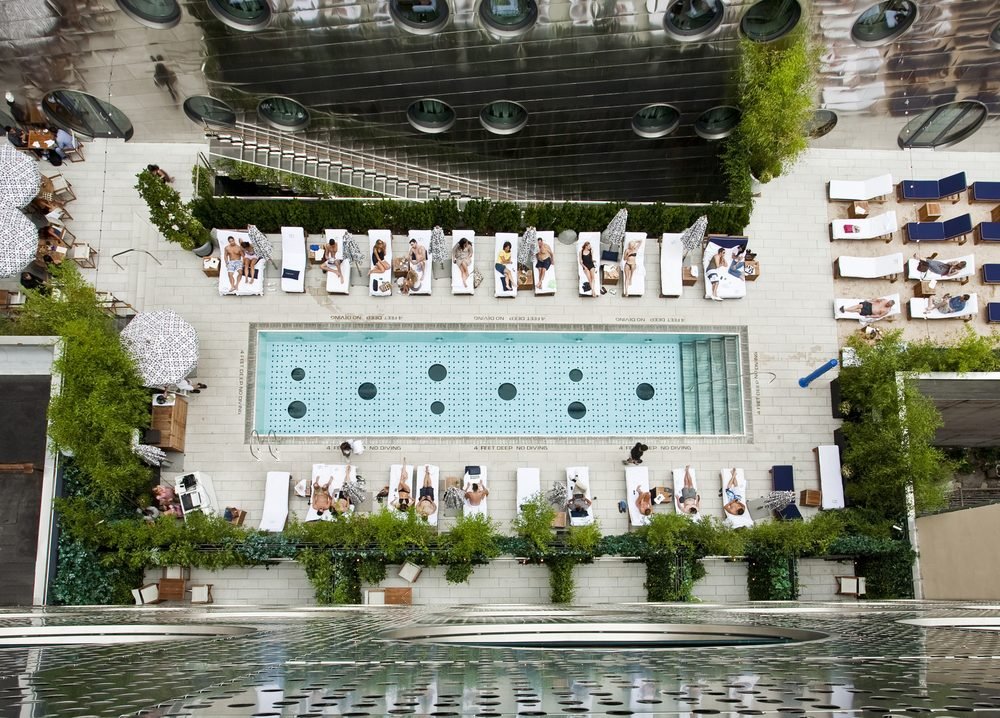
Perhaps the most creatively conceived pool on this list, The Beach at Dream Downtown in Chelsea is exactly what it sounds like: a rooftop pool deck with actual imported sand, sunbeds, and — in a move only New York City could dream up — a glass-bottomed pool that looks directly down into the hotel lobby below.
Located near Chelsea Market and the High Line, this one is pure fun. It’s less about quiet relaxation and more about experiencing a truly one-of-a-kind NYC moment. Day passes start at $25 for general admission (with a $50 minimum spend), making it one of the more accessible options on this list.
💡 Insider Tips Before You Go
Booking an NYC Hotel Pool Day Pass
Use ResortPass.com to browse and compare 30+ NYC hotel pool day passes in one place. It’s the easiest way to check availability, compare what’s included, and book in advance.
Book 2–4 weeks ahead for weekend visits. Popular rooftop pools sell out fast in July and August.
Weekdays are better value — some hotels offer lower day pass prices Monday through Thursday.
What’s Typically Included
Most hotel day passes include: pool access, lounge chairs, and towels. Premium passes or cabana rentals may add food/beverage credits, priority check-in, or dedicated service.
What to Bring
Swimsuit (obviously)
Sunscreen — many pools don’t sell it on-site
Sunglasses and a hat
A valid ID (required at most venues, and mandatory at 21+ spots like QC Spa)
Free Public Pools (NYC Parks)
NYC operates 53 free outdoor pools across the five boroughs from late June through early September. Hours are generally 11 AM–7 PM daily. Rules around electronics, food, and locks vary by location — check the NYC Parks website before visiting.
Quick Comparison: NYC Pools at a Glance
Pool Location Access Price Range Best For William Vale (Sephora Summer Club) Williamsburg, BK Day pass / Stay $$ Views + Vibes Rockaway Hotel Pool House Rockaway, QNS Day pass / Stay $$ Beach escape Aliya Pool Club (Indigo) Williamsburg, BK Day pass / Stay $$ Party scene 1 Hotel Brooklyn Bridge DUMBO, BK Stay / Lounge $$$ Instagram views Arlo Hotel Williamsburg, BK Day pass / Stay $$ Young crowd Astoria Pool Astoria, QNS FREE Free Classic NYC Spa Nalai (Park Hyatt) Midtown, MH Day pass / Stay $$$$ Ultimate luxury Spa La Mer (Baccarat) Midtown, MH Day pass / Stay $$$$ Special occasion Virgin Hotels NYC NoMad, MH Day pass / Stay $$$ City views QC Spa Governors Island Paid admission $$$ (~$98+) Full wellness day Royalton Park Avenue Murray Hill, MH Day pass / Stay $$$ Chic lounging The Beach (Dream Downtown) Chelsea, MH Day pass $ – $$ Unique experience
Final Thoughts: Which NYC Pool Is Right for You?
The NYC hotel pool day pass scene has exploded in recent years, and honestly, the options are better than ever in 2026. Whether you want to float in a luxury spa on a private island, sip cocktails while staring down the Empire State Building, or just splash around in one of the world’s most famous free public pools, New York has something for every budget and every vibe.
If we had to pick just one: QC Spa on Governors Island is unlike anything else in the city — the combination of 20+ wellness experiences, heated outdoor infinity pools, and Statue of Liberty views makes it worth every penny of the day pass. But if the budget is tight, Astoria Pool remains one of New York City’s most genuine summer experiences, and it doesn’t cost a dime.
Which pool are you adding to your summer list? Drop it in the comments below. 🌊☀️
Prices and availability are subject to change. Always confirm hours and day pass pricing directly with the venue or via ResortPass before visiting.
June in New York City is pure magic. Whether you’re a first-time visitor or a lifelong New Yorker, this guide covers the best NYC summer events 2026 — from free outdoor yoga and open-air movie nights to world-class music festivals. Here’s everything you need to know about the top things to do in NYC in June.
If you’re searching for the best NYC summer events 2026, you’ve landed in the right place. June is arguably the most electric month in New York City — the days are long, the parks are bursting with greenery, and the entire city seems to exhale and come alive with outdoor festivals, free concerts, and unmissable cultural gatherings.
Whether you’re a local planning your weekends or a traveler mapping out an itinerary, this guide covers everything you need to know about the top things to do in NYC in June 2026. We’ve done the research so you don’t have to — dates, locations, insider tips, and all.
Let’s dive in. 🗽☀️
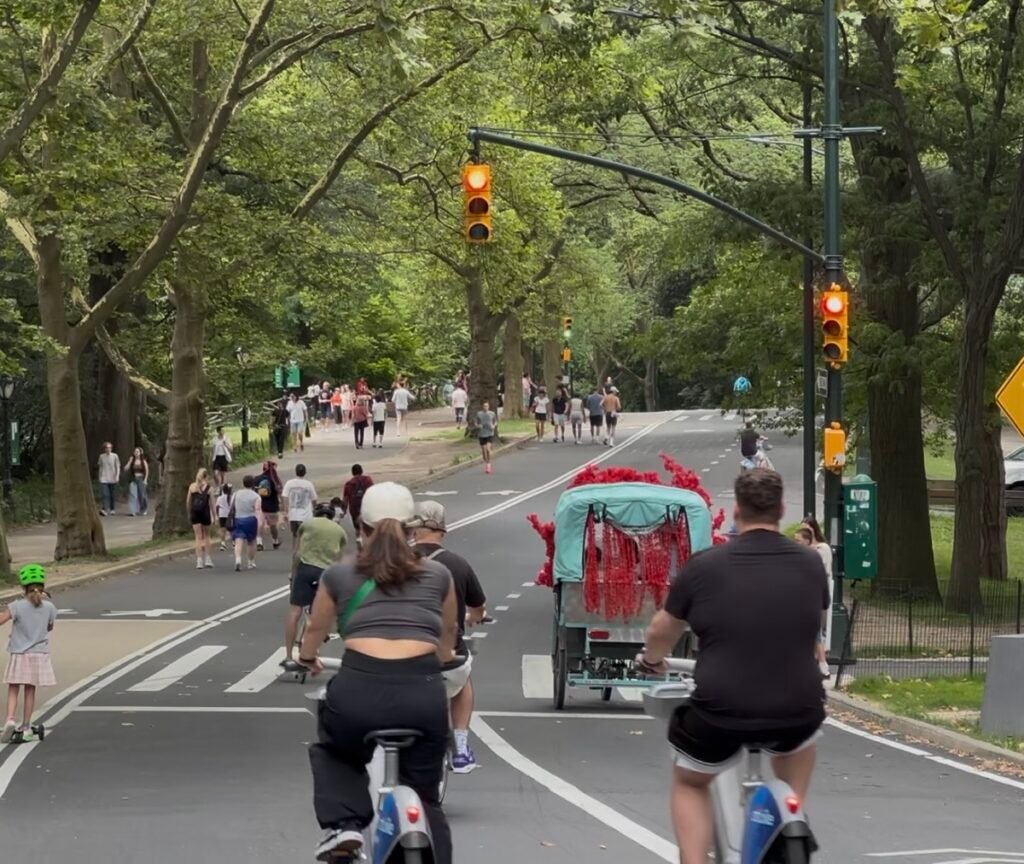
1. Central Park Bike Tour — Soak Up the Best of Early Summer
There’s no better time to explore Central Park than June, when the 843-acre green oasis is draped in its most vibrant shades of emerald. The foliage is lush, the weather is warm without being brutal, and the park hums with energy from joggers, picnickers, street musicians, and families.
Why a bike tour? The park’s loop road stretches over six miles — beautiful but long on foot. Renting a bike near the park (several rental shops cluster around the 59th Street and Columbus Circle entrances) lets you cover the full circuit comfortably and catch highlights like Bethesda Fountain, the Reservoir, and the Great Lawn at a leisurely pace.
Insider tip: Go early on a weekday morning to beat the crowds and catch the park at its most serene. The loop road is closed to cars on weekdays before 7 PM and all weekend, making it a cyclist’s and runner’s paradise.
2. NYC Greenmarket — Shop Local, Eat Like a New Yorker
Union Square Greenmarket
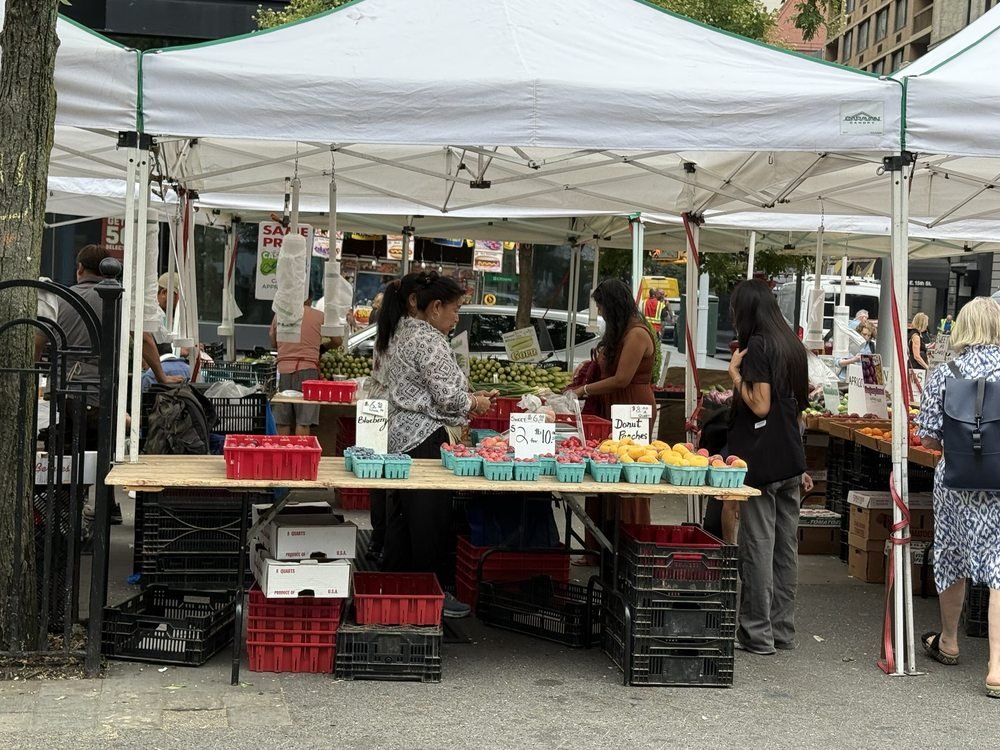
One of the most authentic things to do in NYC in June is visiting one of the city’s beloved Greenmarket farmers’ markets. The flagship Union Square Greenmarket (open Monday, Wednesday, Friday, and Saturday) is the crown jewel, but markets pop up in neighborhoods from the Upper West Side to Brooklyn’s Grand Army Plaza throughout the week.
June marks the start of peak growing season in the Northeast, which means the stalls overflow with peak-season produce: fat strawberries, sweet cherries, snap peas, fresh herbs, and the first summer peaches. Beyond produce, you’ll find artisan bread, farm-fresh eggs, local honey, flowers, and handmade cheeses.
Insider tip: Grab a warm everything bagel from one of the vendors, stock up on seasonal fruit, then head to the nearby park benches for an impromptu and very New York-style picnic. The farmers’ market experience is quintessentially local — you’ll rub elbows with chefs, foodies, and neighborhood regulars all in one spot.
📍 Union Square Greenmarket: East 17th Street & Union Square West, Manhattan
3. Free Movies at the Intrepid — Cinema on an Aircraft Carrier
Source: Intrepid Museum
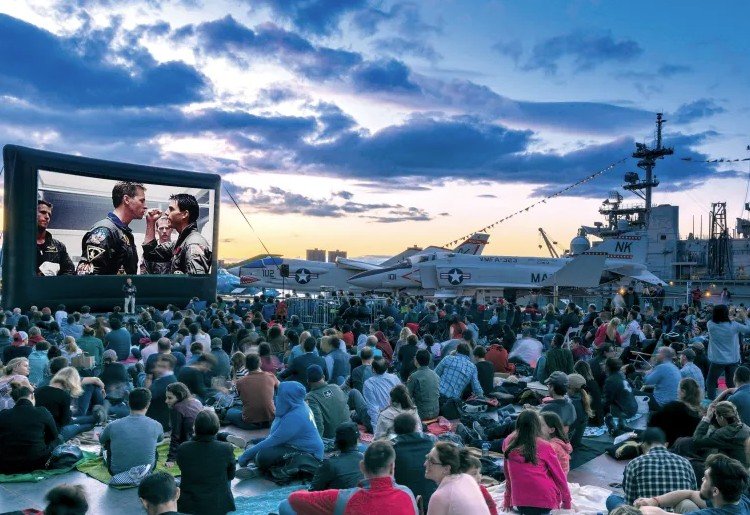
If you’re looking for unusual and unforgettable NYC summer events 2026, this one is hard to top. The Intrepid Sea, Air & Space Museum — home to a decommissioned WWII-era aircraft carrier permanently docked at Pier 86 on the Hudson River — hosts a free outdoor movie series on its iconic flight deck throughout the summer.
The series kicked off on May 22, 2026, with a screening of Top Gun, and continues on select Friday evenings through late August. Films are screened on a giant inflatable screen against the backdrop of the Hudson River and Manhattan’s shimmering skyline — a truly one-of-a-kind cinematic setting.
What to know before you go:
Seating is first-come, first-served with limited capacity — arrive early
Doors open at 6:00 PM; the movie begins at sunset
You can bring your own food and non-alcoholic drinks
Light concessions are also sold on-site
Alcohol is not permitted; all exits are final (no re-entry)
📍 Intrepid Museum: Pier 86, West 46th Street & 12th Avenue, Manhattan 🎟️ Cost: Free Website: https://intrepidmuseum.org/
4. Bryant Park Outdoor Yoga — Free Classes in Midtown Manhattan
Source: Bryant Park
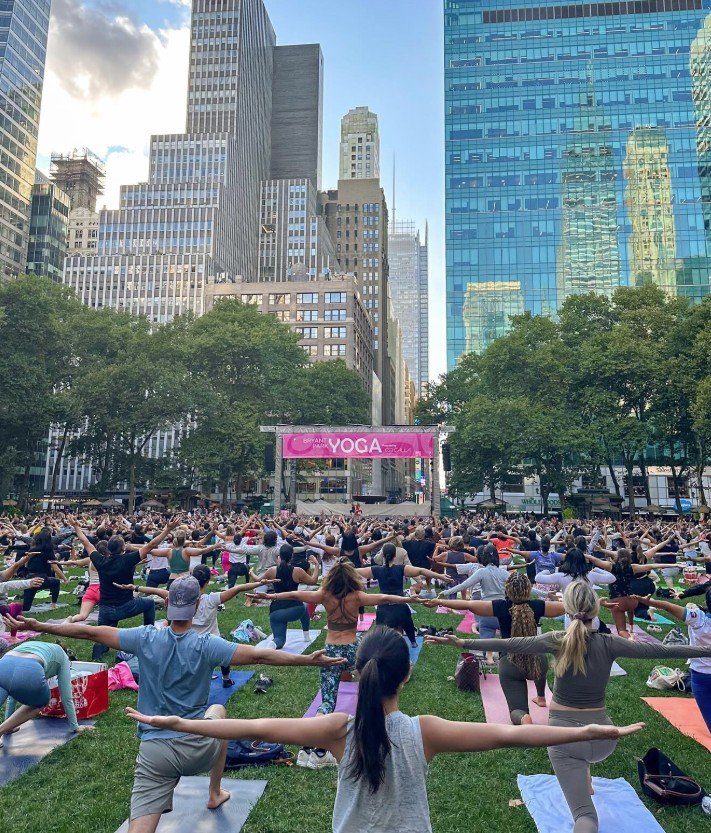
Right in the heart of Midtown, surrounded by skyscrapers and the New York Public Library, Bryant Park transforms into an open-air wellness retreat every week as part of its celebrated free programming series.
Bryant Park Yoga runs weekly on Tuesdays and Wednesdays from May 27 through September 16, 2026, making it one of the most accessible recurring things to do in NYC in June for both visitors and locals. Classes are led by professional instructors and conducted in both English and Spanish.
Beyond yoga, Bryant Park’s Picnic Performances series — presented by Bank of America — is also underway throughout June, with free outdoor music, dance, and theater performances on Thursday and Friday evenings starting at 7:00 PM. It’s one of the best free things the city has to offer.
What to bring: Your own yoga mat, a reusable water bottle, and comfortable clothing. No registration is required — simply show up and find your spot on the lawn.
📍 Bryant Park: 42nd Street between 5th and 6th Avenues, Manhattan 🎟️ Cost: Free
5. Museum Mile Festival — One Night, 20+ Museums, All Free
Source: MET
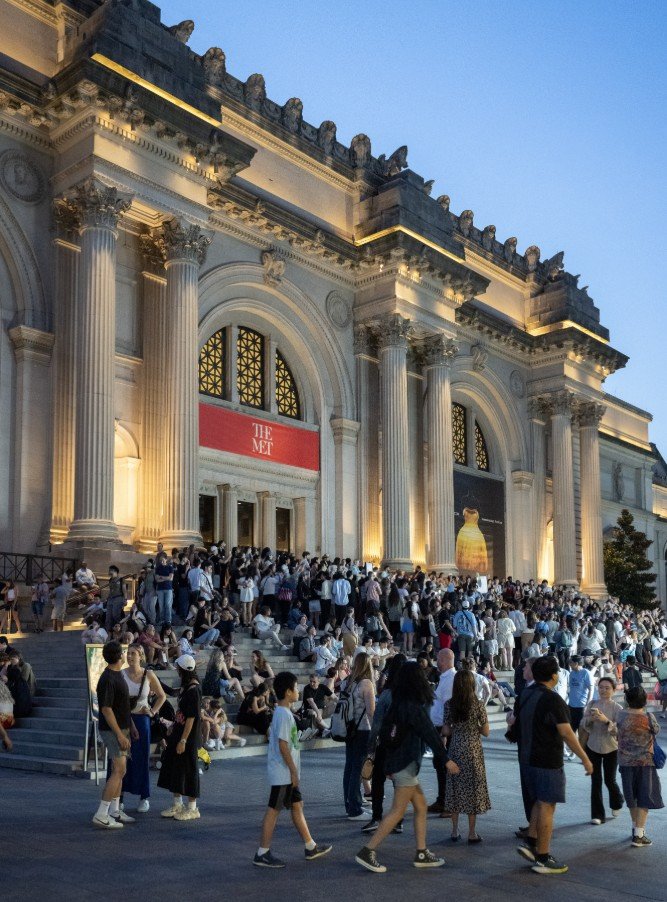
Mark your calendars: Tuesday, June 9, 2026 is one of the most spectacular evenings in NYC’s cultural calendar. The 48th Annual Museum Mile Festival transforms a mile-long stretch of Fifth Avenue — from 82nd Street to 110th Street — into New York City’s biggest block party.
From 6:00 PM to 9:00 PM, Fifth Avenue is completely closed to vehicles, and over 20 of the world’s finest museums open their doors for free. The lineup of participating institutions includes some of the most prestigious cultural destinations on the planet:
The Metropolitan Museum of Art (82nd St) — Special evening programming including live performances on the iconic steps
Solomon R. Guggenheim Museum (89th St) — Frank Lloyd Wright’s spiral masterpiece, free for the night
Cooper Hewitt, Smithsonian Design Museum (91st St)
The Jewish Museum (92nd St)
Museum of the City of New York (104th St)
El Museo del Barrio (105th St)
The Africa Center (110th St)
Beyond the museums, the avenue itself becomes a festival: live music performances, pop-up art activities, dance shows, scavenger hunts, and community programming fill every block. The event has drawn over 2 million visitors since its founding in 1978.
Insider tip: The Met tends to have the longest lines — head there first when doors open at 6 PM, then work your way north to the smaller museums as the evening progresses. Wear comfortable shoes; you’ll be walking.
📍 Fifth Avenue, 82nd to 110th Street, Manhattan 🎟️ Cost: Free — no registration required
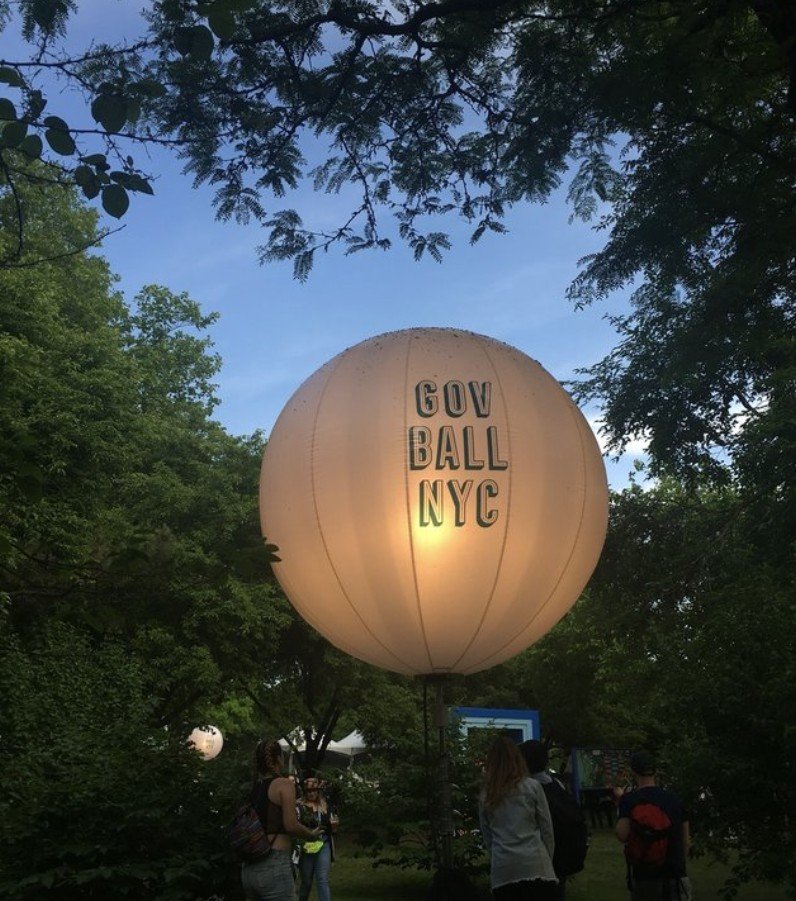
6. Governors Ball NYC — The Biggest Music Festival of the Summer
No guide to NYC summer events 2026 would be complete without the crown jewel of New York’s festival calendar: Governors Ball. Now in its 16th year, Gov Ball returns to Flushing Meadows-Corona Park in Queens from June 5–7, 2026, and the lineup is stacked.
This year’s headliners include Lorde (making her first Gov Ball headlining appearance since 2017), A$AP Rocky (a triumphant return to his hometown stage), and global K-pop superstars Stray Kids, whose stadium-filling live shows have made them one of the most electrifying acts in the world. JENNIE of BLACKPINK fame is also on the bill, alongside Baby Keem, Kali Uchis, Major Lazer, Clipse, and dozens more artists spanning hip-hop, indie, pop, and electronic music.
Flushing Meadows-Corona Park provides a spacious, scenic setting with sweeping views of the Queens skyline, multiple stages, art installations, and a diverse lineup of food vendors from across the city.
Practical info:
Dates: June 5–7, 2026 (Friday–Sunday)
Location: Flushing Meadows-Corona Park, Queens, NY
Getting there: Take the 7 train to Mets-Willets Point — no parking available
Tickets: General admission starts around $139/day; 3-day passes and premium options (GA+, VIP, Cabanas) are also available
All ages welcome
📍 Flushing Meadows-Corona Park, Queens, NY 🎟️ Tickets: Available at governorsballmusicfestival.com
Bonus: More Free NYC Summer Events to Know About in June
The six events above are our headliners, but June in New York is packed. Here are a few more worth adding to your calendar:
Lincoln Center’s Summer for the City (June 10–August 8) — Now in its fifth year, this sprawling free outdoor arts festival across the Lincoln Center campus features concerts, dance performances, spoken word, and interactive art installations. Most events are free with first-come, first-served general admission; free Fast Track reservations are also available online for priority entry.
BRIC Celebrate Brooklyn Festival — Brooklyn’s longest-running free outdoor performing arts festival (since 1977) kicks into full swing in June at the Lena Horne Bandshell in Prospect Park, featuring artists from around the world and across genres.
SummerStage in Central Park — Running from June through October, SummerStage at Rumsey Playfield brings world-class free live performances spanning salsa, jazz, hip-hop, Afrobeat, reggae, and more. Shows also take place in parks across all five boroughs.
Puerto Rican Day Parade (June 14) — One of the largest parades in the world, the National Puerto Rican Day Parade marches up Fifth Avenue with this year’s Grand Marshal, global reggaeton star Daddy Yankee.
Quick Reference: June NYC Summer Events 2026 at a Glance
Event
Date
Cost
Governors Ball NYC
June 5–7
Paid (from ~$139/day)
Museum Mile Festival
June 9, 6–9 PM
Free
Bryant Park Yoga
Tuesdays & Wednesdays through Sept 16
Free
Intrepid Free Movies
Select Fridays, May–August
Free
Lincoln Center Summer for the City
June 10–Aug 8
Free
Puerto Rican Day Parade
June 14
Free
SummerStage Central Park
June–October
Free
Greenmarket (Union Square)
Mon/Wed/Fri/Sat year-round
Free to browse
Final Thoughts on Things to Do in NYC in June 2026
June is simply one of the best months to be in New York City. The weather is warm, the city is buzzing with energy, and whether you have a budget of zero or want to splurge on a music festival weekend, there is genuinely something for everyone.
From the meditative calm of an early morning bike ride through Central Park to the crowd-surging thrill of Governors Ball — and everywhere in between — these NYC summer events 2026 represent the city at its most vibrant and alive.
Save this guide, bookmark your favorites, and get ready for the summer of a lifetime in the greatest city in the world. 🗽
The NY Philharmonic Concerts in the Parks 2026 are back, and the crown jewel — the free New York Philharmonic Central Park concert — takes place on June 10 at the Great Lawn. Here’s everything you need to plan the perfect summer night out.
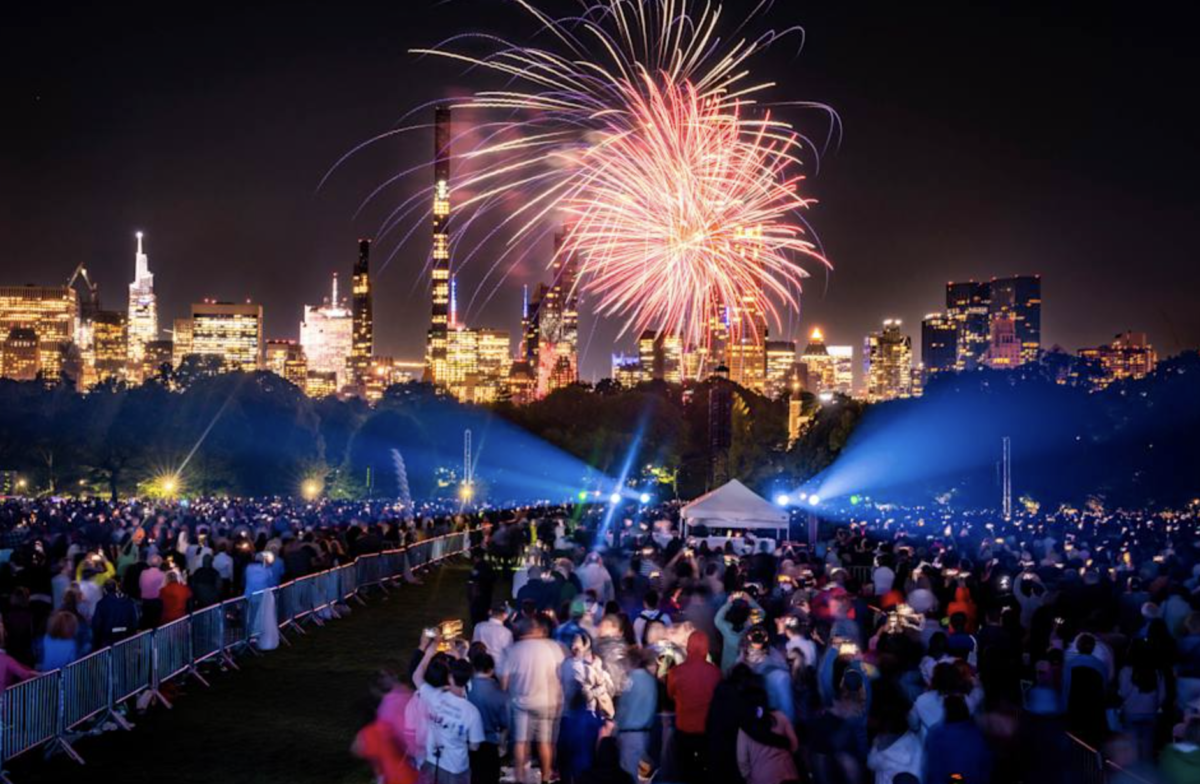
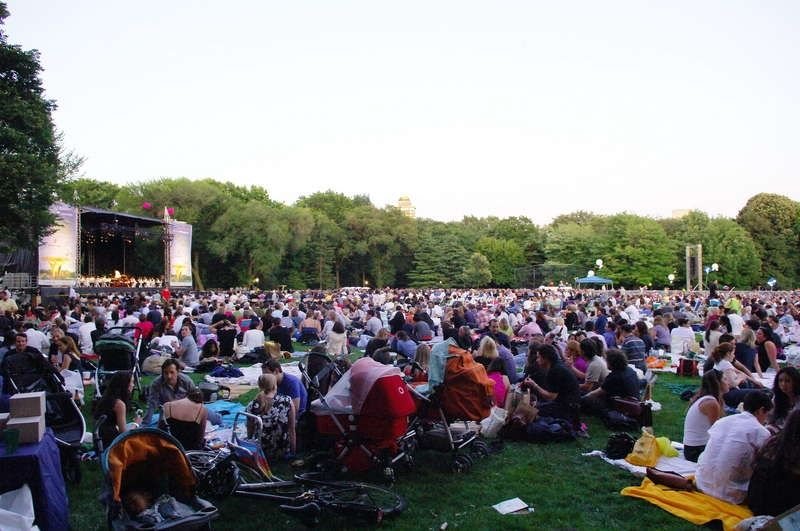
If there’s one event that defines a New York City summer, it’s the NY Philharmonic Concerts in the Parks 2026. Every June, the world-renowned New York Philharmonic takes its music out of David Geffen Hall and into the open air, treating hundreds of thousands of New Yorkers — and visitors — to a completely free evening of world-class classical music capped off with a spectacular fireworks display. No ticket required. No dress code. Just a blanket, a picnic basket, and the Manhattan skyline.
The headline event this year — the New York Philharmonic Central Park concert — is scheduled for Wednesday, June 10, 2026, on the iconic Great Lawn. Whether you’re a lifelong classical music fan or just looking for an unforgettable summer night in the city, here is everything you need to know.
What Are the NY Philharmonic Concerts in the Parks?
The Concerts in the Parks series has been a New York institution since 1965, when the Philharmonic first brought free orchestral music to the city’s outdoor spaces. More than six decades later, the tradition remains one of the most beloved cultural events in the five boroughs, drawing audiences of all ages and backgrounds to parks across the city each summer.
The concept is simple and generous: the full New York Philharmonic orchestra performs a ticketless, open-air concert in each borough — completely free to everyone. The series reflects the Philharmonic’s deep commitment to making world-class music accessible to all New Yorkers, regardless of income or background.
2026 Concerts in the Parks: Full Schedule Across All Five Boroughs
The NY Philharmonic Concerts in the Parks 2026 tour spans all five boroughs across a single week in June. All outdoor performances begin at 8:00 p.m. and conclude with a fireworks display. Date Borough Venue Mon, June 9 The Bronx Van Cortlandt Park (Parade Ground) Wed, June 10ManhattanCentral Park — The Great Lawn Thu, June 11 Queens Cunningham Park (193rd Street Field) Fri, June 12 Brooklyn Prospect Park Sun, June 14 Staten Island St. George Theatre (indoor, tickets required)
Note: The Staten Island performance is a free indoor concert at St. George Theatre starting at 2:00 p.m. Free tickets are required and limited to four per person — check the St. George Theatre website for reservations.
New York Philharmonic Central Park Concert 2026: Date, Time & Location
Date: Wednesday, June 10, 2026
Main Concert: 8:00 p.m. – approx. 10:00 p.m.
Pre-Concert Performances: 6:00–7:30 p.m.
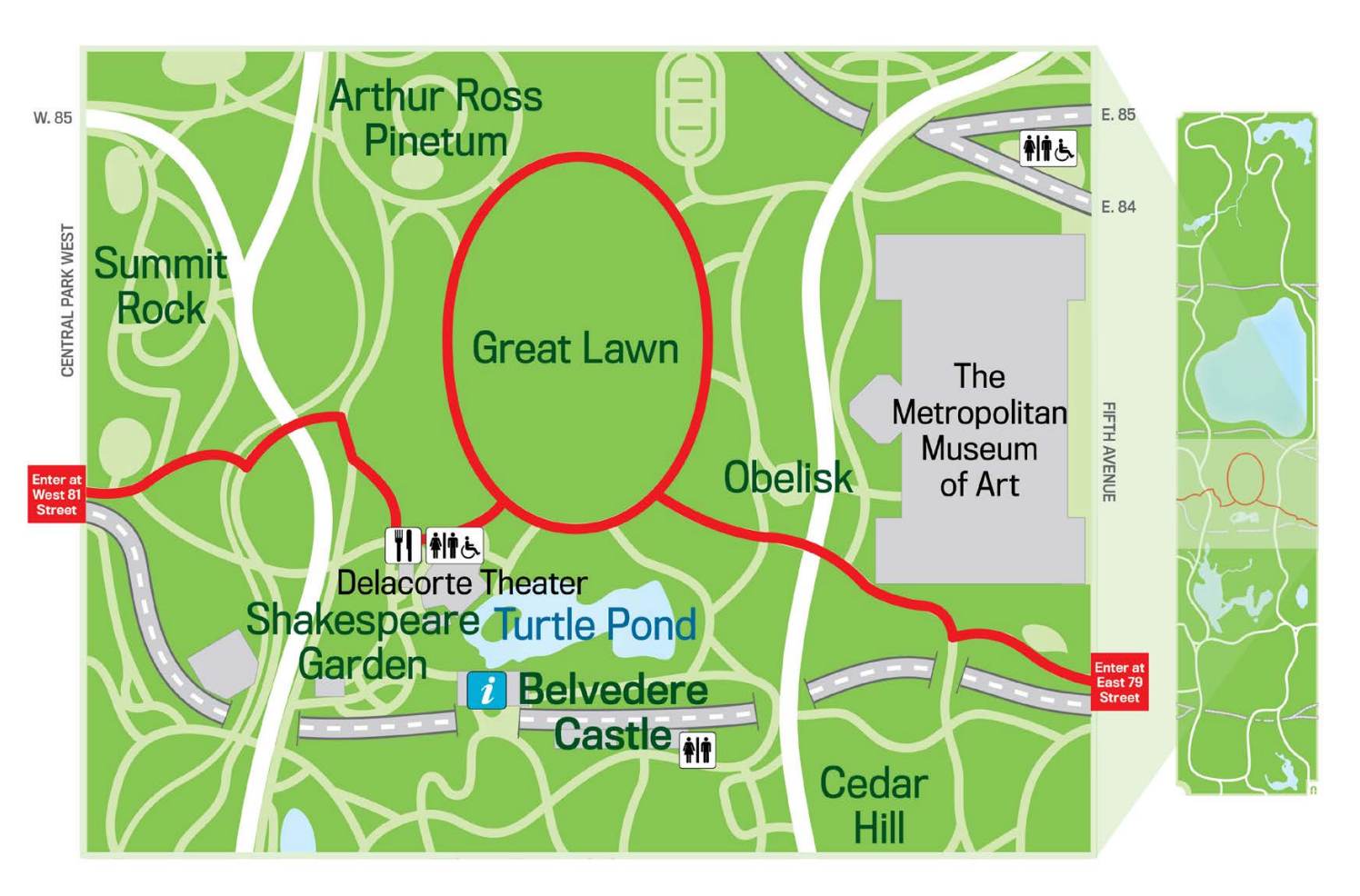
Venue: The Great Lawn, Central Park (mid-park, between 79th and 85th Streets)
Admission: FREE — no tickets or reservations needed
The New York Philharmonic Central Park concert is the emotional heart of the series. The Great Lawn, one of Central Park’s most iconic open spaces, transforms into a massive outdoor concert hall for the evening. Arrive early — this is one of the most attended free events in New York City all year.
Getting There
West Side entrances: West 81st Street or West 86th Street at Central Park West
East Side entrances: East 79th Street or East 85th Street at Fifth Avenue
Recommended: Take the subway (B/C to 81st Street–Museum of Natural History or 1 to 79th Street). Driving and parking in the area is extremely difficult on concert night.
This year’s program is a genuinely special one — festive, emotional, and crowd-pleasing in equal measure.
Conductor: Elim Chan
source: https://www.elimchan.nl/
Making her debut leading this beloved series, Elim Chan is one of the most sought-after conductors of her generation. Known for her crystalline precision and expressive energy, she previously served as principal conductor of the Antwerp Symphony Orchestra (2019–24) and principal guest conductor of the Royal Scottish National Orchestra (2018–23). Her first time at the helm of Concerts in the Parks is a milestone moment.
Soloist: Carter Brey — A Farewell Performance
The most emotionally resonant part of this year’s concert is the solo turn by Carter Brey, who has served as the New York Philharmonic’s Principal Cellist since 1996 — nearly 30 years. This season marks his retirement, making the Central Park concert one of his final solo performances in the city he has called home throughout his entire career. He will perform Saint-Saëns’s Cello Concerto No. 1, a dazzling, passionate work that showcases the full depth of his artistry. For anyone who has followed the Philharmonic over the years, this is a once-in-a-lifetime moment to witness in person.
Full Program Lineup
The complete program for the NY Philharmonic Concerts in the Parks 2026 is:
Aaron Copland — Fanfare for the Common Man
Joan Tower — Fanfare for the Uncommon Woman, No. 1
Hector Berlioz — Le Corsaire Overture
Camille Saint-Saëns — Cello Concerto No. 1 (soloist: Carter Brey)
Paul Dukas — The Sorcerer’s Apprentice
Maurice Ravel — Boléro
Celine Kim & Peace Dixon — Works by New York Philharmonic Very Young Composers
It’s a crowd-pleasing lineup by design — from the stirring patriotism of Copland’s Fanfare and the stormy drama of the Berlioz overture to the pulse-pounding crescendo of Boléro and the magical storytelling of The Sorcerer’s Apprentice. Even first-time classical music listeners will find themselves swept up.
Pre-Concert Entertainment (6:00–7:30 p.m.)
Arrive early for more than just a good spot on the lawn. The Central Park concert features a free pre-concert program from 6:00 to 7:30 p.m., showcasing ensembles from Philharmonic education and community partners across New York City, as well as the Philharmonic Youth Choir, directed by Dr. Tyrone Clinton. It’s a wonderful way to ease into the evening — especially if you’re bringing children.
Every outdoor NY Philharmonic Concerts in the Parks 2026 performance ends the same spectacular way: a fireworks display lighting up the night sky above the park. Presented by Santore’s World Famous Fireworks, the post-concert display is as much a tradition as the music itself. Plan to stay seated or on your blanket after the final bow — the fireworks begin almost immediately.
Practical Tips: How to Make the Most of the New York Philharmonic Central Park Concert
Arrive Early — Really Early
The Great Lawn opens to the public all day on concert day. If you want a prime spot close to the stage or near a speaker tower (for the clearest sound), arriving 2–3 hours before the 8:00 p.m. start is strongly recommended. By 6:00 p.m., the lawn is already filling up fast.
What to Bring
✅ Picnic blanket or low-profile beach chair ✅ Food and non-alcoholic beverages (no glass containers) ✅ Layers — evenings in Central Park can get cool ✅ A small, clear bag (see bag policy below) ✅ Sunscreen if arriving in the afternoon ✅ Portable phone charger
Bag Policy — Important
Security checks at the Great Lawn entrances can be thorough. The Philharmonic permits:
Small clear bags (no larger than 12” x 12” x 6”)
Small clutches or pouches (approximately hand-sized)
Large backpacks, tote bags, and opaque bags may be turned away at the gate. Keep it simple and travel light.
Seating Rules
Picnic blankets: ✅ Allowed
Low beach chairs (that sit close to the ground): ✅ Allowed
Standard camping or lawn chairs: ❌ Not permitted
Pets: ✅ Allowed outdoors, but must be on a leash at all times
Rain Plan
In the event of bad weather, call the NY Philharmonic’s Parks Hotline: (212) 875-5709 and monitor the Philharmonic’s official social media channels. Weather updates are typically posted at least two hours before the scheduled start.
Why the NY Philharmonic Concerts in the Parks Still Matter
In an era of expensive tickets and exclusive experiences, the Concerts in the Parks series stands as a reminder of what culture can be at its most democratic. The fact that you can spread a blanket on the same lawn where children play in the afternoon, listen to a world-class orchestra perform Ravel and Saint-Saëns as the sun sets over Manhattan, and then watch fireworks burst above the treeline — all at no cost — is extraordinary.
This year carries particular weight. Watching Carter Brey step into the spotlight on the Great Lawn for one of his final performances is the kind of moment that doesn’t come around often. These are the evenings New Yorkers talk about for years.
Quick Reference: NY Philharmonic Central Park 2026 at a Glance
Detail Info Date Wednesday, June 10, 2026 Pre-Concert 6:00–7:30 p.m. Main Concert 8:00 p.m. Location Great Lawn, Central Park (79th–85th Sts) Admission FREE Tickets Not required Post-Concert Fireworks display Rain Hotline (212) 875-5709 More Infonyphil.org
Mark June 10 on your calendar. Pack a blanket, bring good food, and get there early. Some evenings you remember for the rest of your life — this is likely to be one of them.
Whether you’re hunting for a rare Oz first edition, a limited-edition photography book, or a quiet corner steeped in French literary culture, New York City’s independent bookstores offer something magical for every reader. Here are six must-visit spots that go far beyond the ordinary.
If you think you’ve seen everything New York City has to offer, you probably haven’t spent enough time in its bookstores. The best NYC independent bookstores are not just retail spaces — they’re portals to entirely different worlds. Whether you’re a parent looking for the perfect picture book, a collector hunting down a signed first edition, or a Francophile searching for Proust in the original French, New York’s indie bookstore scene delivers in ways that no algorithm ever could.
From a legendary children’s sanctuary in Chelsea to a hidden photography vault in NoHo, and from a century-old rare book dealer on the Upper East Side to a stunning French-language reading room inside a Gilded Age mansion, these six destinations represent the very best bookstores in New York City. Tuck your MetroCard in your pocket and let’s go.
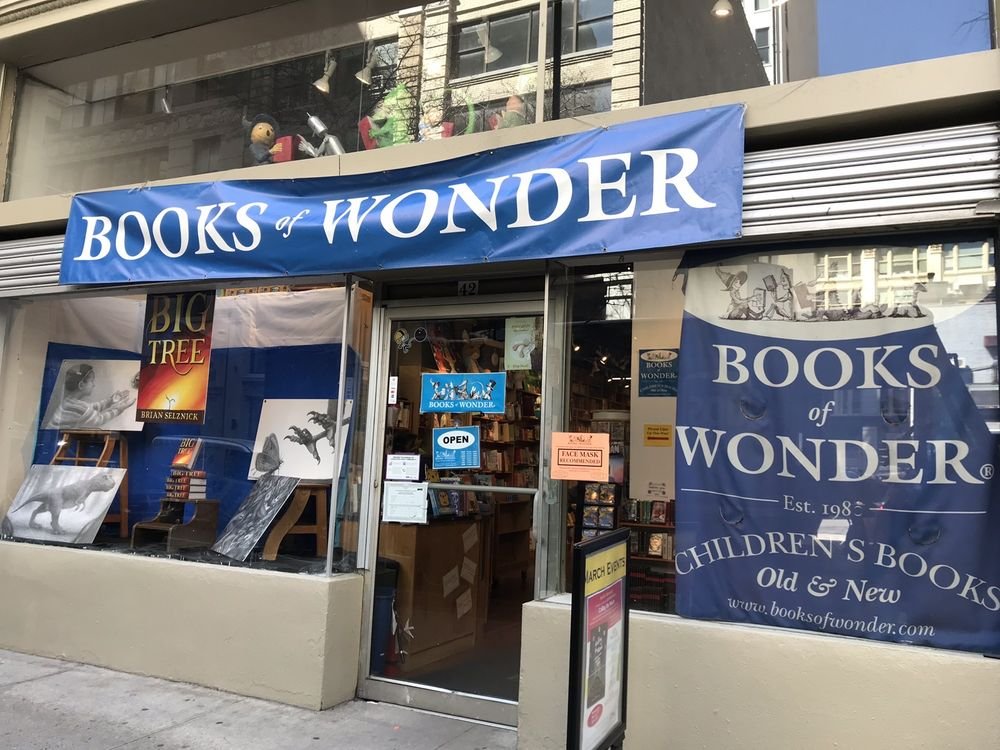
1. Books of Wonder — NYC’s Premier Children’s Independent Bookstore
When it comes to NYC independent bookstores dedicated to children’s literature, nothing quite matches Books of Wonder. Founded in 1980, it holds the proud title of New York City’s largest and oldest independent children’s bookstore, and it has been a beloved institution ever since.
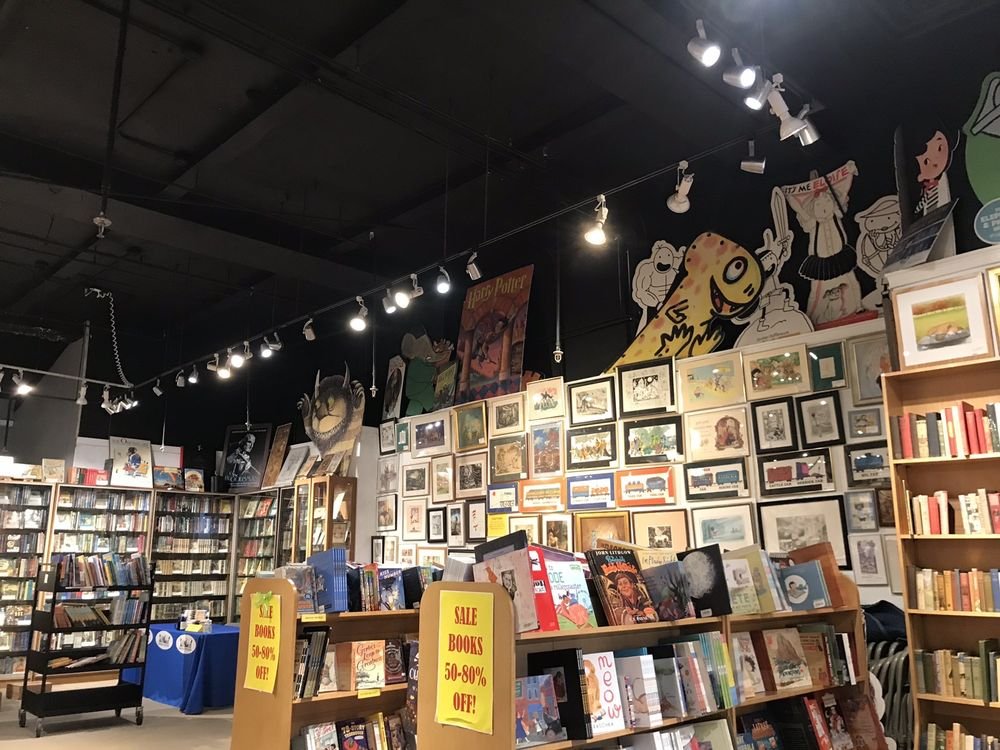
Books of Wonder is considered the model for the bookstore in the popular film You’ve Got Mail, directed by longtime customer and friend Nora Ephron, who worked to capture the essence of the store for Meg Ryan’s character. That kind of cultural cachet is hard to manufacture — it’s earned over decades of genuine community love.
The store’s departments cover children’s classic and contemporary picture books, board books for infants and toddlers, foreign language children’s books, reference and non-fiction, chapter books and novels for children from beginning readers to teens — and of course, its world-famous Oz section, an entire bookcase devoted to L. Frank Baum’s series and its successors.
The staff are known for being polite, chatty, and remarkably well-read — visitors frequently compare the experience to having a walking, talking version of Goodreads on hand to help you find your next favorite book. The store also hosts regular author events and storytimes, making it as much a community hub as a retail destination.
Recommended titles:The Wonderful Wizard of Oz (first edition facsimile), Hot Dog by Doug Salati (Caldecott Award winner), and the latest Newbery and Caldecott selections on their curated display table.
2. Dashwood Books — The Best NYC Bookstore for Photography and Art
source: Dashwood Books
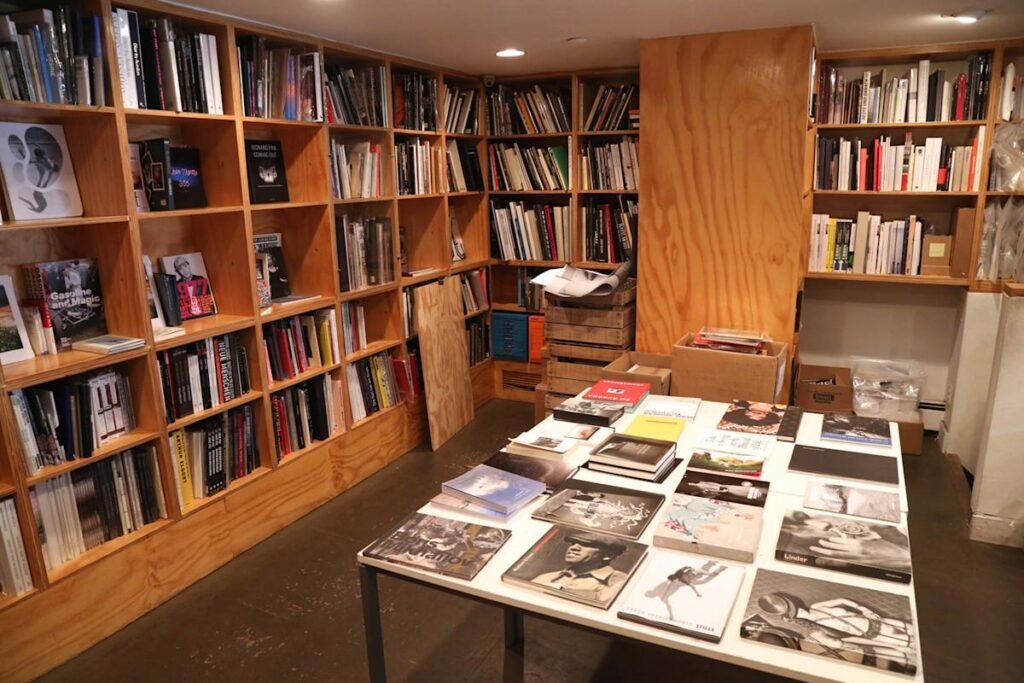
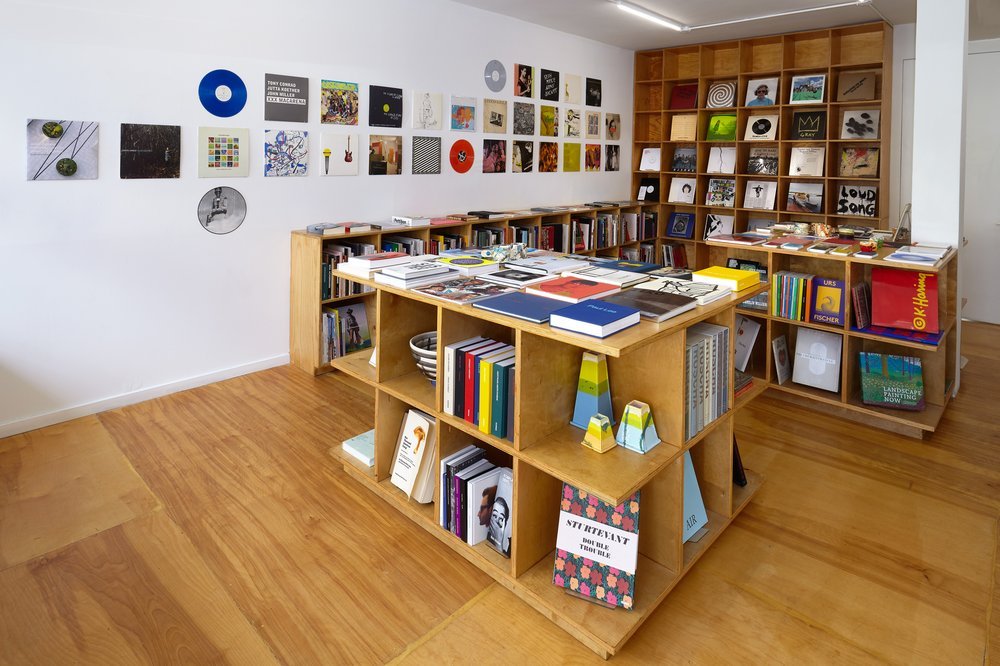
Tucked below street level at 33 Bond Street in NoHo, Dashwood Books is a rare and wonderful thing: New York City’s only independent bookstore devoted entirely to photography.
Founded in 2005 and owned by David Strettell, formerly the Cultural Director of Magnum Photos, Dashwood offers a carefully curated inventory from international publishers, importing books that have no or very limited distribution in the United States — including limited press runs from Japan, Germany, and the Netherlands, as well as artists’ self-published books, signed books, and a carefully curated selection of collectible post-war titles.
The last decade has seen a radical change in the publishing of books on photography, and the photo book has become as respected a medium as the print itself. Dashwood has been at the center of that shift, connecting collectors and curious browsers alike with work they simply couldn’t find anywhere else in the city.
You enter by heading down a staircase and getting buzzed in — which gives the whole experience a delightfully secretive, members-club feel. Once inside, the walls are lined with large-format volumes that reward slow, careful looking.
Address: 33 Bond Street, New York, NY 10012 (basement level)
Best for: Photography collectors, fashion art book enthusiasts, and anyone interested in rare or out-of-print visual art publications.
3. Karma — Where the East Village Art World Comes to Browse
One of the most talked-about NYC independent bookstores among the art world crowd, Karma sits quietly in the East Village at 136 East 3rd Street. It operates as both a gallery and a bookshop — a combination that gives it a uniquely electric atmosphere. – Currently Temporarily Closed.
Source: Karma Bookstore
Karma publishes and stocks titles by a roster of emerging and established artists that its sister gallery represents, including Alex Da Corte and Nicolas Party, and also sells impressive compendiums of art world giants including Richard Prince, Ed Ruscha, and Julian Schnabel.
The space is deliberately small and carefully edited, which means every book on the shelf has been chosen with intention. You won’t find filler here. What you will find are artist journals, experimental design books, self-published zines, and exhibition catalogues that sit at the intersection of fine art and book-making as a craft in its own right.
If you’re visiting another gallery in the East Village or Lower East Side, Karma is a natural companion stop — and almost guaranteed to send you home with something you didn’t know you needed.
Best for: Contemporary art lovers, gallery-goers, collectors of artist books and limited-edition publications.
4. Argosy Book Store — The Best NYC Bookstore for Rare and Antique Books
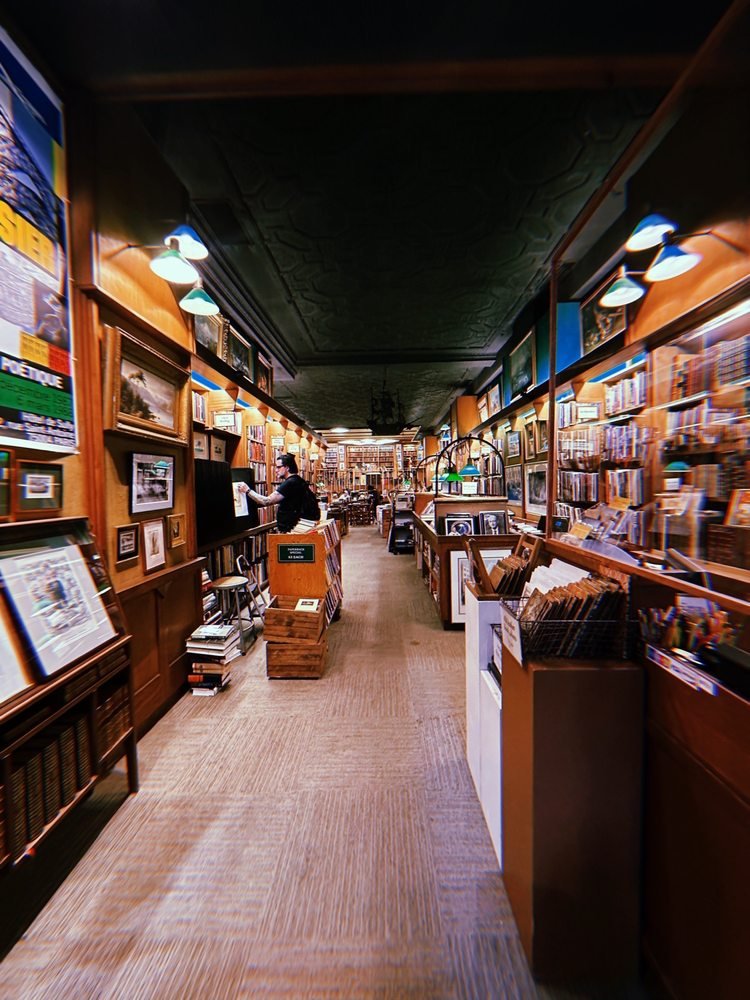
For anyone with a weakness for first editions, antique maps, and the kind of books that feel like artifacts, Argosy Book Store on East 59th Street is essential. In the back of the store, a dedicated section houses rare and vintage books, prints, and original artwork that span centuries of history.
Argosy has been a fixture of the New York rare book world since 1925, occupying a six-story townhouse that is as much a destination as what’s inside it. The store carries an extraordinary range of material: literary first editions, Americana, antique maps and prints, autographs, and historical ephemera. The New Yorker cover prints — particularly those by Saul Steinberg — have become collector’s items in their own right.
This is one of those NYC independent bookstores that rewards multiple visits. The inventory is vast and constantly changing, meaning regulars often stumble upon genuine treasures that weren’t there the week before. Staff are knowledgeable and genuinely passionate about the material, making even a casual browse feel like a private tutorial in the history of the book.
Best for: Rare book collectors, history enthusiasts, anyone looking for antique maps, signed first editions, or vintage New Yorker prints.
5. Albertine Books — The Most Beautiful Bookstore in New York City (and the Best for French Literature)
When people talk about the best bookstores in New York City as experiences — not just shops — Albertine Books on the Upper East Side belongs at the very top of the list.
Opened in 2014, Albertine offers the largest collection in the United States of French-language books and translations from French into English, located in the Payne Whitney House at 972 Fifth Avenue, between 78th and 79th Streets.
Tucked inside the historic Payne Whitney mansion, Albertine is the only bookshop in New York devoted solely to books in French and English, with more than 14,000 contemporary and classic titles from 30 French-speaking countries.
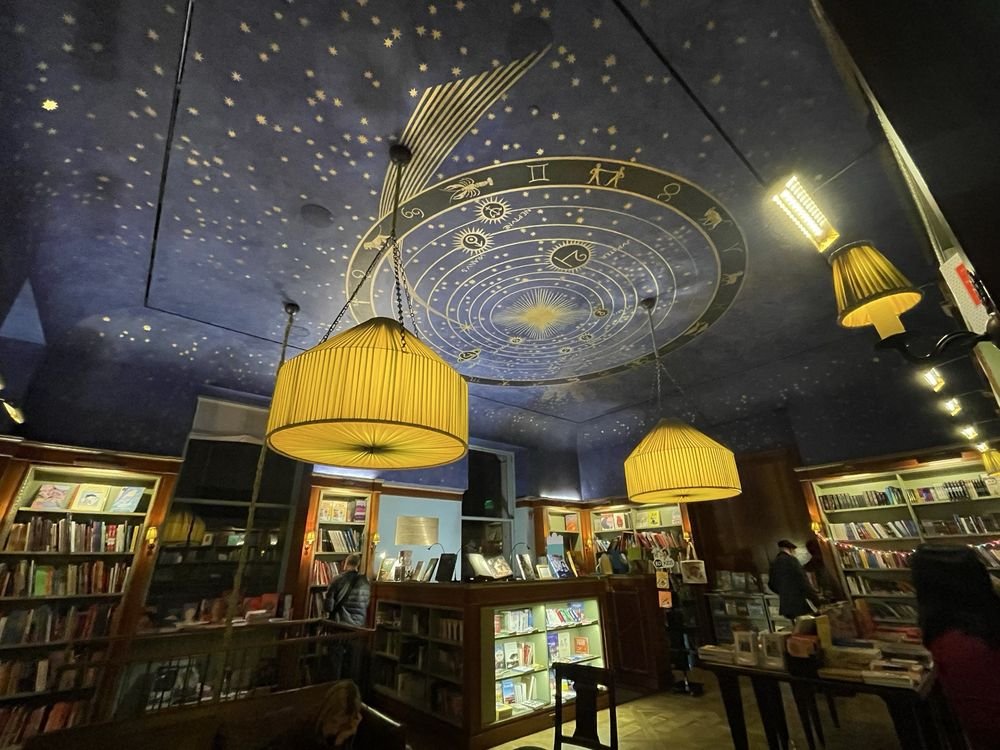
The bookstore’s second floor features a hand-painted ceiling of celestial scenes — planets and zodiac symbols — that invites visitors into a world where science and poetry blend seamlessly. The space also features busts of famous figures from French and French-American culture, such as Descartes and Benjamin Franklin, and a floor-to-ceiling mirrored Venetian room.
The bookstore was conceived by Antonin Baudry, former French Cultural Counselor, as a hub for Franco-American intellectual exchange, and named after Marcel Proust’s character. The interior was designed by French designer Jacques Garcia, known for his work on The NoMad Hotel in New York City.
Beyond the books, Albertine hosts a packed calendar of free public events. Its annual Night of Philosophy gathers dozens of philosophers and other intellectuals for 20-minute presentations that run all night long — one of the most singular cultural events in the city. The store also runs a popular book club and participates in the Museum Mile Festival each summer.
Visitors can also browse rare books in the back room, adding yet another layer to what is already one of New York’s most extraordinary spaces.
Address: 972 Fifth Avenue, New York, NY 10021
Hours: Thursday–Tuesday, 10:00 AM – 6:00 PM (Closed Wednesdays)
Recommended titles: Proust’s In Search of Lost Time, works by Simone de Beauvoir and Jean-Paul Sartre, and the latest French fiction in both French and English translation.
6. Assouline — The Most Luxurious Bookstore Experience in New York City
If the best bookstores in New York City can include spaces that feel more like private clubs or hotel lounges than traditional shops, then Assouline earns its place here without question.
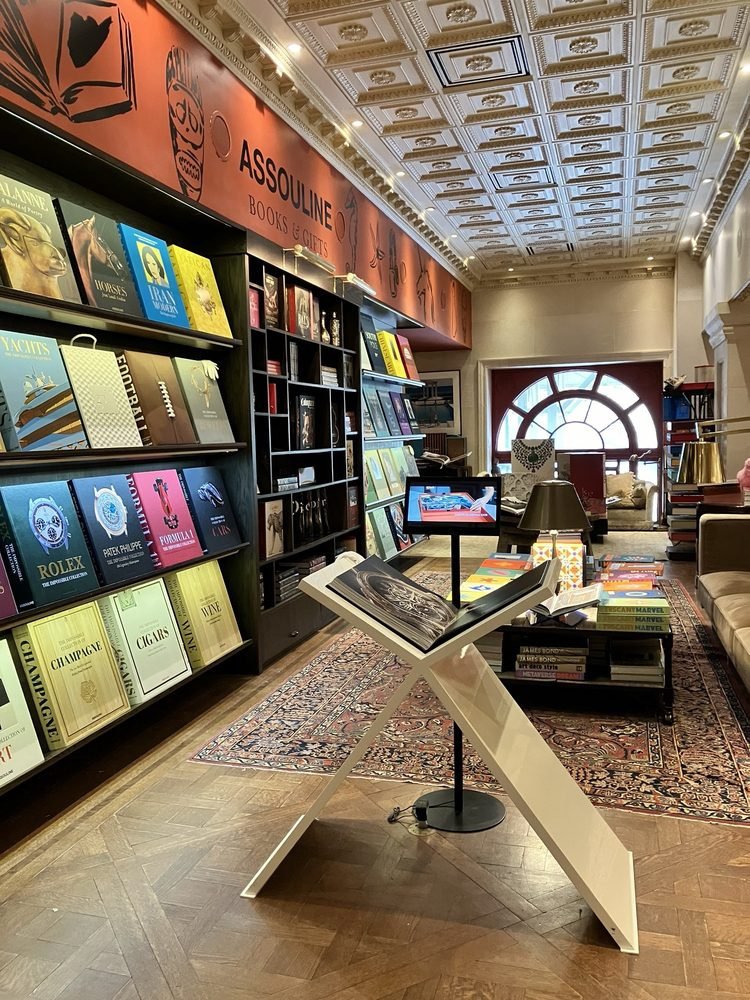
The publishing company behind landmark titles on brands including Cartier, Chanel, and Bentley, Assouline runs an outpost at Manhattan’s Plaza Hotel that is a richly-outfitted space for browsing titles on fashion, art, and design. Coffee table books as well as more portable publications line the shelves — and its balcony provides an overhead view of The Plaza’s sparkling lobby.
Both The Plaza Hotel location and The Mark Hotel location (25 East 77th Street) are open to the public — you don’t need to be a guest to walk in and browse. The books themselves are as much design objects as they are reading material: exceptional production values, premium materials, and subject matter that ranges from the architecture of Rome to the social history of New York City.
The Plaza location also offers a custom book binding service, making it one of the few bookstores in the city where you can watch skilled artisans at work while you shop.
Address (The Plaza): 5th Avenue & Central Park South, New York, NY 10019
Address (The Mark): 25 East 77th Street, New York, NY 10075
Recommended titles:New York Chic, Roma Eterna, and New York by New York — all quintessential Assouline volumes that make exceptional gifts.
NYC Independent Bookstores: A Quick Reference Guide
Bookstore
Neighborhood
Specialty
Best For
Books of Wonder
Chelsea
Children’s literature
Families, collectors of vintage children’s books
Dashwood Books
NoHo
Photography art books
Art collectors, photography enthusiasts
Karma
East Village
Artist books & gallery publications
Contemporary art lovers
Argosy Book Store
Midtown East
Rare books, antique maps
First edition collectors, history buffs
Albertine Books
Upper East Side
French literature
Francophiles, architecture lovers
Assouline
Midtown / UES
Luxury coffee table books
Design lovers, gift-buyers
Final Thoughts: Why NYC Independent Bookstores Still Matter
In a city that moves at the pace of New York, stepping into an independent bookstore is an act of quiet defiance. These six shops — each wildly different in character — share something essential: they were built by people who believe that books deserve more than an algorithm and a one-click purchase.
The best NYC independent bookstores are also some of the city’s best-kept secrets. None of them advertise aggressively. None of them need to. Their regulars find them, fall in love with them, and keep coming back — and that’s exactly the kind of loyalty that no major retailer can replicate.
Whether you’re a lifelong New Yorker or visiting for the first time, set aside a few hours to wander through one (or all six) of these bookstores. You’ll leave with something you didn’t expect — and probably a bag heavier than you planned.
The Keith Haring exhibition 2026 at The Brant Foundation brings the artist’s formative years back to the East Village neighborhood where it all began. From chalk subway drawings to blacklight rooms, here’s everything you need to know before you visit.
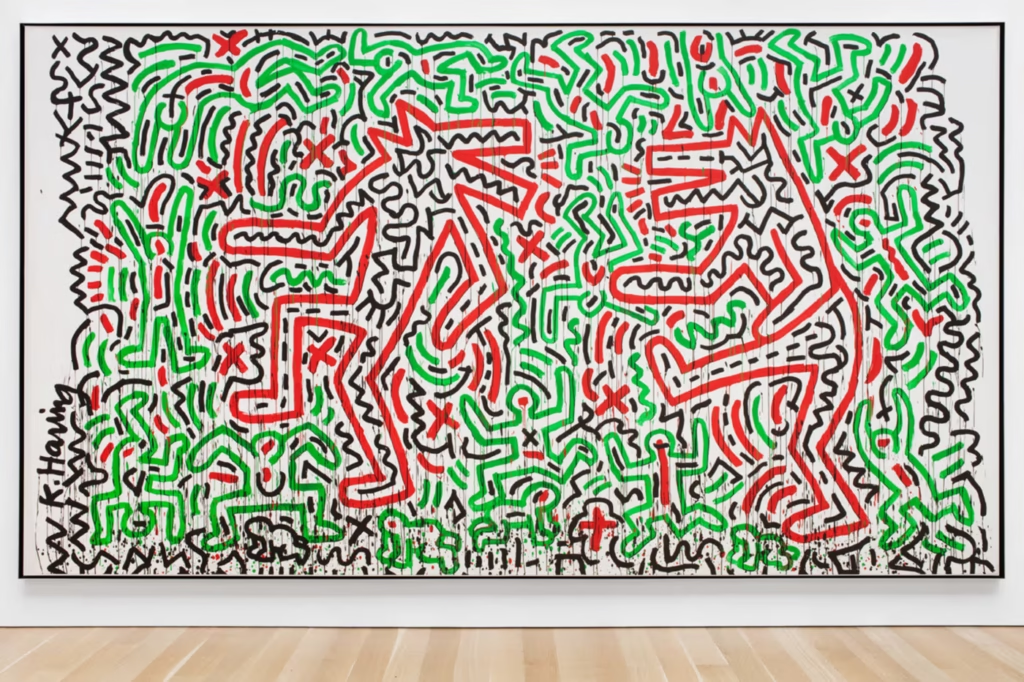
If you’ve been waiting for a Keith Haring exhibition that goes beyond the familiar merchandise and poster-print nostalgia, the 2026 show at The Brant Foundation in New York’s East Village is the one. On view from March 11 through May 31, 2026, this tightly focused survey takes you back to the years 1980–1983 — the moment when a young artist from Pennsylvania transformed New York’s subway system into the world’s most electrifying open-air gallery. And it does so in the very neighborhood where Haring first made his name.
Source: The Brant Foundation
For anyone interested in street art, Pop art, or the history of downtown New York, this is not just an exhibition worth seeing — it’s an experience that puts you in direct contact with the origins of a visual language that now belongs to the whole world.
Why the Keith Haring Exhibition 2026 Is Different From Past Retrospectives
Over the past decade, Keith Haring’s name has appeared on the walls of major institutions worldwide. Most of those shows cast a wide net — covering his full career arc from subway guerrilla to global activist, from the AIDS crisis to his Pop Shop. They are comprehensive, respectful, and often moving.
But the Brant Foundation show, curated by Dr. Dieter Buchhart and Dr. Anna Karina Hofbauer, makes a different choice. Rather than surveying everything, it narrows its focus to the three-year window when Haring’s visual language was still being invented. This is not the polished icon. This is the artist in the act of becoming one.
The curators have cited Haring’s own journals as a guiding framework: his early entries are inseparable from New York — its streets, its clubs, its subway stations. It is only from the mid-1980s onward that his diary fills with destinations like Tokyo, Paris, and Amsterdam. This exhibition catches him before the world came calling.
The show features approximately 50 works, including:
Source: The Brant Foundation
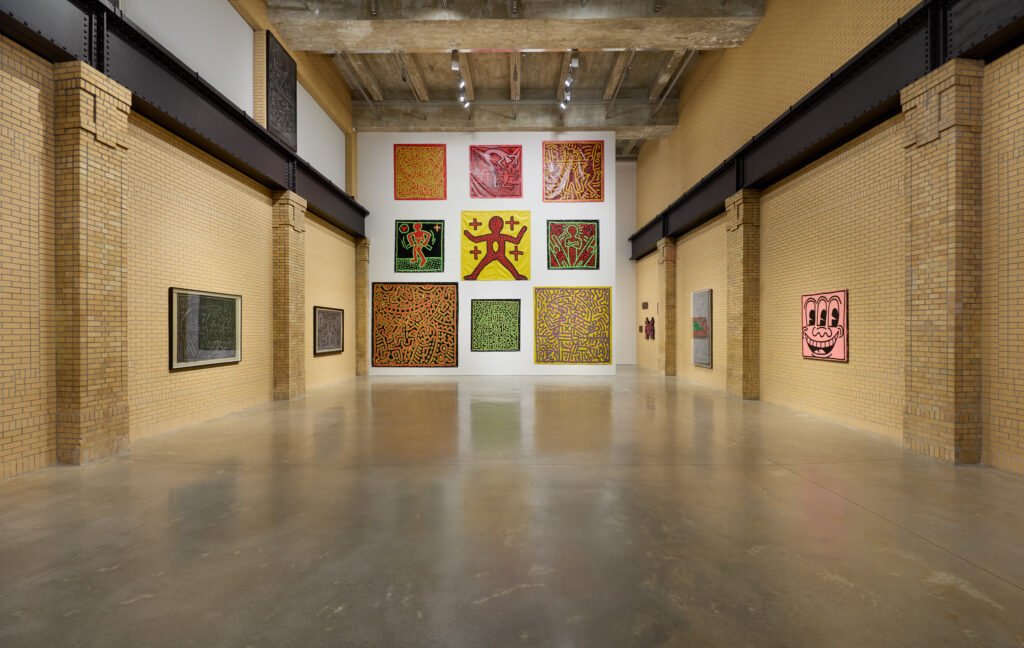
Nine large-scale tarp paintings displayed together on a single wall
Eight surviving subway chalk drawings in their original fiberglass frames
Works from the landmark 1982 Tony Shafrazi Gallery exhibition (including pieces from the legendary Blacklight Room)
Works shown at the FUN Gallery in 1983, a pivotal venue on the Lower East Side
Early enamel paintings on metal from 1981
A portrait of Haring by Jean-Michel Basquiat, on display as a rare document of their friendship
Press coverage since opening has been unanimous: this is a rare show that pushes beyond the deeply familiar surface of Haring’s work into something rawer and more urgent.
Keith Haring’s Subway Drawings: Where It All Began
To understand the Brant Foundation exhibition, you need to understand what Keith Haring’s subway drawings were and why they mattered.
In December 1980, Haring noticed something on the platforms of the New York City subway system: the black matte paper panels used as placeholders when advertisement spaces went unfilled. These blank rectangles, scattered across hundreds of stations, struck him immediately. He went above ground, bought chalk, came back down, and drew.
“It seemed obvious to me when I saw the first empty subway panel that this was the perfect situation,” he later wrote in his book Art in Transit.
What followed was one of the most unusual public art campaigns in American history. Haring rode the subway daily, scanning platforms for empty panels, and drew with white chalk directly onto the black paper — quickly, without preparation, always beginning with a border and working inward. He created more than 5,000 of these drawings between 1980 and 1985, possibly making it the largest sustained public art project ever undertaken by a single artist.
The figures that emerged — a radiant crawling baby, a barking dog, dancing human outlines, flying saucers, pulsating hearts — were drawn flat, without spatial depth, close to the surface like cartoons. Simplicity was not just an aesthetic choice; it was a practical one. Haring needed to finish each drawing before the transit police arrived. The urgency of potential arrest shaped the visual economy of every line.
Commuters stopped. People watched him work. Some drawings were stolen from their frames within hours of being made — a measure of how quickly his reputation spread. Photographer Tseng Kwong Chi followed Haring through the system, documenting what would eventually amount to over 22,000 photographs of the subway project. In 1982, one of Haring’s arrests was filmed and broadcast on a CBS News special, turning a downtown phenomenon into a national story.
The Brant Foundation exhibition displays eight surviving original subway drawings, many of which have never before been shown publicly. Standing in front of them — chalk on black paper, still in their Metropolitan Transit Authority frames — is as close as you can get to those platform moments.
The East Village Setting: Why Location Matters for This Show
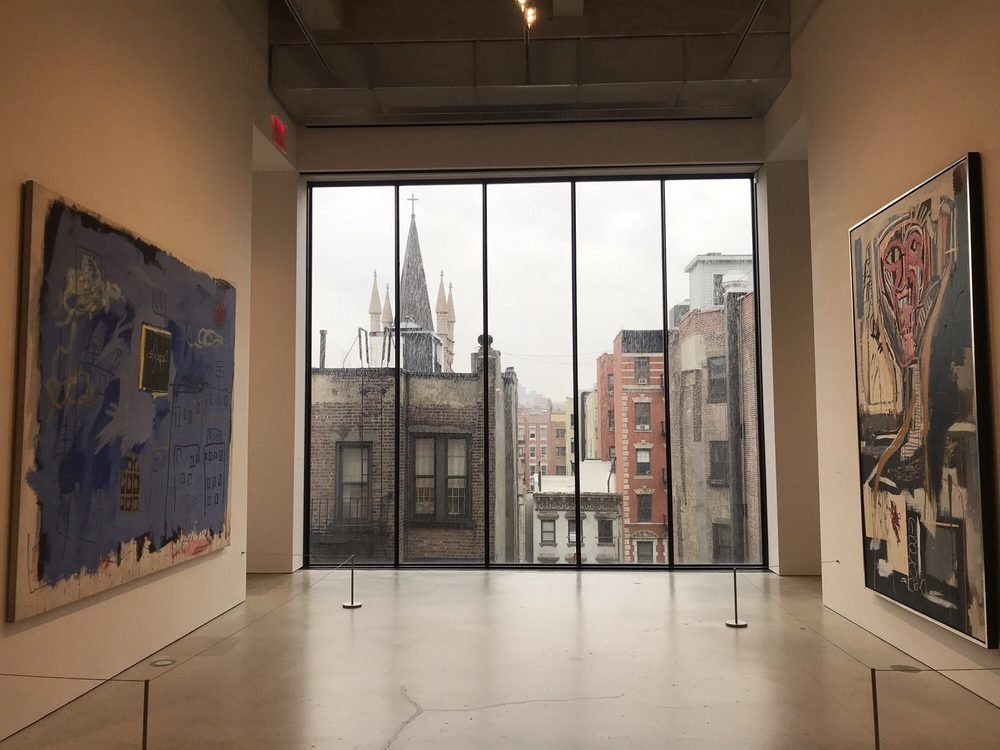
The Brant Foundation’s New York space sits at 421 East 6th Street, between Avenue A and First Avenue in the East Village — just blocks from the clubs, galleries, and streets where Haring built his reputation in the early 1980s.
When Haring arrived in New York in 1978 to study at the School of Visual Arts (SVA), the East Village and Lower East Side were a laboratory of creative energy. Cheap rents and abandoned storefronts had attracted an unlikely convergence: graffiti writers, punk musicians, underground gallery owners, poets, and painters. This was the world of Club 57, of early hip-hop, of zines and word-of-mouth exhibition openings. Art happened in the streets before it happened in any gallery.
Haring moved through all of it — befriending Kenny Scharf and Jean-Michel Basquiat, working out ideas at P.S. 122 and Club 57, drawing on subway walls and then showing in galleries. The East Village was not simply where he worked; it was the ecosystem that produced his aesthetic.
Showing this work a few blocks from its origin point is not incidental. It changes how the work reads. The industrial rawness of the Brant Foundation building — a former Con Edison substation built in 1920, later used as a studio by Minimalism pioneer Walter De Maria — amplifies rather than sanitizes what you’re looking at. The building’s preserved gantry crane, steel staircases, and exposed structure feel closer to a subway platform than to a white-cube museum. That friction is exactly right.
Key Works and Exhibition Highlights
Keith Haring Subway Drawings on View
The subway drawings are the emotional core of the show. Eight original examples survive in the exhibition, displayed in their original fiberglass frames. Watching the figures emerge from black paper — radiant babies, barking dogs, abstracted human forms — it’s easy to understand why subway riders in 1981 stopped mid-commute to look. These are not sketches. They are complete, confident statements made in minutes.
The Blacklight Room (Tony Shafrazi Gallery, 1982)
Among the most talked-about elements of the early Haring career, the Blacklight Room from his 1982 Tony Shafrazi Gallery show turned a gallery basement into something between a painting and a dance floor. Under ultraviolet light, works painted in fluorescent Day-Glo pigments glowed and pulsed. The division between art space and nightclub dissolved. The Brant Foundation show includes works from this period, allowing visitors to understand Haring not just as a graphic artist but as an environmental designer — someone who thought in terms of total experience.
The FUN Gallery, 1983
The FUN Gallery on the Lower East Side was one of the key venues that collapsed the barrier between graffiti culture and the contemporary art world. Haring’s 1983 show there was a defining moment — not only for his career, but for the broader legitimacy of street art as a gallery practice. Works from that exhibition are included here.
Early Enamel Paintings and Tarp Works
A group of small baked enamel on metal paintings from 1981 read like the physical precursors to digital emoji — condensed, iconic, immediately legible. They demonstrate how early Haring was thinking about universal visual communication systems.
The nine large tarp paintings — made from the kind of industrial canvas used to cover trucks — are displayed together on a single wall, creating one of the exhibition’s most striking visual experiences. Originally made when Haring was pushing against the limitations of standard canvas sizes, they have an outdoor, public-space energy that feels entirely at home in the Brant Foundation’s industrial setting.
Keith Haring’s Legacy in New York City Today
The Brant Foundation exhibition exists in dialogue with Haring’s surviving public presence in New York. Two murals remain embedded in the city’s daily life:
“Crack is Wack” (1986) — Painted without permission on a handball court wall along Harlem River Drive at 128th Street, this mural was Haring’s response to the crack cocaine epidemic devastating New York communities. City park authorities moved to protect it almost immediately after it appeared, a measure of the public response it generated. It remains on view today.
Carmine Street Pool Mural (1987) — The exterior wall of the public pool in the West Village continues to greet swimmers every summer with Haring’s figures in motion.
These two works demonstrate something essential about Haring’s practice: he did not leave the street behind when galleries came calling. Throughout his career, he moved fluidly between the commercial art world and free public space, seeing the two not as contradictions but as different registers of the same commitment.
Haring died of AIDS-related complications on February 16, 1990. He was 31 years old. In the years before his death, he had founded the Keith Haring Foundation to support AIDS organizations and programs for children — ensuring that the activist dimension of his work would outlast him.
What Makes This Exhibition Especially Relevant Right Now
Curator Dieter Buchhart has described Haring’s work as “a positive humanist virus” that lives on in collective memory, continuing to fight against ignorance, fear, and silence. That framing feels pointed.
Haring worked in a moment of political tension — the Reagan era, the AIDS crisis, the crack epidemic, the debates over censorship that would eventually produce the culture wars. His response was not retreat into abstraction or irony but a doubled commitment to clarity, accessibility, and public presence. He made art that anyone could read, and he put it where anyone could see it.
In today’s visual culture — saturated with iconography, skeptical of sincerity, alert to the politics of representation — Haring’s early work reads with unexpected freshness. These are not comfortable, decorative images. They were made in a state of urgency, on stolen time, for an audience of strangers.
Practical Visitor Information
Venue: The Brant Foundation, 421 East 6th Street, New York, NY 10009
Exhibition Dates: March 11 – May 31, 2026
Hours:
Wednesday – Friday: 11:00 AM – 6:00 PM
Saturday – Sunday: 11:00 AM – 5:30 PM
Closed Monday and Tuesday
Admission:
General: $20
Students / East Village residents / Visitors with disabilities (+ care partner): $15
Seniors (65+): $18
Children under 12: Free (with adult)
Digital Guide: Available free via the Bloomberg Connects app
Group Visits: Guided tours available for groups of 10 or more; contact the Foundation directly
Note: Photography is permitted for personal use in most galleries (no flash, no tripods, no selfie sticks). Some works contain mature imagery.
The temptation with Keith Haring is to move quickly — the images are familiar, the lines are bold, the rhythm is immediate. Resist that. The point of this show is to slow down inside work you think you already know.
Look at the subway drawings first and notice what it would have felt like to encounter them underground, made in minutes, on your morning commute in 1981. Then move through the exhibition tracking how that same visual energy — the condensed line, the anonymous figure, the symbol designed to carry meaning across barriers of language and class — migrated from black paper to painted tarp to enamel metal to Day-Glo canvas.
By the time you reach the large tarp paintings, you are looking at the same impulse that started on a subway platform, scaled up to the size of a building wall. That continuity is what the Brant Foundation show is really about: not the celebrity Haring, not the T-shirt Haring, but the artist who believed that a line drawn in the right place, for the right reason, could change how a person moves through a city.
The Keith Haring exhibition at The Brant Foundation is on view through May 31, 2026. Tickets are available at brantfoundation.org.
New York moves fast — but it doesn’t have to. Whether you’re a visitor or a local craving a real pause, these 5 hidden picnic spots in NYC offer the quiet, the views, and the breathing room you’ve been looking for. This is slow travel, New York-style.
New York City doesn’t always let you breathe. The subway rushes, the sidewalks push, and even Central Park — for all its 843 acres — can feel like a crowded freeway on a sunny Saturday afternoon. But here’s the secret that locals have quietly kept to themselves: the city is full of hidden picnic spots where you can spread a blanket, exhale slowly, and actually see New York instead of just surviving it.
This is the essence of slow travel in New York City. Not racing between the Empire State Building and Times Square, but letting the city reveal itself at your pace — over a cheese board by the East River, or under a Manhattan Bridge arch with the sound of the water below.
In this guide, we’ve rounded up 5 of the best hidden picnic spots in NYC that most tourists never find, each chosen for its views, its calm, and its potential to turn an afternoon into a memory. Pack your blanket, grab your favorite takeout, and leave the crowds behind.
Why Slow Travel NYC Works Better Than You Think
The concept of slow travel — lingering longer, moving with less urgency, and connecting with a place rather than consuming it — couldn’t be more counterintuitive in a city nicknamed “the city that never sleeps.” And yet New York rewards slowness like few other places on earth. Its waterfront parks, hidden green spaces, and car-free islands offer a version of the city that the average tourist itinerary completely misses.
The spots below are that version. Most are free. All are stunning. And every single one will give you a different angle on a skyline you thought you already knew.
1. Roosevelt Island — FDR Four Freedoms State Park
Best for: Architectural beauty, solitude, and sweeping river views
The Hidden Picnic Spot in NYC That Starts With a Tram Ride
Getting to this hidden gem is half the magic. Board the Roosevelt Island Tramway — a red aerial cable car that floats you across the East River from 59th Street — and by the time you land, you’ve already left the city’s noise behind. Alternatively, you can hop off the F train at Roosevelt Island station or take the free Red Bus to Southpoint Park.
At the southern tip of this thin island sits FDR Four Freedoms State Park, a masterwork of landscape architecture designed by Louis I. Kahn as a tribute to President Franklin D. Roosevelt. The park takes its name from FDR’s landmark 1941 State of the Union speech, in which he articulated four essential human freedoms — speech, worship, freedom from want, and freedom from fear. Those very words are carved into the granite walls of the open-air plaza at the park’s tip, which looks directly south toward the United Nations Secretariat Building across the water.
The park’s design is deliberately meditative: a double row of trees narrows as it approaches the river’s edge, drawing your gaze outward toward the Manhattan skyline and the harbor. The entire space culminates in a 3,600-square-foot granite plaza surrounding a 1933 bronze bust of Roosevelt by sculptor Jo Davidson — a room without a roof, open to the sky.
Slow travel tip: Arrive mid-morning on a weekday and walk straight to the southern tip. Sit on one of the granite ledges and look west toward the Empire State Building, Chrysler Building, Freedom Tower, and the UN — arguably one of the most historically layered views in all of New York. It’s a natural spot for reading, journaling, or simply doing nothing.
📍 Getting there: Roosevelt Island Tram from 59th St & 2nd Ave (MetroCard accepted), or F train to Roosevelt Island. 🕘 Hours: Open daily 9am–5pm; closed Tuesdays. 💰 Cost: Free to enter. Tram fare uses your MetroCard. 🐾 Note: Pets are not permitted in the park.
2. Governors Island — Picnic Point & The Hills
Best for: Car-free escape, Statue of Liberty views, and hammock naps
The 172-Acre Island That Feels Like a Different City
Few hidden picnic spots in NYC come with their own ferry ride, their own hills, and a front-row view of the Statue of Liberty — but Governors Island does. Just a short ferry from Lower Manhattan’s Battery Maritime Building (10 South Street), this 172-acre car-free oasis in New York Harbor has steadily grown into one of the best-kept secrets for slow travel in New York.
Picnic Point, at the island’s southern tip, offers exactly what its name promises: a dedicated picnic lawn where you can sit face-to-face with Lady Liberty and the downtown Manhattan skyline simultaneously. For the most dramatic panorama, climb to the top of The Hills — a series of earthen mounds that rise 70 feet above sea level and were built using materials from the Second Avenue Subway excavation. From the top, you get a sweeping 360-degree view of New York Harbor, Brooklyn, Manhattan, and the Verrazano-Narrows Bridge in the distance.
The island’s Hammock Grove — a shaded grove strung with dozens of hammocks — is exactly what you need after that climb. Lie back, close your eyes, and let the harbor breeze do the rest. Bike rentals are available from Blazing Saddles (with Free Bike Mornings on weekdays from 10am–12pm), and CitiBike docks sit at each ferry landing, including Picnic Point itself.
Slow travel tip: The island is technically open year-round, but the full experience unfolds from Memorial Day through Labor Day, when extended summer hours run until 10pm Sunday–Thursday and 11pm Friday–Saturday. Arrive early on a weekend morning — ferry tickets are free before 11am on Saturdays and Sundays.
📍 Getting there: Trust for Governors Island ferry from Battery Maritime Building, 10 South Street, Lower Manhattan. Ferries run approximately every 30 minutes. 🕘 Hours: Daily 7am–6pm (off-season); extended summer hours from Memorial Day through Labor Day. 💰 Ferry cost: $5 round trip (free for children under 12, IDNYC holders, seniors 65+, and military).
3. Long Island City, Queens — Hunter’s Point South Park
Best for: Iconic skyline views, golden hour photography, and local atmosphere
The Locals’ Favorite Hidden Picnic Spot in NYC
Across the East River from Midtown Manhattan, just one stop on the 7 train from Grand Central, sits one of the city’s most underrated outdoor spaces. Hunter’s Point South Park in Long Island City is where New Yorkers go when they want the best view of the Manhattan skyline without paying for a rooftop bar to see it.
This former post-industrial waterfront was transformed into a stunning 10-acre park featuring a central green, waterside promenade, picnic terraces, and a 30-foot cantilevered viewing platform that juts out over the East River. From the platform and the picnic terraces, you can see an unobstructed lineup of Midtown icons: the Empire State Building, the Chrysler Building, the UN Building, 432 Park Avenue, and the Queensboro Bridge. On a clear evening, the view is nothing short of cinematic.
This park is widely considered one of NYC’s best sunset spots, and the rhythm of a typical visit proves it: locals arrive with blankets, some local takeout from the nearby café or restaurants on Vernon Boulevard, and they simply sit. The golden hour light here — with the sun setting behind the Manhattan skyline — is extraordinary, and the park’s restored wetlands add a surprising layer of natural beauty along the water’s edge.
Slow travel tip: Come on a weekday evening around an hour before sunset. The park is noticeably quieter than weekends, and you’ll have the best picnic terraces to yourself. Take the 7 train to Vernon Blvd–Jackson Ave, then walk five minutes west to the waterfront. Alternatively, arrive by East River Ferry for a scenic approach.
📍 Address: Center Blvd, Long Island City, NY 11101 🚇 Subway: 7 train to Vernon Blvd–Jackson Ave 🌅 Best time: One hour before sunset on weekdays 💰 Cost: Free
4. SoHo / NoLIta — Elizabeth Street Garden
Best for: European atmosphere, intimate scale, urban poetry
The Secret Garden Hidden in Plain Sight
In the middle of one of Manhattan’s most hectic shopping neighborhoods, on a narrow lot between Spring Street and Prince Street in NoLIta, there is a garden that feels like it fell through a crack in the space-time continuum and landed in 1970s Rome.
Elizabeth Street Garden is unlike any other green space in New York. It isn’t a manicured park. It’s a wonderfully eccentric outdoor sculpture garden filled with aging statues, mismatched stone benches, overgrown ivy, and a collection of antique garden ornaments that seem to have their own stories. Lions, angels, urns, and figures from another era populate this half-wild space, giving it a quality that is rare in a city as relentlessly new as New York: the feeling of time passing slowly.
This is one of the best examples of slow travel in New York — a place that rewards the visitor who stumbles upon it without a plan. The garden is run by community volunteers and has long been a beloved neighborhood sanctuary. It is small enough to feel intimate but surprising enough to hold your attention for longer than you expect.
Slow travel tip: Pick up a coffee from one of the nearby cafés along Mulberry Street or Spring Street and bring it here. Find a bench, let the city noise fade to background hum, and spend an hour watching the light shift over the sculptures. It’s one of the few spots in SoHo where slowing down feels completely natural.
📍 Address: Elizabeth St, between Spring St and Prince St, Manhattan (NoLIta) 🚇 Subway: 6 to Spring St; N/R/W to Prince St 🕘 Hours: Open most days; check the Elizabeth Street Garden website for current seasonal hours. 💰 Cost: Free
5. DUMBO, Brooklyn — Pebble Beach Under the Manhattan Bridge
Best for: Industrial romance, river sounds, and a one-of-a-kind New York experience
The Brooklyn Picnic Spot That Doesn’t Look Like One
Most people who visit DUMBO head straight to the famous cobblestone street framing the Manhattan Bridge for a photograph, then move on. The locals know to keep walking down to the water’s edge, where Pebble Beach — a small, pebbly riverfront strip tucked beneath the massive towers of the Manhattan Bridge — offers one of the most atmospheric and unusual picnic settings in the entire city.
There is no grass here. The ground is a mix of smooth river stones and sand, which is precisely what makes this spot feel distinct from every other park in New York. You sit at the river level, with the bridge’s steel structure rising above you, the water lapping just feet away, and the Brooklyn Bridge visible a short distance downstream. At sunset, the combination of warm light on the steel cables, the reflections on the East River, and the silhouette of Lower Manhattan creates a scene that feels more like a painting than a park.
The contrast is part of what makes DUMBO so compelling for slow travel in New York: a neighborhood simultaneously industrial and beautiful, busy and quiet, always more layered than it first appears. After your picnic, the Brooklyn Bridge Park promenade stretches for over a mile northward and southward along the waterfront, offering a natural path for an evening walk as the city lights come on.
Slow travel tip: For your picnic provisions, head to the nearby Time Out Market (just a short walk away in DUMBO’s Archway) for everything from high-quality sandwiches to local pastries. Then walk down to Pebble Beach about an hour before sunset and claim your spot on the stones.
📍 Address: Pebble Beach, DUMBO, Brooklyn (at the base of the Manhattan Bridge, accessible via Main Street Park) 🚇 Subway: F to York St; A/C to High St 🌅 Best time: 1 hour before sunset 💰 Cost: Free
Practical Slow Travel NYC Picnic Tips
Before you head out to these hidden picnic spots in NYC, a few things worth knowing:
What to bring:
A waterproof-backed blanket (parks can be damp even on dry days)
Sunscreen, sunglasses, and a light layer for river breezes
Reusable bags and containers — pack everything out
A portable water bottle; not all parks have fountains
Best times to visit:
Weekday late afternoons and early evenings are almost always quieter than weekends
Spring (April–May) and early fall (September–October) offer the best weather with fewer crowds
For island destinations (Governors Island, Roosevelt Island), check ferry schedules in advance
Food sourcing near each spot:
Roosevelt Island: Pick up provisions from Manhattan before boarding the tram; options on the island itself are limited.
Governors Island: Food vendors operate seasonally on the island; you can also bring your own.
Hunter’s Point South Park: Several excellent cafés and restaurants line Vernon Boulevard in LIC.
Elizabeth Street Garden: Mulberry Street and Spring Street offer independent cafés and bakeries.
DUMBO Pebble Beach: Time Out Market and the many restaurants of DUMBO are within easy walking distance.
Final Thoughts: The Best of NYC Belongs to the Slow Traveler
Central Park will always be there, and it has its own magic. But the hidden picnic spots in NYC described in this guide offer something more elusive: the feeling of having discovered a city that most visitors never quite reach. A city where a tram ride over the East River leads to granite and silence, where a ferry deposits you on a car-free island facing the Statue of Liberty, and where a handful of smooth river stones under a bridge becomes the most memorable place you’ve sat all year.
Slow travel in New York isn’t about doing less — it’s about paying attention differently. Grab your blanket, put your phone down (or at least point it at the view), and let one of these spots show you what New York looks like when you stop rushing past it.
Have a favorite hidden picnic spot in NYC we missed? Share it in the comments below — we’d love to add it to the map.
Last updated: April 2026. Always verify park hours and ferry schedules directly with official park websites before visiting, as seasonal hours can change.