6 NYC Independent Bookstores You Need to Visit — From Rare Books to French Literature

Whether you’re hunting for a rare Oz first edition, a limited-edition photography book, or a quiet corner steeped in French literary culture, New York City’s independent bookstores offer something magical for every reader. Here are six must-visit spots that go far beyond the ordinary.

If you think you’ve seen everything New York City has to offer, you probably haven’t spent enough time in its bookstores. The best NYC independent bookstores are not just retail spaces — they’re portals to entirely different worlds. Whether you’re a parent looking for the perfect picture book, a collector hunting down a signed first edition, or a Francophile searching for Proust in the original French, New York’s indie bookstore scene delivers in ways that no algorithm ever could.

From a legendary children’s sanctuary in Chelsea to a hidden photography vault in NoHo, and from a century-old rare book dealer on the Upper East Side to a stunning French-language reading room inside a Gilded Age mansion, these six destinations represent the very best bookstores in New York City. Tuck your MetroCard in your pocket and let’s go.


1. Books of Wonder — NYC’s Premier Children’s Independent Bookstore

NYC Independent Bookstores

When it comes to NYC independent bookstores dedicated to children’s literature, nothing quite matches Books of Wonder. Founded in 1980, it holds the proud title of New York City’s largest and oldest independent children’s bookstore, and it has been a beloved institution ever since.

Books of Wonder is considered the model for the bookstore in the popular film You’ve Got Mail, directed by longtime customer and friend Nora Ephron, who worked to capture the essence of the store for Meg Ryan’s character. That kind of cultural cachet is hard to manufacture — it’s earned over decades of genuine community love.

The store’s departments cover children’s classic and contemporary picture books, board books for infants and toddlers, foreign language children’s books, reference and non-fiction, chapter books and novels for children from beginning readers to teens — and of course, its world-famous Oz section, an entire bookcase devoted to L. Frank Baum’s series and its successors.

The staff are known for being polite, chatty, and remarkably well-read — visitors frequently compare the experience to having a walking, talking version of Goodreads on hand to help you find your next favorite book. The store also hosts regular author events and storytimes, making it as much a community hub as a retail destination.

  • Address: 42 West 17th Street, New York, NY 10011
  • Hours: Monday–Sunday, 11:00 AM – 7:00 PM
  • Website: booksofwonder.com

Recommended titles: The Wonderful Wizard of Oz (first edition facsimile), Hot Dog by Doug Salati (Caldecott Award winner), and the latest Newbery and Caldecott selections on their curated display table.


2. Dashwood Books — The Best NYC Bookstore for Photography and Art

NYC Independent Bookstores
source: Dashwood Books

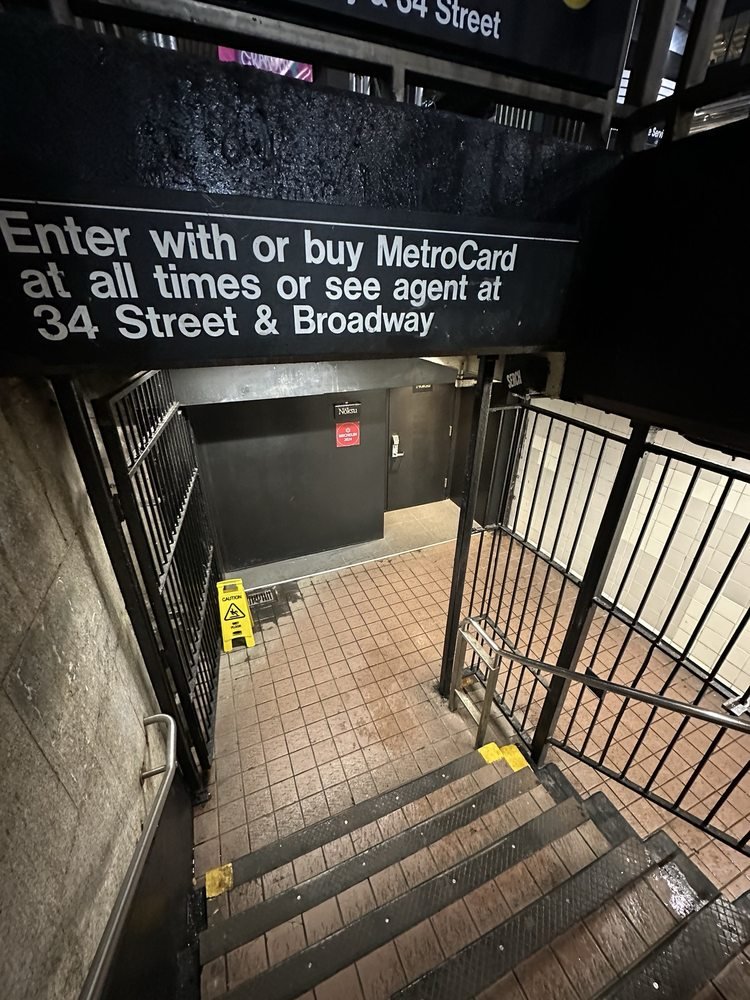
Tucked below street level at 33 Bond Street in NoHo, Dashwood Books is a rare and wonderful thing: New York City’s only independent bookstore devoted entirely to photography.

Founded in 2005 and owned by David Strettell, formerly the Cultural Director of Magnum Photos, Dashwood offers a carefully curated inventory from international publishers, importing books that have no or very limited distribution in the United States — including limited press runs from Japan, Germany, and the Netherlands, as well as artists’ self-published books, signed books, and a carefully curated selection of collectible post-war titles.

The last decade has seen a radical change in the publishing of books on photography, and the photo book has become as respected a medium as the print itself. Dashwood has been at the center of that shift, connecting collectors and curious browsers alike with work they simply couldn’t find anywhere else in the city.

You enter by heading down a staircase and getting buzzed in — which gives the whole experience a delightfully secretive, members-club feel. Once inside, the walls are lined with large-format volumes that reward slow, careful looking.

  • Address: 33 Bond Street, New York, NY 10012 (basement level)
  • Hours: Tuesday–Sunday, 12:00 PM – 6:00 PM (Closed Mondays)
  • Website: dashwoodbooks.com

Best for: Photography collectors, fashion art book enthusiasts, and anyone interested in rare or out-of-print visual art publications.


3. Karma — Where the East Village Art World Comes to Browse

One of the most talked-about NYC independent bookstores among the art world crowd, Karma sits quietly in the East Village at 136 East 3rd Street. It operates as both a gallery and a bookshop — a combination that gives it a uniquely electric atmosphere. – Currently Temporarily Closed.

Source: Karma Bookstore

Karma publishes and stocks titles by a roster of emerging and established artists that its sister gallery represents, including Alex Da Corte and Nicolas Party, and also sells impressive compendiums of art world giants including Richard Prince, Ed Ruscha, and Julian Schnabel.

The space is deliberately small and carefully edited, which means every book on the shelf has been chosen with intention. You won’t find filler here. What you will find are artist journals, experimental design books, self-published zines, and exhibition catalogues that sit at the intersection of fine art and book-making as a craft in its own right.

If you’re visiting another gallery in the East Village or Lower East Side, Karma is a natural companion stop — and almost guaranteed to send you home with something you didn’t know you needed.

  • Address: 136 East 3rd Street, New York, NY 10009
  • Website: karmakarma.org

Best for: Contemporary art lovers, gallery-goers, collectors of artist books and limited-edition publications.


4. Argosy Book Store — The Best NYC Bookstore for Rare and Antique Books

NYC Independent Bookstores

For anyone with a weakness for first editions, antique maps, and the kind of books that feel like artifacts, Argosy Book Store on East 59th Street is essential. In the back of the store, a dedicated section houses rare and vintage books, prints, and original artwork that span centuries of history.

Argosy has been a fixture of the New York rare book world since 1925, occupying a six-story townhouse that is as much a destination as what’s inside it. The store carries an extraordinary range of material: literary first editions, Americana, antique maps and prints, autographs, and historical ephemera. The New Yorker cover prints — particularly those by Saul Steinberg — have become collector’s items in their own right.

This is one of those NYC independent bookstores that rewards multiple visits. The inventory is vast and constantly changing, meaning regulars often stumble upon genuine treasures that weren’t there the week before. Staff are knowledgeable and genuinely passionate about the material, making even a casual browse feel like a private tutorial in the history of the book.

  • Address: 116 East 59th Street, New York, NY 10022
  • Website: argosybooks.com

Best for: Rare book collectors, history enthusiasts, anyone looking for antique maps, signed first editions, or vintage New Yorker prints.


5. Albertine Books — The Most Beautiful Bookstore in New York City (and the Best for French Literature)

When people talk about the best bookstores in New York City as experiences — not just shops — Albertine Books on the Upper East Side belongs at the very top of the list.

NYC Independent Bookstores

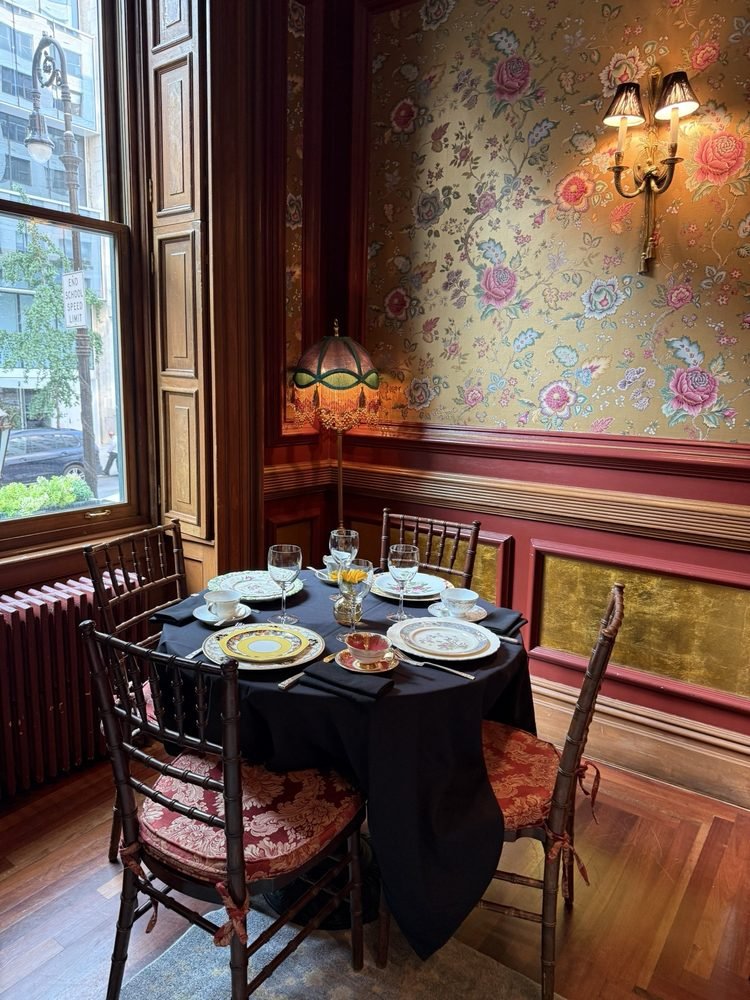
Opened in 2014, Albertine offers the largest collection in the United States of French-language books and translations from French into English, located in the Payne Whitney House at 972 Fifth Avenue, between 78th and 79th Streets.

Tucked inside the historic Payne Whitney mansion, Albertine is the only bookshop in New York devoted solely to books in French and English, with more than 14,000 contemporary and classic titles from 30 French-speaking countries.

The bookstore’s second floor features a hand-painted ceiling of celestial scenes — planets and zodiac symbols — that invites visitors into a world where science and poetry blend seamlessly. The space also features busts of famous figures from French and French-American culture, such as Descartes and Benjamin Franklin, and a floor-to-ceiling mirrored Venetian room.

The bookstore was conceived by Antonin Baudry, former French Cultural Counselor, as a hub for Franco-American intellectual exchange, and named after Marcel Proust’s character. The interior was designed by French designer Jacques Garcia, known for his work on The NoMad Hotel in New York City.

Beyond the books, Albertine hosts a packed calendar of free public events. Its annual Night of Philosophy gathers dozens of philosophers and other intellectuals for 20-minute presentations that run all night long — one of the most singular cultural events in the city. The store also runs a popular book club and participates in the Museum Mile Festival each summer.

Visitors can also browse rare books in the back room, adding yet another layer to what is already one of New York’s most extraordinary spaces.

  • Address: 972 Fifth Avenue, New York, NY 10021
  • Hours: Thursday–Tuesday, 10:00 AM – 6:00 PM (Closed Wednesdays)
  • Website: albertine.com

Recommended titles: Proust’s In Search of Lost Time, works by Simone de Beauvoir and Jean-Paul Sartre, and the latest French fiction in both French and English translation.


6. Assouline — The Most Luxurious Bookstore Experience in New York City

If the best bookstores in New York City can include spaces that feel more like private clubs or hotel lounges than traditional shops, then Assouline earns its place here without question.

NYC Independent Bookstores

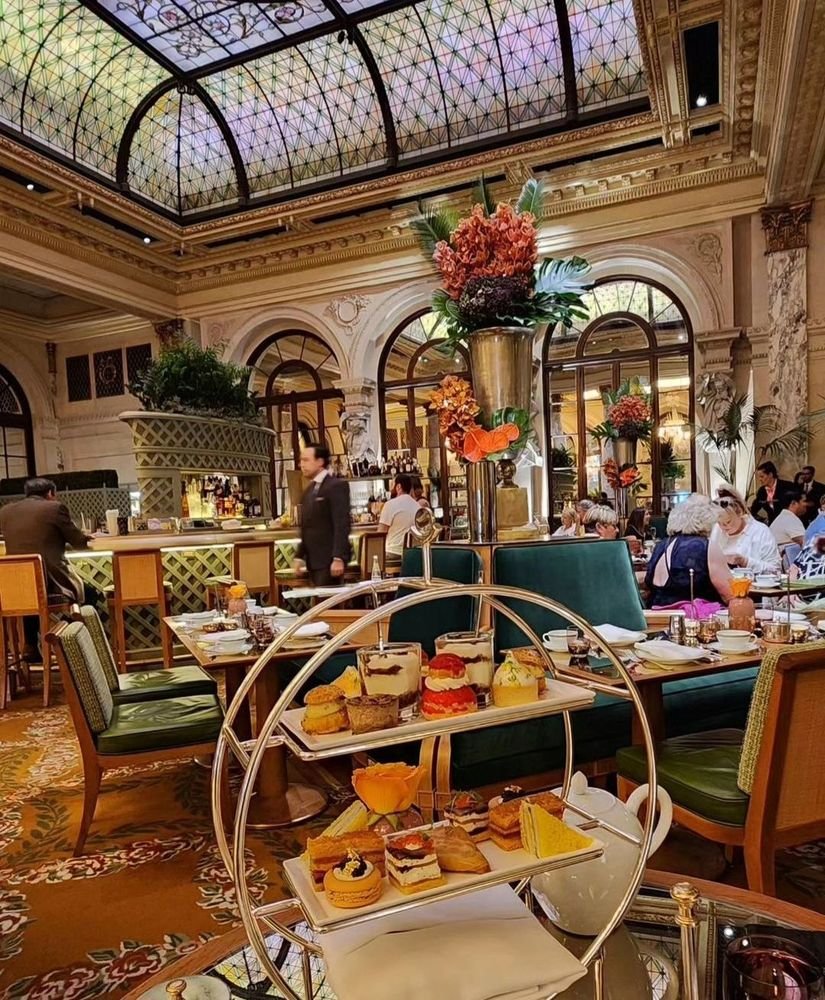
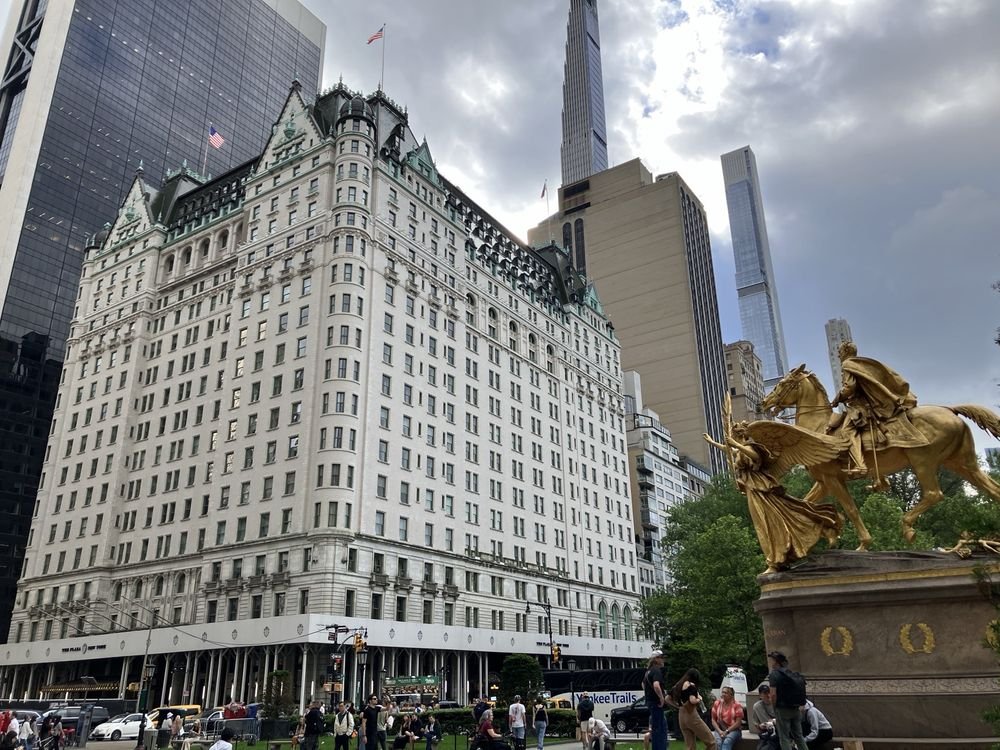
The publishing company behind landmark titles on brands including Cartier, Chanel, and Bentley, Assouline runs an outpost at Manhattan’s Plaza Hotel that is a richly-outfitted space for browsing titles on fashion, art, and design. Coffee table books as well as more portable publications line the shelves — and its balcony provides an overhead view of The Plaza’s sparkling lobby.

Both The Plaza Hotel location and The Mark Hotel location (25 East 77th Street) are open to the public — you don’t need to be a guest to walk in and browse. The books themselves are as much design objects as they are reading material: exceptional production values, premium materials, and subject matter that ranges from the architecture of Rome to the social history of New York City.

The Plaza location also offers a custom book binding service, making it one of the few bookstores in the city where you can watch skilled artisans at work while you shop.

  • Address (The Plaza): 5th Avenue & Central Park South, New York, NY 10019
  • Address (The Mark): 25 East 77th Street, New York, NY 10075
  • Website: assouline.com

Recommended titles: New York Chic, Roma Eterna, and New York by New York — all quintessential Assouline volumes that make exceptional gifts.


NYC Independent Bookstores: A Quick Reference Guide

BookstoreNeighborhoodSpecialtyBest For
Books of WonderChelseaChildren’s literatureFamilies, collectors of vintage children’s books
Dashwood BooksNoHoPhotography art booksArt collectors, photography enthusiasts
KarmaEast VillageArtist books & gallery publicationsContemporary art lovers
Argosy Book StoreMidtown EastRare books, antique mapsFirst edition collectors, history buffs
Albertine BooksUpper East SideFrench literatureFrancophiles, architecture lovers
AssoulineMidtown / UESLuxury coffee table booksDesign lovers, gift-buyers

Final Thoughts: Why NYC Independent Bookstores Still Matter

In a city that moves at the pace of New York, stepping into an independent bookstore is an act of quiet defiance. These six shops — each wildly different in character — share something essential: they were built by people who believe that books deserve more than an algorithm and a one-click purchase.

The best NYC independent bookstores are also some of the city’s best-kept secrets. None of them advertise aggressively. None of them need to. Their regulars find them, fall in love with them, and keep coming back — and that’s exactly the kind of loyalty that no major retailer can replicate.

Whether you’re a lifelong New Yorker or visiting for the first time, set aside a few hours to wander through one (or all six) of these bookstores. You’ll leave with something you didn’t expect — and probably a bag heavier than you planned.


Related posts you might enjoy:
Keith Haring Exhibition 2026: Subway Drawings and Early Works Return to NYC’s East Village

The Keith Haring exhibition 2026 at The Brant Foundation brings the artist’s formative years back to the East Village neighborhood where it all began. From chalk subway drawings to blacklight rooms, here’s everything you need to know before you visit.

If you’ve been waiting for a Keith Haring exhibition that goes beyond the familiar merchandise and poster-print nostalgia, the 2026 show at The Brant Foundation in New York’s East Village is the one. On view from March 11 through May 31, 2026, this tightly focused survey takes you back to the years 1980–1983 — the moment when a young artist from Pennsylvania transformed New York’s subway system into the world’s most electrifying open-air gallery. And it does so in the very neighborhood where Haring first made his name.

Source: The Brant Foundation

For anyone interested in street art, Pop art, or the history of downtown New York, this is not just an exhibition worth seeing — it’s an experience that puts you in direct contact with the origins of a visual language that now belongs to the whole world.


Why the Keith Haring Exhibition 2026 Is Different From Past Retrospectives

Over the past decade, Keith Haring’s name has appeared on the walls of major institutions worldwide. Most of those shows cast a wide net — covering his full career arc from subway guerrilla to global activist, from the AIDS crisis to his Pop Shop. They are comprehensive, respectful, and often moving.

But the Brant Foundation show, curated by Dr. Dieter Buchhart and Dr. Anna Karina Hofbauer, makes a different choice. Rather than surveying everything, it narrows its focus to the three-year window when Haring’s visual language was still being invented. This is not the polished icon. This is the artist in the act of becoming one.

The curators have cited Haring’s own journals as a guiding framework: his early entries are inseparable from New York — its streets, its clubs, its subway stations. It is only from the mid-1980s onward that his diary fills with destinations like Tokyo, Paris, and Amsterdam. This exhibition catches him before the world came calling.

The show features approximately 50 works, including:

Keith Haring Exhibition 2026
Source: The Brant Foundation
  • Nine large-scale tarp paintings displayed together on a single wall
  • Eight surviving subway chalk drawings in their original fiberglass frames
  • Works from the landmark 1982 Tony Shafrazi Gallery exhibition (including pieces from the legendary Blacklight Room)
  • Works shown at the FUN Gallery in 1983, a pivotal venue on the Lower East Side
  • Early enamel paintings on metal from 1981
  • A portrait of Haring by Jean-Michel Basquiat, on display as a rare document of their friendship

Press coverage since opening has been unanimous: this is a rare show that pushes beyond the deeply familiar surface of Haring’s work into something rawer and more urgent.


Keith Haring’s Subway Drawings: Where It All Began

To understand the Brant Foundation exhibition, you need to understand what Keith Haring’s subway drawings were and why they mattered.

In December 1980, Haring noticed something on the platforms of the New York City subway system: the black matte paper panels used as placeholders when advertisement spaces went unfilled. These blank rectangles, scattered across hundreds of stations, struck him immediately. He went above ground, bought chalk, came back down, and drew.

“It seemed obvious to me when I saw the first empty subway panel that this was the perfect situation,” he later wrote in his book Art in Transit.

What followed was one of the most unusual public art campaigns in American history. Haring rode the subway daily, scanning platforms for empty panels, and drew with white chalk directly onto the black paper — quickly, without preparation, always beginning with a border and working inward. He created more than 5,000 of these drawings between 1980 and 1985, possibly making it the largest sustained public art project ever undertaken by a single artist.

The figures that emerged — a radiant crawling baby, a barking dog, dancing human outlines, flying saucers, pulsating hearts — were drawn flat, without spatial depth, close to the surface like cartoons. Simplicity was not just an aesthetic choice; it was a practical one. Haring needed to finish each drawing before the transit police arrived. The urgency of potential arrest shaped the visual economy of every line.

Commuters stopped. People watched him work. Some drawings were stolen from their frames within hours of being made — a measure of how quickly his reputation spread. Photographer Tseng Kwong Chi followed Haring through the system, documenting what would eventually amount to over 22,000 photographs of the subway project. In 1982, one of Haring’s arrests was filmed and broadcast on a CBS News special, turning a downtown phenomenon into a national story.

The Brant Foundation exhibition displays eight surviving original subway drawings, many of which have never before been shown publicly. Standing in front of them — chalk on black paper, still in their Metropolitan Transit Authority frames — is as close as you can get to those platform moments.


The East Village Setting: Why Location Matters for This Show

Keith Haring Exhibition 2026

The Brant Foundation’s New York space sits at 421 East 6th Street, between Avenue A and First Avenue in the East Village — just blocks from the clubs, galleries, and streets where Haring built his reputation in the early 1980s.

When Haring arrived in New York in 1978 to study at the School of Visual Arts (SVA), the East Village and Lower East Side were a laboratory of creative energy. Cheap rents and abandoned storefronts had attracted an unlikely convergence: graffiti writers, punk musicians, underground gallery owners, poets, and painters. This was the world of Club 57, of early hip-hop, of zines and word-of-mouth exhibition openings. Art happened in the streets before it happened in any gallery.

Haring moved through all of it — befriending Kenny Scharf and Jean-Michel Basquiat, working out ideas at P.S. 122 and Club 57, drawing on subway walls and then showing in galleries. The East Village was not simply where he worked; it was the ecosystem that produced his aesthetic.

Showing this work a few blocks from its origin point is not incidental. It changes how the work reads. The industrial rawness of the Brant Foundation building — a former Con Edison substation built in 1920, later used as a studio by Minimalism pioneer Walter De Maria — amplifies rather than sanitizes what you’re looking at. The building’s preserved gantry crane, steel staircases, and exposed structure feel closer to a subway platform than to a white-cube museum. That friction is exactly right.


Key Works and Exhibition Highlights

Keith Haring Subway Drawings on View

The subway drawings are the emotional core of the show. Eight original examples survive in the exhibition, displayed in their original fiberglass frames. Watching the figures emerge from black paper — radiant babies, barking dogs, abstracted human forms — it’s easy to understand why subway riders in 1981 stopped mid-commute to look. These are not sketches. They are complete, confident statements made in minutes.

The Blacklight Room (Tony Shafrazi Gallery, 1982)

Among the most talked-about elements of the early Haring career, the Blacklight Room from his 1982 Tony Shafrazi Gallery show turned a gallery basement into something between a painting and a dance floor. Under ultraviolet light, works painted in fluorescent Day-Glo pigments glowed and pulsed. The division between art space and nightclub dissolved. The Brant Foundation show includes works from this period, allowing visitors to understand Haring not just as a graphic artist but as an environmental designer — someone who thought in terms of total experience.

The FUN Gallery, 1983

The FUN Gallery on the Lower East Side was one of the key venues that collapsed the barrier between graffiti culture and the contemporary art world. Haring’s 1983 show there was a defining moment — not only for his career, but for the broader legitimacy of street art as a gallery practice. Works from that exhibition are included here.

Early Enamel Paintings and Tarp Works

A group of small baked enamel on metal paintings from 1981 read like the physical precursors to digital emoji — condensed, iconic, immediately legible. They demonstrate how early Haring was thinking about universal visual communication systems.

The nine large tarp paintings — made from the kind of industrial canvas used to cover trucks — are displayed together on a single wall, creating one of the exhibition’s most striking visual experiences. Originally made when Haring was pushing against the limitations of standard canvas sizes, they have an outdoor, public-space energy that feels entirely at home in the Brant Foundation’s industrial setting.


Keith Haring’s Legacy in New York City Today

The Brant Foundation exhibition exists in dialogue with Haring’s surviving public presence in New York. Two murals remain embedded in the city’s daily life:

“Crack is Wack” (1986) — Painted without permission on a handball court wall along Harlem River Drive at 128th Street, this mural was Haring’s response to the crack cocaine epidemic devastating New York communities. City park authorities moved to protect it almost immediately after it appeared, a measure of the public response it generated. It remains on view today.

Carmine Street Pool Mural (1987) — The exterior wall of the public pool in the West Village continues to greet swimmers every summer with Haring’s figures in motion.

These two works demonstrate something essential about Haring’s practice: he did not leave the street behind when galleries came calling. Throughout his career, he moved fluidly between the commercial art world and free public space, seeing the two not as contradictions but as different registers of the same commitment.

Haring died of AIDS-related complications on February 16, 1990. He was 31 years old. In the years before his death, he had founded the Keith Haring Foundation to support AIDS organizations and programs for children — ensuring that the activist dimension of his work would outlast him.


What Makes This Exhibition Especially Relevant Right Now

Curator Dieter Buchhart has described Haring’s work as “a positive humanist virus” that lives on in collective memory, continuing to fight against ignorance, fear, and silence. That framing feels pointed.

Haring worked in a moment of political tension — the Reagan era, the AIDS crisis, the crack epidemic, the debates over censorship that would eventually produce the culture wars. His response was not retreat into abstraction or irony but a doubled commitment to clarity, accessibility, and public presence. He made art that anyone could read, and he put it where anyone could see it.

In today’s visual culture — saturated with iconography, skeptical of sincerity, alert to the politics of representation — Haring’s early work reads with unexpected freshness. These are not comfortable, decorative images. They were made in a state of urgency, on stolen time, for an audience of strangers.


Practical Visitor Information

Venue: The Brant Foundation, 421 East 6th Street, New York, NY 10009

Exhibition Dates: March 11 – May 31, 2026

Hours:

  • Wednesday – Friday: 11:00 AM – 6:00 PM
  • Saturday – Sunday: 11:00 AM – 5:30 PM
  • Closed Monday and Tuesday

Admission:

  • General: $20
  • Students / East Village residents / Visitors with disabilities (+ care partner): $15
  • Seniors (65+): $18
  • Children under 12: Free (with adult)

Digital Guide: Available free via the Bloomberg Connects app

Group Visits: Guided tours available for groups of 10 or more; contact the Foundation directly

Note: Photography is permitted for personal use in most galleries (no flash, no tripods, no selfie sticks). Some works contain mature imagery.

Website: brantfoundation.org


Before You Go: How to See This Exhibition Well

The temptation with Keith Haring is to move quickly — the images are familiar, the lines are bold, the rhythm is immediate. Resist that. The point of this show is to slow down inside work you think you already know.

Look at the subway drawings first and notice what it would have felt like to encounter them underground, made in minutes, on your morning commute in 1981. Then move through the exhibition tracking how that same visual energy — the condensed line, the anonymous figure, the symbol designed to carry meaning across barriers of language and class — migrated from black paper to painted tarp to enamel metal to Day-Glo canvas.

By the time you reach the large tarp paintings, you are looking at the same impulse that started on a subway platform, scaled up to the size of a building wall. That continuity is what the Brant Foundation show is really about: not the celebrity Haring, not the T-shirt Haring, but the artist who believed that a line drawn in the right place, for the right reason, could change how a person moves through a city.


The Keith Haring exhibition at The Brant Foundation is on view through May 31, 2026. Tickets are available at brantfoundation.org.

Related posts you might enjoy: