Best Budget Upper West Side Hotels for the NYC Marathon: Walk to the Finish, One Subway to the Start

Planning to run the TCS New York City Marathon? The Upper West Side is the #1 neighborhood for marathon runners — walkable to the Central Park finish line and a single subway ride from the Staten Island Ferry. Here are 6 great-value hotels that make your race weekend stress-free.

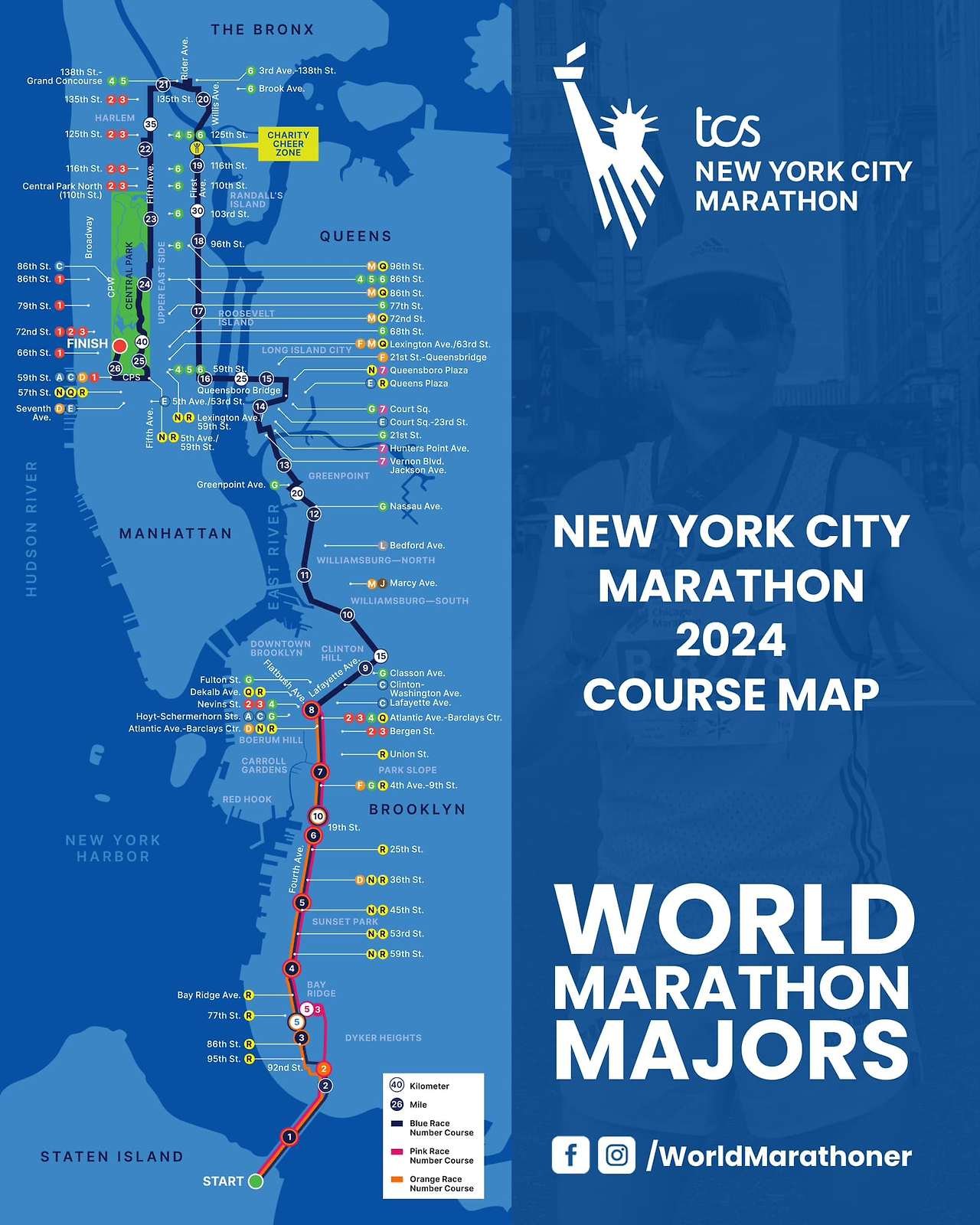
If you’re running the TCS New York City Marathon, where you sleep matters almost as much as how you train. The NYC Marathon takes runners on a 26.2-mile route from the start on Staten Island to the finish line inside Central Park. That means your ideal base camp needs to solve two logistics at once: getting to Staten Island early in the morning, and collapsing into a comfortable bed after crossing the finish line without a grueling commute.

The answer? The Upper West Side — and specifically, a handful of well-priced hotels within walking distance of Central Park’s West 77th Street runner exit.

This guide covers the best Upper West Side hotels for NYC Marathon runners who want genuine value: close to the finish, easy access to the start, and enough comfort to support a proper race-week recovery.


Why Upper West Side Is the #1 Neighborhood for NYC Marathon Runners

The Upper West Side is perhaps the most runner-friendly neighborhood in Manhattan during Marathon Week. Framed by Central Park on the east and the Hudson River on the west, it’s known for tree-lined streets, brownstone buildings, and a relaxed residential vibe — perfect for pre-race rest and post-race celebrations.

Here’s why it wins for marathoners specifically:

Finish line access: After crossing the finish line, runners exit the park at West 77th Street. The closest hotels to that exit are all clustered on the Upper West Side — meaning you can literally walk home on jelly legs without touching a subway.

Start line logistics: Runners are urged to take the Staten Island Ferry to reach the starting line. During the early morning hours, take the 1 train to South Ferry. The line 1 subway from South Ferry to 86th Street takes about 26 minutes and costs $3 — and services depart every 10 minutes. From the Upper West Side, the reverse trip to the ferry terminal takes roughly the same time. It’s one of the most seamless race-morning commutes in the city.

Quieter neighborhood, better sleep: Unlike Midtown, the Upper West Side is primarily residential. There are no blaring Times Square lights or late-night tourist crowds — just the kind of calm that helps pre-race sleep actually happen.

Hotels in this area are approximately 20–25 minutes from the Midtown Bus Loading area at the Public Library via subway, and about 30 minutes from the Staten Island Ferry Terminal — and they tend to be less expensive than Times Square-area hotels.


How to Get from Upper West Side Hotels to the Marathon Start

The route is refreshingly simple for a race with such complex logistics:

  1. Walk to the nearest 1 train station (72nd St, 79th St, or 86th St — all within blocks of the hotels listed below)
  2. Ride the 1 train south to South Ferry (~30 minutes, $3 fare)
  3. Board the Staten Island Ferry (free, ~25 minutes across the harbor)
  4. On Staten Island, shuttle buses take runners directly from the ferry to School Road at Bay Street, near the Fort Wadsworth starting village.

That’s it. No transfers, no confusion. Just one subway line and a scenic ferry ride to kick off your 26.2 miles.

Pro tip: Arrive at the start village between 5:30 and 7:00 a.m. to avoid crowds. Factor in about 90 minutes total travel time from your hotel to the start village corral.


Race Day at a Glance

The 2025 TCS New York City Marathon takes place on the first Sunday of November, with the official start timeline beginning at 8:00 a.m. for the Men’s Professional Wheelchair Division, with main wave runners starting from 9:10 a.m. onward.

The last three miles of the NYC Marathon take place inside Central Park, finishing on West Drive at West 67th Street, right next to Tavern on the Green. After your finish, you’ll collect your medal and poncho, then make your way north through the park — and out onto Central Park West near 77th Street, steps from every hotel on this list.


Top 6 Budget-Friendly Upper West Side Hotels for NYC Marathon Runners

1. Hotel Beacon — Best Overall for Runners

Address: 2130 Broadway at 75th St
Nearest Subway: 72nd St (1/2/3 trains)
upper west side hotels

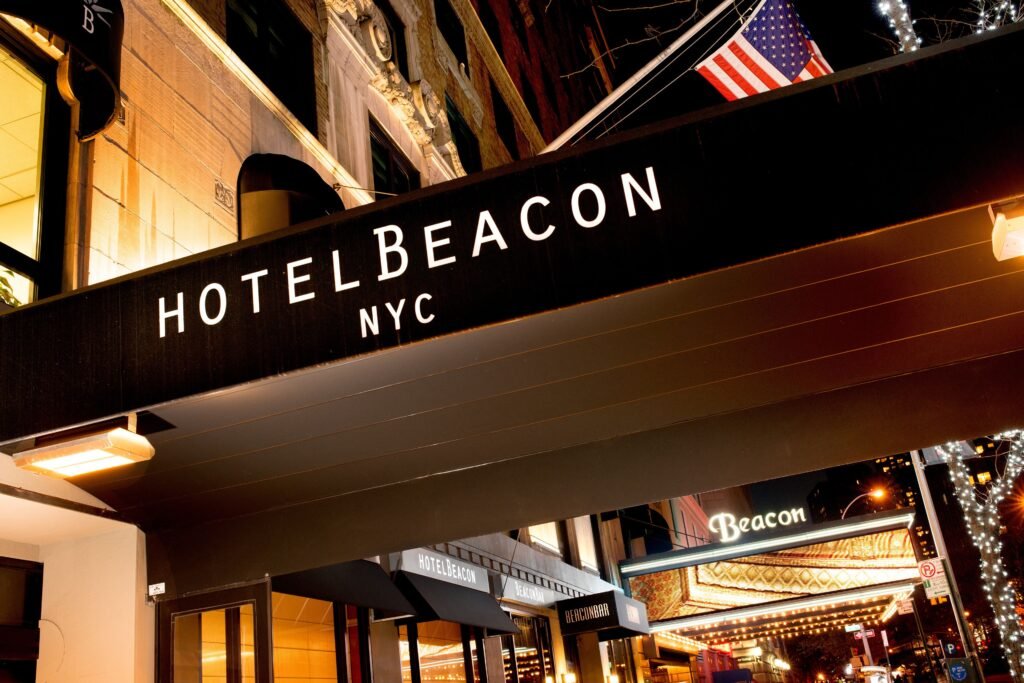
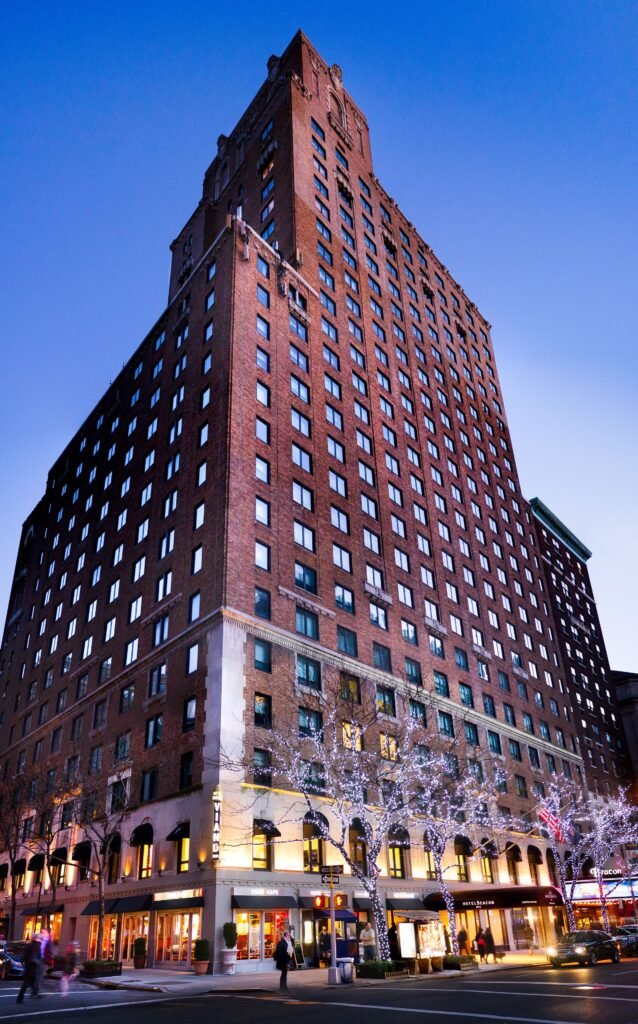
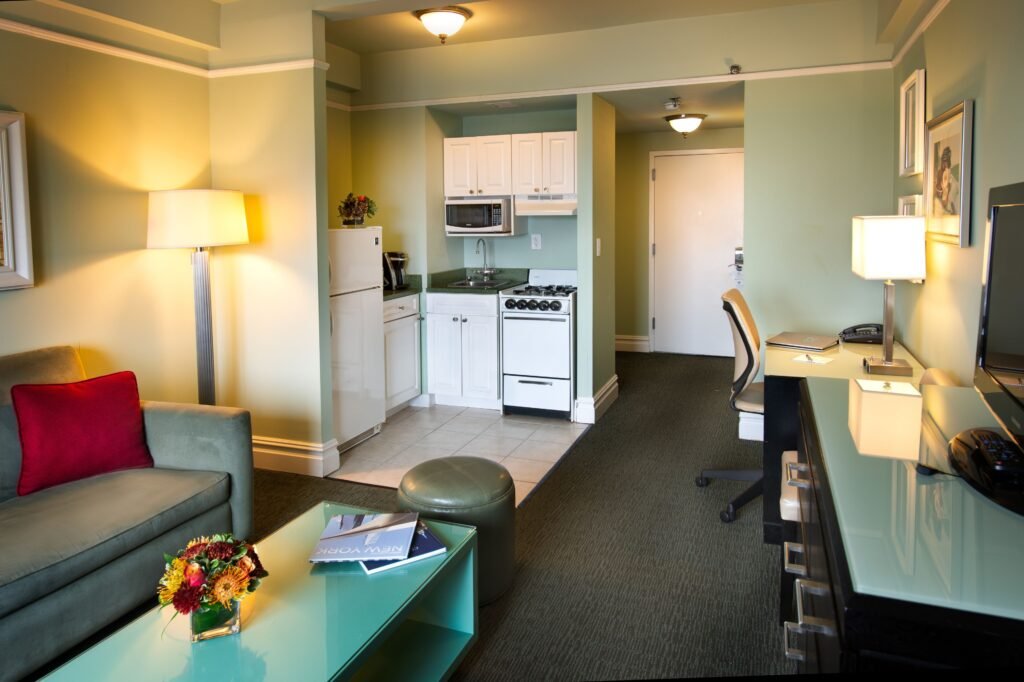
Less than a mile from the Central Park finish line, Hotel Beacon provides rooms with living areas and kitchenettes — serene and comfortable spaces that are ideal for marathon recovery. It’s approximately a 14-minute walk from the hotel to the marathon finish line.
upper west side hotels

The kitchenette is a genuine advantage for runners: you can stock your own pre-race pasta dinner and your own post-race electrolyte drinks without hunting for an open restaurant at 5 a.m. The 72nd Street subway station is right around the corner, making your early-morning dash to the Staten Island Ferry as painless as possible.
upper west side hotels

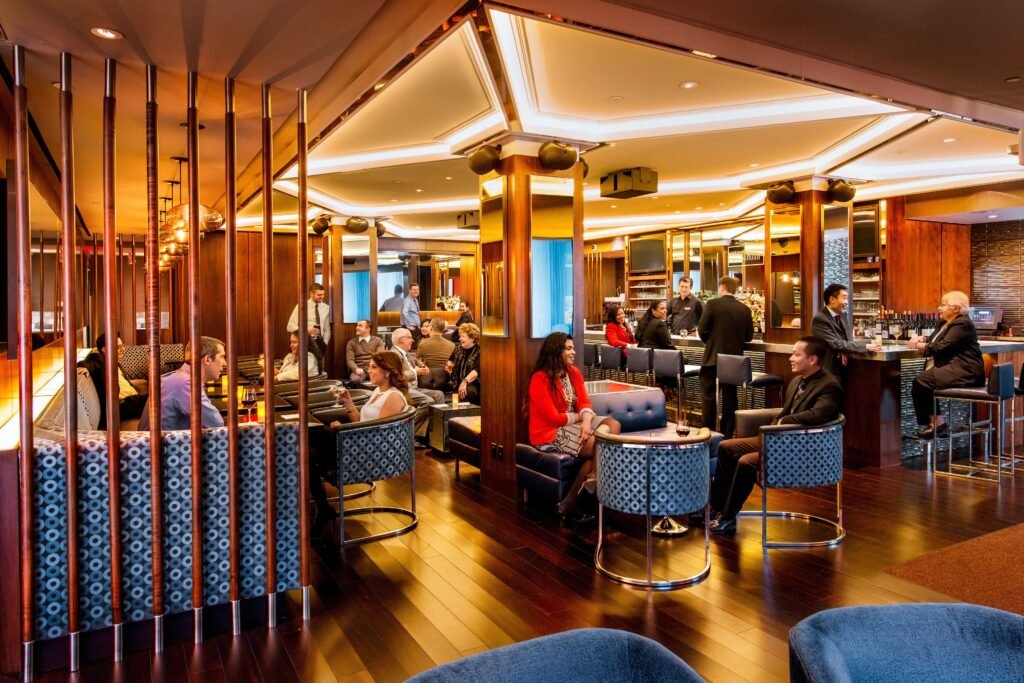
The Hotel Beacon is closest to the W 72nd Street station for the 1, 2, and 3 subway trains — an important detail when you’re heading south at 5:30 a.m. with a bag of gear.
upper west side hotels

Best for: Runners who want kitchenette convenience and the shortest walk to the finish line exit.


2. The Lucerne Hotel — Best Classic Comfort

Address: 201 W 79th St
Nearest Subway: 79th St (1 train)
upper west side hotels

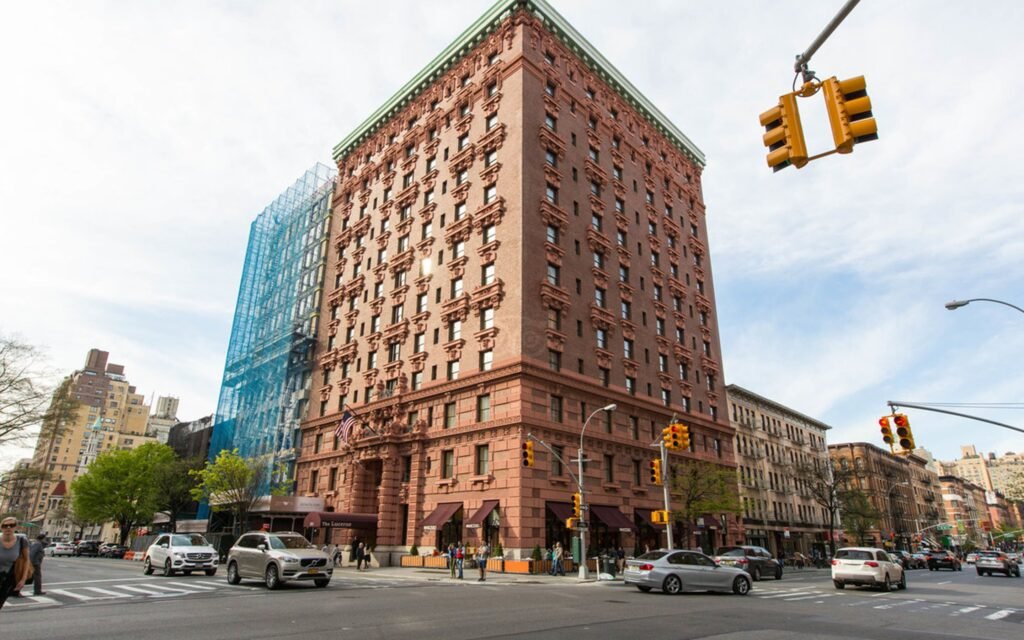
The Lucerne Hotel is positioned around 19 minutes away from the finish line of the NYC Marathon. This 4-star hotel sits on 79th Street, aligning conveniently with post-race runner exit locations, and is only half a block away from the 79th Street Subway station, which offers a direct line to the Staten Island Ferry.
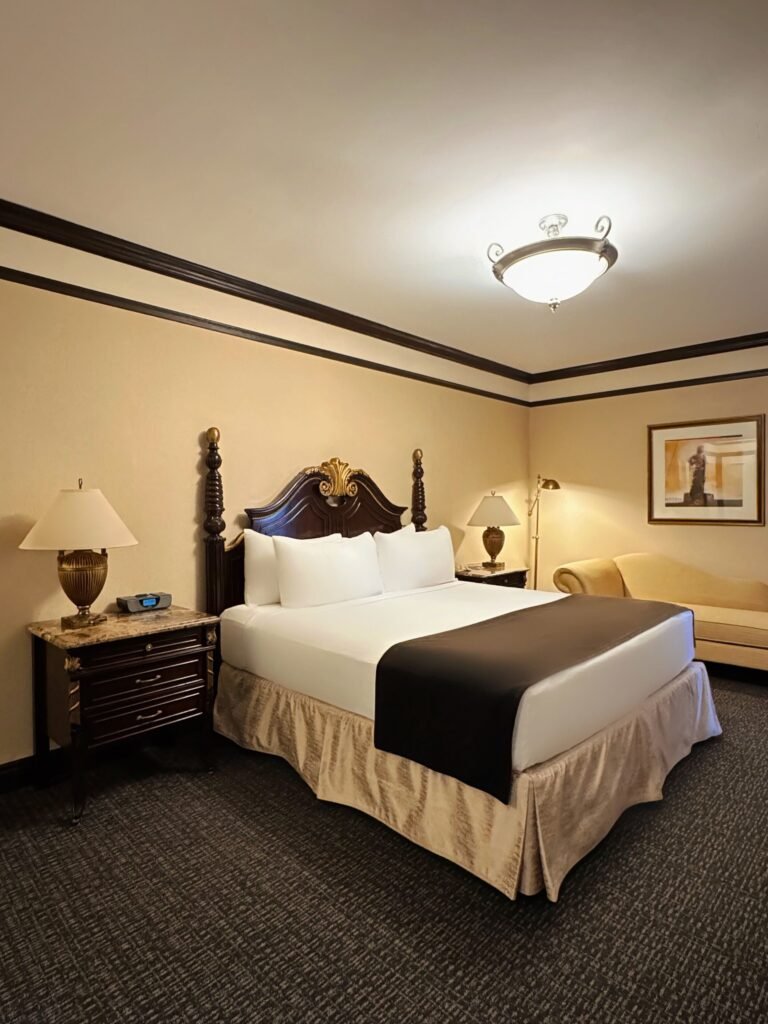
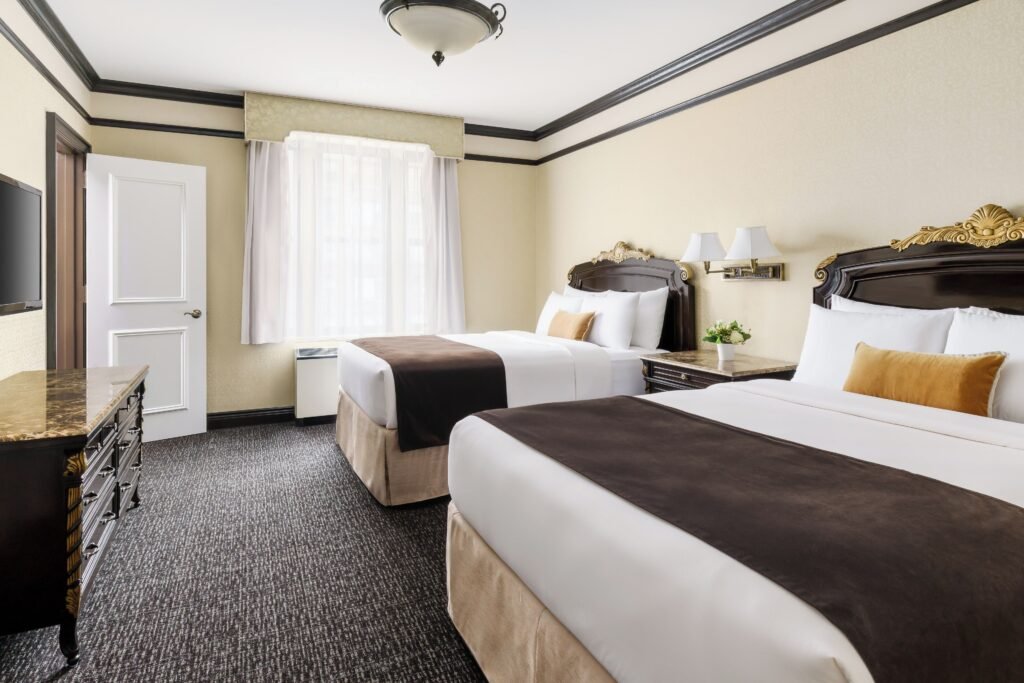
The Lucerne is a classic four-star Upper West Side property with an on-site fitness center, spa, and the French restaurant Nice Matin. For marathoners, the spa is the real draw — there’s nothing quite like a post-race soak when your hotel has one on the premises. The 4-star amenities at a non-Midtown price point make this one of the best-value marathon hotels in Manhattan.
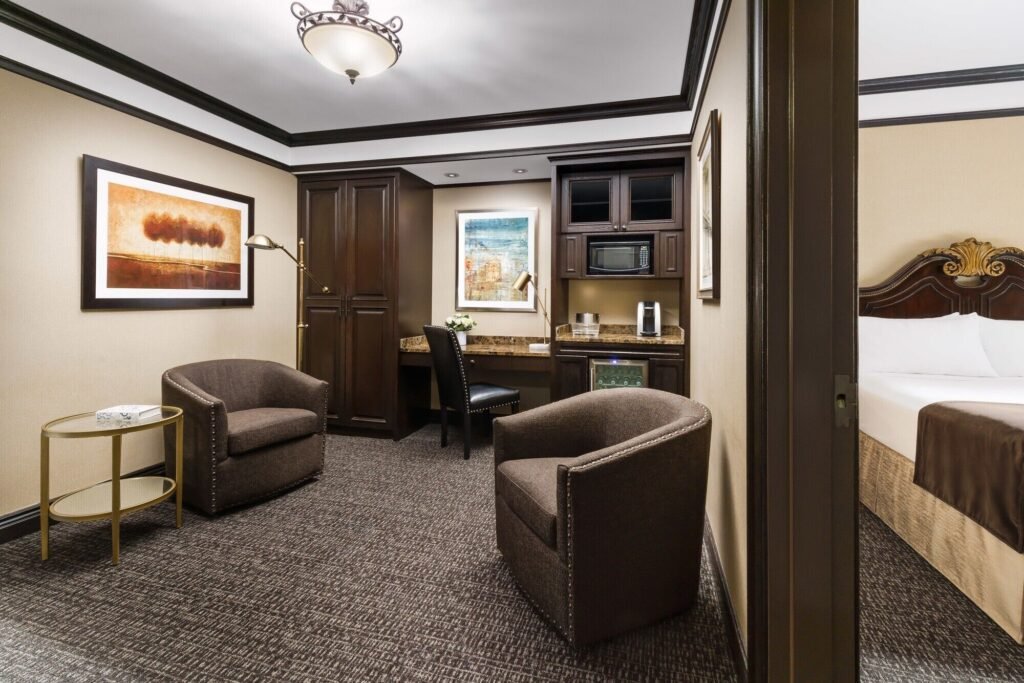
Best for: Runners who want a touch of luxury recovery — spa, quality restaurant, and a prime 79th Street location.


3. Hotel Belleclaire — Best Historic Character

Address: 2175 Broadway at 77th St
Nearest Subway: 79th St (1 train)
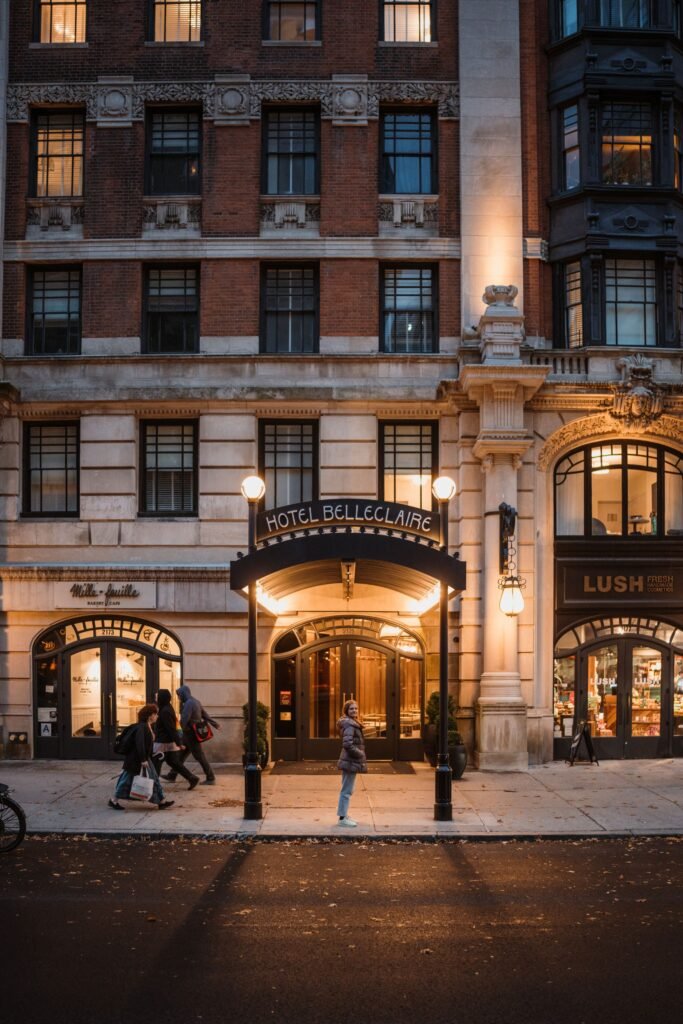
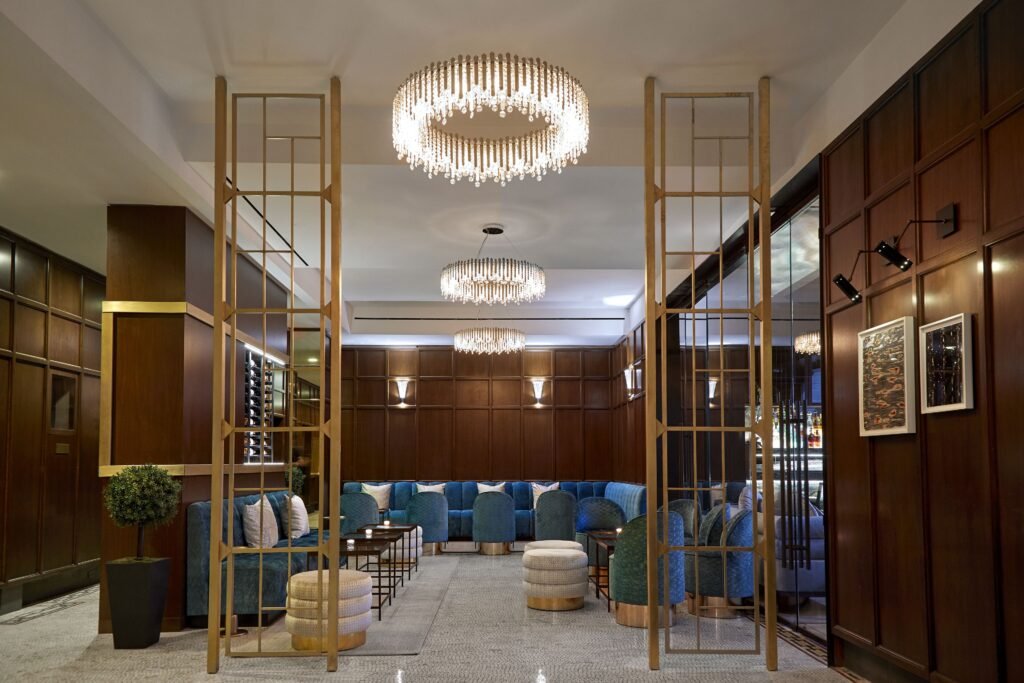
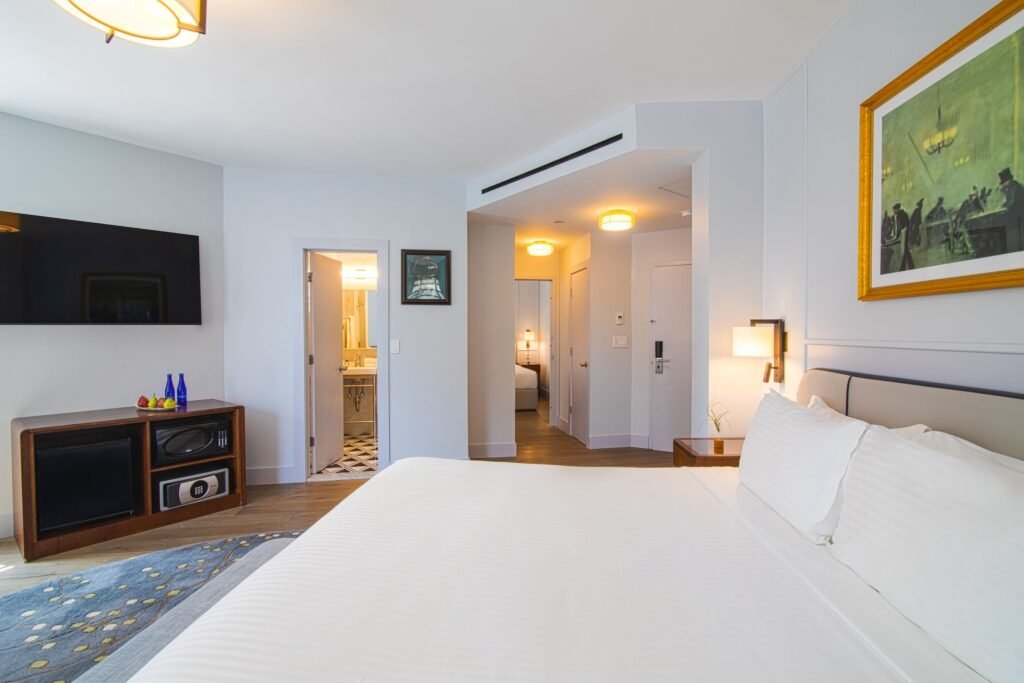
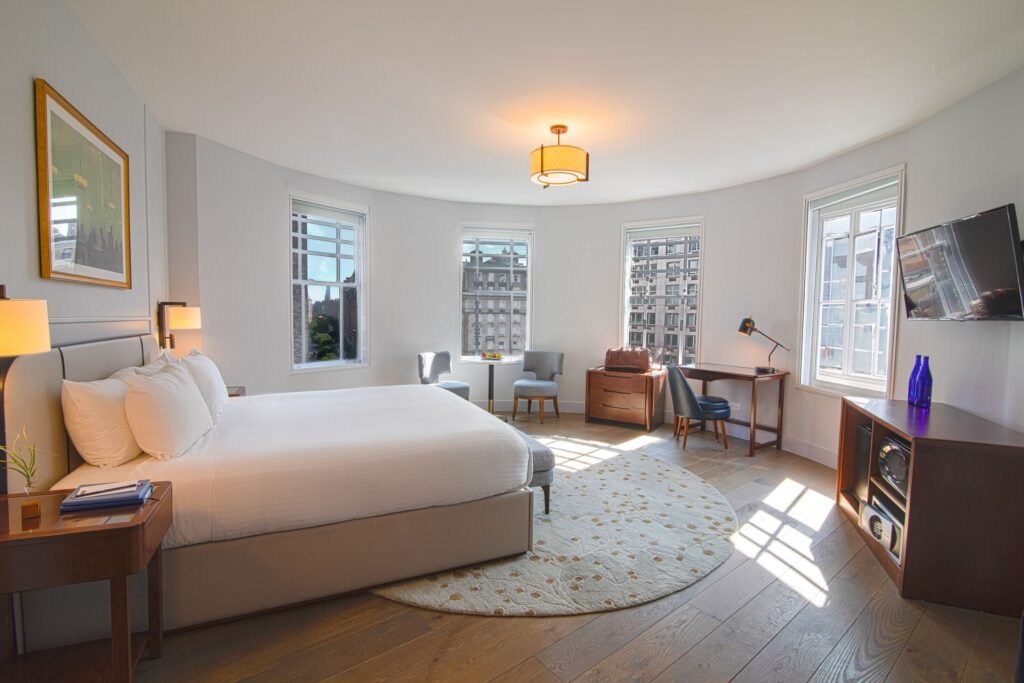
Built in 1903 in the Beaux-Arts style, Hotel Belleclaire is one of the most architecturally striking buildings on Broadway. The interior has been thoughtfully renovated, blending original grandeur with modern comfort. For runners who care about atmosphere as much as logistics, this is a satisfying choice.
upper west side hotels

In recent years, runners exit Central Park at Central Park West and West 77th Street — and the closest hotels to that point include the Hotel Belleclaire. You could not engineer a more convenient post-race walk.
Best for: History buffs and architecture lovers who want a storied address close to the 77th Street park exit.


4. Arthouse Hotel NYC — Best for Style-Conscious Runners

Address: 2178 Broadway at 77th St
Nearest Subway: 79th St (1 train)
upper west side hotels

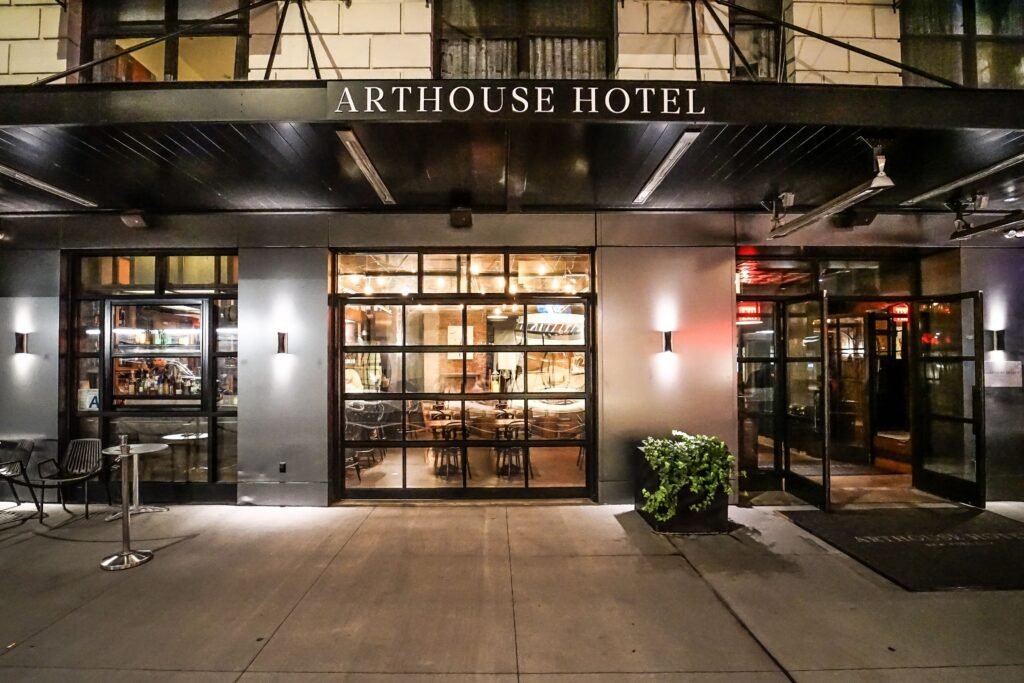
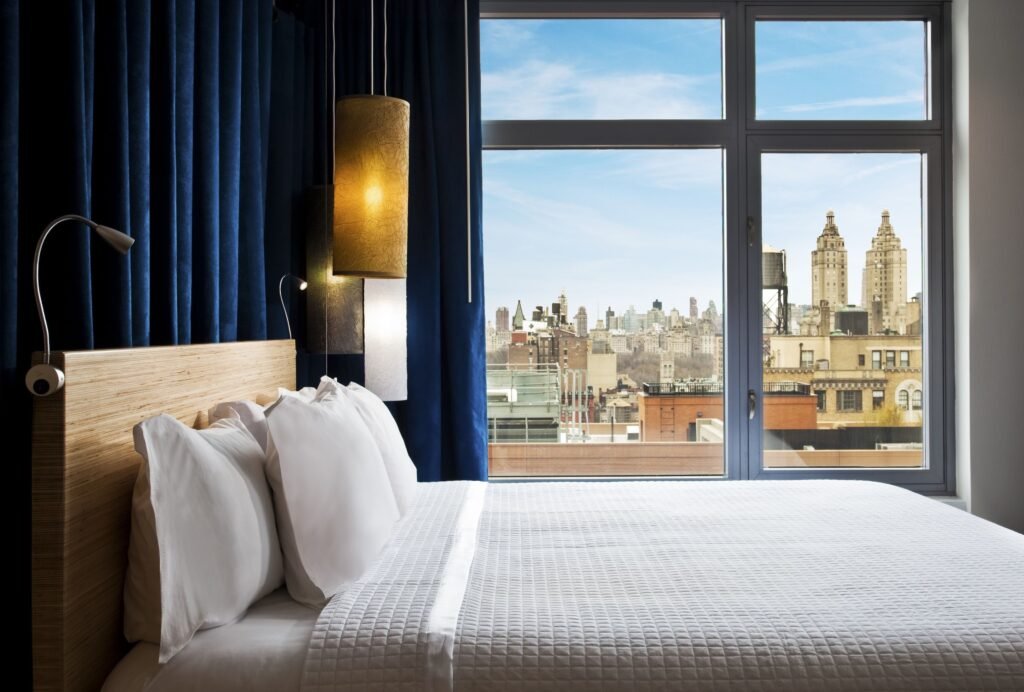
The Arthouse Hotel blends industrial aesthetics with a gallery-like atmosphere — a welcome sensory shift after the chaos of race day. The lobby, bar, and common spaces have strong visual identity, and the location on Broadway at 77th puts it directly in the runner exit zone.

upper west side hotels

It’s a particularly smart choice for runners bringing a non-running partner: while you’re out conquering 26.2 miles, they can explore the American Museum of Natural History, Central Park, and the Lincoln Center neighborhood all within walking distance. Reuniting post-race? Your hotel is right where runners exit the park.

upper west side hotels

Best for: Couples where one person is running and one is spectating — great neighborhood access for both.


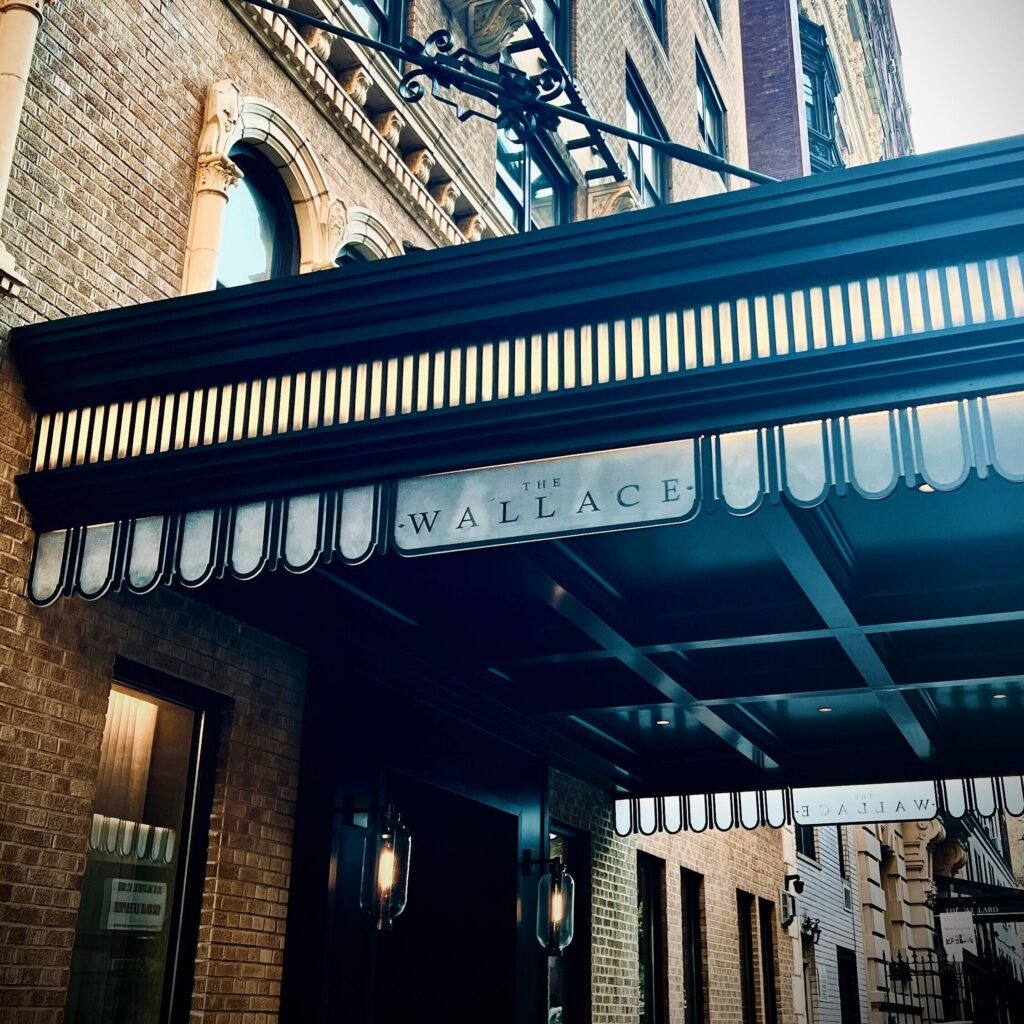
5. The Wallace Hotel — Best Boutique Experience

Address: Broadway at 76th St
Nearest Subway: 72nd St (1/2/3 trains)
upper west side hotels

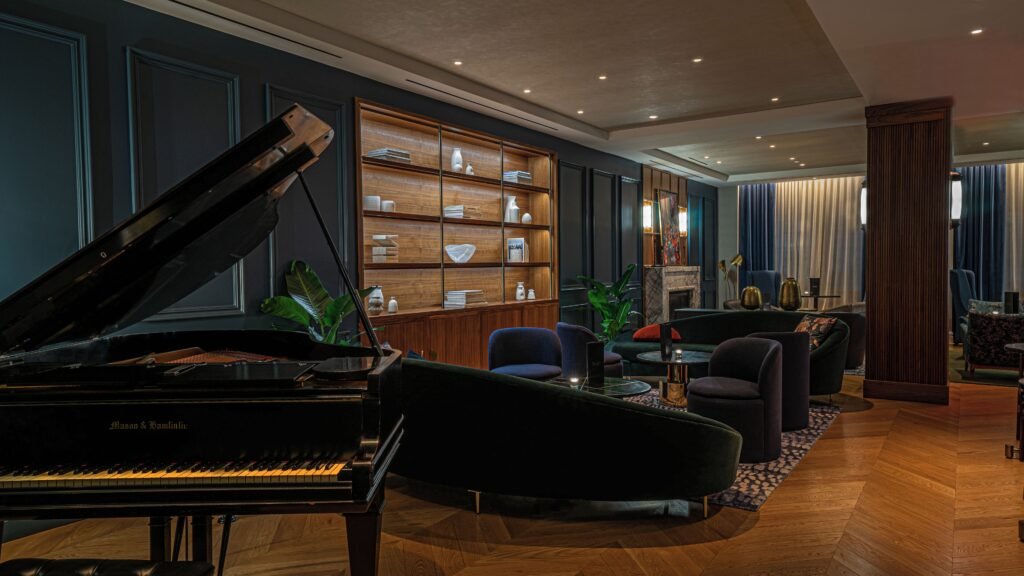
The Wallace is one of the newer boutique properties on the Upper West Side, earning a spot on TripAdvisor’s top U.S. hotel lists for its modern interiors, quiet atmosphere, and generous room sizes. It’s a polished, calm option that suits runners who want to minimize stress in the days leading up to the race.

upper west side hotels

The 72nd Street station — two stops above the Beacon on the same block — gives quick access to the 1 train for your morning journey south. Post-race, the Central Park finish line exit at 77th Street is a few blocks’ walk.


upper west side hotels

Best for: Runners who prioritize a serene, boutique atmosphere and modern design over historic character.


6. Empire Hotel — Best for the Post-Race Celebration

Address: 44 W 63rd St
Nearest Subway: 59th St–Columbus Circle (A/C/B/D/1 trains)
upper west side hotels

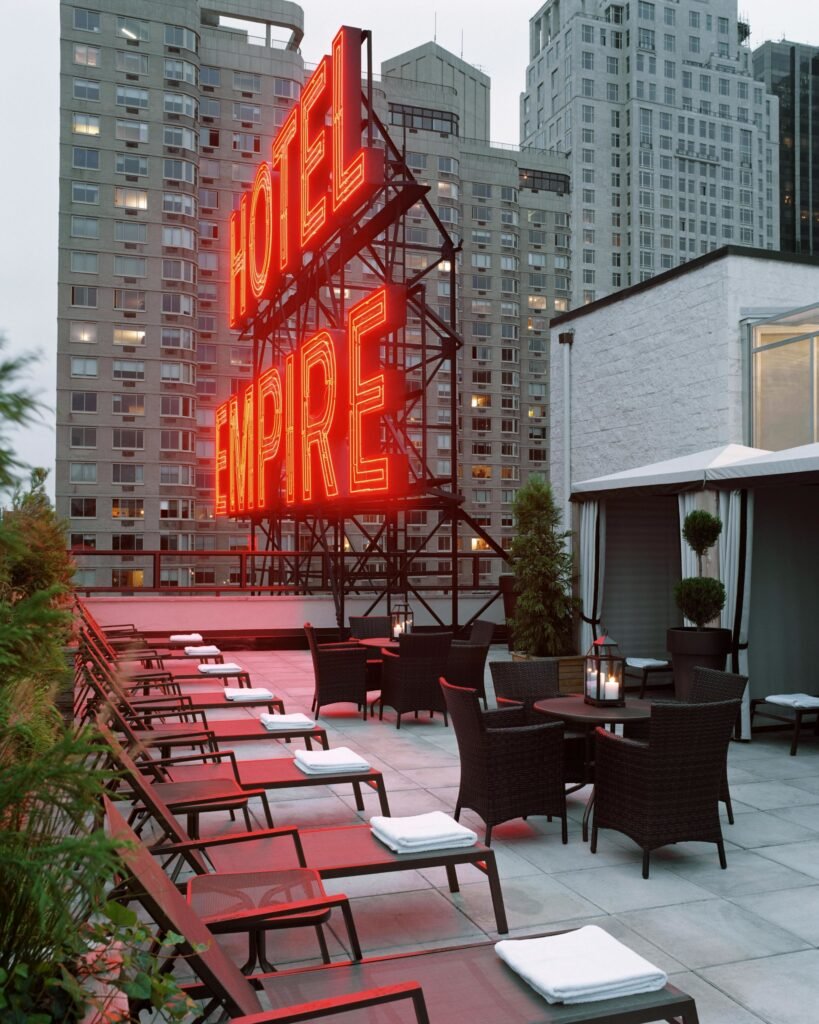
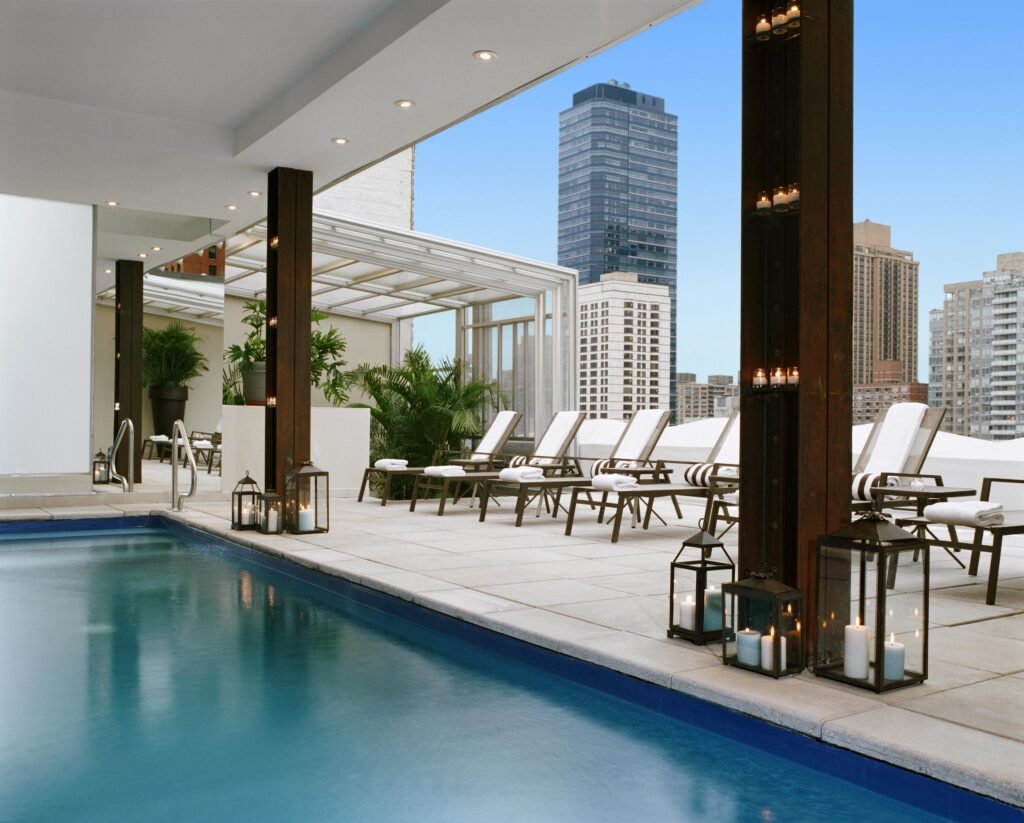
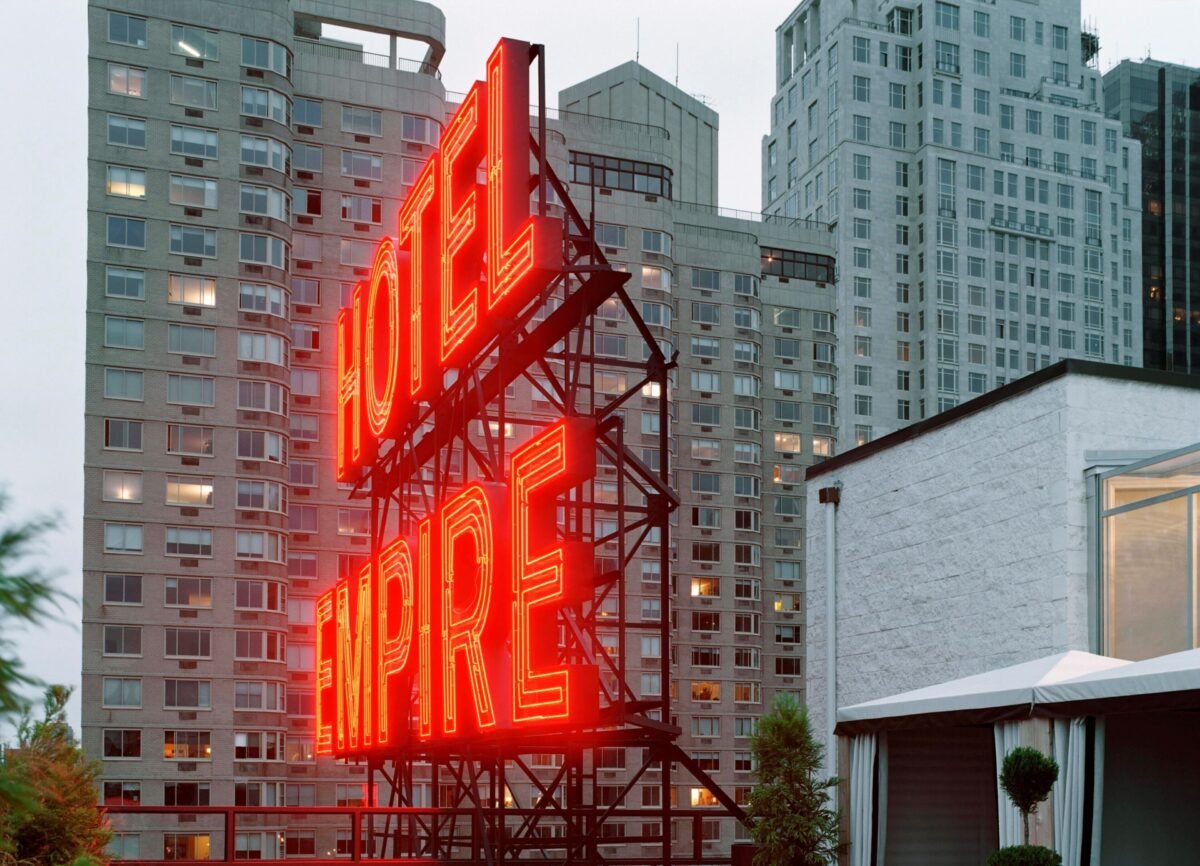
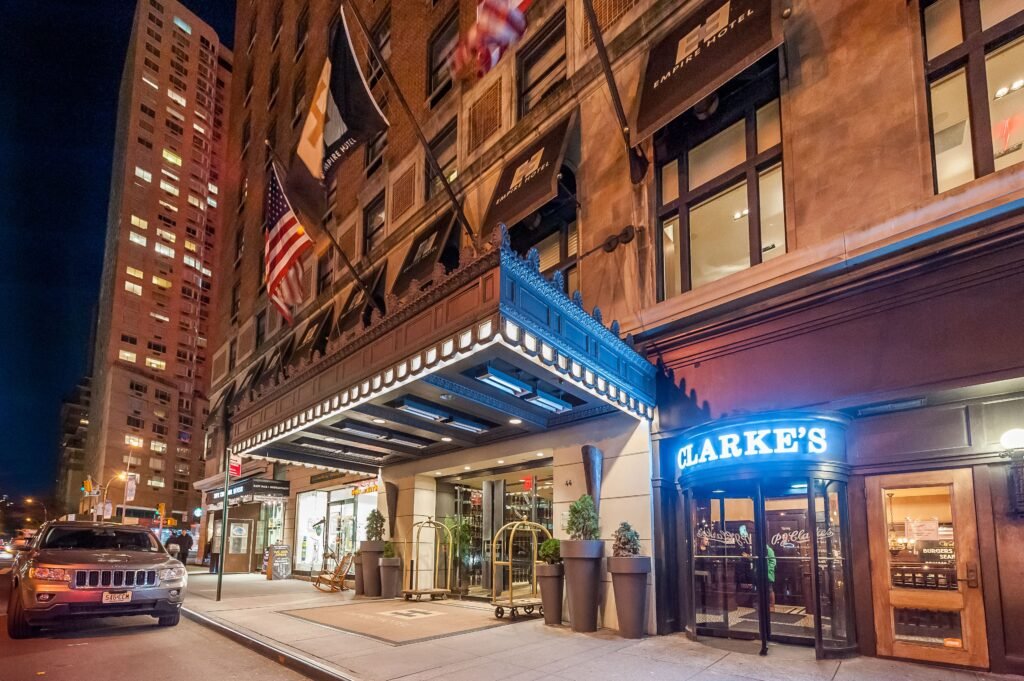
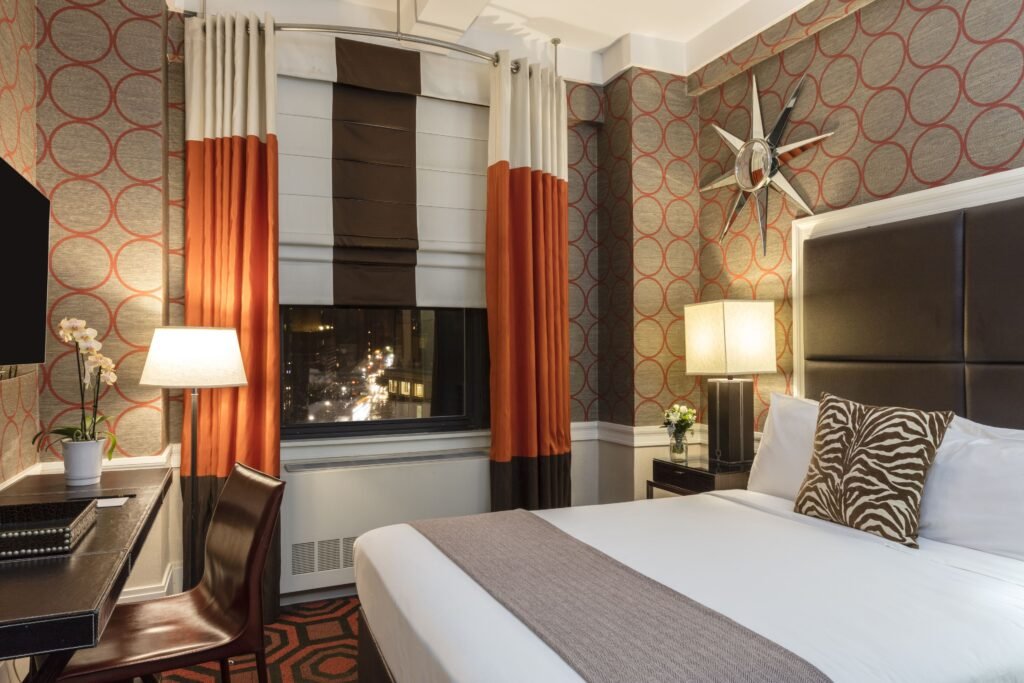
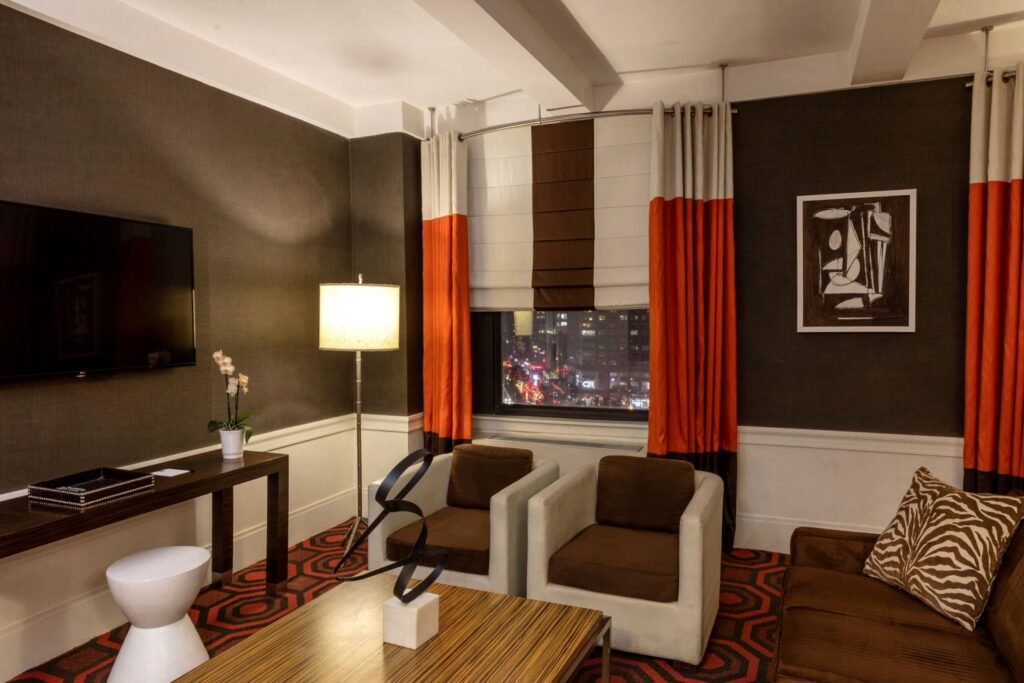
The Empire Hotel sits right across from Lincoln Center, at the southern edge of the Upper West Side. Its rooftop bar and pool make it the most celebratory option on this list — ideal if your race-weekend plan includes a proper post-finish toast with family and friends.

upper west side hotels

Spectators can enter Central Park near Broadway at West 61st or 62nd Street to watch the final stretch, making the Empire Hotel a natural gathering point. It’s a short walk from Columbus Circle, where spectators gather for the final approach, and the rooftop offers a festive backdrop for anyone still riding the race-day high.
upper west side hotels

Best for: Runners celebrating a finish with family — rooftop bar, prime Lincoln Center location, great transit connections.


Upper West Side Hotels for NYC Marathon: Quick Comparison

Hotel Address Walk to 77th Exit Subway to Ferry Best For Hotel Beacon 2130 Broadway (75th) ~14 min 72nd St station Families, kitchenette users The Lucerne 201 W 79th St ~5 min 79th St station Comfort seekers, spa lovers Hotel Belleclaire 2175 Broadway (77th) ~2 min 79th St station Historic character Arthouse Hotel 2178 Broadway (77th) ~2 min 79th St station Couples, design lovers The Wallace Broadway & 76th ~10 min 72nd St station Boutique, quiet atmosphere Empire Hotel 44 W 63rd St ~20 min Columbus Circle Post-race celebrations


Booking Tips for NYC Marathon Weekend

Book early — very early. Prices during marathon weekend spike significantly, so book ideally 6 to 12 months in advance. Hotels in this neighborhood sell out fast once general entry results are released by New York Road Runners.

Check cancellation policies carefully. Entry to the marathon is largely determined by lottery, so if you’re waiting on your lottery result before committing to a hotel, look for flexible bookings — even if they cost slightly more.

Consider marathon Monday. Avoid booking hotels during the first week of November if you’re not running — NYC Marathon weekend drives hotel prices higher than any other comparable week. But if you are running, staying through Monday gives you a zero-pressure recovery day in one of the city’s best neighborhoods.

Pair your hotel with the Expo. All runners must collect their bib at the Marathon Expo at the Javits Center on 34th Street before race day. From the Upper West Side, the crosstown bus or a short cab ride handles this easily — it’s not as close as Midtown, but it’s a manageable errand that shouldn’t drive your hotel choice.


Final Verdict: The Best Upper West Side Hotel for NYC Marathon Runners

For pure marathon logistics, Hotel Beacon and The Lucerne are the strongest picks: both are within a short walk of the 77th Street runner exit, both have the 1 train practically at their doorstep, and both offer the kind of comfort that makes race-week recovery actually work.

If your priority is post-race convenience, nothing beats the Upper West Side. You’ll avoid packed subways and long walks after finishing 26.2 miles — and be back in your room before the city even knows the race is over.

Train hard. Sleep smart. Run well. 🏅


All hotels listed above are rated 8.0 or above on major booking platforms including Booking.com, Hotels.com, and TripAdvisor. Prices vary significantly by season and marathon weekend availability — always compare rates across platforms and book as early as possible.

New York Marathon 2026: The Ultimate Guide to Entry, Training & Race Day

The Ultimate Guide to Central Park Running Routes: Best Loops for Every Level

Best Noise Cancelling Earbuds for Running in 2026: Top 5 That Actually Stay In Your Ears
The Ultimate Guide to Central Park Running Routes: Best Loops for Every Level

Whether you’re a seasoned marathoner or a first-time visitor lacing up for a morning jog, Central Park running routes offer something for everyone. From the challenging Full Loop to the flat, car-free Reservoir track, this guide covers every route, distance, and pro tip you need before your next run in NYC.

If there’s one place in New York City that every runner needs to experience, it’s Central Park. Stretching 2.5 miles from 59th Street to 110th Street and covering over 840 acres of greenery in the heart of Manhattan, Central Park is widely regarded as one of the greatest running destinations in the world. Locals and travelers alike lace up their shoes here every morning and evening, chasing skyline views, fresh air, and that unmistakable New York energy.

Whether you’re visiting NYC for the first time or you’re a regular on the pavement, this guide to Central Park running routes will help you choose the perfect loop for your fitness level, time, and goals.


central park running routes
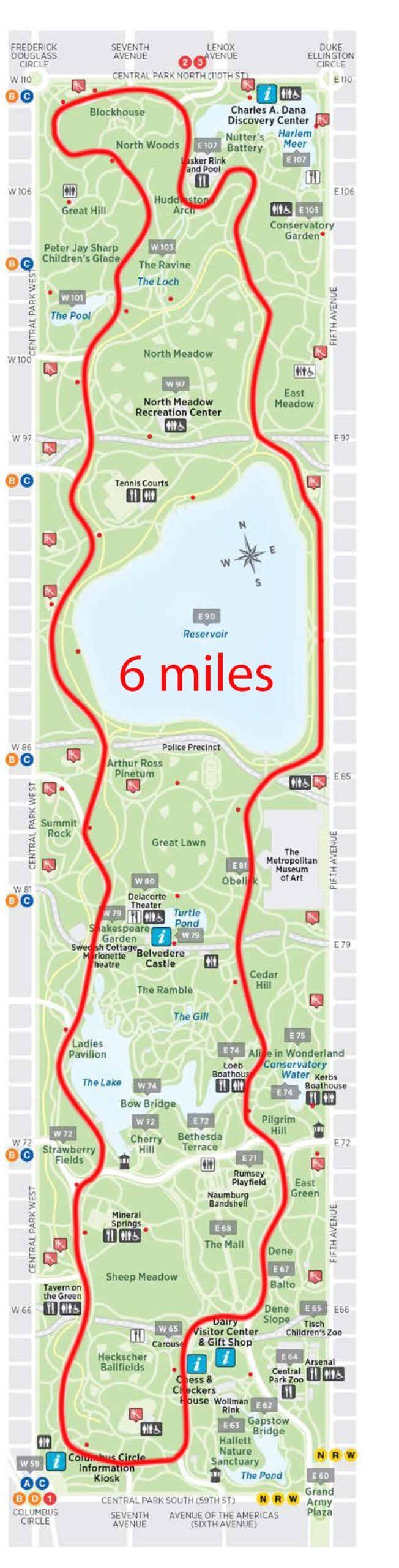
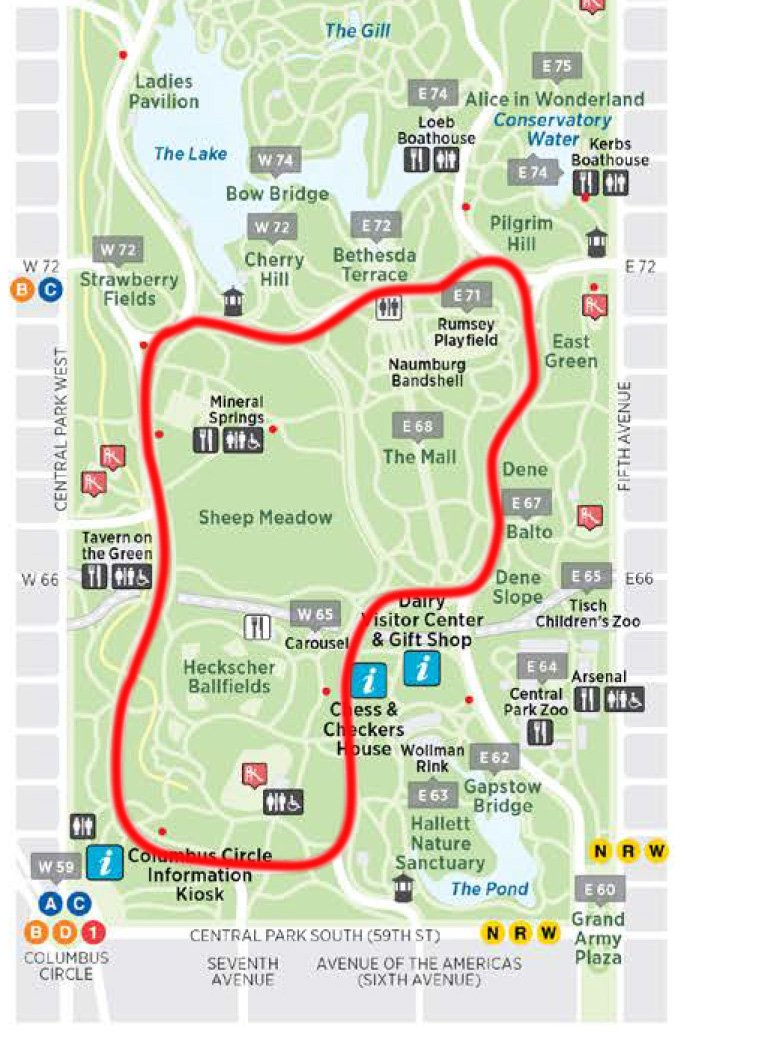
Central Park Map

Why Running in Central Park Is a Bucket-List Experience

Running in Central Park isn’t just exercise — it’s a full sensory experience. You’ll find yourself weaving past the Bethesda Fountain, glancing up at the Manhattan skyline reflected over the Reservoir, and pushing through iconic hills that serious marathoners train on year-round. With an estimated 42 million visitors annually, Central Park is the most frequented urban park in the United States — and for runners, it’s nothing short of a paradise.

The park is open daily from 6:00 AM to 1:00 AM, with the main drives closed to vehicle traffic on weekends (Friday 7 PM through Monday 6 AM) and on weekdays from 10 AM–3 PM and 7–10 PM. That means more room for runners, more peace, and a safer experience overall.


Central Park Running Routes: The Complete Breakdown

1. The Full Loop — 6.1 Miles (~10K): The Crown Jewel of Central Park Running Routes

central park running routes

Distance: 6.1 miles (~9.7–10 km) Surface: Paved Difficulty: Moderate to High

The Full Loop is the quintessential Central Park running route. Circling the entire park along East Drive, West Drive, Center Drive, and Terrace Drive, this is the route that serious runners live for. It overlaps with portions of the TCS New York City Marathon course, making it a genuine bucket-list run for endurance athletes around the globe.

The total elevation gain on the full loop is approximately +300 feet, with two notable climbs to watch for:

  • Cat Hill (near the Loeb Boathouse) — a ~50-foot gain, named for the bronze cat sculpture nearby
  • Harlem Hill (above 102nd Street) — the toughest section, with a ~100-foot gain on the west side

If you want to skip Harlem Hill, you can cut across the 102nd Street Transverse and shave the route down to about 4 miles (6.5 km) — a popular “middle loop” among locals.

Best for: Experienced runners, marathon training, those who want the full New York running experience


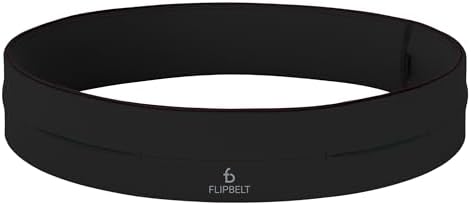
  • COMFY RUNNING WAIST BELT: Made to keep you in motion, the FlipBelt is an exercise-belt phone holder and carrier pouch fo…
  • MONEY & PHONE POUCH: The FlipBelt features 4 pocket openings to slip in all your must-have items, like cards, cash, and …
  • FASHION & FUNCTION: Made of moisture-wicking material that is quick drying and soft even while working up a sweat, this …

2. The Lower Loop — 1.8 miles (~2.9K): Perfect for Running in Central Park as a Beginner

central park running routes

Distance: 1.8 miles (~2.9 km) Surface: Paved Difficulty: Easy to Moderate

The Half Loop follows Central Park Drive south of the 72nd Street Transverse, looping through the most scenic and landmark-dense section of the park. This route passes some of Central Park’s most beloved spots:

  • Bethesda Terrace & Fountain — one of NYC’s most iconic gathering places
  • The Mall & Literary Walk — a grand promenade lined with towering American elm trees
  • Sheep Meadow — a wide-open lawn perfect for a post-run stretch
  • Strawberry Fields — the memorial to John Lennon just off Central Park West

This route is a favorite for before-work or after-work runs, and it’s ideal for tourists who want to combine sightseeing with a workout. Note that this southern section is also where the NYC Marathon finishes — while it looks flat, anyone who has run it at mile 26 will tell you otherwise.

Best for: Beginners, sightseeing runners, quick morning or evening jogs


3. The Reservoir Loop — 1.58 Miles: Scenic Running in Central Park Without the Crowds

central park running routes

Distance: 1.58 miles (~2.54 km) Surface: Crushed gravel (soft) Difficulty: Easy

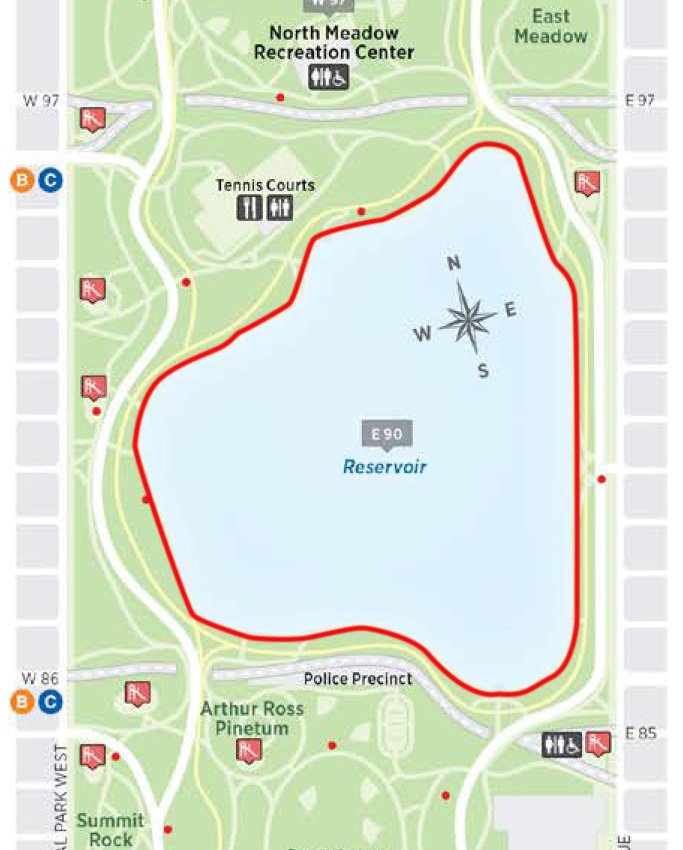
The Jacqueline Kennedy Onassis Reservoir Running Track is one of the most beloved short loops in all of New York City — and for good reason. At 1.58 miles around, this soft-surface crushed gravel path is completely car-free and bike-free, making it a peaceful refuge in the middle of one of the world’s busiest cities.

The track spans from 86th to 96th Street and stretches nearly the full width of the park. Every 100 yards is marked, making it easy to track your distance. The views are spectacular: open water on one side, the Manhattan skyline rising on the other.

Key rules for the Reservoir:

  • Run counterclockwise — this is strictly observed
  • No dogs, strollers, or bikes allowed on the track
  • The most direct access point is the Engineer’s Gate on East 90th Street

The Central Park Conservancy regularly maintains and upgrades the gravel surface, a testament to just how popular this loop is with daily runners.

Best for: Joint-conscious runners, beginners, anyone who wants skyline views with minimal traffic


4. The Bridle Path — 1.6 to 4.2 Miles: Running in Central Park Off the Beaten Track

central park running routes

Distance: 1.66 miles (short loop) or 4.2 miles (full loop) Surface: Dirt / soft soil Difficulty: Easy to Moderate

Once used for horseback riding (and still shared with occasional equestrians — horses have the right of way!), the Bridle Path is now a beloved dirt running trail that winds through the park. The softer surface makes it significantly easier on joints compared to the paved drives.

There are two options:

  • The shorter loop (1.66 miles) circles the Reservoir
  • The full Bridle Path (4.2 miles) extends north to the North Meadow fields, crossing the 102nd Street Transverse before reconnecting near West 93rd

The canopy of trees along the path makes it one of the coolest routes in summer, and the changing foliage makes it particularly beautiful in autumn. If you’re combining the Bridle Path with the main loop, you can build out a longer long-distance training run.

Best for: Injury-prone runners, trail running fans, summer heat escapes


  • Polyester Net + Nylon Elastic Fabric
  • Imported
  • Available In 3 Options: ① running vest only, ② hydration backpack with a 500ml soft flask, ③ Hydration vest with a 1.5L …

5. North Woods & Harlem Meadow — 3 to 5 Miles: The Hidden Gem of Central Park Running Routes

central park running routes

Distance: 3–5 km (customizable) Surface: Mixed trail and dirt Difficulty: Moderate

Head to the northern reaches of Central Park and you’ll find a completely different world. The North Woods is a secluded, forested area with winding paths that feel worlds away from the bustle of Midtown. Combined with the open expanse of Harlem Meadow, this section of the park offers a trail-running experience unlike anything else in Manhattan.

There are fewer tourists, more birdsong, and a sense of quiet that’s rare in New York. The terrain is varied — expect gentle hills, forested trails, and open meadows — and the seasonal changes here are especially dramatic, from spring wildflowers to brilliant autumn color to winter snow.

Best for: Solitude seekers, trail runners, anyone who wants to escape the crowds


Central Park Running Tips: What You Need to Know Before You Go

Direction & Etiquette

  • The recommended running direction on the main loop is counterclockwise
  • On the Reservoir, counterclockwise is mandatory
  • Stay in the designated running lane on paved roads; the innermost lane is for runners going counterclockwise
  • Watch for cyclists in the bike lane — always look both ways before crossing

Hydration

  • Water fountains are located throughout the park but are not operational in winter
  • In colder months, bring water or cash to buy from vendor carts
  • Summer runners should plan hydration carefully — heat can be intense on exposed sections

Safety

  • Morning runs are the most comfortable and crowded — great for energy and safety
  • Evening runs on the main loop are generally fine as it is well-lit
  • Avoid running alone in the interior trails at night
  • If you get lost, check lamppost numbers: the first two digits indicate the nearest cross street, and the last two digits tell you east (even) or west (odd)

Gear Storage

  • The NYRR RUNCENTER on 57th Street (between 8th and 9th Avenues) offers lockers for runners
  • New York Running Company at Columbus Circle also provides locker facilities

Seasonal Notes

  • Spring and fall are peak seasons — the park is at its most beautiful and the weather is ideal
  • Winter brings icy patches, especially on hills — use caution and consider trail shoes
  • Summer mornings are best; avoid midday heat on exposed paved routes

Best Starting Points for Central Park Running Routes

RouteSuggested Start
Full Loop59th St & 7th Ave (Columbus Circle)
Half Loop59th St & 5th Ave (SE entrance)
Reservoir LoopEngineer’s Gate, East 90th St
Bridle PathWest 90th St entrance or East 90th St
North Woods110th St entrances (north side)

Running in Central Park: The NYC Marathon Connection

For runners with a competitive streak, Central Park holds deep significance in the world of road racing. The park is the finish line of the TCS New York City Marathon, one of the six World Marathon Majors, which draws roughly 50,000 runners every November. The final miles of the race wind through Central Park’s East Drive and onto the famous finish on West Drive near Tavern on the Green.

Training on the Full Loop is one of the best ways to prepare for the marathon’s final miles — and a statue of Fred Lebow, the late founder of the NYC Marathon, stands watch near the Reservoir entrance on East 90th Street as an enduring tribute to the race’s history.


Final Thoughts

Central Park’s running routes are more than a workout — they’re an experience of New York City at its most alive. Whether you’re chasing a personal best on the Full Loop, soaking in skyline views on the Reservoir track, or escaping into the quiet of the North Woods, every run here tells a different story.

Start with the route that matches your fitness level, mix and match loops as you build endurance, and don’t forget to look up from your watch once in a while. New York’s greatest park deserves your full attention.

Happy running — and welcome to the most famous stretch of pavement in the world.


Running Central Park for the first time? Save this guide and download the official Central Park running map from the Central Park Conservancy before you head out.

Related post you might enjoy:

New York Marathon 2026: The Ultimate Guide to Entry, Training & Race Day

Best Budget Upper West Side Hotels for the NYC Marathon: Walk to the Finish, One Subway to the Start

New York Marathon 2026: The Ultimate Guide to Entry, Training & Race Day

The 2026 TCS New York City Marathon takes place on November 1, 2026 — and it’s a milestone 50th edition through the five boroughs. Whether you’re chasing a guaranteed bib or hoping to beat the lottery odds, this complete guide breaks down every NYC Marathon entry method, time qualifier standard, training strategy, and race-day tip you need.

Why the 2026 NYC Marathon Is One for the Books

The New York Marathon 2026 is not just another race on the calendar. Taking place on Sunday, November 1, 2026, this year marks the 50th running of the course through New York City’s five boroughs — a milestone that promises a celebration unlike any previous edition.

Officially known as the TCS New York City Marathon and organized by New York Road Runners (NYRR), this World Marathon Major draws over 55,000 finishers annually, making it the largest marathon in the world. From the Verrazzano-Narrows Bridge start in Staten Island to the iconic finish line in Central Park, it’s 26.2 miles of pure New York energy — and one of the most coveted racing experiences on the planet.

new york marathon 2026
source: new york road runners

Whether you’re a first-timer dreaming of your first major, or a seasoned runner chasing a PR on the streets of Brooklyn and Manhattan, this guide covers everything you need to know about the 2026 NYC Marathon — from how to get in, to how to train, to how to cross that finish line feeling strong.


The Ultimate Guide to Central Park Running Routes: Best Loops for Every Level

2026 NYC Marathon at a Glance

DetailInfo
Official NameTCS New York City Marathon
OrganizerNew York Road Runners (NYRR)
Race DateSunday, November 1, 2026
Distance42.195 km / 26.2 miles
CourseStaten Island → Brooklyn → Queens → Bronx → Manhattan → Central Park
Field Size~55,000+ finishers
Entry Fee$269.66 (NYRR members) / $333.11 (non-members)
Milestone50th running through the five boroughs

new york marathon 2026

NYC Marathon Entry Methods: How to Get a Bib in 2026

Getting into the NYC Marathon is often harder than training for it. With millions of runners worldwide wanting in, NYC Marathon entry methods are competitive, varied, and highly time-sensitive. Here’s a full breakdown of every official route to a 2026 bib.

1. General Entry Drawing (Lottery)

The lottery is the most well-known — and most unpredictable — way in. Applications were open February 4–25, 2026, and the drawing took place on March 4, 2026. Runners are grouped into three categories: local (within ~60 miles of NYC), U.S. non-local, and international.

Be aware: acceptance rates are extremely low. In recent years, only about 2–3% of non-guaranteed lottery applicants received a bib. If you’re selected, your card is charged automatically — there’s no confirmation step.

NYRR members who aren’t selected in the main drawing are automatically entered into a Member-Only Second-Chance Drawing on March 4, giving members a notable edge.

2. 9+1 Program — Best Option for NYC-Based Runners

One of the most reliable NYC Marathon entry methods for local runners, the 9+1 Program guarantees your bib if you:

  • Complete 9 qualifying NYRR races in 2025
  • Volunteer at 1 NYRR event in 2025
  • Hold an active NYRR membership by December 31, 2025

Guaranteed entry must be claimed between February 4–25, 2026. You still pay the standard entry fee, but your spot is locked — no lottery nerves required.


UPDATE: Major Changes Coming to the 9+1 Program for 2027

Starting with the 2027 program (for guaranteed entry into the 2028 TCS New York City Marathon), NYRR is introducing significant updates to address high demand:

  • Eligibility Drawing Introduced: You must enter and win a free lottery between September 17–29, 2026 (NYRR membership required by Sept 16) to earn a 9+1 Pass. Passes are capped at ~15,000 runners.
  • $99 Pass Fee: If selected in the drawing, a $99 fee is automatically charged for your 9+1 Pass.
  • Priority Race Registration: Passholders receive a dedicated, early-access window to register for qualifying races and volunteer spots throughout 2027.
  • Member Plus Tier Discontinued: Member Plus and Family Plus tiers are eliminated, giving all general NYRR members equal 2-day early access to race registrations.

(Note: The 2026 9+1 Program for the 2027 NYC Marathon remains unchanged under the traditional format.)


3. Time Qualifier — For Competitive Runners

The time qualifier path is respected, demanding, and one of the most satisfying ways to earn your bib. To qualify for the 2026 NYC Marathon, runners must have achieved NYRR’s published time standards at a certified race during the qualifying window: January 1 – December 31, 2025.

2026 Time Qualifier Standards (Men’s Marathon / NYRR Half-Marathon)

Age GroupFull MarathonNYRR Half-Marathon
18–342:53:001:21:00
35–392:55:001:23:00
40–442:58:001:25:00
45–493:05:001:28:00
50–543:14:001:32:00
55–593:23:001:36:00
60–643:34:001:41:00
65–693:45:001:46:00
70–744:10:001:57:00
75–794:30:002:07:00
80+4:55:002:15:00

(Women’s and Nonbinary standards differ — check the official NYRR page for your full category.)

Important distinctions between NYRR and Non-NYRR qualifiers:

  • NYRR race qualifier: Times are automatically logged to your dashboard. Guaranteed entry — claim it February 4–25, 2026.
  • Non-NYRR race qualifier: Limited spots available. Application window was February 4–11, 2026 (earlier deadline). Entry is NOT guaranteed — if demand exceeds supply, NYRR accepts the fastest runners per age and gender category. Half-marathon times are not accepted for non-NYRR applications.

Strategy tip: If you’re targeting a non-NYRR qualifying race (Chicago, Berlin, CIM, etc.), aim to run significantly faster than the standard. Meeting the minimum time alone may not be enough for acceptance.

4. Charity Entry

Running for a cause is one of the most accessible NYC Marathon entry methods, especially after the lottery results come out. NYRR’s flagship charity program, Team for Kids (TFK), opened registration in October 2025 with a fundraising minimum of $3,000 USD plus the standard entry fee.

In return, charity runners receive:

  • Guaranteed entry
  • Personalized coaching and training platform
  • TFK singlet
  • VIP race-day perks

NYRR’s full list of official charity partners for 2026 will be announced in spring 2026. Most partner charities require fundraising commitments of $2,500–$4,000 USD.

5. Legacy / Streaker Entry

Completed 15+ NYC Marathons? You’ve earned it. Runners with 15 or more official NYC Marathon finishes are eligible for guaranteed entry as a recognition of their lifelong commitment. Claim your entry during the February 4–25, 2026 window.

6. Philanthropic Membership

NYRR’s 5K and 10K Philanthropic Memberships include guaranteed marathon entry plus VIP hospitality and access to additional NYRR marquee races. This is a premium option for those who want guaranteed access while supporting NYRR’s community mission.

7. International Tour Packages

International runners have a streamlined option: book through an NYRR-approved Official International Tour Operator. These packages bundle your race bib with hotel accommodations and race-week logistics, making it the most stress-free path for athletes flying in from overseas. Packages vary by country — check the NYRR website for approved operators in your region.

8. Virtual Marathon Guaranteed Entry

Runners who registered for and completed the 2025 Virtual TCS NYC Marathon (Guaranteed Entry tier) earned non-complimentary guaranteed entry to the 2026 in-person race.


Key 2026 NYC Marathon Dates

DateEvent
February 4, 2026Lottery & guaranteed entry applications open
February 11, 2026Non-NYRR Time Qualifier application closes
February 25, 2026All applications and guaranteed entry claims close
March 4, 2026Drawing day + charity partner announcements
Spring 2026Charity partner list published
November 1, 2026Race day 🎉

Training for the 2026 NYC Marathon: A Strategic Approach

Earning a bib is step one. Running 26.2 miles through five New York City boroughs — with bridges, hills, and 2 million cheering spectators — is a challenge that demands smart, structured preparation.

Phase 1: Base Building (20+ Weeks Out)

Start by gradually increasing your weekly mileage across 4–5 runs per week. Keep most of these runs at an easy, conversational pace. The goal is to build aerobic capacity without accumulating injury risk.

Phase 2: Speed and Hill Work

New York’s course features several demanding elevation changes — most notably the Verrazzano-Narrows Bridge at the start and the rolling hills of Central Park in the final miles. Incorporate:

  • Interval training to sharpen leg turnover
  • Tempo runs to build lactate threshold
  • Uphill repeats to strengthen quads and glutes for the bridges and park climbs

Phase 3: Long Runs

Weekend long runs are the cornerstone of marathon training. Build up to runs of 25–35 km, practicing your goal pace and nutrition strategy. Use these runs to dial in your fueling routine — what works at mile 18 matters far more than what you eat at mile 3.

Phase 4: Taper and Recovery

In the final 2–3 weeks, reduce mileage while maintaining intensity. Trust the process — your body is absorbing all the hard work. Prioritize sleep, nutrition, and mobility work.

Phase 5: Mental Training

NYC is a sensory overload — in the best possible way. Plan your mental strategy for the quiet stretches (Queensboro Bridge, we’re looking at you) and the explosive crowd energy in Brooklyn and on First Avenue. Develop segment-by-segment mantras and pacing targets so you stay composed no matter what the course throws at you.


NYC Marathon Course Strategy: Borough by Borough

Staten Island — Verrazzano-Narrows Bridge (Miles 0–2)

The race starts on the lower deck of the Verrazzano Bridge — one of the steepest climbs of the entire course. With race-day adrenaline surging, most runners go out too fast here. Resist the urge. Run conservatively; the miles to come will reward the patient runner.

Brooklyn (Miles 2–13)

Brooklyn is the heart and soul of the NYC Marathon. The crowd energy is electric, the neighborhoods are vibrant, and the course is relatively flat. This is your opportunity to settle into your goal pace. Don’t let the atmosphere push you faster than your race plan allows.

Queens (Miles 13–16)

A quieter stretch after the Brooklyn buzz. Stay focused and maintain your rhythm. The transition to the Queensboro Bridge is approaching.

Queensboro Bridge (Around Mile 15–16)

This silent, spectator-free climb is where many races unravel. There are no crowds here — just you, the bridge, and your legs. Keep your form, shorten your stride on the incline, and stay mentally strong. The reward is just ahead.

The Bronx (Miles 20–21)

A brief but crucial stop. By now you’re deep into the race, and the Bronx marks the final turning point. This is where mental fortitude separates finishers from faders. Keep your cadence up.

Manhattan and Central Park (Miles 22–26.2)

First Avenue’s roar is one of running’s great experiences — soak it up, but don’t blow up your pace. As you enter Central Park, the rollers begin. Short, punchy hills at miles 23–25 are brutal on tired legs. Break the final miles into smaller goals: get to the next lamppost, the next water station, the next turn. The finish line on Central Park South is worth every step.

Pacing Strategy

Start 5–10 seconds per mile slower than your goal pace for the first 10K. Negative splitting — or at minimum even-splitting — the NYC Marathon course is the most reliable path to a strong finish. The course saves its hardest test for last, so conserve early.


Race Day Essentials: What You Need to Know

Before the start: Expect a long wait at the start village on Staten Island — sometimes 2–3 hours. Bring throwaway warm layers (the start area collects donated clothing for charity). Pack snacks and stay off your feet as much as possible.

During the race: Aid stations appear roughly every mile. Utilize water and sports drink, and take your energy gels on schedule — don’t wait until you feel you need them.

Post-finish recovery: Within 30 minutes of crossing the finish line, consume a combination of protein and carbohydrates to kickstart muscle repair. Use a foam roller that evening and the next morning. Plan for 3 full days of rest before any light movement, and hold off on running for at least a week.


Frequently Asked Questions

How much does the 2026 NYC Marathon cost? Entry fees are $269.66 for NYRR members and $333.11 for non-members. Charity entries require the standard fee plus a fundraising minimum, typically $2,500–$4,000.

When does the NYC Marathon start? Professional women begin at 8:35 AM ET, professional men at 9:05 AM ET, and wave starts for the general field follow through the mid-morning.

Can I defer or transfer my entry? Entries are non-refundable and non-transferable. Deferral may be available in certain circumstances (such as injury), but you would likely need to pay the entry fee again for the following year.

What is the acceptance rate for the NYC Marathon lottery? Historically, only 2–3% of non-guaranteed lottery applicants are accepted. NYRR members have a slight advantage through the second-chance drawing, but the odds remain long regardless.

Is it worth running the NYC Marathon for charity? Absolutely — if you’re committed to the fundraising requirement. Charity runners receive guaranteed entry, coaching support, and a premium race experience. It’s one of the most reliable paths to the start line if the lottery doesn’t work out.


Final Thoughts: Running New York Is Running History

The 2026 TCS New York City Marathon is more than a race. On its 50th anniversary through the five boroughs, it’s a living piece of running history — 26.2 miles of Brooklyn murals, Queensboro Bridge silence, First Avenue thunder, and Central Park finish-line glory.

Whether you qualified by time, won the lottery, fundraised your way in, or completed the 9+1 program, every runner on that start line has earned their place.

Start spreading the news — you’re running New York. 🗽


Official Resources:

Additional Readings:

The Ultimate Classic Diners Guide: 8 Must-Visit Spots in New York and New Jersey

The Ultimate NYC Bakery Pilgrimage: 8 Viral Bakeries You Must Visit

Best Budget Upper West Side Hotels for the NYC Marathon: Walk to the Finish, One Subway to the Start