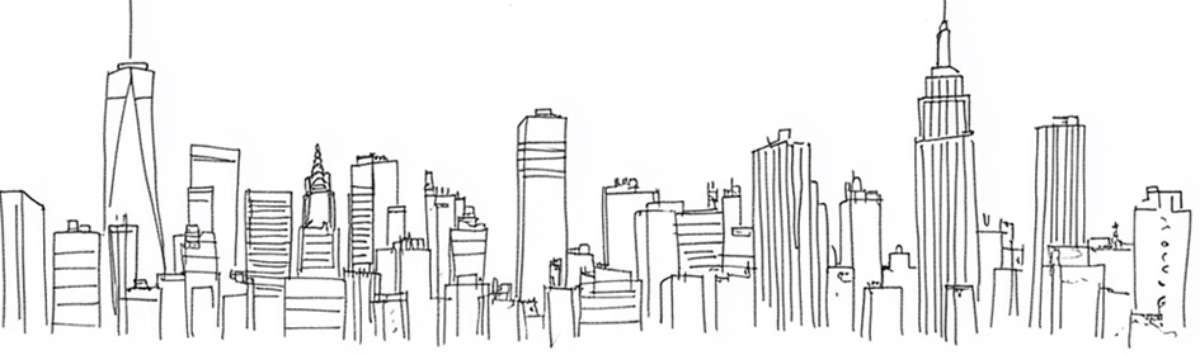
If you’ve been waiting for a Keith Haring exhibition that goes beyond the familiar merchandise and poster-print nostalgia, the 2026 show at The Brant Foundation in New York’s East Village is the one. On view from March 11 through May 31, 2026, this tightly focused survey takes you back to the years 1980–1983 — the moment when a young artist from Pennsylvania transformed New York’s subway system into the world’s most electrifying open-air gallery. And it does so in the very neighborhood where Haring first made his name.
For anyone interested in street art, Pop art, or the history of downtown New York, this is not just an exhibition worth seeing — it’s an experience that puts you in direct contact with the origins of a visual language that now belongs to the whole world.
Why the Keith Haring Exhibition 2026 Is Different From Past Retrospectives
Over the past decade, Keith Haring’s name has appeared on the walls of major institutions worldwide. Most of those shows cast a wide net — covering his full career arc from subway guerrilla to global activist, from the AIDS crisis to his Pop Shop. They are comprehensive, respectful, and often moving.
But the Brant Foundation show, curated by Dr. Dieter Buchhart and Dr. Anna Karina Hofbauer, makes a different choice. Rather than surveying everything, it narrows its focus to the three-year window when Haring’s visual language was still being invented. This is not the polished icon. This is the artist in the act of becoming one.
The curators have cited Haring’s own journals as a guiding framework: his early entries are inseparable from New York — its streets, its clubs, its subway stations. It is only from the mid-1980s onward that his diary fills with destinations like Tokyo, Paris, and Amsterdam. This exhibition catches him before the world came calling.
The show features approximately 50 works, including:
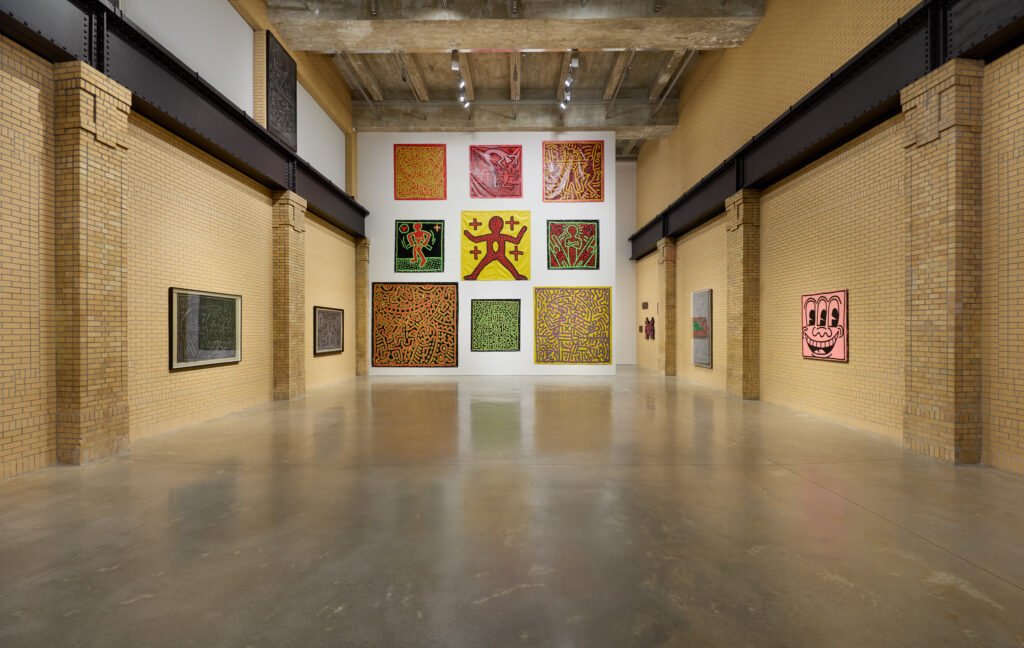
- Nine large-scale tarp paintings displayed together on a single wall
- Eight surviving subway chalk drawings in their original fiberglass frames
- Works from the landmark 1982 Tony Shafrazi Gallery exhibition (including pieces from the legendary Blacklight Room)
- Works shown at the FUN Gallery in 1983, a pivotal venue on the Lower East Side
- Early enamel paintings on metal from 1981
- A portrait of Haring by Jean-Michel Basquiat, on display as a rare document of their friendship
Press coverage since opening has been unanimous: this is a rare show that pushes beyond the deeply familiar surface of Haring’s work into something rawer and more urgent.
Keith Haring’s Subway Drawings: Where It All Began
To understand the Brant Foundation exhibition, you need to understand what Keith Haring’s subway drawings were and why they mattered.
In December 1980, Haring noticed something on the platforms of the New York City subway system: the black matte paper panels used as placeholders when advertisement spaces went unfilled. These blank rectangles, scattered across hundreds of stations, struck him immediately. He went above ground, bought chalk, came back down, and drew.
“It seemed obvious to me when I saw the first empty subway panel that this was the perfect situation,” he later wrote in his book Art in Transit.
What followed was one of the most unusual public art campaigns in American history. Haring rode the subway daily, scanning platforms for empty panels, and drew with white chalk directly onto the black paper — quickly, without preparation, always beginning with a border and working inward. He created more than 5,000 of these drawings between 1980 and 1985, possibly making it the largest sustained public art project ever undertaken by a single artist.
The figures that emerged — a radiant crawling baby, a barking dog, dancing human outlines, flying saucers, pulsating hearts — were drawn flat, without spatial depth, close to the surface like cartoons. Simplicity was not just an aesthetic choice; it was a practical one. Haring needed to finish each drawing before the transit police arrived. The urgency of potential arrest shaped the visual economy of every line.
Commuters stopped. People watched him work. Some drawings were stolen from their frames within hours of being made — a measure of how quickly his reputation spread. Photographer Tseng Kwong Chi followed Haring through the system, documenting what would eventually amount to over 22,000 photographs of the subway project. In 1982, one of Haring’s arrests was filmed and broadcast on a CBS News special, turning a downtown phenomenon into a national story.
The Brant Foundation exhibition displays eight surviving original subway drawings, many of which have never before been shown publicly. Standing in front of them — chalk on black paper, still in their Metropolitan Transit Authority frames — is as close as you can get to those platform moments.
The East Village Setting: Why Location Matters for This Show
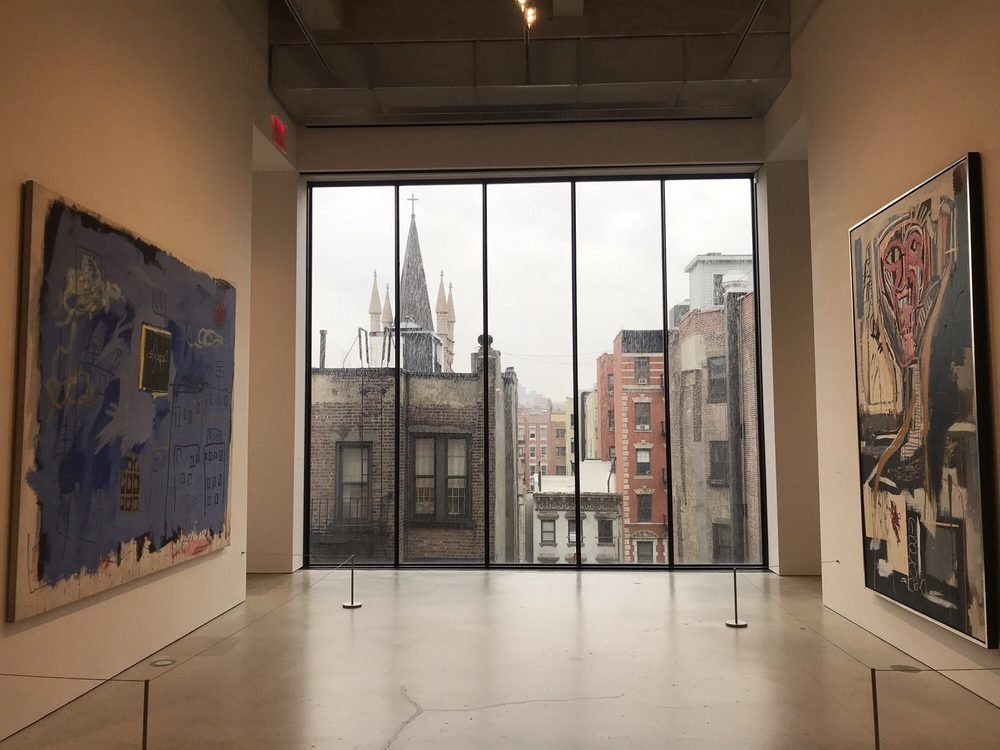
The Brant Foundation’s New York space sits at 421 East 6th Street, between Avenue A and First Avenue in the East Village — just blocks from the clubs, galleries, and streets where Haring built his reputation in the early 1980s.
When Haring arrived in New York in 1978 to study at the School of Visual Arts (SVA), the East Village and Lower East Side were a laboratory of creative energy. Cheap rents and abandoned storefronts had attracted an unlikely convergence: graffiti writers, punk musicians, underground gallery owners, poets, and painters. This was the world of Club 57, of early hip-hop, of zines and word-of-mouth exhibition openings. Art happened in the streets before it happened in any gallery.
Haring moved through all of it — befriending Kenny Scharf and Jean-Michel Basquiat, working out ideas at P.S. 122 and Club 57, drawing on subway walls and then showing in galleries. The East Village was not simply where he worked; it was the ecosystem that produced his aesthetic.
Showing this work a few blocks from its origin point is not incidental. It changes how the work reads. The industrial rawness of the Brant Foundation building — a former Con Edison substation built in 1920, later used as a studio by Minimalism pioneer Walter De Maria — amplifies rather than sanitizes what you’re looking at. The building’s preserved gantry crane, steel staircases, and exposed structure feel closer to a subway platform than to a white-cube museum. That friction is exactly right.
Key Works and Exhibition Highlights
Keith Haring Subway Drawings on View
The subway drawings are the emotional core of the show. Eight original examples survive in the exhibition, displayed in their original fiberglass frames. Watching the figures emerge from black paper — radiant babies, barking dogs, abstracted human forms — it’s easy to understand why subway riders in 1981 stopped mid-commute to look. These are not sketches. They are complete, confident statements made in minutes.
The Blacklight Room (Tony Shafrazi Gallery, 1982)
Among the most talked-about elements of the early Haring career, the Blacklight Room from his 1982 Tony Shafrazi Gallery show turned a gallery basement into something between a painting and a dance floor. Under ultraviolet light, works painted in fluorescent Day-Glo pigments glowed and pulsed. The division between art space and nightclub dissolved. The Brant Foundation show includes works from this period, allowing visitors to understand Haring not just as a graphic artist but as an environmental designer — someone who thought in terms of total experience.
The FUN Gallery, 1983
The FUN Gallery on the Lower East Side was one of the key venues that collapsed the barrier between graffiti culture and the contemporary art world. Haring’s 1983 show there was a defining moment — not only for his career, but for the broader legitimacy of street art as a gallery practice. Works from that exhibition are included here.
Early Enamel Paintings and Tarp Works
A group of small baked enamel on metal paintings from 1981 read like the physical precursors to digital emoji — condensed, iconic, immediately legible. They demonstrate how early Haring was thinking about universal visual communication systems.
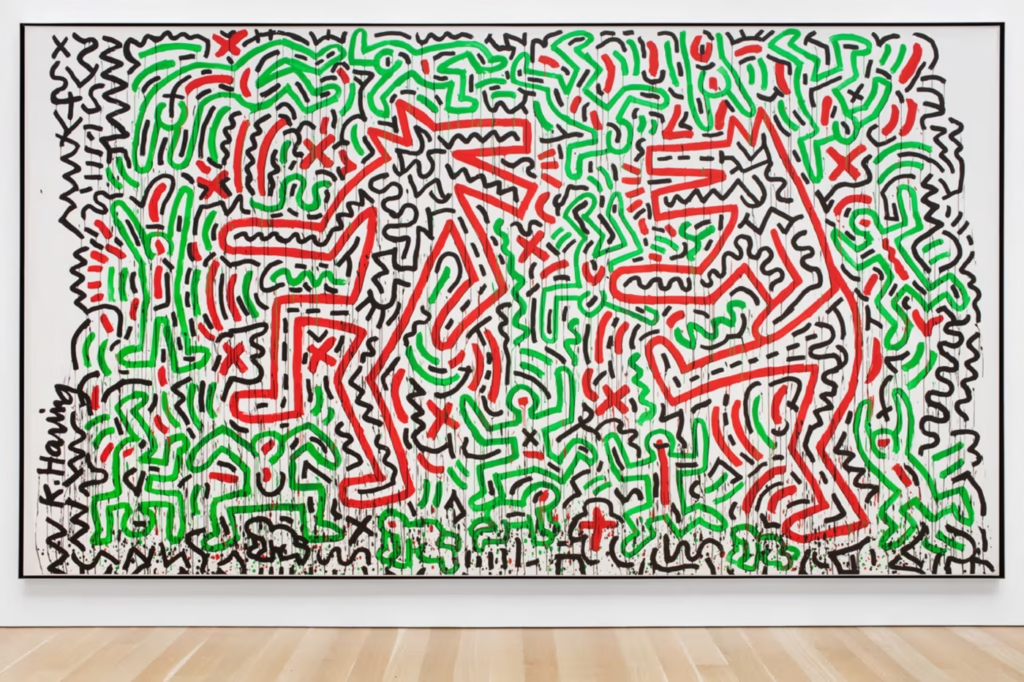
The nine large tarp paintings — made from the kind of industrial canvas used to cover trucks — are displayed together on a single wall, creating one of the exhibition’s most striking visual experiences. Originally made when Haring was pushing against the limitations of standard canvas sizes, they have an outdoor, public-space energy that feels entirely at home in the Brant Foundation’s industrial setting.
Keith Haring’s Legacy in New York City Today
The Brant Foundation exhibition exists in dialogue with Haring’s surviving public presence in New York. Two murals remain embedded in the city’s daily life:
“Crack is Wack” (1986) — Painted without permission on a handball court wall along Harlem River Drive at 128th Street, this mural was Haring’s response to the crack cocaine epidemic devastating New York communities. City park authorities moved to protect it almost immediately after it appeared, a measure of the public response it generated. It remains on view today.
Carmine Street Pool Mural (1987) — The exterior wall of the public pool in the West Village continues to greet swimmers every summer with Haring’s figures in motion.
These two works demonstrate something essential about Haring’s practice: he did not leave the street behind when galleries came calling. Throughout his career, he moved fluidly between the commercial art world and free public space, seeing the two not as contradictions but as different registers of the same commitment.
Haring died of AIDS-related complications on February 16, 1990. He was 31 years old. In the years before his death, he had founded the Keith Haring Foundation to support AIDS organizations and programs for children — ensuring that the activist dimension of his work would outlast him.
What Makes This Exhibition Especially Relevant Right Now
Curator Dieter Buchhart has described Haring’s work as “a positive humanist virus” that lives on in collective memory, continuing to fight against ignorance, fear, and silence. That framing feels pointed.
Haring worked in a moment of political tension — the Reagan era, the AIDS crisis, the crack epidemic, the debates over censorship that would eventually produce the culture wars. His response was not retreat into abstraction or irony but a doubled commitment to clarity, accessibility, and public presence. He made art that anyone could read, and he put it where anyone could see it.
In today’s visual culture — saturated with iconography, skeptical of sincerity, alert to the politics of representation — Haring’s early work reads with unexpected freshness. These are not comfortable, decorative images. They were made in a state of urgency, on stolen time, for an audience of strangers.
Practical Visitor Information
Venue: The Brant Foundation, 421 East 6th Street, New York, NY 10009
Exhibition Dates: March 11 – May 31, 2026
Hours:
- Wednesday – Friday: 11:00 AM – 6:00 PM
- Saturday – Sunday: 11:00 AM – 5:30 PM
- Closed Monday and Tuesday
Admission:
- General: $20
- Students / East Village residents / Visitors with disabilities (+ care partner): $15
- Seniors (65+): $18
- Children under 12: Free (with adult)
Digital Guide: Available free via the Bloomberg Connects app
Group Visits: Guided tours available for groups of 10 or more; contact the Foundation directly
Note: Photography is permitted for personal use in most galleries (no flash, no tripods, no selfie sticks). Some works contain mature imagery.
Website: brantfoundation.org
Before You Go: How to See This Exhibition Well
The temptation with Keith Haring is to move quickly — the images are familiar, the lines are bold, the rhythm is immediate. Resist that. The point of this show is to slow down inside work you think you already know.
Look at the subway drawings first and notice what it would have felt like to encounter them underground, made in minutes, on your morning commute in 1981. Then move through the exhibition tracking how that same visual energy — the condensed line, the anonymous figure, the symbol designed to carry meaning across barriers of language and class — migrated from black paper to painted tarp to enamel metal to Day-Glo canvas.
By the time you reach the large tarp paintings, you are looking at the same impulse that started on a subway platform, scaled up to the size of a building wall. That continuity is what the Brant Foundation show is really about: not the celebrity Haring, not the T-shirt Haring, but the artist who believed that a line drawn in the right place, for the right reason, could change how a person moves through a city.
The Keith Haring exhibition at The Brant Foundation is on view through May 31, 2026. Tickets are available at brantfoundation.org.
Related posts you might enjoy: