Best Japanese Ramen in New York and New Jersey: 10 Must-Try Spots for Authentic Bowls
From creamy tonkotsu to dipping-style tsukemen, New York and New Jersey are home to some of the finest Japanese ramen restaurants outside of Japan. Here are 10 unforgettable bowls you need to try.

Few dishes comfort the soul quite like a steaming bowl of the best Japanese ramen in New York. Whether you’re ducking out of a cold Manhattan wind or crossing the Hudson for a low-key dinner in Fort Lee, a rich, complex bowl of ramen has a way of making the city feel a little smaller and a lot warmer. With hundreds of ramen shops now spanning the tri-state area, the competition is fierce — and the quality has never been higher.

In this guide, we’ve rounded up 10 of the best Japanese ramen restaurants in New York and New Jersey, ranging from legendary Japanese chains that have brought their authentic recipes stateside, to Michelin-recognized neighborhood gems that locals swear by.


A Brief History of Ramen: From Chinese Noodles to Global Phenomenon
Before diving into where to slurp, it’s worth understanding what makes ramen so extraordinary. Though ramen is synonymous with Japanese cuisine today, its roots trace back to China. Early Chinese wheat noodles, known as chuka-men, began arriving in Japan during the Meiji Era (1868–1912). Japanese chefs gradually adapted the dish, layering it with local ingredients and techniques until it evolved into something entirely its own.

Today, ramen is built around four foundational broth styles:

  • Tonkotsu — A rich, creamy, milky-white broth from Fukuoka, made by simmering pork bones for up to 18 hours until collagen and marrow dissolve into the liquid. Bold, indulgent, and deeply savory.
  • Shoyu — The classic Tokyo-style soy sauce broth: amber-colored, aromatic, and balanced. The most common style found throughout Japan.
  • Miso — Born in Sapporo, Hokkaido, miso ramen uses fermented soybean paste to create a thick, hearty, umami-rich broth — perfect for cold winters.
  • Shio — The oldest and subtlest style: a clear, salt-seasoned broth that lets the natural flavors of chicken or seafood shine through with remarkable delicacy.

Beyond broth, there’s also tsukemen — a style where firm, thick noodles are served separately alongside a concentrated dipping broth. It’s an experience unto itself, and New York and New Jersey happen to have some of the best tsukemen outside Japan.


The Best Japanese Ramen Restaurants in New York and New Jersey

1. Ichiran Ramen — Manhattan & Brooklyn

best japanese ramen in new york
Ichran Midtown

Best for: Solo diners and tonkotsu purists

Ichiran is perhaps the most famous ramen chain to make the leap from Japan to New York, and its three Manhattan-area locations (Midtown, Penn Station area, and Bushwick, Brooklyn) consistently draw lines. Originally from Fukuoka — the birthplace of tonkotsu — Ichiran has perfected its craft over decades.

What sets Ichiran apart is its iconic “flavor concentration booth” concept: individual wooden partitioned seats where each diner focuses entirely on their bowl, adjusting broth richness, spice level, and noodle firmness to personal taste via a customizable order form. It’s immersive, meditative, and — especially for solo diners — genuinely enjoyable.

best japanese ramen in new york
  • Signature dish: Classic Tonkotsu Ramen
  • Popular sides: Matcha Pudding, draft beer, Happy Hour specials
  • Locations: 152 W 49th St / 132 W 31st St / 374 Johnson Ave, Brooklyn
  • Website: ichiranusa.com

2. Ramen Ishida — Chelsea, Manhattan

best japanese ramen in new york

Best for: Clean, Tokyo-style chicken broth

A hidden gem in Chelsea, Ramen Ishida is the kind of place you find by word of mouth and return to obsessively. The chef, originally from Oppudo, specializes in Tokyo-style tori chintan — a beautifully clear, deeply flavored chicken broth that feels simultaneously light and satisfying. It’s the kind of bowl that earns quiet devotion rather than social media hype.

best japanese ramen in new york
  • Signature dish: New Tokyo Style Shoyu Ramen, Miso Ramen
  • Popular starters: Pork Buns, Crab Cream Croquette
  • Location: 104 8th Ave, New York, NY
  • Website: ramenishida.com

3. Ippudo Ramen — Multiple NYC Locations

best japanese ramen in new york

Best for: Classic tonkotsu with crowd-pleasing atmosphere

Few names carry as much weight in the Japanese ramen restaurants NYC and NJ scene as Ippudo. Founded in Fukuoka in 1985 by Shigemi Kawahara — himself a legendary figure in the ramen world — Ippudo expanded globally and landed in New York in 2008 to enormous fanfare. Nearly two decades later, the lines are still long and the bowls are still excellent.

Ippudo’s Akamaru Modern is a must-order: a tonkotsu base enriched with special blended miso and fragrant garlic oil, topped with tender chashu pork. The pork buns (buns) are equally legendary as a starter.

  • Signature dish: Akamaru Modern Ramen
  • Popular starters: Pork Buns, Pork Belly
  • Locations: 65 4th Ave / 321 W 51st St / 24 W 46th St / 117 Adams St, Brooklyn
  • Website: ippudo-us.com

4. Tonchin New York — Midtown Manhattan

Best for: Upscale tonkotsu in a stylish setting

Tonchin brings the DNA of its acclaimed Tokyo original to a sleek Midtown setting. With a Michelin-level kitchen behind it, the tonkotsu here is refined and weighty — a deep, serious broth that rewards attention. The Spicy Tan Tan Ramen offers an excellent alternative for those craving heat, drawing on the Japanese take on Sichuan dandan noodles.

The bar program and elevated space make Tonchin an ideal choice for a ramen dinner that feels like an occasion rather than a quick stop.

  • Signature dish: Tonkotsu Ramen, Spicy Tan Tan Ramen
  • Popular starters: Tebasaki Chicken Wings, Curry + Cheese Chicken Wings
  • Location: 41–43 W 55th St, New York, NY
  • Website: tonchinus.com

5. Jin Ramen — Upper West Side, Manhattan

Best for: Neighborhood warmth and Hakata-style depth

Jin Ramen on the Upper West Side has earned fierce local loyalty through consistent, deeply satisfying Hakata-style tonkotsu. The broth is rich but not heavy, the noodles thin and springy, and the atmosphere warm enough that you’ll understand why the wait lines stretch around the corner. Vegetarians are well-served here too — a rarity at traditional tonkotsu-focused shops.

  • Signature dish: Tonkotsu Ramen
  • Popular starters: Chicken Nanban, Spinach Namul Salad
  • Location: 3183 Broadway (Upper West Side), New York, NY
  • Website: uws.jinramen.com

6. Okiboru House of Tsukemen — Lower East Side, Manhattan

Best for: Michelin-recognized tsukemen in NYC

If you haven’t experienced tsukemen, Okiboru is the place to start — and arguably the best place to do it in the entire country. This Lower East Side shop is the only restaurant in New York serving Michelin Guide-recognized tsukemen, where thick, chewy noodles are presented alongside a hyper-concentrated dipping broth of pork or chicken.

The ritual of dipping, slurping, and savoring each pull of noodle in that intense, gelatin-rich broth is one of the most rewarding ramen experiences available in New York City. Don’t skip the Chashu Wrap starter.

  • Signature dish: Tsukemen
  • Popular starters: Chashu Wrap, Ebi Katsu (Shrimp Cutlet)
  • Location: 117 Orchard St, New York, NY 10002
  • Website: okiboru.com

7. Tsujita NJ Artisan Noodles — Fort Lee, New Jersey

Best for: Michelin-pedigree tsukemen across the river

The New Jersey outpost of the Michelin Star-awarded Tsujita brand brings serious tsukemen credentials to Fort Lee — a Hudson County neighborhood that has quietly become one of the best destinations for authentic Japanese ramen restaurants in the NYC–NJ metro area. The tonkotsu broth is thick, the fresh house-made noodles are impeccably springy, and the overall experience rivals anything you’d find in Manhattan.

  • Signature dish: Tsukemen, Tonkotsu Ramen
  • Popular starters: Spicy Salmon Yubu, Takoyaki (Octopus Balls)
  • Location: 2034 Lemoine Ave Ste 5B, Fort Lee, NJ 07024
  • Website: tsujita.com

8. Hokkaido Ramen Santouka — Edgewater, New Jersey

Best for: Clean shio ramen and easy access

Santouka is a Hokkaido-born institution, and its Edgewater location — tucked inside the Mitsuwa Marketplace food court — offers one of the most approachable and authentic ramen experiences in New Jersey. The signature shio ramen is a revelation in restraint: a pristinely clear broth that showcases the natural sweetness of pork and chicken bones, seasoned with sea salt and accented with delicate toppings.

The Mitsuwa setting also means you can browse Japanese grocery aisles and specialty shops before or after your bowl — a full cultural outing in itself.

  • Signature dish: Shio Ramen
  • Popular sides: Karaage Chicken
  • Location: 595 River Road, Edgewater, NJ
  • Website: santouka-usa.com

9. Blackbeard Ramen — Cliffside Park, New Jersey

Best for: Local neighborhood favorite with bold flavors

Off the well-trodden tourist path, Blackbeard Ramen in Cliffside Park is a beloved local institution. The namesake Blackbeard Ramen is a rich, satisfying tonkotsu-style bowl with enough personality to keep regulars returning week after week, and the Red Curry Ramen is a bold, creative option that earns its own devoted following. Pork Buns are the go-to starter.

  • Signature dish: Blackbeard Ramen, Red Curry Ramen
  • Popular starters: Pork Buns
  • Location: 607 Gorge Rd, Cliffside Park, NJ
  • Website: blackbeardramen.com

10. Menya Sandaime — Fort Lee & Jersey City, New Jersey

Best for: Authentic Japanese technique, multiple NJ locations

Menya Sandaime rounds out this list as one of the most faithful ambassadors of Japanese ramen tradition in the tri-state area. The kitchen adheres closely to authentic Japanese techniques and ingredients, offering both dipping-style tsukemen and the spicy Karakuchi Ramen with equal confidence. With locations in Fort Lee (two branches) and Jersey City, it’s also one of the most accessible options for New Jersey diners.

The mini butadon (pork rice bowl) and mini gyudon (beef rice bowl) sides are excellent additions to any order.

  • Signature dish: Tsukemen, Spicy Karakuchi Ramen
  • Popular sides: Mini Butadon, Mini Gyudon
  • Locations: 1638 Parker Ave, Fort Lee / 1406 Bergen Blvd, Fort Lee / 570 Washington Blvd, Jersey City
  • Website: menyausa.com

Tips for Getting the Most Out of Your Best Japanese Ramen in New York Experience

Go on weekdays when possible. Popular spots like Jin Ramen, Ippudo, and Ichiran can have substantial weekend waits. A Tuesday or Wednesday lunch or early dinner often means shorter lines and a more relaxed atmosphere.

Learn to customize. Many shops — especially Ichiran — allow you to specify broth richness, spice level, and noodle firmness. Don’t be afraid to experiment; this is how you find your perfect bowl.

Don’t skip the starters. Pork buns, karaage, gyoza, and marinated eggs are not afterthoughts at these restaurants — they’re often prepared with the same care as the ramen itself.

Try tsukemen if you haven’t. Okiboru, Tsujita NJ, and Menya Sandaime all offer excellent tsukemen, and it’s a style that rewards curious eaters.

Pair your ramen with a cold Japanese beer or sake. Asahi, Sapporo, and Suntory Premium Malts pair beautifully with tonkotsu and shoyu broths. Ichiran and Tonchin both have solid drink menus to complement your meal.


Final Thoughts: The Japanese Ramen Restaurants NYC & NJ Scene Is World-Class

New York and New Jersey punch well above their weight when it comes to Japanese ramen. The concentration of Michelin-recognized, chef-driven, and authenticity-obsessed ramen shops in this metro area is matched by very few cities outside Japan itself. Whether you’re chasing the silky depth of a tonkotsu, the bright subtlety of shio, or the immersive ritual of tsukemen, the bowls on this list will not disappoint.

So this season, skip the delivery queue and make the trip. One steaming bowl of the best Japanese ramen in New York — or across the river in New Jersey — is all it takes to make the city feel like home.


Have a favorite ramen shop we missed? Drop your recommendation in the comments below.

Best Dim Sum in NYC: 12 Must-Visit Restaurants from Chinatown to Flushing

Best Tacos in NYC: 10 Must-Try Spots From Street Trucks to Michelin Stars

The Ultimate Guide to Central Park Running Routes: Best Loops for Every Level

Whether you’re a seasoned marathoner or a first-time visitor lacing up for a morning jog, Central Park running routes offer something for everyone. From the challenging Full Loop to the flat, car-free Reservoir track, this guide covers every route, distance, and pro tip you need before your next run in NYC.

If there’s one place in New York City that every runner needs to experience, it’s Central Park. Stretching 2.5 miles from 59th Street to 110th Street and covering over 840 acres of greenery in the heart of Manhattan, Central Park is widely regarded as one of the greatest running destinations in the world. Locals and travelers alike lace up their shoes here every morning and evening, chasing skyline views, fresh air, and that unmistakable New York energy.

Whether you’re visiting NYC for the first time or you’re a regular on the pavement, this guide to Central Park running routes will help you choose the perfect loop for your fitness level, time, and goals.


central park running routes
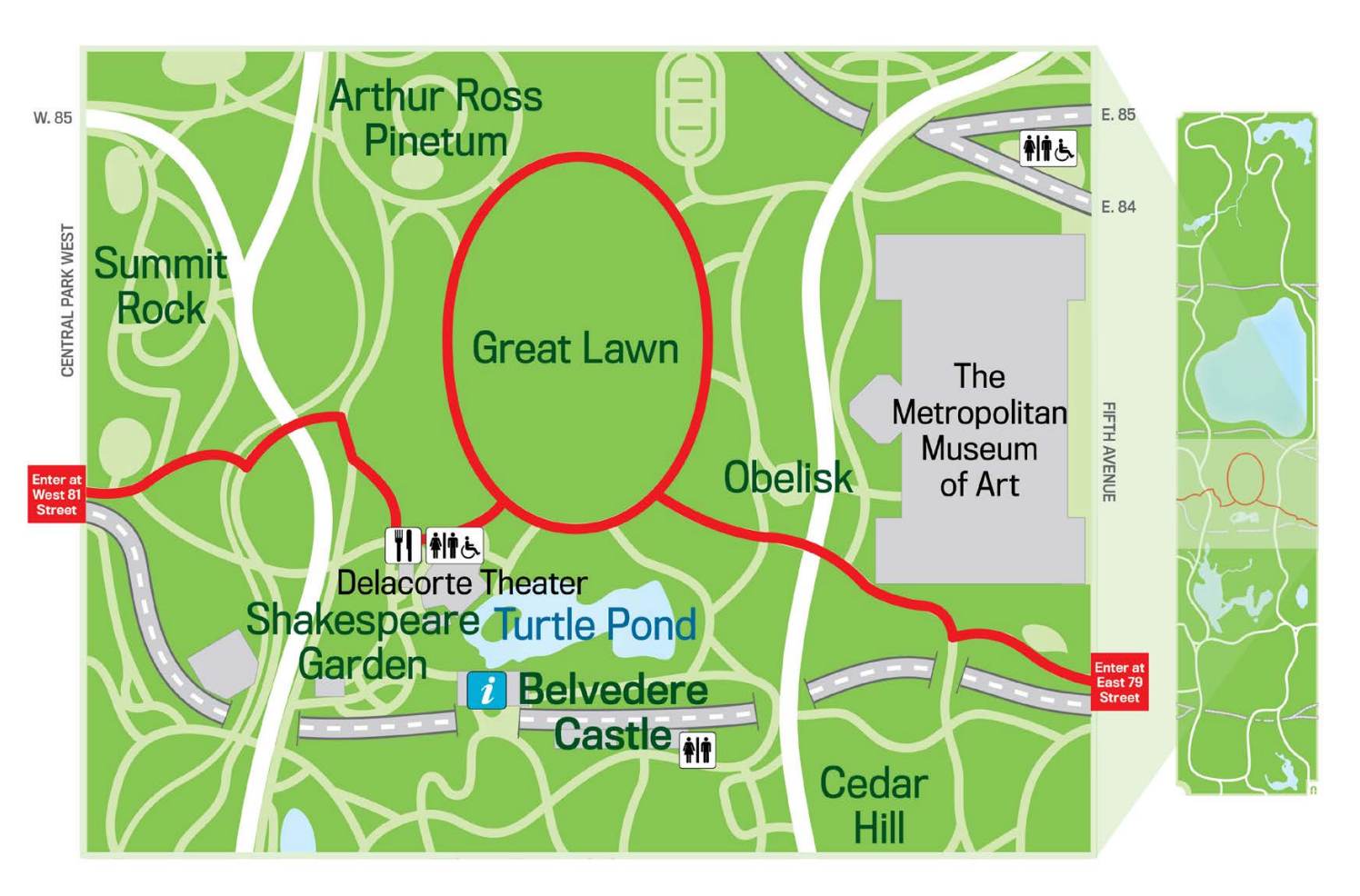
Central Park Map

Why Running in Central Park Is a Bucket-List Experience

Running in Central Park isn’t just exercise — it’s a full sensory experience. You’ll find yourself weaving past the Bethesda Fountain, glancing up at the Manhattan skyline reflected over the Reservoir, and pushing through iconic hills that serious marathoners train on year-round. With an estimated 42 million visitors annually, Central Park is the most frequented urban park in the United States — and for runners, it’s nothing short of a paradise.

The park is open daily from 6:00 AM to 1:00 AM, with the main drives closed to vehicle traffic on weekends (Friday 7 PM through Monday 6 AM) and on weekdays from 10 AM–3 PM and 7–10 PM. That means more room for runners, more peace, and a safer experience overall.


Central Park Running Routes: The Complete Breakdown

1. The Full Loop — 6.1 Miles (~10K): The Crown Jewel of Central Park Running Routes

central park running routes

Distance: 6.1 miles (~9.7–10 km) Surface: Paved Difficulty: Moderate to High

The Full Loop is the quintessential Central Park running route. Circling the entire park along East Drive, West Drive, Center Drive, and Terrace Drive, this is the route that serious runners live for. It overlaps with portions of the TCS New York City Marathon course, making it a genuine bucket-list run for endurance athletes around the globe.

The total elevation gain on the full loop is approximately +300 feet, with two notable climbs to watch for:

  • Cat Hill (near the Loeb Boathouse) — a ~50-foot gain, named for the bronze cat sculpture nearby
  • Harlem Hill (above 102nd Street) — the toughest section, with a ~100-foot gain on the west side

If you want to skip Harlem Hill, you can cut across the 102nd Street Transverse and shave the route down to about 4 miles (6.5 km) — a popular “middle loop” among locals.

Best for: Experienced runners, marathon training, those who want the full New York running experience


2. The Lower Loop — 1.8 miles (~2.9K): Perfect for Running in Central Park as a Beginner

central park running routes

Distance: 1.8 miles (~2.9 km) Surface: Paved Difficulty: Easy to Moderate

The Half Loop follows Central Park Drive south of the 72nd Street Transverse, looping through the most scenic and landmark-dense section of the park. This route passes some of Central Park’s most beloved spots:

  • Bethesda Terrace & Fountain — one of NYC’s most iconic gathering places
  • The Mall & Literary Walk — a grand promenade lined with towering American elm trees
  • Sheep Meadow — a wide-open lawn perfect for a post-run stretch
  • Strawberry Fields — the memorial to John Lennon just off Central Park West

This route is a favorite for before-work or after-work runs, and it’s ideal for tourists who want to combine sightseeing with a workout. Note that this southern section is also where the NYC Marathon finishes — while it looks flat, anyone who has run it at mile 26 will tell you otherwise.

Best for: Beginners, sightseeing runners, quick morning or evening jogs


3. The Reservoir Loop — 1.58 Miles: Scenic Running in Central Park Without the Crowds

central park running routes

Distance: 1.58 miles (~2.54 km) Surface: Crushed gravel (soft) Difficulty: Easy

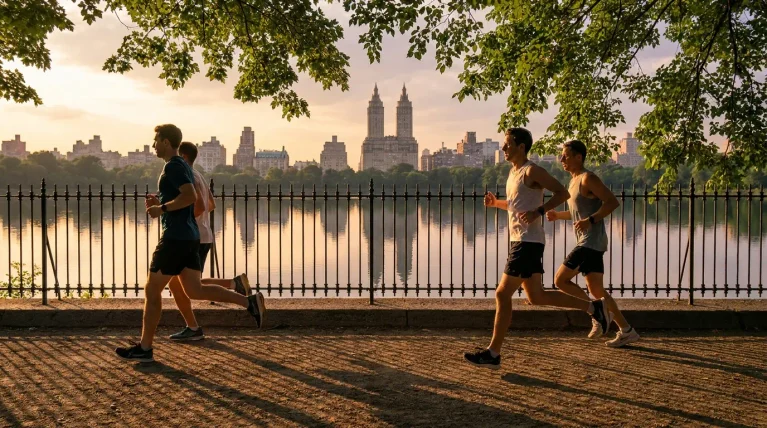
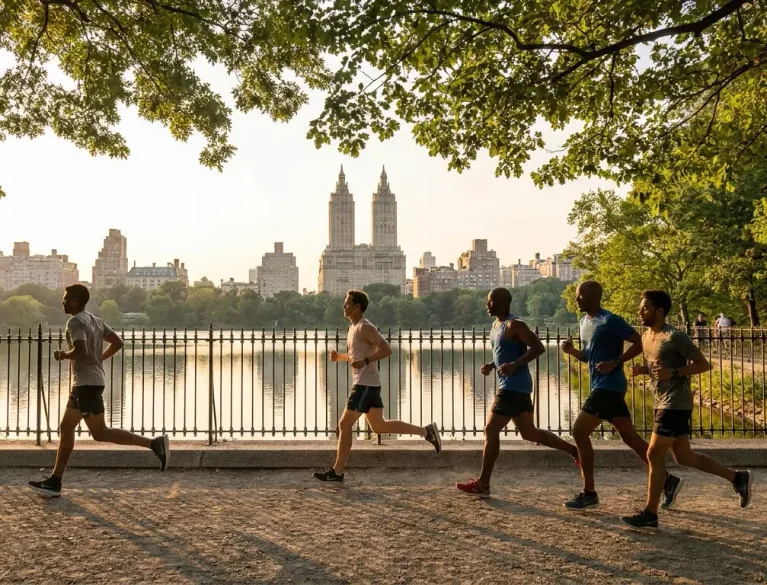
The Jacqueline Kennedy Onassis Reservoir Running Track is one of the most beloved short loops in all of New York City — and for good reason. At 1.58 miles around, this soft-surface crushed gravel path is completely car-free and bike-free, making it a peaceful refuge in the middle of one of the world’s busiest cities.

The track spans from 86th to 96th Street and stretches nearly the full width of the park. Every 100 yards is marked, making it easy to track your distance. The views are spectacular: open water on one side, the Manhattan skyline rising on the other.

Key rules for the Reservoir:

  • Run counterclockwise — this is strictly observed
  • No dogs, strollers, or bikes allowed on the track
  • The most direct access point is the Engineer’s Gate on East 90th Street

The Central Park Conservancy regularly maintains and upgrades the gravel surface, a testament to just how popular this loop is with daily runners.

Best for: Joint-conscious runners, beginners, anyone who wants skyline views with minimal traffic


4. The Bridle Path — 1.6 to 4.2 Miles: Running in Central Park Off the Beaten Track

central park running routes

Distance: 1.66 miles (short loop) or 4.2 miles (full loop) Surface: Dirt / soft soil Difficulty: Easy to Moderate

Once used for horseback riding (and still shared with occasional equestrians — horses have the right of way!), the Bridle Path is now a beloved dirt running trail that winds through the park. The softer surface makes it significantly easier on joints compared to the paved drives.

There are two options:

  • The shorter loop (1.66 miles) circles the Reservoir
  • The full Bridle Path (4.2 miles) extends north to the North Meadow fields, crossing the 102nd Street Transverse before reconnecting near West 93rd

The canopy of trees along the path makes it one of the coolest routes in summer, and the changing foliage makes it particularly beautiful in autumn. If you’re combining the Bridle Path with the main loop, you can build out a longer long-distance training run.

Best for: Injury-prone runners, trail running fans, summer heat escapes


5. North Woods & Harlem Meadow — 3 to 5 Miles: The Hidden Gem of Central Park Running Routes

central park running routes

Distance: 3–5 km (customizable) Surface: Mixed trail and dirt Difficulty: Moderate

Head to the northern reaches of Central Park and you’ll find a completely different world. The North Woods is a secluded, forested area with winding paths that feel worlds away from the bustle of Midtown. Combined with the open expanse of Harlem Meadow, this section of the park offers a trail-running experience unlike anything else in Manhattan.

There are fewer tourists, more birdsong, and a sense of quiet that’s rare in New York. The terrain is varied — expect gentle hills, forested trails, and open meadows — and the seasonal changes here are especially dramatic, from spring wildflowers to brilliant autumn color to winter snow.

Best for: Solitude seekers, trail runners, anyone who wants to escape the crowds


Central Park Running Tips: What You Need to Know Before You Go

Direction & Etiquette

  • The recommended running direction on the main loop is counterclockwise
  • On the Reservoir, counterclockwise is mandatory
  • Stay in the designated running lane on paved roads; the innermost lane is for runners going counterclockwise
  • Watch for cyclists in the bike lane — always look both ways before crossing

Hydration

  • Water fountains are located throughout the park but are not operational in winter
  • In colder months, bring water or cash to buy from vendor carts
  • Summer runners should plan hydration carefully — heat can be intense on exposed sections

Safety

  • Morning runs are the most comfortable and crowded — great for energy and safety
  • Evening runs on the main loop are generally fine as it is well-lit
  • Avoid running alone in the interior trails at night
  • If you get lost, check lamppost numbers: the first two digits indicate the nearest cross street, and the last two digits tell you east (even) or west (odd)

Gear Storage

  • The NYRR RUNCENTER on 57th Street (between 8th and 9th Avenues) offers lockers for runners
  • New York Running Company at Columbus Circle also provides locker facilities

Seasonal Notes

  • Spring and fall are peak seasons — the park is at its most beautiful and the weather is ideal
  • Winter brings icy patches, especially on hills — use caution and consider trail shoes
  • Summer mornings are best; avoid midday heat on exposed paved routes

Best Starting Points for Central Park Running Routes

RouteSuggested Start
Full Loop59th St & 7th Ave (Columbus Circle)
Half Loop59th St & 5th Ave (SE entrance)
Reservoir LoopEngineer’s Gate, East 90th St
Bridle PathWest 90th St entrance or East 90th St
North Woods110th St entrances (north side)

Running in Central Park: The NYC Marathon Connection

For runners with a competitive streak, Central Park holds deep significance in the world of road racing. The park is the finish line of the TCS New York City Marathon, one of the six World Marathon Majors, which draws roughly 50,000 runners every November. The final miles of the race wind through Central Park’s East Drive and onto the famous finish on West Drive near Tavern on the Green.

Training on the Full Loop is one of the best ways to prepare for the marathon’s final miles — and a statue of Fred Lebow, the late founder of the NYC Marathon, stands watch near the Reservoir entrance on East 90th Street as an enduring tribute to the race’s history.


Final Thoughts

Central Park’s running routes are more than a workout — they’re an experience of New York City at its most alive. Whether you’re chasing a personal best on the Full Loop, soaking in skyline views on the Reservoir track, or escaping into the quiet of the North Woods, every run here tells a different story.

Start with the route that matches your fitness level, mix and match loops as you build endurance, and don’t forget to look up from your watch once in a while. New York’s greatest park deserves your full attention.

Happy running — and welcome to the most famous stretch of pavement in the world.


Running Central Park for the first time? Save this guide and download the official Central Park running map from the Central Park Conservancy before you head out.

Related readings

New York Marathon 2026: The Ultimate Guide to Entry, Training & Race Day

Best Budget Upper West Side Hotels for the NYC Marathon: Walk to the Finish, One Subway to the Start