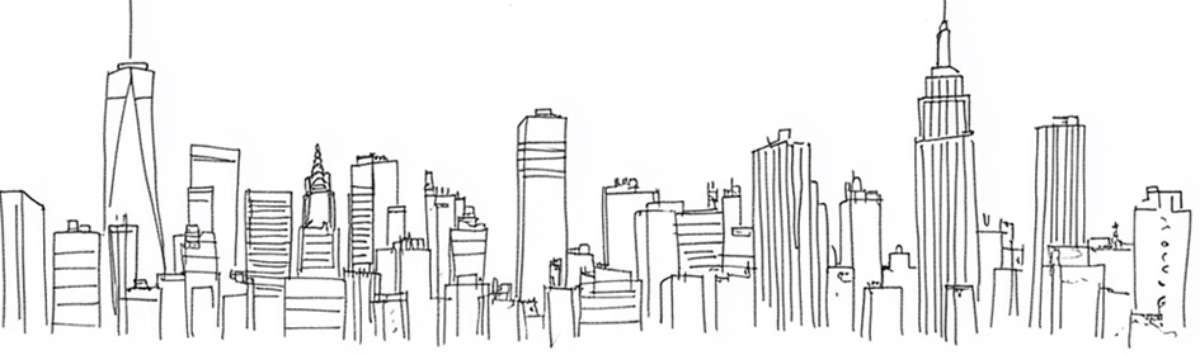
NYC Observation Decks: The Ultimate Guide to the Best Views in New York City

Planning a trip to New York City? Don’t leave without seeing the skyline from above. This ultimate guide compares all five major NYC observation decks — prices, views, insider tips, and which one is right for you.

Introduction: Why NYC Observation Decks Are a Must-Do

Few experiences capture the magic of New York City quite like seeing it from above. Whether you’re a first-time visitor ticking off a bucket list or a returning traveler chasing a new perspective, NYC observation decks deliver a jaw-dropping sense of just how vast, alive, and extraordinary this city really is.

But here’s the thing — there are five major observation decks to choose from, and each one offers something completely different. From the Art Deco grandeur of the Empire State Building to the stomach-dropping glass floor of Edge at Hudson Yards, the best observation deck in NYC for you depends entirely on what kind of experience you’re after.

In this guide, we break down all five — views, prices, insider tips, and the honest pros and cons — so you can make the most of every dollar and every minute spent in the sky.


Quick Comparison: NYC Observation Decks at a Glance

DeckHeightIndoor/OutdoorStarting Price (Adult)Best For
Empire State Building86F / 102FBoth$44Classic NYC, first-timers
Top of the Rock70FOutdoor$40Photography, Central Park views
One World Observatory100–102FIndoor only$32Height, downtown views
Edge at Hudson Yards100FOutdoor$36Thrills, adrenaline
Summit One Vanderbilt91–93FIndoor + glass$39Immersive art experience

Pro tip: Ticket prices fluctuate based on time slot — sunset and weekend evenings are typically the most expensive. Always book online in advance to lock in the best rates.


1. Empire State Building — The Icon of NYC Observation Decks
NYC Observation Decks

Location: 350 5th Ave, New York, NY 10118 Hours: Daily, 8:00 AM – 2:00 AM (last elevator at 1:15 AM) Tickets: 86th floor from $44 | 86th + 102nd combo from $79

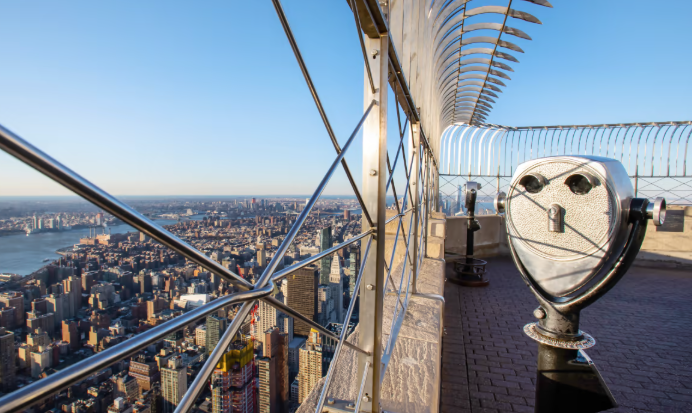
There’s a reason the Empire State Building has stood as one of the world’s most recognizable structures since 1931. This Art Deco masterpiece still holds a unique emotional pull that newer, flashier decks simply can’t replicate. It was the world’s tallest building for nearly 40 years, and stepping onto its 86th-floor open-air terrace remains one of the most iconic moments any visitor to New York can have.

Following a $165 million renovation completed in 2019, the building now features redesigned exhibit spaces, upgraded elevators, and a fully revamped 102nd-floor observatory offering an intimate, enclosed vantage point at 1,250 feet.

What Makes It Special

  • 360-degree open-air views from the 86th floor at 1,050 feet
  • On clear days, you can see up to 120 km across five states: New York, New Jersey, Pennsylvania, Connecticut, and Massachusetts
  • The 102nd-floor enclosed deck adds extra height for those who want to go higher
  • Unbeatable cinematic legacy — Sleepless in Seattle, An Affair to Remember, and countless others

Honest Downsides

  • You cannot photograph the Empire State Building itself from its own deck — you’re standing on it
  • Lines can be long during peak hours, even with pre-booking
  • Pricier than several competitors, especially for the full 102nd-floor combo

Insider Tips

  • Visit early morning (opening at 8 AM) or very late evening to beat crowds
  • Purchase a VIP Express Pass if lines are a concern — it allows you to skip the main queue
  • The building’s spire is lit in different colors throughout the year to mark holidays and events — worth checking in advance if you want a particular look

Book tickets at esbnyc.com →


2. Top of the Rock — The Best NYC Observation Deck for Photography
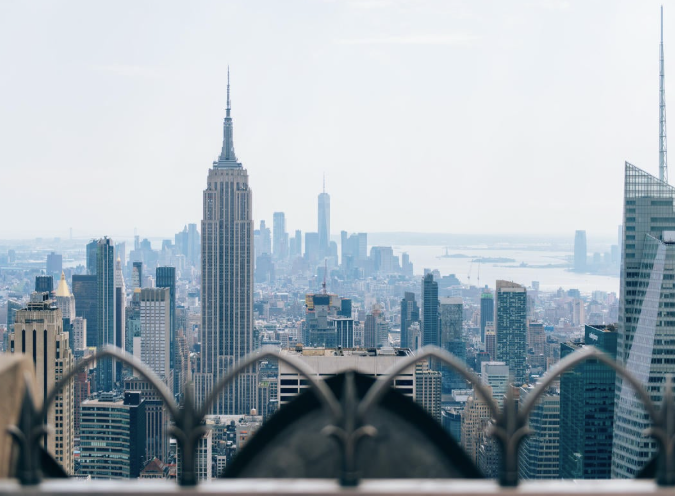
NYC Observation Decks

Location: 30 Rockefeller Plaza, New York, NY 10112 Hours: Daily, 8:00 AM – Midnight (last entry 11:00 PM) Tickets: From $40 | Skylift add-on: +$35

If capturing the perfect New York City skyline photo is your priority, Top of the Rock is the best observation deck in NYC — full stop. Perched on the 67th through 70th floors of Rockefeller Center, this deck offers what no other can: a clear, unobstructed view of the Empire State Building to the south and Central Park sprawling north, all in a single frame.

The open-air 70th-floor rooftop feels genuinely spacious, and the views — especially at golden hour — are breathtaking. In 2024, a new attraction called Skylift was added on the 70th floor, a 360-degree rotating experience that elevates you even further for panoramic sky views.

What Makes It Special

  • The only deck where you can photograph the Empire State Building prominently in the frame
  • Central Park is visible in one direction, Midtown Manhattan in the other — no other deck matches this symmetry
  • Multi-level terraces give you variety: try different floors for different angles
  • Spacious layout makes it ideal for families and those who want room to linger

Honest Downsides

  • The Skylift add-on is an additional $35 on top of admission — factor that into your budget
  • Not the tallest option in the city

Insider Tips

  • Sunset timing is golden — book a slot about 45 minutes before sunset and stay through twilight for two completely different looks
  • Arrive early on weekdays for softer light and thinner crowds
  • The 67th-floor indoor observation area is a great backup if the top deck gets windy

Book tickets at topoftherocknyc.com →


3. One World Observatory — The Highest NYC Observation Deck
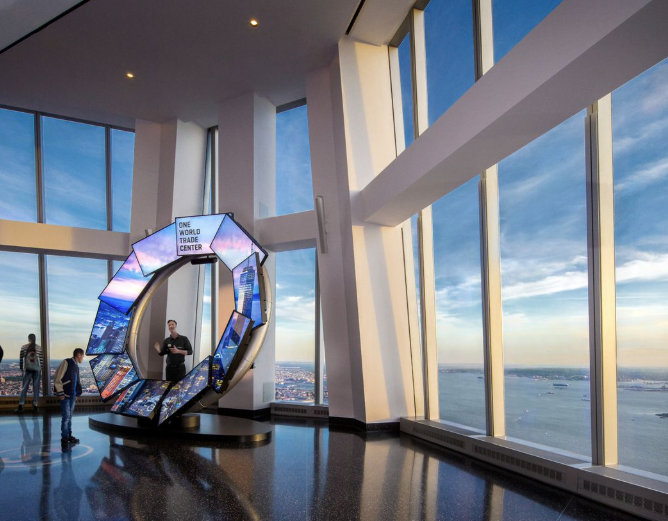
NYC Observation Decks

Location: 117 West St, New York, NY 10007 Hours: Daily, 9:00 AM – 9:00 PM Tickets: From $32 (one of the most affordable options)

Rising 1,776 feet — a height chosen to honor the year of American independence — One World Trade Center is the tallest building in the Western Hemisphere. The observatory occupying floors 100–102 carries a weight and significance that is genuinely unlike any other observation deck in the city.

The journey up is part of the experience. The SkyPod elevators travel at 23 miles per hour, and the walls display a time-lapse of New York’s evolution from the 1600s to the present day during the 47-second ascent. Once at the top, the City Pulse interactive system lets you explore the city’s neighborhoods and culture in real time.

What Makes It Special

  • Unmatched views of Lower Manhattan, the Brooklyn Bridge, New York Harbor, and the Statue of Liberty
  • The 100th-floor Sky Portal — a 14-foot-wide circular disc with a live high-definition video feed showing real-time views of the streets below — creates the sensation of standing directly above the city
  • The most emotionally resonant experience of any deck, given its location on the site of the original World Trade Center
  • The location in the Financial District means this works naturally as part of a downtown day — the 9/11 Memorial and Museum, the Oculus transit hub, and the Brooklyn Bridge are all within easy walking distance
  • Starting price of $32 makes it the most accessible of all five major decks

Honest Downsides

  • Unlike most others, One World Observatory is fully enclosed — there is no outdoor deck, and the views are through floor-to-ceiling windows, which require care with photography to manage reflections
  • Located in Lower Manhattan, which is farther from Midtown tourist hubs

Insider Tips

  • If there’s any chance of rain on your visit day, One World Observatory is one of your best bets — the fully enclosed experience isn’t diminished by weather
  • Pair your visit with the 9/11 Memorial & Museum next door for a deeply meaningful full day in Lower Manhattan
  • Book the first entry slots of the day for the quietest experience

Book tickets at oneworldobservatory.com →


Scrollable

4. Edge at Hudson Yards — The Most Thrilling of All NYC Observation Decks
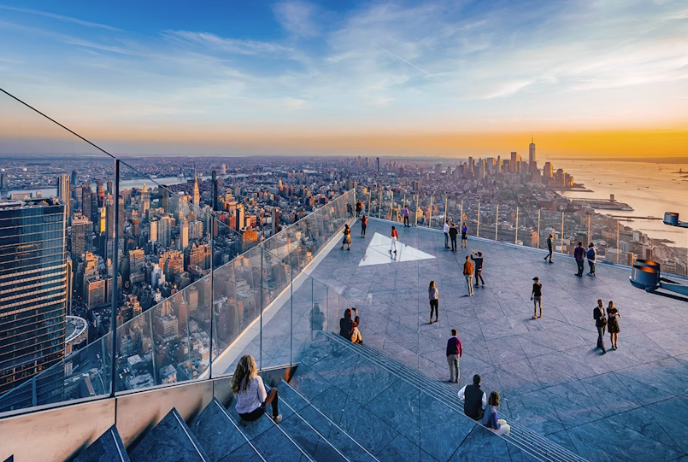
NYC Observation Decks

Location: 30 Hudson Yards, New York, NY 10001 Hours: Daily, 8:00 AM – Midnight Tickets: $36 online | $38 on-site

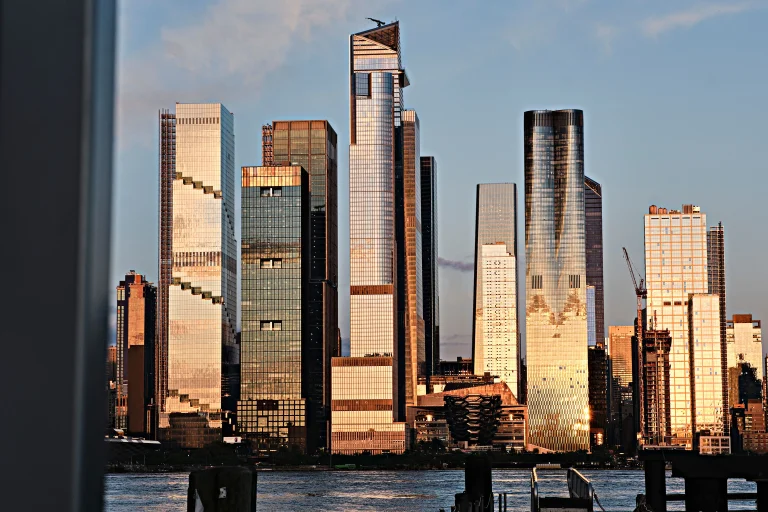
If adrenaline is what you came for, Edge delivers it in full. Located at Hudson Yards on the far west side of Midtown, this 100th-floor outdoor deck is the highest outdoor observation deck in the Western Hemisphere at 1,131 feet. The design is radical: a triangular platform that juts outward from the building, lined with angled glass walls and sections of glass floor that let you stare straight down to the street below.

For the truly fearless, City Climb lets you ascend the outside of the building on a harness-secured track, leaning over the edge at more than 1,200 feet — one of the most extreme experiences available to civilians anywhere in the world (approximately $185, reservation required).

What Makes It Special

  • Glass floor sections and angled walls create a visceral sense of exposure unlike any other deck
  • The triangular jutting design means you feel truly suspended over the city, not just elevated above it
  • Stunning views westward over the Hudson River and New Jersey
  • The Peak restaurant and bar on the 101st floor is a smart money-saving hack (see tip below)

Honest Downsides

  • If you have a fear of heights, this is not the deck to test yourself on
  • Views of classic Midtown landmarks like the Empire State Building are partially side-on
  • The Hudson Yards neighborhood, while impressive, feels less connected to the rest of Manhattan’s iconic areas

Insider Tips ⭐

The Peak Bar Hack: The Peak restaurant and bar on the 101st floor shares the same building and offers partial access to the Edge observation deck. For the price of a cocktail, you can experience the view without purchasing a full admission ticket. It’s a genuinely great deal — book a table at Peak in advance as it’s a popular spot.

Peak restaurant website →

  • On weekdays, Edge is significantly less crowded than the Midtown decks
  • For best photography, position yourself near the glass or railings rather than the center of the deck — the middle gives you other visitors’ heads in every frame

Book tickets at edgenyc.com →


5. Summit One Vanderbilt — The Most Unique Experience on Any NYC Observation Deck
NYC Observation Decks

Location: 45 E 42nd St, New York, NY 10017 Hours: Daily, 9:00 AM – 10:00 PM (last entry 9:00 PM) Tickets: From $39 | New York residents receive a discount

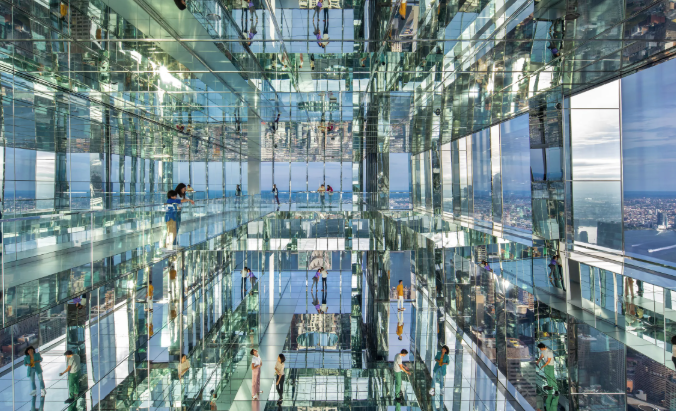
Opened in October 2021 next to Grand Central Terminal, Summit One Vanderbilt is the newest and most unconventional of the city’s major observation decks. Spread across the 91st through 93rd floors of the One Vanderbilt skyscraper, it blurs the line between observation deck and contemporary art installation.

The flagship Transcendence space is a multi-room experience wrapped entirely in mirrors and glass — floor, ceiling, walls — creating a disorienting, dreamlike environment that makes you feel suspended in infinity above the city. The glass-floored Levitation balconies and the Ascent add-on (a glass-enclosed elevator that ascends the building’s exterior) push the concept further.

What Makes It Special

  • Utterly unlike any other observation deck — part sky-high art museum, part thrill ride, part photography studio
  • Superb views of the Empire State Building, the Chrysler Building, and Central Park
  • Perfectly located in Midtown — walkable from Grand Central, Bryant Park, and the Empire State Building
  • A room full of giant silver balloons is interactive and fun, attracting visitors of all ages
  • The built-in bar and restaurant complete the experience

Honest Downsides

  • On extremely sunny days the mirrored surfaces can be blinding — bring sunglasses
  • The Ascent glass elevator add-on has been intermittently closed for maintenance — check availability before booking
  • Not included in most NYC attraction passes, so budget accordingly

Insider Tips

  • Overcast days are ideal — the mirrors and glass interact beautifully with diffused light without the glare
  • If wearing a dress or skirt, the mirrors on the floor make trousers a more comfortable wardrobe choice
  • Book a time slot for mid-morning on a weekday for the most peaceful, photogenic visit

Book tickets at summitov.com →


Which Is the Best Observation Deck in NYC for You?

There’s no single winner — it depends entirely on what you’re looking for:

Your PriorityGo Here
Classic NYC bucket list momentEmpire State Building
Best skyline photographyTop of the Rock
Most affordable + tallest buildingOne World Observatory
Maximum thrillsEdge at Hudson Yards
Unique, immersive art experienceSummit One Vanderbilt
Visiting with kidsSummit One Vanderbilt or Top of the Rock
Bad weather or rain forecastOne World Observatory or Summit One Vanderbilt
Best value for moneyOne World Observatory ($32) or Edge Bar Hack at Peak

Practical Tips for Visiting NYC Observation Decks

Book Online and Book Early

All five major NYC observation decks allow — and strongly recommend — online pre-booking. Prices are dynamic, and popular time slots (especially sunset windows) sell out days in advance. Buying online is almost always cheaper than purchasing on-site.

Time of Day Matters

  • Sunrise / Early morning: Fewest crowds, soft golden light from the east, lowest ticket prices
  • Golden hour (1 hour before sunset): The most magical light, the most popular, and the most expensive — worth it if you can swing it
  • Night: The city sparkles but camera settings become trickier; best for dramatic cityscape shots with a tripod (check each deck’s tripod policy)

Weather Strategy

Weather matters when you’re spending $40–50 on an experience. For outdoor decks (Empire State Building, Top of the Rock, Edge), check the forecast 48 hours out and have a backup plan. For fully enclosed decks, rain or cold is a non-issue.

Photography Tips

  • Face east after sunset for warm reflected light on the Manhattan skyline
  • Use a wide-angle lens or your phone’s ultrawide mode to capture the full panorama
  • Avoid pressing your lens directly against glass (on enclosed decks) to reduce reflections; instead, cup your hands around the lens to block ambient light
  • Arrive at least 10–15 minutes before your target light window

Saving Money

  • The Peak bar hack at Edge is the best-known budget move (cocktail = partial observation access)
  • One World Observatory’s starting price of $32 is significantly cheaper than the competition
  • Check whether your hotel or travel package includes any observation deck credits
  • NYC attraction passes (like the New York Pass or CityPASS) include some — but not all — observation decks; verify current inclusions before purchasing

Final Thoughts

New York City’s skyline is one of the most extraordinary views on the planet, and standing above it — even for an hour — offers a perspective on the city that no street-level experience can replicate. Whether you’re after the timeless romance of the Empire State Building, the perfect photographer’s frame at Top of the Rock, the emotional gravity of One World Observatory, the edge-of-the-world thrill of Edge, or the dreamlike wonder of Summit One Vanderbilt, the city delivers.

If you can only visit one NYC observation deck, make it Top of the Rock for first-timers or Summit One Vanderbilt for something genuinely unforgettable. If your budget allows for two, pair one of those with One World Observatory for the contrast of scale and meaning.

Whichever you choose, go at golden hour at least once. You won’t regret it.


Related posts you might enjoy:

Beyond Starbucks: Best K-Town Dessert Cafes in NYC for Sweet Tooths

Skip the Starbucks line. NYC’s Koreatown on 32nd Street is packed with Korean cafes serving photogenic, not-too-sweet treats that are taking over Instagram — and for good reason. Here’s your slow traveler’s guide to the sweetest stops in K-Town.

    If you’ve walked down 32nd Street in Manhattan lately, you already know something delicious is happening in K-Town. The stretch between Fifth Avenue and Broadway — New York City’s Koreatown — has quietly become one of the most exciting dessert destinations in the entire city. And no, a pumpkin spice latte has nothing to do with it.

    For slow travelers who prefer to linger over a beautifully crafted drink rather than rushing to the next landmark, K-Town dessert cafes in NYC offer exactly the kind of unhurried, sensory experience you’re looking for. Think ribbons of shaved snow piled high in a bowl, mochi waffles with a satisfying chew, and lattes in moody, earthy tones you’ve never seen at a chain coffee shop. Welcome to your new favorite detour.


    Why Korean Desserts Are Taking Over NYC (And It’s Not Just a Trend)

    There’s a reason your Instagram feed has been full of pastel-toned bowls of bingsu and perfectly torched cheesecakes — Korean desserts are genuinely different, and New Yorkers have noticed.

    While classic American desserts tend to lean heavily sweet (think frosted cupcakes or triple-chocolate fudge cake), Korean sweets are built on a philosophy of balance. The phrase you’ll hear again and again at these cafes is “not too sweet” — and it’s a selling point, not an apology. Ingredients like black sesame (heukimja), matcha, red bean, and rice flour create layers of flavor that are complex, satisfying, and somehow lighter than their Western counterparts.

    The Hallyu Wave — the global spread of Korean pop culture through K-dramas, K-pop, and Korean food — has turbocharged interest in Korean cuisine across the US. And in NYC, that cultural current flows straight into Koreatown. From tasting-menu restaurants to casual street-level dessert counters, the Korean dessert scene in Koreatown, Manhattan has exploded in recent years, with each new spot pushing the creative boundaries a little further.

    Seasonal rhythms matter here too. In summer, bingsu (Korean shaved ice) is the undisputed hero — a popular Korean shaved ice dessert served with various toppings and a side of condensed milk to pour over. In cooler months, hoeddeok (sweet stuffed pancakes) and warm ginseng-infused drinks take center stage. This is dessert with intention.


    Your K-Town Dessert Cafe Guide: Must-Visit Spots on 32nd Street

    These are the Korean cafes in Koreatown New York worth rearranging your whole afternoon for.


    🍰 1. Grace Street — The K-Town Institution

    K-Town Dessert Cafes in NYC

    📍 17 W 32nd St, New York, NY 10001

    Website: Gracestreet

    If there’s one cafe that defines the K-Town dessert cafe NYC experience, it’s Grace Street. A one-of-a-kind Korean dessert cafe located in Koreatown, New York, Grace Street serves specialty drinks and handmade desserts — from baristas to shaved ice specialists, it’s a neighborhood community that puts the “grace” in Grace Street.

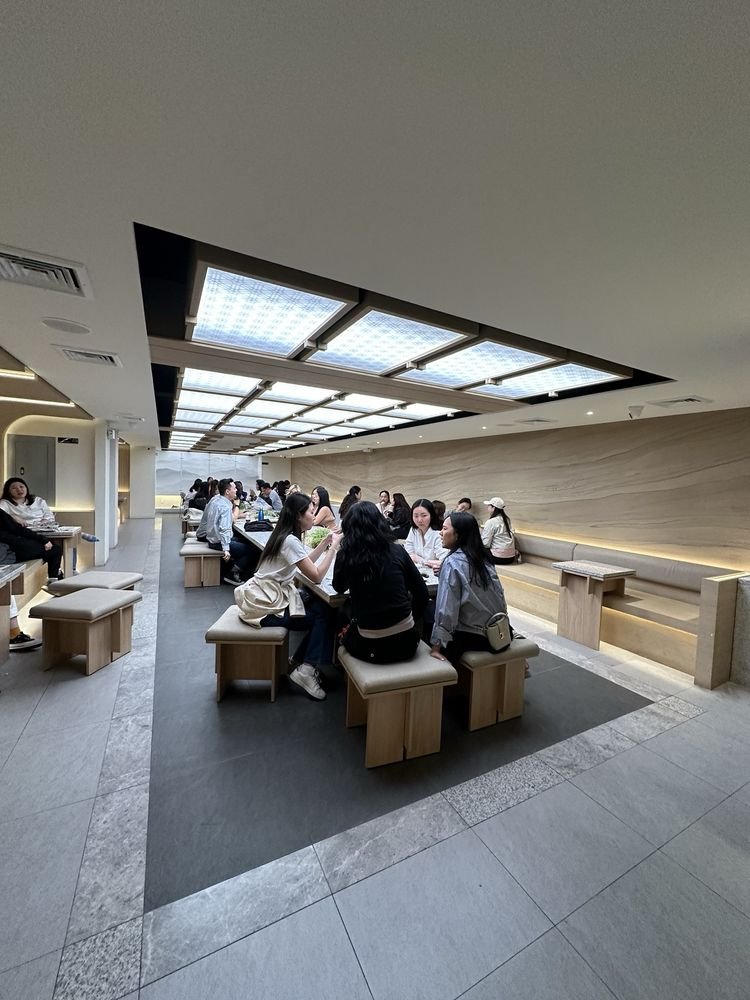
    The space is one of the few in K-Town with genuinely generous seating — a big, open, comfortable dessert and coffee destination that caters to a young and hip crowd. It’s the kind of place where you can pull up a chair, catch up with a friend, and not feel rushed.

    What to Order:

    K-Town Dessert Cafes in NYC
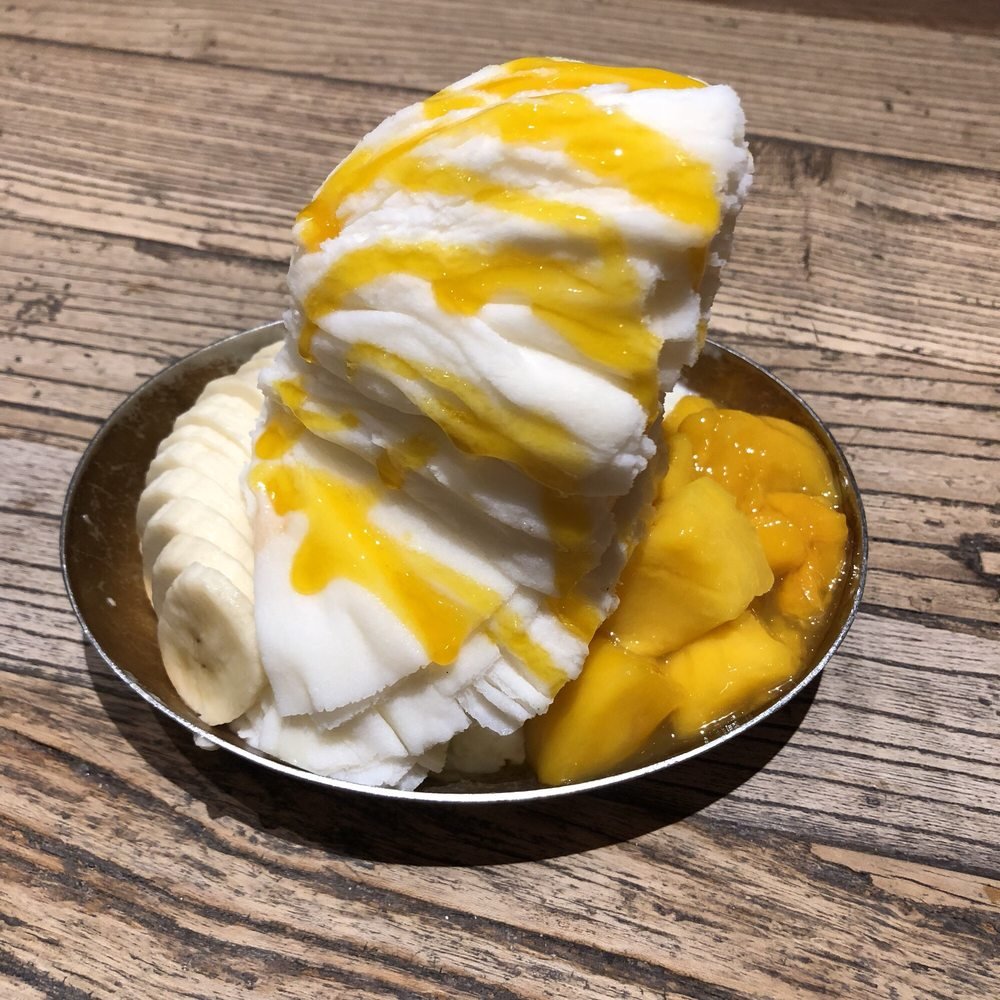
    Mango Madness
    • Shaved Snow — Stacked in elegant ribbon-like layers of creamy ice, this silky tower of sweetness is a long-time fan favorite. Try the green tea or black sesame version.
    • Basque Burnt Cheesecake — Named Flavor of the Year by the New York Times, this cheesecake is cooked at very high heat to create its characteristic burnt exterior and a custard-like interior. The bitterness of the caramelized top and the light creamy center complement each other perfectly — and it’s gluten-free.
    • Mochi Waffle — Crisp on the outside, chewy on the inside. A textural revelation if you’ve never had one.
    • Rose Latte — Delicate, floral, and endlessly photogenic.

    💡 Slow Traveler Tip: Grace Street can get very busy, particularly in the late afternoon and at night. Arrive on a weekday morning for a quieter experience and better odds of snagging a seat by the window.


    🍧 2. Seoul Sweets — Bingsu Done Right

    K-Town Dessert Cafes in NYC

    📍 Koreatown, Manhattan

    Website: https://seoulsweetsnyc.com/

    For the purest, most Instagram-worthy bingsu experience in K-Town, Seoul Sweets delivers. Seoul Sweets in K-Town is the spot for Korean desserts that are light, refreshing, and not overly sweet — which is exactly the point.

    What to Order:

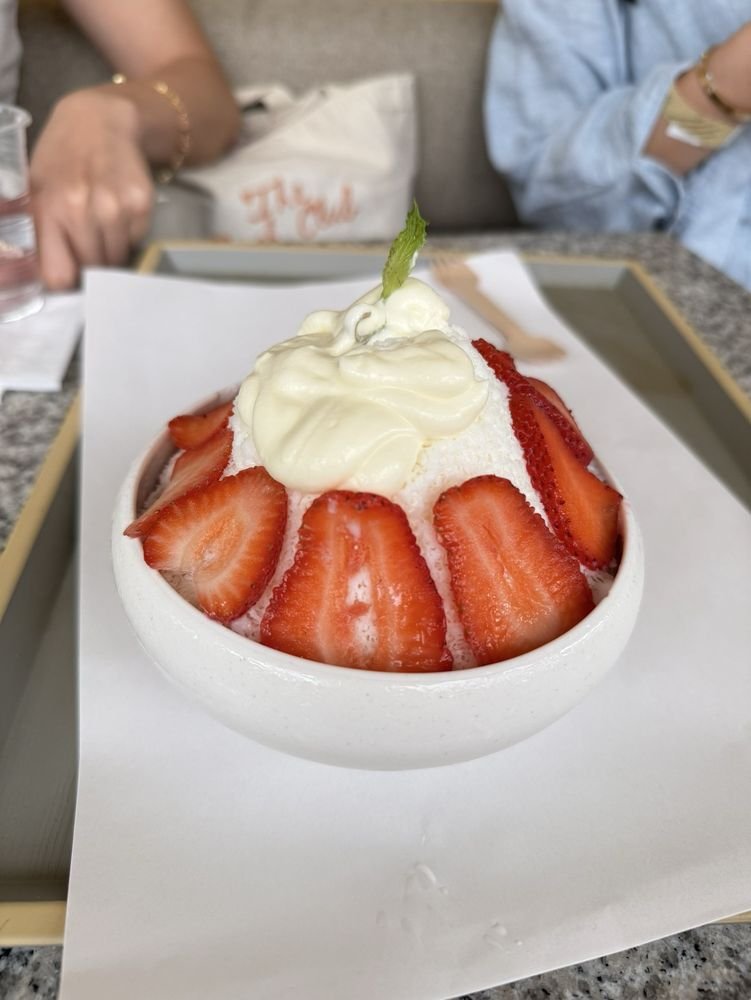
    • Strawberry Bingsu ($18) — Fluffy shaved ice topped with fresh strawberries and strawberry syrup.
    • Mango Bingsu ($18) — Tropical and juicy with plenty of mango chunks. Tastes like summer.

    The ordering process is easy: place your order at the kiosk downstairs, grab your number, and head upstairs to wait. A screen shows when your order is ready.

    💡 Slow Traveler Tip: Bingsu portions are generous. Come with a friend and share — you’ll want to try two flavors anyway.


    ☕ Work-Friendly Cafes in K-Town: The Practical Guide

    One of the great unsung features of the K-Town dessert cafe NYC scene is how well it suits remote workers and laptop-toting travelers. Yelp’s list of the best laptop-friendly cafes with free WiFi near Koreatown includes Grace Street among its top picks — high praise in a neighborhood where foot traffic is constant.

    Here’s what to know before you set up your office for the afternoon:

    Best times to work from K-Town cafes:

    • Weekday mornings (before noon) — The quietest window. Seats are available, the WiFi is fast, and the staff are less rushed.
    • Avoid: Saturday and Sunday afternoons, when the entire neighborhood fills with weekend crowds.

    Practical tips:

    • Most K-Town cafes expect you to order every hour or two if you’re staying a while — it’s an unspoken courtesy.
    • Grace Street’s large open floor plan makes it the most comfortable for longer stays.
    • Bring your own charger. Outlet availability can be hit or miss.
    • For the deepest focus work, consider pairing a K-Town dessert stop with a co-working session at a nearby Midtown coffee shop first, then treating yourself to a shaved snow as a reward.

    🌱 A Note on Dietary Options

    For readers with specific dietary needs, K-Town cafes are increasingly accommodating:

    • Gluten-free: Grace Street’s Basque Burnt Cheesecake is certified gluten-free — a cross between a classic New York cheesecake and a Japanese soufflé cheesecake, crustless and naturally gluten-free.
    • Vegan: Grace Street offers vegan beignets alongside its regular menu.
    • Dairy-light options: Fruit-based bingsu and tea drinks are widely available and naturally lower in dairy.

    Always check with staff on the day, as menus rotate seasonally.


    Final Thoughts: Slow Down and Have the Bingsu

    The best argument for exploring K-Town dessert cafes in NYC isn’t the aesthetics (though those help). It’s the feeling of sitting inside one of these cafes — surrounded by the hum of conversation in three languages, the soft clatter of dessert plates, the gentle sweetness in the air — and realizing that you’ve found one of those rare New York pockets where nobody is in a hurry.

    That’s the slow travel promise: not just seeing a place, but actually tasting it.

    So the next time you’re walking past a Starbucks on 32nd Street, keep walking. The shaved snow is waiting.


    📍 All cafes listed are located in or near Koreatown, Manhattan (32nd Street between 5th Ave and Broadway). Subway: 34th St–Herald Square (B/D/F/M/N/Q/R/W) or 33rd St (6 train).

    Related post you might enjoy:

    6 NYC Independent Bookstores You Need to Visit — From Rare Books to French Literature

    Whether you’re hunting for a rare Oz first edition, a limited-edition photography book, or a quiet corner steeped in French literary culture, New York City’s independent bookstores offer something magical for every reader. Here are six must-visit spots that go far beyond the ordinary.

    If you think you’ve seen everything New York City has to offer, you probably haven’t spent enough time in its bookstores. The best NYC independent bookstores are not just retail spaces — they’re portals to entirely different worlds. Whether you’re a parent looking for the perfect picture book, a collector hunting down a signed first edition, or a Francophile searching for Proust in the original French, New York’s indie bookstore scene delivers in ways that no algorithm ever could.

    From a legendary children’s sanctuary in Chelsea to a hidden photography vault in NoHo, and from a century-old rare book dealer on the Upper East Side to a stunning French-language reading room inside a Gilded Age mansion, these six destinations represent the very best bookstores in New York City. Tuck your MetroCard in your pocket and let’s go.


    1. Books of Wonder — NYC’s Premier Children’s Independent Bookstore

    NYC Independent Bookstores

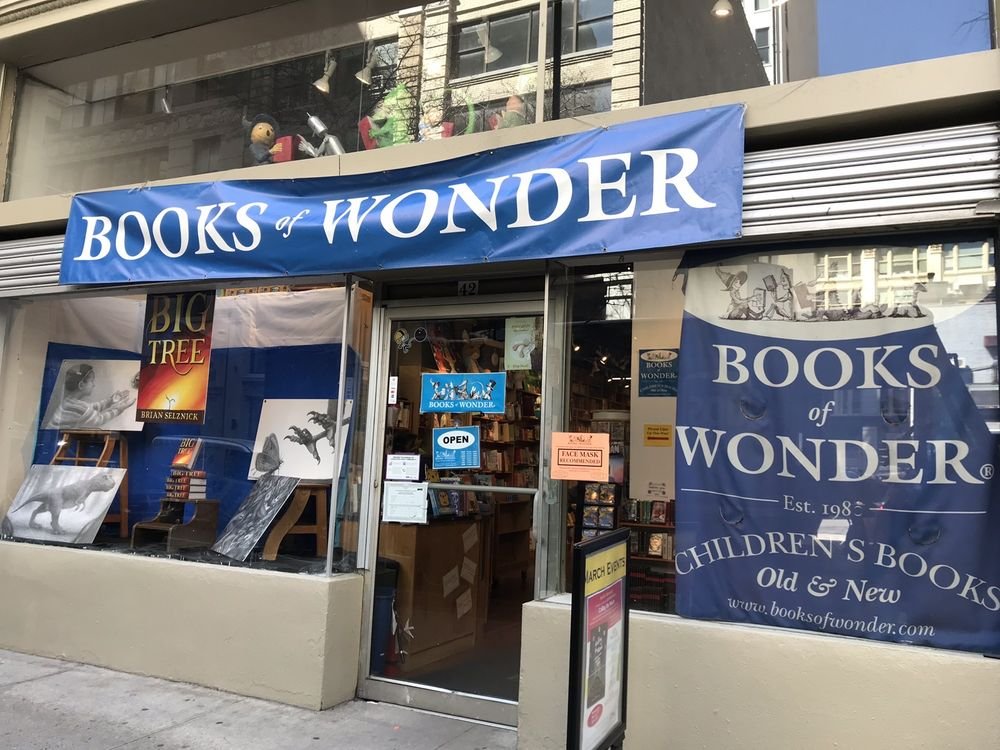
    When it comes to NYC independent bookstores dedicated to children’s literature, nothing quite matches Books of Wonder. Founded in 1980, it holds the proud title of New York City’s largest and oldest independent children’s bookstore, and it has been a beloved institution ever since.

    Books of Wonder is considered the model for the bookstore in the popular film You’ve Got Mail, directed by longtime customer and friend Nora Ephron, who worked to capture the essence of the store for Meg Ryan’s character. That kind of cultural cachet is hard to manufacture — it’s earned over decades of genuine community love.

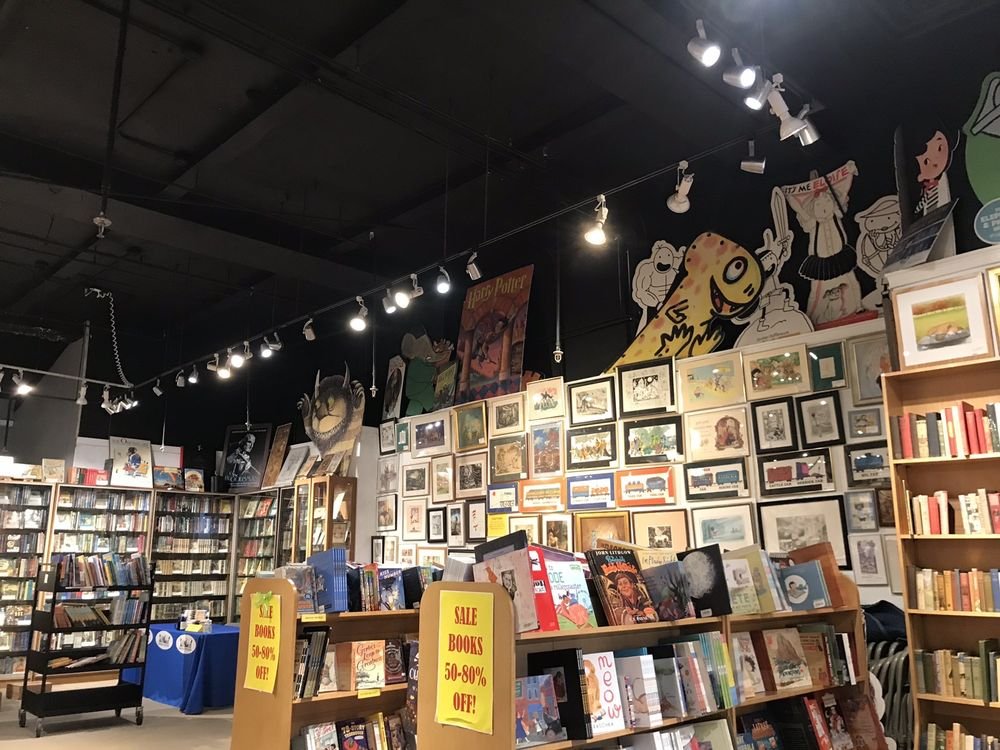
    The store’s departments cover children’s classic and contemporary picture books, board books for infants and toddlers, foreign language children’s books, reference and non-fiction, chapter books and novels for children from beginning readers to teens — and of course, its world-famous Oz section, an entire bookcase devoted to L. Frank Baum’s series and its successors.

    The staff are known for being polite, chatty, and remarkably well-read — visitors frequently compare the experience to having a walking, talking version of Goodreads on hand to help you find your next favorite book. The store also hosts regular author events and storytimes, making it as much a community hub as a retail destination.

    • Address: 42 West 17th Street, New York, NY 10011
    • Hours: Monday–Sunday, 11:00 AM – 7:00 PM
    • Website: booksofwonder.com

    Recommended titles: The Wonderful Wizard of Oz (first edition facsimile), Hot Dog by Doug Salati (Caldecott Award winner), and the latest Newbery and Caldecott selections on their curated display table.


    2. Dashwood Books — The Best NYC Bookstore for Photography and Art

    NYC Independent Bookstores
    source: Dashwood Books

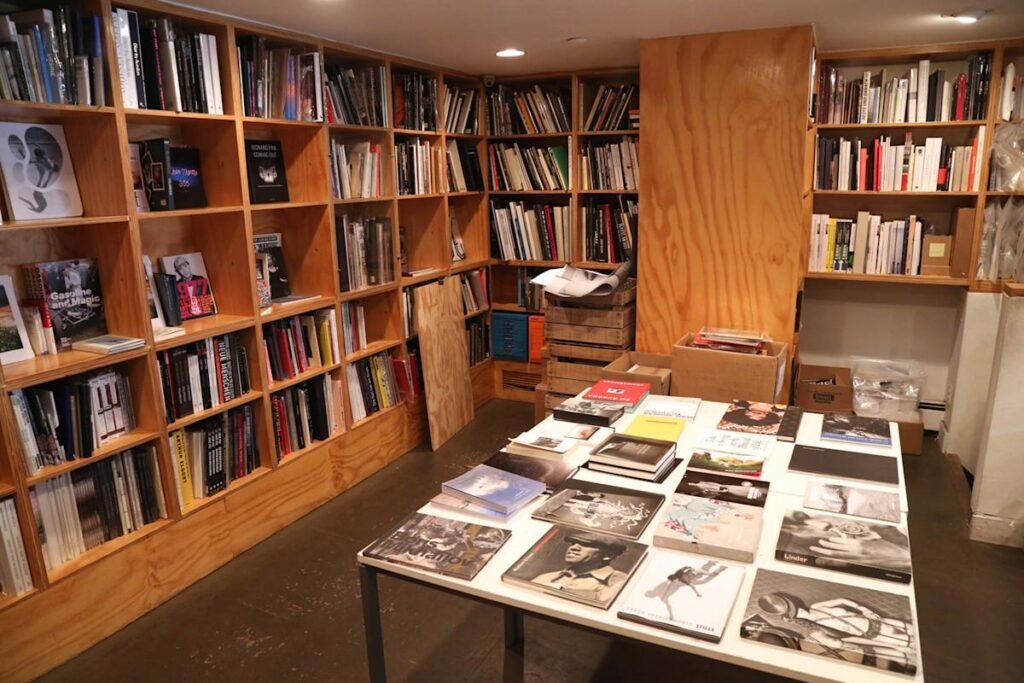
    Tucked below street level at 33 Bond Street in NoHo, Dashwood Books is a rare and wonderful thing: New York City’s only independent bookstore devoted entirely to photography.

    Founded in 2005 and owned by David Strettell, formerly the Cultural Director of Magnum Photos, Dashwood offers a carefully curated inventory from international publishers, importing books that have no or very limited distribution in the United States — including limited press runs from Japan, Germany, and the Netherlands, as well as artists’ self-published books, signed books, and a carefully curated selection of collectible post-war titles.

    The last decade has seen a radical change in the publishing of books on photography, and the photo book has become as respected a medium as the print itself. Dashwood has been at the center of that shift, connecting collectors and curious browsers alike with work they simply couldn’t find anywhere else in the city.

    You enter by heading down a staircase and getting buzzed in — which gives the whole experience a delightfully secretive, members-club feel. Once inside, the walls are lined with large-format volumes that reward slow, careful looking.

    • Address: 33 Bond Street, New York, NY 10012 (basement level)
    • Hours: Tuesday–Sunday, 12:00 PM – 6:00 PM (Closed Mondays)
    • Website: dashwoodbooks.com

    Best for: Photography collectors, fashion art book enthusiasts, and anyone interested in rare or out-of-print visual art publications.


    3. Karma — Where the East Village Art World Comes to Browse

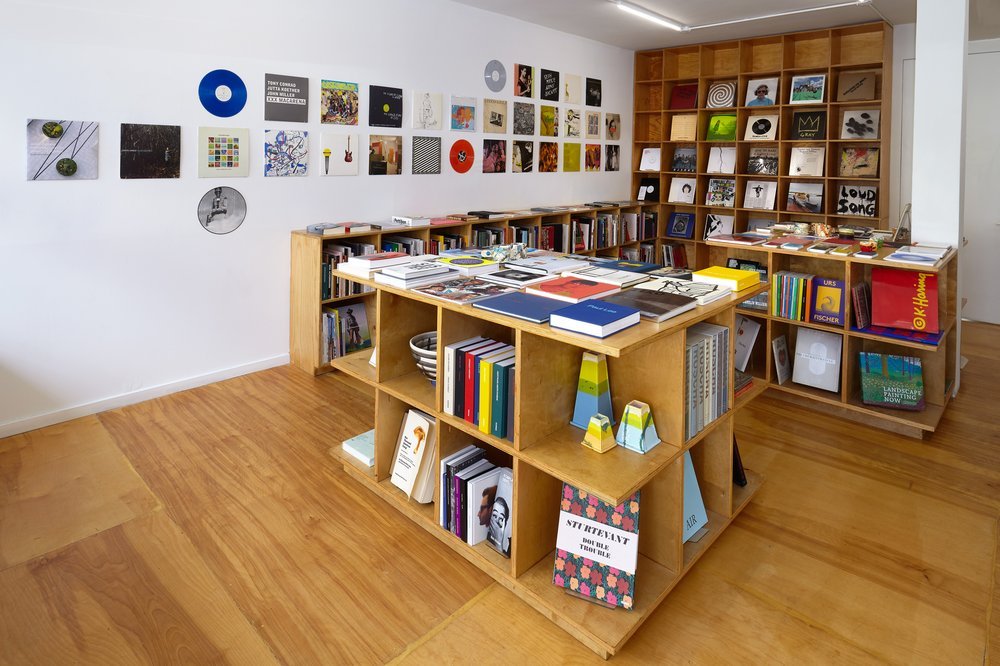
    One of the most talked-about NYC independent bookstores among the art world crowd, Karma sits quietly in the East Village at 136 East 3rd Street. It operates as both a gallery and a bookshop — a combination that gives it a uniquely electric atmosphere. – Currently Temporarily Closed.

    Source: Karma Bookstore

    Karma publishes and stocks titles by a roster of emerging and established artists that its sister gallery represents, including Alex Da Corte and Nicolas Party, and also sells impressive compendiums of art world giants including Richard Prince, Ed Ruscha, and Julian Schnabel.

    The space is deliberately small and carefully edited, which means every book on the shelf has been chosen with intention. You won’t find filler here. What you will find are artist journals, experimental design books, self-published zines, and exhibition catalogues that sit at the intersection of fine art and book-making as a craft in its own right.

    If you’re visiting another gallery in the East Village or Lower East Side, Karma is a natural companion stop — and almost guaranteed to send you home with something you didn’t know you needed.

    • Address: 136 East 3rd Street, New York, NY 10009
    • Website: karmakarma.org

    Best for: Contemporary art lovers, gallery-goers, collectors of artist books and limited-edition publications.


    4. Argosy Book Store — The Best NYC Bookstore for Rare and Antique Books

    NYC Independent Bookstores

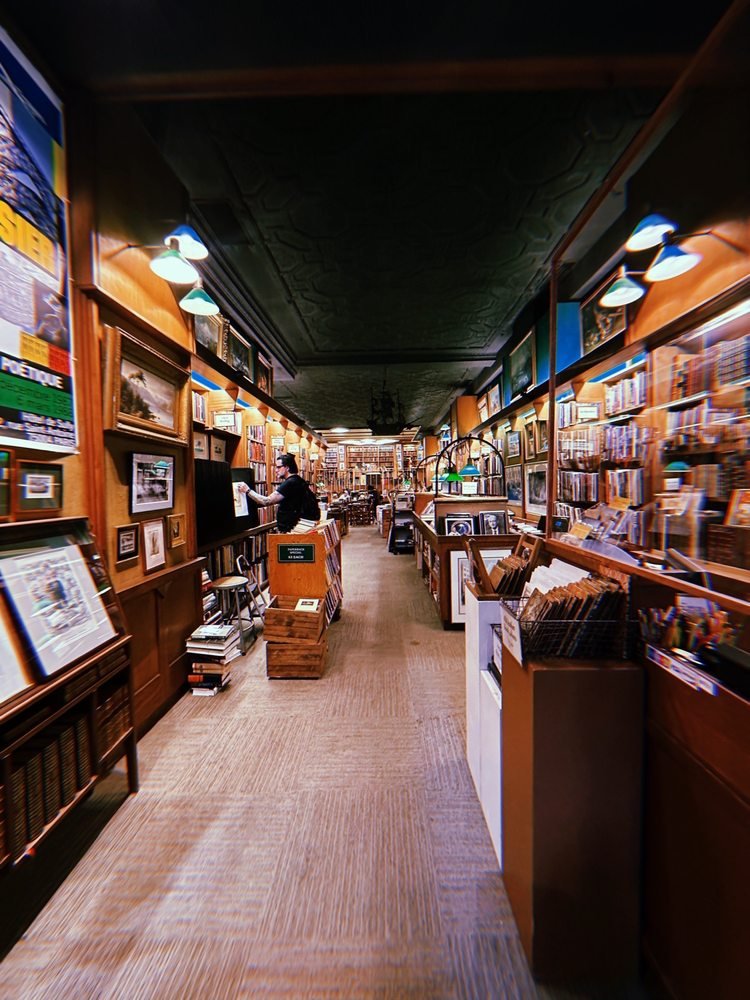
    For anyone with a weakness for first editions, antique maps, and the kind of books that feel like artifacts, Argosy Book Store on East 59th Street is essential. In the back of the store, a dedicated section houses rare and vintage books, prints, and original artwork that span centuries of history.

    Argosy has been a fixture of the New York rare book world since 1925, occupying a six-story townhouse that is as much a destination as what’s inside it. The store carries an extraordinary range of material: literary first editions, Americana, antique maps and prints, autographs, and historical ephemera. The New Yorker cover prints — particularly those by Saul Steinberg — have become collector’s items in their own right.

    This is one of those NYC independent bookstores that rewards multiple visits. The inventory is vast and constantly changing, meaning regulars often stumble upon genuine treasures that weren’t there the week before. Staff are knowledgeable and genuinely passionate about the material, making even a casual browse feel like a private tutorial in the history of the book.

    • Address: 116 East 59th Street, New York, NY 10022
    • Website: argosybooks.com

    Best for: Rare book collectors, history enthusiasts, anyone looking for antique maps, signed first editions, or vintage New Yorker prints.


    5. Albertine Books — The Most Beautiful Bookstore in New York City (and the Best for French Literature)

    When people talk about the best bookstores in New York City as experiences — not just shops — Albertine Books on the Upper East Side belongs at the very top of the list.

    NYC Independent Bookstores

    Opened in 2014, Albertine offers the largest collection in the United States of French-language books and translations from French into English, located in the Payne Whitney House at 972 Fifth Avenue, between 78th and 79th Streets.

    Tucked inside the historic Payne Whitney mansion, Albertine is the only bookshop in New York devoted solely to books in French and English, with more than 14,000 contemporary and classic titles from 30 French-speaking countries.

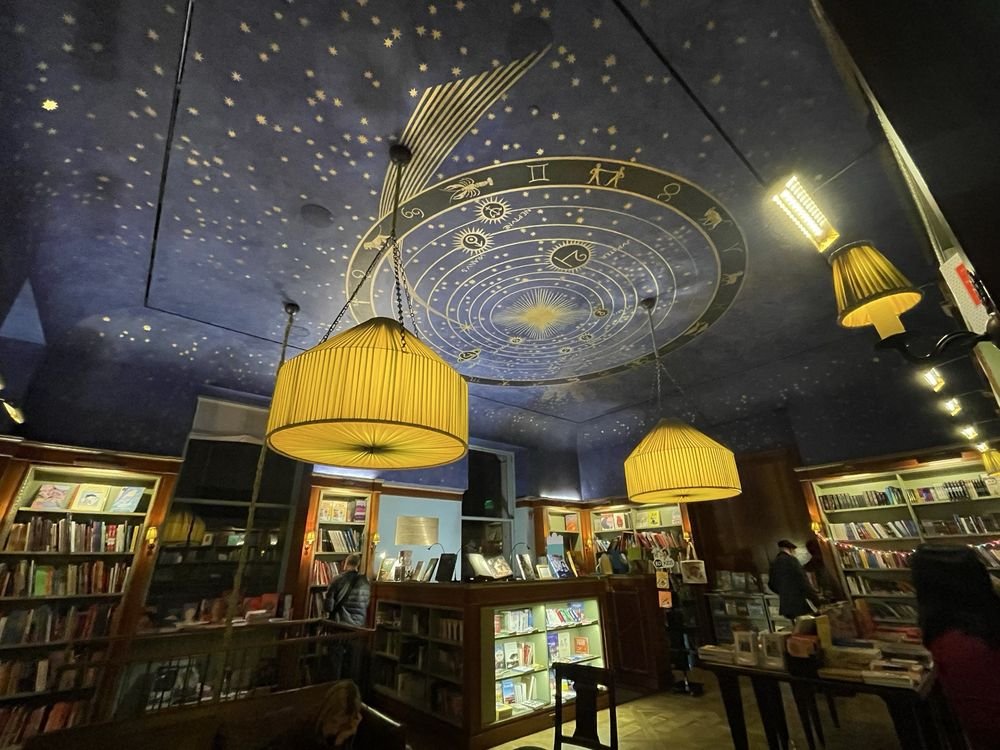
    The bookstore’s second floor features a hand-painted ceiling of celestial scenes — planets and zodiac symbols — that invites visitors into a world where science and poetry blend seamlessly. The space also features busts of famous figures from French and French-American culture, such as Descartes and Benjamin Franklin, and a floor-to-ceiling mirrored Venetian room.

    The bookstore was conceived by Antonin Baudry, former French Cultural Counselor, as a hub for Franco-American intellectual exchange, and named after Marcel Proust’s character. The interior was designed by French designer Jacques Garcia, known for his work on The NoMad Hotel in New York City.

    Beyond the books, Albertine hosts a packed calendar of free public events. Its annual Night of Philosophy gathers dozens of philosophers and other intellectuals for 20-minute presentations that run all night long — one of the most singular cultural events in the city. The store also runs a popular book club and participates in the Museum Mile Festival each summer.

    Visitors can also browse rare books in the back room, adding yet another layer to what is already one of New York’s most extraordinary spaces.

    • Address: 972 Fifth Avenue, New York, NY 10021
    • Hours: Thursday–Tuesday, 10:00 AM – 6:00 PM (Closed Wednesdays)
    • Website: albertine.com

    Recommended titles: Proust’s In Search of Lost Time, works by Simone de Beauvoir and Jean-Paul Sartre, and the latest French fiction in both French and English translation.


    6. Assouline — The Most Luxurious Bookstore Experience in New York City

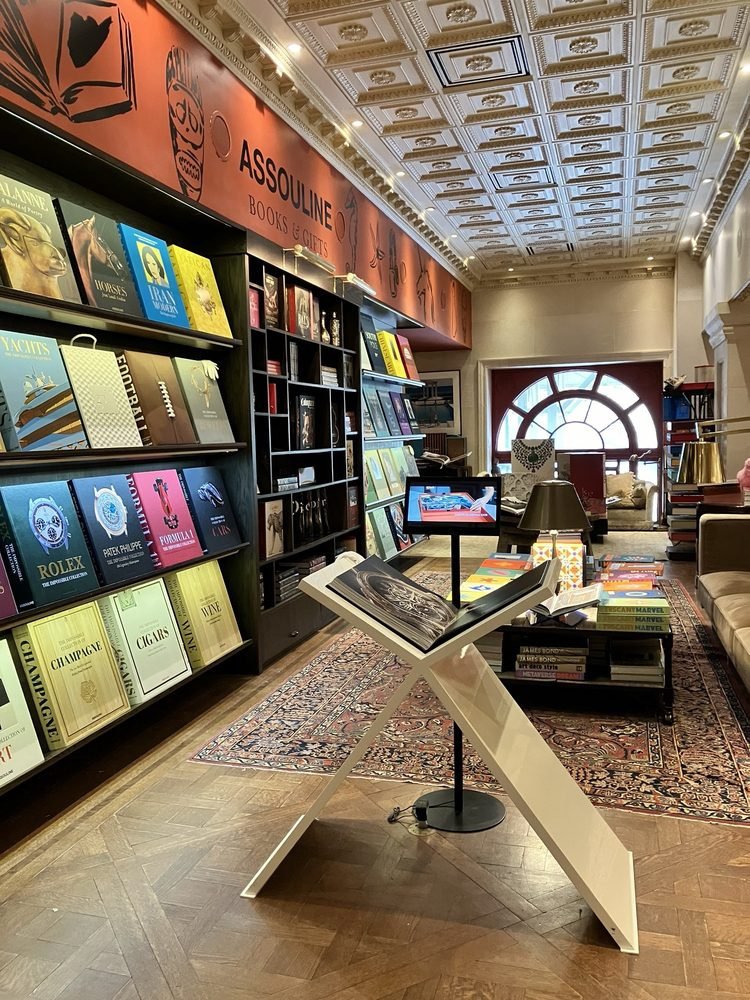
    If the best bookstores in New York City can include spaces that feel more like private clubs or hotel lounges than traditional shops, then Assouline earns its place here without question.

    NYC Independent Bookstores

    The publishing company behind landmark titles on brands including Cartier, Chanel, and Bentley, Assouline runs an outpost at Manhattan’s Plaza Hotel that is a richly-outfitted space for browsing titles on fashion, art, and design. Coffee table books as well as more portable publications line the shelves — and its balcony provides an overhead view of The Plaza’s sparkling lobby.

    Both The Plaza Hotel location and The Mark Hotel location (25 East 77th Street) are open to the public — you don’t need to be a guest to walk in and browse. The books themselves are as much design objects as they are reading material: exceptional production values, premium materials, and subject matter that ranges from the architecture of Rome to the social history of New York City.

    The Plaza location also offers a custom book binding service, making it one of the few bookstores in the city where you can watch skilled artisans at work while you shop.

    • Address (The Plaza): 5th Avenue & Central Park South, New York, NY 10019
    • Address (The Mark): 25 East 77th Street, New York, NY 10075
    • Website: assouline.com

    Recommended titles: New York Chic, Roma Eterna, and New York by New York — all quintessential Assouline volumes that make exceptional gifts.


    NYC Independent Bookstores: A Quick Reference Guide

    BookstoreNeighborhoodSpecialtyBest For
    Books of WonderChelseaChildren’s literatureFamilies, collectors of vintage children’s books
    Dashwood BooksNoHoPhotography art booksArt collectors, photography enthusiasts
    KarmaEast VillageArtist books & gallery publicationsContemporary art lovers
    Argosy Book StoreMidtown EastRare books, antique mapsFirst edition collectors, history buffs
    Albertine BooksUpper East SideFrench literatureFrancophiles, architecture lovers
    AssoulineMidtown / UESLuxury coffee table booksDesign lovers, gift-buyers

    Final Thoughts: Why NYC Independent Bookstores Still Matter

    In a city that moves at the pace of New York, stepping into an independent bookstore is an act of quiet defiance. These six shops — each wildly different in character — share something essential: they were built by people who believe that books deserve more than an algorithm and a one-click purchase.

    The best NYC independent bookstores are also some of the city’s best-kept secrets. None of them advertise aggressively. None of them need to. Their regulars find them, fall in love with them, and keep coming back — and that’s exactly the kind of loyalty that no major retailer can replicate.

    Whether you’re a lifelong New Yorker or visiting for the first time, set aside a few hours to wander through one (or all six) of these bookstores. You’ll leave with something you didn’t expect — and probably a bag heavier than you planned.


    Related posts you might enjoy:

    Inside NYC’s Favorite Korean Grocery Store: The Ultimate H-Mart NYC Survival Guide & Must-Buy K-Food Items

    H-Mart NYC isn’t just a grocery store — it’s a cultural phenomenon. Whether you’re a New York local, a long-term resident, or a slow traveler exploring the city like an insider, this guide covers everything you need to know: the best K-food must-buy items, money-saving shopping tips, and what to eat at the legendary food court.

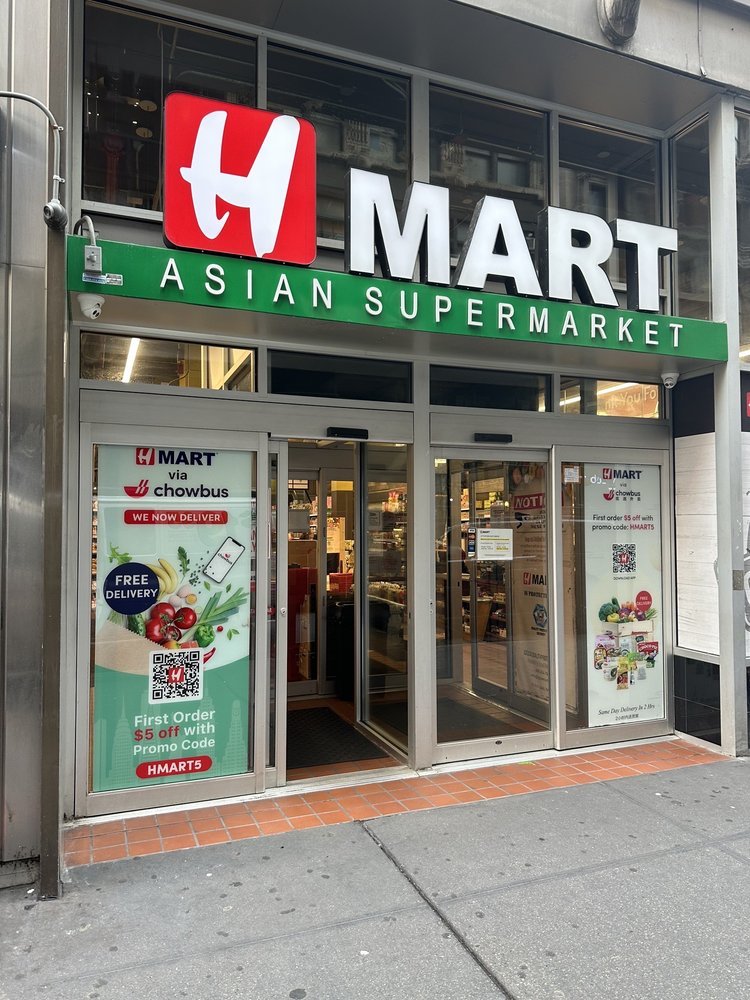
    If you’ve spent any time in New York and stumbled into the buzzing aisles of H-Mart NYC on West 32nd Street in Koreatown, you already know: this place is something else entirely. It’s part grocery store, part cultural time capsule, part TikTok rabbit hole made real. And if you haven’t been yet — consider this your official invitation.

    H-Mart NYC

    New York is notoriously expensive. A sit-down dinner in Midtown can set you back $40 before a single drink. But inside H-Mart NYC, you can fill a basket with restaurant-quality ingredients, ready-to-eat banchan (Korean side dishes), and enough K-food must-buy items to last a week — all without breaking the bank. That’s not a travel hack. That’s just how New Yorkers who know, actually live.

    This guide is for the slow traveler, the curious foodie, the budget-conscious transplant, and anyone who wants to shop and eat the way locals actually do.


    What Is H-Mart — And Why Does All of NYC Seem Obsessed With It?

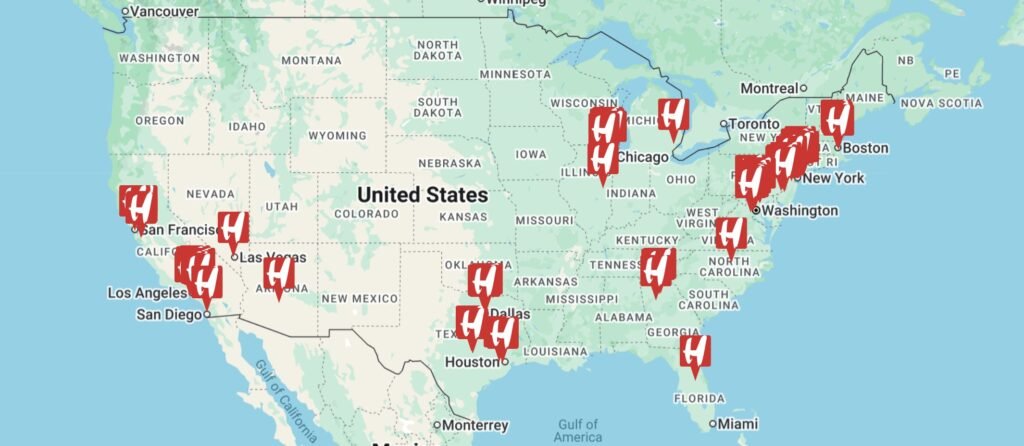
    H-Mart is the largest U.S.-based grocery chain specializing in Asian products, and it traces its roots all the way back to 1982 — when founder Il Yeon Kwon, a South Korean immigrant, opened a small corner grocery store in Woodside, Queens. That humble beginning has since grown into a nationwide institution. As of 2025, there are more than 97 H-Mart stores across the United States.

    H-Mart NYC

    But numbers don’t capture what H-Mart feels like, especially in New York. The flagship Manhattan location at 38 W 32nd St (the heart of Koreatown) has become ground zero for the city’s growing Korean food obsession. Reviewers consistently call it a “super H-Mart” with a huge selection of Asian products — from fresh produce and seafood to frozen goods, candies, snacks, and a prepared foods area with sushi, dumplings, rice bowls, fried chicken, and seaweed salad.

    And then there’s the second location at 210 Amsterdam Avenue on the Upper West Side, which opened to an already-buzzing crowd in May 2024, greeting shoppers with ingredients for staple Korean dishes like japchae and beef bulgogi, as well as pre-made classics like kimchi, kimbap, and tteokbokki.

    H-Mart is no longer a niche ethnic grocery. It’s a legitimate New York institution.


    H-Mart NYC and the Rise of K-Food Culture

    To understand why H-Mart NYC is packed every single day, you need to understand the bigger cultural wave it’s riding.

    A 2024 report from the Korea Agro-Fisheries & Food Trade Corporation noted a 30% increase in Korean restaurant openings in New York City since 2020. Delivery platforms like DoorDash reported a 25% spike in Korean food orders during lunch hours compared to two years prior. Korean cuisine is no longer a trend — it’s woven into the fabric of how New Yorkers eat.

    H-Mart NYC

    And H-Mart sits right at the center of this shift. Fueled by K-pop, K-drama, and a generation of food creators on TikTok, Korean ingredients and snacks have crossed over from niche to mainstream. South Korea’s food exports hit a record $13.6 billion in 2025, and many of those products — Bibigo dumplings, Buldak ramen, gochujang — are now stocked at H-Mart locations across NYC.

    The store doesn’t just sell food. It sells a way of eating.


    H-Mart NYC K-Food Must-Buy Items: Your Complete Shopping List

    Whether it’s your first visit or your fiftieth, here are the K-food must-buy items that New York insiders — and now the entire internet — swear by.

    🍱 1. Frozen Kimbap (The One That Started a Nationwide Craze)

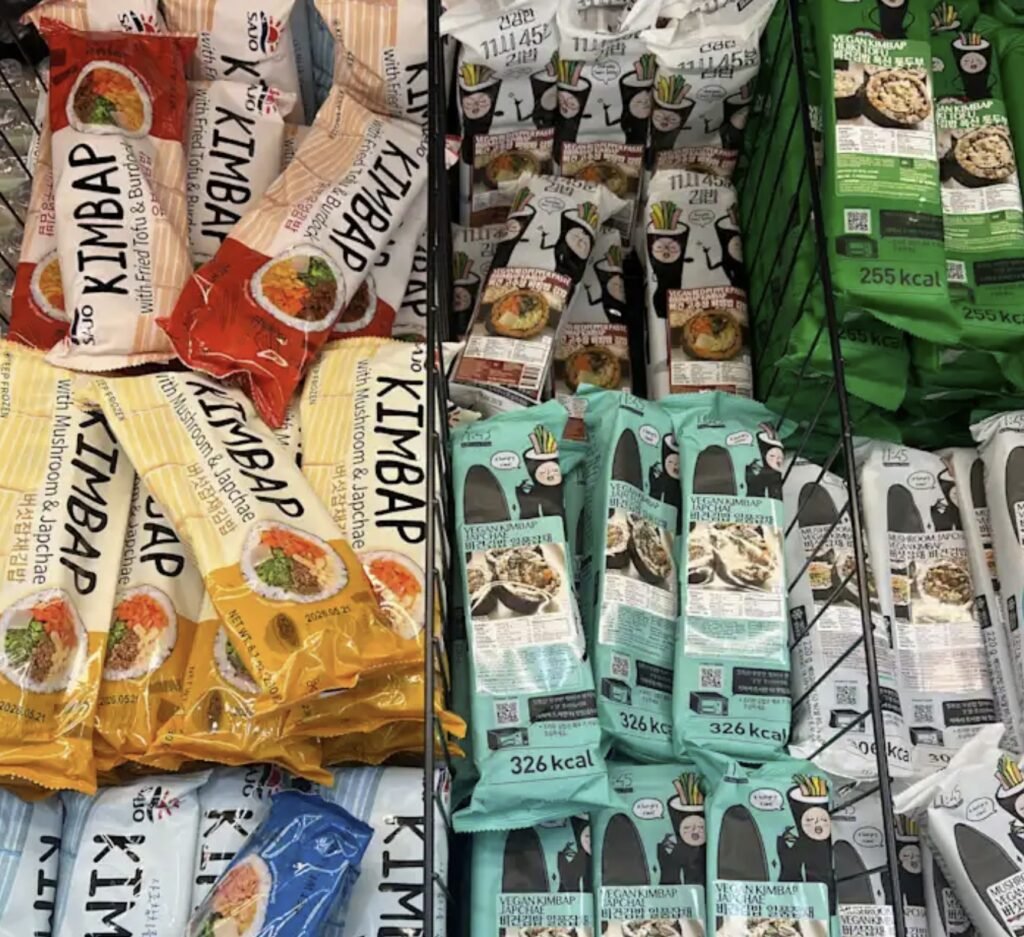
    If you’ve been on TikTok in the last two years, you’ve seen it. The frozen kimbap moment began when South Korean food startup Allgot Co. placed frozen kimbap on Trader Joe’s shelves, and it sold out within weeks — a Korean-American food creator’s TikTok review of the product garnered over 11 million views, causing a nationwide shortage.

    The spillover effect? Massive traffic to H-Mart. Marketing experts noted it was “great news for a more authentic Korean experience through a Korean grocer like H-Mart to really benefit off of something that Trader Joe’s did for them.”

    H-Mart NYC carries multiple varieties — spicy squid, vegetable, fried tofu and burdock, and kimchi tuna mayo. Just snip a corner, microwave for 2–3 minutes, and you have a meal for under $5. It’s the ultimate NYC grab-and-go lunch.

    Pro Tip: Stock up when you see them. Flavors rotate and popular varieties sell out fast, especially on weekends.


    🥟 2. Bibigo Mandu (Dumplings) and Ready Rice (Hatban)

    Bibigo is the K-food brand that’s gone truly global — CJ CheilJedang’s Bibigo brand is now available in over 30 countries, and Harvard Business School added a CJ CheilJedang case study to its curriculum in 2024, examining how Bibigo built global distribution from a Korean base.

    At H-Mart NYC, you’ll find the full Bibigo lineup: pork and vegetable mandu, kimchi mandu, beef bulgogi dumplings, and more. Pan-fry them in 10 minutes and you have a dinner that rivals anything in a sit-down restaurant — for a fraction of the price.

    Pair with Hatban (햇반), Korea’s iconic microwavable cooked rice. 90 seconds in the microwave, and you have perfectly cooked white, brown, or multi-grain rice. NYC apartments with tiny kitchens were practically made for this product.


    🍜 3. Instant Ramen (Far Beyond Shin Ramyun)

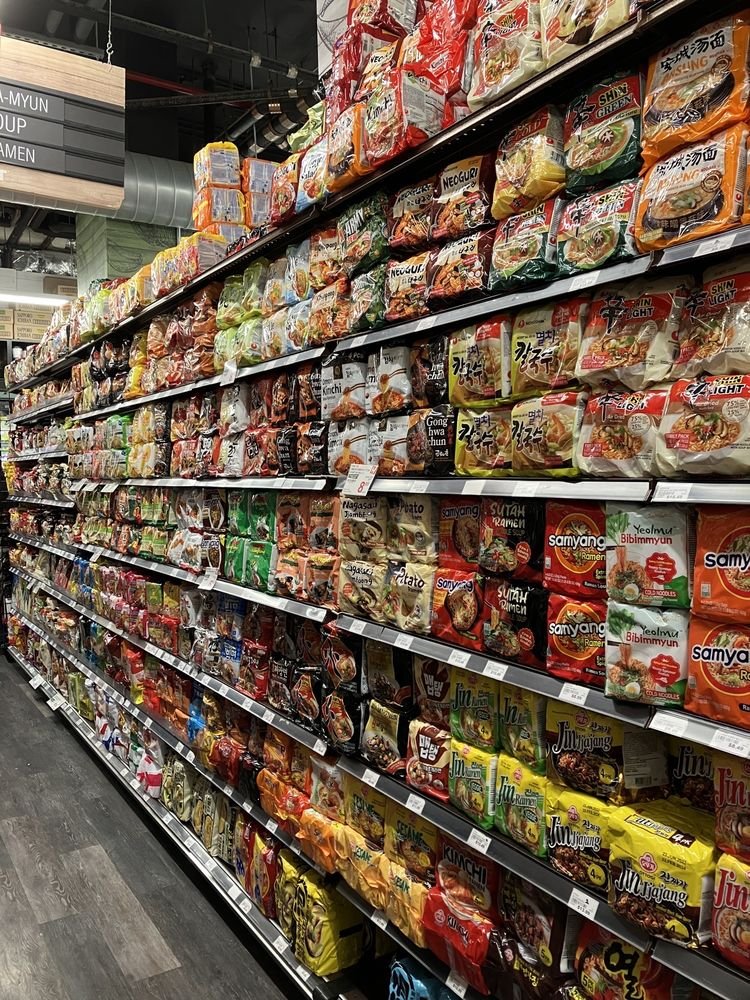
    H-Mart is the perfect one-stop shop to grab instant ramen — everything from the spicy Korean brands with carbonara and kimchi flavors to the classic Japanese brands like Nissin and Maruchan, alongside extra ingredients to level up your bowl.

    The classics are Shin Ramyun (신라면) and Buldak (불닭볶음면), but don’t sleep on the newer flavors: Carbo Buldak, Rose Tteokbokki Ramen, and Jjamppong (seafood spicy noodles). Budget-friendly, deeply satisfying, and endlessly customizable.


    🧂 4. Banchan Corner (The Small-Kitchen Lifesaver)

    This is the section that makes H-Mart truly special for NYC residents.

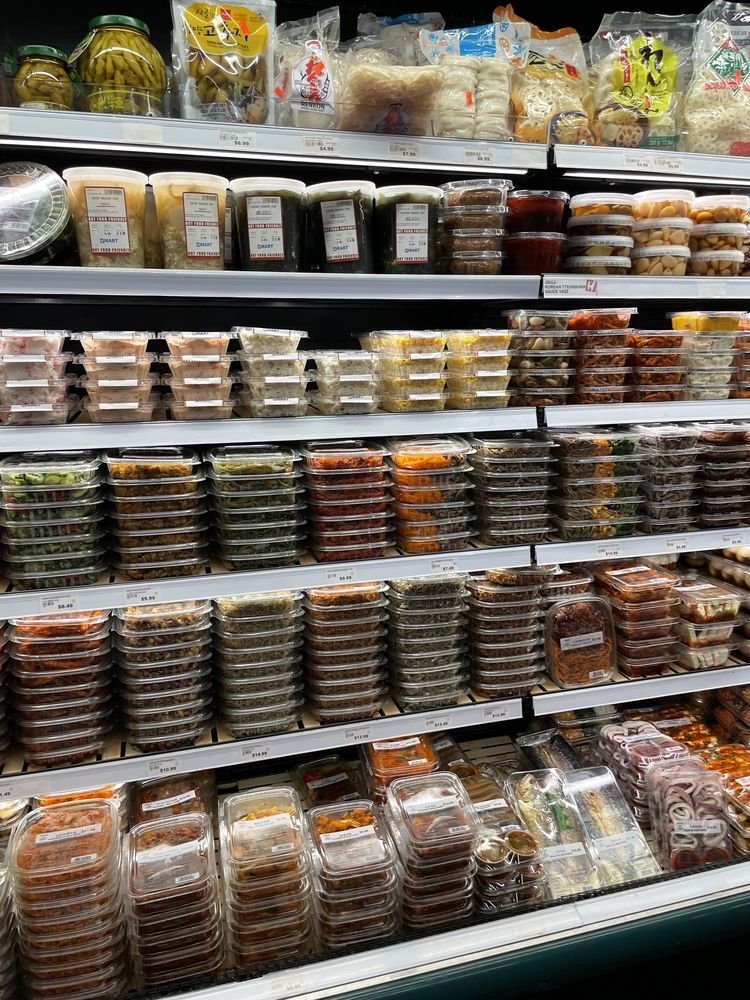
    The banchan (반찬) counter stocks ready-to-eat Korean side dishes: kimchi, spinach namul, japchae, fish cake (eomuk), kongjorim (braised black beans), and marinated meats like bulgogi and jeyuk (spicy pork). For anyone living in a Manhattan studio with a two-burner stove, this is a revelation.

    Scoop a few containers, grab your Hatban, and you have a proper Korean meal — assembled in minutes. It’s exactly the kind of slow, intentional eating that makes living in a fast city feel manageable.


    🍟 5. K-Snacks: The Items People Buy by the Case

    Walk the snack aisle at H-Mart NYC and you’ll understand immediately why locals come back weekly.

    The K-food must-buy items in this category include:

    • Turtle Chips (꼬북칩) — a layered, crunchy corn snack in flavors like sweet corn, butter, and honey butter. These disappear fast.
    • Milkis — Korea’s beloved milk-and-soda carbonated drink, often described as a creamy, sweet alternative to soda. Non-Koreans discover it and never go back.
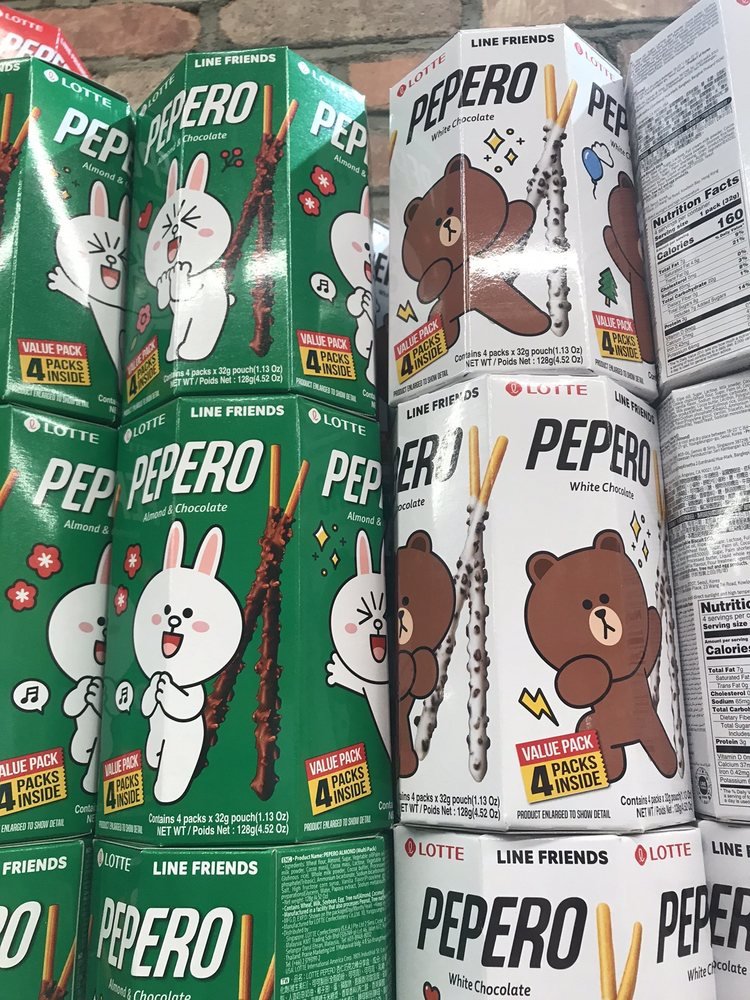
    • Pepero — chocolate-dipped biscuit sticks, perfect as a travel gift or desk snack.
    • Calbee Shrimp Chips — H-Mart is filled to the brim with Asian snacks, and shrimp chips are a standout: light, airy, and delivering a satisfying crunch.
    • **Korean Seaweed Snack Packs (김) ** — roasted, lightly salted, and dangerously addictive. These are the ones New Yorkers buy by the multi-pack.

    Insider Move: The snack section near the register often has discounted multipacks. Stock up for your pantry or grab a few as souvenirs — they’re far better than anything from an airport gift shop.


    🫙 6. Pantry Essentials: The Korean Kitchen Foundation

    If you plan to cook even a few Korean recipes during your time in NYC, these are the H-Mart NYC pantry staples worth picking up:

    • Roasted sesame oil — a finishing oil with a deep, nutty flavor, essential for stir-fries, noodle bowls, and marinades.
    • Gochugaru — the iconic Korean red chili powder, the backbone of kimchi, stews, and marinades.
    • Gochujang — a fermented red chili paste with a deep, complex heat. One tub lasts months.
    • Doenjang — Korean fermented soybean paste. Think of it as a more robust, umami-forward miso.
    • Soy sauce (Jin Ganjang) — the aged, Korean-style soy sauce is noticeably different from standard soy sauce. Once you try it, you’ll buy it every time.

    How to Save Money Shopping at H-Mart NYC: Insider Tips

    New York is an expensive city, but H-Mart is one of the few places where shopping smart genuinely pays off. Here’s how to maximize every visit.

    ✅ Check the Weekly Sale Flyer Before You Go

    H-Mart runs rotating weekly specials — often deeply discounted on proteins, produce, and snack multipacks. Check hmart.com or follow @hmartnyc on Instagram before heading out. The savings on items like marinated short ribs (galbi) or whole fish can be significant.

    ✅ Visit on Weekday Mornings

    This is the single best tip for H-Mart NYC shoppers. Weekend afternoons are crowded, and the ready-to-eat (grab-and-go) banchan and prepared foods section gets picked over quickly. Weekday mornings — especially Tuesday through Thursday — offer the freshest selection, shorter lines, and a more relaxed experience.

    ✅ Don’t Overlook the Produce Section

    H-Mart has some of the best produce for a grocery chain in the United States, sourcing from the country of origin while maintaining high quality control and a quick turnover rate. The produce section is also a haven for items harder to find in standard American grocery stores — jackfruit, bok choy, shiso leaf, persimmons.

    Asian greens, fresh tofu, and daikon radish are almost always cheaper here than at Whole Foods or comparable NYC grocers.

    ✅ Sign Up for H-Mart Rewards

    The rewards program may not be flashy, but it accumulates discounts over time — especially if you’re a regular shopper. It’s worth the two-minute signup at the register.


    The H-Mart NYC Food Hall: Eat Before (or After) You Shop

    The H-Mart NYC Koreatown location isn’t just a grocery store — it’s a full experience, especially once you head upstairs.

    The Ktown H-Mart now features a 2nd floor food court that includes a Bibimbap bar where you can customize your own rice bowls with proteins like bulgogi, spicy pork, teriyaki chicken, or grilled salmon, along with a variety of toppings and sauces. Bowls start around $10.99 — a genuinely fair price for a filling, customizable meal in Manhattan.

    Beyond the bibimbap bar, the food court offers:

    • Tteokbokki — spicy rice cakes, served for around $5. They have a kick.
    • Soups and stews — including doenjang jjigae and kimchi jjigae.
    • Korean fried chicken — crispy, saucy, and deeply satisfying.
    • A sushi station — freshly rolled, reasonably priced for a quick lunch.

    And don’t miss the bakery section, where you’ll find Korean-style breads: soft milk bread (soboro), red bean buns (danpatppang), and cream-filled pastries from brands like Paris Baguette or Tous Les Jours. Grab one with a coffee after your shop, find a seat upstairs, and let yourself settle into one of those rare unhurried moments that New York occasionally allows.


    H-Mart NYC: A Cultural Phenomenon, Not Just a Store

    It’s worth pausing to acknowledge what H-Mart actually represents in the context of New York City.

    For many Asian Americans, H-Mart has stood not only as a gold standard for Asian supermarkets but as a cultural hub for finding food, ingredients, and cookware that connect people with their heritage. It’s the place where first-generation families shop for the ingredients they grew up with, where second-generation kids bring their non-Korean friends for the first time, and where curious New Yorkers discover that Korean food is far more than just Korean BBQ.

    The frozen kimbap craze, the Bibigo takeover of mainstream supermarkets, the line of non-Korean New Yorkers debating which ramen brand is superior in the instant noodle aisle — this is what quiet globalization looks like: Korean food showing up in freezer aisles, lunchboxes, and weeknight meal plans, becoming normal grocery-store food for a much wider public.

    H-Mart NYC is where that shift is most visible, most alive, and most delicious.


    NYC Souvenir Idea: Best Korean Snacks to Bring Home

    Heading back after a trip to New York? Skip the I ♥ NY magnets. Here are the K-food must-buy items that make genuinely great gifts: Snack Why It Travels Well Turtle Chips (꼬북칩) Sealed bag, unique flavor, universally loved Pepero Box Classic gift in Korea, surprisingly unfamiliar abroad Seaweed Snack Multi-Pack Lightweight, healthy, highly giftable Milkis (canned) Novelty drink that’s easy to pack Gochujang Tube Airline-safe if under 100ml, genuinely useful in any kitchen Buldak Ramen (set) The international “dare” snack that everyone wants to try


    H-Mart NYC: Key Information

    Detail Info Koreatown Location 38 W 32nd St, New York, NY 10001 Koreatown Hours Mon–Sun: 8:00 AM – 11:00 PM Upper West Side Location 210 Amsterdam Ave (between 69th & 70th St) Nearest Subway (K-Town) 2-min walk from 34th St – Herald Sq Station Online/Delivery hmartdelivery.com Weekly Sales hmart.com


    Final Thoughts: Shopping Like a New Yorker

    The beauty of H-Mart NYC — and the reason it fits so perfectly into the slow travel philosophy — is that it asks you to slow down. To read the labels. To ask the person next to you what they do with that cut of meat. To try the sample at the banchan counter and decide you need three containers instead of one.

    New York moves fast. But a weekday morning at H-Mart, with a red bean bun in hand and a basket full of K-food must-buy items, is one of the more quietly pleasurable ways to feel like you actually live here.


    📍 Find your nearest H-Mart NYC location: hmart.com/store-location
    🛒 Check this week’s H-Mart sales and specials: hmart.com/weekly-sale


    Related posts you might enjoy:

    Keith Haring Exhibition 2026: Subway Drawings and Early Works Return to NYC’s East Village

    The Keith Haring exhibition 2026 at The Brant Foundation brings the artist’s formative years back to the East Village neighborhood where it all began. From chalk subway drawings to blacklight rooms, here’s everything you need to know before you visit.

    If you’ve been waiting for a Keith Haring exhibition that goes beyond the familiar merchandise and poster-print nostalgia, the 2026 show at The Brant Foundation in New York’s East Village is the one. On view from March 11 through May 31, 2026, this tightly focused survey takes you back to the years 1980–1983 — the moment when a young artist from Pennsylvania transformed New York’s subway system into the world’s most electrifying open-air gallery. And it does so in the very neighborhood where Haring first made his name.

    Source: The Brant Foundation

    For anyone interested in street art, Pop art, or the history of downtown New York, this is not just an exhibition worth seeing — it’s an experience that puts you in direct contact with the origins of a visual language that now belongs to the whole world.


    Why the Keith Haring Exhibition 2026 Is Different From Past Retrospectives

    Over the past decade, Keith Haring’s name has appeared on the walls of major institutions worldwide. Most of those shows cast a wide net — covering his full career arc from subway guerrilla to global activist, from the AIDS crisis to his Pop Shop. They are comprehensive, respectful, and often moving.

    But the Brant Foundation show, curated by Dr. Dieter Buchhart and Dr. Anna Karina Hofbauer, makes a different choice. Rather than surveying everything, it narrows its focus to the three-year window when Haring’s visual language was still being invented. This is not the polished icon. This is the artist in the act of becoming one.

    The curators have cited Haring’s own journals as a guiding framework: his early entries are inseparable from New York — its streets, its clubs, its subway stations. It is only from the mid-1980s onward that his diary fills with destinations like Tokyo, Paris, and Amsterdam. This exhibition catches him before the world came calling.

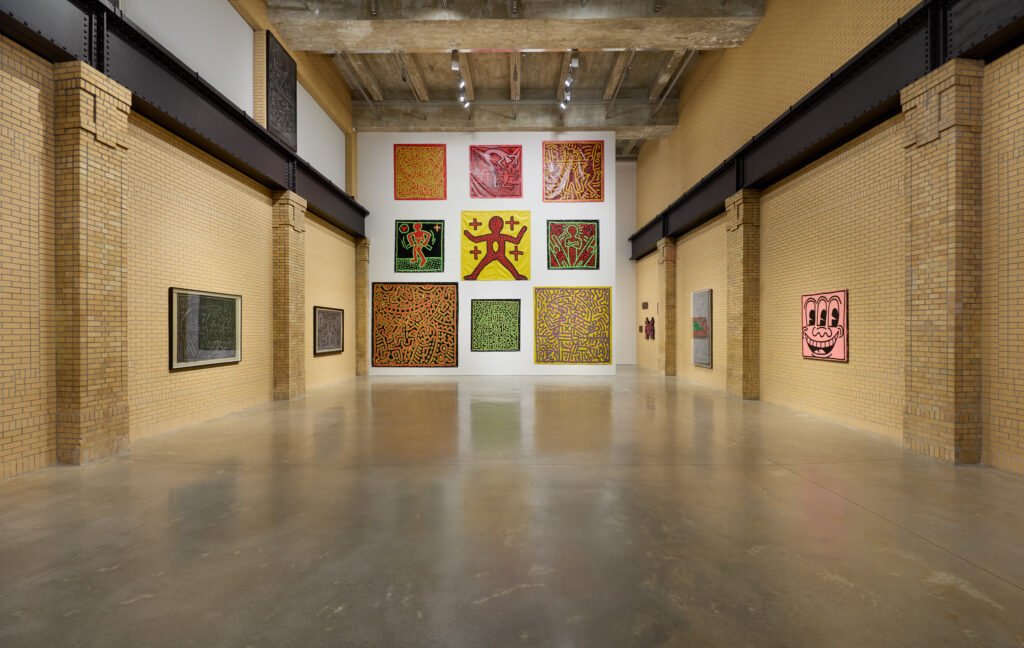
    The show features approximately 50 works, including:

    Keith Haring Exhibition 2026
    Source: The Brant Foundation
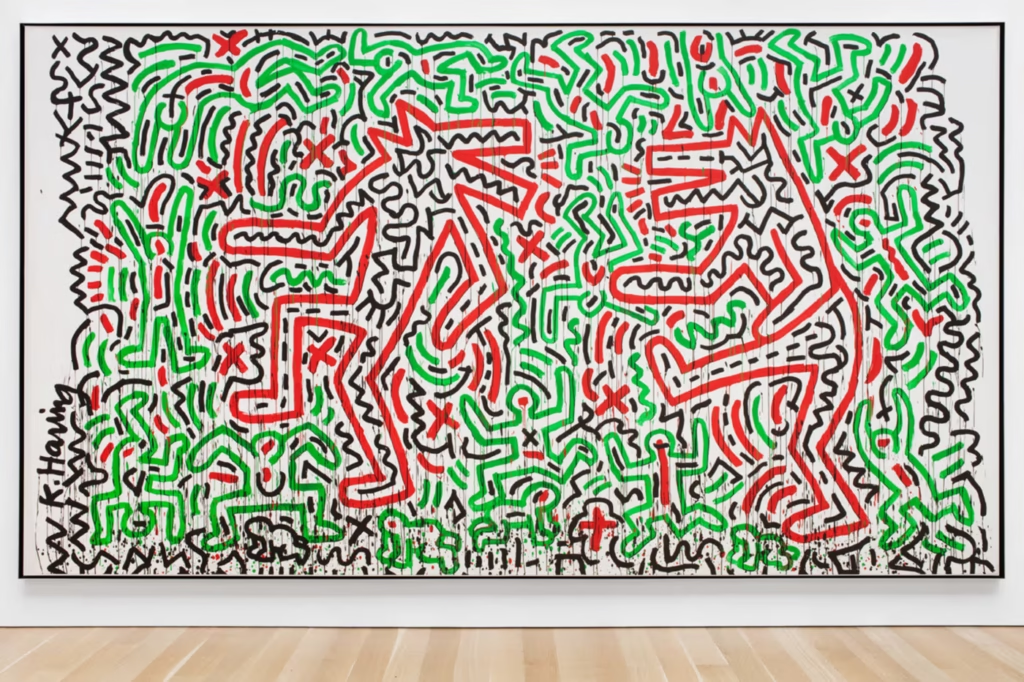
    • Nine large-scale tarp paintings displayed together on a single wall
    • Eight surviving subway chalk drawings in their original fiberglass frames
    • Works from the landmark 1982 Tony Shafrazi Gallery exhibition (including pieces from the legendary Blacklight Room)
    • Works shown at the FUN Gallery in 1983, a pivotal venue on the Lower East Side
    • Early enamel paintings on metal from 1981
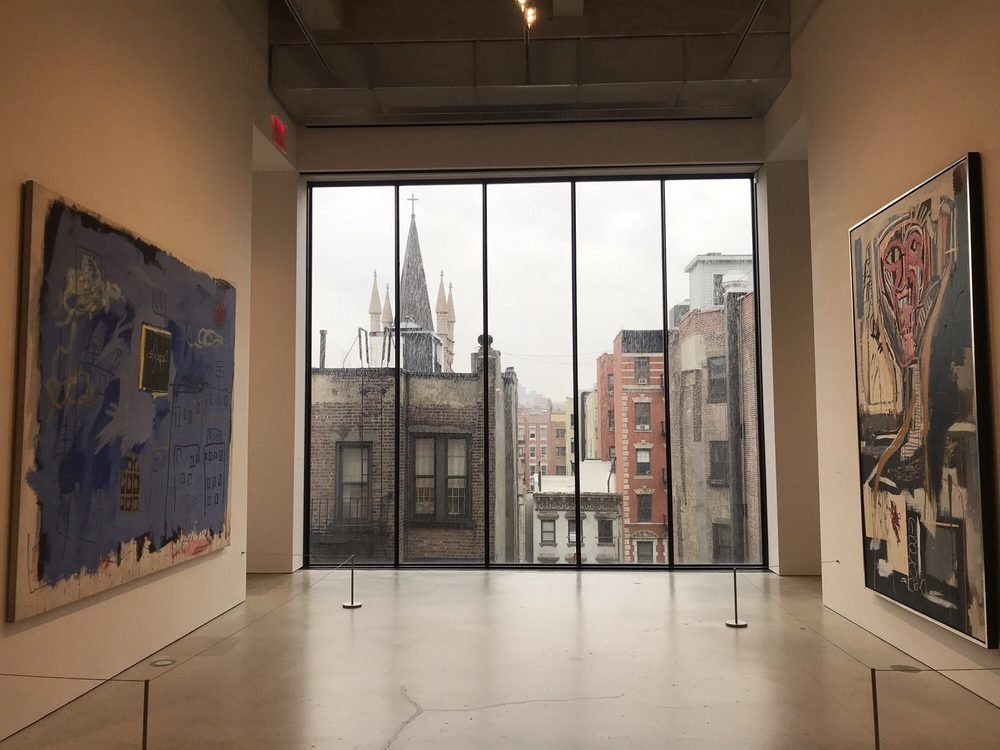
    • A portrait of Haring by Jean-Michel Basquiat, on display as a rare document of their friendship

    Press coverage since opening has been unanimous: this is a rare show that pushes beyond the deeply familiar surface of Haring’s work into something rawer and more urgent.


    Keith Haring’s Subway Drawings: Where It All Began

    To understand the Brant Foundation exhibition, you need to understand what Keith Haring’s subway drawings were and why they mattered.

    In December 1980, Haring noticed something on the platforms of the New York City subway system: the black matte paper panels used as placeholders when advertisement spaces went unfilled. These blank rectangles, scattered across hundreds of stations, struck him immediately. He went above ground, bought chalk, came back down, and drew.

    “It seemed obvious to me when I saw the first empty subway panel that this was the perfect situation,” he later wrote in his book Art in Transit.

    What followed was one of the most unusual public art campaigns in American history. Haring rode the subway daily, scanning platforms for empty panels, and drew with white chalk directly onto the black paper — quickly, without preparation, always beginning with a border and working inward. He created more than 5,000 of these drawings between 1980 and 1985, possibly making it the largest sustained public art project ever undertaken by a single artist.

    The figures that emerged — a radiant crawling baby, a barking dog, dancing human outlines, flying saucers, pulsating hearts — were drawn flat, without spatial depth, close to the surface like cartoons. Simplicity was not just an aesthetic choice; it was a practical one. Haring needed to finish each drawing before the transit police arrived. The urgency of potential arrest shaped the visual economy of every line.

    Commuters stopped. People watched him work. Some drawings were stolen from their frames within hours of being made — a measure of how quickly his reputation spread. Photographer Tseng Kwong Chi followed Haring through the system, documenting what would eventually amount to over 22,000 photographs of the subway project. In 1982, one of Haring’s arrests was filmed and broadcast on a CBS News special, turning a downtown phenomenon into a national story.

    The Brant Foundation exhibition displays eight surviving original subway drawings, many of which have never before been shown publicly. Standing in front of them — chalk on black paper, still in their Metropolitan Transit Authority frames — is as close as you can get to those platform moments.


    The East Village Setting: Why Location Matters for This Show

    Keith Haring Exhibition 2026

    The Brant Foundation’s New York space sits at 421 East 6th Street, between Avenue A and First Avenue in the East Village — just blocks from the clubs, galleries, and streets where Haring built his reputation in the early 1980s.

    When Haring arrived in New York in 1978 to study at the School of Visual Arts (SVA), the East Village and Lower East Side were a laboratory of creative energy. Cheap rents and abandoned storefronts had attracted an unlikely convergence: graffiti writers, punk musicians, underground gallery owners, poets, and painters. This was the world of Club 57, of early hip-hop, of zines and word-of-mouth exhibition openings. Art happened in the streets before it happened in any gallery.

    Haring moved through all of it — befriending Kenny Scharf and Jean-Michel Basquiat, working out ideas at P.S. 122 and Club 57, drawing on subway walls and then showing in galleries. The East Village was not simply where he worked; it was the ecosystem that produced his aesthetic.

    Showing this work a few blocks from its origin point is not incidental. It changes how the work reads. The industrial rawness of the Brant Foundation building — a former Con Edison substation built in 1920, later used as a studio by Minimalism pioneer Walter De Maria — amplifies rather than sanitizes what you’re looking at. The building’s preserved gantry crane, steel staircases, and exposed structure feel closer to a subway platform than to a white-cube museum. That friction is exactly right.


    Key Works and Exhibition Highlights

    Keith Haring Subway Drawings on View

    The subway drawings are the emotional core of the show. Eight original examples survive in the exhibition, displayed in their original fiberglass frames. Watching the figures emerge from black paper — radiant babies, barking dogs, abstracted human forms — it’s easy to understand why subway riders in 1981 stopped mid-commute to look. These are not sketches. They are complete, confident statements made in minutes.

    The Blacklight Room (Tony Shafrazi Gallery, 1982)

    Among the most talked-about elements of the early Haring career, the Blacklight Room from his 1982 Tony Shafrazi Gallery show turned a gallery basement into something between a painting and a dance floor. Under ultraviolet light, works painted in fluorescent Day-Glo pigments glowed and pulsed. The division between art space and nightclub dissolved. The Brant Foundation show includes works from this period, allowing visitors to understand Haring not just as a graphic artist but as an environmental designer — someone who thought in terms of total experience.

    The FUN Gallery, 1983

    The FUN Gallery on the Lower East Side was one of the key venues that collapsed the barrier between graffiti culture and the contemporary art world. Haring’s 1983 show there was a defining moment — not only for his career, but for the broader legitimacy of street art as a gallery practice. Works from that exhibition are included here.

    Early Enamel Paintings and Tarp Works

    A group of small baked enamel on metal paintings from 1981 read like the physical precursors to digital emoji — condensed, iconic, immediately legible. They demonstrate how early Haring was thinking about universal visual communication systems.

    The nine large tarp paintings — made from the kind of industrial canvas used to cover trucks — are displayed together on a single wall, creating one of the exhibition’s most striking visual experiences. Originally made when Haring was pushing against the limitations of standard canvas sizes, they have an outdoor, public-space energy that feels entirely at home in the Brant Foundation’s industrial setting.


    Keith Haring’s Legacy in New York City Today

    The Brant Foundation exhibition exists in dialogue with Haring’s surviving public presence in New York. Two murals remain embedded in the city’s daily life:

    “Crack is Wack” (1986) — Painted without permission on a handball court wall along Harlem River Drive at 128th Street, this mural was Haring’s response to the crack cocaine epidemic devastating New York communities. City park authorities moved to protect it almost immediately after it appeared, a measure of the public response it generated. It remains on view today.

    Carmine Street Pool Mural (1987) — The exterior wall of the public pool in the West Village continues to greet swimmers every summer with Haring’s figures in motion.

    These two works demonstrate something essential about Haring’s practice: he did not leave the street behind when galleries came calling. Throughout his career, he moved fluidly between the commercial art world and free public space, seeing the two not as contradictions but as different registers of the same commitment.

    Haring died of AIDS-related complications on February 16, 1990. He was 31 years old. In the years before his death, he had founded the Keith Haring Foundation to support AIDS organizations and programs for children — ensuring that the activist dimension of his work would outlast him.


    What Makes This Exhibition Especially Relevant Right Now

    Curator Dieter Buchhart has described Haring’s work as “a positive humanist virus” that lives on in collective memory, continuing to fight against ignorance, fear, and silence. That framing feels pointed.

    Haring worked in a moment of political tension — the Reagan era, the AIDS crisis, the crack epidemic, the debates over censorship that would eventually produce the culture wars. His response was not retreat into abstraction or irony but a doubled commitment to clarity, accessibility, and public presence. He made art that anyone could read, and he put it where anyone could see it.

    In today’s visual culture — saturated with iconography, skeptical of sincerity, alert to the politics of representation — Haring’s early work reads with unexpected freshness. These are not comfortable, decorative images. They were made in a state of urgency, on stolen time, for an audience of strangers.


    Practical Visitor Information

    Venue: The Brant Foundation, 421 East 6th Street, New York, NY 10009

    Exhibition Dates: March 11 – May 31, 2026

    Hours:

    • Wednesday – Friday: 11:00 AM – 6:00 PM
    • Saturday – Sunday: 11:00 AM – 5:30 PM
    • Closed Monday and Tuesday

    Admission:

    • General: $20
    • Students / East Village residents / Visitors with disabilities (+ care partner): $15
    • Seniors (65+): $18
    • Children under 12: Free (with adult)

    Digital Guide: Available free via the Bloomberg Connects app

    Group Visits: Guided tours available for groups of 10 or more; contact the Foundation directly

    Note: Photography is permitted for personal use in most galleries (no flash, no tripods, no selfie sticks). Some works contain mature imagery.

    Website: brantfoundation.org


    Before You Go: How to See This Exhibition Well

    The temptation with Keith Haring is to move quickly — the images are familiar, the lines are bold, the rhythm is immediate. Resist that. The point of this show is to slow down inside work you think you already know.

    Look at the subway drawings first and notice what it would have felt like to encounter them underground, made in minutes, on your morning commute in 1981. Then move through the exhibition tracking how that same visual energy — the condensed line, the anonymous figure, the symbol designed to carry meaning across barriers of language and class — migrated from black paper to painted tarp to enamel metal to Day-Glo canvas.

    By the time you reach the large tarp paintings, you are looking at the same impulse that started on a subway platform, scaled up to the size of a building wall. That continuity is what the Brant Foundation show is really about: not the celebrity Haring, not the T-shirt Haring, but the artist who believed that a line drawn in the right place, for the right reason, could change how a person moves through a city.


    The Keith Haring exhibition at The Brant Foundation is on view through May 31, 2026. Tickets are available at brantfoundation.org.

    Related posts you might enjoy:

    5 Best Hidden Picnic Spots in NYC for Slow Travel (Beyond Central Park)

    New York moves fast — but it doesn’t have to. Whether you’re a visitor or a local craving a real pause, these 5 hidden picnic spots in NYC offer the quiet, the views, and the breathing room you’ve been looking for. This is slow travel, New York-style.

    New York City doesn’t always let you breathe. The subway rushes, the sidewalks push, and even Central Park — for all its 843 acres — can feel like a crowded freeway on a sunny Saturday afternoon. But here’s the secret that locals have quietly kept to themselves: the city is full of hidden picnic spots where you can spread a blanket, exhale slowly, and actually see New York instead of just surviving it.

    This is the essence of slow travel in New York City. Not racing between the Empire State Building and Times Square, but letting the city reveal itself at your pace — over a cheese board by the East River, or under a Manhattan Bridge arch with the sound of the water below.

    In this guide, we’ve rounded up 5 of the best hidden picnic spots in NYC that most tourists never find, each chosen for its views, its calm, and its potential to turn an afternoon into a memory. Pack your blanket, grab your favorite takeout, and leave the crowds behind.


    Why Slow Travel NYC Works Better Than You Think

    The concept of slow travel — lingering longer, moving with less urgency, and connecting with a place rather than consuming it — couldn’t be more counterintuitive in a city nicknamed “the city that never sleeps.” And yet New York rewards slowness like few other places on earth. Its waterfront parks, hidden green spaces, and car-free islands offer a version of the city that the average tourist itinerary completely misses.

    The spots below are that version. Most are free. All are stunning. And every single one will give you a different angle on a skyline you thought you already knew.


    1. Roosevelt Island — FDR Four Freedoms State Park

    Best for: Architectural beauty, solitude, and sweeping river views

    picnic spots

    The Hidden Picnic Spot in NYC That Starts With a Tram Ride

    Getting to this hidden gem is half the magic. Board the Roosevelt Island Tramway — a red aerial cable car that floats you across the East River from 59th Street — and by the time you land, you’ve already left the city’s noise behind. Alternatively, you can hop off the F train at Roosevelt Island station or take the free Red Bus to Southpoint Park.

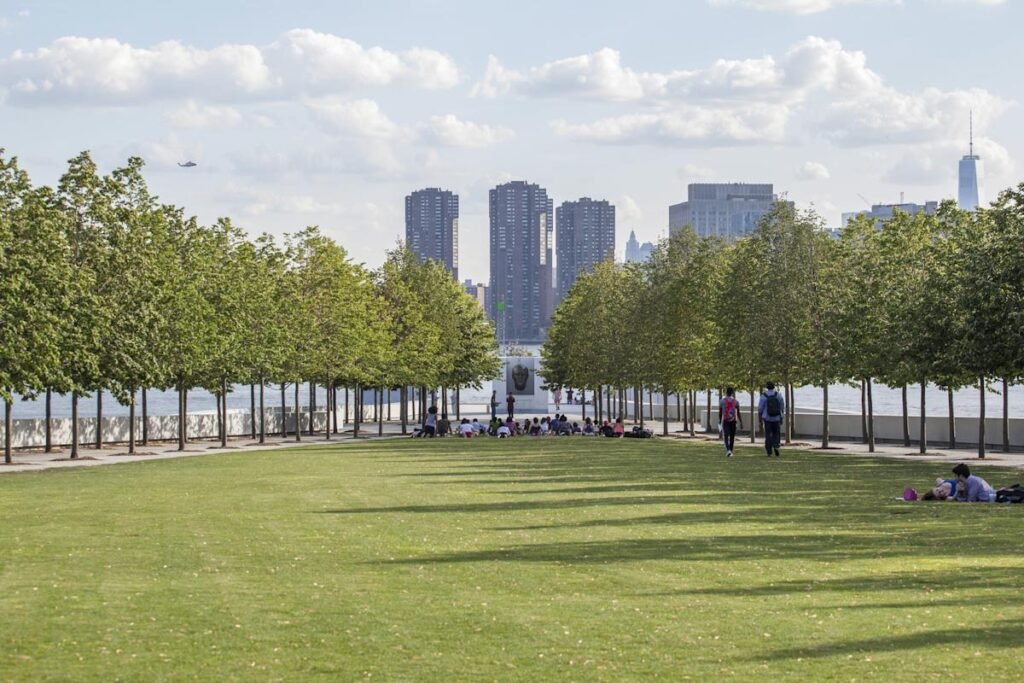
    At the southern tip of this thin island sits FDR Four Freedoms State Park, a masterwork of landscape architecture designed by Louis I. Kahn as a tribute to President Franklin D. Roosevelt. The park takes its name from FDR’s landmark 1941 State of the Union speech, in which he articulated four essential human freedoms — speech, worship, freedom from want, and freedom from fear. Those very words are carved into the granite walls of the open-air plaza at the park’s tip, which looks directly south toward the United Nations Secretariat Building across the water.

    The park’s design is deliberately meditative: a double row of trees narrows as it approaches the river’s edge, drawing your gaze outward toward the Manhattan skyline and the harbor. The entire space culminates in a 3,600-square-foot granite plaza surrounding a 1933 bronze bust of Roosevelt by sculptor Jo Davidson — a room without a roof, open to the sky.

    Slow travel tip: Arrive mid-morning on a weekday and walk straight to the southern tip. Sit on one of the granite ledges and look west toward the Empire State Building, Chrysler Building, Freedom Tower, and the UN — arguably one of the most historically layered views in all of New York. It’s a natural spot for reading, journaling, or simply doing nothing.

    📍 Getting there: Roosevelt Island Tram from 59th St & 2nd Ave (MetroCard accepted), or F train to Roosevelt Island. 🕘 Hours: Open daily 9am–5pm; closed Tuesdays. 💰 Cost: Free to enter. Tram fare uses your MetroCard. 🐾 Note: Pets are not permitted in the park.


    2. Governors Island — Picnic Point & The Hills

    Best for: Car-free escape, Statue of Liberty views, and hammock naps

    picnic spots

    The 172-Acre Island That Feels Like a Different City

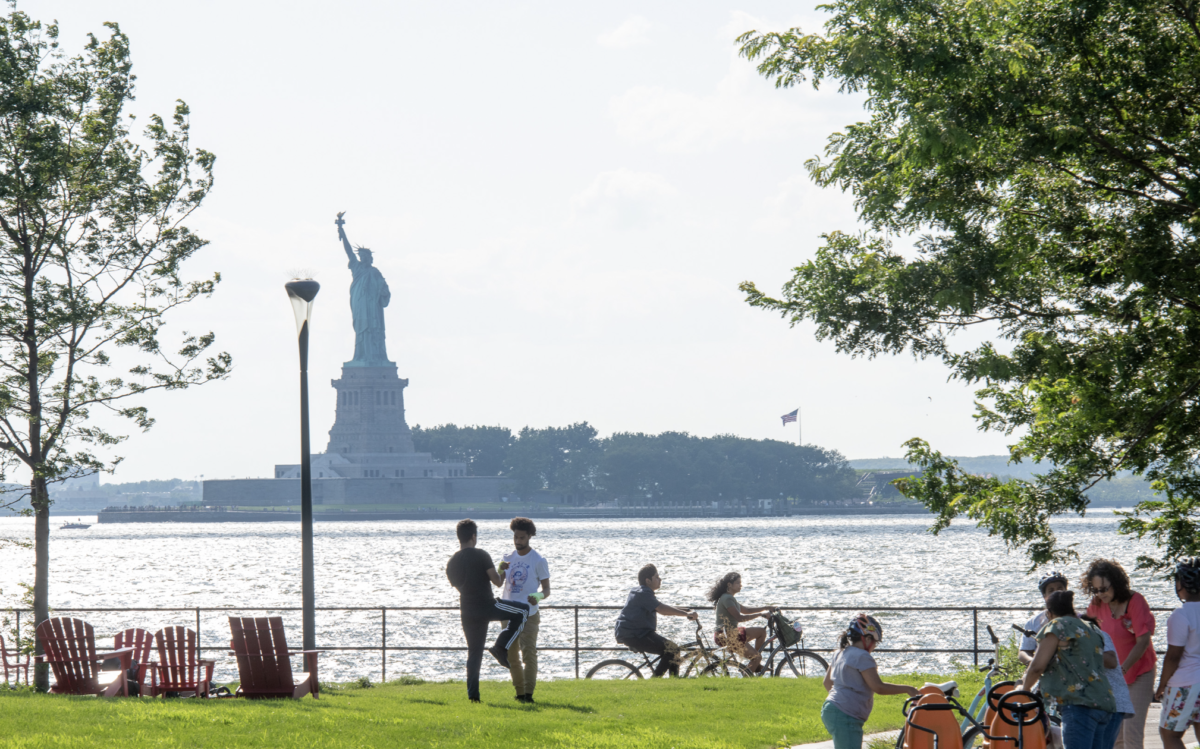
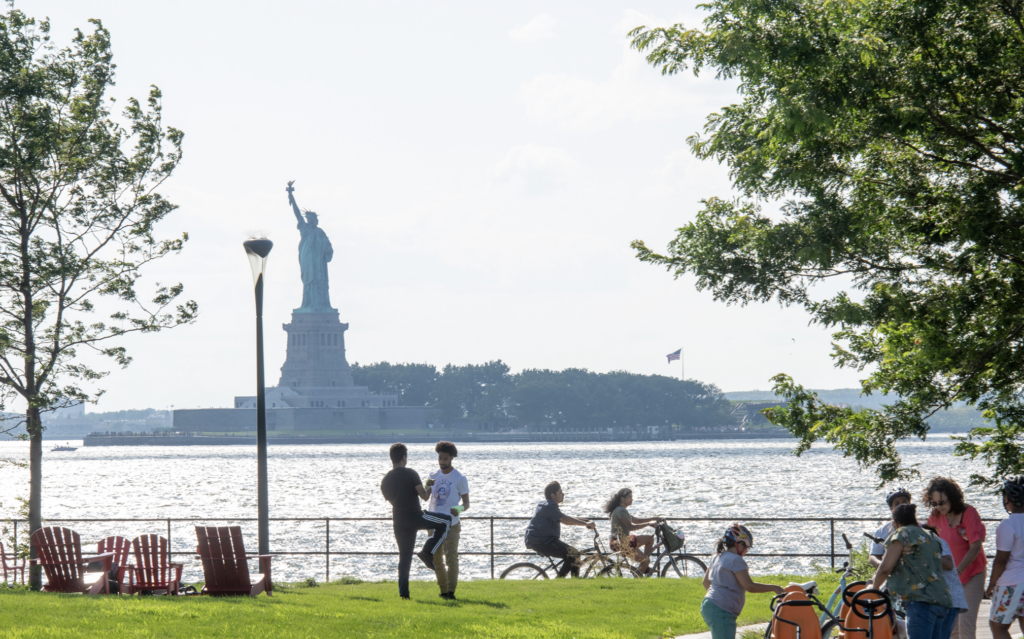
    Few hidden picnic spots in NYC come with their own ferry ride, their own hills, and a front-row view of the Statue of Liberty — but Governors Island does. Just a short ferry from Lower Manhattan’s Battery Maritime Building (10 South Street), this 172-acre car-free oasis in New York Harbor has steadily grown into one of the best-kept secrets for slow travel in New York.

    Picnic Point, at the island’s southern tip, offers exactly what its name promises: a dedicated picnic lawn where you can sit face-to-face with Lady Liberty and the downtown Manhattan skyline simultaneously. For the most dramatic panorama, climb to the top of The Hills — a series of earthen mounds that rise 70 feet above sea level and were built using materials from the Second Avenue Subway excavation. From the top, you get a sweeping 360-degree view of New York Harbor, Brooklyn, Manhattan, and the Verrazano-Narrows Bridge in the distance.

    The island’s Hammock Grove — a shaded grove strung with dozens of hammocks — is exactly what you need after that climb. Lie back, close your eyes, and let the harbor breeze do the rest. Bike rentals are available from Blazing Saddles (with Free Bike Mornings on weekdays from 10am–12pm), and CitiBike docks sit at each ferry landing, including Picnic Point itself.

    Slow travel tip: The island is technically open year-round, but the full experience unfolds from Memorial Day through Labor Day, when extended summer hours run until 10pm Sunday–Thursday and 11pm Friday–Saturday. Arrive early on a weekend morning — ferry tickets are free before 11am on Saturdays and Sundays.

    📍 Getting there: Trust for Governors Island ferry from Battery Maritime Building, 10 South Street, Lower Manhattan. Ferries run approximately every 30 minutes. 🕘 Hours: Daily 7am–6pm (off-season); extended summer hours from Memorial Day through Labor Day. 💰 Ferry cost: $5 round trip (free for children under 12, IDNYC holders, seniors 65+, and military).


    3. Long Island City, Queens — Hunter’s Point South Park

    Best for: Iconic skyline views, golden hour photography, and local atmosphere

    The Locals’ Favorite Hidden Picnic Spot in NYC

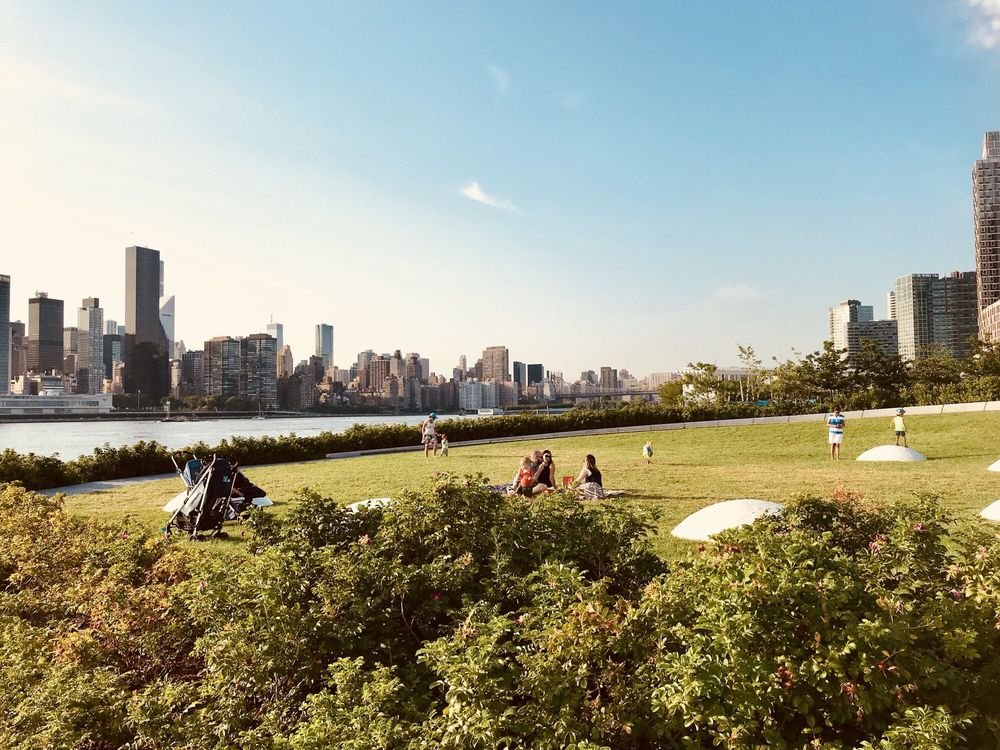
    Across the East River from Midtown Manhattan, just one stop on the 7 train from Grand Central, sits one of the city’s most underrated outdoor spaces. Hunter’s Point South Park in Long Island City is where New Yorkers go when they want the best view of the Manhattan skyline without paying for a rooftop bar to see it.

    This former post-industrial waterfront was transformed into a stunning 10-acre park featuring a central green, waterside promenade, picnic terraces, and a 30-foot cantilevered viewing platform that juts out over the East River. From the platform and the picnic terraces, you can see an unobstructed lineup of Midtown icons: the Empire State Building, the Chrysler Building, the UN Building, 432 Park Avenue, and the Queensboro Bridge. On a clear evening, the view is nothing short of cinematic.

    This park is widely considered one of NYC’s best sunset spots, and the rhythm of a typical visit proves it: locals arrive with blankets, some local takeout from the nearby café or restaurants on Vernon Boulevard, and they simply sit. The golden hour light here — with the sun setting behind the Manhattan skyline — is extraordinary, and the park’s restored wetlands add a surprising layer of natural beauty along the water’s edge.

    Slow travel tip: Come on a weekday evening around an hour before sunset. The park is noticeably quieter than weekends, and you’ll have the best picnic terraces to yourself. Take the 7 train to Vernon Blvd–Jackson Ave, then walk five minutes west to the waterfront. Alternatively, arrive by East River Ferry for a scenic approach.

    📍 Address: Center Blvd, Long Island City, NY 11101 🚇 Subway: 7 train to Vernon Blvd–Jackson Ave 🌅 Best time: One hour before sunset on weekdays 💰 Cost: Free


    4. SoHo / NoLIta — Elizabeth Street Garden

    Best for: European atmosphere, intimate scale, urban poetry

    picnic spots

    The Secret Garden Hidden in Plain Sight

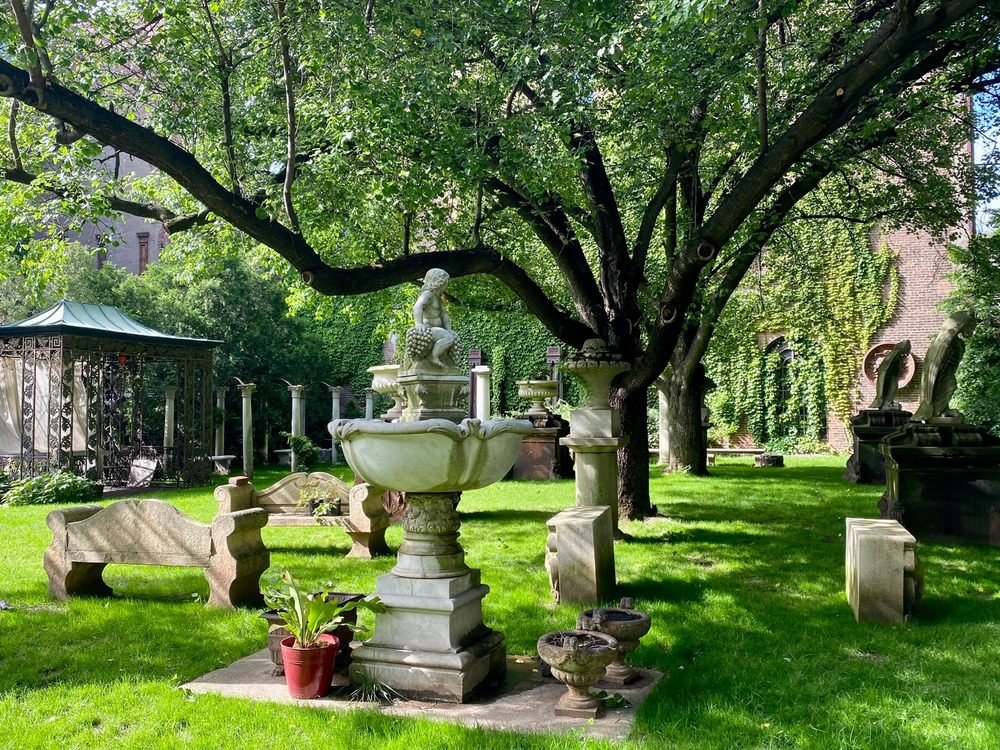
    In the middle of one of Manhattan’s most hectic shopping neighborhoods, on a narrow lot between Spring Street and Prince Street in NoLIta, there is a garden that feels like it fell through a crack in the space-time continuum and landed in 1970s Rome.

    Elizabeth Street Garden is unlike any other green space in New York. It isn’t a manicured park. It’s a wonderfully eccentric outdoor sculpture garden filled with aging statues, mismatched stone benches, overgrown ivy, and a collection of antique garden ornaments that seem to have their own stories. Lions, angels, urns, and figures from another era populate this half-wild space, giving it a quality that is rare in a city as relentlessly new as New York: the feeling of time passing slowly.

    This is one of the best examples of slow travel in New York — a place that rewards the visitor who stumbles upon it without a plan. The garden is run by community volunteers and has long been a beloved neighborhood sanctuary. It is small enough to feel intimate but surprising enough to hold your attention for longer than you expect.

    Slow travel tip: Pick up a coffee from one of the nearby cafés along Mulberry Street or Spring Street and bring it here. Find a bench, let the city noise fade to background hum, and spend an hour watching the light shift over the sculptures. It’s one of the few spots in SoHo where slowing down feels completely natural.

    📍 Address: Elizabeth St, between Spring St and Prince St, Manhattan (NoLIta) 🚇 Subway: 6 to Spring St; N/R/W to Prince St 🕘 Hours: Open most days; check the Elizabeth Street Garden website for current seasonal hours. 💰 Cost: Free


    5. DUMBO, Brooklyn — Pebble Beach Under the Manhattan Bridge

    Best for: Industrial romance, river sounds, and a one-of-a-kind New York experience

    picnic spots

    The Brooklyn Picnic Spot That Doesn’t Look Like One

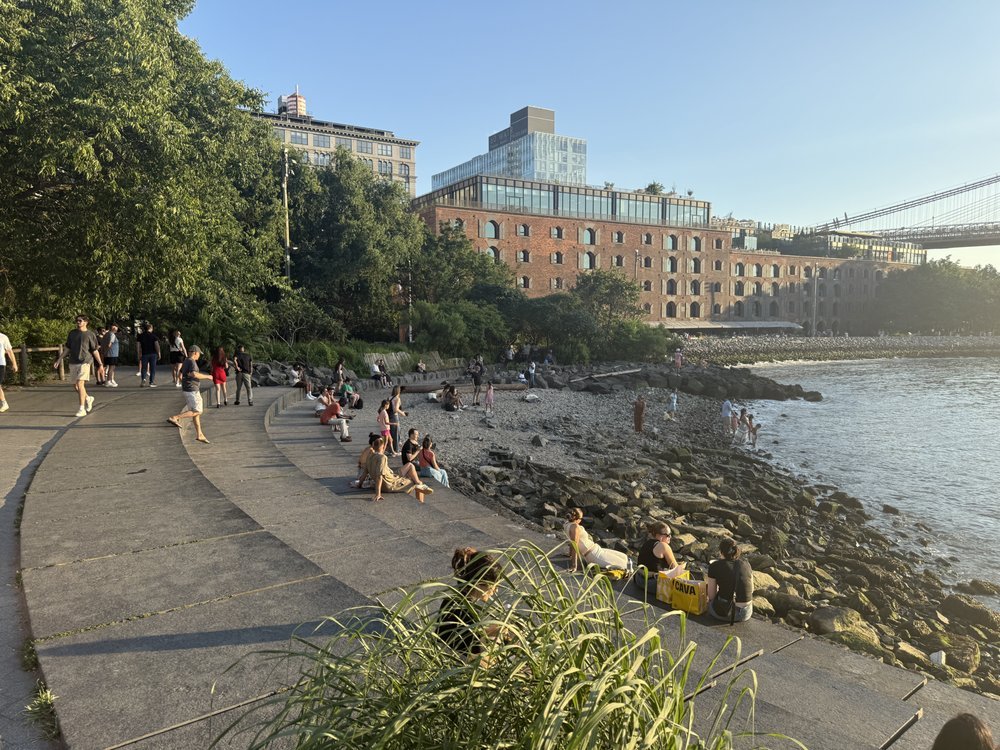
    Most people who visit DUMBO head straight to the famous cobblestone street framing the Manhattan Bridge for a photograph, then move on. The locals know to keep walking down to the water’s edge, where Pebble Beach — a small, pebbly riverfront strip tucked beneath the massive towers of the Manhattan Bridge — offers one of the most atmospheric and unusual picnic settings in the entire city.

    There is no grass here. The ground is a mix of smooth river stones and sand, which is precisely what makes this spot feel distinct from every other park in New York. You sit at the river level, with the bridge’s steel structure rising above you, the water lapping just feet away, and the Brooklyn Bridge visible a short distance downstream. At sunset, the combination of warm light on the steel cables, the reflections on the East River, and the silhouette of Lower Manhattan creates a scene that feels more like a painting than a park.

    The contrast is part of what makes DUMBO so compelling for slow travel in New York: a neighborhood simultaneously industrial and beautiful, busy and quiet, always more layered than it first appears. After your picnic, the Brooklyn Bridge Park promenade stretches for over a mile northward and southward along the waterfront, offering a natural path for an evening walk as the city lights come on.

    Slow travel tip: For your picnic provisions, head to the nearby Time Out Market (just a short walk away in DUMBO’s Archway) for everything from high-quality sandwiches to local pastries. Then walk down to Pebble Beach about an hour before sunset and claim your spot on the stones.

    📍 Address: Pebble Beach, DUMBO, Brooklyn (at the base of the Manhattan Bridge, accessible via Main Street Park) 🚇 Subway: F to York St; A/C to High St 🌅 Best time: 1 hour before sunset 💰 Cost: Free


    Practical Slow Travel NYC Picnic Tips

    Before you head out to these hidden picnic spots in NYC, a few things worth knowing:

    What to bring:

    • A waterproof-backed blanket (parks can be damp even on dry days)
    • Sunscreen, sunglasses, and a light layer for river breezes
    • Reusable bags and containers — pack everything out
    • A portable water bottle; not all parks have fountains

    Best times to visit:

    • Weekday late afternoons and early evenings are almost always quieter than weekends
    • Spring (April–May) and early fall (September–October) offer the best weather with fewer crowds
    • For island destinations (Governors Island, Roosevelt Island), check ferry schedules in advance

    Food sourcing near each spot:

    • Roosevelt Island: Pick up provisions from Manhattan before boarding the tram; options on the island itself are limited.
    • Governors Island: Food vendors operate seasonally on the island; you can also bring your own.
    • Hunter’s Point South Park: Several excellent cafés and restaurants line Vernon Boulevard in LIC.
    • Elizabeth Street Garden: Mulberry Street and Spring Street offer independent cafés and bakeries.
    • DUMBO Pebble Beach: Time Out Market and the many restaurants of DUMBO are within easy walking distance.

    Final Thoughts: The Best of NYC Belongs to the Slow Traveler

    Central Park will always be there, and it has its own magic. But the hidden picnic spots in NYC described in this guide offer something more elusive: the feeling of having discovered a city that most visitors never quite reach. A city where a tram ride over the East River leads to granite and silence, where a ferry deposits you on a car-free island facing the Statue of Liberty, and where a handful of smooth river stones under a bridge becomes the most memorable place you’ve sat all year.

    Slow travel in New York isn’t about doing less — it’s about paying attention differently. Grab your blanket, put your phone down (or at least point it at the view), and let one of these spots show you what New York looks like when you stop rushing past it.


    Have a favorite hidden picnic spot in NYC we missed? Share it in the comments below — we’d love to add it to the map.


    Last updated: April 2026. Always verify park hours and ferry schedules directly with official park websites before visiting, as seasonal hours can change.

    Related posts you might enjoy:

    Mother’s Day NYC: The Best Family-Friendly Museums and Rooftop Parks in 2026

    May in New York City is pure magic — and Mother’s Day (May 10, 2026) is the perfect excuse to explore the city’s finest museums and outdoor spaces with the whole family. Here’s your complete guide to the best family-friendly museums and rooftop parks in NYC this spring.

    May is one of New York City’s most luminous months — the trees are in full bloom, the days stretch longer, and the city hums with a particular kind of energy that only comes with spring. And right in the heart of it all: Mother’s Day, falling on Sunday, May 10, 2026. Whether you’re a local family looking for something new or visiting the city for the occasion, NYC offers an extraordinary mix of culture, outdoor beauty, and shared moments to make the day truly special.

    This guide covers the best Mother’s Day NYC family activities — from world-class museum programs designed with kids in mind to open-air rooftop parks where the whole family can breathe, laugh, and take in some of the most iconic views on the planet. Bookmark it, share it, and start planning now — the best spots fill up fast.


    🏛️ Family-Friendly Museums in NYC for Mother’s Day

    1. MoMA (Museum of Modern Art) — Where Art Meets Curiosity for All Ages

    Mother's Day NYC

    When it comes to family-friendly museums in NYC, MoMA consistently leads the pack. The museum’s Heyman Family Programs are specifically designed so that children can engage with modern and contemporary art in ways that feel intuitive, playful, and genuinely exciting — not intimidating.

    Kids 16 and under enjoy free admission year-round, and on select dates the museum hosts Family Gallery Talks, hands-on activity guides, and in-person creative workshops that walk young visitors through the galleries with purpose. During peak spring weekends, keep an eye on MoMA’s calendar for educator-led gallery tours and drop-in creative labs — both perennial favorites with NYC families.

    Best For: Families with kids aged 5 and up who love making things and exploring ideas visually.

    Pro Tip: After your gallery time, head down to the Abby Aldrich Rockefeller Sculpture Garden on the ground floor. It’s one of the great secret exhales in Manhattan — open sky, modernist sculptures, and room for kids to wander freely while parents decompress. It’s also one of the best photo spots in Midtown. The garden is included with museum admission.

    📍 11 W 53rd St, Midtown Manhattan | moma.org/visit/families


    Recommended item you might want:


    2. AMNH & The Gilder Center — A Day of Discovery on the Upper West Side

    Mother's Day NYC

    For science-loving families, the American Museum of Natural History offers an almost overwhelming richness — and since the opening of the Richard Gilder Center for Science, Education, and Innovation, it has become one of the most exciting destinations for kids in the entire country.

    The Gilder Center is a stunning 230,000-square-foot expansion designed by Studio Gang, with a five-story atrium inspired by canyons of the American Southwest. It adds more than 30 new connections to the museum’s existing buildings, and houses some of the most hands-on, family-forward experiences in New York.

    Here’s what to prioritize with kids:

    Mother's Day NYC
    butterfly vivarium

    Davis Family Butterfly Vivarium — A 2,500-square-foot tropical micro-climate on the second floor where up to 1,000 free-flying butterflies from 80 different species flutter freely among lush vegetation. There’s a pupae incubator where you can watch chrysalises split and adult butterflies emerge in real time. Kids can use magnifying glasses at the feeding dishes for a close-up view. It’s warm (about 80°F), humid, and genuinely magical — especially in May. Note: an additional timed ticket is required beyond general admission, and spots sell out, so book in advance.

    Susan and Peter J. Solomon Family Insectarium — On the ground floor, this 5,000-square-foot space brings visitors face-to-face with 18 live insect species, including leafcutter ants carrying leaves across a skybridge. Insectarium access is included with general museum admission.

    Invisible Worlds

    Invisible Worlds Immersive Experience — A 12-minute, 360-degree immersive journey through the connections that link all life on Earth, from rainforest canopies to the human brain. A timed ticket is required in addition to general admission.

    Best For: Families with curious kids of all ages — toddlers through teens will find something riveting here.

    Pro Tip: NY, NJ, and CT residents can purchase general admission on a pay-what-you-wish basis, though ticketed exhibitions (Butterfly Vivarium, Invisible Worlds) still require purchased timed tickets. Book everything online well ahead of Mother’s Day weekend.

    📍 Central Park West at 79th St, Upper West Side | amnh.org


    🌿 Family-Friendly Rooftop Parks in NYC for Mother’s Day

    New York’s rooftops aren’t just for cocktails and skyline selfies. The city has invested meaningfully in open, public green spaces with panoramic views — and in spring, they are some of the finest places to simply be. Here are the top picks for families.


    3. Pier 57 Sky Park — NYC’s Largest Rooftop Park

    This is the crown jewel of Mother’s Day NYC family activities that most tourists haven’t discovered yet. Opened in spring 2022, the Pier 57 Sky Park spans nearly two acres of rooftop parkland above the historic Chelsea waterfront — making it the largest public rooftop park in New York City.


    Recommended item you might need for a picnic:

    • ATTRACTIVE DESIGN – Our sophisticated and attractive outdoor blanket is tartan & creative stripe design is fashion forwa…
    • WATERPROOF & DURABLE – This picnic blanket is constructed with a waterproof PEVA backing in order to keep out moisture, …
    • USE IT ANYWHERE – Simply fold up this picnic mat and use its handy strap to conveniently carry it over your shoulder and…

    Designed by landscape firm !melk, the park offers sweeping panoramic views of the Hudson River, Lower Manhattan, the New Jersey waterfront, and a perfect vantage point over Little Island, the neighboring floating park designed by Heatherwick Studio (whose unusual tulip-stem architecture is best appreciated from above). Open grass lawns give kids room to run freely, while bleacher seating makes it easy for the whole family to settle in for a picnic or a front-row Hudson sunset.

    The park is completely free and open to the public daily from 6 AM to 1 AM.

    Downstairs, Market 57 — curated by the James Beard Foundation — solves the family lunch problem elegantly: 15+ independent vendors covering everything from dim sum (Nom Wah) to Vietnamese, Thai, Japanese, and more. There’s also a unique Oda sound installation in the indoor “Living Room” that streams live audio from a Costa Rican rainforest, including a dawn chorus from the Macaw Sanctuary. It’s a small sensory surprise that kids absolutely love.

    Best For: All ages; especially great for families with toddlers and young children who need open space to run.

    Pro Tip: Arrive around 5:30–6 PM for the golden hour light on the Hudson. The sunset views from the rooftop are genuinely spectacular and completely free — one of the most romantic and relaxed ways to end Mother’s Day.

    📍 25 11th Ave (at W 15th St), Chelsea | pier57nyc.com/rooftop


    4. Javits Center Rooftop Orchard & Farm — Urban Agriculture Meets Family Wonder

    One of Manhattan’s most unexpected and underrated outdoor spaces sits on top of the Jacob K. Javits Convention Center on the Far West Side. The Javits Center’s rooftop farm and orchard is a genuine working green space — part pollinator habitat, part urban garden — covering more than 6.75 acres atop the convention center.


    Recommended item you might want:

    • AMERICAS #1 DIGITAL FRAME: Join 4 million connected Americans through moments that matter. Featured by Rolling Stone, Op…
    • EFFORTLESS SETUP WITHIN SECONDS: Download the Nixplay app, plug in your frame, and follow simple on-screen steps—no tech…
    • A GIFT STRAIGHT FROM THE HEART: Preload photos, videos, and a personalized message using your phone before gifting. The …

    In May, the apple and pear trees are often in bloom, creating a fragrant, almost countryside atmosphere that feels nothing short of surreal with the Hudson River and Manhattan skyline as your backdrop. The rooftop is part of a broader sustainability initiative that has turned the building into a model for urban ecological design, home to beehives, native plantings, and migratory bird habitats.

    Best For: Families interested in nature, sustainability, and a conversation-starter about urban ecology and food systems.

    Pro Tip: Rooftop access at Javits is primarily available through special events and tours — check their schedule in advance for any spring programs. Even a guided look at the farm is a memorable and educational experience for kids curious about where food comes from and how cities can support wildlife.

    📍 429 11th Ave, Hell’s Kitchen | javitscenter.com


    ⚠️ A Note on The Met’s Cantor Roof Garden

    Many guides still recommend The Met’s Iris and B. Gerald Cantor Roof Garden for spring in NYC — and historically, it has been one of the city’s great seasonal highlights. However, the roof garden closed in October 2025 and will remain closed until approximately 2030 as part of the $500 million Oscar L. Tang and H.M. Agnes Hsu-Tang Wing expansion. The annual Roof Garden Commission series has also paused during construction.

    The good news: the Tang Wing, designed by Mexican architect Frida Escobedo, will expand the rooftop space from 7,500 to 10,000 square feet with new terraces overlooking Central Park. When it reopens, it will be extraordinary. For now, The Met’s interior galleries — including the new “Raphael: Sublime Poetry” exhibition (on view through June 28, 2026) — remain very much open and worth a visit on Mother’s Day weekend.

    📍 1000 Fifth Ave, Upper East Side | metmuseum.org


    💡 Planning Tips for Mother’s Day Weekend in NYC

    Book Early. The Butterfly Vivarium at AMNH requires a timed ticket in addition to general admission, and slots on the May 10 weekend will sell out. MoMA’s workshops can also reach capacity. Reserve online at least 2–3 weeks ahead.

    Start with Museums, End Outdoors. A morning at MoMA or AMNH, followed by an afternoon at Pier 57’s Sky Park, makes for a beautifully paced day. You get the cultural richness in the cooler morning hours, and the outdoor magic in the warm afternoon light.

    Consider a Museum Membership. If you’re a frequent NYC family, an AMNH membership makes the Butterfly Vivarium free and removes the pay-what-you-wish limitation. MoMA family memberships include free admission for the whole family year-round.

    Pack for the Rooftops. Bring sunscreen, a light layer for early evenings, and a blanket if you plan to picnic at Pier 57. May weather in NYC is gorgeous but can shift — layers are your friend.


    What’s Your Favorite NYC Family Spot?

    Whether you’re a lifelong New Yorker or planning your first Mother’s Day trip to the city, we’d love to know — what’s your go-to NYC destination for a family day out? Drop it in the comments below. And if this guide helped you plan something special, share it with another family who deserves a beautiful May Sunday.

    Happy Mother’s Day. 🌸


    Last updated: April 2026. Always verify current hours, ticket availability, and programming directly with each venue before your visit.

    Related post you might enjoy:

    Inside K-Beauty NYC: Best Skincare Shops and Korean Spas in Manhattan

    Skip Sephora. New York’s Koreatown is home to the most exciting K-Beauty NYC scene in America — and a handful of Korean spa Manhattan retreats that will reset your body and mind after a long day of city living. Here’s where to go, what to buy, and how to make the most of it.

    If you’ve spent more than a week in New York City, you’ve probably noticed something: the wind here is ruthless. That relentless winter chill that whips down the avenues doesn’t just mess with your hair — it strips your skin dry, breaks down your moisture barrier, and leaves you looking like you haven’t slept since October.

    New Yorkers in the know have a secret weapon: K-Beauty NYC, specifically the cluster of Korean skincare shops and wellness spaces tucked into Manhattan’s Koreatown, centered around 32nd Street between Fifth and Broadway. This isn’t just a shopping district. It’s a fully functioning slow travel wellness corridor — one where you can walk in with flaky, wind-burned skin and walk out glowing.

    Whether you’re a longtime K-beauty devotee or someone who’s only heard the term “glass skin” on TikTok, this guide will walk you through the best K-Beauty NYC stores, the cult products locals actually buy, and the Korean spa Manhattan experiences that make this one of the city’s most underrated self-care rituals.


    Why New Yorkers Are Skipping Sephora for K-Beauty NYC

    This isn’t a trend — it’s a shift. K-beauty has become more and more popular over the years, moving from a niche Queens phenomenon into mainstream Manhattan, and now you can find dedicated K-beauty stores scattered across the city. But the real magic still happens in Koreatown.

    The reason locals keep coming back isn’t just price (though the value is genuinely hard to beat). It’s the curation. K-beauty stores in this neighborhood stock brands and formulas that are months or even years ahead of what Sephora carries. The staff actually know their ingredients. And the philosophy behind Korean skincare — layered hydration, barrier protection, prevention over correction — is perfectly suited to life in a city that brutalizes your skin daily.

    The K-Beauty NYC scene also offers something big-box beauty retailers can’t: the experience of trying before you buy, getting a genuine recommendation, and leaving with samples you didn’t ask for. That’s just the culture.


    Step 1: The K-Beauty NYC Shops Worth Knowing

    Besfren Beauty — The One-Stop Skincare Heaven

    K-Beauty NYC

    If you only have time for one stop, make it Besfren Beauty (315 5th Ave, Koreatown). This is essentially a Sephora for all things K-beauty — the workers know the products, the prices are reasonable, and the inside is clean and pleasing to be in. The curatorial team includes biochemists and beauty merchandisers, so the shelves aren’t just stocked with whatever’s trending — they stock what works.

    K-Beauty NYC

    They regularly run deals like buy-one-get-one, 30% off, and $1 sheet masks, and the associates are genuinely helpful when you’re lost choosing between brands. If you tell them your skin concerns, expect a proper consultation — and a handful of samples on your way out.

    Pro tip: There’s a café right next door. More on that in Step 4.


    Kosette Beauty Market — Curated, Trend-Forward, Direct from Seoul

    K-Beauty NYC

    Also in the heart of Koreatown, Kosette Beauty Market is the place to go if you want the freshest product drops. It’s a multi-branded K-beauty shop that offers an on-trend blend of skincare, cosmetics, and wellness items sourced directly from South Korea, including brands like COSRX and Beauty of Joseon.

    K-Beauty NYC

    The shelves here feel more editorial than retail — tightly curated, regularly refreshed, and stocked with items that are often sold out everywhere else. Perfect for the traveler who wants to bring home something genuinely special.


    Senti Senti — The Chinatown Hidden Gem

    K-Beauty NYC

    For the slow traveler who likes to discover places off the main path, head to Senti Senti (formerly oo35mm) in Chinatown. This second-floor beauty cave on Mott Street is a best-kept secret for editors in the know, with cleverly curated shelves and a knowledgeable, dewy-skinned staff who can help you find that dream product you never knew you were missing.

    The narrow space is lined with brightly lit cubbies filled with rare products — including brands you’ve only heard about in beauty YouTube rabbit holes. Tell the staff what you want to improve about your skin. Chances are, they’ve got just the thing.


    Step 2: The Glass Skin Products New Yorkers Are Actually Buying

    “Glass skin” — that Korean ideal of luminous, translucent, perfectly hydrated skin — is more than a hashtag. It’s a framework for how you treat your skin. And the products that deliver it are increasingly available right here in K-Beauty NYC shops without the markup of Amazon or the guesswork of buying online.

    Here are the products locals actually queue up for:

    COSRX Advanced Snail 96 Mucin Power Essence

    K-Beauty NYC

    Even in 2025, this bottle of snail mucin continues to reign supreme. It’s formulated with 96% snail secretion filtrate — lightweight, absorbs instantly, and leaves a plump, dewy finish. It works for acne-prone skin, dry skin, and aging concerns alike. It’s the single most versatile first step into K-beauty, and you can test the texture in-store before committing.

    • The Real Snail Essence: Formulated with 96.3% Snail Secretion Filtrate, this essence repairs and rejuvenates the skin fr…
    • Simple Yet Effective Light-weight Essence: A lightweight essence which fastly absorbs into the skin and gives you a natu…
    • Key Ingredient: Snail Secretion Filtrate contains “Mucin”- an EFFECTIVE ingredient for enhanced moisturization. It insta…

    Beauty of Joseon Relief Sun: Rice + Probiotics (SPF 50+)

    K-Beauty NYC

    This sunscreen went absolutely viral for feeling more like a luxurious moisturizer than a sun protectant. Drawing from hanbang (traditional Korean herbal medicine), it uses rice extract and grain fermented extracts — the same ingredients women in the Joseon Dynasty used as brightening toners. The texture is unmatched: creamy but light, leaves zero white cast even on deeper skin tones, and gives a subtle, healthy glow.

    It also doubles as a primer. New Yorkers who’ve discovered it tend to stop buying anything else for SPF.

    • 1.Korean Rice Probiotics Anti-black frost offers , ideal for all skin types.
    • 2.Enriched with nourishing ingredients for superior skin protection and deep hydration.
    • 3.Provides long-lasting moisture to keep skin supple and hydrated.

    Anua Heartleaf 77% Soothing Toner

    K-Beauty NYC

    Anua’s 77% Soothing Toner is arguably the single most recommended Korean skincare product of the last three years — zero fragrance, unmatched hydration, and built around heartleaf extract for sensitive, reactive skin. If NYC wind has left your skin red and irritated, this is your reset button.

    • [Lightweight Milk Toner] Provides intense moisture with a blend of Rice Water, Niacinamide and Ceramides, yet leaves a r…
    • [Skin Barrier Care] Contains Anua RICE CERA-PROTEIN, a blend of Ceramides and Protein that helps support the skin’s natu…
    • [Radiance-Boosting & Sooting Hydration] 70% Rice Water + Niacinamide for dull skin; Panthenol, Glycerin & Allantoin soot…

    Laneige Water Sleeping Mask

    K-Beauty NYC

    A classic for a reason. This overnight mask has become a global phenomenon — and it’s particularly beloved by New Yorkers who wake up every morning to heated, dry apartment air. Apply it as the last step in your nighttime routine and let the water-based formula do the work while you sleep.

    • A Korean sleeping mask to deeply hydrate and brighten skin while you sleep. The lightweight, refreshing gel formula wrap…
    • Packed with squalane, niacinamide, ceramides, and a special blend of 3 hyaluronic acids for deep hydration overnight.
    • Suggested Use: Apply 2-3 times a week after moisturizer, as the last step of your PM routine. Rinse off in the AM.

    Local tip: Buying in-store from K-town shops means you’re getting authenticated product you can test before purchasing — something that matters more than ever given counterfeit K-beauty flooding online marketplaces.


    Step 3: Korean Spa Manhattan — An Unexpected Oasis

    Here’s the thing about New York apartments: they don’t have bathtubs. Or if they do, the bathtub is approximately the size of a large salad bowl. Which makes the Korean spa Manhattan experience not just a luxury — it’s a genuine antidote to the city’s physical and psychological compression.

    Korean jjimjilbang (찜질방) culture — the tradition of communal bathhouses with hot pools, saunas, body scrubs, and rest areas — translates beautifully to Manhattan. You don’t need to know anything about Korean wellness traditions to appreciate it. You just need to walk in.

    Juvenex Spa — 24 Hours, Right in Koreatown

    K-Beauty NYC

    Address: 25 W 32nd St, 5th Floor, New York, NY 10001

    Juvenex Spa, tucked away in an office building in the center of Koreatown, is open 24/7. It’s ladies-only during the day, but the spa becomes coed in the evening — making it a popular late-night spot for Broadway actors and dancers winding down after a performance.

    The signature experience here is the four-step jade journey. You begin in the thermal phase to de-stress and detoxify in the igloo sauna, then move to the Diamond Herbal Steam Sauna and cold rainforest shower. Next, you soak in Japanese-style tubs filled with sake, ginseng, seaweed, and noni. Finally, you rest in a baked-clay low-temperature sauna to draw out toxins.

    But the real showstopper? The Korean body scrub (seshin, 세신). After going through the saunas and soaking pools, a skilled attendant scrubs, sloughs, washes, and conditions you from head to toe. The process takes a while, but your skin afterward has never felt so soft. It genuinely feels like a reset.

    After the scrub, expect fresh fruit and hot tea at the small bar. Because that’s how it’s done.

    Practical notes:

    • Open 24/7 — great for late-night visits after shows or dinners
    • Body scrub packages start around $92
    • Book in advance on weekends

    A Note on Spa Etiquette (That No One Tells You)

    If you’ve never been to a Korean spa before, a few things will feel unfamiliar — and they’re half the fun:

    • You go in without clothes in the gender-segregated wet areas. It’s not awkward. Everyone’s in the same boat. Literally.
    • The towel-turban (yang-meori, 양머리) — a spiral towel wrap balanced on your head — is a cultural staple you’ll see everywhere. Try it. Own it.
    • 식혜 (sikhye) and 구운 계란 (roasted eggs) are the traditional snacks of the jjimjilbang — sweet rice punch and eggs baked in the sauna. Order both. It’s a rite of passage.
    • Don’t rush. The entire philosophy of the Korean spa is slow, intentional restoration. You’re not supposed to be in and out in 45 minutes. Give yourself at least two hours.

    Step 4: Inner Beauty — Finishing the Loop at a Korean Café

    A wellness ritual isn’t complete without nourishing from the inside. Conveniently, Koreatown’s dining and café scene makes it easy to close the loop.

    Explore the wider Koreatown block for bingsu (Korean shaved ice), traditional teas, or a proper Korean meal to end what is, by now, a full-body reset experience.

    The message, and the spirit of slow travel at its best: You came to New York to experience it deeply — and this is as deep as it gets.


    K-Beauty NYC Gift Guide — What to Bring Home

    If you’re visiting New York and want to bring back something memorable (and genuinely useful), skip the Magnolia Bakery cookies and the I ♥ NY magnets. Here’s what actually travels well and delights people:

    • Sheet masks in bulk — $1 single masks from Besfren are a crowd-pleaser and pack flat
    • Beauty of Joseon Relief Sun SPF 50+ — often cheaper in-store than on Amazon, and easy to travel with
    • COSRX Snail Mucin Essence — universally loved, converts skeptics on first use
    • Laneige Lip Sleeping Mask — a perennial bestseller and great as a small gift
    • Anua Heartleaf Toner — currently impossible to find in most US retail stores outside of K-beauty specialty shops

    Plan Your K-Beauty NYC Day: A Slow Travel Itinerary

    Time Stop What to Do 11:00 AM Koreatown (32nd St) Start at Besfren Beauty — browse, consult, sample 12:00 PM Kosette Beauty Market Pick up trending drops and restocks 1:00 PM Korean lunch on 32nd St Refuel at one of the many excellent BBQ or bibimbap spots 2:30 PM Juvenex Spa Two-hour spa ritual: sauna, soak, body scrub 5:00 PM Besfren Café Ginseng latte + yakgwa to decompress 6:00 PM Depart glowing Genuinely


    Final Thoughts: Why K-Beauty NYC Belongs on Every Slow Traveler’s List

    Koreatown is one of Manhattan’s most compressed, most alive neighborhoods — packed into barely three blocks, but containing multitudes. The K-Beauty NYC shopping scene here isn’t just about buying skincare. It’s about engaging with a wellness philosophy that prioritizes consistency, gentleness, and long-term care over quick fixes.

    And the Korean spa Manhattan experience? It’s the closest thing New York has to a genuine pause. A place where you’re asked to slow down, soak, breathe, and exist without urgency.

    In a city that rarely stops, that’s not just a spa treatment. That’s a radical act.


    Related posts you might enjoy:

    NYC K-Town Nightlife: How to Enjoy Koreatown on 32nd Street Like a Local
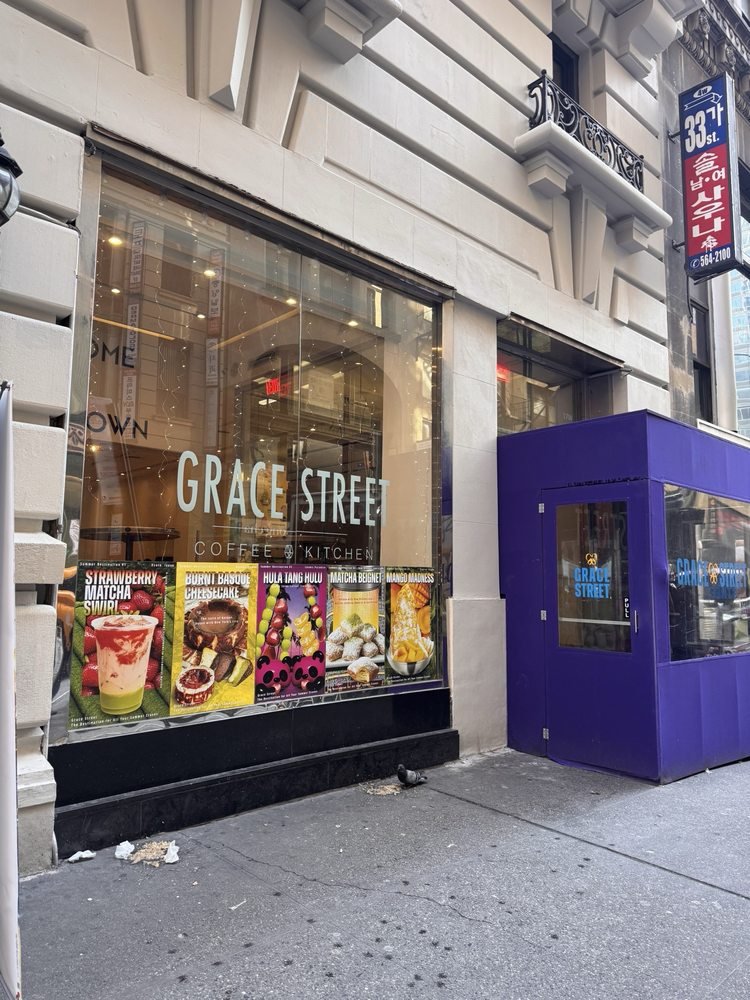
    Think you’ve seen New York’s nightlife? You haven’t until you’ve done Koreatown on 32nd Street. This step-by-step local guide covers the best rooftop bars, soju spots, private noraebang karaoke rooms, and late-night soups that keep the party going until sunrise.
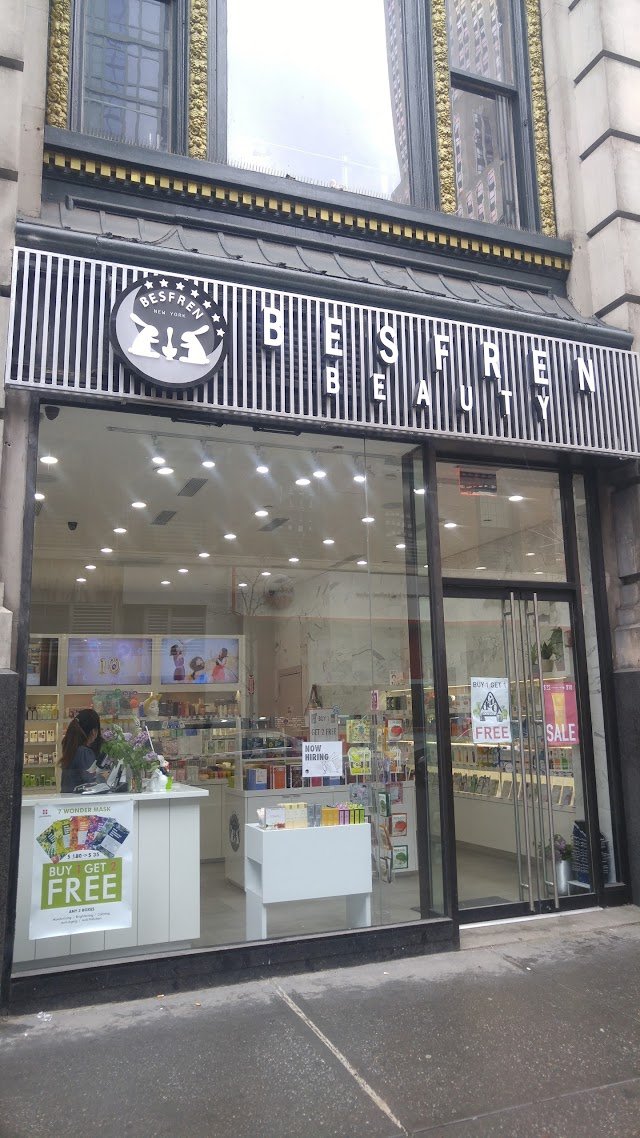
    If you think you’ve figured out New York’s nightlife, let me stop you right there.

    You probably know the rooftop bars in the Meatpacking District. You’ve probably done a round of drinks in the West Village. Maybe you’ve even queued outside a Williamsburg club at midnight. But there’s one street in Midtown Manhattan that most tourists walk past without a second glance — and it happens to be the most electric stretch of nightlife the city has to offer.

    Welcome to NYC K-Town nightlife on 32nd Street. One block. Dozens of floors. Korean BBQ, soju, private karaoke rooms, and bubbling tofu soup at 3am. This is how locals actually spend a night out in New York — and this guide will take you through it, step by step.


    What Is Koreatown NYC — and Why Does It Hit Different at Night?

    NYC K-Town Nightlife

    Koreatown NYC on 32nd Street sits between Fifth Avenue and Broadway, just a few blocks south of the Empire State Building in Midtown Manhattan. It’s compact — barely a block long — but what it lacks in size, it more than makes up for in vertical density. Buildings here stack restaurants, bars, karaoke lounges, dessert cafés, and nightclubs on top of each other, floor by floor, so a single address can mean an entirely different world depending on which elevator button you press.
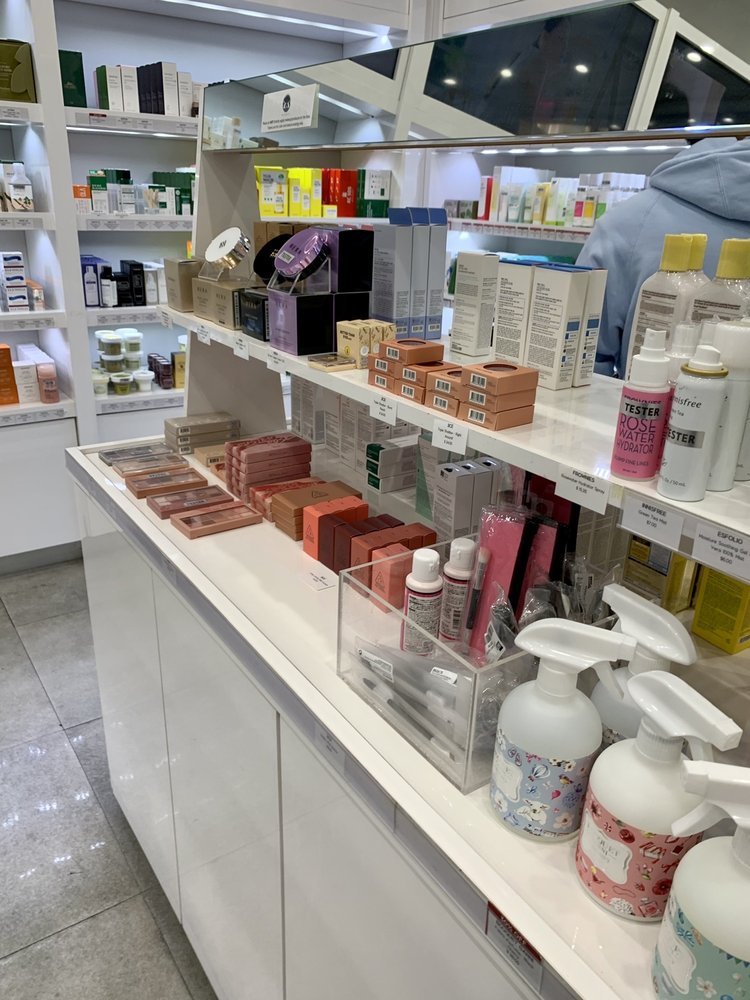
    During the day, K-Town is all about the food. But after 9pm, it transforms. The streets fill up, the neon signs get brighter, and the energy shifts into something you’d be hard-pressed to find anywhere else in the city. K-Town regularly stays open until 2am, 4am, and sometimes through sunrise — making it the rare Manhattan neighborhood that truly never sleeps.

    The nearest subway stops are 34th St–Herald Square (B/D/F/M/N/Q/R/W) and 33rd St (6 train), both just a short walk away.

    Ready? Here’s how to do it right.

    Step 1 — Get into It: Pocha Bars and the Art of Soju

    Once the sun is down, it’s time to drop into the real NYC K-Town nightlife experience. And nothing defines that experience more than a pocha — the Korean-style pub that blends loud music, communal drinking, sharp cocktails, and the kind of bar food that actually makes you want another round.
    Pocha 32 — The K-Town Icon

    NYC K-Town Nightlife

    There is no more iconic stop in Koreatown than Pocha 32 at 15 W 32nd St, 2nd Floor. Open since 2006, this place has become a rite of passage for anyone serious about experiencing K-Town nightlife. The ceiling is covered in fishnets strung with soju bottle caps. The tables are topped with hollowed-out watermelons and pineapples filled with soju and Sprite. The energy on a Friday or Saturday night is borderline chaotic — in the best possible way.

    NYC K-Town Nightlife
    watermelon soju

    The watermelon soju is the signature order and will almost certainly end up on your Instagram. But regulars know to pair their drinks with the budae jjigae — a big, bubbling cauldron of ramen stew loaded with spam, rice cakes, kimchi, and hot dogs. It sounds ridiculous; it tastes incredible.

    A few things to know before you go:

    • On weekends, Pocha 32 stays open until 5am. This is a late-night place. Don’t rush.
    • Expect a wait of 30–60 minutes on weekend nights. Check Yelp before you arrive to gauge the line.
    • Paying in cash saves you 10%, so stop at an ATM beforehand.
    • Budget roughly $30–$50 per person including drinks and food.
    • Website: Pocha32.com

    Osamil — For a Slightly More Refined Crowd

    NYC K-Town Nightlife

    If you want the soju experience with a little more polish, Osamil Upstairs consistently ranks among the top soju bars in Manhattan. The cocktails here are more composed — expect creative pairings and a carefully considered menu — and the vibe skews slightly more date-night than group bender. It’s a great option if Pocha 32 feels like too much of a scene, or if you want to start the night somewhere you can actually have a conversation.

    Website: Osamil.com

    What’s Soju, Exactly?
    Soju is a clear Korean spirit, traditionally made from rice, with an alcohol content typically between 16–25%. It’s lighter than vodka, slightly sweet, and designed to be drunk socially. The flavored versions — watermelon, grape, peach, yuzu — are the gateway; the neat bottle of Jinro green is the local default. Somaek (soju + beer) is the classic combo. Order it at least once.


    Step 2 — Forget Your Inhibitions: Private Noraebang Karaoke

    Here’s where Koreatown NYC 32nd Street separates itself from every other nightlife neighborhood in the city. Around 10 or 11pm, the crowd migrates upstairs — not to a club, not to another bar, but to a noraebang: a private karaoke room where you and your group get your own space, your own song catalog, your own drink service, and no audience except each other.

    This is not American karaoke. There is no stage. There is no audience of strangers judging your off-key rendition of Bohemian Rhapsody. It’s just you, your friends, a massive touchscreen, and a sound system loud enough to feel it in your chest.

    The Best Noraebang Spots on 32nd Street

    NYC K-Town Nightlife
    Maru Karaoke Lounge

    Maru Karaoke Lounge (opened 2004) is one of the neighborhood’s most established venues — a bi-level space with a sleek interior that transitions from elegant lounge to full karaoke experience as the night progresses. The sound systems are top-tier and the cocktail menu is surprisingly good for a karaoke spot.

    Website: https://www.marukaraokelounge.com/

    NYC K-Town Nightlife
    32 Karaoke

    32 Karaoke (32 W 32nd St, 6th Floor) is one of the most affordable options in the area, making it a local favorite for groups who want to stay longer without running up a massive tab. Their song catalog spans 30,000+ English tracks and 10,000+ Spanish songs, with monthly updates for new releases. Open until 4am every night.
    Website: https://www.32karaoke.com/home

    NYC K-Town Nightlife
    Space Karaoke Bar & Lounge

    Space Karaoke Bar & Lounge (34 W 32nd St, 11th Floor) sits higher in the building, which gives it a slightly different energy — more lounge-forward, with a full bar and a more polished atmosphere.
    Website: https://spacekaraoke.com/

    Key Practical Tips for Noraebang:

    • Book ahead on weekends. Private rooms fill up fast, especially between 10pm and 1am. Most venues have online reservation systems.
    • Look for BYOB options. Some noraebang spots in K-Town allow you to bring your own alcohol, which dramatically cuts the cost. Always check the venue’s policy before you arrive.
    • Pricing is usually by the hour per room, not per person. A group of 4–8 people splits the cost, making it surprisingly reasonable.
    • Don’t be the person who hogs the microphone. (You know who you are.)

    Step 3 — End Right: 24-Hour Late-Night Eats on 32nd Street

    It’s 2am. The bars are calling last orders. Most of Manhattan is shutting down, and you’re hungry in a way that only happens at 2am. This is when NYC K-Town nightlife plays its final and best card: the 24-hour late-night kitchen.

    Nowhere else in Midtown Manhattan will you find a proper, hot, sit-down meal at 3am. K-Town will give you multiple options.

    BCD Tofu House — The Late-Night Institution

    BCD Tofu House (5 W 32nd St) is the undisputed king of the K-Town late-night scene. The restaurant runs until 5am on Fridays and Saturdays and until 1am most other nights, making it the go-to destination for the post-karaoke, post-everything crowd.

    NYC K-Town Nightlife

    The signature order is soon dubu jjigae (soft tofu stew) — a bubbling hot-stone pot that arrives at your table still actively boiling, served with a raw egg that you crack in yourself and a spread of unlimited banchan (small side dishes) that keep getting refilled. It comes in multiple spice levels, and even the “mild” version has some heat.

    The two-level space somehow always has room for one more group. The food is fast, the portions are generous, and the bill is shockingly reasonable for Midtown Manhattan. It’s become something of a ritual: end the night at BCD, warm up from the inside out, and sober up slowly over a bowl of tofu stew.

    Order This: The soon dubu jjigae with pork, the seafood pancake (large, for sharing), and a side of steamed rice. Crack the egg into the stew early so it cooks through.

    Gammeeok — For a Different Kind of Comfort

    NYC K-Town Nightlife

    For a slightly different late-night experience, Gammeeok serves seolleongtang — a milky, slow-simmered ox bone broth soup that’s been one of Korea’s classic hangover remedies for centuries. It’s subtler than the fiery tofu stews and hits differently at 3am: deeply warming, quietly restorative, and the kind of soup that makes you feel like everything is going to be fine.


    The Full NYC K-Town Nightlife Itinerary at a Glance

    Here’s how to string it all together into one perfect night: Time Where What 7:30–8:30pm Cloud Social (6 W 32nd St, 17th Fl) Sunset cocktails, Empire State Building views 8:30–10:30pm Pocha 32 (15 W 32nd St, 2nd Fl) Watermelon soju, budae jjigae, group energy 10:30pm–1am Maru Karaoke / 32 Karaoke Private noraebang session 1–3am BCD Tofu House (5 W 32nd St) Soon dubu jjigae, banchan, decompress


    Practical Guide: Everything You Need to Know Before You Go

    Getting There

    • Subway: 34th St–Herald Square (B/D/F/M/N/Q/R/W) or 33rd St (6 train)
    • From Times Square: About a 10–15 minute walk south
    • From the Empire State Building: Less than 5 minutes on foot

    Money & Reservations

    • Bring cash. Many K-Town spots offer a cash discount (usually 10%), and a few are cash-only.
    • Use Yelp to check wait times at Pocha 32 and popular BBQ spots before you arrive on a weekend night.
    • Book noraebang rooms in advance — especially for groups of 6+, Friday and Saturday nights fill up fast.

    Hours to Know

    • Pocha 32: Open until 2am weekdays, 5am weekends
    • BCD Tofu House: Open until 1am most nights, 5am Fri–Sat
    • Most noraebang: Open until 4am daily
    • Cloud Social: Open until midnight Sun–Thu, 1am Fri–Sat

    Safety

    K-Town is located in Midtown Manhattan, one of the city’s most well-trafficked and well-lit areas. It’s considered very safe at night. The neighborhood is busiest between 10pm and 3am, especially on weekends, so you’ll rarely be walking alone.


    Why NYC K-Town Nightlife Is Unlike Anywhere Else in the City

    What makes Koreatown NYC on 32nd Street special isn’t any single venue. It’s the sequence — the way a single block can take you from golden-hour cocktails with a view of the Empire State Building, to soju-soaked bar food surrounded by regulars, to a private room where you’re singing your heart out at midnight, to a quiet bowl of hot soup that resets everything at 2am.

    It’s the fact that everything is vertical and everything is walkable. You don’t need a cab, you don’t need a plan, and you don’t need a table at the hottest reservation in the city. You just need to show up on 32nd Street after 9pm and follow the neon signs up.

    That’s NYC K-Town nightlife. And once you’ve done it, the rest of Manhattan’s nightlife scene is going to feel like it’s missing something.


    Related posts you might enjoy: