Every May, New York City quietly transforms. Studios unlock their doors. Showrooms reshape themselves into something closer to gallery space. And one of the world’s most complex, chaotic, and beautiful cities starts telling a different kind of story — one written entirely in design.
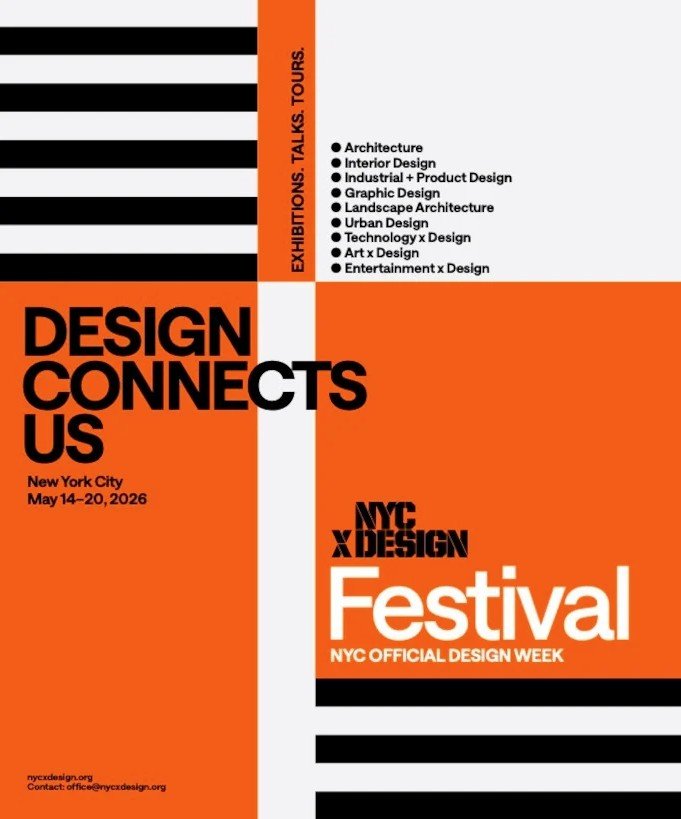
NYCxDESIGN 2026, New York City’s official design week, returns for its 14th edition from May 14–20, 2026, under the theme “Design Connects Us.” More than 163,000 designers, cultural leaders, and global creatives are expected across all five boroughs — with roughly a third traveling into the city specifically for the festival. Over 250 hosted events span the full week, from major trade fairs and public installations to intimate studio tours, keynote talks, and late-night showroom crawls.
If you work in interiors, architecture, or product design — or simply have a deep appreciation for the built world — New York Design Week 2026 is not optional. This guide covers every major confirmed event, with dates, locations, and the designer-level context to help you make the most of each one.
What Is NYCxDESIGN? Understanding New York Design Week 2026
NYCxDESIGN began as a city-led initiative in 2012 and has since grown into an independent nonprofit anchoring New York’s creative identity on the global stage — alongside Milan Design Week and London Design Festival as one of the world’s most significant annual design events.
Crucially, NYCxDESIGN is not a single-venue fair. It is a citywide platform of independently hosted events across studios, showrooms, retail spaces, museums, schools, and public spaces throughout all five boroughs. The 2026 festival features two major trade and consumer design fairs — ICFF and the Afternoon Light Design Fair — alongside a day-long AI Summit, the SHINE lighting exhibition, the Design Pavilion by Lexus in Times Square, Oui Design! celebrating French-American creative exchange, guided city tours, open studios, keynote talks, product launches, and evening receptions.
The disciplines represented span architecture, landscape and urban design, interior design, product and industrial design, graphic design, lighting, sound, technology, art, and entertainment.
NYCxDESIGN 2026 at a Glance
- 📅 Official Festival Dates: May 14–20, 2026 (some events begin May 11)
- 📍 Location: All five boroughs, New York City
- 🎟️ Entry: Mix of free, RSVP, and ticketed events
- 📱 App: NYCxDESIGN app + Bloomberg Connects app (iOS & Android)
- 🌐 Full calendar: nycxdesign.org
1. ICFF + WANTED at the Javits Center: The Anchor Event of NYCxDESIGN 2026
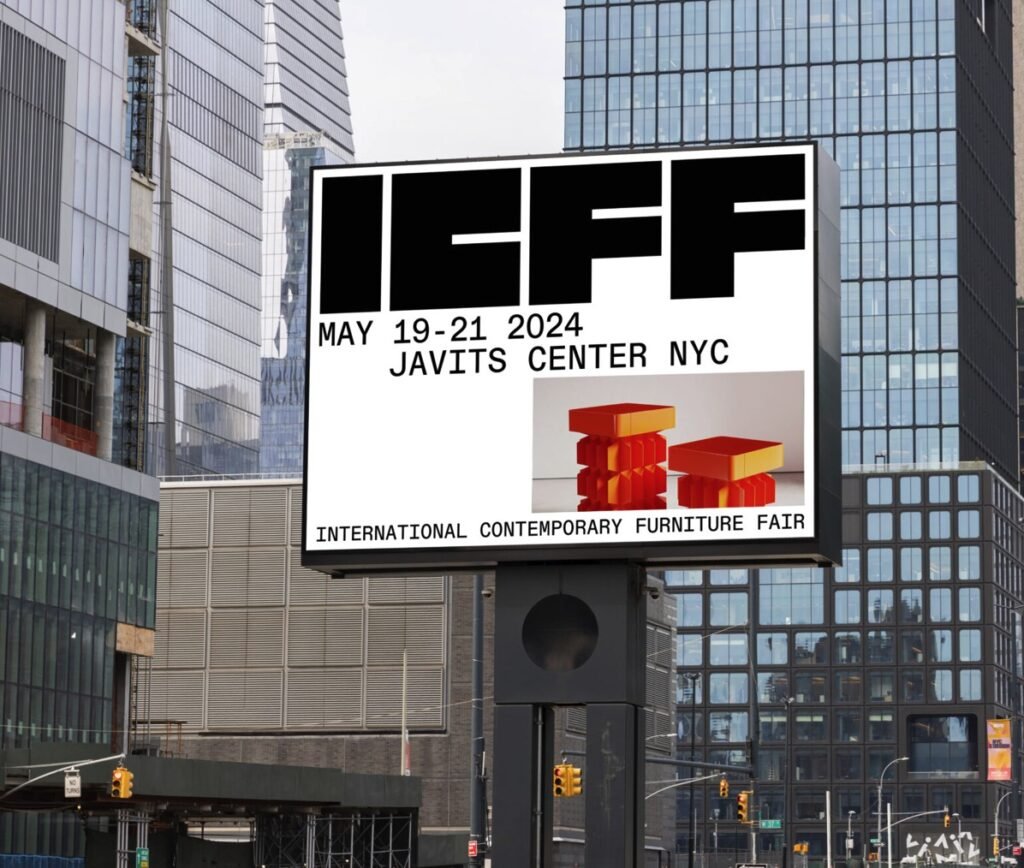
Dates: May 17–19, 2026 | Location: Jacob K. Javits Convention Center
The International Contemporary Furniture Fair (ICFF) is North America’s leading platform for contemporary furnishing design and the single biggest anchor event of New York Design Week 2026. Running May 17–19 at the Javits Center, it brings together over 400 established and emerging design brands from more than 35 countries — covering furniture, lighting, seating, outdoor pieces, kitchen and bath, wall coverings, textiles, carpet and flooring, materials, and accessories.
The 2026 edition is guided by the theme “Common Ground: A Global Dialogue on Design and Shared Values” — positioning design as a connective force across cultures, disciplines, and communities.
What’s New at ICFF 2026
- Bauhaus Archive × Tecta Exhibition (presented by Rarify): ICFF’s first collaboration uniting Berlin’s official Bauhaus archive with German manufacturer Tecta — collapsing the distance between museum and trade fair, history and active production.
- Healthy Materials Lab Exhibit, led by Jonsara Ruth (Design Director, Parsons School of Design): A focused look at non-toxic, human-centered material choices in the built environment.
- Habitat for Humanity Partnership: In a first for ICFF, a portion of registration proceeds supports affordable housing initiatives across New York City and Westchester County.
- Mayfair Design District Collaboration: A new partnership bringing a London curatorial perspective through the fair’s Bespoke programming track.
- ICFF Talks Program: A full lineup of panel sessions, keynote presentations, and intimate conversations examining everything from healthy building materials to design’s role in housing equity.
WANTED: The Emerging Talent Floor
Running alongside ICFF and occupying approximately 20,000 sq. ft. of the show floor, WANTED is where you discover tomorrow’s names today:
- Look Book (with Dezeen) — 70+ high-end North American design studios
- Launch Pad (with Dwell Magazine) — International emerging designers presenting new concepts and prototypes
- Schools Showcase (with Design Milk) — Work from 20+ global design schools
- Design Schools Workshop: “The Unseen Narratives” — A partnership with Centro (Mexico), exploring how sound, data, rhythm, and emotion can transform perception of daily life
Designer’s Tip: May 17–18 are trade-professional days; May 19 is open to the public and fills quickly. Register in advance for complimentary trade access at icff.com. Head to the Hospitality and Contract sections first — that’s where the most commercially relevant shifts in modular furniture, sustainable finishes, and flexible spatial systems tend to surface.
2. The Design Pavilion by Lexus in Times Square: Urban Design as Public Experience
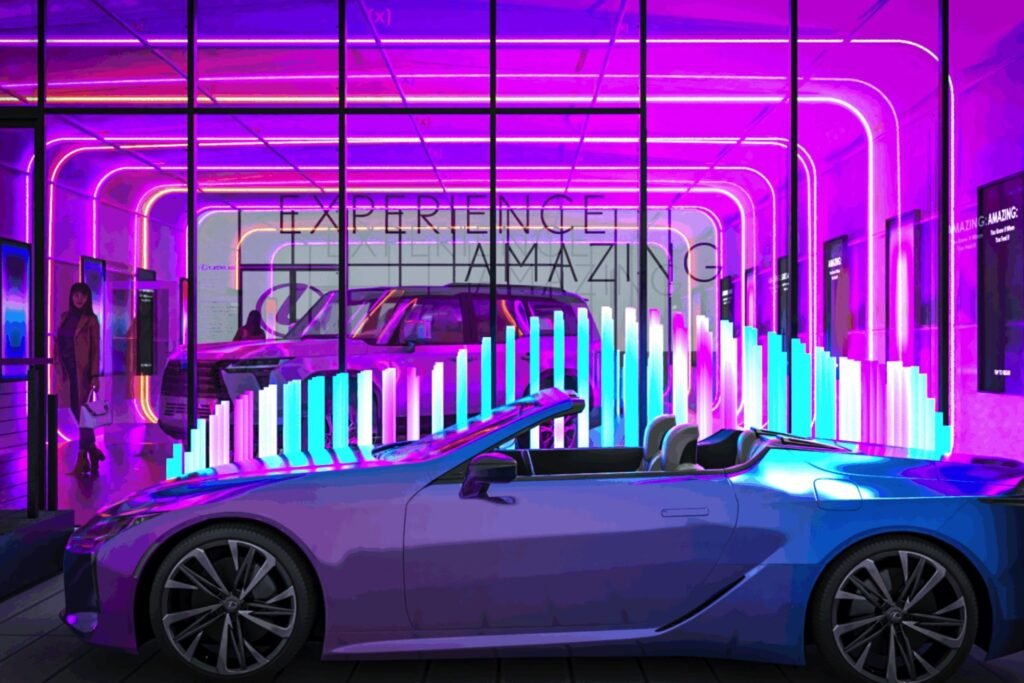
Dates: May 14–19, 2026 | Location: Times Square, Midtown Manhattan | Free & open to all ages
Returning to Times Square for 2026, the Design Pavilion by Lexus is an immersive installation blending design, craft, art, technology, and innovation. Through daily programming open to visitors of all ages, the experience invites engagement with leading artists and industrial designers across the week.
What makes this installation worth studying — beyond the obvious photogenic context of LED towers and kinetic signage — is the design challenge embedded in its brief: how do you create a moment of human scale and intentional rest inside one of the most overstimulating public environments on earth? The structures selected for this site function as what designers call urban furniture — not just sculpture, but infrastructure for pause and pedestrian experience.
Note: The Lexus Design Pavilion has been a recurring NYCxDESIGN anchor since 2019. The 2026 edition is confirmed; specific installation details will be announced closer to the opening.
Photo Tip: Arrive before 8 AM for the best light. The LED boards are at full intensity, the crowds haven’t arrived, and the architectural geometry of the structure reads most clearly from the north end of the Broadway pedestrian plaza between 45th and 47th Streets.
3. SHINE at The Seaport: A Lighting Exhibition Worth Making Time For
Dates: May 14–20, 2026 | Location: The Seaport, Lower Manhattan | Free
SHINE is one of NYCxDESIGN’s own flagship exhibitions — and in 2026 it returns for its third consecutive year, building on the success of the 2024 and 2025 editions.
Curated by award-winning industrial designer Harry Allen in collaboration with COOL HUNTING and sponsored by Kikkerland Design, SHINE brings together 70 designers presenting original light objects at The Seaport’s waterfront setting. Each piece explores the intersection of craft, technology, personal expression, and function — treating the light object not as an accessory but as a primary design discipline.
For designers and decorators, this is one of the most directly applicable exhibitions of the week: the scale is residential, the ideas are current, and the waterfront context gives you a completely different read on how artificial light behaves in relation to open sky and water. It’s also free and open all week — no registration required.
4. Afternoon Light Design Fair at WSA: The Curator’s Alternative to ICFF
Dates: May 16–19, 2026 | Location: WSA, Downtown Manhattan | Trade + Public
New to the NYCxDESIGN 2026 lineup as a confirmed anchor fair, the Afternoon Light Design Fair brings together 80+ carefully selected exhibitors — a more intimate, editorially driven counterpart to the scale of ICFF.
Confirmed participating brands and studios include Anglepoise, Carl Hansen & Søn, Ford Bostwick, Gantri × Rarify, Humanscale Living, Matter Made, Matthew McCormick, Palet, Parma Tile, Phase Design, Resource Furniture, Symbol Audio, USM, and Willett, among many others.
The curatorial direction here reflects a broader industry shift: away from spectacle, toward thoughtful material choices, enduring craftsmanship, and the intersection of craft and everyday function. If ICFF is the full market survey, Afternoon Light is the edit.
5. Friday Night on the Town: The Showroom Crawl You Don’t Want to Miss
Date: May 15, 2026 | Time: 4:00–10:00 PM | Locations: TriBeCa, Meatpacking, Flatiron, SoHo, NoMad
On the evening of May 15, New York’s design districts come alive simultaneously. Showrooms across TriBeCa, Meatpacking District, Flatiron, SoHo, and NoMad extend their hours until 10 PM for Friday Night on the Town — the festival’s most social evening.
Key programming within the crawl includes:
- AN After Dark: NYC Design Districts Showroom Crawl — A structured tour through the most active showroom zones
- SoHo Design Night — Independent events and activations across SoHo’s concentrated design corridor
- NoMad Design District events
- Interni’s Big Italy — A major Italian design event co-organized with the Italian Trade Agency, NYCxDESIGN, and ICFF, stretching from NoMad and Madison Avenue to SoHo
Designer’s Tip: This is the best single evening for experiencing the breadth of Manhattan’s high-end residential and hospitality design market in one go. The lighting showrooms along West Broadway and Greene Street are particularly strong — touch the fixtures and observe how light behaves in a real room rather than on a spec sheet.
6. NYCxDESIGN Keynote Program: Two Talks Worth Scheduling Around
Santiago Calatrava at the Saint Nicholas Shrine
Date: May 16, 2026 | Time: 5:00–7:30 PM | Location: Financial District
A featured public talk by international architect and structural engineer Santiago Calatrava at the Saint Nicholas Greek Orthodox Church and National Shrine at the World Trade Center — the church he designed, completed in 2022, replacing the parish house destroyed on September 11. The talk is followed by a personal tour of the Oculus, led by his son Gabriel Calatrava.
This is architecture experienced inside the building its architect created, at a site of profound public significance. Very few design-week events offer this kind of layered context.
New York in Light: A Night Boat Tour
Date: May 17, 2026 | Location: Departure from waterfront
Renowned lighting designer Hervé Descottes guides a boat tour of New York’s skyline through the lens of light, form, and architectural landmark. Made possible by Signify Color Kinetics. Part of the NYCxDESIGN Keynote Program — check nycxdesign.org for ticketing.
7. Future Now AI Summit at Cornell Tech: Design’s Most Urgent Conversation
Date: May 19, 2026 | Location: Cornell Tech, Roosevelt Island | Ticketed
Expanded from a keynote slot into a full-day summit in response to demand, the Future Now AI Summit is NYCxDESIGN’s dedicated program on artificial intelligence in design practice.
Confirmed speakers include:
- Keynote: Phil Gilbert, former Head of Design, IBM
- Panelists from: Adobe, Google DeepMind, IBM, Mastercard, MIT Media Lab, School of Visual Arts, SHoP Architects
- Host: Will Hall, CTO of PreSeason
The central questions — how are generative tools reshaping authorship? what happens to design practice when AI accelerates ideation? — are ones every working designer needs to be engaging with now, not in five years. Book early; this sold out as a keynote slot and is expected to fill quickly as a full-day event.
8. NYCxDESIGN Tours: The City as the Exhibition
Dates: May 15–19, 2026 | Various locations
NYCxDESIGN 2026 features a confirmed guided tours program that turns the city’s own fabric into the exhibition:
- Defensible Dwelling and Placemaking in Brownsville: Live on Livonia — Presented by the NYC Department of Transportation, exploring community-led affordable housing and cultural reinvestment in Brownsville, Brooklyn
- Harlem Sculpture Gardens Tour — Large-scale sculpture and design works across parks, plazas, and public spaces in West Harlem, led by Executive Director and Chief Curator Savona Bailey-McClain (West Harlem Art Fund)
- Wagner Park Tour — Presented by the American Society of Landscape Architects, focusing on the park’s rebuilt flood-resilient landscape and climate-adaptive design
- NYCxDESIGN High School Student Tours — Visiting end-of-year exhibitions at Cornell Tech and other participating institutions
These tours are underused by visiting professionals and overused by people who’ve figured out that the official programming is where the real depth lives. Sign up early through nycxdesign.org.
9. DUMBO x Design Day + Festival Closing Party
Date: May 20, 2026 | Time: 12:00–9:00 PM | Location: DUMBO, Brooklyn
The festival closes in Brooklyn’s most design-dense neighborhood, with a day of open studios and activations followed by the official closing party.
Confirmed participants in the DUMBO program include BIG (Bjarke Ingels Group), Snøhetta, Fishs Eddy, Henrybuilt, Hudson Wilder, and Reform, among many others.
Two standout moments:
- BIG hosts a panel moderated by Lora Appleton (The Female Design Council), featuring female leaders at the firm and spotlighting their new publication BIG Atlas
- Snøhetta marks the opening of its new 25,000 sq. ft. New York headquarters and unveils a new identity and logo it has designed for the DUMBO neighborhood itself
10. Oui Design! — French Design in New York
Dates: May 14–20, 2026 | Various locations across NYC
Now in its fourth edition, Oui Design! is presented by Villa Albertine as an NYCxDESIGN International Spotlight. The program encompasses exhibitions, open studios, talks, and special events celebrating the dialogue between French and American creative communities.
The centerpiece is a major week-long exhibition at Villa Albertine’s Payne Whitney Mansion, showcasing Craft & Design residency laureates — many of whom are presenting in the United States for the first time.
Practical Guide: Navigating NYCxDESIGN 2026 Like a Pro
Before You Arrive
- Register early. ICFF trade days, the AI Summit, the Opening Night Party at Halo Twenty Eight (May 14), and the Santiago Calatrava keynote all require advance booking. The festival calendar is live at nycxdesign.org and on the NYCxDESIGN app (iOS and Android) and Bloomberg Connects app.
- Download the app. Filter events by neighborhood, discipline, and date. Build your itinerary before you land — popular events fill up.
- Trade professionals: Register at icff.com for complimentary ICFF trade access (May 17–18).
On the Ground
- Plan by neighborhood, not by category. Crossing the city multiple times a day will drain you fast. A suggested framework:
| Day | Area | Key Events |
|---|---|---|
| May 14 | Citywide | Opening Night Party (Halo Twenty Eight), SHINE opens, Design Pavilion opens, Oui Design! opens |
| May 15 | SoHo / TriBeCa / NoMad | Friday Night on the Town (4–10 PM showroom crawl), Parsons student showcase |
| May 16 | Afternoon Light Fair (WSA) + Financial District | Afternoon Light opens, Santiago Calatrava talk + Oculus tour |
| May 17–18 | Javits Center | ICFF + WANTED (trade days), NYCxDESIGN Awards (May 18), Night Boat Tour (May 17) |
| May 19 | Javits Center + Cornell Tech | ICFF public day, Future Now AI Summit |
| May 20 | DUMBO, Brooklyn | DUMBO x Design Day, BIG panel, Snøhetta HQ opening, Festival Closing Party |
- Wear comfortable shoes. This is a walking festival spread across a city. Prioritize footwear.
- Attend at least one guided tour. The NYCxDESIGN tour program offers access to perspectives and places you won’t find on any showroom floor.
Getting Around
- Javits Center: The M34 SBS bus runs directly from the east side. The ferry from Pier 79 can be faster than taxis during morning rush.
- DUMBO: F or A train to York St, or the East River Ferry from Pier 11 in the Financial District. The Brooklyn Bridge walk is worth it if weather cooperates.
- Cornell Tech (Roosevelt Island): The Roosevelt Island Tram from 59th St & 2nd Ave is the most memorable way to arrive, and takes about 3 minutes.
The Big Picture: What NYCxDESIGN 2026 Is Really About
The 2026 theme — Design Connects Us — might read as a brand line, but the programming backs it up with specificity. ICFF partners with Habitat for Humanity. The AI Summit asks hard questions about authorship and creative labor. Calatrava speaks inside the building he designed at Ground Zero. The closing party happens in a neighborhood whose new identity was itself designed by one of the studios celebrating that night.
That’s not decoration. That’s design being used as a tool for civic meaning, economic equity, and cultural memory — all in the same week, in the same city.
Full festival calendar: nycxdesign.org ICFF registration: icff.com NYCxDESIGN app: Available on the App Store and Google Play
Related posts you might enjoy: