New York’s jazz clubs are more than just venues—they’re living history. The basement where Miles Davis caught his breath, the stage where John Coltrane poured his soul into every note, the piano where Bill Evans held the night captive—these moments have layered upon each other to create today’s New York jazz scene. Let’s follow the trail of legends past and present, exploring the venues where history still breathes every night.
1. Village Vanguard: The Sacred Ground of Jazz Since 1935
Greenwich Village | Operating since 1935
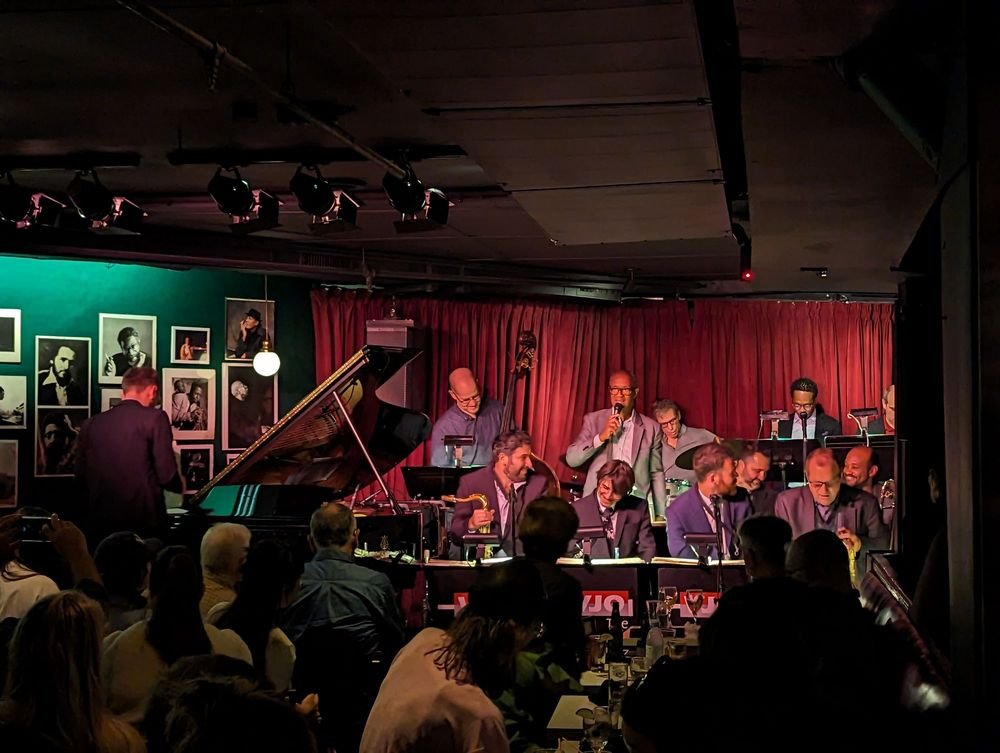
Miles Davis, John Coltrane, Bill Evans, Sonny Rollins, Thelonious Monk, Wynton Marsalis, Brad Mehldau, and Joe Lovano have all graced this underground stage. Opening in 1935, this uniquely shaped basement space stands as New York’s longest continuously operating jazz club.
The live albums recorded here have become textbooks of jazz history. Starting with Sonny Rollins’ 1957 recording, over 100 albums have been born within these walls. Village Vanguard functions less as a performance venue and more as a recording studio where tonight’s performance becomes tomorrow’s standard.
Though intimate with only 130 seats, the distinctive triangular architecture creates perfect acoustics. The red velvet curtains, low ceilings, and close proximity to the stage offer an intimacy unmatched anywhere else. Every Monday night since 1966, the Vanguard Jazz Orchestra has maintained its residency.
Address: 178 Seventh Avenue South, New York, NY 10014
Website: villagevanguard.com
2. Blue Note: The Living Mainstream of Modern Jazz
Greenwich Village | Where legends and rising stars share the stage
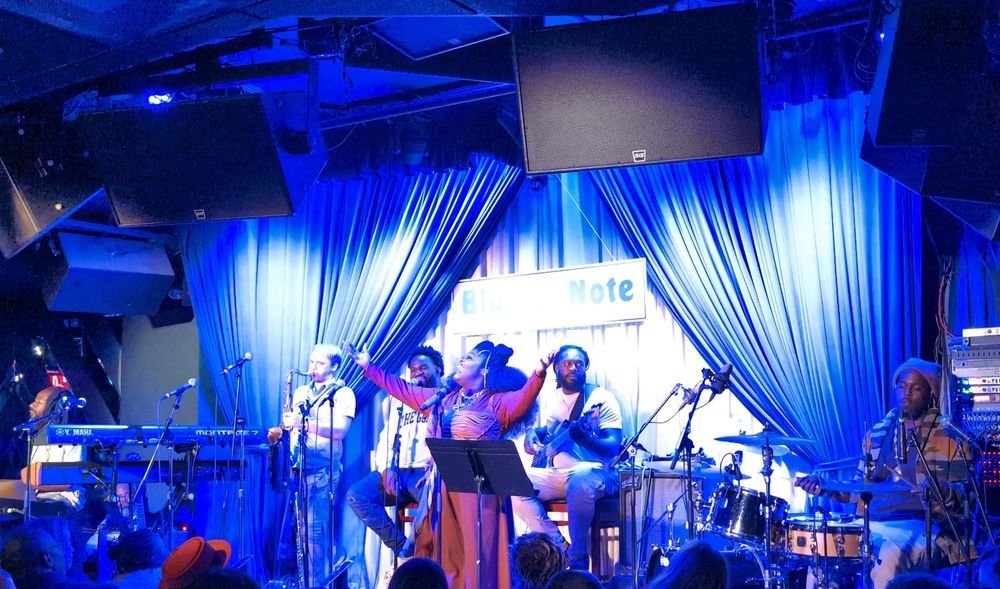
Herbie Hancock, Chick Corea, Wayne Shorter, Wynton Marsalis, Dizzy Gillespie, Sarah Vaughan, Oscar Peterson, Keith Jarrett, and James Carter have all performed on this stage. Ray Charles even held week-long residencies here annually.
Since opening in 1981, Blue Note has demonstrated that jazz is a living, evolving art form by featuring both legendary masters and contemporary virtuosos on the same stage. Founded by Danny Bensusan, it quickly became New York’s premier jazz club and soon earned its place among the world’s most prestigious jazz venues. Today, Blue Note has locations worldwide including Tokyo, Milan, Rio, and Beijing.
In 2001, the club established its own label, Half Note Records, to release live albums directly. Since 2011, it has hosted the annual Blue Note Jazz Festival. Performances run nightly at 8 PM and 10:30 PM, with jazz brunch on Sundays. As a full-service restaurant, you can enjoy dinner while immersed in world-class jazz.
Address: 131 West 3rd Street, New York, NY 10012
Website: bluenotejazz.com
3. Smalls Jazz Club: Where Jazz Is Reborn
Greenwich Village | The crucible of 1990s jazz renaissance
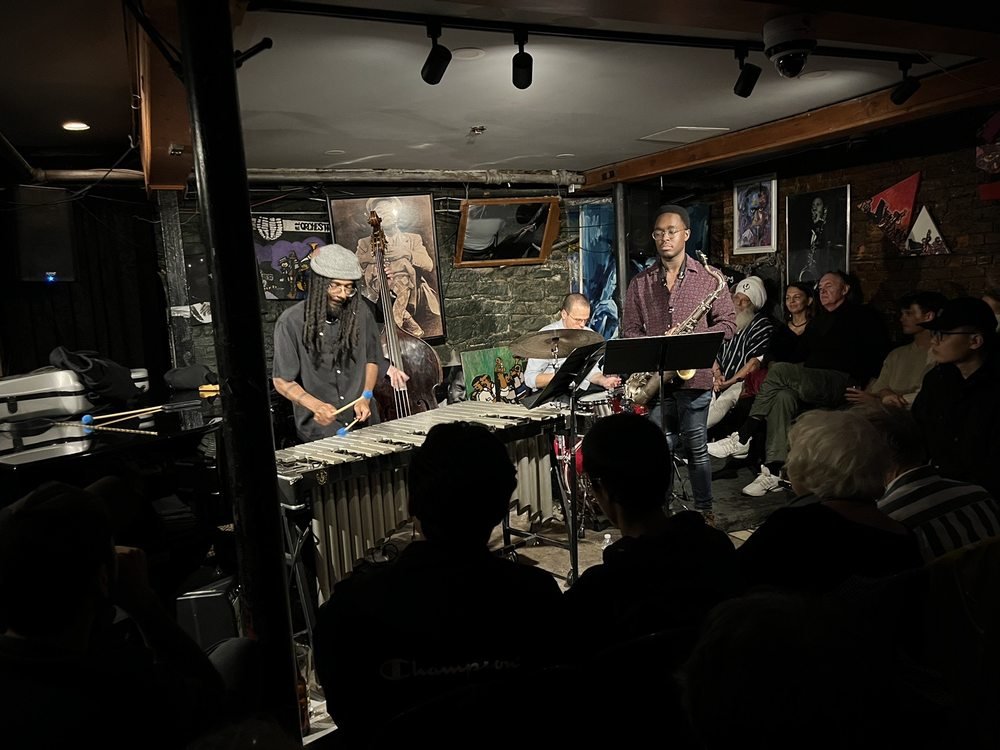
Brad Mehldau, Joshua Redman, Kurt Rosenwinkel, Peter Bernstein, Mark Turner, and Jason Lindner all developed their careers in this basement. Founded in 1994 by Mitch Borden, Smalls became the epicenter of the 1990s New York jazz renaissance.
Initially operating with a $10 cover charge and BYOB policy, it functioned as a playground for young musicians. Famous for late-night jam sessions, rising stars honed their craft here. After briefly closing following 9/11, it reopened in 2006 with improved sound systems and a full bar.
Since 2013, Smalls has pioneered live-streaming and archiving every performance online. Subscribers can revisit past shows, with revenue shared among artists. Though only accommodating about 60 people, this intimacy defines its character. Open Tuesday through Thursday from 7:30 PM, and Friday through Sunday from 2 PM. Sister club Mezzrow is located nearby.
Address: 183 West 10th Street, New York, NY 10014
Website: smallslive.com
4. Birdland: The Jazz Corner of the World
Midtown | Symbol of jazz’s golden age
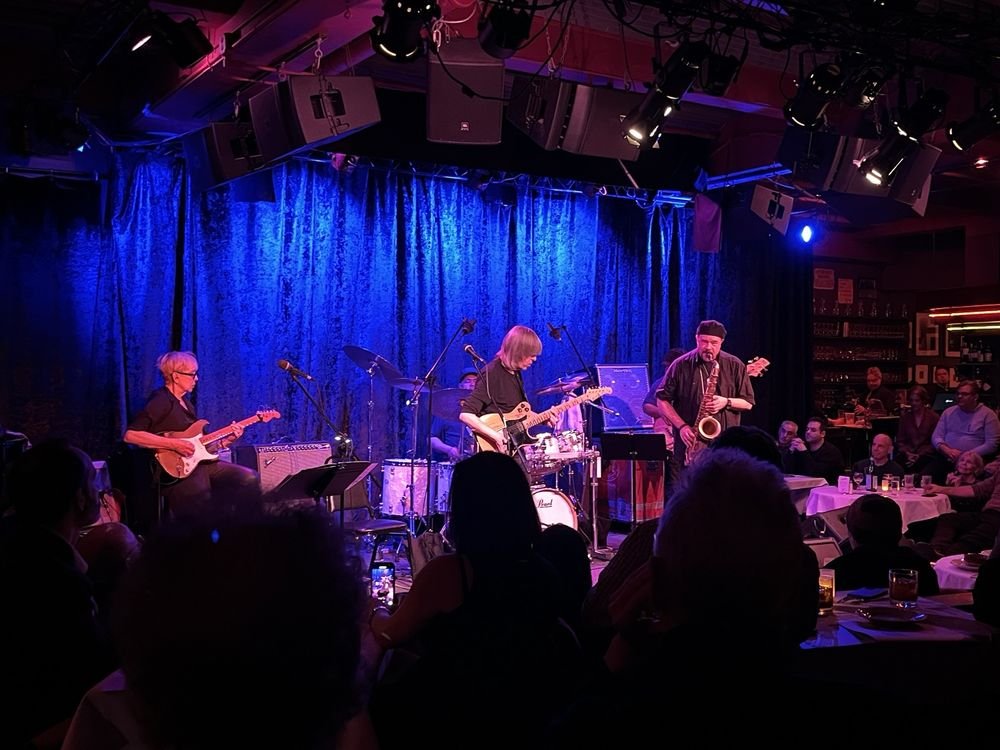
Charlie Parker, Dizzy Gillespie, Count Basie, John Coltrane, Miles Davis, Art Blakey, and Thelonious Monk all performed on this stage. Opening on December 15, 1949, and named after Charlie “Bird” Parker, Birdland symbolizes New York jazz’s golden era.
Though the original Broadway location closed in 1965 due to rising rent, the club was revived on the Upper West Side in 1986 and now resides in the Midtown theater district. True to its nickname “The Jazz Corner of the World,” the weight of big band and vocal jazz remains alive here.
The Count Basie Orchestra made this their home base, and George Shearing’s classic “Lullaby of Birdland” (1952) was composed to honor this very club. During the 1950s, Hollywood stars like Frank Sinatra, Marilyn Monroe, and Marlon Brando were regulars.
Today’s Birdland operates two spaces: the main performance hall and the underground Birdland Theater. Serving Cajun-style American cuisine, it’s open daily from 5 PM to midnight (1 AM on weekends). Monday nights feature Jim Caruso’s Cast Party, showcasing Broadway stars.
Address: 315 West 44th Street, New York, NY 10036
Website: birdlandjazz.com
5. Smoke Jazz & Supper Club: Refined Jazz Nights
Upper West Side | Where mature jazz resides
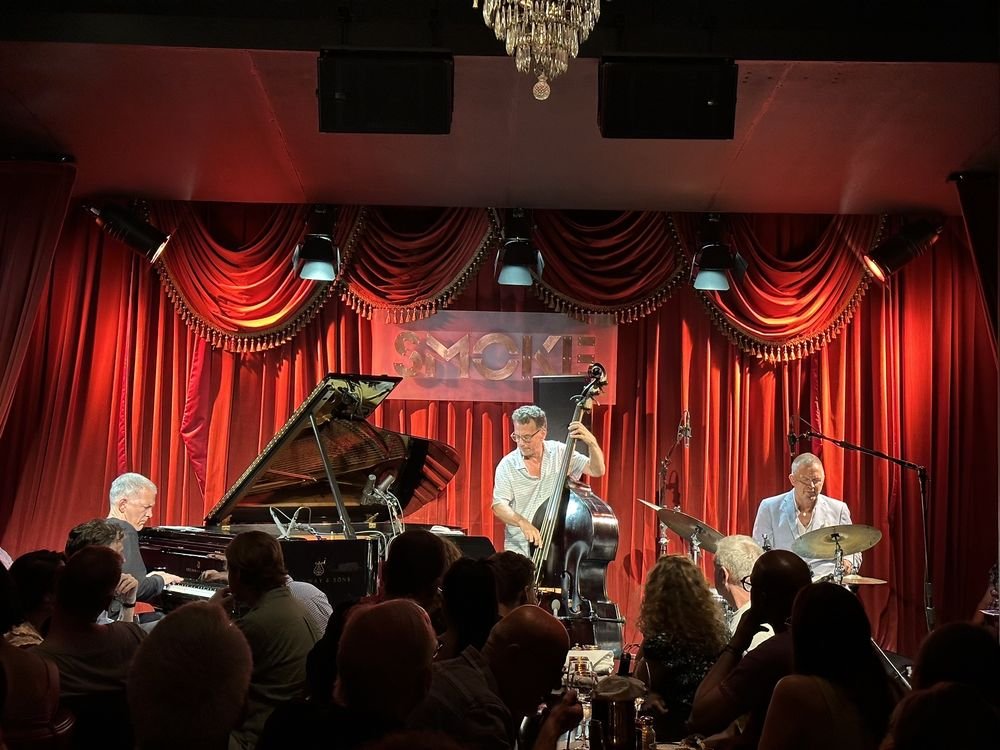
Ron Carter, McCoy Tyner, Kenny Barron, Harold Mabern, George Coleman, Wynton Marsalis, Brad Mehldau, and Chris Potter have all performed here. Opening on April 9, 1999, founders Paul Stache and Frank Christopher created a space that demonstrates what sophisticated jazz truly means.
Inheriting over 30 years of jazz tradition from the former Augie’s Jazz Bar location, Smoke was named Best New Jazz Club by New York Magazine in 2000. Located on Duke Ellington Boulevard (106th Street) near Harlem in the Upper West Side.
Candlelit tables, velvet sofas, antique chandeliers, and a full bar combine to create an authentic jazz atmosphere. Though intimate with about 50 seats, the acoustics are exceptional. Pianist David Hazeltine noted it’s rare to find a club where the piano sounds this clear, while Harold Mabern called it the best jazz club in the world.
Chef Patricia Williams developed soulful American cuisine that perfectly balances dinner and music. In 2014, Smoke established its own label, Smoke Sessions Records, producing Grammy-nominated releases. Open Wednesday through Sunday, with performances running until midnight on Fridays and Saturdays.
Address: 2751 Broadway, New York, NY 10025
Website: smokejazz.com
6. The Iridium: Where Guitar Legends Made History
Midtown West | Les Paul’s home stage
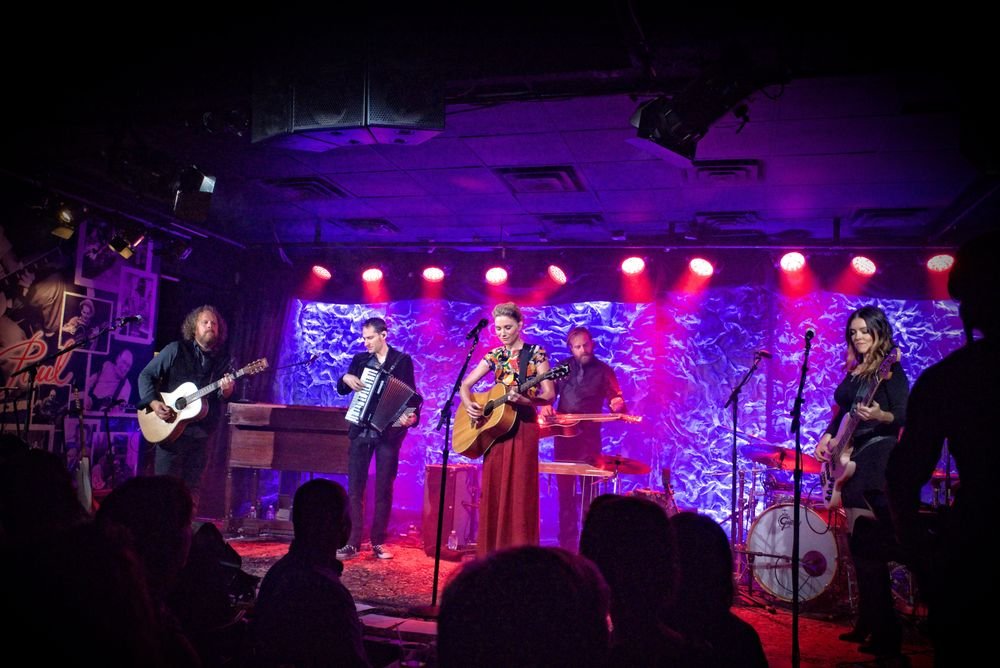
Les Paul, Jeff Beck, Steve Miller, Buddy Guy, Joe Walsh, and Joe Satriani have all performed here. Opening in January 1994, The Iridium is inseparable from guitar legend Les Paul, who performed here every Monday night from 1995 until his death in 2009 at age 94—nearly 15 years of weekly performances.
This venue birthed new traditions where the boundaries between jazz and rock blurred. Initially starting in the Empire Hotel basement across from Lincoln Center, it relocated to its current Times Square location in 2001.
With 180 seats, The Iridium showcases diverse genres including jazz, blues, rock, folk, and cabaret. Its label IridiumLive has released Albert Lee’s ‘Live At The Iridium’ and Jeff Beck’s Grammy-nominated ‘Rock ‘N’ Roll Party Honoring Les Paul.’
As a full-service restaurant featuring upscale American cuisine and a 450-square-meter wine cellar, performances begin nightly at 7 PM, with dinner service starting at 6:30 PM. Located at Broadway and 51st Street for excellent accessibility.
Address: 1650 Broadway, New York, NY 10019
Website: theiridium.com
7. Arthur’s Tavern: West Village’s Timeless Night
Greenwich Village | Home of the Bird
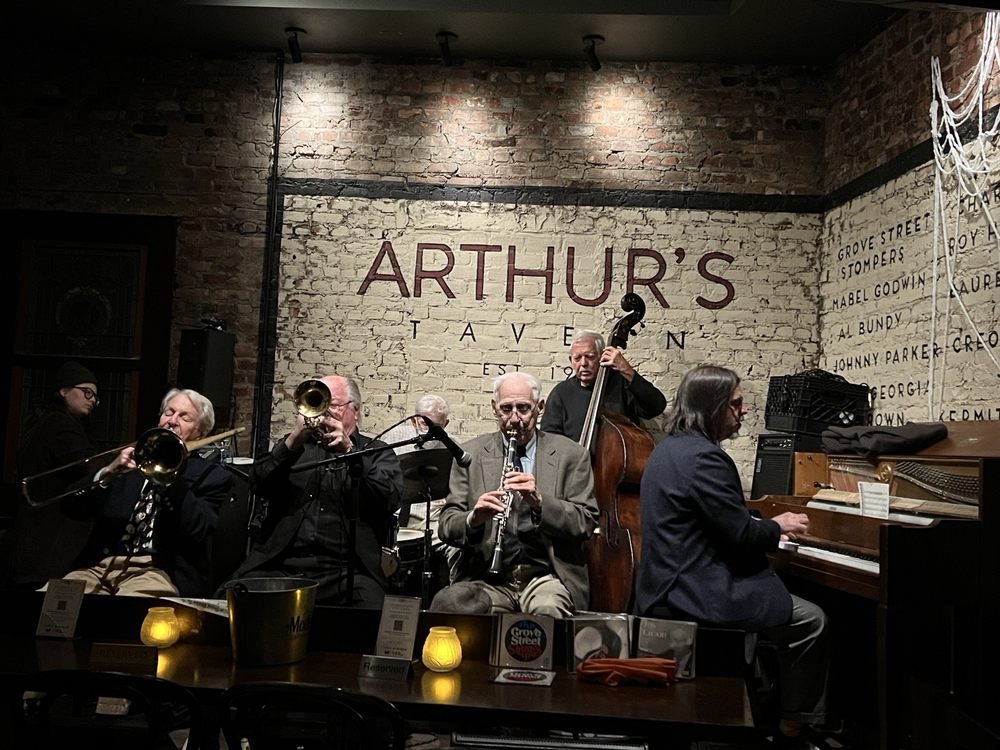
Charlie Parker and Roy Hargrove have graced this small bar’s stage. Opening in 1937, Arthur’s Tavern boasts 88 years of history and is known as the last existing club where Charlie Parker regularly performed, earning it the nickname “Home of the Bird.”
Pianist and singer Al Bundy performed here for 22 years, with a plaque honoring him hanging on the door. This venue blending traditional jazz, blues, swing, and funk remembers when jazz was part of everyday life.
Though maintaining a humble, friendly neighborhood bar atmosphere, live music fills the space every night. The Grove Street Stompers have performed every Sunday since 1986, with various bands playing Monday through Saturday.
No cover charge—just order at least one drink per person. Cash only, no credit cards accepted. The small space creates intimate proximity to the stage. Open Monday-Thursday and Sunday from 5 PM to 2 AM, Friday-Saturday from 5 PM to 4 AM.
Address: 57 Grove Street, New York, NY 10014
Website: arthurstavern.nyc
8. Dizzy’s Club: Where Jazz Meets Institution
Jazz at Lincoln Center | Purpose-built for jazz
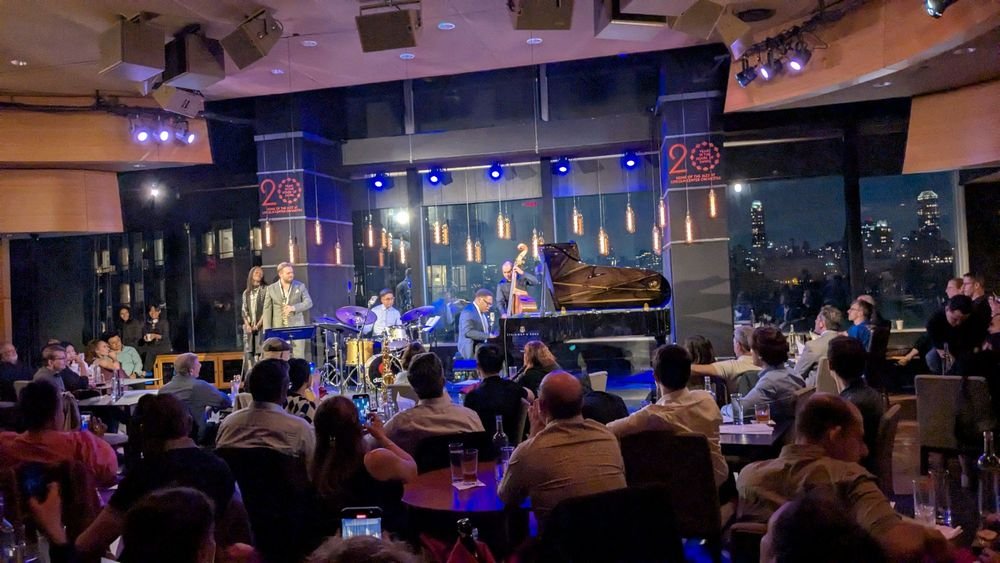
Named after Dizzy Gillespie, this club regularly features Wynton Marsalis, Wycliffe Gordon, and members of the Jazz at Lincoln Center Orchestra. Opening in fall 2004 on the 5th floor of Frederick P. Rose Hall, Jazz at Lincoln Center’s new headquarters, Dizzy’s Club is part of the world’s first performance, education, and broadcast facility built specifically for jazz.
Designed by Rafael Viñoly as a $131 million facility, the space was specially created for jazz music’s warmth and clarity. Though intimate with 140 seats, experiencing jazz while overlooking Central Park and the Manhattan skyline is truly transcendent. Tony Bennett praised it as New York’s finest jazz room.
Unlike most historic jazz clubs located in basements, Dizzy’s Club occupies an elevated position with stunning Central Park views. It also serves an educational role in preserving jazz history for future generations. Wynton Marsalis has served as artistic director since 1987, leading the Jazz at Lincoln Center Orchestra.
Serving New Orleans-style soul food, performances run Monday-Saturday at 7 PM and 9 PM, and Sundays at 5 PM and 7:30 PM.
Address: 10 Columbus Circle, 5th fl., New York, NY 10019
Website: jazz.org
9. Café Carlyle: Where Jazz Meets Cabaret
The Carlyle Hotel | The last bastion of New York’s golden age cabaret
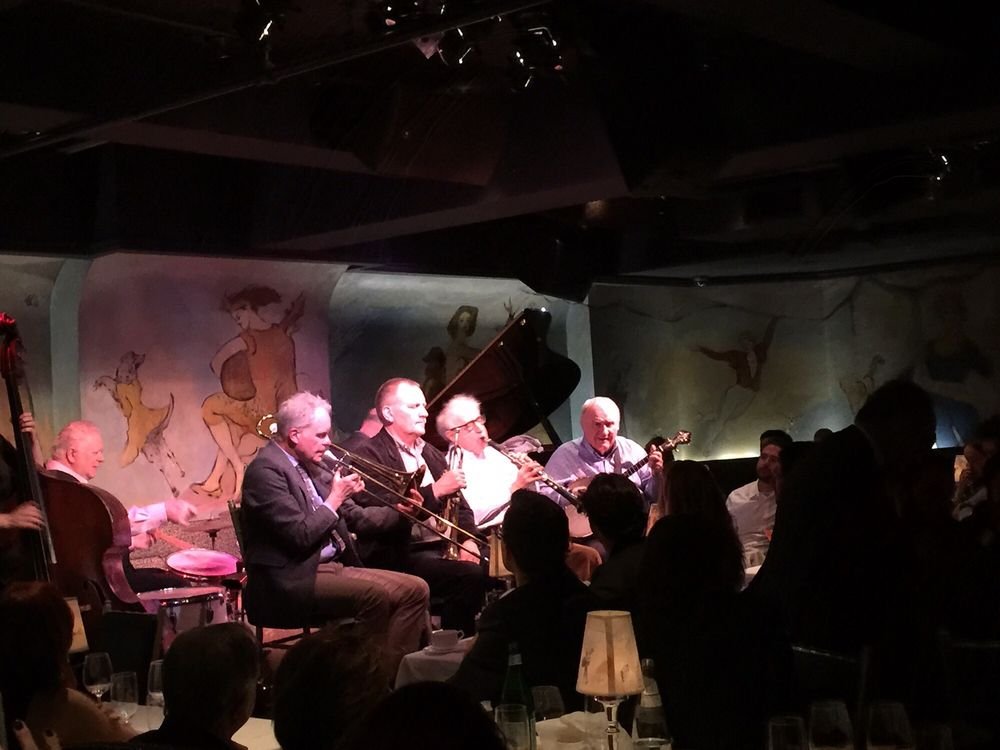
Bobby Short, Woody Allen, Eartha Kitt, and Barbara Carroll held regular residencies here. Recently, artists like Judy Collins, Sutton Foster, and St. Vincent have performed extended runs.
Opening in 1955 within The Carlyle Hotel, Café Carlyle represents the intersection of New York high culture, jazz, and cabaret. Decorated with murals by Marcel Vertès, this space is called the last bastion of New York’s golden age cabaret.
Bobby Short performed here regularly for nearly 40 years from 1968 until just before his death in 2005, while Woody Allen played clarinet every Monday. Though accommodating only about 60 people, the narrative depth is profound.
Formal attire is recommended in this elegant atmosphere where you can enjoy cabaret and jazz alongside French cuisine. Broadway stars, jazz artists, and Grammy winners regularly hold residencies. The 2024-2025 season featured a special series commemorating Bobby Short’s 100th birthday.
Cover charges start at $80 depending on the artist, with separate food and beverage orders required. Valet parking is available at the hotel’s 76th Street entrance. Open Monday-Saturday from 6:30 PM, with performances typically starting at 8:45 PM.
Address: 35 East 76th Street, New York, NY 10021
Website: rosewoodhotels.com/cafe-carlyle
10. Zinc Bar: Where Jazz Boundaries Expanded
Greenwich Village | Underground stage of evolution
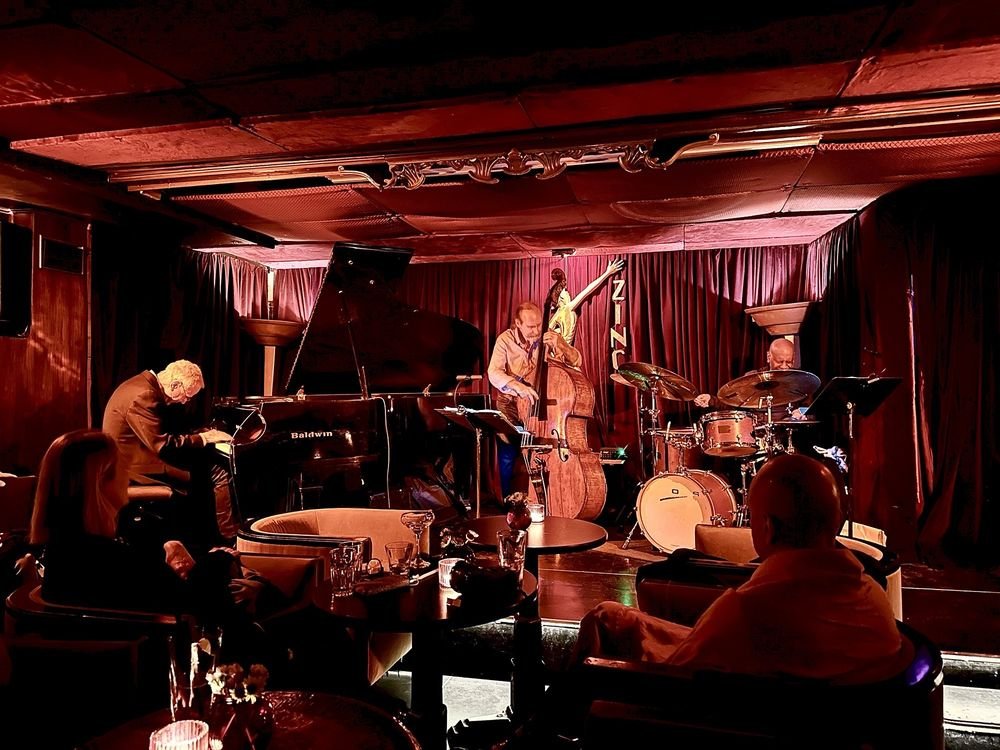
Zinc Bar demonstrates how New York jazz has evolved with the times. Since the 1970s, this Soho and Village area venue has functioned as a stage where jazz, Latin jazz, world music, and Afro-Cuban jazz intersect.
Joe Henderson, McCoy Tyner, Gonzalo Rubalcaba, Miguel Zenón, and David Sánchez—performers who led jazz’s expansion after hard bop—have all graced this stage. Rather than specific albums or singular moments, Zinc Bar’s legend lies in showing the flow of jazz evolution.
It stands as one of the venues most consistently demonstrating how post-bebop jazz created new languages through Latin rhythms and world music influences. The music performed here has proven that jazz is no longer a single style but an open structure.
Located at the bottom of a descending staircase, the space is dark and dense. The proximity between stage and audience is close, with flexible seating arrangements creating different atmospheres for each performance.
Address: 82 West 3rd Street, New York, NY 10012
Website: zincbar.com
Planning Your Jazz Journey in New York
These ten legendary venues represent different facets of New York’s jazz heritage. From Village Vanguard’s unchanged 1935 aesthetic to Dizzy’s Club’s modern institution, each space tells its own story while contributing to the living history of jazz.
Tips for visiting:
- Reserve in advance, especially for popular venues like Blue Note and Village Vanguard
- Expect minimum drink requirements at most clubs
- Dress codes vary from casual to formal depending on the venue
- Many clubs offer multiple sets per night—check schedules online
- Consider multi-club nights in Greenwich Village where several venues are within walking distance
Whether you’re a devoted jazz aficionado or a curious first-timer, these venues offer more than just music—they offer a chance to step into history, to sit where legends once sat, and to experience the art form that defines New York’s cultural soul.
The stages may be empty during the day, but at night, they still pulse with the same energy that moved Miles, Coltrane, and countless others. This is where time stands still, and jazz lives forever.
Dia:Beacon: A Pilgrimage to Minimalist Art in New York’s Hudson Valley