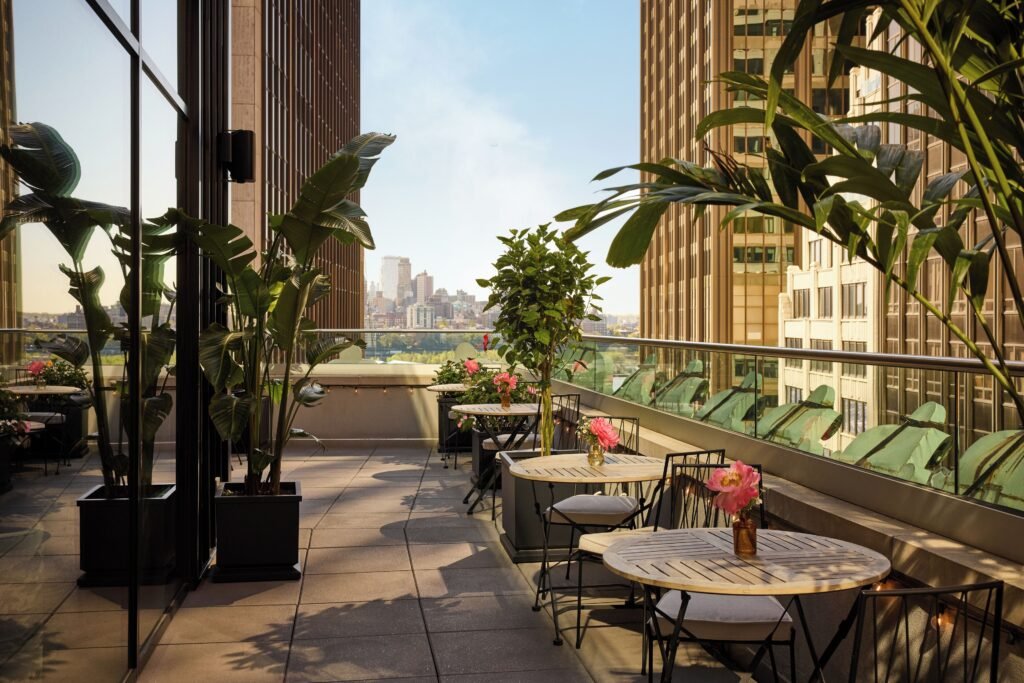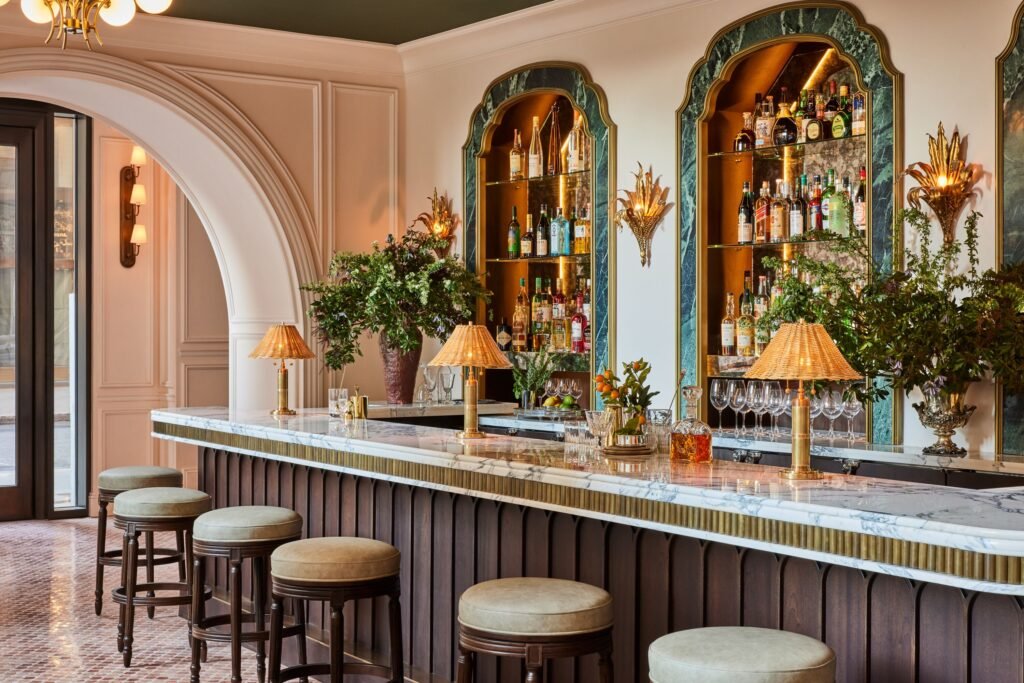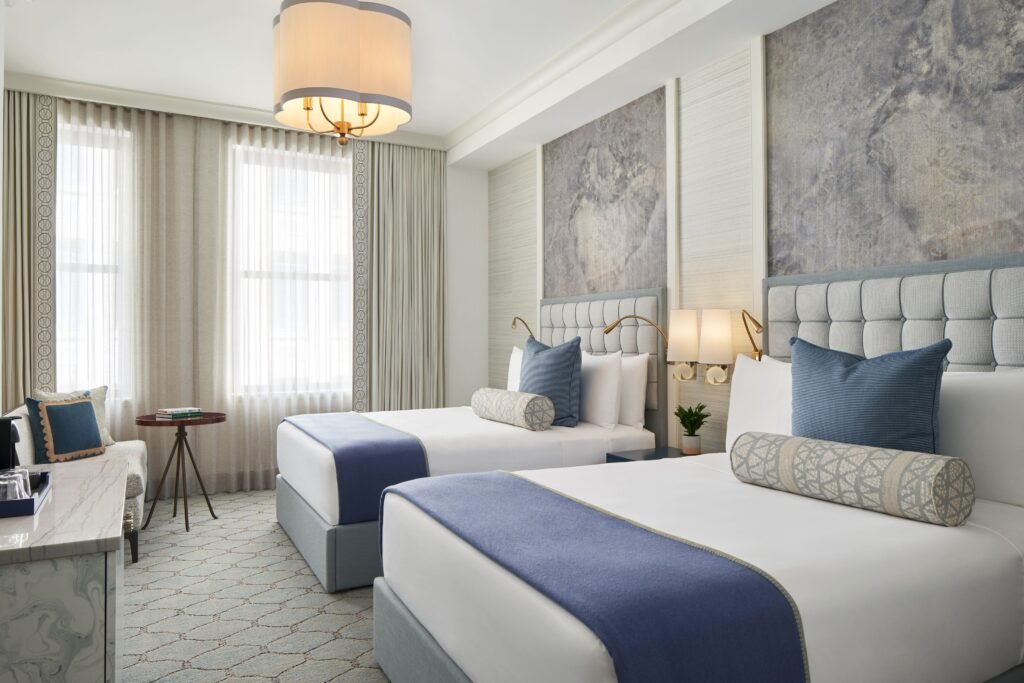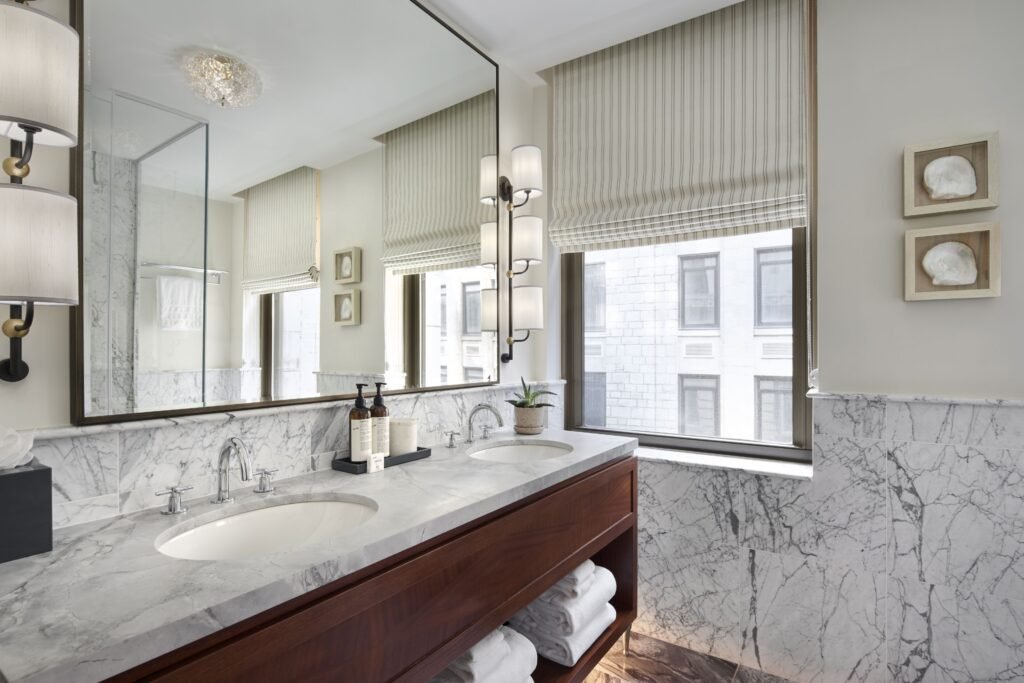
A Day in New York Starts With Donuts: 11 Must-Try NYC Donut Shops in 2025

From legendary Brooklyn institutions to Instagram-worthy artisanal creations, New York City’s donut scene in 2025 offers something for every sweet tooth. This comprehensive guide explores 11 must-visit donut shops where traditional craftsmanship meets modern innovation, revealing why donuts have become as iconic to NYC as yellow cabs and bagels.

A Day in New York Starts With Donuts: 11 Must-Try NYC Donut Shops in 2025

A New York morning isn’t complete without coffee in one hand and a donut in the other. Sugar glistens on glazed surfaces, reflecting the city lights, while freshly fried dough emerges from hot oil with the same speed and precision that defines New York itself. In 2025, donuts have evolved far beyond quick snacks—they’ve become a culinary language spoken across all five boroughs, where neighborhood bakery memories, social media aesthetics, and pop culture narratives converge into something uniquely New York.

The Deep-Fried History: How Donuts Became a New York Staple
donut
Dutch Settler, painting

Dutch Origins Meet American Innovation

The donut’s journey to New York begins in the 19th century with Dutch immigrants who brought olykoek—literally “oily cake”—to American shores. New York quickly transformed this simple fried pastry into an essential fuel for its growing workforce. By the mid-20th century, donut shops appeared on nearly every corner, serving night shift workers, taxi drivers, police officers, and firefighters who made donuts synonymous with the city’s round-the-clock rhythm.

From Working-Class Snack to Artisanal Obsession

Today’s NYC donut scene operates on three distinct levels. First, there are the traditional neighborhood shops that have served local communities for decades with classic glazed and jelly-filled varieties. Second, emerging artisanal brands are reimagining dough, fermentation techniques, and cream fillings with chef-driven precision. Third, social media-first donut creators craft Instagram-worthy visual spectacles where color, texture, and collaborations take center stage. This evolution reflects how donuts have moved from pure utility to become objects of both gastronomic and aesthetic appreciation.

Why Donuts Matter in New York Culture

Cinema, Television, and the Donut as Symbol

Donuts have appeared repeatedly in New York films and television shows, becoming visual shorthand for the city itself. Whether it’s a pink box on a patrol car dashboard, remnants on a diner counter at dawn, or a detective’s coffee-and-donut combo, these scenes have cemented donuts as symbols of New York’s exhaustion, speed, and comfort. The donut represents both the city’s working-class roots and its constant need for quick, accessible energy.

The 24-Hour City Demands 24-Hour Fuel

In a metropolis that never sleeps, donuts function as the perfect around-the-clock sustenance. They’re portable, affordable, calorie-dense, and available at any hour. From overnight subway workers to students cramming in 24-hour cafes, the donut-and-coffee pairing has remained constant through decades of urban change. This practical function has evolved into cultural significance, where donuts represent New York’s democratic accessibility—anyone can grab one, anytime, anywhere.

Modern Evolution: Craft Meets Instagram
Today’s NYC donuts exist at the intersection of several trends. Artisanal bakers experiment with sourdough starters, gluten-free flours, and vegan ingredients. Meanwhile, visual-first creators design donuts as social media content, where vibrant colors, glossy finishes, and creative toppings generate shares and likes. The result is a donut landscape where a $2 classic glazed from a 70-year-old bakery coexists with a $7 matcha-ube fusion creation designed for maximum Instagram impact.

The 11 Best Donut Shops in NYC: 2025 Edition

1. Doughnut Plant – Multiple Locations, Manhattan & Beyond

new york donut
Doughnut Plant, Grand Central

What Makes It Special: Since 1994, Doughnut Plant has pioneered artisanal donuts in New York City. Founder Mark Isreal transformed his grandfather’s recipe in a Lower East Side apartment into what the New York Times called “Doughnuts of the Gods.” The shop refuses to use artificial ingredients, preservatives, or even eggs—all jams, fillings, and glazes are made in-house.

Signature Offerings: The Crème Brûlée donut, created in 2008, features the perfect brittle caramelized top layer. Their square donuts stuffed with house-made fillings (peanut butter banana, coconut cream) have become iconic. The tres leches cake donut and Brooklyn Blackout are fan favorites.

What to Know: Multiple locations including Grand Central Terminal (Lower Level Dining Concourse near Track 112), the original Lower East Side shop (379 Grand St), and Queens. They offer vegan and gluten-free options. Hours vary by location; Grand Central opens at 6 AM weekdays.

Price Range: $$-$$$

Website: doughnutplant.com


2. Peter Pan Donut & Pastry Shop – Brooklyn (Greenpoint)

Peter Pan Donut & Pastry Shop

What Makes It Special: Operating from the same Greenpoint location since the 1950s, Peter Pan represents authentic old-school New York donut culture. The retro interior, unchanged recipes, and cash-only policy preserve a piece of mid-century Brooklyn. Recent reviews note recipe changes in the past year, but it remains a neighborhood institution.

Signature Offerings: Classic glazed donuts, jelly-filled varieties, sour cream donuts, and red velvet. Their blueberry buttermilk and cream crumb old fashioned have loyal followings. The boston cream and apple fritters are massive.

What to Know: Cash only. Opens as early as 4:30 AM weekdays. Lines can form on weekends but move quickly. The counter seating creates a classic diner atmosphere perfect for morning coffee and conversation.

Price Range: $ (very affordable)

Address: 727 Manhattan Ave, Brooklyn, NY 11222
Phone: (718) 389-3676
Website: peterpandonuts.com


3. The Donut Pub – Manhattan (Chelsea)

The Donut Pub

What Makes It Special: Open 24/7, The Donut Pub has fueled New York’s night shift workers for decades. They offer alphabet-shaped donuts for celebrations, rotating special flavors, and their own take on hybrid pastries including a maple bacon croissant donut.

The Donut Pub

Signature Offerings: French cruller, maple bacon, cannoli kreme, chocolate dipper. Their consistency across decades makes them reliable comfort food.

What to Know: Never closes—truly 24/7/365. Available for nationwide shipping via Goldbelly. Multiple menu options beyond traditional donuts.

Price Range: $$

Address: 203 W 14th St, New York, NY
Website: donutpub.com


4. Moe’s Doughs – Brooklyn (Greenpoint)

Moe’s Doughs

What Makes It Special: This halal donut shop run by Moe, who has nearly 30 years of donut-making experience, offers over 70 handmade flavors. The rainbow cake donut and creative cream combinations attract younger crowds and compete directly with nearby Peter Pan.

Moe’s Doughs

Signature Offerings: Rainbow cake donut, boston cream, massive apple fritters (described as “dinner plate” sized), and unique Middle Eastern-inspired flavors including a knafeh donut.

What to Know: Oversized portions. Lines can be long but service is fast. Great alternative when Peter Pan sells out.

Price Range: $-$$

Address: 126 Nassau Ave, Brooklyn, NY 11222


5. Fan-Fan Doughnuts – Brooklyn (Clinton Hill)

What Makes It Special: Filipino-influenced artisanal donuts featuring seasonal ingredients, global spices, and inventive flavor combinations. The denser dough holds up to complex fillings and toppings better than traditional yeast donuts.

Signature Offerings: Danny Boy (salted brown butter caramel with nuts), La Donna, Guava and Cheese (cream cheese filling with guava glaze and graham cracker crumbs), Mango Lassi. Weekend-only availability creates scarcity and lines.

What to Know: Only open weekends. Arrive early as popular flavors sell out quickly. The fan-fan shape (elongated like a long john) is their signature.

Price Range: $$-$$$

Address: 448 Lafayette Ave, Brooklyn, NY 11205
Website: fanfandoughnuts.com


6. Daily Provisions – Multiple Locations, Manhattan

What Makes It Special: From the team behind Union Square Cafe, Daily Provisions merges brunch culture with quality baked goods. Their croissant-donut hybrid (cruller) bridges French pastry technique with American donut tradition.

Signature Offerings: Cruller donut made with laminated dough, breakfast sandwiches, excellent coffee. Perfect for a complete morning meal beyond just sweets.

What to Know: Multiple Manhattan locations. Opens around 8 AM, making it ideal for a civilized breakfast rather than an early-morning sugar rush. Pairs well with their savory menu items.

Price Range: $$$

Website: dailyprovisionsnyc.com


7. Dough Doughnuts – Multiple Locations, Brooklyn & Manhattan

What Makes It Special: Oversized donuts with bold, experimental flavors made in small batches throughout the day. Vegan options available. Their hibiscus donut has become legendary.

Signature Offerings: Dulce de leche with almonds, hibiscus (available vegan), strawberry boston cream, café au lait with pecan crumbs.

What to Know: Donuts are notably larger than average. Seasonal menu rotations keep offerings fresh. Multiple Brooklyn and Manhattan locations.

Price Range: $$-$$$

Address: 10 W 19th St (and other locations), New York, NY
Website: doughdoughnuts.com


8. Supermoon Bakehouse – Lower East Side

What Makes It Special: Famous for croissants but their donuts are a “sleeper hit” according to food critics. Displayed like gallery art on terrazzo bars in jewel-like boxes. Asian-inspired flavors with tropical fruit fillings.

Signature Offerings: Berries & cream donut, passionfruit curd doughnut, seasonal croissant-donut hybrids. Orb-like shapes stuffed with calamansi, yuzu, and other exotic ingredients.

What to Know: Popular items sell out early—arrive before 10 AM. Limited daily production means calling ahead is wise. Neon pink “Bite Me NYC” sign is Instagram famous.

Price Range: $$$

Address: 120 Rivington St, New York, NY
Website: supermoonbakehouse.com


9. Bear Donut – Manhattan (Koreatown)

What Makes It Special: Reimagined retro concept offering “brionuts” (brioche-donut hybrids), bubble ring shapes, and Asian-inspired flavors like milk tea, matcha, and ube. Optional soft-serve ice cream topping.

Signature Offerings: Double milk tea brionut, crunch chocolate glazed, classic glazed donut cone with ube soft serve, tiramisu brionut, scallion cream cheese (savory option).

What to Know: Brionuts are morning specialties. The soft-serve donut cone is unique to NYC. Fresh daily with creative seasonal rotations.

Price Range: $$-$$$

Address: 40 W 31st St, New York, NY
Website: beardonuts.com


10. Kora – Queens (Sunnyside)

What Makes It Special: Minimalist approach focusing on perfecting basic glazed donuts. Filipino bakery recognized by The Infatuation as having “NYC’s best, most meticulously constructed donuts.”

Signature Offerings: Plain glazed (perfected), minimal menu emphasizing quality over variety.

What to Know: Simplicity is the point—these are donuts stripped to their essence and executed flawlessly. Great value for exceptional quality.

Price Range: $-$$

Address: 45-12 Greenpoint Ave, Sunnyside, NY 11104
Website: koradonuts.com


11. I’m donut? – Manhattan (Times Square)

What Makes It Special: Japanese-inspired donut brand that debuted in Times Square in 2025. Mochi-textured donuts offer chewy, bouncy texture distinct from traditional American donuts. Savory options break donut conventions.

Signature Offerings: Glazed mochi donut, BLT donut (savory), specialty Asian flavors. The mochi texture appeals to those who find traditional fried donuts too heavy.

What to Know: Newest addition to NYC’s donut scene. Multiple mochi donut competitors exist (Alimama Tea, Mochi Mochi Donut) but I’m donut? offers unique savory options.

Price Range: $$-$$$

Location: Times Square, New York, NY
Website: imdonut.nyc


Honorable Mentions: More Great NYC Donuts

While the above 11 represent the best of NYC’s current donut landscape, several other shops deserve recognition:

  • Alimama Tea (Chinatown): Mochi donuts with taro, matcha, and caramel dark chocolate flavors
  • Shaikh’s Place (Sheepshead Bay): 24/7 operations with $10 dozen donuts
  • Doughnuttery: Mini donuts with international ingredients, fresh-made to order
  • The Doughnut Project: Experimental flavors and collaborations
  • Angelina Bakery: Italian-style donuts and pastries

NYC Donut Trends in 2025

The Mochi Donut Explosion

Chewy, ring-shaped mochi donuts with their distinctive bubble texture have proliferated across NYC. Shops like Alimama Tea pioneered this trend, but now multiple locations serve these gluten-free, bouncy alternatives to traditional fried donuts.

Craft Ingredients and Transparency

Following the “farm-to-table” movement, donut shops now emphasize ingredient sourcing. Doughnut Plant’s no-preservatives approach has become standard. Vegan, gluten-free, and organic options are expected rather than exceptional.

The Hybrid Pastry Era

Croissant-donuts (cronuts), brionuts, and other hybrid creations blur the lines between French patisserie and American donut culture. Daily Provisions and Bear Donut exemplify this fusion approach.

Savory Donuts Go Mainstream

No longer novelties, savory donuts featuring bacon, cheese, herbs, and even BLT combinations are becoming permanent menu items rather than limited experiments.

How to Plan Your NYC Donut Tour

Timing Matters

  • Early Birds (4:30-7 AM): Peter Pan, traditional shops with fresh morning batches
  • Civilized Breakfast (8-10 AM): Daily Provisions, Doughnut Plant locations
  • Weekend Warriors (9 AM-12 PM): Fan-Fan, Supermoon (arrive early before sellouts)
  • Night Owls (Midnight-4 AM): The Donut Pub, Shaikh’s Place

Budget Planning

  • Budget-Friendly ($1-3 per donut): Peter Pan, Kora, Moe’s Doughs
  • Mid-Range ($4-6): Doughnut Plant, Dough, Bear Donut
  • Splurge ($6-8): Supermoon Bakehouse, Fan-Fan, specialty items

Neighborhood Donut Crawls

Brooklyn Focus: Start at Peter Pan (Greenpoint), walk to Moe’s Doughs, then Fan-Fan in Clinton Hill.

Manhattan Classic: Daily Provisions for breakfast, Doughnut Plant LES for lunch dessert, The Donut Pub for late-night.

International Flavors: Bear Donut (Korean), I’m donut? (Japanese), Alimama Tea (Asian fusion).

What Makes a Great NYC Donut?

After visiting these 11 shops and sampling dozens of varieties, several qualities separate exceptional NYC donuts from merely good ones:

  1. Freshness: The best shops make batches throughout the day rather than once in the morning
  2. Texture Balance: Whether cake or yeast, the exterior should have slight resistance while the interior stays tender
  3. Filling Generosity: Premium shops don’t skimp—fillings should be abundant without overwhelming the dough
  4. Glaze Quality: Should set properly but not harden into thick shells
  5. Flavor Clarity: Each ingredient should be identifiable rather than muddy

The Future of NYC Donuts

As we move through 2025, NYC’s donut culture continues evolving. Social media will keep pushing visual innovation, but there’s also a counter-movement toward simplicity and perfection of basics (as seen at Kora). Expect more regional and international influences, especially from Filipino, Japanese, and Korean donut traditions. Sustainability and ingredient transparency will become standard expectations rather than marketing differentiators.

The traditional neighborhood donut shop isn’t disappearing—Peter Pan’s 70+ years prove that classic execution will always have a place. Instead, NYC’s donut landscape is expanding to accommodate both nostalgia and innovation, giving residents and visitors an unprecedented range of options.

Final Thoughts: Why NYC Does Donuts Differently

New York’s donuts aren’t just food—they’re cultural artifacts that tell the story of immigration, labor, innovation, and urban life. From Dutch immigrants to Filipino artisans, from overnight workers to Instagram influencers, donuts have absorbed and reflected every wave of change that has swept through the city.

In 2025, you can still find a classic glazed for $1.50 at a Greenpoint institution that’s been operating since the Eisenhower administration. You can also spend $7 on a yuzu-passionfruit creation displayed like fine jewelry. Both are authentically New York. Both deserve their place in the city’s food landscape.

The best NYC donut isn’t in a single shop or style—it’s in the democratic abundance of choices, the constant innovation layered atop tradition, and the way a simple fried circle of dough can contain the entire history and future of the world’s greatest city.

Whether you’re starting your day with coffee and a classic or documenting avant-garde flavor combinations for your followers, NYC’s donut scene offers something perfect for you. The only wrong choice is not trying any at all.


Have you tried any of these NYC donut shops? Share your favorites in the comments below!


Additional Reading:

Manhattan’s Korean Restaurant Revolution: From Michelin Stars to Comfort Food

Manhattan’s Korean dining scene has exploded beyond the boundaries of Koreatown, evolving from traditional barbecue joints to Michelin-starred fine dining and hip casual eateries. From kimchi meeting caviar to nostalgia-driven comfort food, here’s your ultimate guide to the best Korean restaurants transforming New York’s culinary landscape.

Manhattan’s Korean Restaurant Revolution: From Michelin Stars to Comfort Food


Manhattan’s Korean food scene is having a moment—and it’s unlike anything we’ve seen before. Just a few years ago, Korean dining in New York meant heading to 32nd Street for barbecue, soft tofu stew, or seolleongtang. Today, the landscape has transformed dramatically, with Michelin-starred establishments redefining Korean cuisine and casual spots bringing authentic comfort food to new neighborhoods across the city.

From fine dining temples where kimchi meets caviar to retro-style “driver’s restaurants” (gisa-sikdang) offering affordable set meals, Korean cuisine has expanded its footprint and elevated its profile. With multiple Michelin stars now dotting the Manhattan Korean restaurant map, including the city’s first three-starred Korean establishment, K-food has firmly established itself as a major force in New York’s competitive culinary scene.

The Michelin-Starred Elite: Korean Fine Dining at Its Peak

Jungsik: New York’s First Three-Michelin-Starred Korean Restaurant

Korean Restaurant, Jungsik
Jungsik

Jungsik in Tribeca has made history as the first Korean restaurant in North America to earn three Michelin stars, a distinction held by only about 140 restaurants worldwide. Since opening in 2011, Chef Yim Jung-sik’s restaurant has been foundational to New York’s modern Korean movement, serving as a training ground for many of today’s celebrated Korean chefs.

The restaurant’s approach is characterized by highly original, impeccably executed dishes that make diners involuntarily nod in appreciation. The meal begins with an artfully presented array of banchan, followed by creative dishes like raw striped jack with white kimchi and chilled fish bone broth, and crispy octopus with gochujang aioli. The cooking here is both enormously satisfying and distinctly Korean, yet presented through a thoroughly modern lens.

Banchan:  small side dish served along with rice as part of a typical Korean meal.
Striped Jack

Location: Tribeca
What to expect: Multi-course tasting menu, Japanese and Korean fusion influences, impeccable technique
Reservation: www.jungsik.com
Price point: $$$$ (Fine dining)

Oiji Mi: Flatiron’s Modern Korean Showcase

One-Michelin-starred Oiji Mi offers a five-course prix-fixe menu priced at $150 per person, featuring creative contemporary Korean cuisine from Chef Brian Kim. After establishing himself with the more casual Oiji in the East Village, Kim elevated his concept to fine dining in the Flatiron District.

Wagyu galbi with potato gratin
Appetizer

The menu showcases luxury ingredients applied through Korean techniques—think foie gras with bokbunja (Korean raspberry wine) sauce, bossam with oysters and pork belly steamed in bamboo baskets, and truffles and caviar woven throughout the courses. The space beautifully merges traditional Korean hanok design elements with early 20th-century social club glamour, featuring custom lighting inspired by traditional Korean hair pins and a warm palette of plum, powder blue, and cool green.

Location: 17 W 19th St, Flatiron District
Reservations: oijimi.com
Price point: $$$ ($150 prix-fixe)

Naro: Rockefeller Center’s Elegant Korean Experience

From the husband-and-wife team behind two-Michelin-starred Atomix, Naro focuses on showcasing types of Korean cuisine not very abundant in the United States, highlighting seafood and vegetables in lighter dishes inspired by traditional Korean cuisine. Located on the Rink Level of Rockefeller Center, Naro earned its Michelin star shortly after opening in 2022.

The restaurant draws inspiration from hansik (traditional Korean cuisine) and historical Korean cookbooks, presenting dishes like tangpyeongchae (mung bean jelly with chilled vegetables), octopus naengchae with radish-kimchi granita, and wagyu carpaccio with aged soy sauce and fermented kimchi in samhap style with uni and truffle. Recently reimagined with an all-day à la carte menu alongside tasting options, Naro now offers more flexibility for different dining occasions.

Location: 610 5th Ave, Rockefeller Center (Rink Level)
Reservations: naronyc.com
Michelin status: One Star
Price point: $$-$$$ (lunch $42-48, dinner tasting available)

Nōksu: The Secret Subway Sanctuary

Perhaps Manhattan’s most unusual Michelin-starred restaurant, Nōksu operates from a secret location behind a locked door inside the 34th Street subway station exit, offering only 15 counter seats. Chef Daniel “Dae” Kim, who trained at Thomas Keller’s Per Se, opened this ultra-premium Korean restaurant in October 2023, and reservations remain fiercely competitive.

The nine-course seasonal menu centers on seafood, with signature dishes including barbecued squab, caviar-topped scallop egg custard, and freshwater trout with tangy citrus sauce. At approximately $300 per person, it’s among Manhattan’s priciest dining experiences, but the intimate, private atmosphere and luxury ingredients create a truly unique culinary journey.

Surf Clam
Sardine: charred romaine, caesar

Location: 49 W 32nd St (inside Herald Square subway station)
Reservations: noksunyc.com
Michelin status: One Star
Price point: $$$$ (~$300)

Mari: Korean Handrolls Reimagined

Mari, whose name comes from the Korean word for roll, earned its Michelin star less than a year after opening in late 2021. Chef Sungchul Shim’s second restaurant (after Kochi) takes inspiration from Korean kimbap and Japanese handrolls to create a tasting menu that’s both playful and refined.

Uni tuna – add on

The restaurant serves glistening planks of Scottish salmon, tender strips of cured mackerel, and three types of mushrooms on beds of rice cradled in seaweed, with chefs working swiftly around a counter flanked on all sides. The approximately 11-12 course menu features handrolls with caviar, tuna, salmon, abalone, and mushrooms, plus standouts like yukhoe (Korean beef tartare) with uni roll, black sesame marshmallow choco-pie, and a deeply savory noodle soup made from chicken, pork, and beef broth.

The intimate 31-seat space centers around an open kitchen with a U-shaped counter, creating an interactive omakase-style experience.

Location: 679 9th Ave, Hell’s Kitchen
Reservations: Marinyc.com
Michelin status: One Star
Price point: $$$ ($145-185)

Joo Ok: Seoul’s Michelin Legacy in Koreatown

In a remarkable move, Chef Chang-ho Shin closed his two-Michelin-starred restaurant in Seoul in December 2023 to relocate Joo Ok entirely to New York City, bringing his core team with him. The Manhattan location opened in September 2024 in the heart of Koreatown and has since been promoted to two Michelin stars in the 2025 guide.

Accessible via freight elevator up 16 stories, the elegantly appointed space echoes a traditional Korean home, where guests are welcomed with snacks and drinks before entering the minimalist dining room with Manhattan skyline views. Shin’s tasting menu is rooted in tradition but presented through a modern lens, featuring dishes like deul gi reum with geoduck and perilla oil, and jat jeup chae with lobster and Korean pear in salted cucumber.

Location: West 32nd St, Koreatown
Michelin status: Two Stars
Reservation: https://www.joo-ok.com
Price point: $$$$ (Fine dining tasting menu)

Mid-Range Modern Korean: Where Innovation Meets Accessibility

Moono: The Bridge Between Casual and Fine Dining

Opened in May 2023 by Michelin-starred chef Kim Ho-young (of Jua), Moono occupies a sweet spot between traditional Korean and high-end tasting menus. The name means “gateway” in Korean, and the restaurant lives up to it by offering refined à la carte Korean dishes at more approachable prices.

Uni sotbap
Pyongyang cold noodle

Signature dishes include mushroom solbap (stone pot rice) with uni and truffle using Golden Queen rice, sundae (blood sausage) wrapped in perilla leaves, dry-aged branzino, and Pyongyang-style naengmyeon. The two-story space features stunning stained glass windows and warm wood interiors, creating an atmosphere that’s both grand and intimate. A chef’s counter is planned for the future.

Location: 29 E 32nd St, near Koreatown
Reservations: moononyc.com
Price point: $$ (à la carte)

Seoul Salon: The Trendy Korean Bar Experience

Located in a former karaoke space on the northern edge of Koreatown, Seoul Salon completely reimagines the Korean drinking establishment for New York audiences. The industrial-chic space features neon signs, graffiti-style art, and staff dressed in streetwear, while K-hip-hop from artists like those on AOMG plays throughout.

Seoul Salon Fried Chicken

The menu creatively reworks Korean drinking snacks: crispy chicken with sweet-spicy glaze, ceviche-style hwe muchim (Korean raw fish salad), truffle-enhanced tteokbokki, and cocktails ($18-25) made with gochujang, honey-jujube syrup, and makgeolli. It’s less fine dining, more vibrant party atmosphere.

Location: 28 W 33rd St
Reservations: Seoulsalon.nyc
Price point: $$ (small plates and cocktails)

Casual Korean: Comfort Food and Street Style

Kisa: The Nostalgic Gisa-Sikdang Experience

In a tiny corner of the Lower East Side, Kisa brings the Korean “driver’s restaurant” concept to Manhattan—and it’s become a sensation. The restaurant opens only once daily at a set time and offers just one menu: a complete Korean table d’hôte for $32.

Spicy Squid Platter

Choose from four main dishes (bulgogi, jeyuk bokkeum, etc.), which come with rice, soup, and 7-8 side dishes all served on a single tray. The interior features red tiles and vintage photo frames creating a retro atmosphere, as if time has stood still. The pricing is remarkably affordable by Manhattan standards, earning praise as a triumph of practical, humble Korean cooking.

No reservations are accepted, so lines form early. Arrive by 5pm for first seating. Cash only at lunch.

Location: 205 Allen St, Lower East Side
Price point: $ ($32 set meal)

Sam Sunny: Instagram-Famous Kimchi Fried Rice

This unassuming spot in Murray Hill gained viral fame on Instagram for its tableside kimchi bokkeumbap performance. The signature dish features thick chicken katsu and a soft-boiled egg on kimchi fried rice, prepared with theatrical flair—complete with a fire show—right at your table.

Kimchi Fried Rice with Chicken Katsu

At around $25 per bowl, it offers excellent value and has become a favorite among NYU students and office workers. The menu also includes tomahawk-style braised pork galbi, cloud-like egg custard inspired by Southern Korean cuisine, and Korean-style brunch items.

Egg Souffle

Location: 517 2nd Avenue, Murray Hill
Reservations: Resy
Price point: $ ($20-30)

8282: Lower East Side’s Korean Tapas Bar

Named after the Korean expression “ppalli ppalli” (hurry hurry), 8282 channels the energy of a Korean pocha (street food tent) in a modern LES setting. Since opening in 2021, it’s attracted both hipsters and Korean food enthusiasts with its playful, contemporary approach to Korean drinking snacks.

tuna tartare

The menu divides into small plates (anju) and larger dishes. The most popular item is tuna tartare on crispy gim bugak (seaweed chips) with house soy sauce and quail egg yolk. Other highlights include spicy-sweet chicken wings, truffle japchae pasta, and Iberico pork bossam tacos. For larger dishes, try the seafood-loaded haemul pajeon or charcoal LA galbi.

Fried chicken

Pair dishes with soju cocktails at the casual bar seating. Two to three small plates per person make for a satisfying meal.

Location: 84 Stanton Street, Lower East Side
Reservations: Official website or Resy
Price point: $ (small plates $12-18, mains ~$25)

The Evolution of Korean Dining in Manhattan

The transformation of Manhattan’s Korean restaurant scene reflects broader shifts in how New York diners engage with Korean culture. New York now easily ranks with Seoul as one of the world’s hotbeds for cutting-edge and expensive Korean cuisine, with the Michelin Guide documenting this evolution for years.

What makes this moment particularly exciting is the diversity of concepts. Fine dining establishments are pushing boundaries with techniques learned at French temples like Per Se and Le Bernardin, while casual spots embrace the warmth and generosity of Korean home cooking and street food culture. Some restaurants, like Moono, successfully bridge both worlds.

The geographic expansion beyond Koreatown also signals Korean cuisine’s mainstream acceptance. From the Lower East Side to Rockefeller Center, from Flatiron to Hell’s Kitchen, Korean restaurants are now integral to Manhattan’s diverse culinary ecosystem.

Tips for Exploring Manhattan’s Korean Food Scene

For Fine Dining:

  • Book well in advance—Michelin-starred restaurants fill up quickly
  • Budget $150-400 per person depending on the venue
  • Consider lunch prix-fixe menus for better value (where available)
  • Ask about wine or traditional Korean alcohol (sool) pairings

For Casual Dining:

  • Most popular spots don’t take reservations or have limited availability
  • Arrive early to avoid long waits, especially on weekends
  • Come with a group to share more dishes family-style
  • Don’t skip the banchan (side dishes)—they’re often the highlight

Neighborhood Guide:

  • Koreatown (32nd St): Traditional spots, Moono, Seoul Salon, Nōksu
  • Flatiron: Oiji Mi
  • Rockefeller Center: Naro
  • Hell’s Kitchen: Mari, Kochi
  • Lower East Side: Kisa, 8282
  • Tribeca: Jungsik
  • Murray Hill: Sam Sunny

The Future of Korean Cuisine in New York

With Jungsik’s historic three-star achievement and numerous one and two-starred establishments, Korean cuisine has proven it can compete at the highest levels of fine dining. Meanwhile, the success of casual concepts like Kisa and Sam Sunny shows that New Yorkers crave both high and low expressions of Korean food culture.

The current boom suggests we’ll see continued innovation—perhaps more regional Korean cuisines represented, more chef-driven reinterpretations, and greater integration of Korean ingredients and techniques into non-Korean restaurants. As chef training grounds like Jungsik, Atomix, and Oiji Mi continue producing talented alums, the next generation of Korean restaurants will only push boundaries further.

From three-Michelin-starred temples to $32 set meals that transport you to Seoul, Manhattan’s Korean restaurant scene offers something for every palate and budget. Whether you’re seeking culinary adventure, nostalgia, or simply a great meal, there’s never been a better time to explore Korean food in New York City.


Additional Reading:

Last Updated: January 2026


Have you visited any of these Korean restaurants in Manhattan? Share your experiences in the comments below!

NYC’s Best Street Food: Hidden Gems and Award-Winning Carts Locals Actually Eat At

Beyond Manhattan’s fancy restaurants lies New York’s true culinary soul: street food carts and trucks serving authentic flavors from around the world. From Vendy Award winners to New York Times-acclaimed spots, discover where real New Yorkers eat.

While tourists line up at overpriced restaurants in Times Square, savvy locals know that New York City’s best meals often come from humble food carts and trucks parked on street corners. From Queens to Manhattan, these mobile kitchens serve authentic flavors that rival—and often surpass—their brick-and-mortar counterparts.

The proof? The New York Times food critic Pete Wells awarded two stars to Birria-Landia, a Queens food truck, while street vendors regularly win the prestigious Vendy Awards, often called “the Oscars of street food.” This comprehensive guide reveals the NYC street food spots that critics and locals actually recommend.

The New York Times Star: Birria-Landia

The Food Truck That Made History

Best Street Food

In 2019, Pete Wells shook up New York’s food scene by giving two stars to Birria-Landia, a food truck in Jackson Heights, Queens. For a street vendor to receive such recognition from the Times was unprecedented—and entirely deserved.

What Makes It Special

Brothers José and Jesús Moreno specialize in Tijuana-style birria de res, a slowly simmered beef stew. The signature dish features crispy-edged tacos filled with tender, shredded beef and melted mozzarella, served with a cup of rich consommé (the beef cooking broth) for dipping.

Piece Taco Birria (Beef)

Wells called the consommé “tangy, mildly spicy, and mysteriously deep,” praising it as one of the most flavorful broths in the city. The food truck ranked 18th on the New York Times’ prestigious “100 Best Restaurants in NYC” list in 2023.

Where to Find Them

Birria-Landia has expanded from its original Queens location to six spots across NYC:

  • Jackson Heights (Original): Roosevelt Ave & 78th St, Queens
  • Flushing: 136-21 Roosevelt Ave, Tangram Mall Food Court
  • Lower East Side: Bowery & E Houston St, Manhattan
  • Upper West Side: Broadway & W 72nd St, Manhattan
  • Bronx: 2501 Grand Concourse
  • Brooklyn: 491 Metropolitan Ave

Pro Tips:

  • Order the birria tacos ($3.50 each) and a cup of consommé for dipping
  • Expect lines, especially at the Jackson Heights original location
  • Peak hours are evenings and weekends

Hours: Most locations open 5 PM-1 AM weekdays, noon-2 AM weekends

https://birrialandia.com

Vendy Award Winners: The Street Food Hall of Fame

The Vendy Awards celebrate the best street food vendors in New York City while supporting vendor rights through the Street Vendor Project. These winners represent the pinnacle of NYC street food.

NY Dosas: The 2007 Champion

Thiru “Dosa Man” Kumar won the 2007 Vendy Award for his vegetarian South Indian cart at Washington Square Park. A Sri Lankan immigrant who came to the US in 1995, Kumar opened his pushcart in 2001, becoming the first all-vegan dosa vendor in New York.

The Signature Dish

Pondicherry Dosa

The Pondicherry Dosa is a lentil and rice crepe filled with spiced potatoes and fresh vegetables, served with coconut chutney and sambar (lentil soup). Each dosa is made fresh to order on Kumar’s griddle, ensuring a crispy exterior and steaming-hot filling.

Kumar’s pushcart is listed in guidebooks in 42 countries and has fan clubs in Japan, testament to his worldwide reputation.

Location & Details

  • Where: Washington Square Park South & Sullivan Street, Greenwich Village
  • Hours: Monday-Saturday, 11 AM-3 PM (weather permitting)
  • Price: Pondicherry Dosa $7
  • Note: Call ahead at (917) 710-2092 to confirm he’s there, as he sometimes skips early-week days
  • https://nydosas.com/

King of Falafel & Shawarma: 2010 Vendy Cup Winner

Fares “Freddy” Zeideia won both the Vendy Cup and People’s Taste Award in 2010 after being nominated three times. The business is known for its Palestinian-style, chickpea-only falafel shaped as oblong patties.

What Sets It Apart

Zeideia uses his mother and father’s Middle Eastern spice recipes, with a secret blend of 11 spices for the shawarma. The falafel’s distinctive oval shape and crispy texture make it instantly recognizable.

The operation serves upwards of 400 people daily, with Zeideia’s charismatic personality (“YEAH BABY!” is his catchphrase) adding to the experience.

Multiple Locations

The King has expanded significantly:

  • Astoria Restaurant: 30-15 Broadway (original location)
  • Astoria Cart: 31 Ditmars Blvd
  • Midtown Manhattan: E 53rd St & Park Ave
  • Additional trucks rotate through Queens, Manhattan, and the Bronx

Must-Try: Falafel platter or the chicken & beef shawarma combo

Falafel platter

Local Legends: Hidden Gems Worth Seeking Out

Queens: The World’s Food Capital

Queens is where NYC’s immigrant communities create authentic street food that rivals anything in their home countries.

Arepa Lady (Jackson Heights)

Maria Piedad Cano, a former Colombian judge, has been selling arepas since the 1990s and earned recognition from Anthony Bourdain and Andrew Zimmern. Her late-night cart became so legendary that she opened a brick-and-mortar restaurant.

The signature Colombian-style arepas feature sweet corn masa griddled until crispy, stuffed with cheese and your choice of meat. The sweet-savory contrast is addictive.

Locations:

Joe’s Steam Rice Roll (Flushing)

This tiny shop in Landmark Quest Mall serves made-to-order Cantonese-style cheung fun (rice noodle rolls). The silky texture and fresh preparation have made it a local favorite for over a decade.

Steamed rice roll

Where: Landmark Quest Mall, 136-21 Roosevelt Ave #A1, Flushing
What to Order: Shrimp rice rolls or BBQ pork rice rolls

King Souvlaki (Astoria)

At 31st St & 31st Ave, Astoria

Operating since 1979, King Souvlaki is an Astoria institution serving authentic Greek street food. Along with King of Falafel, it forms one half of the neighborhood’s street food royalty.

Multiple Locations:

  • 31st St & 31st Ave, Astoria
  • 22-02 Steinway St, Astoria
  • Northern Blvd & Bell Blvd, Bayside
  • And more across Queens and Brooklyn

Manhattan’s Hidden Street Food Treasures

Ling’s Sweet Mini Cakes (Chinatown)

Since 1982, Ling has been selling Hong Kong-style egg cakes (gai dan jai) from her cart on Canal Street. For just $1.50, you get 15 warm, cake-like treats with crispy edges and soft centers—a nostalgic taste of old Chinatown.

Location: 263 Canal St B, New York
Price: $1.50 for 15 mini cakes

Uncle Gussy’s (Midtown)

A three-generation Greek food operation that’s been at the same Park Avenue spot since 1971. Using family recipes, Uncle Gussy’s serves generous portions of gyro and souvlaki to Midtown office workers.

Location: 345 Park Ave (near Grand Central)
Best for: Quick, affordable lunch in Midtown

Rafiqi’s (Multiple Manhattan Locations)

Among NYC’s countless halal carts, Rafiqi’s stands out for consistently fresh ingredients and flavorful hot sauce. Their “chicken over rice” exemplifies the genre—tender marinated chicken, fragrant basmati rice, crisp salad, and white sauce with a kick.

Chicken over rice

Key Locations:

  • 375 Park Ave (Midtown East)
  • 139-169 Chambers St (Tribeca)
  • 101 E 32nd St (Murray Hill)
  • 1250 Broadway (Herald Square)

How to Eat NYC Street Food Like a Local

Best Times to Visit

  • Avoid peak lunch rush (noon-1:30 PM) unless you enjoy long lines
  • Late afternoon (3-5 PM) often has shorter waits
  • Evening hours (after 6 PM) are prime time for food trucks
  • Weekends draw bigger crowds but vendors often have extended hours

Payment Tips

  • Many carts are cash-only, though this is changing
  • Some accept Venmo or CashApp
  • Brick-and-mortar locations usually take cards
  • Always ask before ordering if you only have card

Ordering Strategy

  1. Watch what regulars order before you reach the front
  2. Ask for recommendations—vendors love sharing their specialties
  3. Start with the signature dish on your first visit
  4. Don’t be afraid to customize spice levels or ingredients
  5. Order extra sauce—it’s usually free

Weather Considerations

  • Rain or snow often means carts don’t operate
  • Extreme cold can lead to reduced hours
  • Follow vendors on social media for real-time updates
  • Some have indoor locations for winter months

Why NYC Street Food Matters

New York’s street food scene represents something deeper than just convenient, affordable meals. These vendors—many of them immigrants—bring authentic flavors from their home countries while adapting to New York’s fast-paced culture. They’re small business owners who create community gathering spots, cultural ambassadors who introduce New Yorkers to new cuisines, and proof that great food doesn’t require white tablecloths or reservations.

When a food truck can earn two New York Times stars and compete with three-Michelin-star restaurants, it proves that excellence in cooking transcends location, price point, or prestige. The best meal in New York might just be from a cart on a Queens street corner.

Planning Your NYC Street Food Tour

Suggested Routes

Queens International Route (Half Day)

  1. Start with NY Dosas at Washington Square Park (late breakfast)
  2. Take the 7 train to Jackson Heights for Birria-Landia
  3. Walk to Arepa Lady for afternoon snack
  4. End at King Souvlaki in Astoria for dinner

Manhattan Street Food Crawl (2-3 Hours)

  1. Ling’s Mini Cakes in Chinatown (start)
  2. Rafiqi’s for lunch in Midtown
  3. Uncle Gussy’s for a late afternoon snack
  4. Birria-Landia Upper West Side for dinner

Resources for Street Food Hunters

  • Vendy Awards Website: Tracks past winners and finalists
  • Instagram: Most vendors post daily locations and hours
  • Google Maps: Check recent reviews for current status
  • Street Food Apps: Mobile Munch and Food Truck Finder track locations

The Future of NYC Street Food

NYC’s street food scene continues evolving. Vendors who started with carts now open restaurants (like Arepa Lady and King of Falafel). New locations keep emerging, with Birria-Landia expanding to multiple boroughs and other vendors following suit.

The Street Vendor Project continues advocating for vendor rights, working to increase permit availability and protect these essential small businesses. Supporting street vendors means supporting immigrant entrepreneurs, preserving cultural traditions, and maintaining the diverse culinary landscape that makes New York unique.

Final Thoughts

The next time someone asks where to find authentic food in New York, skip the trendy restaurant recommendations. Point them instead to a Queens food truck where they’ll wait in line alongside locals, or a decades-old Chinatown cart where prices haven’t changed in years. That’s where they’ll find the real New York—vibrant, diverse, delicious, and accessible to everyone.

The street food vendors of New York prove that the city’s greatest treasures aren’t always found in guidebooks or behind velvet ropes. Sometimes, they’re parked at a street corner, grilling shawarma, steaming dosas, or slow-cooking birria—serving meals that might just be the best thing you eat all year.

Ready to explore? Grab some cash, comfortable shoes, and an empty stomach. The streets of New York are waiting.


Have you tried any of these NYC street food spots? Share your favorites in the comments below, and follow us for more authentic food guides to New York’s hidden culinary gems.

The Ultimate Guide to New York’s Bacon Egg and Cheese: 12 Must-Try Spots

Top 10 Pizza Places in New York City: From Classic to Creative

NYC Hotel Week 2025: Your Complete Guide to 25% Off New York City Hotels

Planning a winter getaway to New York City? NYC Hotel Week returns January 2 through February 12, 2025, offering 25% discounts at over 140 participating hotels across all five boroughs. From luxury midtown landmarks to trendy Brooklyn boutiques, this comprehensive guide helps you choose the perfect hotel for your winter staycation.

NYC Hotel Week 2025: Your Complete Guide to 25% Off New York City Hotels

Winter in New York City transforms the metropolis into an invitation to explore its finest indoor spaces. NYC Hotel Week, running from January 2 through February 12, 2025, offers travelers a unique opportunity to experience the city’s hospitality scene at 25% off standard rates.

Organized by NYC Tourism + Conventions, this annual promotion features more than 140 participating hotels across Manhattan, Brooklyn, Queens, and beyond. Whether you’re seeking classic luxury, local Brooklyn charm, or vibrant downtown energy, this guide will help you navigate your options.

How NYC Hotel Week Works

The discount applies to standard rates booked directly through participating hotel websites. Third-party booking platforms like Hotels.com are excluded from the promotion. Keep in mind that taxes and additional fees apply separately, room availability is limited, and each hotel may have specific terms and conditions.

You can browse and book participating hotels at the official Hotel Week website, with filter options by borough and neighborhood to help narrow your search.

Top Participating Hotels

Notable properties joining this year’s promotion include:

  • W New York – Union Square
  • Lotte New York Palace
  • New York Marriott Marquis
  • New York Hilton Midtown
  • The Plaza Hotel
  • The Pierre
  • Ace Hotel Brooklyn
  • Wythe Hotel

Understanding the NYC Winter Staycation

A New York winter staycation differs significantly from typical resort getaways. Rather than poolside lounging and breakfast buffets, the NYC approach centers on minimizing outdoor exposure while maximizing the use of sophisticated indoor spaces. Your hotel becomes a cultural basecamp, anchoring your daily rhythm in the heart of the city.

Midtown Manhattan: Classic Luxury Basecamp

Why Choose Midtown

NYC hotel week

Midtown’s concentration of large hotels with multiple restaurants, bars, and lounges within a single building makes it ideal for winter stays. Many of New York’s most iconic properties cluster in this area, offering classic staycation appeal.

Recommended Hotels

Lotte New York Palace (Madison Avenue & 50th Street)

Lotte New York Palace

Located across from St. Patrick’s Cathedral, this hotel features marble bathrooms and cathedral views from select rooms. The property incorporates the historic Villard Mansion, built in 1884, with tours available to guests. A 7,000-square-foot fitness center and spa serve wellness needs, while Rockefeller Center sits within walking distance and Central Park lies less than one kilometer away.

Hotel amenities include the Villard restaurant for brunch, the Gold Room bar, and Pomme Palais. The property’s lounges and bars welcome both guests and visitors.

New York Marriott Marquis (Times Square)

Source: New York Marriott Marquis (Times Square)

Positioned in the heart of Times Square, this hotel provides immediate access to the theater district.

New York Hilton Midtown (6th Avenue)

New York Hilton Midtown (6th Avenue)

Features an expansive lobby lounge and multiple restaurant options.

The Plaza Hotel (Fifth Avenue & Central Park South)

The Plaza Hotel

An iconic landmark overlooking Central Park.

Suggested Itinerary

  1. Check in (or store luggage)
  2. Coffee and reading in the hotel lounge
  3. Afternoon workshop or nearby museum visit (MoMA, Rockefeller Center)
  4. Evening cocktails at the hotel bar
  5. Relax in your room or attend a Broadway show

Best For

Couples seeking quiet conversation, families traveling with parents, first-time visitors to New York.

Brooklyn & Queens: Boutique Charm and Local Vibes

Why Choose Brooklyn or Queens

These boroughs offer a more relaxed atmosphere than Manhattan while providing distinctive neighborhood character. Properties here appeal to solo travelers and those seeking authentic local experiences.

Recommended Hotels

Ace Hotel Brooklyn (Boerum Hill)

This design-forward boutique property operates its own local cafe and restaurant. Manhattan sits just 15-20 minutes away by subway.

Wythe Hotel (Williamsburg, Brooklyn)

Offering East River views of the Manhattan skyline, the hotel provides walking access to Williamsburg’s galleries, cafes, and vintage shops.

The Rockaway Hotel (Rockaway Beach, Queens)

This unique location allows for winter beach walks and surf culture immersion, complete with beachfront bar and restaurant.

Renaissance New York Flushing at Tangram (Flushing, Queens)

Situated in Queens’ Asian cultural hub near Koreatown, with access to large shopping centers and diverse Asian restaurants.

Suggested Itinerary

  1. Check in
  2. Brunch at a nearby cafe
  3. Gallery and design store browsing
  4. Evening drinks at the hotel bar or rooftop
  5. Return to your room or explore neighborhood live music venues

Best For

Solo travelers, those seeking local culture, design enthusiasts.

Uptown: Classic Elegance and Urban Reflection

Why Choose Uptown

Hotels along the Upper East Side and Upper West Side feature high ceilings and traditional interiors that accommodate longer, slower stays. These properties suit families and travelers seeking quiet conversation.

Recommended Hotels

The Pierre (Upper East Side, Fifth Avenue & 61st Street)

Opening in 1930, this Five Star, Five Diamond property offers afternoon tea (2pm-6pm) and live jazz (Thursday-Saturday, 6:30pm-9:30pm) at Two E Bar & Lounge. The hotel sits near Fifth Avenue designer boutiques, Museum Mile, and Central Park. Its famous Rotunda ceiling murals and classic interiors define the space.

The Renwick Hotel (Upper East Side)

A boutique-style property with refined uptown sensibility.

Suggested Itinerary

  1. Check in
  2. Afternoon at nearby museums (Metropolitan Museum of Art, Guggenheim) or Lincoln Center performance
  3. Return for wine or coffee at the lounge bar
  4. Central Park walk (weather permitting)
  5. Dinner at the hotel restaurant

This routing considers proximity to transit, museums, and cultural venues while minimizing weather exposure.

Accessible Spaces (Non-Guests Welcome)

The Pierre’s Two E Bar & Lounge offers Central Park views, afternoon tea, and live jazz performances.

Best For

Families traveling with parents, couples seeking quiet ambiance, those preferring traditional atmospheres.

Downtown, East Village & Hell’s Kitchen: Neighborhood Character

Why Choose These Areas

Union Square, East Village, and Hell’s Kitchen each maintain distinct neighborhood cultures. These areas suit travelers who prefer neighborhood rhythm over formal hotel elegance, particularly younger travelers seeking contemporary experiences.

Recommended Hotels

Moxy NYC East Village (112 East 11th Street)

Website: https://moxyeastvillage.com/

Located in the historic heart of rock and roll, avant-garde art, Beat poetry, and LGBTQ+ activism, this property operates four food and beverage venues: Cathédrale (French-Mediterranean restaurant), Alphabet Bar, The Ready Cantina (rooftop bar), and Little Sister (basement lounge).

Rockwell Group designed the 286 rooms. The hotel sits three blocks from Union Square and features coworking spaces, cultural programming, and regular live music and comedy shows.

W New York – Union Square

Source: Rockwell Group

Reservation Link

Near the Union Square Farmers Market (Monday, Wednesday, Friday, Saturday), independent bookstore Strand Books, and specialty coffee shops. The W brand’s contemporary, sophisticated design defines the property. Gramercy Park lies within walking distance.

Source: Rockwell Group

Romer Hell’s Kitchen

Reservation Link

Positioned in the Broadway theater and restaurant district, within walking distance of Times Square and diverse international dining options.

Suggested Itinerary

  1. Check in
  2. Nearby cafe or brunch (Cafe d’Avignon in East Village, Union Square Cafe)
  3. Afternoon exploring neighborhood galleries, vintage shops, record stores
  4. Hotel lobby bar or coworking space for reading or work
  5. Evening at hotel rooftop or nearby live music venue
  6. Broadway show (Hell’s Kitchen) or East Village bar hopping

Accessible Spaces

Moxy East Village: Cathédrale (happy hour), The Ready Cantina (rooftop bar), Alphabet Bar (lobby bar), Little Sister (basement lounge, independently operated by Tao Group)

W New York – Union Square: Lobby bar

Best For

Young solo travelers, those interested in local culture and music, couples enjoying nightlife, travelers seeking LGBTQ+ friendly spaces.

Situation-Specific Recommendations

Best Hotel Bars for Quiet Conversation

  • The Pierre – Two E Bar & Lounge: Central Park views, peaceful atmosphere, live jazz
  • Lotte New York Palace – Gold Room: Historic Villard Mansion setting
  • Lotte New York Palace – Rarities: Upscale wine lounge (reservations required)

Most Comfortable Lounges for Solo Travelers

  • Moxy East Village – Alphabet Bar: Lobby bar with coworking space
  • Moxy East Village – The Ready Cantina: Rooftop bar with Manhattan skyline views
  • Ace Hotel Brooklyn: Lobby lounge and cafe
  • Wythe Hotel: Rooftop bar and restaurant
  • W New York – Union Square: Lobby bar

Best for Young Travelers and Nightlife

  • Moxy East Village: Cathédrale (happy hour), Little Sister (basement lounge), live music and comedy shows
  • Wythe Hotel: Williamsburg’s gallery and live music scene
  • W New York – Union Square: Access to Union Square bars and clubs

Traveling with Parents: Key Considerations

Spacious Accommodations: Lotte New York Palace (luxury hotel), The Plaza, The Pierre

Quiet Environment: Uptown classic hotels offer more tranquility than Midtown

Park Proximity: The Pierre and The Plaza provide walking access to Central Park

Family Amenities: Lotte New York Palace offers content like Villard Mansion tours

Practical Booking Information

How to Book

Visit the official website at nyctourism.com/hotelweek to browse participating properties. You can filter by borough and neighborhood, then book directly through individual hotel websites.

Important Notes

  • Discounts apply to each hotel’s standard rates only (excludes third-party booking sites)
  • Taxes and additional fees are separate
  • Room availability is limited with hotel-specific terms
  • Popular hotels sell out quickly
  • Cancellation policies vary by property—review terms and conditions when booking

Making the Most of Winter in New York

New York’s winter season invites the entire city indoors, creating opportunities to experience the metropolis through its interior spaces. NYC Hotel Week transcends a simple discount promotion, offering a designed approach to urban rest that allows you to absorb the city’s diverse character and seasonal rhythms.

When you approach a winter staycation as a practice of “dwelling” rather than just lodging, you can fully appreciate the meaning of urban space that the city provides, whether you’re staying overnight or simply enjoying the public areas these hotels offer.

Since its launch in 2022, NYC Hotel Week has embodied what NYC Tourism + Conventions CEO Julie Coker describes as the ideal way to experience New York: January and February offer excellent opportunities to enjoy more of the city while spending less.

Plan Your NYC Hotel Week Stay

With over 140 hotels participating across five boroughs, NYC Hotel Week 2025 presents diverse options for every type of traveler. Whether you’re drawn to Midtown’s classic luxury, Brooklyn’s creative energy, Uptown’s traditional elegance, or Downtown’s vibrant neighborhoods, the 25% discount makes this an ideal time to experience New York’s winter hospitality.

Book early to secure your preferred property, and prepare to discover why New Yorkers know that winter is one of the best times to truly experience their city.


Additional Reading:

New York’s 10 Legendary Jazz Clubs: Where Time Stands Still on Stage

The Ultimate Guide to New York Cheesecake: 11 Must-Try Spots From Classic Icons to Modern Favorites

Dog Friendly Travel Guide: New York & New Jersey Hotspots 2026

The Ultimate Guide to New York’s Bacon Egg and Cheese: 12 Must-Try Spots

New York mornings start with one essential ritual: the bacon egg and cheese sandwich. Whether on a bagel or roll, wrapped in foil and grabbed on the go, this simple combination fuels the city. Explore 12 iconic spots where this NYC breakfast staple reaches perfection.

The Ultimate Guide to New York’s Bacon Egg and Cheese: 12 Must-Try Spots

How New York Starts Its Day: Bacon, Egg, and Cheese

bacon egg and cheese, new york

New York mornings aren’t quiet. There’s coffee in a paper cup, foil-wrapped sandwiches changing hands, and feet already moving toward the next light. At the center of it all sits the bacon egg and cheese sandwich. No frills, no explanation needed. It might come on a bagel or a roll, but in New York, this combination isn’t just a preference—it’s a function. It’s the minimum fuel to get through the day, the most practical way this city takes care of itself.

The Origins of New York’s BEC Culture

This sandwich didn’t emerge from fine dining. While its exact origins remain unclear, the bacon egg and cheese became a staple as delis and bodegas spread across New York in the mid-20th century. Cab drivers, hospital workers, construction crews, and night shift employees needed something fast. The sandwich had to be wrapped in foil, eaten with one hand, and most importantly, never disappoint. Affordable prices and quick preparation made this sandwich a citywide phenomenon.

Bagel vs Roll: Two Bread Cultures, One Sandwich

New York’s bacon egg and cheese exists within two distinct bread traditions. The bagel offers density and satisfaction, an extension of Jewish deli culture that transforms breakfast into a substantial meal. The roll—kaiser roll, hard roll—is lighter and faster, the bodega classic that pairs perfectly with coffee for a quick caffeine-and-carb morning boost. The choice isn’t about which is more authentically New York, but rather which kind of New York morning you’re living.

12 Essential NYC Bacon Egg and Cheese Spots

1. Tompkins Square Bagels (East Village)

bacon egg and cheese
Tompkins Square Bagels

The definitive bagel-based BEC. Thick egg, crispy bacon, and perfectly melted cheese on an oversized everything bagel. The open kitchen lets you watch bagels being made. Ideal for grabbing breakfast before heading to the park.

Signature: Bacon, Egg & Cheese on Everything Bagel
Location: 165 Avenue A, Manhattan
Website: tompkinssquarebagels.com

2. Ess-a-Bagel (Midtown)

Ess-a-Bagel (Midtown)

Over 50 years of New York bagel excellence. These massive bagels mean serious satisfaction before work. Customize with cheese options including Swiss and mozzarella on their legendary plain bagel.

Signature: Bacon, Egg & Cheese on Plain Bagel
Location: 831 3rd Ave (multiple locations)
Website: ess-a-bagel.com

3. Russ & Daughters (Lower East Side)

Russ & Daughters (Lower East Side)

Operating since 1914, this legendary deli brings Jewish deli tradition to breakfast. The bagel quality supports every ingredient perfectly, with influences from their smoked fish heritage. Try the scallion cream cheese combination.

Signature: Egg & Cheese with Bacon on Bagel
Location: 179 E Houston St, Manhattan
Website: russanddaughters.com

4. Court Street Grocers (Lower East Side / Brooklyn)

A refined take on bodega style with precise ingredient selection. Their ciabatta roll adds chewiness, while arugula and cheddar create a fresh, lighter BEC variation.

Signature: Classic BEC on Roll
Location: 540 LaGuardia Pl, Manhattan / 485 Court St, Brooklyn
Website: courtstreetgrocers.com

5. Daily Provisions (Multiple Locations)

Daily Provisions

Where brunch meets deli. Roll-based sandwiches with high execution, starting from their Union Square flagship. Berkshire bacon, fried egg, and American cheese with optional continental sauce elevate this to brunch-style status.

Signature: Bacon, Egg & Cheese on Roll
Location: 440 West 33rd St, Manhattan (multiple locations)
Website: dailyprovisionsnyc.com

6. Sunny & Annie’s Deli (East Village)

A neighborhood bodega legend. High customization freedom with excellent value. Open 24 hours, their BEC is a steady local favorite alongside Vietnamese-inspired creative sandwiches.

Signature: BEC on Roll
Location: 94 Avenue B, Manhattan
Instagram: @sunny_annies

7. Liberty Bagels (Midtown)

Liberty Bagels
Liberty Bagel

Popular with tourists and locals alike, conveniently located near Koreatown. Eight cheese options including pepper jack, plus signature variations like “The Works” and “The Rumba.”

Signature: Bacon, Egg & Cheese on Everything Bagel
Location: 32 W 32nd St, Manhattan
Website: libertybagels.com

8. Murray’s Bagels (Greenwich Village)

Murray's Bagels

Dense bagels paired with soft eggs make this a Village morning institution. Fresh bagels with thoroughly melted cheese, plus fast online ordering and app delivery for busy mornings.

Signature: BEC on Bagel
Location: 500 LaGuardia Pl, Manhattan
Website: murraysbagels.com

9. Frankel’s Delicatessen (Brooklyn)

Brooklyn’s classic deli maintaining Eastern European Jewish traditions. Reliable on both bagels and rolls. Their pastrami BEC showcases fluffy eggs with beautifully melted cheese.

Signature: BEC on Bagel
Location: 631 Manhattan Ave, Brooklyn
Website: frankelsdelicatessen.com

10. God Bless USA Deli (Greenpoint, Brooklyn)

The textbook bodega bacon egg and cheese. Open 24 hours with evenly distributed bacon and perfect ingredient harmony. Greenpoint’s most consistent BEC, voted best by locals, served by friendly staff.

Signature: BEC on Roll
Location: 818 Manhattan Ave, Brooklyn
Instagram: @godblessusadeli

11. Utopia Bagels (Queens)

Queens’ bagel destination with thick, kettle-boiled bagels that draw regulars from across the city. Known for their crispy exterior and soft interior, with vegan options available.

Signature: Bacon, Egg & Cheese on Bagel
Location: 1909 Utopia Pkwy, Queens
Website: utopiabagelsny.com

12. Brooklyn Bagel & Coffee Company (Queens / Manhattan)

Brooklyn Bagel & Coffee Company

Dependable breakfast routine for locals. Great value with multiple locations. Kettle-boiled, hand-rolled bagels pair perfectly with coffee, offering options like scallion cream cheese or lox and eggs.

Signature: BEC on Bagel
Location: 63 E 8th St, Manhattan (multiple locations)
Website: bkbagel.com

How to Order Like a New Yorker

“Salt, pepper, ketchup?” isn’t just a question—it’s a daily ritual completing your bacon egg and cheese order. Whether to add ketchup remains debated. American cheese is standard, though substituting sausage or turkey bacon is common. Choose between scrambled or fried eggs, and specify if you want it toasted. There’s no wrong answer. Order quickly, grab it in foil, and go—that’s the New York way.

The Rhythm of the City

Bacon, egg, and cheese doesn’t trend. It repeats. The same combination, every day, helping different days get started. Bagel or roll, this sandwich shows New York mornings at their most honest. Not fancy, but precise. And that precision keeps this city moving.


Additional Reading:

New York’s Top 12 Hot Chocolates: From Christmas Market Mugs to Chocolatier Cups

New York’s winter asks for warmth before light. Hot chocolate isn’t just a beverage here—it’s the oldest way to cross December, the most certain comfort. From ice rinks to Christmas markets, explore the city’s top 12 spots where chocolate meets tradition.

New York’s Top 12 Hot Chocolates

Hot Chocolates

Winter in New York demands warmth before anything else. Before gloves tucked in coat pockets, you need a cup to warm your hands. Hot chocolate here isn’t simply a drink—it’s the oldest method of navigating December and the most reliable comfort. Steam rising from ice rinks, time spent waiting for tree lighting ceremonies, the noise at the center of Christmas markets. People always make the same choice: something hot, sweet, and open to everyone. That’s why hot chocolate has become the symbol of the holidays.

Why Hot Chocolate Became the Holiday Drink

Cocoa was originally a beverage for rituals and celebrations. It spread as a social drink among 17th-century European royal courts, then became an essential winter beverage in the 19th century with the popularization of sugar and milk. In America, during an era of inadequate heating, it established itself as a safe warm drink for both children and adults. Combined with Christmas, year-end family gatherings, and department store window culture, it became winter’s symbol. As a beverage that encompasses even those who don’t drink alcohol, it has positioned itself as a more universal holiday drink than mulled wine.

The Structure Behind Christmas Markets’ Signature Beverage

Hot chocolate satisfies multiple conditions simultaneously: its role as an alcohol alternative, immediate body-warming effects, perfect harmony with winter spices like cinnamon and peppermint, and the visual symbolism of the mug itself. This is why it became the most reliably sold beverage even in the harsh environment of ice rinks and outdoor markets. A mug held in one hand carries meaning beyond the drink—it’s a small device for enduring winter and visual proof of the holiday season.

The Basic Formula for Hot Chocolate Pairings

Chocolate cookies, croissants, brownies, and gingerbread form the most stable combinations with hot chocolate. In New York, pairings with bakery pastries with strong butter flavors are particularly popular. Marshmallows aren’t mere decoration—they’re functional toppings that lower surface temperature and lengthen the chocolate aroma. Choosing marshmallows over whipped cream is not only a matter of sensation but also temperature control.

Where Hot Chocolate Becomes an Event in New York

Bryant Park Winter Village, Union Square Holiday Market, American Dream Holiday Market. In these three locations, hot chocolate isn’t a beverage—it’s part of the experience. Skating wait times, shopping routes, the flow of lights and crowds all connect around a single cup. People don’t come to drink hot chocolate; they come to experience winter. And hot chocolate sits at the center of that experience. This is how New York’s winter operates most authentically.


New York’s Top 12 Hot Chocolate Destinations

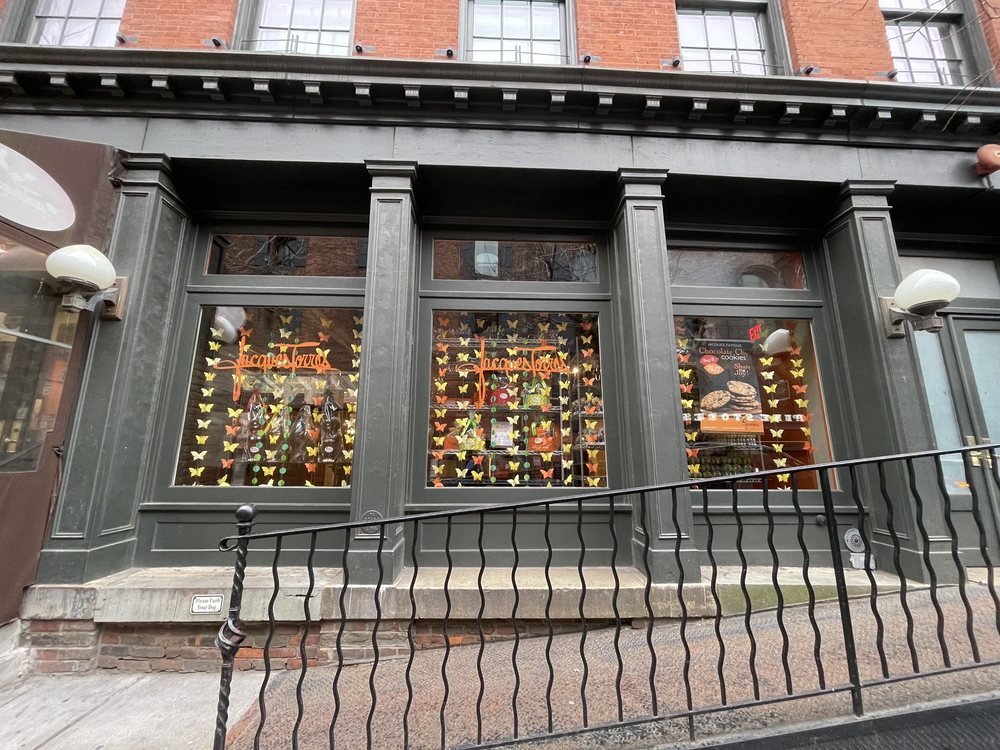
1. Jacques Torres Chocolate

Jacques Torres Chocolate

Regarded as the benchmark of New York’s chocolatier culture, this spot offers a distinct balance between dark chocolate concentration and spicy notes.

Signature Item: Wicked Hot Chocolate

Location: 66 Water St, Brooklyn, NY 11201

Website: mrchocolate.com

Known affectionately as “Mr. Chocolate,” Jacques Torres pioneered artisan chocolate in New York. His hot chocolate is intensely rich, made from freshly ground cacao with a touch of heat that builds gradually. The texture is thick enough to coat a spoon—this is drinking chocolate in its most serious form.

2. Angelina Paris NYC

A space where Parisian ultra-concentrated hot chocolate has been faithfully transported.

Signature Item: L’Africain Hot Chocolate

Location: 1050 Avenue of the Americas, New York, NY 10018

Website: angelina-paris.fr

This Parisian institution’s New York outpost serves L’Africain, their legendary African hot chocolate that’s more liquid truffle than beverage. So thick it requires a spoon, it’s served alongside a pitcher of whipped cream. The experience is quintessentially French: elegant, indulgent, and unapologetic about excess.

3. Dominique Ansel Bakery

Interior of Dominique Ansel Bakery
Dominique Ansel Bakery

Winter-limited hot chocolate reflecting the techniques of a dessert chef stands out particularly.

Signature Item: Hot Chocolate with Milk Jam

Location: 189 Spring St, New York, NY 10012

Website: dominiqueansel.com

The creator of the Cronut applies his pastry expertise to hot chocolate. The milk jam—caramelized condensed milk—adds a layer of complexity that transforms the drink into something closer to liquid dessert. Seasonal variations appear throughout winter, each demonstrating Ansel’s technical precision.

4. Levain Bakery

Levain Bakery

The most practically consumed combination, paired with oversized cookies.

Signature Item: Classic Hot Chocolate

Location: 167 W 74th St, New York, NY 10023

Website: levainbakery.com

Levain’s hot chocolate serves a supporting role to their famous six-ounce cookies, but it’s perfectly calibrated for that purpose. Medium sweetness, smooth texture, and served hot enough to maintain temperature while you work through half a pound of cookie. It’s functional comfort in its purest form.

5. L.A. Burdick Chocolate

The place that maintains European-style drinking chocolate most authentically.

Signature Item: Dark Drinking Chocolate

Location: 156 Prince St, New York, NY 10012

Website: burdickchocolate.com

Burdick’s drinking chocolate comes in small cups because that’s all you need. Made from pure chocolate melted into milk, with no additional flavors to interfere. The dark version uses 60% cacao—intense but balanced. Pair it with their handmade chocolates or simply savor it slowly.

6. MarieBelle

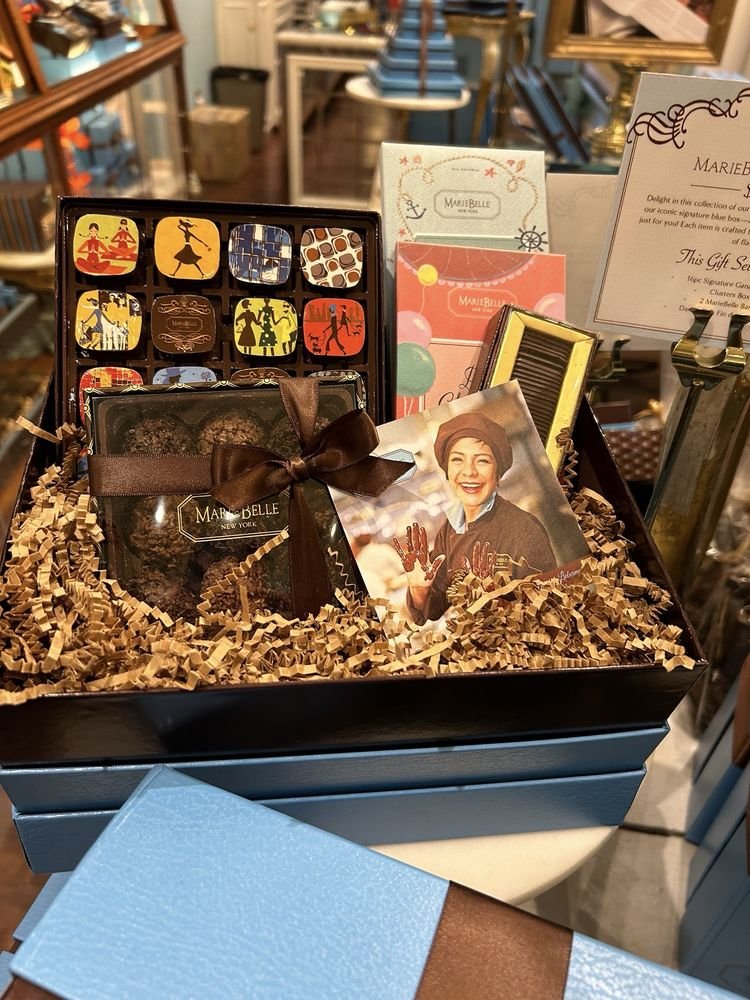
A New York-style chocolate boutique where chocolate bars and hot chocolate are enjoyed simultaneously.

Signature Item: Aztec Hot Chocolate

Location: 484 Broome St, New York, NY 10013

Website: mariebelle.com

MarieBelle’s Cacao Bar in SoHo offers an Aztec hot chocolate that nods to chocolate’s pre-Columbian origins with subtle spice notes. The space itself—with its blue-tiled walls and display cases of hand-painted bonbons—makes the experience feel both contemporary and timeless. Their hot chocolate is medium-bodied, accessible yet refined.

7. Kahkow NYC

Strong focus on single-origin hot chocolate centered on Dominican Republic cacao.

Signature Item: 70% Single Origin Hot Chocolate

Location: 97 Green St, Brooklyn, NY 11222

Website: kahkow.com

This Greenpoint shop specializes in bean-to-bar chocolate from Dominican cacao. Their 70% single-origin hot chocolate lets you taste terroir—the fruity notes, the subtle acidity, the clean finish that distinguishes quality cacao. For chocolate enthusiasts who want to understand origin, this is essential.

8. Eataly Flatiron

Reliably provides Italian-style thick cioccolata calda.

Signature Item: Italian Hot Chocolate

Location: 200 5th Ave, New York, NY 10010

Website: eataly.com

Eataly’s cioccolata calda follows the Italian tradition of pudding-thick hot chocolate. It’s served in small cups because the intensity doesn’t require volume. The texture is achieved through cornstarch, creating a velvety consistency that clings to the palate. Drink it slowly at the stand-up bar, Italian style.

9. Bryant Park Winter Village

Bryant Park Winter Village

The winter beverage most consumed at New York’s largest holiday market.

Signature Item: Classic Hot Chocolate (Most popular: No Chewing Allowed)

Location: Bryant Park, 42nd St & 6th Ave, New York, NY 10018

Website: bryantpark.org

Multiple vendors operate within Bryant Park’s Winter Village, but No Chewing Allowed consistently draws the longest lines. Their hot chocolate is straightforward—sweet, creamy, topped with whipped cream and chocolate shavings. It’s designed for mittened hands and outdoor consumption, and it succeeds perfectly at that mission.

Bryant Park Winter Village 2025: Your Complete Guide to NYC’s Best Winter Destination

10. Union Square Holiday Market

Union Square Holiday Market

Vegan, oat milk-based hot chocolate appears with different recipes each year.

Signature Item: Vegan Hot Chocolate (Most popular: Rubyzaar Baked)

Location: Union Square, New York, NY 10003

Website: urbanspacenyc.com

Union Square’s market vendors rotate, but vegan options have become standard. Rubyzaar Baked offers an oat milk hot chocolate that doesn’t taste like compromise—rich, creamy, and made with high-quality chocolate. The oat milk adds a subtle natural sweetness that complements rather than competes with the cacao.

11. Royce’ Chocolate Bryant Park Kiosk

Japanese-style soft sweetness attracts the most family visitors.

Signature Item: Nama Chocolate Hot Drink

Location: Bryant Park Winter Village

Website: roycechocolate.com

Royce’s approach brings Japanese sensibility to hot chocolate—less intense than European styles, with a silkier texture and gentler sweetness. Their nama chocolate (fresh chocolate) drink feels luxurious without being heavy. It’s particularly popular with families seeking something universally appealing.

12. American Dream Holiday Market

Indoor large-mall holiday market structure concentrates family consumption.

Signature Item: Marshmallow Hot Chocolate

Location: 1 American Dream Way, East Rutherford, NJ 07073

Website: americandream.com

Located just outside Manhattan in New Jersey’s mega-mall, American Dream’s holiday market offers climate-controlled hot chocolate consumption. Their marshmallow hot chocolate is unabashedly kid-friendly—sweet, topped with mini marshmallows, and served in generous portions. It’s hot chocolate as pure comfort, without pretension.


Insider Tips for Hot Chocolate Season in NYC

Timing Matters: Weekend afternoons at popular spots like Bryant Park mean 20+ minute waits. Visit weekday mornings or after 8 PM for shorter lines.

Temperature Strategy: If you’re skating or market-shopping, order your hot chocolate after activities, not before. Cold hands appreciate warmth more, and you won’t struggle with holding both a cup and shopping bags.

The Marshmallow Question: Marshmallows aren’t just decoration—they moderate drinking temperature and add textural interest. At chocolatier shops, skip them to taste the pure chocolate. At market stands, they’re part of the experience.

Pairing Protocol: Rich, European-style drinking chocolate pairs best with plain pastries—croissants, shortbread, or biscotti. American-style hot chocolate can handle richer pairings like brownies or cookies.

Price Expectations: Market hot chocolates run $4-6. Chocolatier establishments charge $6-12. The price difference reflects cacao quality, technique, and atmosphere—both have their place.


The Winter Ritual

Hot chocolate functions as the central device in New York’s winter, binding cold, waiting, light, and crowds into a single temperature. That’s why this city welcomes the same winter every year yet drinks different hot chocolate each time. Even with the same ingredients in the same places, people discover slightly different warmth annually. This is how New York enjoys winter—one warm cup at a time, in spaces that range from Brooklyn warehouses to Midtown ice rinks, from Parisian elegance to market-stand simplicity.

Whether you’re a visitor seeking the quintessential New York holiday experience or a local exploring new winter traditions, these twelve destinations offer more than hot chocolate. They offer what the city needs most in December: warmth, comfort, and a reason to slow down in a place that rarely does.

The mug in your hand becomes more than a beverage—it’s a tool for surviving winter, a ticket to the holiday experience, and a small ceremony practiced by millions in the world’s most restless city.


Plan Your Visit: Most chocolatier shops operate year-round, but holiday markets typically run from late November through early January. Check individual websites for seasonal hours and special holiday offerings. And remember: in New York’s winter, the best hot chocolate is always the one warming your hands right now.

Additional Reading:

New York’s 10 Legendary Jazz Clubs: Where Time Stands Still on Stage

Step into New York’s legendary jazz clubs where history breathes every night. From Village Vanguard’s 90-year legacy to Blue Note’s world-class performances, discover the iconic venues where jazz legends were born and continue to thrive in Greenwich Village, Midtown, and beyond.

New York’s jazz clubs are more than just venues—they’re living history. The basement where Miles Davis caught his breath, the stage where John Coltrane poured his soul into every note, the piano where Bill Evans held the night captive—these moments have layered upon each other to create today’s New York jazz scene. Let’s follow the trail of legends past and present, exploring the venues where history still breathes every night.

1. Village Vanguard: The Sacred Ground of Jazz Since 1935

Greenwich Village | Operating since 1935

Miles Davis, John Coltrane, Bill Evans, Sonny Rollins, Thelonious Monk, Wynton Marsalis, Brad Mehldau, and Joe Lovano have all graced this underground stage. Opening in 1935, this uniquely shaped basement space stands as New York’s longest continuously operating jazz club.

The live albums recorded here have become textbooks of jazz history. Starting with Sonny Rollins’ 1957 recording, over 100 albums have been born within these walls. Village Vanguard functions less as a performance venue and more as a recording studio where tonight’s performance becomes tomorrow’s standard.

Though intimate with only 130 seats, the distinctive triangular architecture creates perfect acoustics. The red velvet curtains, low ceilings, and close proximity to the stage offer an intimacy unmatched anywhere else. Every Monday night since 1966, the Vanguard Jazz Orchestra has maintained its residency.

Address: 178 Seventh Avenue South, New York, NY 10014
Website: villagevanguard.com

2. Blue Note: The Living Mainstream of Modern Jazz

Greenwich Village | Where legends and rising stars share the stage

Herbie Hancock, Chick Corea, Wayne Shorter, Wynton Marsalis, Dizzy Gillespie, Sarah Vaughan, Oscar Peterson, Keith Jarrett, and James Carter have all performed on this stage. Ray Charles even held week-long residencies here annually.

Since opening in 1981, Blue Note has demonstrated that jazz is a living, evolving art form by featuring both legendary masters and contemporary virtuosos on the same stage. Founded by Danny Bensusan, it quickly became New York’s premier jazz club and soon earned its place among the world’s most prestigious jazz venues. Today, Blue Note has locations worldwide including Tokyo, Milan, Rio, and Beijing.

In 2001, the club established its own label, Half Note Records, to release live albums directly. Since 2011, it has hosted the annual Blue Note Jazz Festival. Performances run nightly at 8 PM and 10:30 PM, with jazz brunch on Sundays. As a full-service restaurant, you can enjoy dinner while immersed in world-class jazz.

Address: 131 West 3rd Street, New York, NY 10012
Website: bluenotejazz.com

3. Smalls Jazz Club: Where Jazz Is Reborn

Greenwich Village | The crucible of 1990s jazz renaissance

Brad Mehldau, Joshua Redman, Kurt Rosenwinkel, Peter Bernstein, Mark Turner, and Jason Lindner all developed their careers in this basement. Founded in 1994 by Mitch Borden, Smalls became the epicenter of the 1990s New York jazz renaissance.

Initially operating with a $10 cover charge and BYOB policy, it functioned as a playground for young musicians. Famous for late-night jam sessions, rising stars honed their craft here. After briefly closing following 9/11, it reopened in 2006 with improved sound systems and a full bar.

Since 2013, Smalls has pioneered live-streaming and archiving every performance online. Subscribers can revisit past shows, with revenue shared among artists. Though only accommodating about 60 people, this intimacy defines its character. Open Tuesday through Thursday from 7:30 PM, and Friday through Sunday from 2 PM. Sister club Mezzrow is located nearby.

Address: 183 West 10th Street, New York, NY 10014
Website: smallslive.com

4. Birdland: The Jazz Corner of the World

Midtown | Symbol of jazz’s golden age

Charlie Parker, Dizzy Gillespie, Count Basie, John Coltrane, Miles Davis, Art Blakey, and Thelonious Monk all performed on this stage. Opening on December 15, 1949, and named after Charlie “Bird” Parker, Birdland symbolizes New York jazz’s golden era.

Though the original Broadway location closed in 1965 due to rising rent, the club was revived on the Upper West Side in 1986 and now resides in the Midtown theater district. True to its nickname “The Jazz Corner of the World,” the weight of big band and vocal jazz remains alive here.

The Count Basie Orchestra made this their home base, and George Shearing’s classic “Lullaby of Birdland” (1952) was composed to honor this very club. During the 1950s, Hollywood stars like Frank Sinatra, Marilyn Monroe, and Marlon Brando were regulars.

Today’s Birdland operates two spaces: the main performance hall and the underground Birdland Theater. Serving Cajun-style American cuisine, it’s open daily from 5 PM to midnight (1 AM on weekends). Monday nights feature Jim Caruso’s Cast Party, showcasing Broadway stars.

Address: 315 West 44th Street, New York, NY 10036
Website: birdlandjazz.com

5. Smoke Jazz & Supper Club: Refined Jazz Nights

Upper West Side | Where mature jazz resides

Ron Carter, McCoy Tyner, Kenny Barron, Harold Mabern, George Coleman, Wynton Marsalis, Brad Mehldau, and Chris Potter have all performed here. Opening on April 9, 1999, founders Paul Stache and Frank Christopher created a space that demonstrates what sophisticated jazz truly means.

Inheriting over 30 years of jazz tradition from the former Augie’s Jazz Bar location, Smoke was named Best New Jazz Club by New York Magazine in 2000. Located on Duke Ellington Boulevard (106th Street) near Harlem in the Upper West Side.

Candlelit tables, velvet sofas, antique chandeliers, and a full bar combine to create an authentic jazz atmosphere. Though intimate with about 50 seats, the acoustics are exceptional. Pianist David Hazeltine noted it’s rare to find a club where the piano sounds this clear, while Harold Mabern called it the best jazz club in the world.

Chef Patricia Williams developed soulful American cuisine that perfectly balances dinner and music. In 2014, Smoke established its own label, Smoke Sessions Records, producing Grammy-nominated releases. Open Wednesday through Sunday, with performances running until midnight on Fridays and Saturdays.

Address: 2751 Broadway, New York, NY 10025
Website: smokejazz.com

6. The Iridium: Where Guitar Legends Made History

Midtown West | Les Paul’s home stage

Les Paul, Jeff Beck, Steve Miller, Buddy Guy, Joe Walsh, and Joe Satriani have all performed here. Opening in January 1994, The Iridium is inseparable from guitar legend Les Paul, who performed here every Monday night from 1995 until his death in 2009 at age 94—nearly 15 years of weekly performances.

This venue birthed new traditions where the boundaries between jazz and rock blurred. Initially starting in the Empire Hotel basement across from Lincoln Center, it relocated to its current Times Square location in 2001.

With 180 seats, The Iridium showcases diverse genres including jazz, blues, rock, folk, and cabaret. Its label IridiumLive has released Albert Lee’s ‘Live At The Iridium’ and Jeff Beck’s Grammy-nominated ‘Rock ‘N’ Roll Party Honoring Les Paul.’

As a full-service restaurant featuring upscale American cuisine and a 450-square-meter wine cellar, performances begin nightly at 7 PM, with dinner service starting at 6:30 PM. Located at Broadway and 51st Street for excellent accessibility.

Address: 1650 Broadway, New York, NY 10019
Website: theiridium.com

7. Arthur’s Tavern: West Village’s Timeless Night

Greenwich Village | Home of the Bird

Charlie Parker and Roy Hargrove have graced this small bar’s stage. Opening in 1937, Arthur’s Tavern boasts 88 years of history and is known as the last existing club where Charlie Parker regularly performed, earning it the nickname “Home of the Bird.”

Pianist and singer Al Bundy performed here for 22 years, with a plaque honoring him hanging on the door. This venue blending traditional jazz, blues, swing, and funk remembers when jazz was part of everyday life.

Though maintaining a humble, friendly neighborhood bar atmosphere, live music fills the space every night. The Grove Street Stompers have performed every Sunday since 1986, with various bands playing Monday through Saturday.

No cover charge—just order at least one drink per person. Cash only, no credit cards accepted. The small space creates intimate proximity to the stage. Open Monday-Thursday and Sunday from 5 PM to 2 AM, Friday-Saturday from 5 PM to 4 AM.

Address: 57 Grove Street, New York, NY 10014
Website: arthurstavern.nyc

8. Dizzy’s Club: Where Jazz Meets Institution

Jazz at Lincoln Center | Purpose-built for jazz

Named after Dizzy Gillespie, this club regularly features Wynton Marsalis, Wycliffe Gordon, and members of the Jazz at Lincoln Center Orchestra. Opening in fall 2004 on the 5th floor of Frederick P. Rose Hall, Jazz at Lincoln Center’s new headquarters, Dizzy’s Club is part of the world’s first performance, education, and broadcast facility built specifically for jazz.

Designed by Rafael Viñoly as a $131 million facility, the space was specially created for jazz music’s warmth and clarity. Though intimate with 140 seats, experiencing jazz while overlooking Central Park and the Manhattan skyline is truly transcendent. Tony Bennett praised it as New York’s finest jazz room.

Unlike most historic jazz clubs located in basements, Dizzy’s Club occupies an elevated position with stunning Central Park views. It also serves an educational role in preserving jazz history for future generations. Wynton Marsalis has served as artistic director since 1987, leading the Jazz at Lincoln Center Orchestra.

Serving New Orleans-style soul food, performances run Monday-Saturday at 7 PM and 9 PM, and Sundays at 5 PM and 7:30 PM.

Address: 10 Columbus Circle, 5th fl., New York, NY 10019
Website: jazz.org

9. Café Carlyle: Where Jazz Meets Cabaret

The Carlyle Hotel | The last bastion of New York’s golden age cabaret

Bobby Short, Woody Allen, Eartha Kitt, and Barbara Carroll held regular residencies here. Recently, artists like Judy Collins, Sutton Foster, and St. Vincent have performed extended runs.

Opening in 1955 within The Carlyle Hotel, Café Carlyle represents the intersection of New York high culture, jazz, and cabaret. Decorated with murals by Marcel Vertès, this space is called the last bastion of New York’s golden age cabaret.

Bobby Short performed here regularly for nearly 40 years from 1968 until just before his death in 2005, while Woody Allen played clarinet every Monday. Though accommodating only about 60 people, the narrative depth is profound.

Formal attire is recommended in this elegant atmosphere where you can enjoy cabaret and jazz alongside French cuisine. Broadway stars, jazz artists, and Grammy winners regularly hold residencies. The 2024-2025 season featured a special series commemorating Bobby Short’s 100th birthday.

Cover charges start at $80 depending on the artist, with separate food and beverage orders required. Valet parking is available at the hotel’s 76th Street entrance. Open Monday-Saturday from 6:30 PM, with performances typically starting at 8:45 PM.

Address: 35 East 76th Street, New York, NY 10021
Website: rosewoodhotels.com/cafe-carlyle

10. Zinc Bar: Where Jazz Boundaries Expanded

Greenwich Village | Underground stage of evolution

Zinc Bar demonstrates how New York jazz has evolved with the times. Since the 1970s, this Soho and Village area venue has functioned as a stage where jazz, Latin jazz, world music, and Afro-Cuban jazz intersect.

Joe Henderson, McCoy Tyner, Gonzalo Rubalcaba, Miguel Zenón, and David Sánchez—performers who led jazz’s expansion after hard bop—have all graced this stage. Rather than specific albums or singular moments, Zinc Bar’s legend lies in showing the flow of jazz evolution.

It stands as one of the venues most consistently demonstrating how post-bebop jazz created new languages through Latin rhythms and world music influences. The music performed here has proven that jazz is no longer a single style but an open structure.

Located at the bottom of a descending staircase, the space is dark and dense. The proximity between stage and audience is close, with flexible seating arrangements creating different atmospheres for each performance.

Address: 82 West 3rd Street, New York, NY 10012
Website: zincbar.com


Planning Your Jazz Journey in New York

These ten legendary venues represent different facets of New York’s jazz heritage. From Village Vanguard’s unchanged 1935 aesthetic to Dizzy’s Club’s modern institution, each space tells its own story while contributing to the living history of jazz.

Tips for visiting:

  • Reserve in advance, especially for popular venues like Blue Note and Village Vanguard
  • Expect minimum drink requirements at most clubs
  • Dress codes vary from casual to formal depending on the venue
  • Many clubs offer multiple sets per night—check schedules online
  • Consider multi-club nights in Greenwich Village where several venues are within walking distance

Whether you’re a devoted jazz aficionado or a curious first-timer, these venues offer more than just music—they offer a chance to step into history, to sit where legends once sat, and to experience the art form that defines New York’s cultural soul.

The stages may be empty during the day, but at night, they still pulse with the same energy that moved Miles, Coltrane, and countless others. This is where time stands still, and jazz lives forever.​​​​​​​​​​​​​​​​

Dia:Beacon: A Pilgrimage to Minimalist Art in New York’s Hudson Valley

Bryant Park Winter Village 2025: Your Complete Guide to NYC’s Best Winter Destination

Discover everything Bryant Park Winter Village has to offer this season, from the exciting new Ice Bumper Cars to classic ice skating, 170+ market vendors, and special Winter Olympics celebrations. Whether you’re planning a family outing, romantic date, or solo adventure, this complete guide covers activities, pricing, tips, and the best times to visit NYC’s premier winter destination in the heart of Manhattan.

Bryant Park Winter Village 2025: Your Complete Guide to NYC’s Best Winter Destination.

Looking for the perfect winter weekend activity in New York City? Bryant Park in the heart of Manhattan offers an exciting new addition this season that’s worth checking out.

Ice Bumper Cars Are Back at Bryant Park

The Ice Bumper Cars have returned to Bryant Park, running from January 9 through February 28. This unique winter attraction lets you enjoy the ice without needing any skating skills. Sessions last 45 minutes and cost between $22-$26 for participants ages 7 and up (minimum height 42 inches). Advance reservations are highly recommended at wintervillage.org, especially for popular time slots like weekday evenings and weekend afternoons.

What makes ice bumper cars special is their accessibility. You don’t need to know how to skate, and you won’t worry about falling. Just bundle up in warm outerwear and gloves, then enjoy bumping into friends and family while seated comfortably in your bumper car. It’s the perfect low-pressure winter activity for everyone.

Classic Ice Skating at The Rink

Bryant Park’s famous outdoor ice skating rink operates daily through March 1, from 8am to 10pm. Admission to the rink is free, though skate rentals range from $19-$60 depending on the time of day. Off-peak hours during weekday mornings and early afternoons offer the lowest rates. If you bring your own skates, you can use the rink without any rental fees.

For beginners, weekday mornings are ideal since the rink is less crowded and you can practice at your own pace. Weekend evenings create a romantic atmosphere under the lights, but expect larger crowds. First-timers should start near the walls and can typically get the hang of basic skating within 30 minutes.

Pro tip: Book skating and bumper cars at least one week in advance. Weekday mornings are the least crowded. Activities run rain or shine, though severe weather may cause cancellations. Wear comfortable shoes and warm layers, and budget for locker rentals starting at $6.

BRYANT PARK RESERVE TICKET

Winter Village Market: Shopping and Dining

Over 170 vendor booths surround the skating rink, offering handmade accessories, knitwear, candles, home decor items, and unique products from local New York brands. Whether you’re shopping for gifts or just browsing, the market provides hours of entertainment.

The food vendors are a winter highlight, serving hot chocolate, mulled wine, pretzels, waffles, cheese dishes, and other warming treats. Prices typically range from $5-$15, making it affordable to enjoy multiple items. The market is especially atmospheric in the evening when lights illuminate the entire area.

You can explore the market freely without skating, making it perfect for dates, solo walks, or family outings. For a more relaxed experience, visit on weekday evenings or early afternoons when crowds are lighter.

The Lodge: Warm Indoor Space with Special Events

The Lodge offers a heated indoor area where you can watch the ice rink and holiday market while enjoying drinks and snacks from 10am to 10pm daily.

Special events at The Lodge include:

Vinyl Nights – Select Tuesdays (January 13, 20, 27, February 3) from 7-9:30pm feature disco, hip-hop, and funk music.

Winter Dance – Wednesday dance lessons open to everyone, couples or singles.

Mixtape Bingo – An interactive event where participants share playlists and connect through music.

We Met IRL – Social programs designed to help online connections meet in person.

Rosy Igloos for Special Occasions

Bryant Park Winter Village

The pink-lit igloos provide a private dining and relaxation space for groups up to eight people. Sessions last 90 minutes and start at $254, including Afternoon Tea. Reservations are required. Special events include a Rose Light Skate Night for Valentine’s Day and Lunar New Year performances and craft programs in February.

Family-Friendly Programming

Winter StoryTime – Saturdays at 10:30am for one hour (recommended ages 2-9). Some sessions feature performances by the Bryant Parkettes, a children’s skating group.

Kids Week – February 17-20 offers free skating lessons, junior performances, and off-ice activities, perfectly timed for winter break.

Winter Olympics Celebration (February 2025)

As the Milano Cortina Winter Olympics approach (February 6-22), Bryant Park transforms into an Olympic celebration hub.

The Lodge Community Lounge – Watch live Olympic coverage throughout February from 10am-10pm. The space becomes a Team USA cheering station with real-time medal updates and podium photo zones. Experience New York’s unique way of celebrating the Games, even if you’re not a winter sports fan.

Ice-less Curling – February 6-26, 11am-7pm, free admission. Try curling on a special mat instead of real ice. No reservation needed, first-come first-served. Staff will teach you the rules on-site, giving you a chance to experience an actual Olympic sport.

Suggested Itinerary

Here’s how to make the most of your Bryant Park winter visit:

  1. Start by exploring the Winter Village Market with a warm beverage
  2. Try ice bumper cars or ice skating (pre-booked)
  3. Warm up and relax at The Lodge
  4. Finish with dinner at nearby restaurants or food vendors in the village

Bryant Park’s winter season isn’t about checking off a to-do list. It’s designed as a space where you can spend time in your own way. This weekend, you don’t need to travel far to find something special.

The season runs through March 1. For detailed schedules and reservations, visit the official website at wintervillage.org.

Visitor Information

Location: Bryant Park, Manhattan
Season: Through March 1, 2025
Ice Bumper Cars: January 9 – February 28
Ice Skating: Daily 8am-10pm through March 1
The Lodge: Daily 10am-10pm
Winter Market: Daily hours vary
Website: wintervillage.org

Whether you’re looking for active winter fun, leisurely shopping, or a cozy spot to enjoy the season, Bryant Park Winter Village has something for everyone right in the heart of New York City.

New York’s Top 12 Hot Chocolates: From Christmas Market Mugs to Chocolatier Cups

The Ultimate Guide to NYC Times Square Ball Drop 2026: Best Viewing Spots, Tips & Premium Packages

Planning to ring in 2026 at Times Square? You’re in for an unforgettable experience! The New Year’s Eve Ball Drop is one of the world’s most iconic celebrations, attracting millions of viewers both in-person and worldwide. Here’s everything you need to know to make your experience perfect.

Table of Contents

  1. What is the Ball Drop?
  2. Free Viewing Guide
  3. Getting There: Transportation Tips
  4. Essential Packing Checklist
  5. Premium Viewing Options (Hotels & Restaurants)
  6. 2026 Ball Drop Timeline
  7. Pro Tips & Safety Information

What is the Ball Drop?

The Times Square Ball Drop is an annual New Year’s Eve celebration held every December 31st at midnight. This tradition, dating back to 1907, features a massive 12-foot crystal ball descending from atop One Times Square as millions count down to the new year. Over 1 billion people worldwide watch this spectacular event via TV and online streaming.

2026 Ball Drop Date: December 31, 2025 (Wednesday) evening through January 1, 2026 (Thursday) morning


Free Viewing Guide

Arrival Time Strategy

The Ball Drop is completely free and operates on a first-come, first-served basis. However, securing a good spot requires serious dedication.

  • Official Opening Time: Areas typically open around 3:00 PM
  • Recommended Arrival: 10:00 AM – 11:00 AM for prime viewing spots
  • Expected Wait Time: 12-14 hours minimum

Best Viewing Locations

The Ball descends from the top of One Times Square building. Here are the best viewing zones:

Prime Viewing Areas:

  • Broadway between 43rd and 50th Streets
  • 7th Avenue between 43rd and 59th Streets
  • Selected sections of 6th Avenue

Critical Warning: Once you enter a viewing zone, you cannot leave. This means:

  • No bathroom breaks
  • No re-entry
  • You must stay in your designated area until after midnight

Security Screening

Expect airport-level security measures:

  • Metal detectors
  • Bag X-ray screening
  • Only small, transparent bags allowed (check official website for current regulations)
  • Security screening alone can take 1-2 hours

Getting There: Transportation Tips

Subway (Highly Recommended)

Important Alert: Major Times Square subway stations (42 St-Times Square, 34 St-Herald Square) will be exit-only from afternoon onwards. Entry is restricted.

Recommended Stations:

  • 50 St Station (C, E lines)
  • 59 St-Columbus Circle (A, B, C, D, 1 lines)
  • Walk to Times Square from these stations (10-15 minutes)

Taxis/Rideshares: Not Recommended

The entire Times Square area will be closed to vehicle traffic. Taxis and Uber/Lyft will not be able to access the area. Public transportation is your only viable option.

Parking Information

Manhattan parking is extremely difficult and expensive. We strongly recommend using public transportation instead.


Essential Packing Checklist

Weather Preparation (Top Priority!)

New York’s December 31st average temperature ranges from 23°F to 41°F (-5°C to 5°C), but wind chill can make it feel like 14°F (-10°C) or colder.

Cold Weather Essentials:

  • Multiple layers of clothing (layering is key!)
  • Heavy winter parka or down jacket
  • Waterproof winter boots (for snow/rain)
  • Ear muffs, scarf, gloves (touchscreen-compatible gloves recommended)
  • 10+ hand and foot warmers
  • Blanket or insulated sitting pad

Rain/Snow Protection

  • Rain poncho (umbrellas are prohibited!)
  • Waterproof pants or rain pants

Food & Beverages

  • Energy bars, sandwiches
  • Thermos with hot chocolate or tea
  • Water (minimal amount, considering bathroom limitations)
  • Gum, candy

Electronics

  • 2+ portable chargers (cold weather drains batteries rapidly)
  • Waterproof phone case

Other Essentials

  • ID/passport
  • Cash (some vendors don’t accept cards)
  • Hand sanitizer, tissues
  • Personal medications, pain relievers

The Bathroom Problem (Real Talk)

This is not a joke. Many attendees actually use these solutions:

  • Adult diapers (seriously considered by many veterans)
  • Use facilities at nearby McDonald’s, Starbucks before entering viewing area
  • Minimize fluid intake

Prohibited Items

  • Backpacks, large bags
  • Folding chairs
  • Large blankets
  • Alcohol
  • Weapons, sharp objects
  • Umbrellas
  • Drones

Premium Viewing Options (Hotels & Restaurants)

If 12+ hours in freezing temperatures doesn’t appeal to you, premium packages offer a comfortable alternative. Enjoy the Ball Drop from heated venues with food, drinks, and actual bathrooms!

Recommended Hotels (Live Ball Drop Views)

1. The Knickerbocker

  • Rooftop Bar: St. Cloud
  • Advantage: Best view of the Ball Drop, right next to the action
  • Price Range: $800-$1,500+
  • Address: 6 Times Square, New York, NY 10036

2. New York Marriott Marquis

  • Advantage: Central Times Square location, select rooms and The View revolving restaurant
  • Price Range: $500-$1,200
  • Address: 1535 Broadway, New York, NY 10036

3. Hyatt Centric Times Square

  • Rooftop Bar: Bar 54 (54th floor)
  • Advantage: One of NYC’s highest rooftop bars
  • Price Range: $600-$1,000
  • Address: 135 W 45th St, New York, NY 10036

4. Renaissance New York Times Square Hotel

  • Rooftop: R Lounge
  • Advantage: Panoramic floor-to-ceiling windows
  • Price Range: $400-$800

Recommended Restaurants & Bars

1. R Lounge NYC

  • Watch the entire Ball Drop through floor-to-ceiling windows
  • Includes drinks and buffet
  • Price Range: $300-$600

2. Applebee’s Times Square

  • More casual atmosphere
  • Food and drinks included
  • Price Range: $200-$400

3. Carmine’s Italian Restaurant

  • Times Square views
  • Italian buffet style
  • Price Range: $250-$500

How to Book Premium Tickets

Booking Websites:

  • BallDrop.com
  • NYCNewYears.com
  • Individual hotel official websites

Important: Popular venues sell out months in advance! Start booking in September-October.

Premium Package Price Summary

OptionPrice Range
Rooftop Bar Packages$300-$1,000+
Hotel Room Packages$1,500-$5,000+
Restaurant Dinner Packages$200-$500

2026 Ball Drop Timeline

December 31, 2025 (Wednesday)

3:00 PM – Official viewing areas begin opening

6:00 PM – Ball lighting and raising to the top (official event start)

6:00 PM – 11:59 PM – Live performances and entertainment

  • Famous artists perform each year
  • 2025-2026 lineup announced October-November

11:59 PM – 60-second countdown begins as the Ball descends

January 1, 2026 (Thursday)

12:00 AM – Happy New Year!

  • Over 1 ton of confetti released
  • Fireworks and celebration

12:30 AM – 1:00 AM – Crowd dispersal begins


Pro Tips & Safety Information

Photography & Video Tips

  • Video Mode Recommended: The midnight moment lasts only 60 seconds. Video captures it better than photos.
  • Battery Management: Smartphone batteries drain quickly in cold weather. Bring 2+ portable chargers!
  • Touchscreen Gloves: Essential for operating your phone while keeping hands warm
  • Stabilization: Small tripod or selfie stick helpful (large tripods prohibited)

Safety Information

  • Emergency Exits: Familiarize yourself with evacuation routes
  • Emergency Help: Alert nearby police officers or security personnel
  • Pickpockets: Watch your belongings in dense crowds
  • Minimize Valuables: Bring only essentials

Staying Connected

  • Cell networks become overloaded (expect connectivity issues)
  • Arrange meeting points with your group in advance
  • Phone calls work better than texts/apps

The Honest Truth

Let’s be real: Watching on TV at home is warmer and more comfortable!

Many New York locals watch from home. However, experiencing it live is a once-in-a-lifetime bucket list item. Consider your cold tolerance and physical stamina before committing.

Next Day Planning

  • Crowd dispersal takes 1-2 hours after midnight
  • You’ll likely reach your hotel around 2-3 AM
  • Keep January 1st morning free for rest

Alternative: TV Viewing Options

If the outdoor experience seems overwhelming:

  • Hotel Room: Book a Times Square view room (without package)
  • Friend’s Party: If you know NYC locals
  • Sports Bars: Watch on big screens with festive atmosphere

Master Checklist

3 Months Before (September-October)

  • [ ] Book premium packages (hotel/restaurant)
  • [ ] Reserve flights and accommodation

1 Month Before (Early December)

  • [ ] Check official website for latest regulations
  • [ ] Purchase cold weather gear
  • [ ] Test portable chargers

1 Week Before

  • [ ] Check weather forecast
  • [ ] Confirm transportation plans
  • [ ] Buy hand warmers and snacks

Event Day (December 31)

  • [ ] Arrive at 10-11 AM
  • [ ] Fully charge all devices
  • [ ] Use bathroom before entering viewing area
  • [ ] Pass security screening
  • [ ] Secure your spot and settle in for the wait

Final Thoughts

The Times Square Ball Drop is an unforgettable experience, but it requires physical endurance and serious preparation. Whether you choose the authentic street-level experience or opt for the comfort of premium packages, thorough planning is the key to success.

Here’s to ringing in 2026 in the most iconic location on Earth! May your New Year be filled with warmth, joy, and unforgettable memories.


Useful Resources


Did you find this guide helpful? Share it with friends planning their NYC New Year’s adventure!

Tags: #TimesSquare #NYE2026 #BallDrop #NewYorkCity #NYCTravel #NewYearsEve #TimesSquareBallDrop #NYCEvents #TravelGuide #NewYork #Manhattan #WinterTravel #USATravel #BucketList #NYCTips