New York’s Top 12 Hot Chocolates: From Christmas Market Mugs to Chocolatier Cups

New York’s winter asks for warmth before light. Hot chocolate isn’t just a beverage here—it’s the oldest way to cross December, the most certain comfort. From ice rinks to Christmas markets, explore the city’s top 12 spots where chocolate meets tradition.

New York’s Top 12 Hot Chocolates
Hot Chocolates

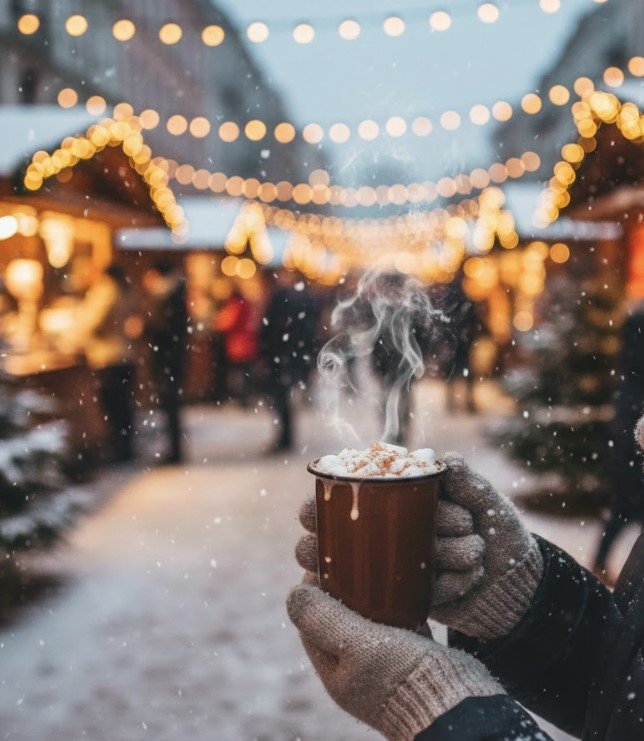
Winter in New York demands warmth before anything else. Before gloves tucked in coat pockets, you need a cup to warm your hands. Hot chocolate here isn’t simply a drink—it’s the oldest method of navigating December and the most reliable comfort. Steam rising from ice rinks, time spent waiting for tree lighting ceremonies, the noise at the center of Christmas markets. People always make the same choice: something hot, sweet, and open to everyone. That’s why hot chocolate has become the symbol of the holidays.

Why Hot Chocolate Became the Holiday Drink

Cocoa was originally a beverage for rituals and celebrations. It spread as a social drink among 17th-century European royal courts, then became an essential winter beverage in the 19th century with the popularization of sugar and milk. In America, during an era of inadequate heating, it established itself as a safe warm drink for both children and adults. Combined with Christmas, year-end family gatherings, and department store window culture, it became winter’s symbol. As a beverage that encompasses even those who don’t drink alcohol, it has positioned itself as a more universal holiday drink than mulled wine.

The Structure Behind Christmas Markets’ Signature Beverage

Hot chocolate satisfies multiple conditions simultaneously: its role as an alcohol alternative, immediate body-warming effects, perfect harmony with winter spices like cinnamon and peppermint, and the visual symbolism of the mug itself. This is why it became the most reliably sold beverage even in the harsh environment of ice rinks and outdoor markets. A mug held in one hand carries meaning beyond the drink—it’s a small device for enduring winter and visual proof of the holiday season.

The Basic Formula for Hot Chocolate Pairings

Chocolate cookies, croissants, brownies, and gingerbread form the most stable combinations with hot chocolate. In New York, pairings with bakery pastries with strong butter flavors are particularly popular. Marshmallows aren’t mere decoration—they’re functional toppings that lower surface temperature and lengthen the chocolate aroma. Choosing marshmallows over whipped cream is not only a matter of sensation but also temperature control.

Where Hot Chocolate Becomes an Event in New York

Bryant Park Winter Village, Union Square Holiday Market, American Dream Holiday Market. In these three locations, hot chocolate isn’t a beverage—it’s part of the experience. Skating wait times, shopping routes, the flow of lights and crowds all connect around a single cup. People don’t come to drink hot chocolate; they come to experience winter. And hot chocolate sits at the center of that experience. This is how New York’s winter operates most authentically.


New York’s Top 12 Hot Chocolate Destinations

1. Jacques Torres Chocolate
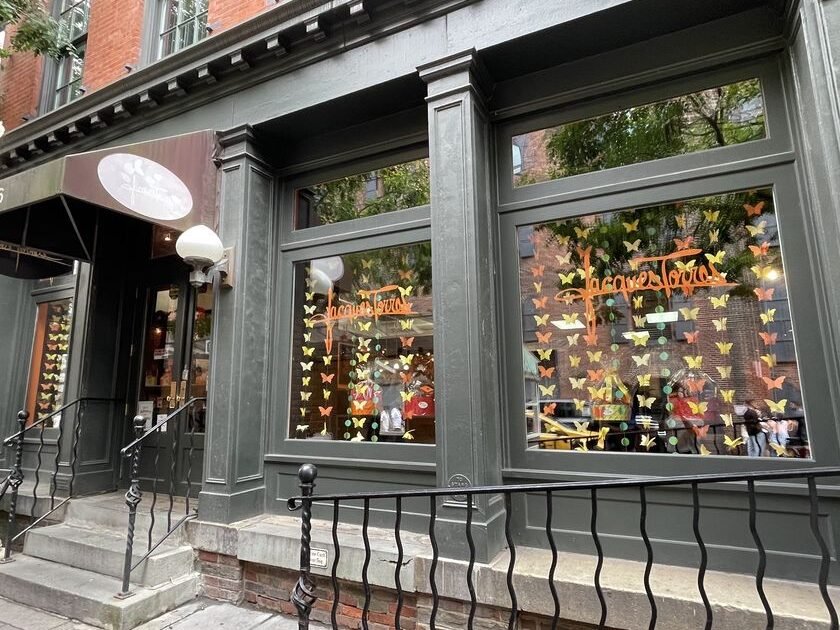
Jacques Torres Chocolate

Regarded as the benchmark of New York’s chocolatier culture, this spot offers a distinct balance between dark chocolate concentration and spicy notes.

Signature Item: Wicked Hot Chocolate

Location: 66 Water St, Brooklyn, NY 11201

Website: mrchocolate.com

Known affectionately as “Mr. Chocolate,” Jacques Torres pioneered artisan chocolate in New York. His hot chocolate is intensely rich, made from freshly ground cacao with a touch of heat that builds gradually. The texture is thick enough to coat a spoon—this is drinking chocolate in its most serious form.

2. Angelina Paris NYC
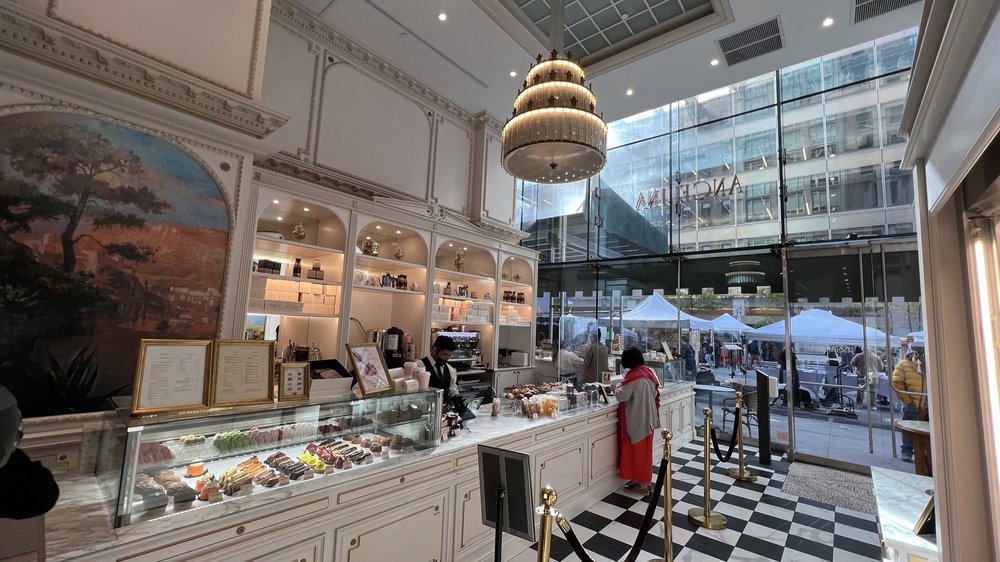
A space where Parisian ultra-concentrated hot chocolate has been faithfully transported.

Signature Item: L’Africain Hot Chocolate
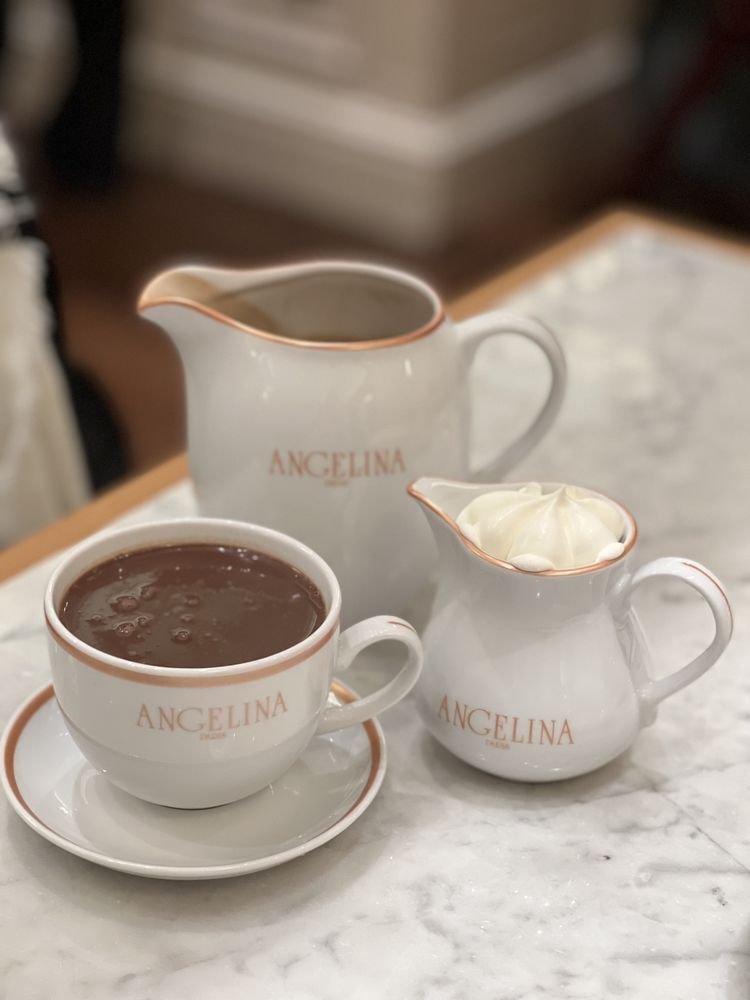
Location: 1050 Avenue of the Americas, New York, NY 10018

Website: angelina-paris.fr

This Parisian institution’s New York outpost serves L’Africain, their legendary African hot chocolate that’s more liquid truffle than beverage. So thick it requires a spoon, it’s served alongside a pitcher of whipped cream. The experience is quintessentially French: elegant, indulgent, and unapologetic about excess.

3. Dominique Ansel Bakery
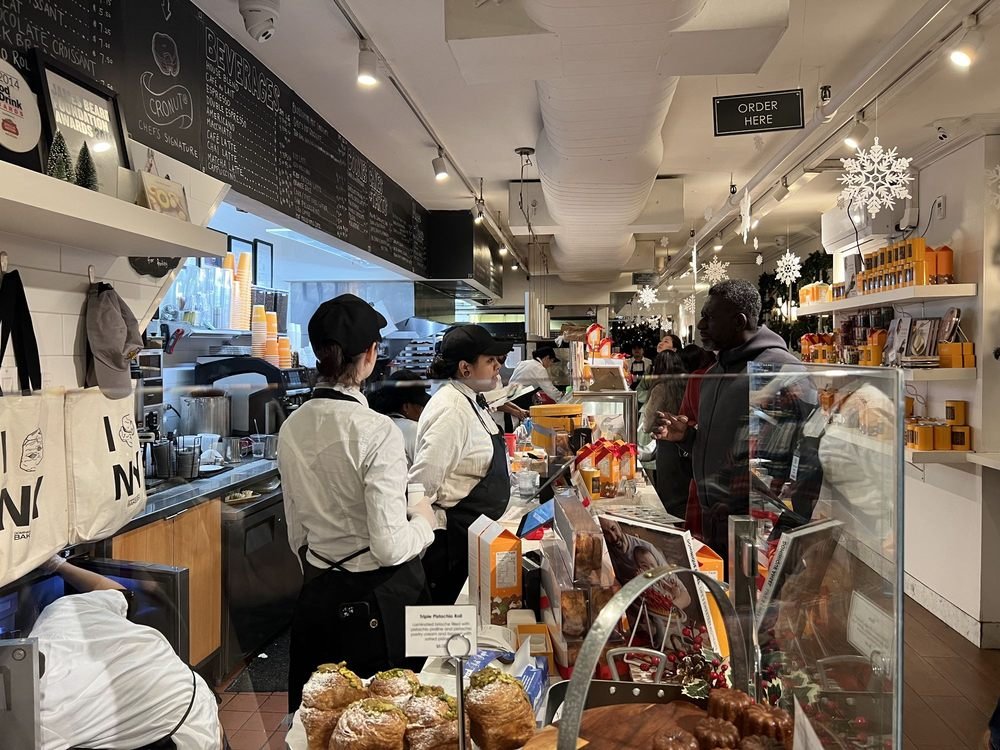
Interior of Dominique Ansel Bakery
Dominique Ansel Bakery

Winter-limited hot chocolate reflecting the techniques of a dessert chef stands out particularly.

Signature Item: Hot Chocolate with Milk Jam

Location: 189 Spring St, New York, NY 10012

Website: dominiqueansel.com

The creator of the Cronut applies his pastry expertise to hot chocolate. The milk jam—caramelized condensed milk—adds a layer of complexity that transforms the drink into something closer to liquid dessert. Seasonal variations appear throughout winter, each demonstrating Ansel’s technical precision.

4. Levain Bakery
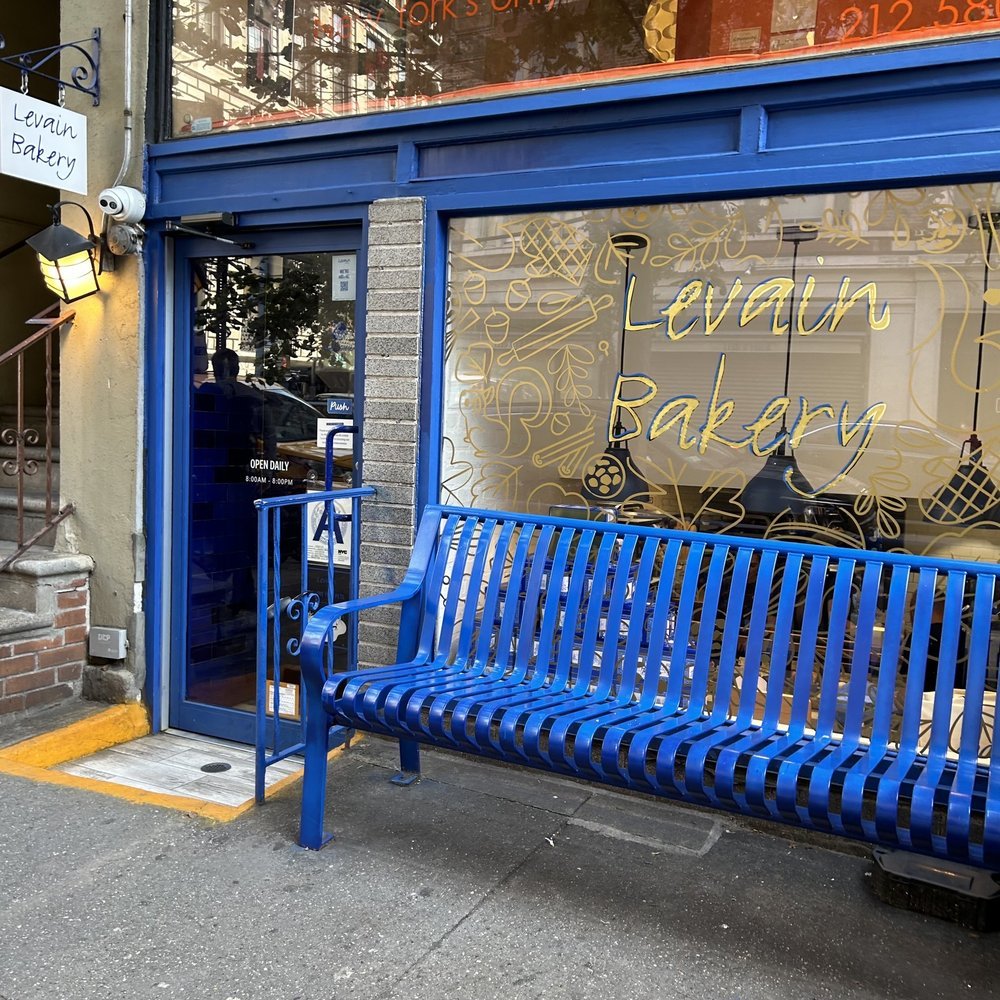
Levain Bakery

The most practically consumed combination, paired with oversized cookies.

Signature Item: Classic Hot Chocolate

Location: 167 W 74th St, New York, NY 10023

Website: levainbakery.com

Levain’s hot chocolate serves a supporting role to their famous six-ounce cookies, but it’s perfectly calibrated for that purpose. Medium sweetness, smooth texture, and served hot enough to maintain temperature while you work through half a pound of cookie. It’s functional comfort in its purest form.

5. L.A. Burdick Chocolate
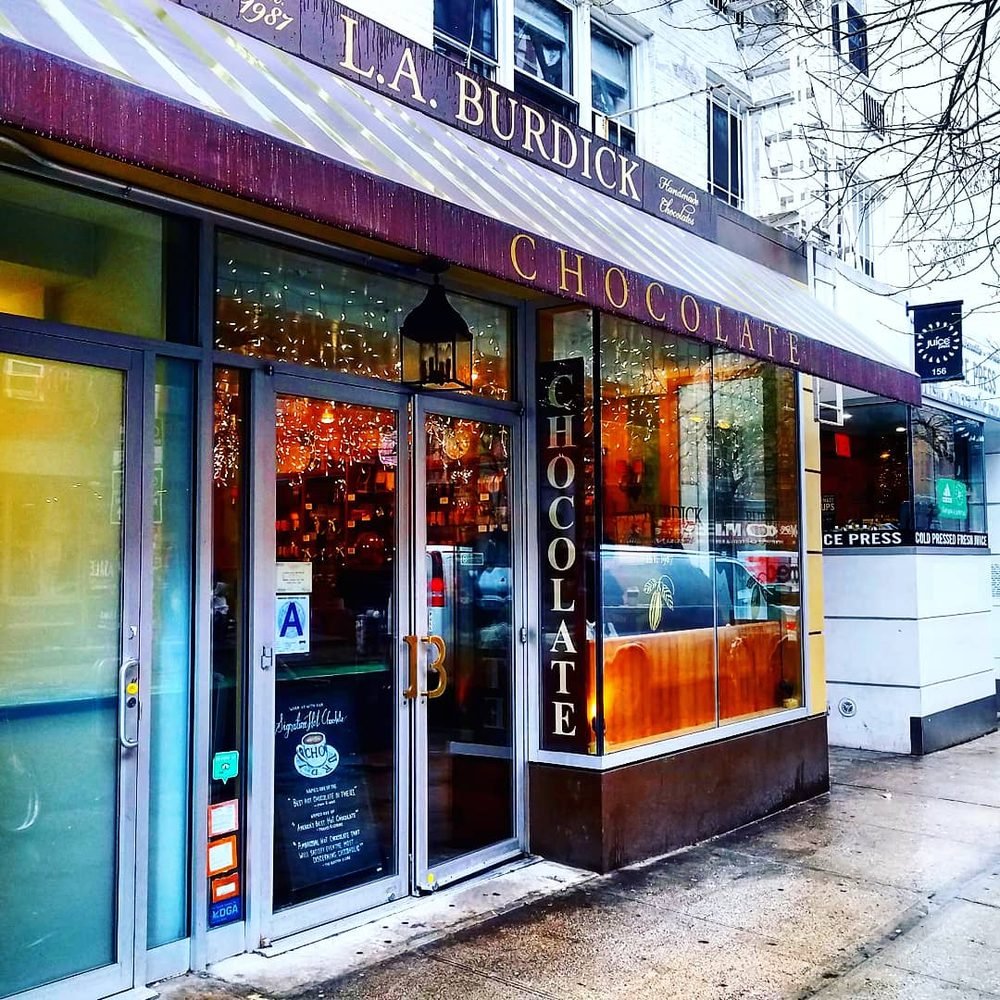
The place that maintains European-style drinking chocolate most authentically.

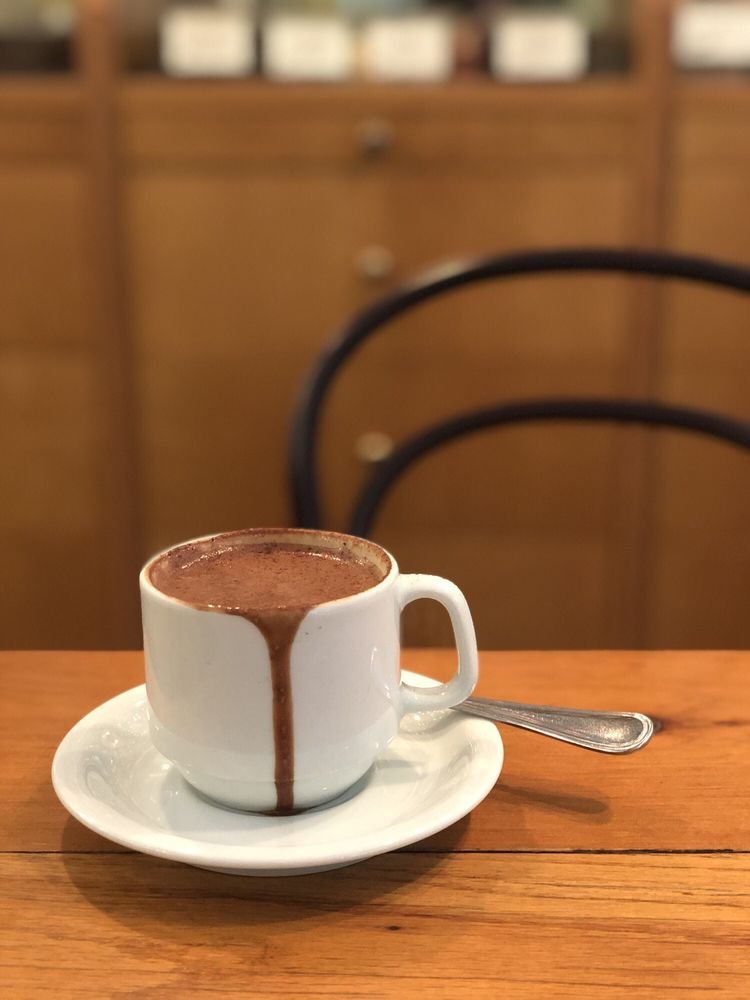
Signature Item: Dark Drinking Chocolate
Location: 156 Prince St, New York, NY 10012

Website: burdickchocolate.com

Burdick’s drinking chocolate comes in small cups because that’s all you need. Made from pure chocolate melted into milk, with no additional flavors to interfere. The dark version uses 60% cacao—intense but balanced. Pair it with their handmade chocolates or simply savor it slowly.

6. MarieBelle
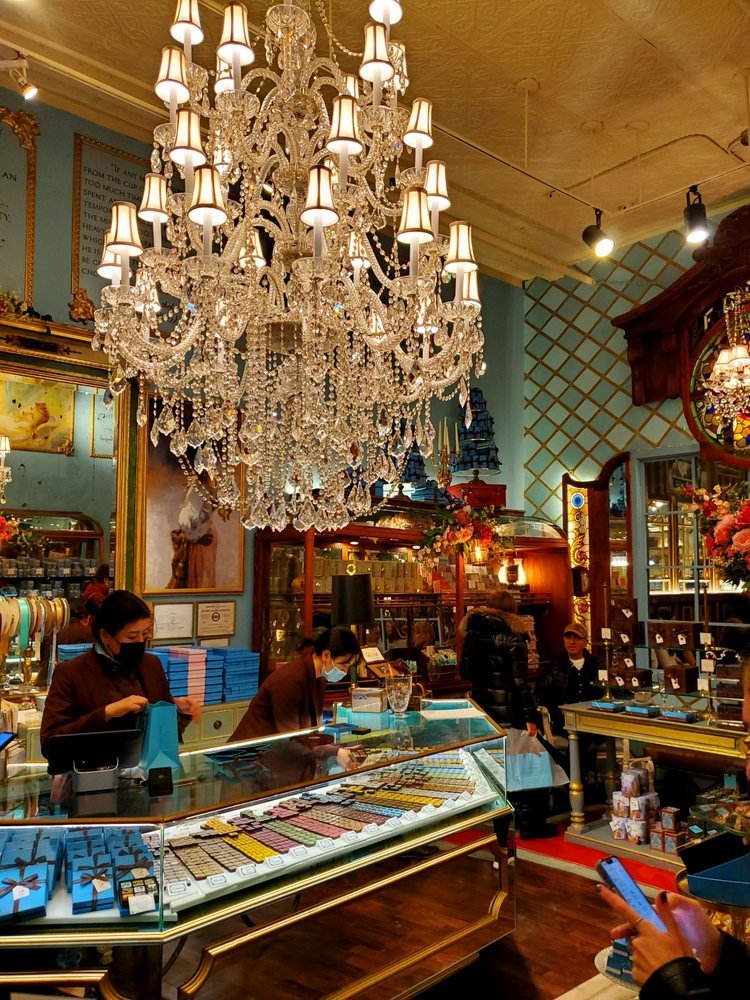
A New York-style chocolate boutique where chocolate bars and hot chocolate are enjoyed simultaneously.

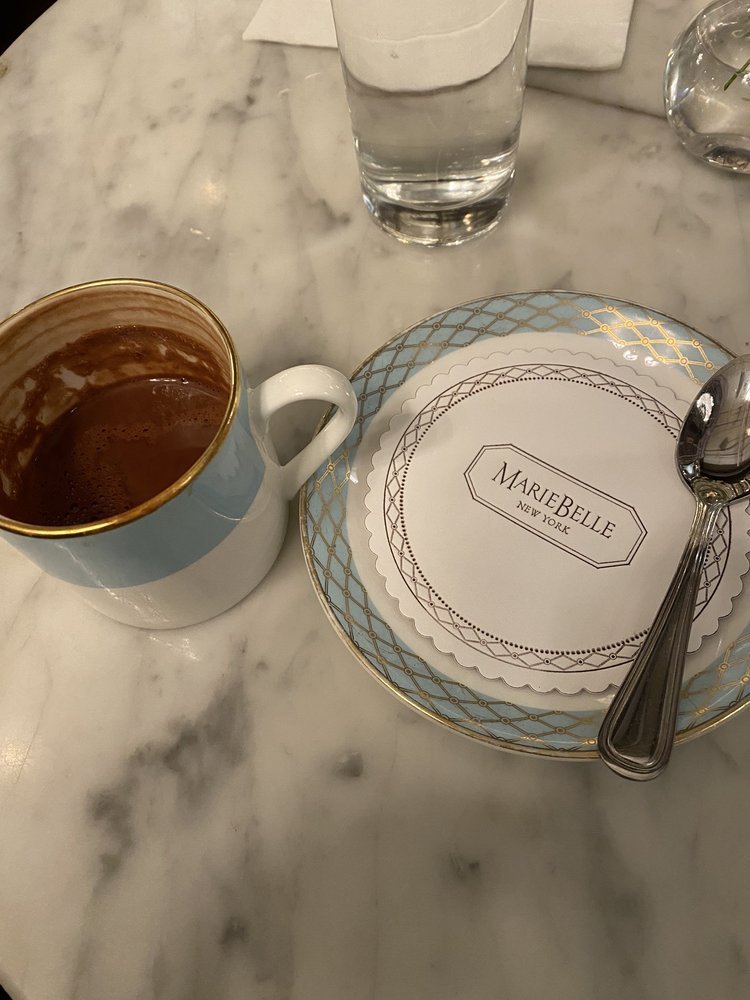
Signature Item: Aztec Hot Chocolate
Location: 484 Broome St, New York, NY 10013

Website: mariebelle.com

MarieBelle’s Cacao Bar in SoHo offers an Aztec hot chocolate that nods to chocolate’s pre-Columbian origins with subtle spice notes. The space itself—with its blue-tiled walls and display cases of hand-painted bonbons—makes the experience feel both contemporary and timeless. Their hot chocolate is medium-bodied, accessible yet refined.

7. Kahkow NYC

Strong focus on single-origin hot chocolate centered on Dominican Republic cacao.

Signature Item: 70% Single Origin Hot Chocolate

Location: 97 Green St, Brooklyn, NY 11222

Website: kahkow.com

This Greenpoint shop specializes in bean-to-bar chocolate from Dominican cacao. Their 70% single-origin hot chocolate lets you taste terroir—the fruity notes, the subtle acidity, the clean finish that distinguishes quality cacao. For chocolate enthusiasts who want to understand origin, this is essential.

8. Eataly Flatiron
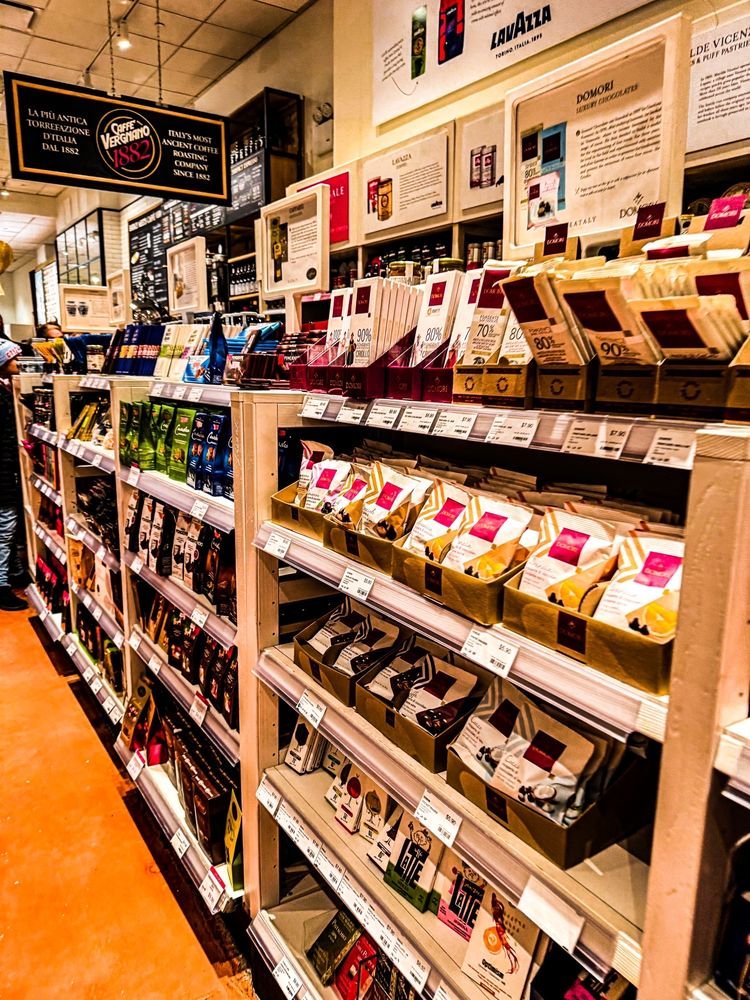
Reliably provides Italian-style thick cioccolata calda.

Signature Item: Italian Hot Chocolate

Location: 200 5th Ave, New York, NY 10010

Website: eataly.com

Eataly’s cioccolata calda follows the Italian tradition of pudding-thick hot chocolate. It’s served in small cups because the intensity doesn’t require volume. The texture is achieved through cornstarch, creating a velvety consistency that clings to the palate. Drink it slowly at the stand-up bar, Italian style.

9. Bryant Park Winter Village
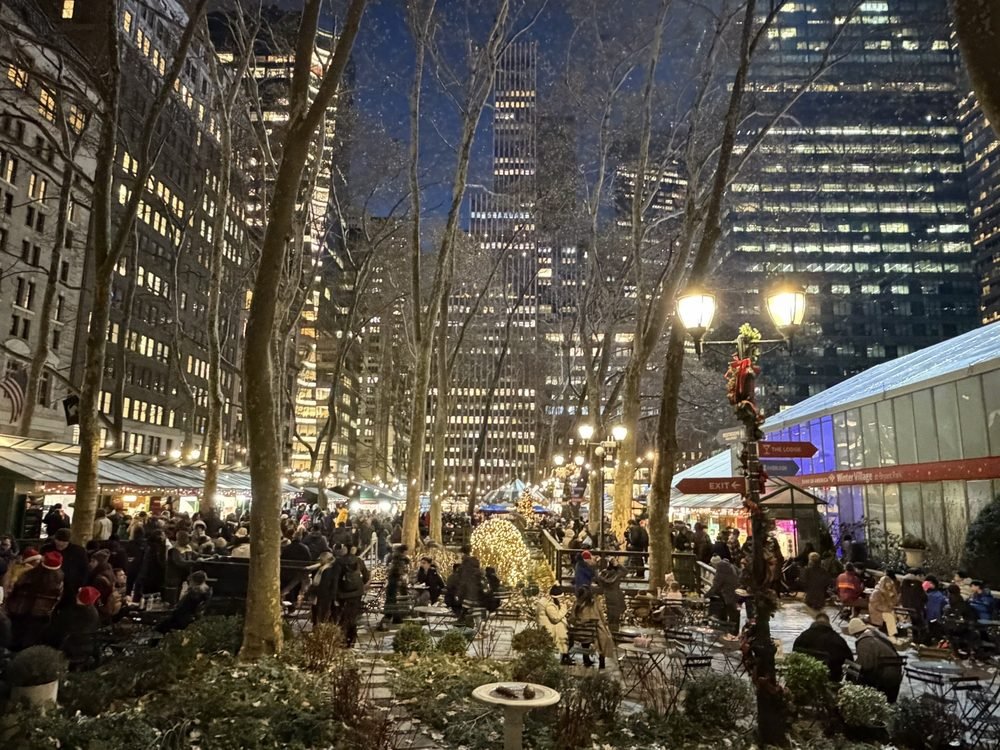
Bryant Park Winter Village

The winter beverage most consumed at New York’s largest holiday market.

Signature Item: Classic Hot Chocolate (Most popular: No Chewing Allowed)

Location: Bryant Park, 42nd St & 6th Ave, New York, NY 10018

Website: bryantpark.org

Multiple vendors operate within Bryant Park’s Winter Village, but No Chewing Allowed consistently draws the longest lines. Their hot chocolate is straightforward—sweet, creamy, topped with whipped cream and chocolate shavings. It’s designed for mittened hands and outdoor consumption, and it succeeds perfectly at that mission.

Bryant Park Winter Village 2025: Your Complete Guide to NYC’s Best Winter Destination

10. Union Square Holiday Market
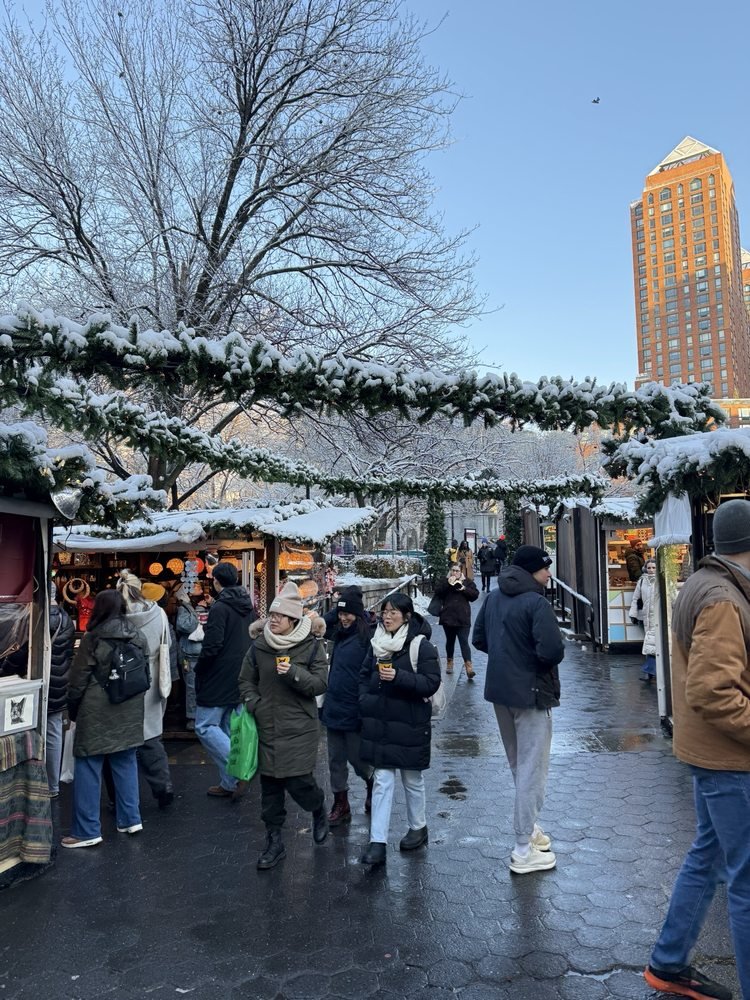
Union Square Holiday Market

Vegan, oat milk-based hot chocolate appears with different recipes each year.

Signature Item: Vegan Hot Chocolate (Most popular: Rubyzaar Baked)

Location: Union Square, New York, NY 10003

Website: urbanspacenyc.com

Union Square’s market vendors rotate, but vegan options have become standard. Rubyzaar Baked offers an oat milk hot chocolate that doesn’t taste like compromise—rich, creamy, and made with high-quality chocolate. The oat milk adds a subtle natural sweetness that complements rather than competes with the cacao.

11. Royce’ Chocolate Bryant Park Kiosk

Japanese-style soft sweetness attracts the most family visitors.

Signature Item: Nama Chocolate Hot Drink

Location: Bryant Park Winter Village

Website: roycechocolate.com

Royce’s approach brings Japanese sensibility to hot chocolate—less intense than European styles, with a silkier texture and gentler sweetness. Their nama chocolate (fresh chocolate) drink feels luxurious without being heavy. It’s particularly popular with families seeking something universally appealing.

12. American Dream Holiday Market

Indoor large-mall holiday market structure concentrates family consumption.

Signature Item: Marshmallow Hot Chocolate

Location: 1 American Dream Way, East Rutherford, NJ 07073

Website: americandream.com

Located just outside Manhattan in New Jersey’s mega-mall, American Dream’s holiday market offers climate-controlled hot chocolate consumption. Their marshmallow hot chocolate is unabashedly kid-friendly—sweet, topped with mini marshmallows, and served in generous portions. It’s hot chocolate as pure comfort, without pretension.


Insider Tips for Hot Chocolate Season in NYC

Timing Matters: Weekend afternoons at popular spots like Bryant Park mean 20+ minute waits. Visit weekday mornings or after 8 PM for shorter lines.

Temperature Strategy: If you’re skating or market-shopping, order your hot chocolate after activities, not before. Cold hands appreciate warmth more, and you won’t struggle with holding both a cup and shopping bags.

The Marshmallow Question: Marshmallows aren’t just decoration—they moderate drinking temperature and add textural interest. At chocolatier shops, skip them to taste the pure chocolate. At market stands, they’re part of the experience.

Pairing Protocol: Rich, European-style drinking chocolate pairs best with plain pastries—croissants, shortbread, or biscotti. American-style hot chocolate can handle richer pairings like brownies or cookies.

Price Expectations: Market hot chocolates run $4-6. Chocolatier establishments charge $6-12. The price difference reflects cacao quality, technique, and atmosphere—both have their place.


The Winter Ritual

Hot chocolate functions as the central device in New York’s winter, binding cold, waiting, light, and crowds into a single temperature. That’s why this city welcomes the same winter every year yet drinks different hot chocolate each time. Even with the same ingredients in the same places, people discover slightly different warmth annually. This is how New York enjoys winter—one warm cup at a time, in spaces that range from Brooklyn warehouses to Midtown ice rinks, from Parisian elegance to market-stand simplicity.

Whether you’re a visitor seeking the quintessential New York holiday experience or a local exploring new winter traditions, these twelve destinations offer more than hot chocolate. They offer what the city needs most in December: warmth, comfort, and a reason to slow down in a place that rarely does.

The mug in your hand becomes more than a beverage—it’s a tool for surviving winter, a ticket to the holiday experience, and a small ceremony practiced by millions in the world’s most restless city.


Plan Your Visit: Most chocolatier shops operate year-round, but holiday markets typically run from late November through early January. Check individual websites for seasonal hours and special holiday offerings. And remember: in New York’s winter, the best hot chocolate is always the one warming your hands right now.

Additional Reading:
New York’s 10 Legendary Jazz Clubs: Where Time Stands Still on Stage

Step into New York’s legendary jazz clubs where history breathes every night. From Village Vanguard’s 90-year legacy to Blue Note’s world-class performances, discover the iconic venues where jazz legends were born and continue to thrive in Greenwich Village, Midtown, and beyond.

New York’s jazz clubs are more than just venues—they’re living history. The basement where Miles Davis caught his breath, the stage where John Coltrane poured his soul into every note, the piano where Bill Evans held the night captive—these moments have layered upon each other to create today’s New York jazz scene. Let’s follow the trail of legends past and present, exploring the venues where history still breathes every night.

1. Village Vanguard: The Sacred Ground of Jazz Since 1935

Greenwich Village | Operating since 1935

Miles Davis, John Coltrane, Bill Evans, Sonny Rollins, Thelonious Monk, Wynton Marsalis, Brad Mehldau, and Joe Lovano have all graced this underground stage. Opening in 1935, this uniquely shaped basement space stands as New York’s longest continuously operating jazz club.

The live albums recorded here have become textbooks of jazz history. Starting with Sonny Rollins’ 1957 recording, over 100 albums have been born within these walls. Village Vanguard functions less as a performance venue and more as a recording studio where tonight’s performance becomes tomorrow’s standard.

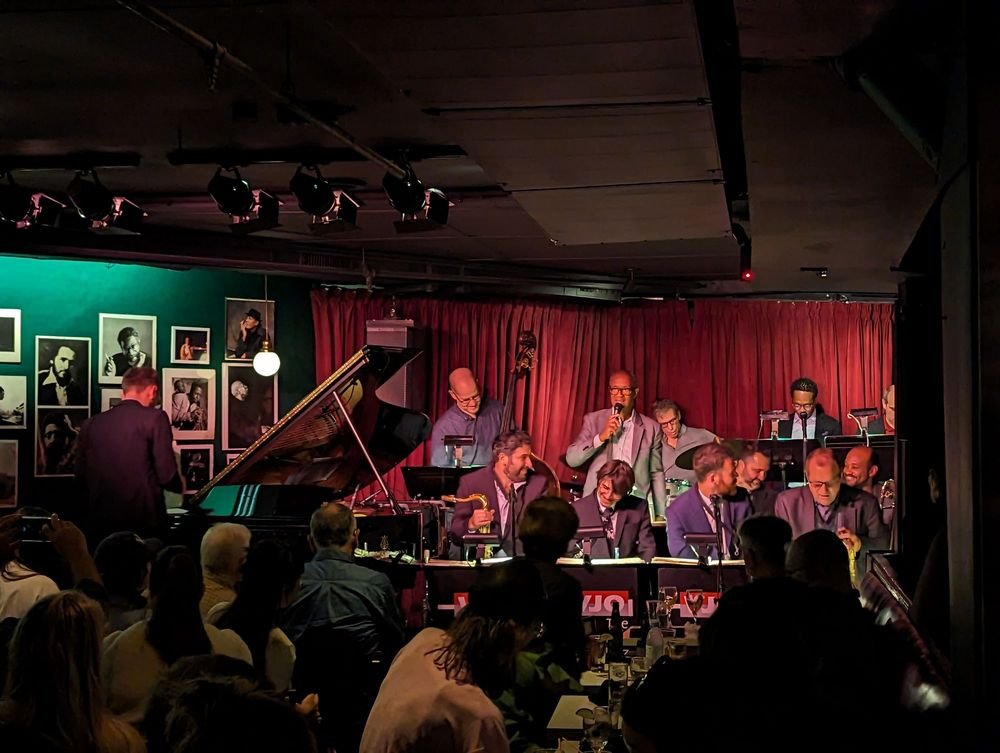
Though intimate with only 130 seats, the distinctive triangular architecture creates perfect acoustics. The red velvet curtains, low ceilings, and close proximity to the stage offer an intimacy unmatched anywhere else. Every Monday night since 1966, the Vanguard Jazz Orchestra has maintained its residency.

Address: 178 Seventh Avenue South, New York, NY 10014
Website: villagevanguard.com

2. Blue Note: The Living Mainstream of Modern Jazz

Greenwich Village | Where legends and rising stars share the stage

Herbie Hancock, Chick Corea, Wayne Shorter, Wynton Marsalis, Dizzy Gillespie, Sarah Vaughan, Oscar Peterson, Keith Jarrett, and James Carter have all performed on this stage. Ray Charles even held week-long residencies here annually.

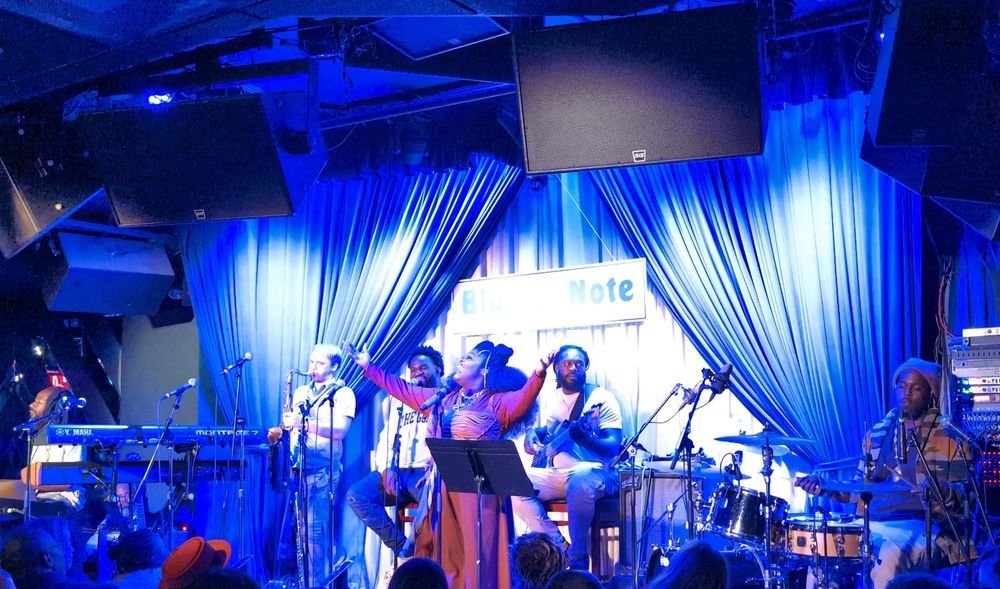
Since opening in 1981, Blue Note has demonstrated that jazz is a living, evolving art form by featuring both legendary masters and contemporary virtuosos on the same stage. Founded by Danny Bensusan, it quickly became New York’s premier jazz club and soon earned its place among the world’s most prestigious jazz venues. Today, Blue Note has locations worldwide including Tokyo, Milan, Rio, and Beijing.

In 2001, the club established its own label, Half Note Records, to release live albums directly. Since 2011, it has hosted the annual Blue Note Jazz Festival. Performances run nightly at 8 PM and 10:30 PM, with jazz brunch on Sundays. As a full-service restaurant, you can enjoy dinner while immersed in world-class jazz.

Address: 131 West 3rd Street, New York, NY 10012
Website: bluenotejazz.com

3. Smalls Jazz Club: Where Jazz Is Reborn

Greenwich Village | The crucible of 1990s jazz renaissance

Brad Mehldau, Joshua Redman, Kurt Rosenwinkel, Peter Bernstein, Mark Turner, and Jason Lindner all developed their careers in this basement. Founded in 1994 by Mitch Borden, Smalls became the epicenter of the 1990s New York jazz renaissance.

Initially operating with a $10 cover charge and BYOB policy, it functioned as a playground for young musicians. Famous for late-night jam sessions, rising stars honed their craft here. After briefly closing following 9/11, it reopened in 2006 with improved sound systems and a full bar.

Since 2013, Smalls has pioneered live-streaming and archiving every performance online. Subscribers can revisit past shows, with revenue shared among artists. Though only accommodating about 60 people, this intimacy defines its character. Open Tuesday through Thursday from 7:30 PM, and Friday through Sunday from 2 PM. Sister club Mezzrow is located nearby.

Address: 183 West 10th Street, New York, NY 10014
Website: smallslive.com

4. Birdland: The Jazz Corner of the World

Midtown | Symbol of jazz’s golden age

Charlie Parker, Dizzy Gillespie, Count Basie, John Coltrane, Miles Davis, Art Blakey, and Thelonious Monk all performed on this stage. Opening on December 15, 1949, and named after Charlie “Bird” Parker, Birdland symbolizes New York jazz’s golden era.

Though the original Broadway location closed in 1965 due to rising rent, the club was revived on the Upper West Side in 1986 and now resides in the Midtown theater district. True to its nickname “The Jazz Corner of the World,” the weight of big band and vocal jazz remains alive here.

The Count Basie Orchestra made this their home base, and George Shearing’s classic “Lullaby of Birdland” (1952) was composed to honor this very club. During the 1950s, Hollywood stars like Frank Sinatra, Marilyn Monroe, and Marlon Brando were regulars.

Today’s Birdland operates two spaces: the main performance hall and the underground Birdland Theater. Serving Cajun-style American cuisine, it’s open daily from 5 PM to midnight (1 AM on weekends). Monday nights feature Jim Caruso’s Cast Party, showcasing Broadway stars.

Address: 315 West 44th Street, New York, NY 10036
Website: birdlandjazz.com

5. Smoke Jazz & Supper Club: Refined Jazz Nights

Upper West Side | Where mature jazz resides

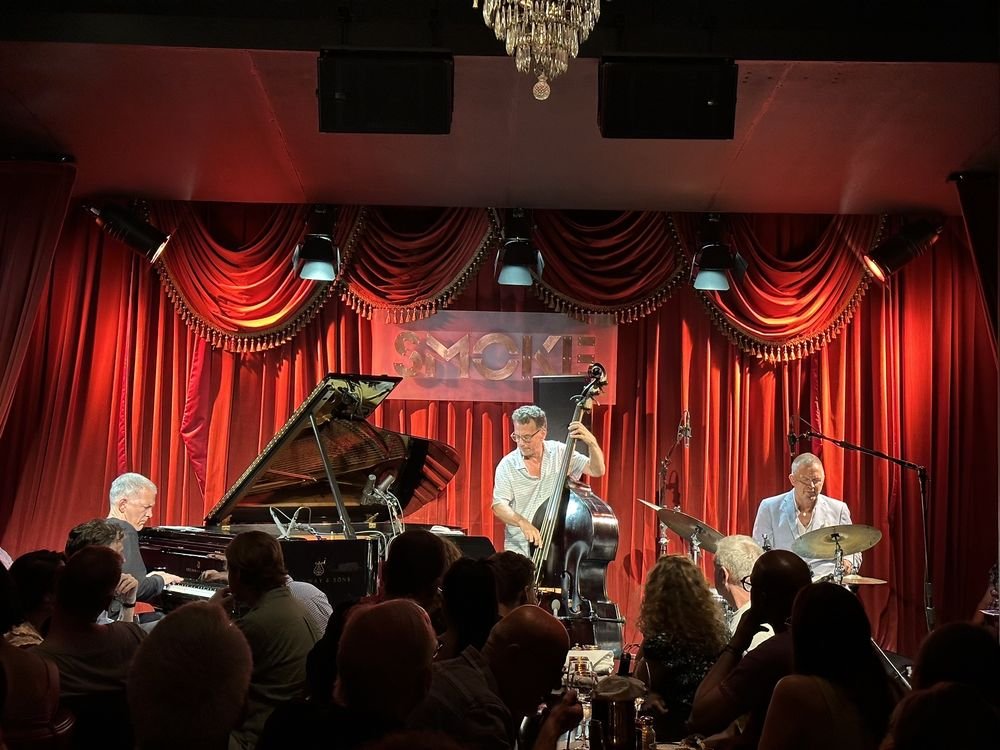
Ron Carter, McCoy Tyner, Kenny Barron, Harold Mabern, George Coleman, Wynton Marsalis, Brad Mehldau, and Chris Potter have all performed here. Opening on April 9, 1999, founders Paul Stache and Frank Christopher created a space that demonstrates what sophisticated jazz truly means.

Inheriting over 30 years of jazz tradition from the former Augie’s Jazz Bar location, Smoke was named Best New Jazz Club by New York Magazine in 2000. Located on Duke Ellington Boulevard (106th Street) near Harlem in the Upper West Side.

Candlelit tables, velvet sofas, antique chandeliers, and a full bar combine to create an authentic jazz atmosphere. Though intimate with about 50 seats, the acoustics are exceptional. Pianist David Hazeltine noted it’s rare to find a club where the piano sounds this clear, while Harold Mabern called it the best jazz club in the world.

Chef Patricia Williams developed soulful American cuisine that perfectly balances dinner and music. In 2014, Smoke established its own label, Smoke Sessions Records, producing Grammy-nominated releases. Open Wednesday through Sunday, with performances running until midnight on Fridays and Saturdays.

Address: 2751 Broadway, New York, NY 10025
Website: smokejazz.com

6. The Iridium: Where Guitar Legends Made History

Midtown West | Les Paul’s home stage

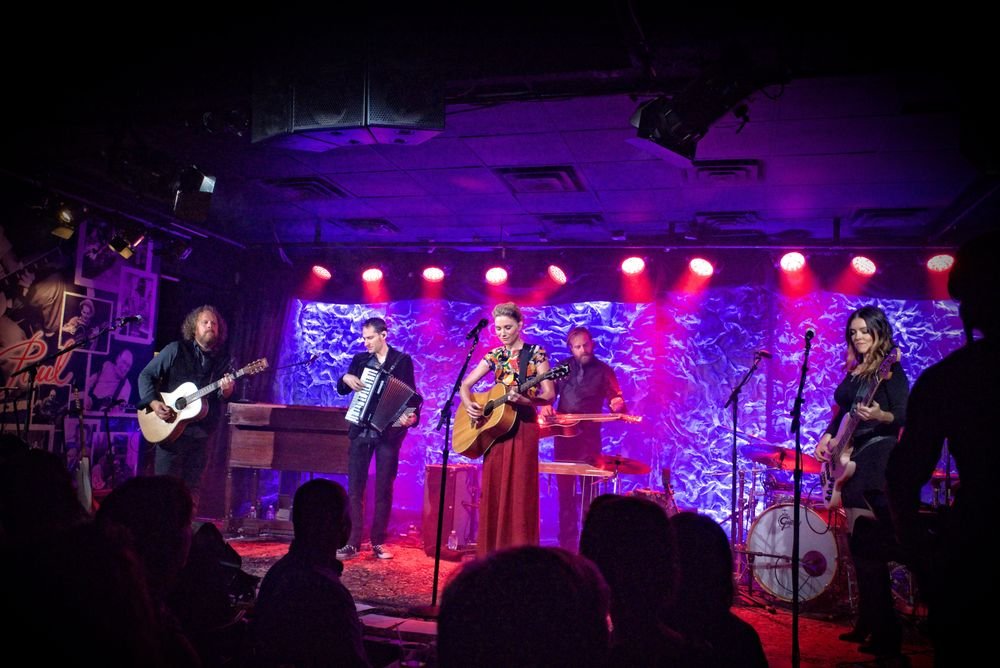
Les Paul, Jeff Beck, Steve Miller, Buddy Guy, Joe Walsh, and Joe Satriani have all performed here. Opening in January 1994, The Iridium is inseparable from guitar legend Les Paul, who performed here every Monday night from 1995 until his death in 2009 at age 94—nearly 15 years of weekly performances.

This venue birthed new traditions where the boundaries between jazz and rock blurred. Initially starting in the Empire Hotel basement across from Lincoln Center, it relocated to its current Times Square location in 2001.

With 180 seats, The Iridium showcases diverse genres including jazz, blues, rock, folk, and cabaret. Its label IridiumLive has released Albert Lee’s ‘Live At The Iridium’ and Jeff Beck’s Grammy-nominated ‘Rock ‘N’ Roll Party Honoring Les Paul.’

As a full-service restaurant featuring upscale American cuisine and a 450-square-meter wine cellar, performances begin nightly at 7 PM, with dinner service starting at 6:30 PM. Located at Broadway and 51st Street for excellent accessibility.

Address: 1650 Broadway, New York, NY 10019
Website: theiridium.com

7. Arthur’s Tavern: West Village’s Timeless Night

Greenwich Village | Home of the Bird

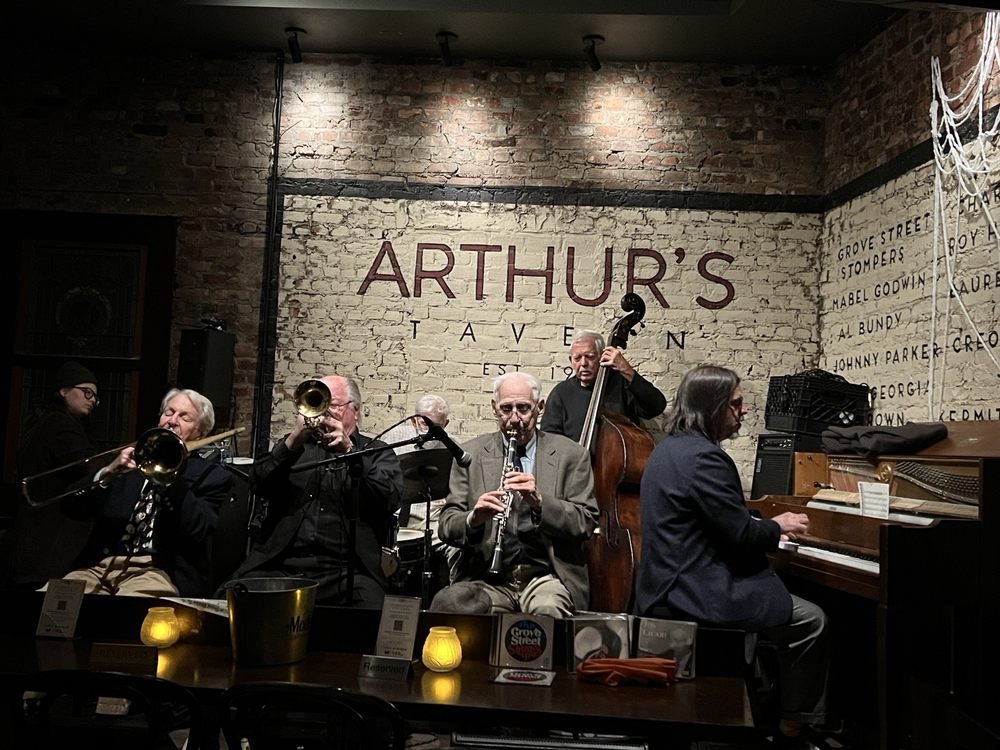
Charlie Parker and Roy Hargrove have graced this small bar’s stage. Opening in 1937, Arthur’s Tavern boasts 88 years of history and is known as the last existing club where Charlie Parker regularly performed, earning it the nickname “Home of the Bird.”

Pianist and singer Al Bundy performed here for 22 years, with a plaque honoring him hanging on the door. This venue blending traditional jazz, blues, swing, and funk remembers when jazz was part of everyday life.

Though maintaining a humble, friendly neighborhood bar atmosphere, live music fills the space every night. The Grove Street Stompers have performed every Sunday since 1986, with various bands playing Monday through Saturday.

No cover charge—just order at least one drink per person. Cash only, no credit cards accepted. The small space creates intimate proximity to the stage. Open Monday-Thursday and Sunday from 5 PM to 2 AM, Friday-Saturday from 5 PM to 4 AM.

Address: 57 Grove Street, New York, NY 10014
Website: arthurstavern.nyc

8. Dizzy’s Club: Where Jazz Meets Institution

Jazz at Lincoln Center | Purpose-built for jazz

Named after Dizzy Gillespie, this club regularly features Wynton Marsalis, Wycliffe Gordon, and members of the Jazz at Lincoln Center Orchestra. Opening in fall 2004 on the 5th floor of Frederick P. Rose Hall, Jazz at Lincoln Center’s new headquarters, Dizzy’s Club is part of the world’s first performance, education, and broadcast facility built specifically for jazz.

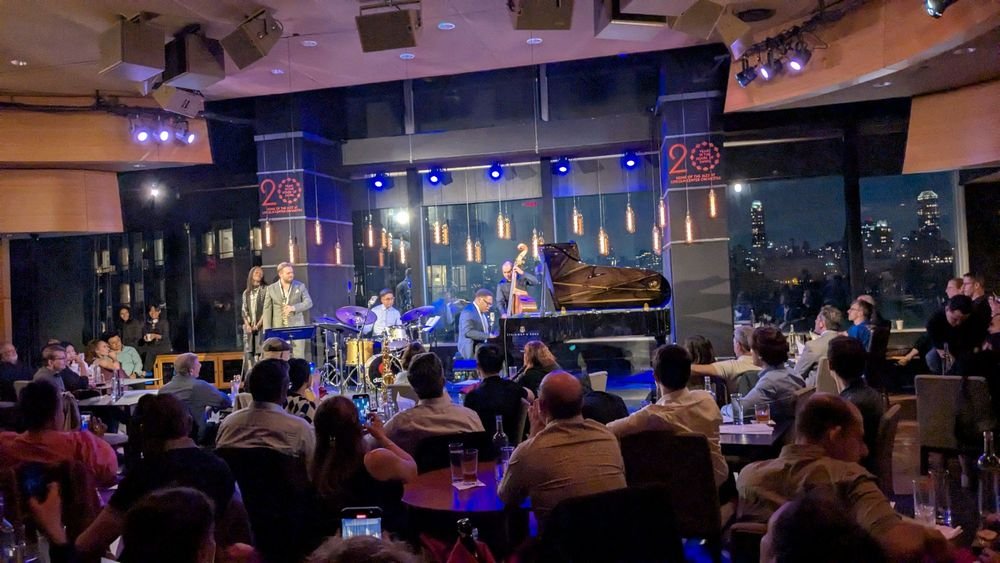
Designed by Rafael Viñoly as a $131 million facility, the space was specially created for jazz music’s warmth and clarity. Though intimate with 140 seats, experiencing jazz while overlooking Central Park and the Manhattan skyline is truly transcendent. Tony Bennett praised it as New York’s finest jazz room.

Unlike most historic jazz clubs located in basements, Dizzy’s Club occupies an elevated position with stunning Central Park views. It also serves an educational role in preserving jazz history for future generations. Wynton Marsalis has served as artistic director since 1987, leading the Jazz at Lincoln Center Orchestra.

Serving New Orleans-style soul food, performances run Monday-Saturday at 7 PM and 9 PM, and Sundays at 5 PM and 7:30 PM.

Address: 10 Columbus Circle, 5th fl., New York, NY 10019
Website: jazz.org

9. Café Carlyle: Where Jazz Meets Cabaret

The Carlyle Hotel | The last bastion of New York’s golden age cabaret

Bobby Short, Woody Allen, Eartha Kitt, and Barbara Carroll held regular residencies here. Recently, artists like Judy Collins, Sutton Foster, and St. Vincent have performed extended runs.

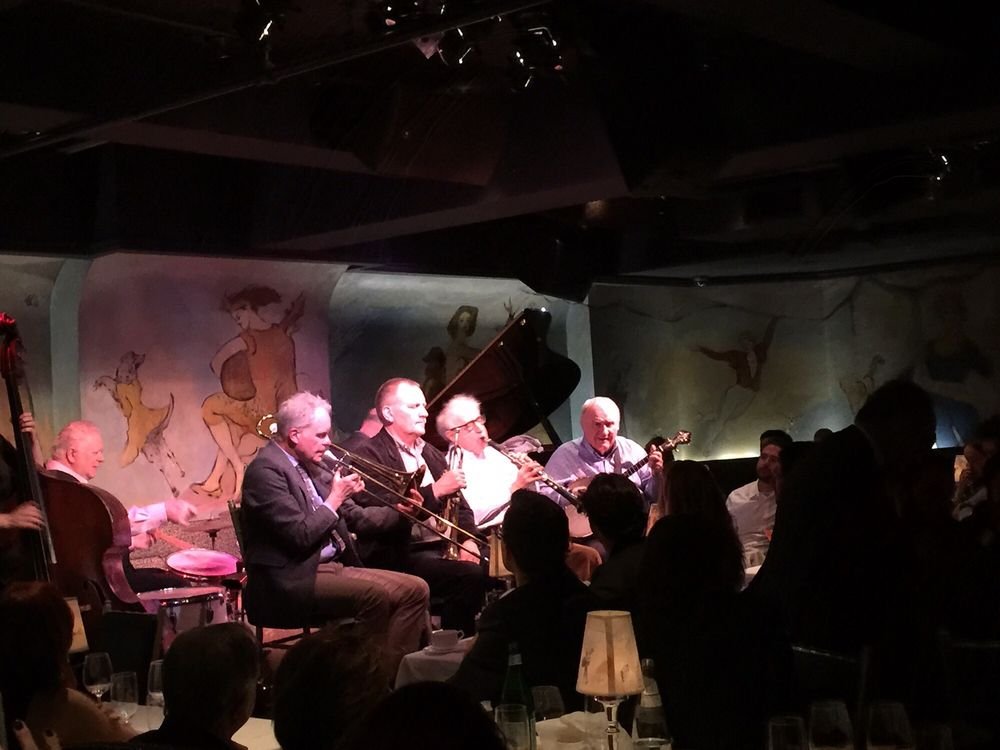
Opening in 1955 within The Carlyle Hotel, Café Carlyle represents the intersection of New York high culture, jazz, and cabaret. Decorated with murals by Marcel Vertès, this space is called the last bastion of New York’s golden age cabaret.

Bobby Short performed here regularly for nearly 40 years from 1968 until just before his death in 2005, while Woody Allen played clarinet every Monday. Though accommodating only about 60 people, the narrative depth is profound.

Formal attire is recommended in this elegant atmosphere where you can enjoy cabaret and jazz alongside French cuisine. Broadway stars, jazz artists, and Grammy winners regularly hold residencies. The 2024-2025 season featured a special series commemorating Bobby Short’s 100th birthday.

Cover charges start at $80 depending on the artist, with separate food and beverage orders required. Valet parking is available at the hotel’s 76th Street entrance. Open Monday-Saturday from 6:30 PM, with performances typically starting at 8:45 PM.

Address: 35 East 76th Street, New York, NY 10021
Website: rosewoodhotels.com/cafe-carlyle

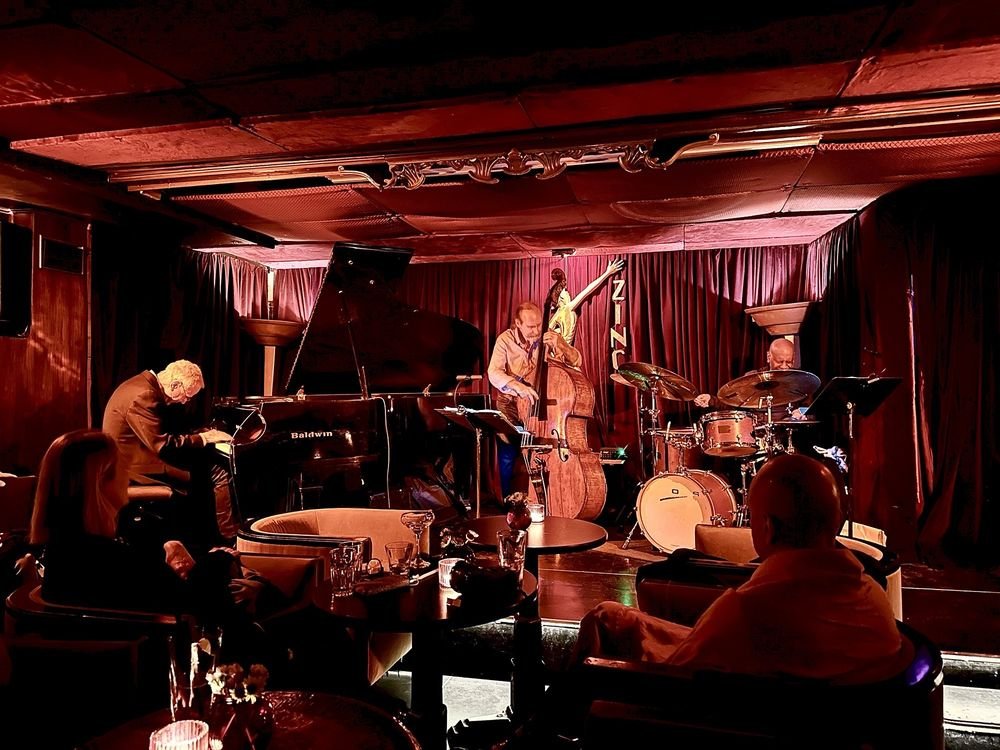
10. Zinc Bar: Where Jazz Boundaries Expanded

Greenwich Village | Underground stage of evolution

Zinc Bar demonstrates how New York jazz has evolved with the times. Since the 1970s, this Soho and Village area venue has functioned as a stage where jazz, Latin jazz, world music, and Afro-Cuban jazz intersect.

Joe Henderson, McCoy Tyner, Gonzalo Rubalcaba, Miguel Zenón, and David Sánchez—performers who led jazz’s expansion after hard bop—have all graced this stage. Rather than specific albums or singular moments, Zinc Bar’s legend lies in showing the flow of jazz evolution.

It stands as one of the venues most consistently demonstrating how post-bebop jazz created new languages through Latin rhythms and world music influences. The music performed here has proven that jazz is no longer a single style but an open structure.

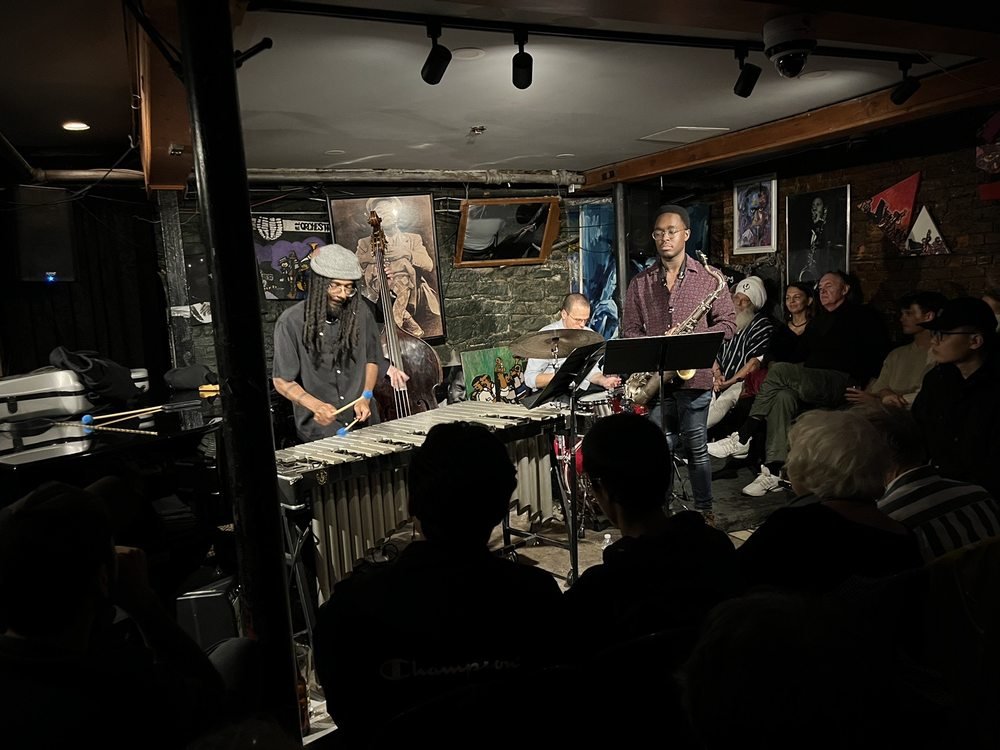
Located at the bottom of a descending staircase, the space is dark and dense. The proximity between stage and audience is close, with flexible seating arrangements creating different atmospheres for each performance.

Address: 82 West 3rd Street, New York, NY 10012
Website: zincbar.com


Planning Your Jazz Journey in New York

These ten legendary venues represent different facets of New York’s jazz heritage. From Village Vanguard’s unchanged 1935 aesthetic to Dizzy’s Club’s modern institution, each space tells its own story while contributing to the living history of jazz.

Tips for visiting:

  • Reserve in advance, especially for popular venues like Blue Note and Village Vanguard
  • Expect minimum drink requirements at most clubs
  • Dress codes vary from casual to formal depending on the venue
  • Many clubs offer multiple sets per night—check schedules online
  • Consider multi-club nights in Greenwich Village where several venues are within walking distance

Whether you’re a devoted jazz aficionado or a curious first-timer, these venues offer more than just music—they offer a chance to step into history, to sit where legends once sat, and to experience the art form that defines New York’s cultural soul.

The stages may be empty during the day, but at night, they still pulse with the same energy that moved Miles, Coltrane, and countless others. This is where time stands still, and jazz lives forever.​​​​​​​​​​​​​​​​

Dia:Beacon: A Pilgrimage to Minimalist Art in New York’s Hudson Valley