Reading the City: Where to Read Alone in NYC

Quiet Corners, Hidden Benches, and Sanctuaries for the Solitary Reader

There’s a particular kind of silence that only happens when you’re reading in public—surrounded by people but deeply elsewhere. In a city like New York, where noise is the native language, finding a place to sit down with a book and truly disappear is a subtle act of rebellion.

This post is for the readers who carry novels in their bags, for those who sit with poetry in coffee-stained corners, for anyone who craves quiet among chaos. Here are five places in NYC where reading alone doesn’t feel lonely—it feels intentional.

📍 1. Jefferson Market Garden – West Village

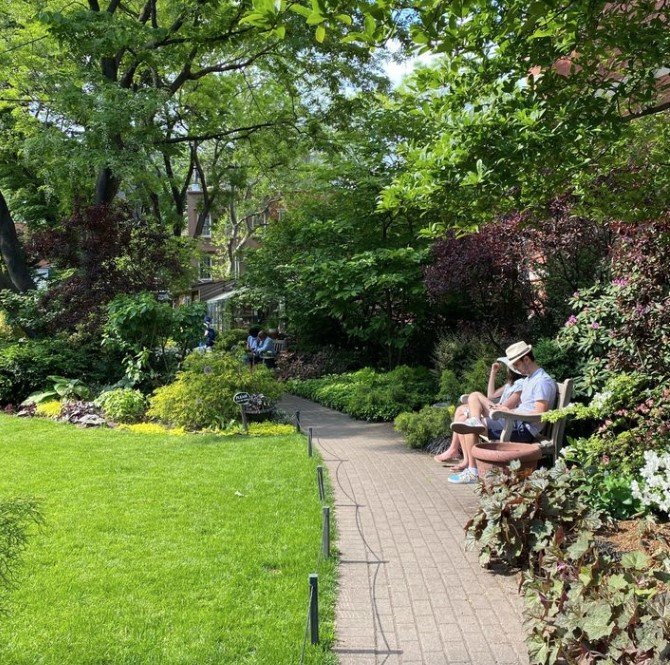
Tucked behind the Gothic spire of the Jefferson Market Library is a garden that feels like a secret. Jefferson Market Garden is only open seasonally, but when it is, its benches are shaded, its flowers are fragrant, and its silence is golden.
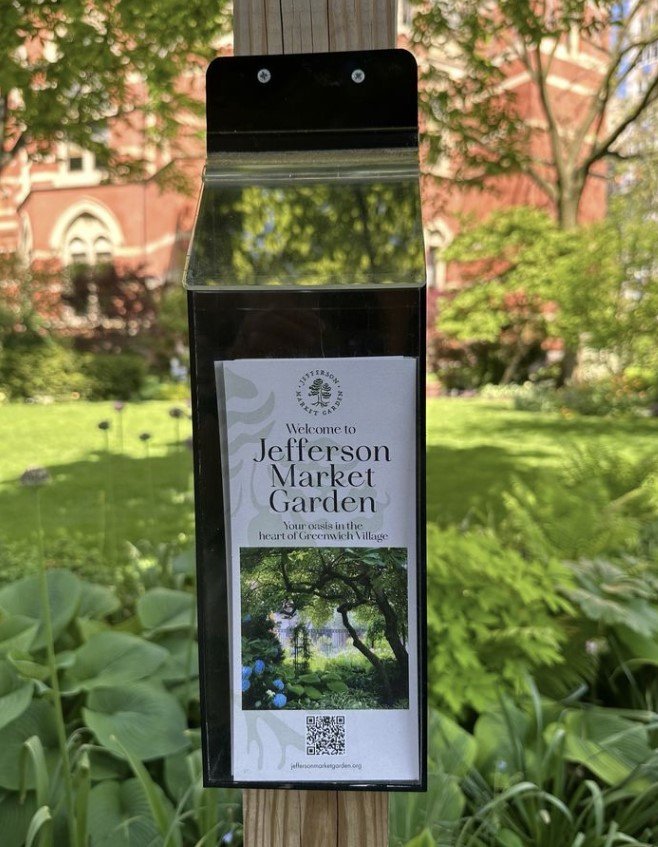
Bring a slim paperback. Mornings between 10 AM and noon are best, when the neighborhood is calm and the sunlight softens the pages. This is a garden for slow chapters and slow breathing.
📍 2. Albertine Books – Upper East Side

Inside the ornate walls of the French Embassy on Fifth Avenue lies Albertine, a bookstore where French and English literature sit side by side. Climb to the second floor, where celestial murals cover the ceiling, and find a chair near the window.

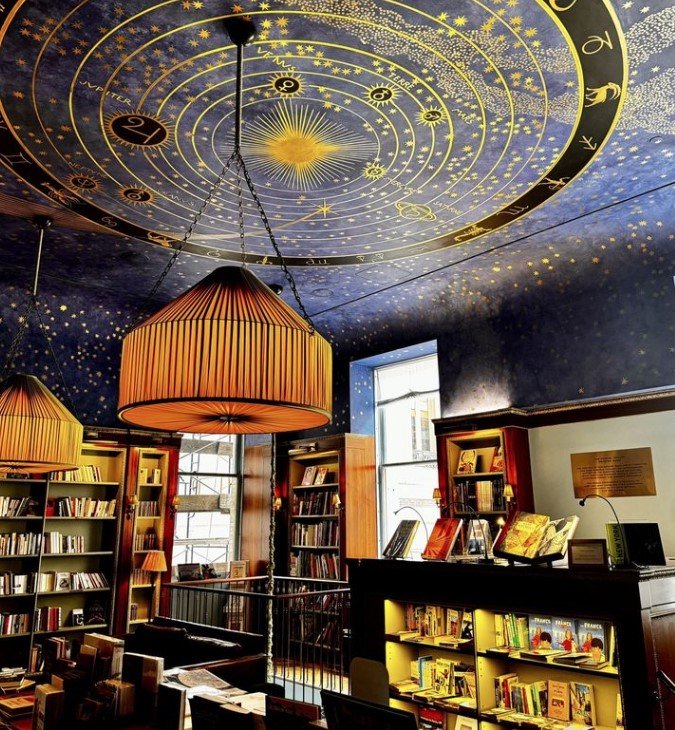
The room is hushed like a chapel. No laptops. No espresso machines. Just pages and thoughts. If you like your solitude to come with a side of Parisian elegance, this is your place.

📍 3. Riverside Park @ 91st Street Garden – Upper West Side
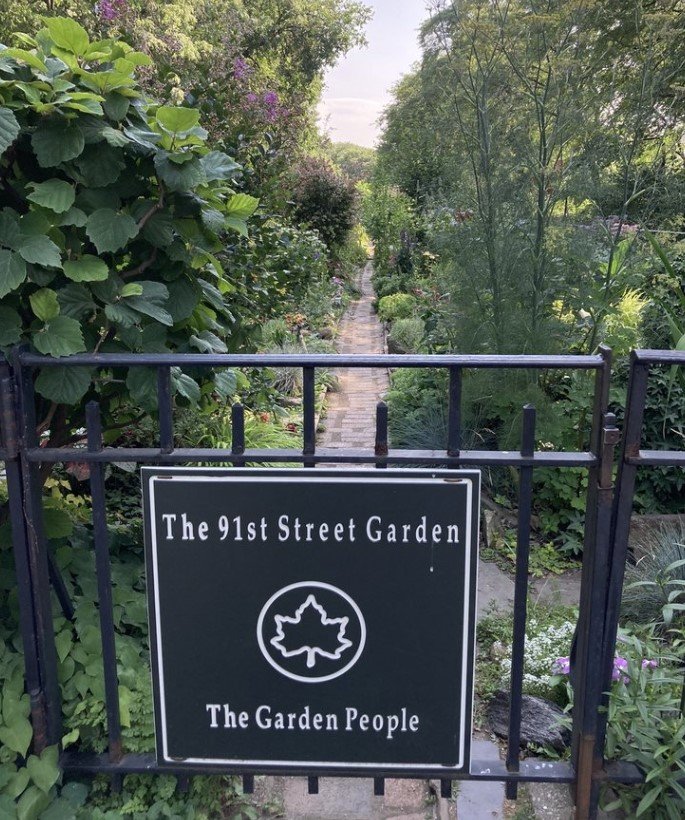
Sometimes, reading outside isn’t about escape—it’s about connection. The 91st Street Garden, made famous by You’ve Got Mail, is a small, well-kept oasis overlooking the Hudson. The benches face the water and the breeze is generous.
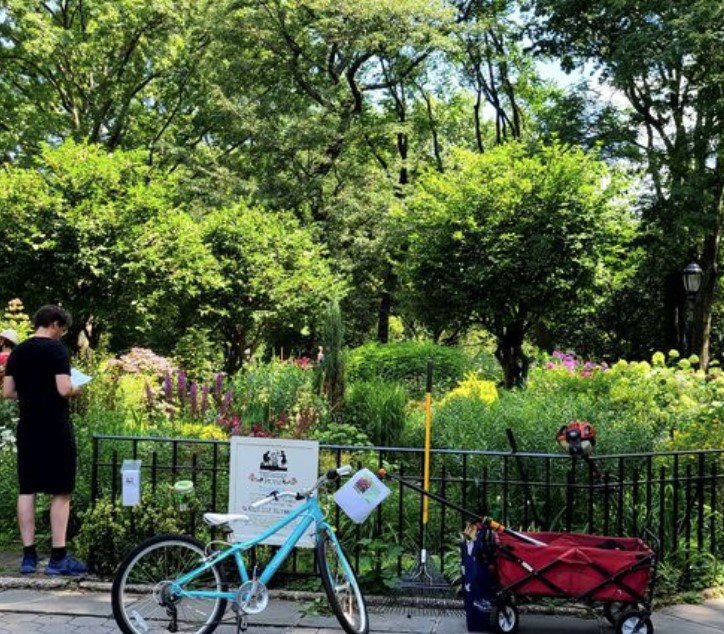
Early evenings are perfect. The sky fades behind the trees, and your book becomes backlit by the river. It’s the kind of space where fiction feels more honest than real life.

📍 4. McNally Jackson Bookstore – Seaport

Not all bookstores welcome lingering. McNally Jackson invites it. The Seaport location is quieter than its Soho cousin, with wide aisles and scattered chairs that encourage you to sit and stay.
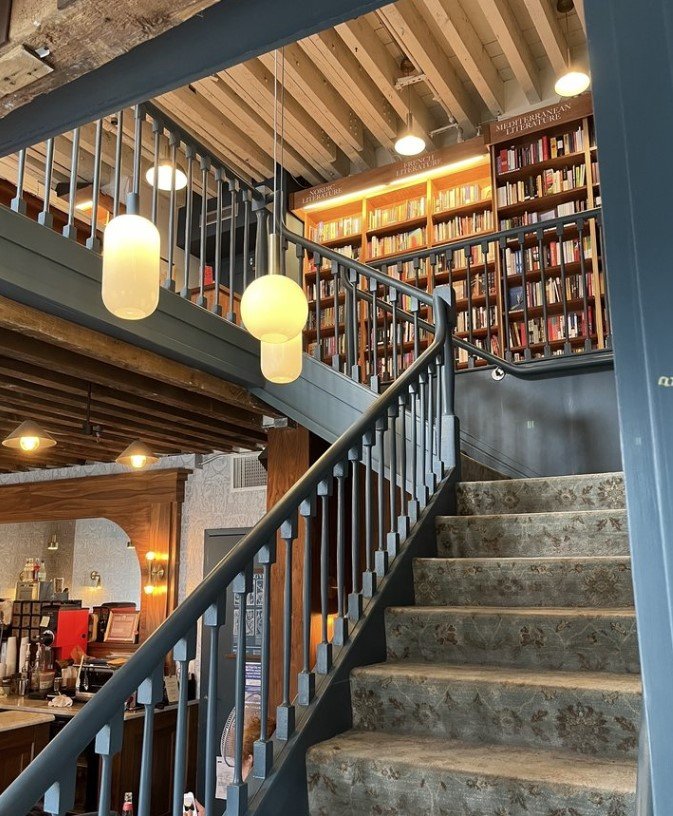
The natural light and waterfront calm make it ideal for a solo Sunday visit. Buy a book, or don’t. No one will ask. Just pick a corner and read like the city isn’t spinning so fast around you.

📍 5. Rose Main Reading Room – NY Public Library, Midtown

This is where reading becomes sacred. The Rose Main Reading Room at the New York Public Library is less a room and more a cathedral for thought. Vast ceilings. Long oak tables. The silence is almost physical.
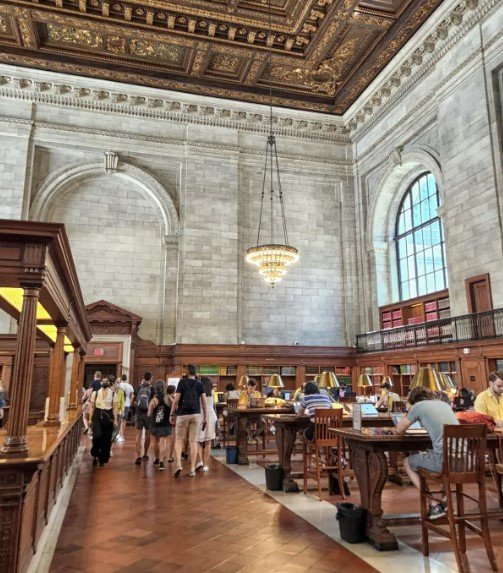
It’s not a casual space—you’ll want to bring a hardcover and your best pen—but it rewards stillness like nowhere else. You’ll feel small here, but not insignificant. Just part of something grander: the long story of readers in New York.

Tips for Reading Alone in NYC

  • Go early: Weekday mornings are quieter everywhere
  • Bring: A light book and water
  • Leave your phone off: Let the city blur behind the words

Closing

Reading alone in New York isn’t antisocial—it’s deeply social, just with a different rhythm. It’s you, the words, and the city breathing in the background. So find a spot. Open a book. Let the city wait for you for once.

Slow Travel NYC
Slowing Down in Cold Spring: A Solo Day Trip by the Hudson

There are times when the city gets too loud, even if nothing’s being said. On those days, the subway feels tighter, the skyline more distant, and the sidewalks too crowded for thought. That’s when I know I need to leave—not forever, just for the day.

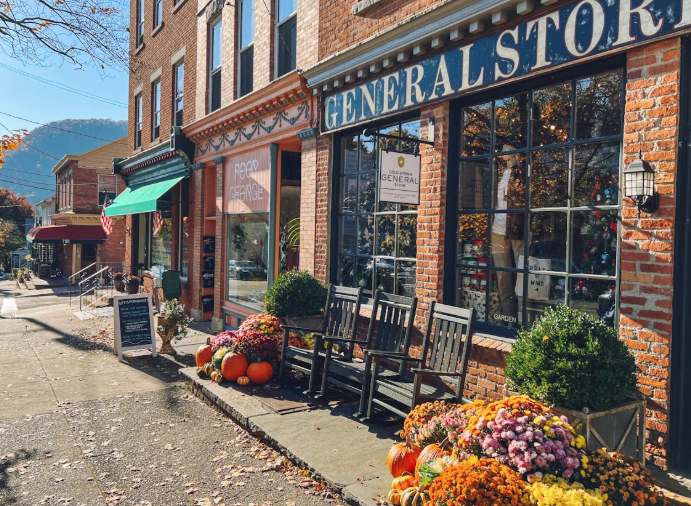
Just 90 minutes north of Manhattan lies Cold Spring, a small riverside village that feels like a page torn out of another season. It’s not just quieter here—it’s slower, softer, and perfectly made for walking alone. This is a journey for those who don’t need a plan, only a pause.

Getting There: The Hudson Line

Board the Metro-North Hudson Line at Grand Central Terminal. Sit on the left side for views of the river. As the train climbs north, steel gives way to green, and glass becomes water. About an hour and twenty minutes later, you’ll arrive at Cold Spring Station—with the Hudson greeting you as you step off.

There’s no ticket gate. No rush. You walk straight out onto a quiet platform, and within minutes, you’re in a different rhythm entirely.

First Stop: Cold Spring Coffeehouse

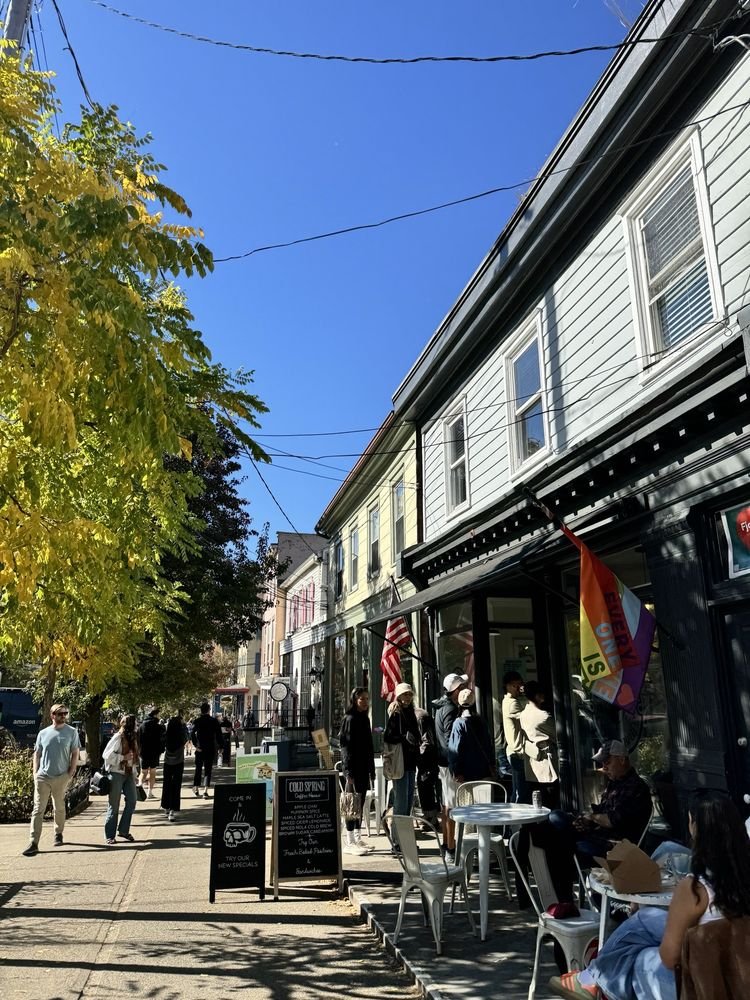
Start your walk through town by heading up Main Street. Just a few blocks in, you’ll find Cold Spring Coffeehouse—an understated café with warm lighting, wooden chairs, and a quiet hum. Grab a latte or a cold brew and take a seat by the window.

cold spring

No one’s in a hurry here. Even the baristas move like they’ve read every chapter of the morning already. This is the kind of place where you don’t need Wi-Fi to stay awhile.

Wandering Main Street

Walk slowly. No need to follow a map. Main Street is lined with antique shops, secondhand bookstores, local art galleries, and vintage signs that seem like they’ve always been there.

The joy of Cold Spring is in what you don’t do. You can browse. You can skip. You can stand in front of a window for ten minutes watching the leaves fall. No one will ask why you’re alone. No one will interrupt the silence.

Riverside Quiet: Dockside Park

At the end of Main Street, the town opens into Dockside Park—a wide grassy area with wooden benches and sweeping views of the Hudson River. This is where time truly stops.

Sit for as long as you like. Watch the water move. Feel the breeze shift. The city feels far away here—not just in miles, but in meaning. Here, it’s okay to be still. To not post. To not explain.

“Sometimes, the best part of a journey is the part where you don’t move at all.”

Optional Detour: Little Stony Point Trail

If you’re up for a short hike, cross Route 9D to find Little Stony Point Trail. It’s an easy loop through forested paths that opens to a quiet riverside beach with mountain views.

No special gear needed. Just good shoes, a bottle of water, and your willingness to listen to the woods. It’s only a 30–40 minute loop, but you might take longer. That’s kind of the point.

Heading Back

Trains back to Grand Central run about once per hour. There’s no rush. Sit on a bench near the platform. Read. Write. Let the wind carry off whatever you came here to release.

You’ll arrive back in the city the same way you left—but you won’t feel quite the same. That’s the quiet magic of Cold Spring.

Practical Tips

  • Train: Metro-North Hudson Line (Grand Central → Cold Spring)
  • Duration: 1hr 20min (each way)
  • Best time: Weekdays or Sunday mornings
  • Bring: Water, a book, notebook, comfortable shoes
  • Don’t bring: Expectations. Just let the place arrive to you.

Closing

We often think we need to travel far to feel new. But sometimes, all it takes is a train ride north, a bench by the river, and a little time alone. If you’re craving silence, space, or simply a breath—Cold Spring is waiting.

Related posts you might enjoy

Where Stillness Takes Shape: A Slow Walk Through the Noguchi Museum

In a city where space is currency and silence feels rare, the Noguchi Museum offers both, in abundance.

Tucked away in Long Island City, far from the noise of midtown and the buzz of SoHo, this museum feels less like an institution and more like a retreat. Not for tourists in a hurry. Not for checklist travelers. But for those willing to pause, to breathe, and to experience art as presence.

Who Was Isamu Noguchi?

Isamu Noguchi was a Japanese-American sculptor, designer, and thinker. His work defies categories—somewhere between architecture, furniture, landscape, and sculpture. But what’s most striking about his work is not what it is, but how it makes you feel.

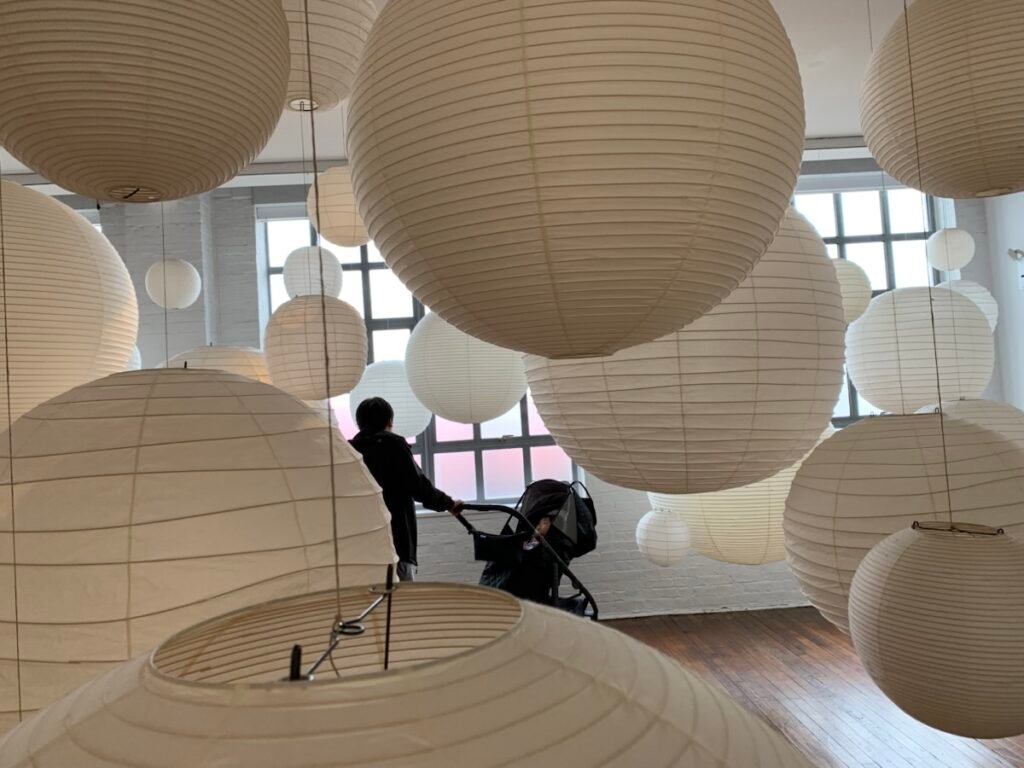
Everything he created, from massive stone pieces to soft paper lanterns, invites stillness. His forms are not loud. They don’t scream for attention. They simply exist—with gravity, elegance, and restraint.

Arrival: A Gate Into Another Tempo

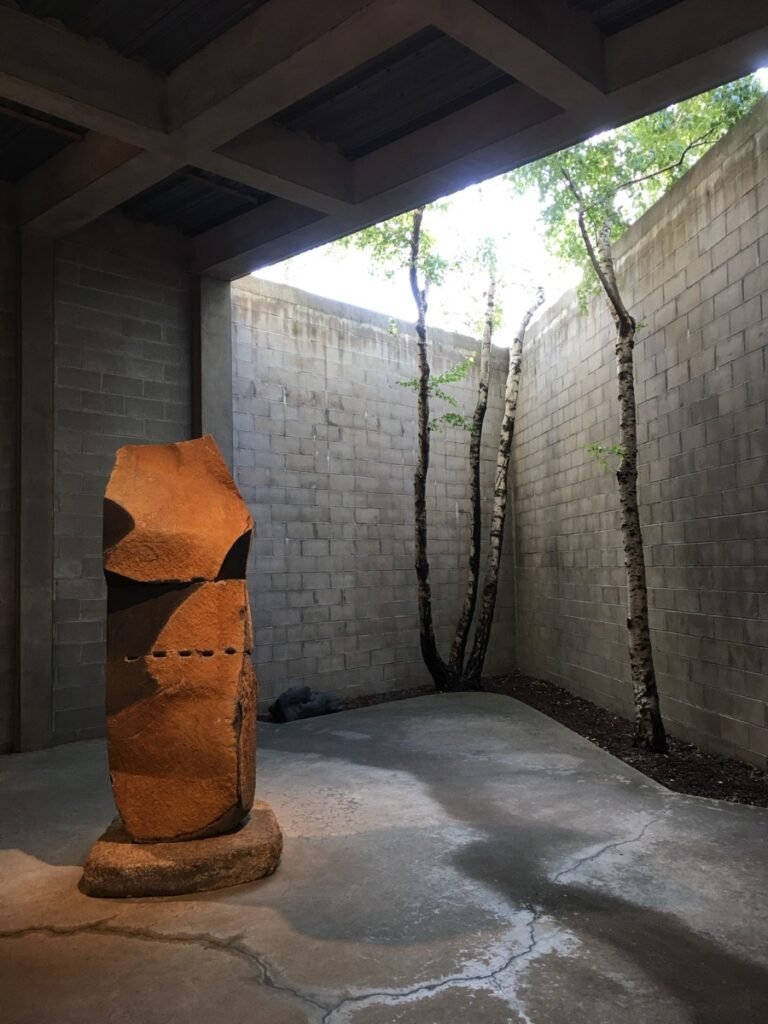
noguchi museum

From the outside, the Noguchi Museum looks like little more than a concrete wall. No banners. No fanfare. Just a small wooden sign and a quiet door.

Step inside, and you’re met not with marble floors or museum guards, but with natural light, raw textures, and a garden. The space breathes. It asks you to slow down. And, if you’re willing, to stay a while.

The Garden: Where Sculpture Meets Sky

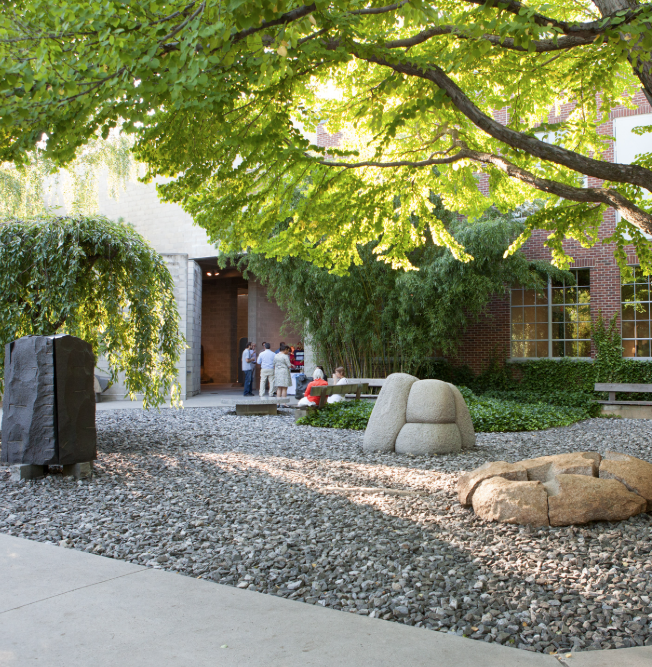
The heart of the museum is its inner courtyard—an open-air sculpture garden surrounded by Japanese maple trees and gravel paths. Sculptures rest, not on pedestals, but on the ground itself. They seem to have grown there, as if carved directly from the earth.

You don’t “look at” Noguchi’s art. You sit with it. You walk around it. You notice how the light changes it. How its shadow stretches or shortens with the passing sun.

Slow tip: Sit on one of the benches near the center. Listen. To birds, to breeze, to the silence inside you.

Inside: Forms That Whisper

The indoor galleries are arranged simply—no numbered order, no pressure to move forward. Each room offers space: space between works, space around you, and space inside you. Some sculptures are smooth and minimalist. Others are rough and weighty, like memory.

There are no crowds. No loud school groups. Just a few people moving slowly. Often alone. It’s one of the few museums where no one minds if you sit in silence for twenty minutes before moving on.

What to bring: A sketchbook. Or nothing at all.

Why This Museum Matters

In a city of iconic museums—MoMA, the Met, the Guggenheim—why spend your time here? Because sometimes, art isn’t about interpretation. It’s about feeling. About being.

The Noguchi Museum doesn’t demand your intellect. It invites your attention. It doesn’t ask you to understand. Only to notice.

Practical Details

  • Location: 9-01 33rd Rd, Long Island City, NY 11106
  • Hours: Wednesday–Sunday, 11am–6pm (closed Monday & Tuesday)
  • Admission: $12 (free on first Friday of each month)
  • How to get there: Take the N or W train to Broadway, then walk 10 minutes

Tip: Pair your visit with a stop at the nearby Socrates Sculpture Park or walk down to the East River to sit on the waterfront steps.

Final Thoughts

“The essence of sculpture is for me the perception of space, the continuum of our existence.” – Isamu Noguchi

In a world that often demands reaction, the Noguchi Museum offers reflection. It reminds us that art doesn’t have to shout. That beauty can rest. And that meaning can be found not in movement—but in stillness.

If you ever need to return to yourself, come here. Walk slowly. Sit often. Let shape and shadow speak to you. Welcome to a different kind of New York.

Slow Travel NYC

Why I Chose to Slow Travel in NYC

New York City moves fast. It always has. From the moment you step into Manhattan, you’re swept into its rhythm—the blaring horns, the flashing lights, the hurried footsteps. The energy is intoxicating, but also, at times, overwhelming.

When I first arrived in New York, I was determined to see it all. I planned each day with military precision: Times Square in the morning, Central Park in the afternoon, MoMA before sunset, and perhaps a rooftop bar after dinner. I checked off landmarks like items on a grocery list, yet found myself oddly unfulfilled. Despite all the sights I had “seen,” something was missing.

It took me a while to realize what that was: presence. I wasn’t really experiencing New York—I was consuming it.

Slowing Down: A Personal Turning Point

One rainy Thursday morning changed everything.

My original plan had been to visit the Top of the Rock, but the weather made that impossible. Instead, I wandered aimlessly into a quiet café in the West Village. I ordered a cappuccino, took out a book I had been meaning to read for weeks, and sat by the window. Outside, people hurried past with umbrellas, but inside, time seemed to pause.

That was the first time I really felt the city. Not as a list of destinations, but as a living, breathing place. That’s when I began to question whether the “best” way to see New York was actually to not rush at all.

What Is Slow Travel?

Slow travel isn’t just about taking things easy. It’s about being intentional—moving at a pace that allows you to notice, reflect, and connect.

It means choosing one neighborhood over ten attractions. It means spending an entire morning on a park bench rather than squeezing in three museums. It means taking the long walk instead of the fast subway ride. It’s about depth over speed, presence over productivity.

In a city like New York—so often described as loud, intense, and perpetually in motion—this approach may seem counterintuitive. But that’s precisely what makes it so rewarding. Amid the chaos, New York has countless pockets of stillness. You just have to slow down enough to find them.

Moments That Mattered More

Some of my most cherished memories in NYC have come from doing “nothing special.”

  • Reading under the trees in Bryant Park on a weekday morning
  • Watching the golden hour bathe brownstones in the East Village
  • Stumbling upon a jazz trio playing on a quiet corner of Washington Square
  • Having a long, aimless conversation with a barista in Fort Greene

None of these moments were on a list. I didn’t find them in a guidebook. They happened because I gave the city permission to surprise me.

What Slow Travel NYC Is About

This blog isn’t just a travel guide—it’s a philosophy in motion. It’s about discovering New York not through the eyes of a tourist, but through the heart of a curious wanderer.

Here, I’ll share:

  • Walkable routes through quiet neighborhoods like Carroll Gardens and Cobble Hill
  • Cafés where time seems to stop and reflection feels natural
  • Stories—not just from places, but from how they made me feel

I believe that travel can be healing. Especially in a place like New York, where slowing down feels like an act of resistance. Through these stories and spaces, I hope to offer not just tips, but a different way of being in the city.

Who This Blog Is For

Slow Travel NYC is for anyone who’s ever felt that rushing through a place meant missing something real. It’s for the traveler who lingers in bookstores, who finds comfort in silence, who chooses a side street over the main road.

Whether it’s your first visit to New York or your fiftieth, this blog is for you—if you’re willing to walk a little slower, stay a little longer, and feel a little deeper.

A Final Thought

“Sometimes, the most meaningful journeys happen just a few blocks from where you are—if you’re moving slow enough to notice.”

Thank you for being here. I hope these pages inspire you to experience New York in a way that leaves space for wonder, reflection, and real connection.

Welcome to Slow Travel NYC. Let’s walk the city—slowly.